• KGS/USD = 0.01144 0%
  • KZT/USD = 0.00212 0%
  • TJS/USD = 0.10456 0.19%
  • UZS/USD = 0.00008 0%
  • TMT/USD = 0.28490 0%
  • KGS/USD = 0.01144 0%
  • KZT/USD = 0.00212 0%
  • TJS/USD = 0.10456 0.19%
  • UZS/USD = 0.00008 0%
  • TMT/USD = 0.28490 0%
  • KGS/USD = 0.01144 0%
  • KZT/USD = 0.00212 0%
  • TJS/USD = 0.10456 0.19%
  • UZS/USD = 0.00008 0%
  • TMT/USD = 0.28490 0%
  • KGS/USD = 0.01144 0%
  • KZT/USD = 0.00212 0%
  • TJS/USD = 0.10456 0.19%
  • UZS/USD = 0.00008 0%
  • TMT/USD = 0.28490 0%
  • KGS/USD = 0.01144 0%
  • KZT/USD = 0.00212 0%
  • TJS/USD = 0.10456 0.19%
  • UZS/USD = 0.00008 0%
  • TMT/USD = 0.28490 0%
  • KGS/USD = 0.01144 0%
  • KZT/USD = 0.00212 0%
  • TJS/USD = 0.10456 0.19%
  • UZS/USD = 0.00008 0%
  • TMT/USD = 0.28490 0%
  • KGS/USD = 0.01144 0%
  • KZT/USD = 0.00212 0%
  • TJS/USD = 0.10456 0.19%
  • UZS/USD = 0.00008 0%
  • TMT/USD = 0.28490 0%
  • KGS/USD = 0.01144 0%
  • KZT/USD = 0.00212 0%
  • TJS/USD = 0.10456 0.19%
  • UZS/USD = 0.00008 0%
  • TMT/USD = 0.28490 0%

Kazakhstan Begins Mineral Exploration in Afghanistan’s Nuristan Province

Kazakhstani geologists have begun prospecting potential mining sites in Afghanistan, starting with the resource-rich Nuristan Province. The initiative reflects Kazakhstan’s broader efforts to expand its mining interests and strengthen economic ties with Afghanistan.

In mid-April, a group of geologists and engineers from Kazakhstan traveled to Afghanistan, according to the Ministry of National Economy. During their visit, specialists collected 130 kilograms of ore samples from prospective deposits in Nuristan Province, targeting beryllium, lead, and zinc resources. The samples will now be sent to Kazakhstan for laboratory analysis. Depending on the results, Kazakhstan may move to a more in-depth phase of negotiations regarding the development of these deposits.

Nuristan Province is located along the border between Afghanistan and Pakistan, south of the Hindu Kush mountain range, with its administrative center in the city of Parun. Mining activity in the province has historically focused on artisanal extraction of precious and semi-precious stones, including varieties of beryl. At least 55 gemstone deposits are known to exist in the region, featuring lazurite, cordierite, ruby, kunzite, emerald, and danburite. However, industrial-scale mining of lead and zinc has not previously been developed in the area.

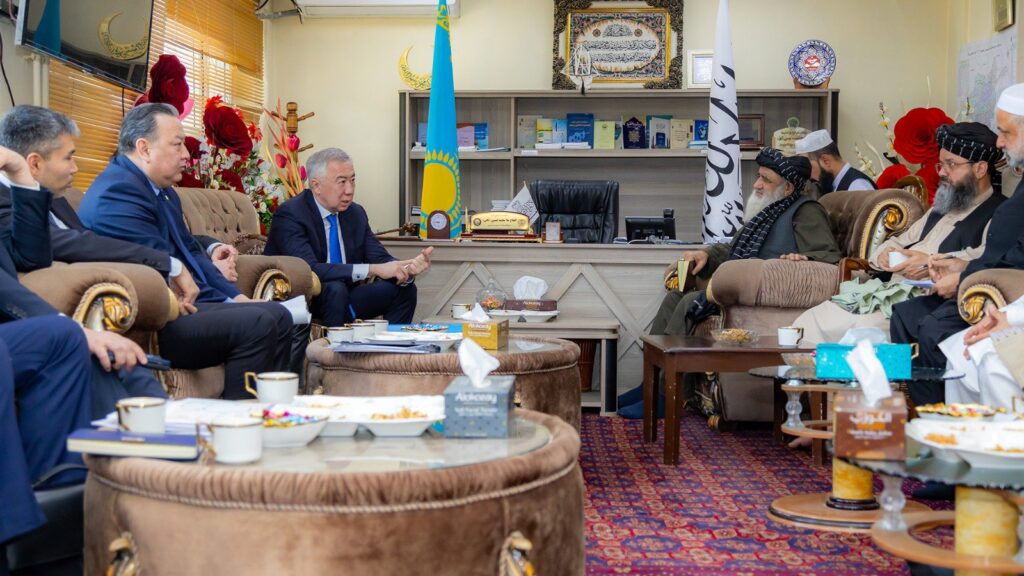
Kazakhstan’s geological exploration in Afghanistan will not be limited to Nuristan. During a meeting in Kabul between Kazakhstan’s Deputy Prime Minister Serik Zhumangarin and Afghanistan’s Minister of Mines and Petroleum Hedayatullah Badri, it was agreed that another team of Kazakhstani specialists would travel to Afghanistan at the end of May. The Afghan side also expressed readiness to share information about confirmed mineral reserves that could be of interest to Kazakh companies.

“Today Kazakhstan has formed a professional pool of extractive companies experienced in geological exploration, mining, and processing of solid minerals. These companies are keen to find and invest in promising deposits,” Zhumangarin noted. Representatives from major firms such as ERG Exploration, Kazakhmys Barlau, and Kazatomprom accompanied the Kazakh delegation. The meeting participants agreed to establish a joint technical commission to facilitate timely discussions on emerging issues.

Zhumangarin also attended the Kazakhstan-Afghanistan Business Forum, which saw participation from 50 Kazakhstani companies. During the forum, he highlighted the potential for Afghanistan to serve as a key logistics hub between Central and South Asia, while Kazakhstan could become a reliable supplier of food products, technologies, engineering services, chemicals, and IT solutions.

“An ambitious but achievable goal has been set, to increase the volume of trade to $3 billion in the short term. Achieving this requires building sustainable supply chains, expanding the range of traded goods, and creating favorable conditions for investment and entrepreneurship,” Zhumangarin stated.

He also proposed to Afghan Deputy Prime Minister Abdul Ghani Baradar the opening of a Kazakh trade house in Kabul. Additionally, the Kazakh side suggested considering the export of buses manufactured by QazTehna LLP to Afghanistan.

As previously reported by The Times of Central Asia, Kazakhstan is also exploring the possibility of exporting cars produced in Kostanay and Almaty to Afghanistan, with first deliveries potentially taking place this year.


Kandas Resettlement Rises as Kazakhstan Boosts Integration Efforts

Since the beginning of 2025, 3,203 ethnic Kazakhs have returned to their historical homeland and officially received received the status of Kandas. In total, since gaining independence in 1991, more than 1.15 million ethnic Kazakhs have resettled in Kazakhstan for permanent residence. The Times of Central Asia examines who today’s Kandas are and how their integration and resettlement are being managed.

Geography of Return

According to the Ministry of Labor and Social Protection, nearly half (48.1%) of all Kandas arriving in Kazakhstan in 2025 have come from China. This is followed by ethnic Kazakhs from Uzbekistan (39.5%), Turkmenistan (5.8%), Mongolia (2.5%), Russia (1.9%), and other countries (2.2%).

As of April 1, 2025, 60.7% of new arrivals are of working age, 31.1% are minors, and 8.2% are pensioners. Regarding educational background, 17.9% hold higher education degrees, 27.8% have specialized secondary education, 52.9% have general secondary education, and 1.4% have no formal education.

Resettlement and Regional Priorities

Kandas are being resettled across the country, with labor-deficient regions prioritized. These include Akmola, Abay, Kostanay, Pavlodar, Atyrau, West Kazakhstan, East Kazakhstan, and North Kazakhstan. The quota for 2025 in these regions stands at 2,309 people, with 642 already resettled by early April.

Since the start of the year, 147 Kandas have received various forms of state support, and 94 of them have secured permanent employment.

State Support and Economic Mobility

The government offers a range of support measures, including a one-time relocation subsidy of 70 Monthly Calculated Indexes (MRP), or approximately $527 per family member. Additionally, monthly payments for rent and utilities ranging from 15 to 30 MRPs ($113-$226) are provided for up to one year.

To enhance economic mobility, the Kandas can receive up to $8,600 per family, covering up to 50% of housing costs, for home purchases, construction, or mortgage down payments. Homes bought with these funds cannot be sold for five years, nor can they be transferred among close relatives, to prevent misuse.

Since 2025, all services related to quotas and support have been moved online. According to Vice Minister of Labor and Social Protection of the Population, Yertaev Askarbek Ertaev, this transition aims to minimize corruption and strengthen oversight of compliance with program conditions. A new tracking system within the “Labor Market” information platform monitors movements of displaced persons. Unauthorized departure from the designated resettlement region requires repayment of financial aid through a pre-trial process.

Adaptation and integration centers were launched in 2024 in Pavlodar, East Kazakhstan, Akmola, and Abay. In 2025, Kostanay and North Kazakhstan joined this list. Full support is now available via the mobile app “FSM Social” (Fund for Social Payments), covering everything from adaptation to employment services.

Among recent innovations is a simplified procedure for verifying Kazakh ethnic identity. To date, 13 applications have been reviewed, 9 approved and 4 denied.

Program Development and Future Outlook

In 2024, around 9,500 resettlement quotas were allocated, with 2,477 used by Kandas and 4,500 by internal migrants. The Ministry plans to increase the annual quota by 500 people moving forward. As part of ongoing reforms, authorities are also enhancing oversight of housing market valuations to prevent fictitious transactions.

The 2025 focus is on boosting the transparency and effectiveness of resettlement and adaptation efforts, ensuring that the Kandas will have the opportunity to build a new life in their ancestral homeland.

EDB Chief Economist Outlines Central Asia’s Water Challenges and Proposes Solutions

Evgeny Vinokurov, Vice-Chairman and Chief Economist of the Eurasian Development Bank (EDB), presented a sobering assessment of Central Asia’s water and energy challenges at the Annual Meetings of the Association of Development Financing Institutions in Asia and the Pacific (ADFIAP) on April 23. The event, held in Muscat, Oman, featured a plenary session dedicated to sustainable water management and practical strategies for addressing mounting environmental pressures in the region.

Shrinking Glaciers and Growing Demand

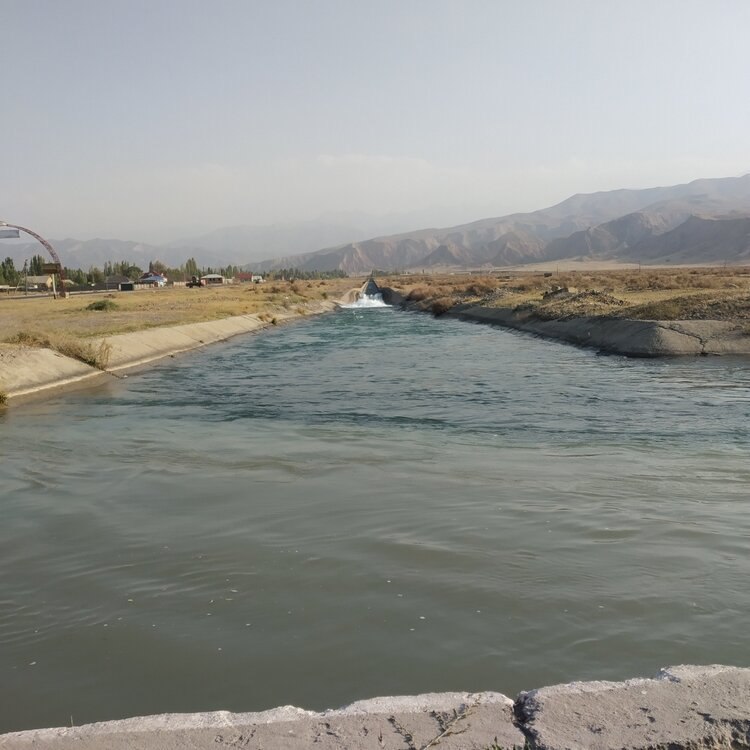
Vinokurov unveiled findings from the EDB’s think tank research, which paint a stark picture: Central Asia’s glaciers have shrunk by 30% over the past 50 years, while water demand continues to rise. Despite this, much of the region’s water infrastructure remains outdated and inefficient, resulting in a loss of 40-55% of available water. Additionally, 10 million people in Central Asia still lack access to safe drinking water. Without targeted intervention, annual water scarcity could reach 5-12 cubic kilometers by 2028.

National Commitments and Regional Coordination

The EDB report emphasized water conservation as a critical pillar in the region’s response to these challenges. Several countries are already pursuing large-scale water-saving initiatives:

  • Kazakhstan plans to expand water-saving irrigation technologies to 150,000 hectares per year by 2030.
  • Uzbekistan has committed to saving 15 billion cubic meters of water.
  • Kyrgyzstan aims to construct 106 new reservoirs to secure water supply.

“Central Asia’s water crisis cannot be solved in isolation,” said Vinokurov. “Our research provides a roadmap for efficiency, investment, and, most importantly, regional cooperation. This is why the water-energy nexus remains a strategic priority for our Bank, both in terms of investments and research.”

Localizing Water Solutions

The EDB, in partnership with the United Nations Industrial Development Organization (UNIDO), recently published a report titled Irrigation Equipment Production in Central Asia: Industrialising the Water Sector, calling for localized production of irrigation equipment to enhance water efficiency and reduce dependency on imports.

Another key publication from the EDB, The Irtysh River Basin: Transboundary Challenges and Practical Solutions, focuses on the Irtysh River basin shared by China, Kazakhstan, and Russia. The report outlines increasing water demand across the basin and proposes measures for managing cross-border water resources through collaborative frameworks.

Uzbekistan Joins the EDB

On April 9, Uzbekistan became the seventh member of the Eurasian Development Bank, joining Armenia, Belarus, Kazakhstan, Kyrgyzstan, Russia, and Tajikistan. The move is expected to provide new avenues for Uzbekistan to modernize its infrastructure, particularly in the transport, energy, and water sectors, and support its broader industrial and agricultural development goals.

Lavrov in Uzbekistan: Criticism, Controversy, and Clashing Narratives

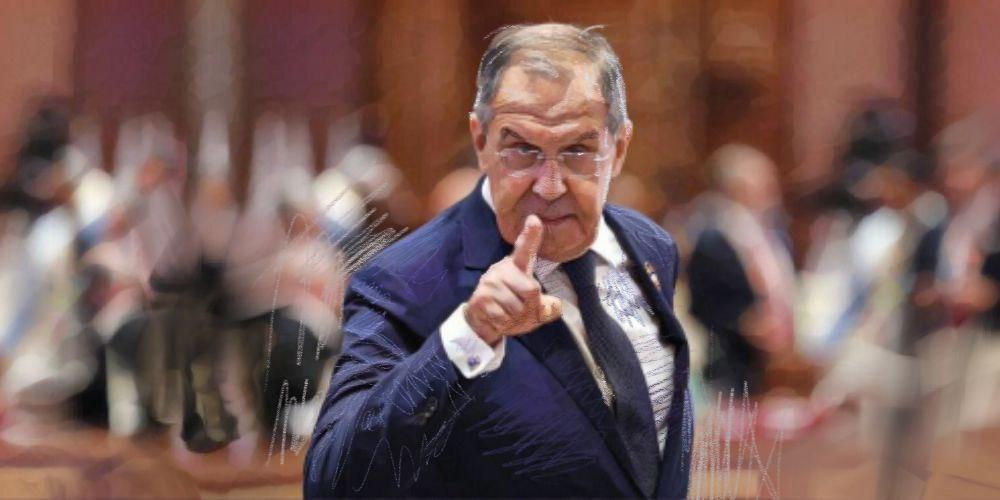
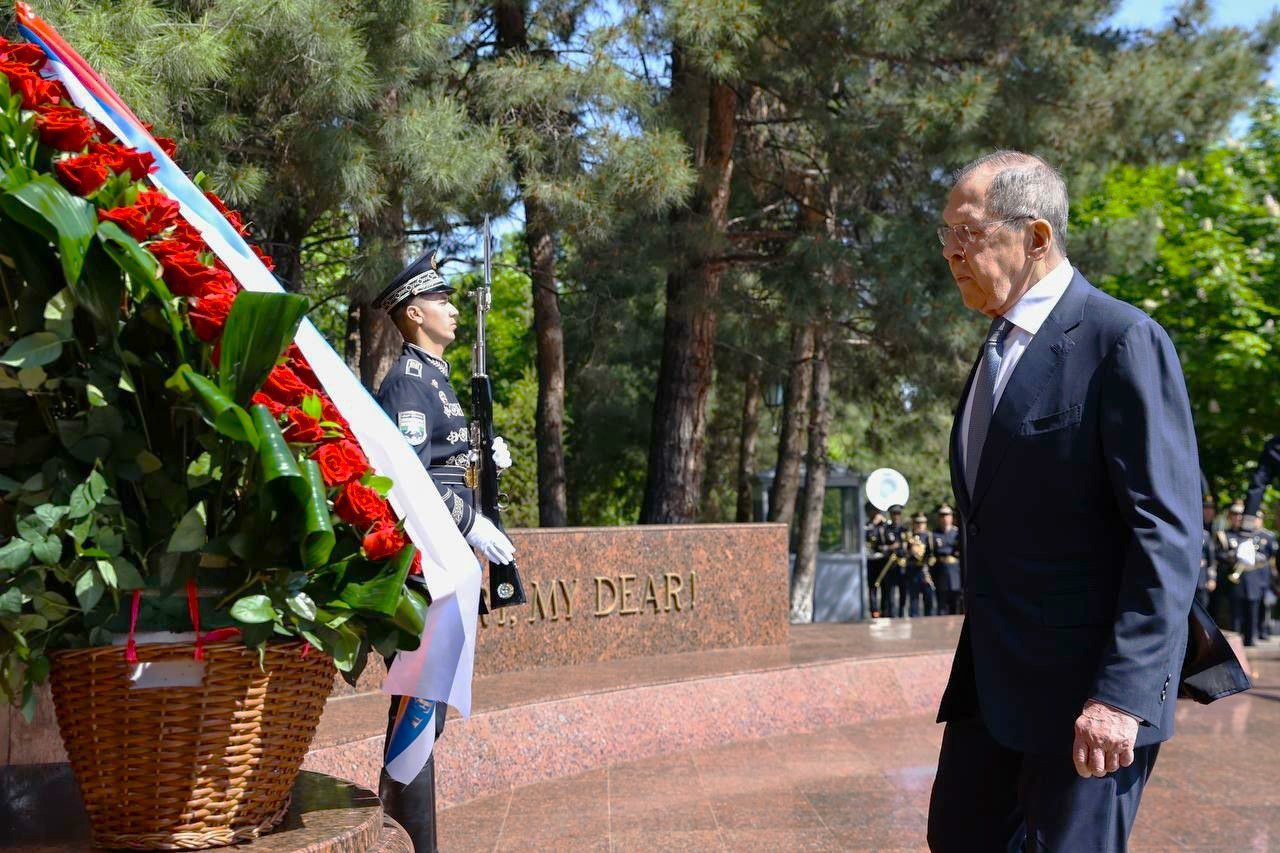
Russian Foreign Minister Sergey Lavrov’s official visit to Uzbekistan this week has triggered significant public and political responses, particularly after remarks he made during a visit to the Motamsaro Ona (Grieving Mother) memorial in Samarkand.

While at the memorial, which honors Uzbek soldiers who died during World War II and features inscriptions in Uzbek and English, Lavrov pointed out the absence of a Russian-language text. “There is an inscription in English, but I didn’t see one in Russian. A mother is the most sacred figure,” Lavrov reportedly told his tour guide, according to TASS. Uzbekistan’s Foreign Minister Bakhtiyor Saidov was present during the exchange.

Photographs released by the Russian Foreign Ministry show Lavrov laying flowers at the site, accompanied by an honor guard.

Lavrov was in Uzbekistan for a two-day official visit. On April 23, he met with President Shavkat Mirziyoyev to discuss bilateral ties and regional cooperation, including trade, energy, and security issues.

Sergey Lavrov lays flowers at the Grieving Mother memorial in Samarkand; image: MFA Russia

Domestic Responses to Lavrov’s Remarks

Lavrov’s observation about the memorial sparked criticism from several Uzbek public figures. Alisher Qodirov, a member of parliament and leader of the Milliy Tiklanish (National Revival) party, stated that “Russian politicians seem to be trying every possible way to portray Uzbekistan as disrespectful to Russian language and culture… Lavrov surely understands that forced respect and invented needs only create the opposite effect.”

Sherzodkhon Qudratkhodja, rector of the University of Journalism and Mass Communications of Uzbekistan, was similarly outspoken. “It is inappropriate for a Foreign Minister from another country to come here and criticize us,” he said. “After all, we are not their colony.”

Qudratkhodja further criticized Russia’s treatment of Uzbek labor migrants. “Why are our migrants in Russia discriminated against? Why do Russian officials remain silent when local authorities, migration services, or police violate their basic human rights?” he asked. “If Mr. Lavrov wants to speak about sacred symbols like mothers, Uzbekistan can remind him that human rights are sacred, too.”

Mutual Recriminations and Educational Policy

Lavrov also addressed Uzbekistan’s engagement with the EU, prompting a further response from Qudratkhodja. “No one has the right to interfere in Uzbekistan’s internal affairs,” he said. “This includes independently determining our level of relations with the European Union. It demonstrates our state’s multi-vector foreign policy.”

Coinciding with Lavrov’s visit, Uzbekistan’s Ministry of Preschool and School Education introduced a new requirement: all graduating students, including those from non-Uzbek-language schools, must now pass an exam in the Uzbek state language, a move widely viewed as part of broader efforts to reinforce national identity.

At a joint press conference, Lavrov emphasized the closeness of Uzbekistan-Russia relations. “You feel this closeness when you are here, not only at the official level but also at the human level,” he said. Foreign Minister, Saidov responded by underscoring Uzbekistan’s balanced diplomacy: “Our country does not compare friends. We are close to all our strategic partners and friendly countries.”

Labor Migration and Energy Cooperation

Lavrov further addressed the challenges surrounding labor migration, asserting that workers from Central Asia should have a strong command of Russian and be aware of Russian laws. “We must prevent the growth of criminal behavior among migrants. Many such cases are happening today,” he said. Nonetheless, Lavrov acknowledged that reducing migrant numbers would not be in Russia’s interest, given the country’s labor needs.

On economic cooperation, Lavrov highlighted plans to double the volume of gas exports from Russia to Uzbekistan through ongoing infrastructure projects. He noted that Russian investments currently account for nearly 18% of Uzbekistan’s total trade turnover. “There are over 115 investment projects worth more than 3.2 trillion rubles ($38.5 billion) underway,” Lavrov stated.

He also cited progress on a flagship bilateral initiative: the construction of Uzbekistan’s first nuclear power plant, with implementation “practically ongoing” since the agreement was signed last year.

Russia, the EU, and Geopolitical Tensions

Lavrov criticized Western efforts to increase their geopolitical influence in Central Asia, particularly through partnerships such as the Central Asia-EU summit. “We are categorically against politicizing cooperation processes and introducing ideological elements associated with Western attempts to dominate,” he said, accusing the EU of funding projects aimed not at mutual development but at accessing sensitive sectors such as customs and border management.

Despite these criticisms, Lavrov stressed that Russia respects the sovereignty of its neighbors. “We will never allow ourselves to interfere in the domestic affairs of other countries,” he claimed, amid ongoing scrutiny over Moscow’s role in the region.

Lavrov also announced that the next Central Asia-Russia summit will take place in October in Dushanbe, coinciding with the broader CIS summit. The event will build on discussions held at the April 11 meeting of regional foreign ministers in Almaty, part of the Central Asia Five plus Russia mechanism.

The first such summit was held in October 2022 in Astana, Kazakhstan.

Uzbekistan and Russia Advance Trans-Afghan Railway Project to Pakistan

Uzbekistan and Russia have taken a significant step toward the practical implementation of the long-envisioned Trans-Afghan railway project, which aims to connect Central Asia to Pakistan via Afghanistan. The transport ministries of both countries, along with Russian Railways and the Uzbek national railway company, Uzbekistan Temir Yollari, have signed documents formalizing the start of the project’s development phase.

According to Russia’s Ministry of Transport, the two countries will jointly develop a feasibility study in 2025, assessing freight traffic forecasts and economic viability. Two potential routes have been proposed:

  • Route 1: Mazar-e-Sharif – Herat – Dilaram – Kandahar (Afghanistan) – Chaman (Pakistan)
  • Route 2: Termez (Uzbekistan) – Naibabad (Afghanistan) – Logar (Afghanistan) – Harlachi (Pakistan)

Further discussions involving Pakistan Railways and an Afghan delegation are scheduled for the Russia-Islamic World Forum in the Russian city of Kazan on May 15-16.

Uzbekistan, which already maintains a direct rail connection to Afghanistan, continues to position itself as a logistics hub for trade between Russia, Central Asia, South Asia, and beyond. In January 2025, Tashkent extended its contract with the Taliban-led government in Afghanistan to operate and maintain the Hairaton to Mazar-e-Sharif railway — a vital segment of the broader China-Kyrgyzstan-Uzbekistan-Afghanistan corridor.

The corridor’s significance is expected to grow upon completion of the China–Kyrgyzstan–Uzbekistan railway. Currently, Central Asia’s rail links to China are limited to routes transiting Kazakhstan.

In a major development on April 17, Russia’s Supreme Court lifted its 2003 ban on the Taliban, having until then designated the group a terrorist organization. The decision, formally allowing Russian state institutions to engage with the Taliban, opens the door to deeper trade and infrastructure cooperation. Russian Deputy Prime Minister Alexei Overchuk stated that this policy shift will facilitate the promotion of Russian exports and the realization of Afghanistan’s transport and logistics potential.

Uzbekistan has pursued a consistent policy of engagement with Afghanistan, emphasizing economic cooperation over isolation. In October 2024, Abdul Ghafar Terawi began his tenure as the head of the Taliban-led Afghan diplomatic mission in Tashkent.

Speaking at the 79th session of the UN General Assembly in September 2024, Uzbek Foreign Minister Bakhtiyor Saidov reaffirmed Uzbekistan’s commitment to regional stability. “Afghanistan is an integral part of Central Asia,” Saidov told the Assembly. “Addressing the Afghan issue is essential for ensuring sustainable development across the region”.

He praised Uzbekistan’s role in implementing the Trans-Afghan railway, which he said would offer landlocked Central Asian economies access to international ports. “This will positively impact the economic development of the entire region,” Saidov noted.

Tajikistan Launches Program to Reintegrate Convicted Extremists into Society

Tajik authorities have launched a state-backed program aimed at reintegrating citizens convicted of extremism and terrorism into peaceful civilian life. The initiative, which will run from 2025 to 2029, seeks to reduce the likelihood of re-engagement with radical movements and support the return of these individuals to society.

New State Initiative: Goals and Budget

According to official documents, the program is set to receive 38.5 million Tajikistani somoni (approximately $3.6 million) in funding. Nearly half of the funds will come from the state budget, with the remainder provided through international grants and extra-budgetary sources.

The initiative includes a comprehensive set of measures: physical and psychological rehabilitation, vocational training, employment support, and involvement in patriotic and cultural activities. These components are designed to assist former prisoners in adjusting to life outside correctional facilities. Upon release, participants will be closely monitored to prevent any return to extremist ideologies.

Implementation and oversight will be managed by local authorities and specialized agencies under the Ministry of Justice, which is tasked with submitting regular progress reports to the government.

Understanding Pathways to Radicalization

The drivers of radicalization in Central Asia are complex and multifaceted. Rustam Azizi, a specialist in countering violent extremism, told Asia-Plus that economic hardship alone does not account for why some individuals are drawn to extremist groups such as ISIS, Ansarullah, or the Taliban.

“Economic difficulty doesn’t automatically lead to radicalization, other negative outcomes like crime or social withdrawal are also possible,” Azizi explained. “Moreover, real-life cases show that not all recruits come from impoverished backgrounds.”

Migration, while often discussed as a risk factor, does not directly cause radicalization, according to Azizi. Rather, it can create an environment where individuals are more exposed to recruitment efforts, particularly among youths aged 18 to 26. Azizi identifies three main categories of individuals most susceptible to radicalization:

1. Identity crisis: Often from secular, modernized, or mixed-background families, these individuals turn to religion as a way to find belonging, purpose, or self-worth. Frequently recent converts or newly observant Muslims, they may express a sentiment such as: “I may not be a good Tajik, but I am a very good Muslim.”

2. Individuals with criminal tendencies: For this group, terrorist organizations offer a platform to continue illicit activities under the cover of religious struggle. Notable examples include Abu Khalid Kulobi (Nusrat Nazarov) and Abu Usama Noraki (Tojiddin Nazarov), both of whom were involved in drug trafficking before joining ISIS.

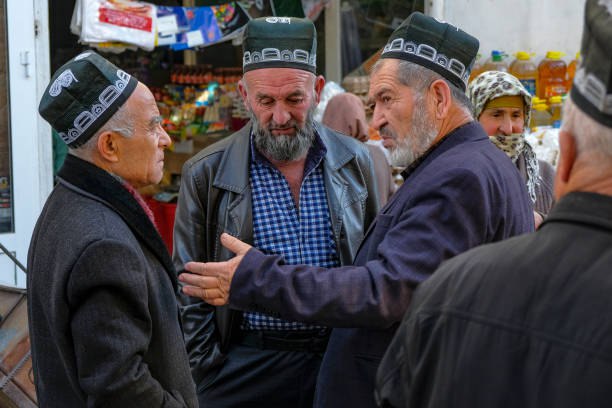
3. Marginalized citizens: Representing the largest group, these individuals often come from remote areas and have limited access to education and economic opportunity. Lacking formal religious training, they are especially susceptible to simplistic, binary religious narratives—such as Muslims versus infidels, halal versus haram, jihad versus martyrdom—and are particularly vulnerable to recruitment.

It is this demographic that the new government program primarily targets, with an emphasis on prevention, education, and structured support after incarceration. Authorities believe these efforts will promote national stability and help curb the threat posed by radical movements.