• KGS/USD = 0.01144 0%
  • KZT/USD = 0.00196 -0%
  • TJS/USD = 0.10899 -0%
  • UZS/USD = 0.00008 -0%
  • TMT/USD = 0.28490 0%
  • KGS/USD = 0.01144 0%
  • KZT/USD = 0.00196 -0%
  • TJS/USD = 0.10899 -0%
  • UZS/USD = 0.00008 -0%
  • TMT/USD = 0.28490 0%
  • KGS/USD = 0.01144 0%
  • KZT/USD = 0.00196 -0%
  • TJS/USD = 0.10899 -0%
  • UZS/USD = 0.00008 -0%
  • TMT/USD = 0.28490 0%
  • KGS/USD = 0.01144 0%
  • KZT/USD = 0.00196 -0%
  • TJS/USD = 0.10899 -0%
  • UZS/USD = 0.00008 -0%
  • TMT/USD = 0.28490 0%
  • KGS/USD = 0.01144 0%
  • KZT/USD = 0.00196 -0%
  • TJS/USD = 0.10899 -0%
  • UZS/USD = 0.00008 -0%
  • TMT/USD = 0.28490 0%
  • KGS/USD = 0.01144 0%
  • KZT/USD = 0.00196 -0%
  • TJS/USD = 0.10899 -0%
  • UZS/USD = 0.00008 -0%
  • TMT/USD = 0.28490 0%
  • KGS/USD = 0.01144 0%
  • KZT/USD = 0.00196 -0%
  • TJS/USD = 0.10899 -0%
  • UZS/USD = 0.00008 -0%
  • TMT/USD = 0.28490 0%
  • KGS/USD = 0.01144 0%
  • KZT/USD = 0.00196 -0%
  • TJS/USD = 0.10899 -0%
  • UZS/USD = 0.00008 -0%
  • TMT/USD = 0.28490 0%
08 December 2025

Rosatom Exits Key Uranium Ventures in Kazakhstan Amid Strategic Shifts

Uranium One Group, a subsidiary of State Atomic Energy Corporation Rosatom. has announced its withdrawal from uranium projects in Kazakhstan. This decision coincides with Kazakhstan’s ongoing selection of operators for a consortium tasked with constructing the country’s first nuclear power plant.

According to Kazatomprom (KAP), Uranium One Group has sold its 49.979% stake in the Zarechnoye joint venture to SNURDC Astana Mining Company Limited. The ultimate beneficiary of the acquiring party is China’s State Nuclear Uranium Resources Development Co., Ltd. Kazatomprom retains its 49.979% stake in the venture.

The Zarechnoye joint venture, operational since its discovery in 1977, extracts uranium from the Zarechnoye deposit in Kazakhstan’s Turkestan region. As of early 2024, the deposit holds approximately 3,500 tons of uranium ore, with mining operations expected to conclude by 2028.

In addition, Uranium One Group is set to divest its 30% stakes in the Khorasan-U and Kyzylkum joint ventures to China Uranium Development Company Limited, a subsidiary of China General Nuclear Power Corporation (CGN). The transaction awaits the completion of closing procedures. Kazatomprom’s share in these ventures remains unchanged, with 50% ownership in Khorasan-U and a 50% indirect interest in Kyzylkum.

Khorasan-U operates in the Zhanakorgan district of the Kyzylorda region, mining uranium from the Khorasan-1 section of the North Khorasan deposit. This deposit contains reserves of approximately 33,000 tons of uranium as of 2024, with mining projected to continue until 2038. Meanwhile, Kyzylkum focuses on processing uranium from Khorasan-U but does not hold subsoil usage rights, restricting its activities to processing.

Kazatomprom has prioritized replenishing its mineral resource base, recently securing four new licenses for uranium exploration. These areas are estimated to contain over 180,000 tons of uranium, which Kazatomprom plans to develop independently.

In November 2023, Kazakhstan’s Ministry of Ecology and Natural Resources reported environmental violations at the Zarechnoye joint venture. Soil samples revealed excessive concentrations of sulfuric acid, prompting authorities to issue directives for remediation.

Kazakh political analyst Daniyar Ashimbayev highlighted that Kazatomprom oversees 14 subsidiaries, including joint ventures with Japan, France, Russia, Kyrgyzstan, and China. These partnerships underscore Kazakhstan’s significant role in the global uranium market.

China and Russia remain the largest importers of Kazakh uranium. From January to October 2023, Kazakhstan exported $2.46 billion worth of uranium, with $922.7 million going to China and $1.2 billion to Russia.

Several nations are vying for inclusion in the consortium that will construct Kazakhstan’s first nuclear power plant. During a state visit to Kazakhstan, Russian President Vladimir Putin emphasized Rosatom’s advanced nuclear technologies. Valentina Matvienko, Speaker of Russia’s Federation Council, underscored Kazakhstan’s interest in Rosatom’s involvement. However, President Kassym-Jomart Tokayev has yet to finalize the decision.

Kazakhstan’s Energy Minister, Almasadam Satkaliyev, has recently visited South Korea, France, and China to explore nuclear energy partnerships. Political analyst Gaziz Abishev affirmed this diplomatic outreach as a strategic effort to secure the most advantageous terms for Kazakhstan, ensuring that competing nations present their best proposals.

Gas Station Explosion in Uzbekistan Kills One Person; Safety Failure Blamed

An explosion and a fire at a gas station in Uzbekistan has killed one person and injured four others. 

The explosion on Tuesday occurred in the city of Fergana “during the discharge of liquefied gas due to a violation of technological processes and non-compliance with technical safety regulations,” the emergency department of the Fergana region said in a statement. 

Firefighters arrived at the scene at 1:47 p.m. and the fire was completely extinguished by 2:12 p.m., the department said. In addition to the casualties, another eight people were under medical supervision, it said. 

Images posted on social media show sheets of flame and thick smoke billowing from the scene. A photo report on the Kun.uz media site showed the station that was gutted by fire and damaged cars. The Qalampir.uz site also posted photos of the fire. 

Fear Returns to Tajikistan’s Konibodom Area

A series of murders in spring had residents in the area around Tajikistan’s northern city of Konibodom on edge for weeks.

Thirteen people were killed between late March and late May, apparently by someone who broke into their homes at night.

The victims ages ranged from young children to elderly people; they were ethnic Tajiks and Kyrgyz (Konibodom is located near the border with Kyrgyzstan), and the crimes happened in different areas around the city.

The murders stopped, and later the Tajik authorities said they had captured the suspects, but on December 9, the nightmare started again with six people being killed, and on December 16, four more people were found dead in their homes.


The Killing Starts Again

On December 9, the bodies of six people were found in the Shurkurgon neighborhood of Konibodom. All six were members of the Nematov family. Thirty-seven-year-old Naimjon was found hanged on a tree in the courtyard of the family’s home. His body showed signs of a struggle. His 33-year-old wife and four children, the youngest only two years old, were all strangled inside the family’s home.

Local authorities and police have not commented on the killings.

On December 16, reports said the bodies of 35-year-old Gaibullo Majidov and his 28-year-old wife Zarnigor were found in their home in Konibodom’s Hisorak neighborhood. Their three children were reportedly unharmed. On the same day in the same neighborhood, the bodies of 70-year-old Oyisha Shokirova and her 44-year-old son Javlon were found.

Reports said all appeared to have died violent deaths, but the exact cause was not given. Police have also not commented on these murders.

Prior to these latest killings, it appeared the police had caught at least some of the people responsible for a wave of murders in the spring that had local residents talking about “men in black” who prowled the streets in the middle of the night.


The Authorities’ Version

On July 31, Konibodom Mayor Abdusalom Tukhtasunzoda said a suspect had been caught for the May 28-29 killings of six people in the village of Sanjidzor, on the outskirts of Konibodom. Tukhtasunzoda did not give any details about the suspect or the motive, except to say the person had been detained the week before.

The Konibodom mayor said the murders in May were not connected to the earlier killings of five members of the Sharipov family in March, or to Muzaffar Urmonov and his wife Inoyat Urmanova in April. Tukhtasunzoda also dismissed the tales being told of men dressed in black clothing and masks being responsible for any of the murders.

“There were no people ‘in black’ in the city of Konibodom,” Tukhtasunzoda said, “The video, which is distributed on social networks, was not filmed in Konibodom. Such footage is being circulated to frighten people.”

On August 8, First Deputy Interior Minister Abdurahmon Alamshozoda told a press conference the was “nothing sensational” about the murders in Konibodom the previous spring. Alamshozoda said the incidents in March and April were the result of family quarrels, that suspects had already been arrested, and the killings in May were still being investigated.

Alamshozoda said he could not reveal any more information since the investigations into all the killings were still ongoing.

It seemed clear from Alamshozoda’s and Tukhtasunzoda’s comments that authorities considered the crimes solved.

At the end of November, 42-year-old Marat Sattorov was convicted of killing Mahbuba Ahmedova and her two children, and the murders of Zulho Ibragimova, her brother and brother’s wife in the village of Sanjidzor at the end of May.

Sattorov was sentenced to life imprisonment.

On December 12, 68-year-old Sharifjon Ashurov was convicted of the killing of Muzaffar Urmonov and his wife in April, and was sentenced to 20 years in prison.

In both cases, relatives of the defendants and the victims expressed doubts that the authorities had caught the right people. Sharifjon Ahsurov’s family claims he was tortured and continually proclaimed his innocence during the trial.


Murderers Still on the Loose?

These latest six murders show that either the authorities have not caught the people responsible, or all the people responsible, or there is a copycat killer or killers now on the loose.

What facts are known show similarities between the killings in spring and those just committed.

When the first murders happened in March, police initially believed the 65-year-old head of the Sharipov family had killed his wife, daughter-in-law, and two grandchildren, then hanged himself. Later police determined the man was hanged by the killer, who tried to make it look like a suicide.

In the murders on December 9, Naimjon Nematov was found hanged.

Most of the victims of the series of killings in spring were strangled, which also appears to be how most of the victims on December 8-9 were killed, whilst the cause of deaths in the December 16 incident have not been made public.

Authorities seem anxious to resolve these murders, but their explanations do not add up.

At least 23 people in the Konibodom area have been murdered in 2024, a huge number for one area in such a short period and difficult to ascribe to domestic quarrels. And despite two people being convicted for the March-May killings, ten more murders were just committed in the same area.

Activist in Exile: Tajikistan Pressures Family Over Political Dissent

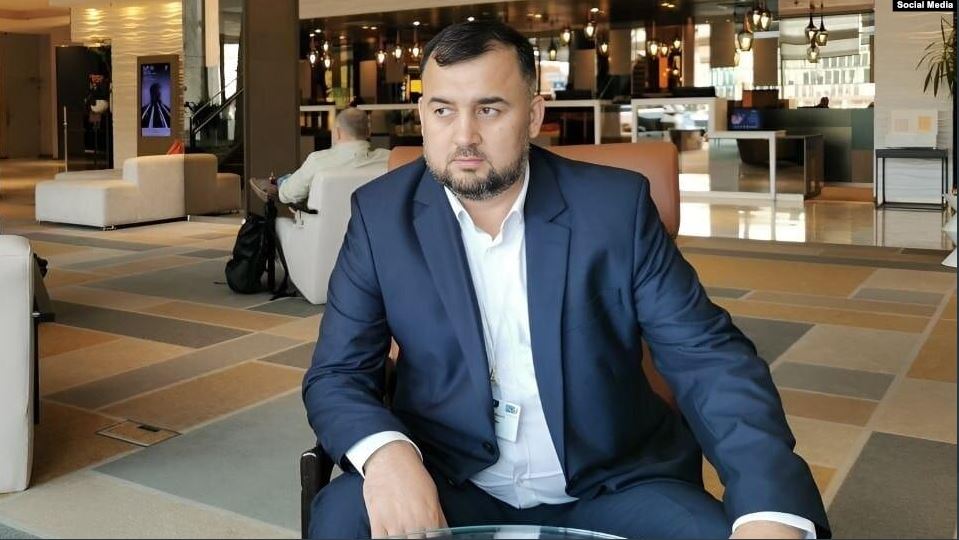
Mahmadsobir Abdukakhor, an activist associated with the banned Group 24 in Tajikistan, has accused law enforcement agencies in the Rasht District of pressuring his family. According to Abdukahkhor, authorities are demanding that his relatives persuade him to renounce his political activities and return to Tajikistan.

“They came to my parents and brother, demanding that they convince me to return and ask for forgiveness from the authorities. But my parents are not responsible for my actions,” Abdukahkhor told Radio Ozodi on December 16.

Abdukahkhor stated that such tactics are not new but reaffirmed that he would not stop his political activities or “repent,” as he does not trust the authorities’ assurances.

“If I go back, I will either be killed like Umarali Kuwwatov or arrested like Sukhrob Zafar,” he said, referring to other opposition figures.

Attempts by Radio Ozodi to obtain comments from Rasht District law enforcement agencies were unsuccessful.

Tajik authorities have placed Mahmadsobir Abdukahkhor and other members of Group 24 — a political movement recognized as an extremist organization and banned in the country — on a wanted list. Abdukahkhor initially moved to Russia in 2012, where he ran a business and became involved in the movement before relocating to Europe.

In 2014, Tajikistan amended its Criminal Code, allowing individuals accused of extremism to be exonerated if they return and “sincerely repent.” President Emomali Rahmon instructed law enforcement agencies to facilitate the return of such citizens. However, human rights activists claim that despite promises of amnesty, some returnees — including former members of ISIS and the Islamic Renaissance Party of Tajikistan (IRP) — were subsequently arrested and imprisoned.

Uzbekistan’s Economic Transformation and Future Goals Take Center Stage

Uzbekistan’s economic progress and future ambitions are in focus as the Indian magazine Business Central Asia dedicates its latest issue to the country’s development. Highlighting key points from President Shavkat Mirziyoyev’s address to the Legislative Chamber of the Oliy Majlis, the feature showcases Uzbekistan’s achievements and ambitious goals for the years ahead.

The article highlights Uzbekistan’s remarkable economic transformation. Since the early 2000s, the country’s economy has doubled, surpassing the $100 billion mark. By 2024, per capita income is expected to reach $3,000, while exports have grown to exceed $25 billion for the first time. Gold and foreign exchange reserves have also seen substantial growth, surpassing $40 billion.

Looking to the future, the Uzbekistan-2030 strategy outlines ambitious targets to further accelerate economic growth. The plan envisions increasing GDP to $160 billion, with a projected $110 billion milestone this year. If current growth rates are sustained, Uzbekistan’s economy could reach $200 billion by 2030, significantly improving living standards and the overall quality of life for its citizens.

Ensuring macroeconomic stability is a key priority in the government’s roadmap. Over the next five years, Uzbekistan aims to sustain annual growth of 6-7%, expand the private sector’s share of the economy to 85%, and launch large-scale public-private partnership projects.

The feature also emphasizes Uzbekistan’s long-term economic resilience. According to the World Bank, the country is poised to rank among the top three fastest-growing economies in Europe and Central Asia in 2024, further validating its development strategy.

Uzbekistan’s leadership remains committed to maintaining growth momentum while addressing structural reforms. With a strong focus on sustainable development, the government’s policies aim to enhance economic opportunities and ensure inclusive growth for all segments of the population.

Turkmenistan and U.S. Representatives Explore Prospects for Economic Partnership

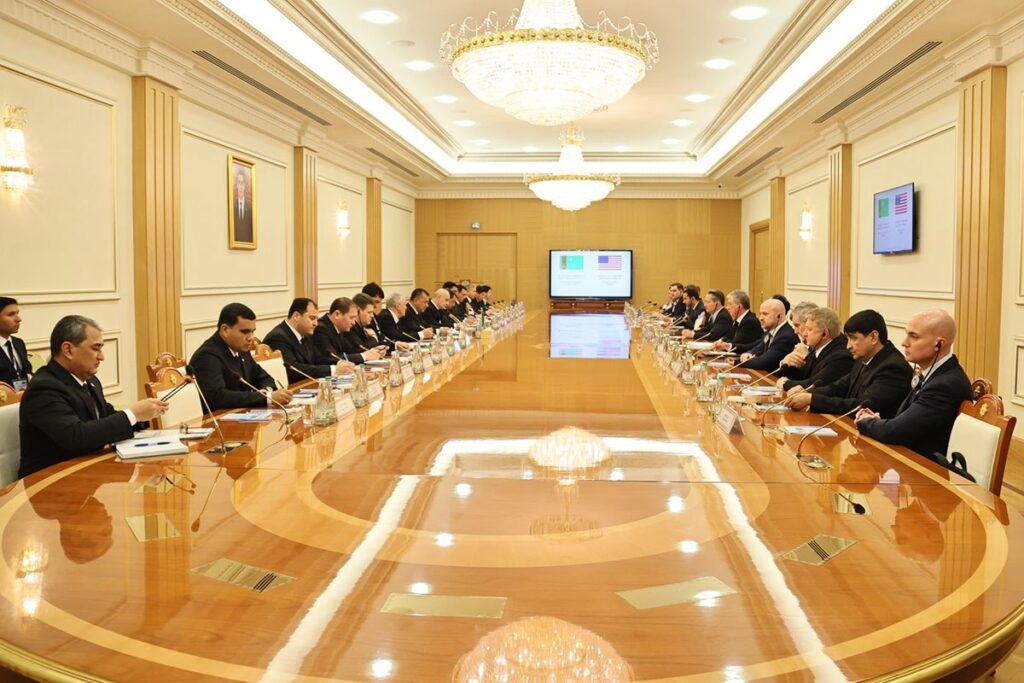
A Turkmen-American business forum was held in Ashgabat to discuss opportunities for expanding economic cooperation between Turkmenistan and the United States. The event brought together a delegation of American business leaders led by Eric Stewart, Executive Director of the Turkmen-American Business Council.

In their remarks, representatives from both sides emphasized the friendly and cooperative nature of Turkmen-American relations, reaffirming their commitment to deepening ties based on mutual benefit. Turkmenistan, focused on economic diversification and the adoption of advanced technologies, expressed readiness to support U.S. companies in establishing and expanding operations in the Turkmen market. It was highlighted that Turkmenistan offers favorable conditions for investors, including legal and organizational mechanisms to facilitate business activities.

The U.S. delegation underscored the strong interest of leading American companies in the Turkmen market and their willingness to contribute to strategic programs aimed at regional development. Companies such as John Deere, Case, General Electric, Boeing, and others are already operating successfully in key sectors of the Turkmen economy.

Discussions during the forum centered on priority areas of collaboration, including:

  • Industry, agriculture, and water resources: Supplies of advanced equipment to boost productivity.
  • Fuel and energy sector: Joint projects to advance energy infrastructure.
  • Transportation and construction: Enhancing connectivity and infrastructure development.
  • Innovative technologies, healthcare, and ecology: Promoting sustainable solutions and technological progress.

Special attention was given to the role of the Turkmen-American Business Council as a key platform for fostering partnerships between public and private sectors in both countries.

Meetings between Turkmen ministries and agencies and representatives of the U.S. business community took place as part of the forum. Discussions focused on opportunities to increase bilateral trade, expand investment activities, and enhance cooperation in high-tech industries. Participants outlined practical steps for implementing joint projects to further strengthen economic ties.

Turkmen-American cooperation continues to develop across multiple sectors. Notable recent engagements include:

  • February 2024: The U.S. State Department hosted talks with a Turkmen delegation led by U.S. Deputy Assistant Secretary of State for Central Asia, John Pommersheim, covering political, economic, and cultural cooperation.
  • April 2024: Political consultations in Ashgabat reaffirmed mutual commitments to enhancing bilateral ties.
  • August 2024: Turkmen Deputy Foreign Minister Ahmed Gurbanov met with U.S. Ambassador Elizabeth Rood to discuss future collaboration prospects.

Both sides highlighted the importance of regular political consultations and multilateral platforms such as the C5+1 format for coordinating joint actions and fostering regional development.