• KGS/USD = 0.01144 0%
  • KZT/USD = 0.00196 -0%
  • TJS/USD = 0.10899 -0%
  • UZS/USD = 0.00008 -0%
  • TMT/USD = 0.28490 0%
  • KGS/USD = 0.01144 0%
  • KZT/USD = 0.00196 -0%
  • TJS/USD = 0.10899 -0%
  • UZS/USD = 0.00008 -0%
  • TMT/USD = 0.28490 0%
  • KGS/USD = 0.01144 0%
  • KZT/USD = 0.00196 -0%
  • TJS/USD = 0.10899 -0%
  • UZS/USD = 0.00008 -0%
  • TMT/USD = 0.28490 0%
  • KGS/USD = 0.01144 0%
  • KZT/USD = 0.00196 -0%
  • TJS/USD = 0.10899 -0%
  • UZS/USD = 0.00008 -0%
  • TMT/USD = 0.28490 0%
  • KGS/USD = 0.01144 0%
  • KZT/USD = 0.00196 -0%
  • TJS/USD = 0.10899 -0%
  • UZS/USD = 0.00008 -0%
  • TMT/USD = 0.28490 0%
  • KGS/USD = 0.01144 0%
  • KZT/USD = 0.00196 -0%
  • TJS/USD = 0.10899 -0%
  • UZS/USD = 0.00008 -0%
  • TMT/USD = 0.28490 0%
  • KGS/USD = 0.01144 0%
  • KZT/USD = 0.00196 -0%
  • TJS/USD = 0.10899 -0%
  • UZS/USD = 0.00008 -0%
  • TMT/USD = 0.28490 0%
  • KGS/USD = 0.01144 0%
  • KZT/USD = 0.00196 -0%
  • TJS/USD = 0.10899 -0%
  • UZS/USD = 0.00008 -0%
  • TMT/USD = 0.28490 0%
08 December 2025

Kazakhstan Expands Grain Exports to Europe and Beyond

Kazakhstan is entering new grain export markets, including the United Kingdom, Norway, and Portugal, as part of a broader push to diversify its agricultural trade, Agriculture Minister Aidarbek Saparov has announced.

Saparov reported that the 2025 harvest has been one of the strongest in recent years, with 27.1 million tons of grain crops harvested from 16 million hectares. The average yield reached 17 centners per hectare, and wheat production totaled 20.3 million tons, an increase of 500,000 tons compared to last year.

“We plan to maintain the level of wheat exports. This year, we have begun supplying markets that have not traditionally received Kazakh grain, Belgium, Portugal, Poland, Norway, the United Kingdom, Vietnam, the United Arab Emirates, as well as Morocco, Algeria, and Egypt in North Africa. Additionally, we have resumed shipments to Iran, Azerbaijan, Armenia, and Georgia,” Saparov said.

Kazakhstan exported 13.4 million tons of grain during the last marketing year (September 1, 2024, August 31, 2025), a 47% increase compared to the 2023-2024 season. As of the latest data, 2.2 million tons of grain from the new harvest have already been exported, marking a 21% year-on-year increase.

New Investments in Deep Grain Processing

To support long-term export potential and value-added production, Kazakhstan is implementing five major investment projects aimed at deep grain processing. According to the Ministry of Agriculture, these initiatives will enable the additional processing of approximately 2.5 million tons of grain products annually.

Among the most significant is a $1.5 billion investment by China’s Hopefull Grain & Oil Group to build a deep grain processing plant in the Akmola region. The project was discussed by Deputy Minister Yermek Kenzhehanuly and Hopefull’s local project manager, Yao Yao.

The project will be rolled out in two phases. The first phase includes constructing a combined heat and power plant to generate renewable energy. The second phase will launch a high-tech facility to produce citric acid, glucose-fructose syrups, bioethanol, and protein concentrates. The company is also considering establishing an industrial park equipped with transport, energy, and engineering infrastructure.

Focus on the Chinese Market

As previously reported by The Times of Central Asia, Kazakhstan also aims to increase grain exports to China to two million tons per year. This expansion into Asia complements the country’s growing presence in European and Middle Eastern markets.

Afghanistan Restores Power Imports from Uzbekistan and Tajikistan After Earthquake

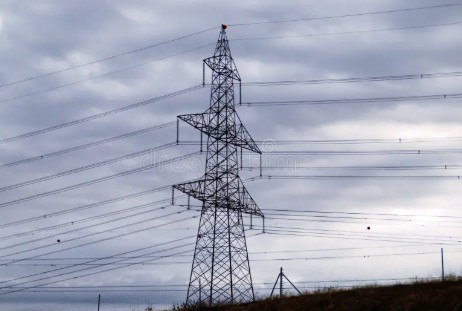
A powerful earthquake that struck northern Afghanistan on November 2 caused significant destruction and disrupted electricity imports from neighboring Uzbekistan and Tajikistan, according to Da Afghanistan Breshna Sherkat (DABS), the country’s national power company.

The earthquake damaged two major transmission lines, Nayibabad to Samangan and Kholm to Pul-e-Khumri, severing power supplies from Uzbekistan to several provinces, including Kabul, Baghlan, Parwan, Panjshir, Kapisa, Logar, Paktia, Ghazni, and Maidan Wardak. Electricity imported from Tajikistan to Kunduz was also interrupted, leaving large swathes of northern Afghanistan without power. Technical teams were immediately deployed to assess the damage and begin restoration work.

The U.S. Geological Survey reported that the 6.3-magnitude quake struck at a depth of 28 kilometers near Mazar-i-Sharif. Tremors were felt across multiple provinces, including Samangan, Balkh, and the capital, Kabul. The cities of Aybak, Mazar-i-Sharif, Maymana, Takhar, Kunduz, and Sar-e-Pul experienced the strongest shocks.

According to CNN, at least 27 people were killed and more than 950 injured, citing Dr. Sharafat Zaman Amar, spokesperson for Afghanistan’s Ministry of Public Health. The quake also damaged one of the country’s historic mosques in the north.

DABS confirmed that electricity imports have now been fully restored, including the damaged 220-kilovolt transmission line from Tajikistan. On November 3, the company’s spokesperson told TOLONews that imports from both Uzbekistan and Tajikistan had been interrupted due to the earthquake. DABS representative Mohammad Sadiq Haqparast said, “Our technical teams are working diligently to restore both transmission lines as quickly as possible.”

Following the disruption, Kabul residents urged the government to accelerate repairs, emphasizing that stable and reliable access to electricity remains a critical concern, particularly in the capital.

Afghanistan is heavily reliant on imported electricity, receiving over 720 megawatts from Uzbekistan, Tajikistan, Turkmenistan, and Iran. These imports cost the country between $250 million and $280 million annually.

Separately, on the sidelines of the International Conference and Exhibition on Energy, Construction Affairs, Industry and Development of Chemicals of Turkmenistan-2025, DABS General Director Dr. Abdul Bari Omar met with Turkmen Deputy Cabinet Minister Batur Amanov. Their discussions focused on key regional energy projects, including the 500 kV transmission line, the TAPI gas pipeline, and the electrification of Bala Murghab district. The meeting underscored the importance of regional cooperation in bolstering Afghanistan’s energy infrastructure.

Kazakhstan Courts Global Investment with Critical Minerals and Green Energy Push

Since gaining independence, Kazakhstan has established itself as a reliable global supplier of raw materials. Today, the country’s economic structure is evolving as it positions itself as a high-added-value hub for industrial production. These developments are closely tied to Kazakhstan’s transition to a green economy and its role in global supply chains for critical minerals.

Creating a Favorable Investment Climate

Kazakhstan has taken significant steps to create a transparent, predictable investment environment and enhance its business competitiveness. Among these measures is the introduction of investment agreements that guarantee legislative stability for up to 25 years for large projects exceeding $60 million. The legal framework has also undergone reforms, procurement procedures have been modernized, and judicial reforms have created separate cassation courts and redefined the Supreme Court’s role.

These reforms have drawn the attention of international investors and rating agencies. In 2024, Moody’s upgraded Kazakhstan’s long-term credit rating to the highest level in the country’s history, citing macroeconomic stability and policy predictability. In the first nine months of 2025, GDP grew by 6.3%, while investment in fixed capital rose by 13.5% to reach $26 billion.

Moody’s analysts also highlighted Kazakhstan’s stronger economic outlook compared to other hydrocarbon-exporting nations, attributing this to ongoing reforms that enhance the country’s competitiveness. One key driver is the rapid development of the transport and logistics sector, particularly through the Trans-Caspian International Trade Route, also known as the Middle Corridor.

This corridor is attracting foreign investors across a range of non-oil sectors, including automotive, pharmaceuticals, food production, and construction materials.

Kazakhstan is also home to the Astana International Financial Centre (AIFC), a platform that operates under English common law. The AIFC offers tax exemptions, simplified labor regulations, and digital arbitration. It currently ranks first in Eastern Europe and Central Asia in the Global Financial Centres Index. More than 4,200 companies from 80 countries, including over 60 American firms, are registered with the AIFC.

Strategic Projects Take Shape

Kazakhstan’s diversification strategy and focus on critical minerals were prominently showcased during the 8th Kazakhstan Global Investment Roundtable (KGIR-2025), held in Astana in October. The event attracted over 1,000 participants from 55 countries, resulting in the signing of 49 agreements worth $7.5 billion.

A key session focused on critical minerals and the energy transition, signaling the country’s long-term growth trajectory. Among the highlights was a meeting between the government and Mohammad Vahid Sheikhzadeh Najjar, CEO of FakoorSanat Tehran Engineering Co., to explore cooperation in mining and metallurgy, including new technologies for processing mineral raw materials.

Sheikhzadeh Najjar noted that the global market for critical minerals, currently valued at $328 billion, is expected to double by 2032. He emphasized that Kazakhstan is well-positioned to lead this growth. Environmental initiatives, such as a project to process 55 billion tons of mining waste, offer additional economic potential.

Meanwhile, Chinese investor Zhang Jintao, founder of Chengdu Sepmem Energy, proposed a long-term plan to develop an LNG cluster in Kazakhstan. The project envisions a nationwide network of LNG plants and supporting infrastructure to reduce emissions and enhance energy access during the green transition. Chengdu Sepmem Energy already operates 12 LNG facilities in China and has completed over 500 projects.

Zhang highlighted China’s success in reducing winter air pollution through LNG, expressing confidence that Kazakhstan could achieve similar outcomes. The plan includes scaling up LNG use in freight and public transportation to support Kazakhstan’s carbon-neutrality goals.

Experts underscore that Kazakhstan’s natural gas reserves and strategic location between Asia and Europe make it an ideal base for LNG development. These efforts also support the expansion of the Middle Corridor, which connects China and Europe via the Caspian Sea and serves as a vital route for energy, minerals, and goods.

Competitive Edge in Critical Minerals

Global markets are shifting toward critical minerals, which are essential for producing electric vehicles, wind turbines, energy storage systems, and more. Demand is projected to increase tenfold in the coming years. For example, lithium demand could rise 42-fold by 2040, while copper, nickel, and cobalt demand could also double by 2035. By 2040, demand for minerals used in electric vehicles and energy storage systems could rise more than 30-fold.

Kazakhstan has designated the development of its critical minerals industry as a strategic priority. This is seen as the nation’s key contribution to the global clean energy transition.

Several national initiatives are already underway. These include the 2023-2027 Concept for the Development of the Geological Industry and the 2024-2028 Comprehensive Plan for the Development of the Rare and Rare Earth Metals Industry. A notable achievement under these programs was the opening of Kazakhstan’s first tungsten concentrate processing plant in November 2024. The United States is backing a private American bid by Cove Kaz Capital Group LLC to develop Kazakhstan’s major tungsten deposits at Upper Kairakty and North Katpar.

The country holds nearly 4% of the global copper market and ranks among the top 20 nations for nickel reserves, with 1.5 million tons, roughly 2% of global supply. In March 2024, a new lithium deposit valued at $15.7 billion was discovered in Eastern Kazakhstan by the Korea Institute of Geoscience and Mineral Resources.

The United States: Kazakhstan’s Leading Partner in Central Asia

U.S.-Kazakhstan cooperation continues to deepen. Since independence, U.S. companies have invested over $60 billion in Kazakhstan, 13% of the country’s total foreign direct investment. More than 630 American firms operate in Kazakhstan, drawn by its stability, market size, and access to regional supply chains.

In 2024, bilateral trade reached $4.2 billion, nearly double the amount five years prior. Kazakhstan accounted for 96.7% of all Central Asian exports to the U.S. that year, totaling $2.4 billion.

Kazakhstan’s green and industrial transitions have not gone unnoticed. The country remains committed to reform, economic diversification, and maintaining an investor-friendly environment, reinforcing its role as a strategic partner in a rapidly changing global landscape.

TCA Interview: Author Judith Lindbergh on Her Novel “Akmaral”, Set on the Kazakh Steppe

In recent years, many international writers have written books about Kazakhstan. One of these is the American author Judith Lindbergh, whose latest historical novel, Akmaral, is set on the Kazakh steppe.

TCA: The story of Akmaral is related to Central Asia, and particularly, Kazakhstan…

JL: Absolutely correct. Akmaral is about a nomadic woman warrior on the Central Asian steppes in the 5th century BCE. It’s based on archaeology that many of your readers are likely familiar with: the Siberian Ice Maiden discovered in Tuva and the Issyk Golden Warrior of Kazakhstan.

These two burials were just the beginning of my research, which also included the writings of the Greek historian Herodotus about the Amazon warrior women who fought in the Trojan War. I delved deeply into the history, landscape, and cultures of Central Asia, both ancient and modern. In writing my novel, I worked hard to understand how people lived, and still live, on the steppes: their traditional nomadic ways of herding and hunting, and especially how this ancient, often-forgotten culture fits into the broader story of human civilization.

Judith Lindbergh

TCA: How did the idea to write such a novel come about?

JL: It all started with a documentary about the Siberian Ice Maiden. I love ancient history and archaeology, especially when they reveal truths about women’s lives. The Ice Maiden burial was fascinating. Her body was so well preserved that I could almost imagine her standing before me. I wanted to understand how she might have lived, and to uncover the mystery of why she was buried in such an isolated place.

As I continued my research, I realized that she was not the only important female burial from that era in Central Asia. There were, in fact, countless others. Many women who had died of war wounds were buried with weapons. I began combining these burials in my imagination to create my main character, Akmaral, which I learned means “White Deer.” The name felt connected to the Siberian Ice Maiden’s famous tattoo, which became an important spiritual symbol in my novel.

I used extensive research to try to accurately represent what life might have been like for these ancient women. In historical fiction, as in history itself, women rarely play significant roles in public life. Yet these artifacts and burials show us that many nomadic women once held important military and spiritual positions.


There are almost no works written in English about nomadic peoples, including the real life and history of the Kazakhs. In fact, nomads were people who lived freely and truly in their time. And now we are not able to glorify their values, their way of life. What do you think about this?

You’re right that there’s very little written in the West about the Sarmatians, or really much about Central Asia at all. I wanted to bring my fascination with this vital, “forgotten” part of history to new readers.

In many ways, it can be hard for modern readers to understand and appreciate the sophistication and achievements of ancient peoples, nomads in particular. But to me, the idea that the land itself is home, and that nature provides everything we need, is both a challenge and an inspiration. In the West, and in modern life more broadly, we have grown so distant from the earth. What I saw in my characters, and in ancient nomadism, is a profoundly different relationship with the land that gave us life. I wanted to honor and portray that connection through my story.

TCA: Where did you get the details for this work?

JL: Along with countless archaeological and historical sources, I drew on many nomadic cultural traditions still practiced and honored in Kazakhstan, Mongolia, and Tuva. I tried to create as authentic a depiction of nomadic culture and traditions as possible, even though the story takes place in the distant past.

I deeply admire the resilience and self-sufficiency required to live a nomadic life, both among contemporary people who still live part of the year on the steppes and the ancient peoples who survived through herding and horsemanship. I wanted my characters to be deeply connected to nature and to understand the necessity of respecting the land.

While I’m fairly certain that I don’t have the stamina or fortitude to live that way myself, through my novel and its characters, I feel I’ve absorbed at least a touch of their strength and wisdom.

TCA: Did you have any difficulty in depicting the image of a female warrior from the Sarmatian era?

JL: The hardest thing for me was imagining being a woman who could willingly kill. I’m not a violent person myself, and I have no real hunting skills. Although I did practice archery and horseback riding to get a sense of what my characters’ daily life might have been like. But I can’t imagine doing many of the things that Akmaral had to do.

She had to hunt wild animals to survive, which was frightening enough. But she also had to protect her people from enemy attacks, facing close combat and death on a regular basis. Akmaral lived in a different time and place, and the values were different. Survival on the steppes, especially in ancient times, meant guarding oneself against countless dangers: wild beasts, hunger, deprivation, drought, heat, cold, and attacks from rival tribes.

Whenever I wrote a battle scene, I would prepare myself by listening to traditional Central Asian throat singing or other music played in deep, minor tones. It helped me face the fear and gravity of battle and death. I never wanted my characters to kill frivolously.

TCA: How do readers in America and other countries respond to your work?

JL: I have been thrilled at the reception to my novel so far, both by well-known American authors and readers in the USA and around the globe. Many readers are fascinated and surprised at the rich history of Central Asia, and by the realization that these women warriors aren’t made-up fantasy characters like in Game of Thrones. My characters are based on real archaeology that proves that women were once powerful warriors and leaders in a real time and place.

TCA: Have there been any proposals to translate the novel “Akmaral” into Kazakh?

JL: I’ve had a lot of interest and many requests for translations, including several conversations with Kazakh natives who either live in the U.S. or read English. I’m so grateful to hear that my research and imagination hold up against their real-life experiences and knowledge of the landscapes and cultures I tried to bring to life. But so far, no translation has been made.

I would love for a publisher in Kazakhstan to reach out to me or my publisher. The people who would truly understand my novel with all their hearts live in your country and region.

TCA: What do you know about Kazakh literature?

JL: A little. I’ve read one or two novels in translation, thanks to recommendations from Kazakh readers who reached out to me. Right now, I’m reading “Ulpan Is Her Name” by Gabit Musirepov, thanks to one of them. I know there is much more literature that I can’t yet access because I don’t read Kazakh, but I look forward to discovering more works in translation.

Sharing literature across languages is a powerful way to create compassion, understanding, and appreciation for our different cultures and for our shared humanity.

What’s Holding Back Kazakhstan’s Air Transport Market?

Kazakhstan’s aviation industry has posted steady growth in recent years. Over the past four years, passenger and cargo traffic have risen by more than 36% and 23% respectively, with an actively expanding route network.

The state’s aviation development strategy prioritizes infrastructure upgrades, improved safety standards, and expanded international cooperation. Yet, despite these advances, several systemic barriers continue to prevent Kazakhstan from realizing its potential as a Central Asian aviation hub.

These challenges were discussed at the New Silk Way International Transport and Logistics Business Forum and the annual TransLogistica Kazakhstan 2025 exhibition. Experts agree that Kazakhstan’s air transport market ranks among the fastest-growing globally, driven in part by geopolitical shifts that have boosted the volume of Chinese and European transit flights through its airspace.

Industry Trends and Infrastructure Expansion

A major airport modernization effort is underway, targeting key cities such as Astana, Almaty, Aktobe, Shymkent, and Karaganda. Renovations have already been completed in Aktau, Pavlodar, and Balkhash, while new terminals have opened in Almaty, Kyzylorda, and Shymkent. New airports are under construction in Kenderli, Zaisan, Katon-Karagai, and Arkalyk. Total investment in infrastructure has exceeded $2.9 billion.

According to the Civil Aviation Committee, in 2025, Kazakh airlines transported a record 15 million passengers and 171,000 tons of cargo. Transit flights accounted for 414 million aircraft-kilometers. Deputy Chairman Sarsen Zharylgasov has stated that the country now operates 56 domestic routes, up 9% year-on-year, and maintains air links with 30 countries.

International Routes and Regional Competition

In 2025, 33 new international routes were launched, connecting Kazakhstan to cities including Budapest, Munich, Cairo, Shanghai, Phuket, and Delhi. Currently, 140 international routes operate under the Open Skies policy, which has applied to 15 airports since 2019.

Looking ahead to 2026, new routes are planned to major global hubs, such as Singapore, Tokyo, Rome, Vienna, and New York. The long-anticipated direct U.S. flight hinges on a successful completion of the FAA’s CAT-1 audit, following Kazakhstan’s passage of the preliminary technical assessment in August 2024. The 2022 air transport agreement between the U.S. and Kazakhstan remains a key step toward this goal.

Air Astana plans to operate the route using a Boeing 787 Dreamliner, though delivery has been delayed to Q2 2026 due to production backlogs.

Meanwhile, Uzbekistan is ramping up its own ambitions. During President Shavkat Mirziyoyev’s 2025 visit to the US, Tashkent signed a deal with Boeing for 22 Dreamliners. Analysts suggest this could intensify regional competition and enhance Uzbekistan’s appeal as a transit hub.

Airport Bottlenecks and Tariff Issues

Despite progress in large cities, many regional airports remain hampered by chronic underinvestment and outdated tariff policies. According to Zharylgasov, tariffs at several airports have not been updated in over two decades.

“We are working to completely deregulate tariffs, but the Agency for the Protection and Development of Competition does not yet support us,” he noted.

Eliminating state control over airport tariffs could introduce market-based pricing, attract investors, and improve profitability, particularly for regional hubs.

Digitalization Drives Efficiency

Digital transformation is another key priority. Kazakhstan is implementing the E-Freight, API/PNR, and E-Doc-Airport systems and preparing to launch Face ID and digital passenger insurance programs.

The E-Freight system, now active at 18 airports and 20 airlines, has replaced 20 paper documents with digital alternatives, slashing cargo processing times from one day to one hour.

In 2025, Almaty Airport handled 850,000 passengers via its new Q-Gate automated passport control system, eliminating the need for manual inspection. Similar systems are set to be deployed in Astana, Aktobe, Aktau, Atyrau, and Shymkent by late 2026.

Cargo Hub Ambitions

Kazakhstan’s airspace lies along one of the busiest cargo corridors between Asia and Europe. More than 200 aircraft cross its territory daily, yet the existing infrastructure remains insufficient.

Even Almaty, the country’s largest airport, can only handle three to four aircraft at once. Astana and Karaganda manage just one to two.

“Every hour of aircraft downtime means added costs for both carriers and customers,” said Pavel Chistyakov, partner at IEC International.

Building robust hub infrastructure and expanding cargo capabilities is critical for maximizing Kazakhstan’s multimodal logistics potential. Chistyakov emphasized the need to identify which flights could make technical stops to generate new revenue streams.

Establishing a National Cargo Carrier

Kazakhstan plans to launch its first national cargo airline by 2026, based on KTZ Express, a subsidiary of Kazakhstan Temir Zholy (KTZ).

Gamir Zhumatayev, director of KTZ Express’s multimodal transport department, highlighted that the global air cargo market is growing at 4% annually. Kazakhstan aims to capture a share of that growth, leveraging its geographic position.

The Asian e-commerce market reached $2.6 trillion in 2024 and is projected to hit $3.8 trillion by 2028. A national cargo carrier could help integrate Kazakhstan into global logistics chains.

Fuel Supply Constraints

Jet fuel shortages remain a critical bottleneck. Domestic production from the country’s three refineries does not meet demand, leaving the industry reliant on imports.

From January 1, 2026, jet fuel imports will be exempt from VAT and import duties. Simultaneously, the government aims to boost production to 1.5 million tons annually by 2030. Still, for a country that holds 3.2% of global oil reserves, fuel dependency poses a strategic vulnerability.

To address long-term structural issues, Kazakhstan is working with the International Civil Aviation Organization (ICAO) to develop the Civil Aviation Master Plan 2050. The strategy outlines plans for infrastructure, regulation, and safety improvements, alongside efforts to fully leverage the country’s position at the crossroads of global air routes.

Kazakhstan’s aviation sector is growing steadily. But to become a true regional hub, the country must tackle long-standing issues, reforming tariffs, modernizing infrastructure, and enhancing regulatory effectiveness. Only through comprehensive reform, from deregulation to digitalization, can the industry take off to its next altitude.

Moscow International Relations University Opens Branch in Astana

The Moscow State Institute of International Relations (MGIMO), a leading Russian university affiliated to Russia’s Ministry of Foreign Affairs, has officially opened a branch at L.N. Gumilyov Eurasian National University in Astana.

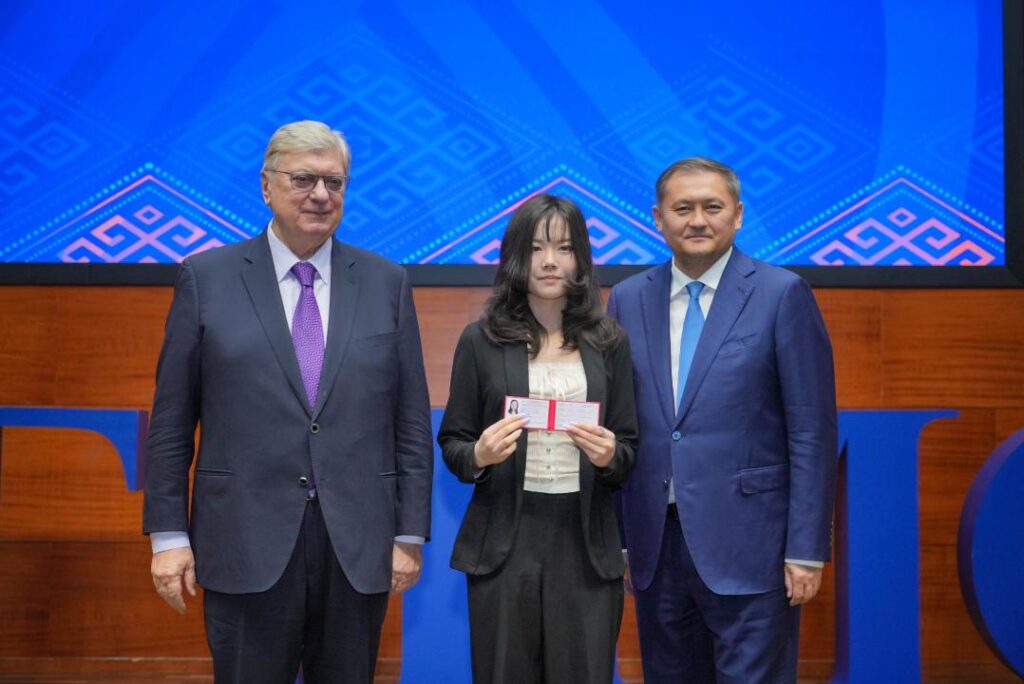
On November 1, the inaugural class of 103 students at the new MGIMO Astana campus received their student ID cards from Kazakhstan’s Minister of Science and Higher Education, Sayasat Nurbek, and MGIMO Rector Anatoly Torkunov.

According to Torkunov, the academic programs at the Astana branch are designed to train specialists for key sectors of Kazakhstan’s economy, business, and international relations.

Kazakhstan’s Ministry of Science and Higher Education reported that MGIMO Astana currently offers two undergraduate programs, World Mineral Resources and Energy Markets and Analysis and Modeling of Socioeconomic and Business Processes, as well as two master’s programs: Financial Economics and Financial Technologies and Multilateral Institutions and Management of Global Technological Development.

Artem Malgin, director of the MGIMO Astana branch, noted that undergraduate students will spend two semesters studying in Moscow, while master’s students will study there for one semester. Courses at the branch are taught by faculty from both MGIMO and the Eurasian National University.

MGIMO Astana is the university’s second international campus. Its first overseas branch, MGIMO Tashkent, opened in Uzbekistan and currently offers six undergraduate and graduate programs tailored to the local academic context and taught by MGIMO faculty.