• KGS/USD = 0.01144 0%
  • KZT/USD = 0.00214 0%
  • TJS/USD = 0.10508 0.48%
  • UZS/USD = 0.00008 0%
  • TMT/USD = 0.28571 0%
  • KGS/USD = 0.01144 0%
  • KZT/USD = 0.00214 0%
  • TJS/USD = 0.10508 0.48%
  • UZS/USD = 0.00008 0%
  • TMT/USD = 0.28571 0%
  • KGS/USD = 0.01144 0%
  • KZT/USD = 0.00214 0%
  • TJS/USD = 0.10508 0.48%
  • UZS/USD = 0.00008 0%
  • TMT/USD = 0.28571 0%
  • KGS/USD = 0.01144 0%
  • KZT/USD = 0.00214 0%
  • TJS/USD = 0.10508 0.48%
  • UZS/USD = 0.00008 0%
  • TMT/USD = 0.28571 0%
  • KGS/USD = 0.01144 0%
  • KZT/USD = 0.00214 0%
  • TJS/USD = 0.10508 0.48%
  • UZS/USD = 0.00008 0%
  • TMT/USD = 0.28571 0%
  • KGS/USD = 0.01144 0%
  • KZT/USD = 0.00214 0%
  • TJS/USD = 0.10508 0.48%
  • UZS/USD = 0.00008 0%
  • TMT/USD = 0.28571 0%
  • KGS/USD = 0.01144 0%
  • KZT/USD = 0.00214 0%
  • TJS/USD = 0.10508 0.48%
  • UZS/USD = 0.00008 0%
  • TMT/USD = 0.28571 0%
  • KGS/USD = 0.01144 0%
  • KZT/USD = 0.00214 0%
  • TJS/USD = 0.10508 0.48%
  • UZS/USD = 0.00008 0%
  • TMT/USD = 0.28571 0%

EBRD Provides €20 Million Loan to Expand Uzbekistan’s Pharmaceutical Production

Uzbekistan is taking further steps to strengthen its pharmaceutical industry and healthcare system through new investment and sector reforms aimed at reducing reliance on imported medical products.

The European Bank for Reconstruction and Development (EBRD) has announced a loan of up to €20 million to its long-term client Samarkand England Eco-Medical (SEEM) and its sister company, Bayan Medical. Both companies produce intravenous solutions, including sodium chloride, glucose, and amino acid infusions, as well as generic and specialized medicines in tablet and capsule form.

The financing will support the installation of new production lines at SEEM, enabling the company to expand manufacturing of in-glass intravenous solutions, antibiotics, syrups and suspensions, medical-grade water, nasal sprays, suppositories, and ointments. Part of the funds will also be allocated to modernizing Bayan Medical’s facilities, including energy-efficiency upgrades and the installation of a blow-fill-seal ampoule production line and other specialized equipment. The companies are also expected to restructure their balance sheets as part of the project.

The investment comes at a time when approximately 75% of medical goods used in Uzbekistan are imported. Expanding domestic production capacity is intended to promote localization, strengthen supply security, and align manufacturing standards with international requirements.

The project also includes social and workforce components. Bayan Medical plans to introduce internship opportunities for university graduates, expand professional training programs for employees, and create new jobs, including positions accessible to people with disabilities.

To date, the EBRD has invested nearly $6.9 billion (€5.8 billion) in Uzbekistan across 205 projects, the majority of which have supported private sector development. Uzbekistan has been the largest recipient of EBRD funding in Central Asia for six consecutive years, reflecting sustained economic reforms and investor engagement.

Healthcare indicators point to broader structural progress. According to the 2024 Health Care Index published by CEOWORLD magazine, Uzbekistan ranks first in Central Asia and 64th globally, with a score of 36.26. Kazakhstan ranks 78th, and Turkmenistan 95th.

Data from the World Health Organization and the World Bank indicate that Uzbekistan’s Universal Health Coverage service index rose from the mid-50s in 2000 to the mid-70s by 2021, suggesting expanded access to essential medical services. Authorities aim to further increase coverage by 2027 while reducing out-of-pocket healthcare spending through strengthened primary care systems and clearer guarantees of publicly funded services.

Two Architectural Monuments from Kazakhstan Included in UNESCO’s Tentative World Heritage List

Two landmark architectural monuments in Kazakhstan, the Zharkent Mosque and the Ascension Cathedral, have been added to UNESCO’s Tentative List of World Heritage Sites. The announcement was made by State Counselor of Kazakhstan Erlan Karin.

Inclusion on the Tentative List is a mandatory preliminary step before a site can be formally nominated for inscription on the UNESCO World Heritage List. Only properties included in the Tentative List may proceed to the full nomination process.

The Zharkent Mosque is located in the city of Zharkent in the Zhetysu region. Built in 1895 to the designs of Chinese architect Hong Pique, the structure was constructed without the use of nails. It represents a distinctive synthesis of Islamic architectural principles and East Asian design traditions, including elements commonly associated with Buddhist temples.

This architectural fusion reflects the historical cultural exchanges among the peoples of the region and the cross-border influence of architectural schools. Since 1982, the mosque has been under state protection as a monument of architectural and historical significance at the national level.

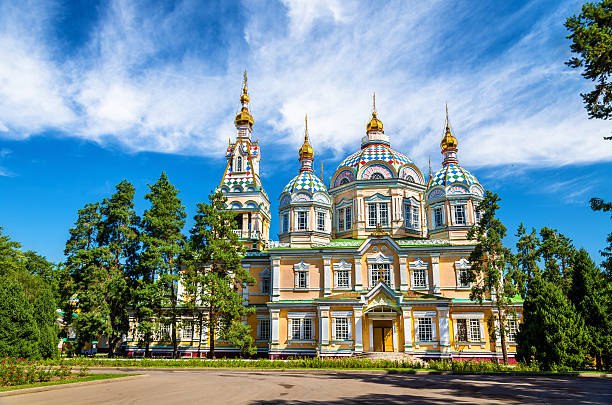
The Ascension Cathedral, situated in Almaty’s Park of the 28 Panfilov Guardsmen, was constructed between 1904 and 1907 as the cathedral of the Turkestan diocese of the Russian Orthodox Church.

Rising to a height of 54 meters, it is considered one of the tallest wooden Orthodox churches in the world. Built from Tien Shan spruce, the cathedral’s wooden framework, reinforced with metal fastenings, allowed it to withstand several major earthquakes. Today, it is listed as a historical and cultural monument of Kazakhstan.

According to Karin, the inclusion of both the mosque and the cathedral on the Tentative List marks an important step toward preserving and promoting the country’s cultural heritage. If the nomination process is successfully completed, the sites could obtain full World Heritage status, granting them enhanced international recognition and protection, as well as potentially increasing tourism.

The joint nomination of Islamic and Orthodox religious monuments also underscores Kazakhstan’s cultural and religious diversity and reflects the historical coexistence of different faith traditions in the region.

Previously, The Times of Central Asia reported that an updated UN Action Plan for the Protection of Religious Sites Worldwide was presented in Astana during the Congress of Leaders of World and Traditional Religions.

Escalation in the Middle East Threatens Kyrgyzstan’s Agricultural Export Potential

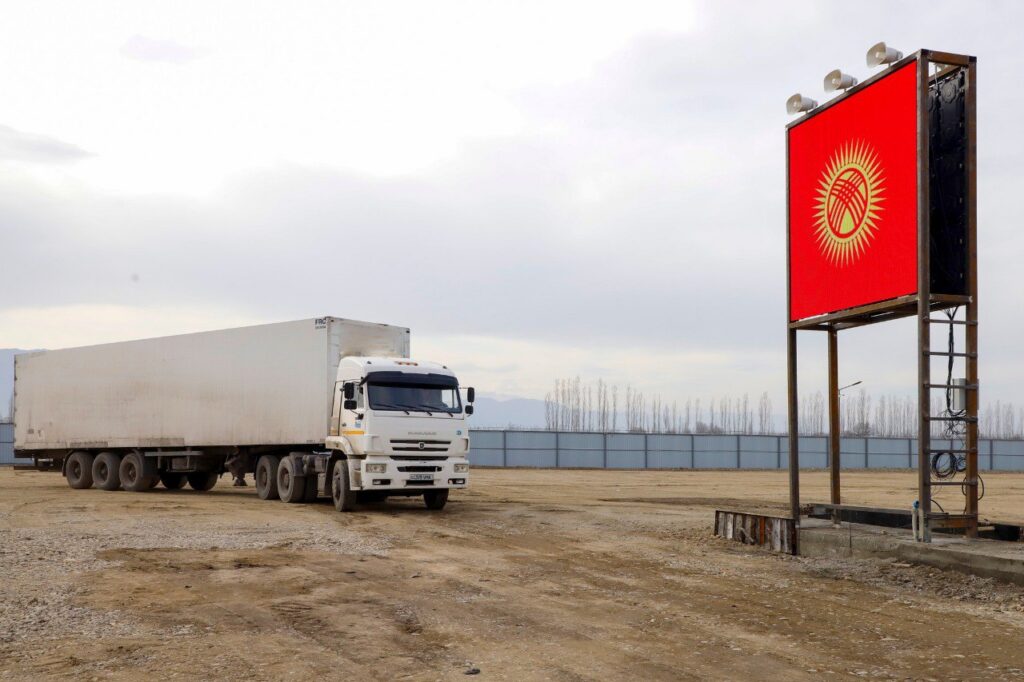
Escalating tensions in the Middle East are putting pressure on Kyrgyzstan’s export routes, a significant portion of which previously transited through Iranian territory. Iranian ports in the Persian Gulf and on the Caspian Sea have provided Kyrgyz producers with access to markets in the Middle East and Europe.

According to the National Statistical Committee of Kyrgyzstan, cattle exports from Kyrgyzstan declined fivefold in 2024.

In 2025, domestic meat prices rose sharply amid what authorities described as uncontrolled exports of cattle carcasses, primarily to Uzbekistan and Tajikistan. In response, the State Antimonopoly Service introduced maximum retail prices for lamb and beef in the domestic market and imposed a temporary ban on livestock exports to neighboring countries.

To stabilize supply, the government approved meat imports from India for processing plants, while domestic production was intended to meet internal demand.

Against this backdrop, many farmers shifted their focus to exporting chilled meat to Iran. In 2024, shipments resumed, beginning with an initial 10-ton consignment, after which volumes gradually increased. The Ministry of Agriculture announced plans to raise lamb exports to Iran to 1,000 tons.

In addition to meat, Kyrgyz companies exported legumes, grains, and dried vegetables to Middle Eastern markets via Iranian ports. Honey, beans, and nuts were also shipped to Europe using Iranian transit routes.

However, in the context of renewed military tensions, Kyrgyz exporters may now need to seek alternative logistics corridors or new destination markets. Any rerouting is likely to increase transportation costs and reduce the price competitiveness of Kyrgyz agricultural products.

In 2023, the Eurasian Economic Commission signed a free trade agreement with Iran, which entered into force on May 15, 2024. The agreement provides for the creation of “green customs corridors,” the digitalization of trade procedures, and the introduction of electronic transit mechanisms. According to EEC Minister for Trade Andrey Slepnev, the deal was intended to facilitate accelerated access to the Iranian market for companies from the Eurasian Economic Union.

Under the agreement, goods from EAEU member states benefit from tariff preferences, including zero or reduced import duties in Iran. Iranian products receive comparable preferences within the EAEU market.

Last year, Tehran also proposed that Bishkek consider establishing its own merchant fleet, using Iranian ports in the Persian Gulf and the Caspian Sea to export Kyrgyz agricultural products and expand transit opportunities.

S&P Global Ratings Expects Kazakhstan’s GDP Growth to Slow in 2026

The international rating agency S&P Global Ratings has affirmed Kazakhstan’s long-term sovereign credit rating at BBB- and its short-term rating at A-3, while maintaining a positive outlook on the long-term rating. At the same time, S&P analysts expect economic growth to decelerate in 2026 and warn of persistently high inflation.

According to commentary on S&P’s projections by analysts at the Halyk Finance research center, Kazakhstan’s GDP growth is forecast to slow to 4.1% in 2026. The projected slowdown is attributed to a 4% decline in oil production, weaker fiscal stimulus, and reduced consumer activity amid higher taxes and tighter credit conditions.

In the medium term, for 2028-2029, S&P expects GDP growth to remain at around 4% or slightly higher. However, risks persist, particularly those related to geopolitical tensions and the continued sensitivity of Kazakhstan’s budget revenues and exports to fluctuations in global oil prices.

For comparison, Kazakhstan’s GDP grew by 6.5% in 2025. In 2026, the government expects growth of 6.2%, a notably more optimistic projection than S&P’s estimate.

Other international institutions have offered varying forecasts. The European Bank for Reconstruction and Development (EBRD) recently upgraded its 2026 GDP growth forecast for Kazakhstan to 4.7%, up from 4.5%. In contrast, the International Monetary Fund (IMF) in January lowered its 2026 growth forecast by 0.4 percentage points to 4.4%.

Returning to S&P’s projections, the agency expects inflation to reach 11% by the end of 2026 and forecasts an exchange rate of 540 tenge per $1.

Halyk Finance analysts stated that they broadly agree with S&P’s GDP and inflation forecasts. However, they consider the risks of further weakening of the national currency to be greater than the agency anticipates. According to their estimates, the exchange rate in 2026 could depreciate to 580-590 tenge per $1.

S&P also expects the Kazakh government to continue fiscal consolidation in the medium term by expanding the tax base and tightening control over public spending, while preserving substantial liquid reserves.

Over the next three years, the government does not plan to withdraw additional funds from the National Fund through targeted transfers or bond placements. The guaranteed annual transfer from the National Fund is set at $5.5 billion, half the $11.1 billion withdrawn in 2025.

“We share S&P Global Ratings’ positive assessment, provided that the government strictly adheres to its fiscal consolidation commitments and reduces transfers from the National Fund,” Halyk Finance concluded.

The Times of Central Asia previously reported that the IMF believes Kazakhstan’s current GDP growth rate exceeds the country’s long-term economic potential, thereby increasing inflationary pressures and signaling potential overheating of the economy.

Escalation with Iran at the Epicenter: How Central Asian Countries Are Reacting

Over the past weekend, the Middle East has once again become a focal point of global tensions. At the center of the escalation is Iran, a country with which Central Asian states intensified engagement last year following the visit of President Masoud Pezeshkian to the region. As events unfold, the potential regional and economic consequences have become a key concern for Central Asian leaders.

Kazakhstan

President Kassym-Jomart Tokayev responded swiftly on February 28, as Iran was reportedly preparing a retaliatory strike targeting not only Israel, which, together with the U.S., had assumed responsibility for the latest escalation, but also several Arab states in the Persian Gulf.

On February 27, Tokayev received U.S. Ambassador to Kazakhstan Julie Stufft. According to the official readout, the sides exchanged views “on further cooperation within the framework of the Board of Peace.” While it remains unclear whether the meeting was directly linked to impending military developments, Kazakhstan’s leadership moved quickly the following day.

On February 28, the president instructed Security Council Secretary Gizat Nurdauletov, together with the heads of law enforcement agencies and relevant ministries, to prepare an emergency action plan in light of the escalating situation around Iran and potential risks to domestic stability.

All law enforcement agencies were placed on heightened alert, and a special monitoring group was established within the government under the supervision of the Ministry of Foreign Affairs. Regional governors were instructed to assess potential risks stemming from developments in the Middle East.

Late on March 1, presidential press secretary Aibek Smadiyarov announced that Tokayev had sent personal messages to the leaders of the United Arab Emirates, Saudi Arabia, Qatar, Bahrain, and Kuwait, expressing solidarity and support during what he described as a difficult period.

Tokayev strongly condemned military actions that undermine the sovereignty and security of states friendly to Kazakhstan.

“Our country consistently advocates resolving complex international problems and armed conflicts exclusively through diplomatic means,” Tokayev stated.

He also expressed Kazakhstan’s readiness to provide assistance if necessary and reaffirmed the importance of maintaining working contacts with regional leaders.

Subsequently, Tokayev held telephone conversations with Emir of Qatar Sheikh Tamim bin Hamad Al Thani and President of the United Arab Emirates Sheikh Mohammed bin Zayed Al Nahyan.

In both calls, Tokayev expressed serious concern over the escalation and reiterated Kazakhstan’s support and solidarity. During the conversation with the UAE president, Tokayev also noted reports that civilian infrastructure had been damaged and stated that attacks on civilian targets deserve strong condemnation.

Sheikh Mohammed bin Zayed Al Nahyan thanked Kazakhstan for its support and expressed appreciation for its readiness to assist in overcoming the crisis.

Uzbekistan

Uzbekistan, alongside Kazakhstan, suspended flights to several Middle Eastern destinations, with some aircraft reportedly turning back after departure.

The Ministry of Foreign Affairs issued emergency contact information for Uzbek diplomatic missions and urged citizens abroad or planning to travel, to closely monitor official updates from host countries and Uzbek embassies.

The ministry advised citizens to maintain communication with diplomatic missions, register with consular services when necessary, and exercise heightened caution, particularly in areas with large public gatherings. The statement also emphasized compliance with local laws and customs.

Officials in Tashkent view instability in the Middle East as a potential risk to trade routes, labor migration channels, and broader regional security.

Azerbaijan

On March 1, Azerbaijani Foreign Minister Jeyhun Bayramov held a telephone conversation with Uzbekistan’s Foreign Minister Bakhtiyor Saidov. According to the Azerbaijani Foreign Ministry, the ministers discussed the deteriorating security environment and expressed deep concern about the expanding military confrontation.

Both sides stressed the importance of restraint and underscored the need to resolve disputes through political dialogue and diplomatic means in accordance with international law.

On the same day, Bayramov also spoke with Iran’s Foreign Minister Abbas Arakchi. During the call, Bayramov expressed condolences over reported casualties, including the death of Iran’s Supreme Leader Ayatollah Ali Khamenei and civilian victims following U.S. and Israeli strikes.

Bayramov further stated that Azerbaijani territory would not be used for military operations against Iran.

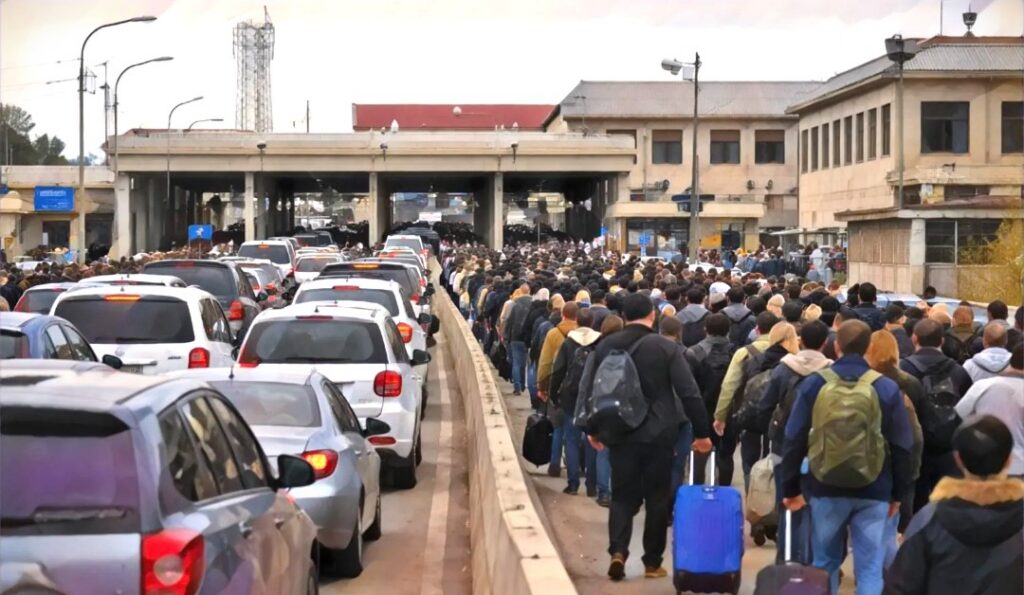
Meanwhile, at the Astara border crossing in southeastern Azerbaijan, located along the Astara River, which forms the state border with Iran, authorities reported an influx of individuals leaving Iranian territory. Most arrivals were Azerbaijani citizens returning home, though approximately 50 foreign nationals were also reported at the checkpoint, including citizens of Poland, India, Pakistan, Nepal, Brazil, Tunisia, and France.

Azerbaijani officials stated that third-country nationals must obtain an “evacuation code” to exit Iran, though some individuals reportedly arrived at the crossing unaware of this requirement.

Baku has indicated that it remains prepared to assist in the evacuation of foreign nationals from Iran if necessary.

Central Asian Countries Scramble to Help Nationals in Mideast Conflict Zone

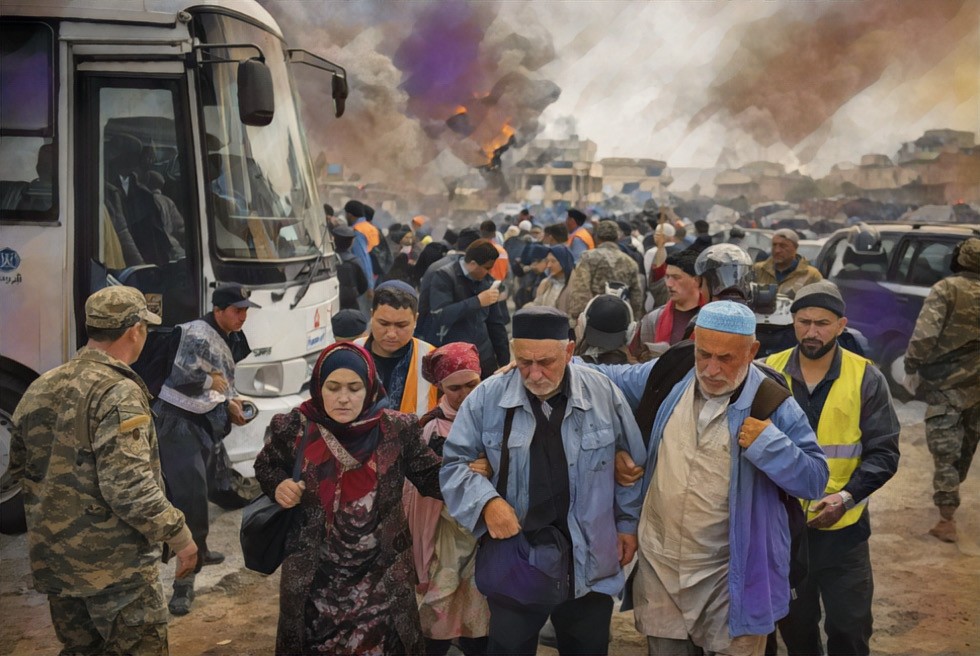
With the Mideast conflict entering a second day, Central Asian governments have urged their citizens in the region to take precautions, including following the instructions of local authorities and staying away from mass gatherings.

Five civilians from Tajikistan are among foreigners from a range of countries who have crossed from Iran into Azerbaijan since the United States and Israel launched air strikes at Iranian targets on Saturday, the Azerbaijani Press Agency reported. Others who have crossed include 18 Saudi diplomats, four diplomats from Jordan and hundreds of Russian civilians. Canada and Spain have communicated with Azerbaijan about the possible evacuation of their citizens as well.

One citizen of Azerbaijan in the region has been injured, but is in good condition and receiving support from diplomatic staff, said Aykhan Hajizade, spokesman for Azerbaijan’s Ministry of Foreign Affairs. He was quoted by state news agency Azertac.

Uzbekistan said there are no casualties among its 81 citizens in Iran. The nationals from Uzbekistan include eight employees of diplomatic missions, nine students in the city of Qom, nine who are in Iran on private visits and 55 permanent residents.

“The Embassy maintains constant contact with compatriots,” the Uzbek government said.

Iran responded to the air strikes with retaliatory waves of missiles and drones aimed at Israel as well as U.S. military facilities and civilian areas across the region.

“Air traffic has been suspended due to temporary restrictions on the use of airspace,” Uzbekistan’s Ministry of Foreign Affairs said in a message on Telegram to its nationals in Dubai, United Arab Emirates. The ministry urged them to fully comply with local laws, avoid going out unnecessarily and stay away from crowded places, and rely only on official sources of information.

Kazakhstan said it was working on “round-the-clock interaction” with authorities in countries affected by the conflict, and that its diplomatic missions are providing consular and legal assistance to compatriots. The Ministry of Foreign Affairs has opened hotlines.

“Lists of citizens in the region, including transit zones, are being updated,” the ministry said. “Operational chats have been created in messengers where compatriots can get answers to their questions and information about the situation in the country, including recommendations.”

The ministry said it was collecting information about the number of Kazakhstani citizens in the “escalation zone,” and that it was difficult to specify the exact number. There have been no reports so far of casualties among people from Kazakhstan, it said.

Last year, Mashhad, a northeastern Iranian city near the border with Turkmenistan and a significant hub for trade with Central Asia, was among the targets hit by the Israeli military. At the time, Turkmenistan facilitated the cross-border transfer from Iran of some people from Central Asia and other regions.

So far, there are no reports of U.S. or Israeli strikes on Mashhad since the latest conflict began. The city is an Islamic pilgrimage site and is the birth place of Ayatollah Ali Khamenei, Iran’s supreme leader. He was killed in air strikes on Saturday.