• KGS/USD = 0.01144 0%
  • KZT/USD = 0.00193 -0%
  • TJS/USD = 0.10866 0.55%
  • UZS/USD = 0.00008 0%
  • TMT/USD = 0.28490 0%
  • KGS/USD = 0.01144 0%
  • KZT/USD = 0.00193 -0%
  • TJS/USD = 0.10866 0.55%
  • UZS/USD = 0.00008 0%
  • TMT/USD = 0.28490 0%
  • KGS/USD = 0.01144 0%
  • KZT/USD = 0.00193 -0%
  • TJS/USD = 0.10866 0.55%
  • UZS/USD = 0.00008 0%
  • TMT/USD = 0.28490 0%
  • KGS/USD = 0.01144 0%
  • KZT/USD = 0.00193 -0%
  • TJS/USD = 0.10866 0.55%
  • UZS/USD = 0.00008 0%
  • TMT/USD = 0.28490 0%
  • KGS/USD = 0.01144 0%
  • KZT/USD = 0.00193 -0%
  • TJS/USD = 0.10866 0.55%
  • UZS/USD = 0.00008 0%
  • TMT/USD = 0.28490 0%
  • KGS/USD = 0.01144 0%
  • KZT/USD = 0.00193 -0%
  • TJS/USD = 0.10866 0.55%
  • UZS/USD = 0.00008 0%
  • TMT/USD = 0.28490 0%
  • KGS/USD = 0.01144 0%
  • KZT/USD = 0.00193 -0%
  • TJS/USD = 0.10866 0.55%
  • UZS/USD = 0.00008 0%
  • TMT/USD = 0.28490 0%
  • KGS/USD = 0.01144 0%
  • KZT/USD = 0.00193 -0%
  • TJS/USD = 0.10866 0.55%
  • UZS/USD = 0.00008 0%
  • TMT/USD = 0.28490 0%
11 December 2025

Kyrgyzstan’s Airlines Could Be Removed from EU Blacklist in 2025

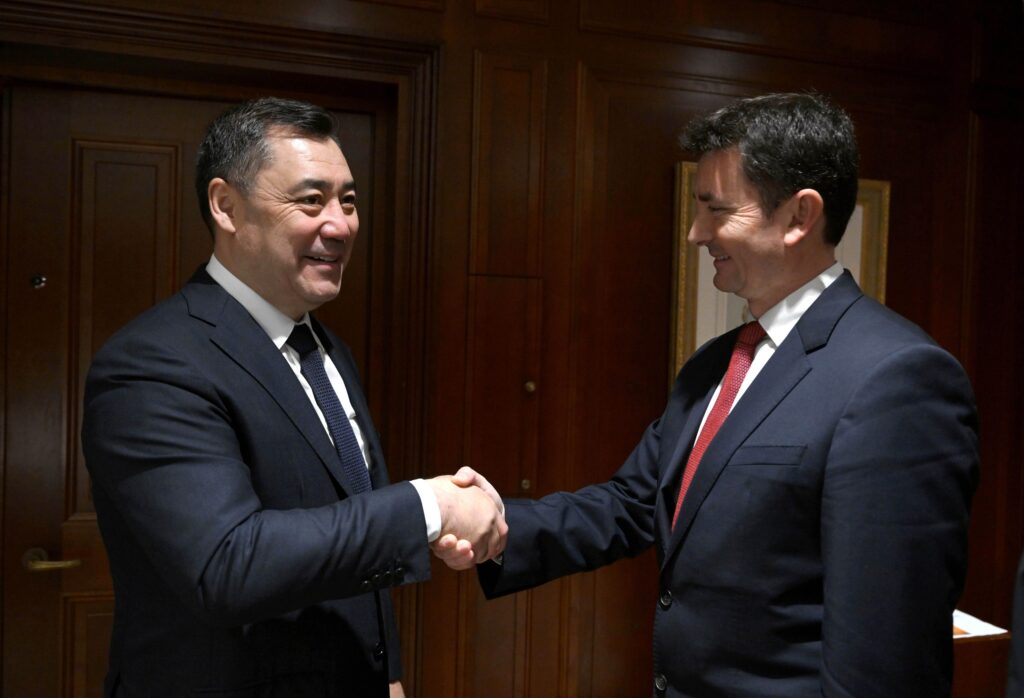
Kyrgyzstan’s airlines may soon achieve a significant milestone by being removed from the European Union’s Air Safety List, which currently bans them from operating flights to Europe. Kyrgyz President Sadyr Japarov made this announcement on November 27 during a meeting in Berlin with Johan Pelissier, the head of Airbus Europe, where they discussed the future of Kyrgyzstan’s aviation sector.

Japarov emphasized the government’s concerted efforts to enhance aviation safety, implement international standards, and modernize infrastructure. He expressed optimism that these measures have significantly improved the likelihood of lifting restrictions on Kyrgyz airlines.

As part of these developments, Japarov highlighted the government’s support for the national carrier, Asman Airlines. Under an initial agreement with Airbus, the airline plans to lease two A320 or A321 aircraft to establish direct routes to Europe, including destinations such as Paris, Berlin, and London. This initiative marks a critical step toward integrating Kyrgyzstan into the global aviation network.

Looking ahead, Kyrgyzstan aims to expand its fleet and deepen cooperation with Airbus, fostering stronger connections with the international aviation community. At the conclusion of the meeting, Japarov extended an invitation to Pelissier to visit Kyrgyzstan for further discussions with local aviation representatives.

Background: A Longstanding Ban
Kyrgyz airlines was added to the EU’s Air Safety List in 2006 after failing to meet international safety standards. This decision, based on assessments that the country’s legal framework did not adequately ensure flight safety, has prohibited Kyrgyz airlines from flying to EU destinations for over 18 years. The ban has had a profound impact on the aviation sector, limiting its operational scope and market reach.
Efforts to address these shortcomings represent a turning point, with the potential removal from the blacklist signaling a new chapter for Kyrgyz aviation. If successful, this move could open up significant opportunities for growth and international collaboration.

CSTO Leaders Tackle Regional Security, Nuclear Energy, and Afghan Border Concerns

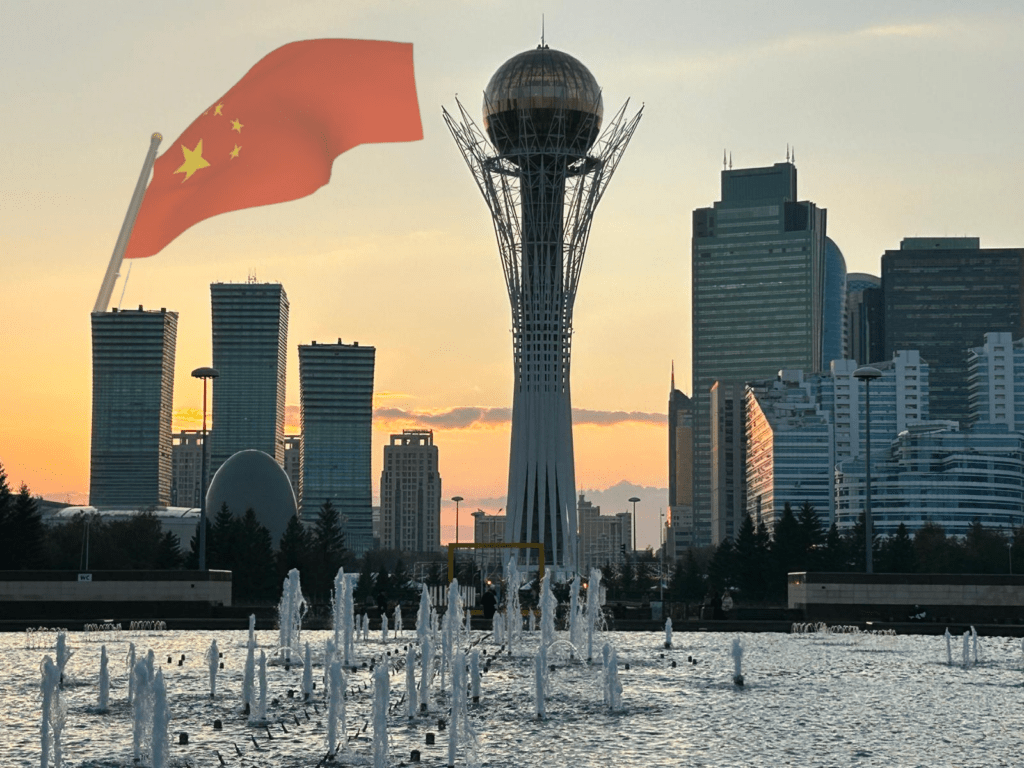
Astana hosted a summit of the Collective Security Treaty Organization (CSTO), gathering heads of member states to discuss pressing regional and international issues. Kazakh President Kassym-Jomart Tokayev chaired the session of the CSTO Collective Security Council. Attendees included Belarusian President Alexander Lukashenko, Kyrgyz President Sadyr Japarov, Russian President Vladimir Putin, Tajik President Emomali Rahmon, and CSTO Secretary-General Imangali Tasmagambetov.

In his address, President Tokayev highlighted the CSTO’s pivotal role in maintaining peace and stability in Eurasia. “Amid modern challenges, the CSTO consistently demonstrates its relevance as a guarantor of security for all member states. Our coordinated actions, mutual trust, and support strengthen our collective ability to tackle complex and large-scale tasks. The CSTO is not merely a military partnership but a unique mechanism that unites our efforts and resources to safeguard sovereignty and territorial integrity,” Tokayev stated.

CSTO’s Response to Kazakhstan’s 2022 Crisis

Tokayev reflected on the CSTO’s rapid deployment in January 2022, when Kazakhstan faced unrest over rising gas prices, which escalated into violent confrontations. Within 24 hours, CSTO forces were deployed to stabilize the situation. Russian troops secured strategic facilities in Almaty, while Kazakh forces restored order, marking a critical demonstration of the organization’s operational capability.

Putin Unveils “Oreshnik” Missile System

Russian President Vladimir Putin addressed ongoing tensions with Ukraine, signaling the potential use of the Oreshnik medium-range ballistic missile system in response to Western-supplied long-range missiles targeting Russian territory.

According to Putin, the Oreshnik has the destructive power of nuclear weapons, and can penetrate heavily fortified targets. “The temperature of the striking elements reaches 4,000 degrees. At the explosion’s epicenter, everything is reduced to elementary particles, essentially turning to dust,” he explained. Putin also announced that serial production of the missile had begun, with several units ready for deployment.

Kazakhstan’s Nuclear Power Project

Discussions also turned to Kazakhstan’s plans to build its first nuclear power plant. Tokayev has proposed an international consortium, and Putin expressed Russia’s willingness to participate through Rosatom, emphasizing its extensive experience with international collaborations. “Rosatom is ready to work with specialists from other countries,” Putin remarked, leaving the door open for multilateral cooperation.

Armenia’s Absence and CSTO’s Future

Noticeably absent from the summit was Armenian Prime Minister Nikol Pashinyan, following Armenia’s decision to freeze its CSTO membership earlier this year. Yerevan cited concerns over its sovereignty as the reason for the suspension. Secretary-General Tasmagambetov remained optimistic about Armenia’s return, calling it a valued ally.

“This is the decision of an independent and sovereign state, which no country or organization can influence. Nevertheless, we view Armenia as an ally and hope it will return to full participation in the CSTO in the foreseeable future,” Tasmagambetov stated.

Key Summit Outcomes

During the session, the Collective Security Treaty Organization (CSTO) also reflected on Kazakhstan’s presidency in 2024, highlighting significant milestones achieved under its leadership. President Tokayev reported that approximately 60 activities were conducted within the CSTO’s statutory areas of cooperation during Kazakhstan’s presidency. This included advancing coordinated approaches to key international issues in collaboration with member states, as noted by political analyst Marat Shibutov.

One of the most notable achievements of the summit was the adoption of a pivotal document over a decade in the making – a targeted interstate program for the development of the Tajik-Afghan border. Shibutov emphasized that this program will facilitate a collaborative approach among CSTO member states to enhance border security, thereby bolstering the stability of the entire Central Asian region.

Political scientist Daniyar Ashimbayev also highlighted an important remark by Russian Security Council Secretary, Sergei Shoigu, ahead of the summit. Shoigu is said to have commented that Russia’s “nuclear umbrella” extends to protecting all CSTO allies.

The CSTO countries also underscored the importance of addressing the Afghan situation. On the one hand, they acknowledged the need for economic integration and interconnection with Afghanistan, viewing this as a means to foster regional peace and stability. On the other, the formal adoption of the targeted program for the Tajik-Afghan border represents a decisive step toward enhancing collective security measures.

Kazakhstan, with China’s Help, Plans to Export Green Energy to Europe

Although Kazakhstan is a major producer of all fossil fuels – coal, crude oil, and natural gas – it also has the capacity to secure its energy future by prioritizing renewable energy. Fully aware of that, the European Union – one of the former Soviet republic’s most significant trade partners – aims to strengthen its energy ties with Astana, hoping to begin importing not only “green electricity” from the Central Asian nation, but also green hydrogen.

On November 25, at Nazarbayev University in Astana, the “Energy in Transition – Powering Tomorrow” traveling exhibition was held, and one of the major topics discussed by energy experts was green hydrogen – hydrogen produced using renewable energy sources such as solar and wind power. It is unlikely a pure coincidence that the German Federal Foreign Office initiated the event. Over the past few years, Germany has shown interest in the development of the Kazakh green hydrogen sector.

The most prominent green hydrogen project in Kazakhstan is currently being developed by Hyrasia One, a subsidiary of the German-Swedish energy company, Svevind. In 2021, the company announced its plans for €50 billion ($55 billion) green hydrogen project in the Mangystau Region in western Kazakhstan. It is expected that Hyrasia One will begin the production of green hydrogen in 2030, and the power plant will reach full capacity by 2032.

Meanwhile, the authorities in Astana will need to find a way to export this form of renewable energy to Europe, a major energy market for Kazakhstan. Although Astana and Brussels signed a strategic partnership on the production of green hydrogen in November 2022, several challenges remain in the implementation of the deal. Issues such as the high cost, water scarcity in the largest Central Asian state (with water being the key component of green hydrogen production), and a lack of transport infrastructure, are significant barriers to exporting hydrogen from Kazakhstan to Europe.

Using Russian gas pipeline systems for transportation of the Kazakh green hydrogen to Europe is not an option given current geopolitical circumstances. To resolve this transportation issue, the Kazakh authorities and their European partners could build hydrogen pipelines across the Caspian Sea, the Caucasus and Turkey to reach southern European countries. The problem is that building such a pipeline infrastructure is very expensive, and it remains uncertain who would be willing to fund such a project.

That, however, does not mean that Kazakhstan cannot become Europe’s major green hydrogen supplier. What Astana would have to do, according to experts, is to convert the green hydrogen into green ammonia and then export it to Europe via the Middle Corridor – running through Kazakhstan, the Caspian Sea, Azerbaijan, and Georgia. On the Black Sea coast, ammonia would be loaded onto ships and transported past the Bosphorus to EU members such as Greece, Romania, and Bulgaria. From there, it would be sent further north, where green hydrogen would eventually be extracted from the ammonia. This is a rather complex process, and it is unclear how feasible and profitable would be.

That is why, at least at for now, the export of “green electricity” from Kazakhstan to Europe seems to be a more realistic option. The International Energy Agency (IEA) has described Kazakhstan as a “frontrunner in Central Asia for developing clean energy innovation policies”, pointing out that it has the resources to “attract significant foreign direct investment in areas like renewable energy.”

Indeed, China has already started investing in the Kazakh solar and wind energy sectors, helping the country increase green energy production. More importantly, on November 13, during the 29th Conference of the Parties to the UN Framework Convention on Climate Change (COP29) in Baku, Kazakhstan’s Energy Minister Almasadam Satkaliyev signed multiple agreements with various international companies worth nearly $3.7 billion to advance green energy initiatives in the Central Asian nation. Also, on November 18, Kazakhstan, Azerbaijan, and Uzbekistan signed a strategic partnership agreement for green energy development and transmission.

These deals are not just about business. They represent an opportunity for Central Asian countries to consolidate their role on the world stage, strengthen ties with Europe, and create a sustainable future for their citizens. The agreement between Astana, Baku, and Tashkent provides for the joint construction of a clean energy cable beneath the Caspian Sea for exporting renewable energy to European markets. In other words, with the help of Chinese and other investors, Kazakhstan, as well as Uzbekistan and Azerbaijan, will produce electricity from renewable sources, and then export it to the EU. That seems to be Astana and Brussels ultimate goal at this point.

In order to achieve it, however, Kazakhstan will have to work hard not only on creating the Caspian-Black Sea-Europe Green Energy Corridor – connecting it with Uzbekistan, Azerbaijan, Turkey, and further with European nations – but on increasing green electricity production. Presently, coal is by far the largest source of electricity production in Kazakhstan, amounting to 57 percent of total electricity generation, with natural gas providing another 29 percent.

The Central Asian nation is rich in renewable energy resources, having a strong wind potential in the north, and solar in the south of the country. If it manages to use these resources properly, Kazakhstan has the opportunity not only to become a reliable supplier of green electricity – and potentially green hydrogen – to Europe, but also to reach carbon neutrality by 2060, a goal Kazakh President Kassym-Jomart Tokayev set in 2020.

The Impact of Korean Culture on Kazakhstan: Personal Stories and Impressions

In recent years, Korean culture – including K-pop and doramas (dramas) – has gained incredible popularity in Kazakhstan. It has had a significant impact on young people, offering not only entertainment, but also support, motivation, and new opportunities to socialize and express themselves. To better understand how Korean culture is influencing life in Kazakhstan, TCA talked to young people about their stories and experiences.

Image: TCA

Alua, 22, computer club administrator

For me, as an insecure teenager, K-pop and doramas have been a tremendous support and help in shaping my personality. Songs about self-love, with words of encouragement and motivation give many teens a foothold they often can’t get from their environment. The doramas teach us and show us that nothing is impossible, that everything is in our hands. They also show young girls what healthy relationships should look like. That’s what I love about Korean culture, the lack of gender boundaries and the promotion of healthy attitudes. I think this kind of influence has a great effect on the youth of Kazakhstan.

Doramas are television series produced in South Korea and other Asian countries. They cover a wide range of genres: romance, drama, comedy, sci-fi, historical subjects, and more. Doramas are known for their high-quality productions, plot twists, and colorful characters.

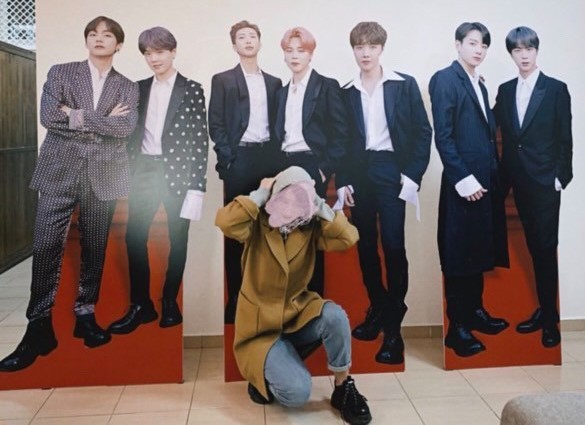
Image by Nastya, from the official BTS film festival in Kino Park, Astana

Nurlan, 19, student at a pedagogical faculty

I like Korean culture because of its unconventionality. For example, K-pop groups such as BTS have always fought against male stereotypes and I’m inspired by it. I think it’s really great, because in Kazakhstan there are big problems with the perception of gender roles. In addition to male stereotypes, they are also breaking down female stereotypes through female groups like BLACKPINK, who present themselves as confident girls who are not afraid of getting their own way.

Also in Kazakhstan, many convenience stores like the Korean 7/11 are opening up where you can eat noodles and tokpoki, and sit with friends, just like in the doramas. I really like it, and I’m happy that Korean trends that are reaching us in Kazakhstan.

Image: TCA

Sarah, 21, store administrator and student

I started getting into Korean culture back in 2010, when my sister showed me the dorama Boys More Beautiful Than Flowers. After that, K-pop and doramas helped me not to get discouraged during difficult moments, offering an interactive culture that nurtured a sense of love and support. Even if it wasn’t fashionable then and I was made fun of, K-pop kept me going.

Now, however, it’s a worldwide phenomenon, and that’s nothing short of heartwarming. So many people around the world have discovered a whole new genre of music, movies, TV series and things in the Korean media space, such as albums and photocards, fan-sites, merch, and concerts. Doramas and shows like Running Man and Apartment 404 have become my favorite part of celebrity promotion in Korea.

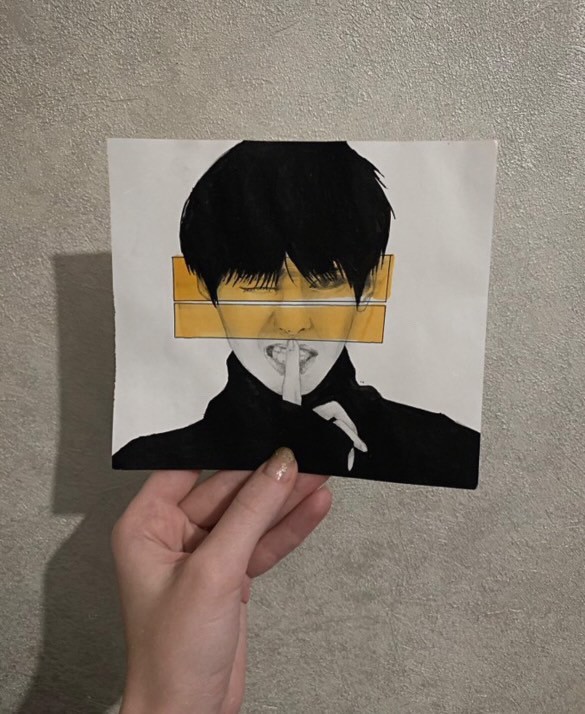
K-pop (Korean pop music) albums usually include not only CDs, but various extras that make them unique and appealing to fans, such as photobooks, photocards, posters with images of the band or individual members, stickers, and scrapbooks for fans to decorate or create their own collections.

Image: Nastya, work from Korean language lessons

Amir, 21, social media marketing specialist

I’ve definitely noticed the influence of Korean culture on Kazakhstan. More and more teenagers are into it, and I see positive aspects to it. I especially like manhwa, but I’m less interested in K-pop and doramas.

Manhwa are Korean comic books or graphic novels. They are similar to Japanese manga and Chinese manhua, but have their own unique characteristics. Manhwa are often published online, making them easily accessible to a wide audience. Stories in manhwa can cover a variety of genres, including romance, sci-fi, fantasy, adventure, horror, and more.

Image Nastya, work from Korean language lessons

Nastya, 20, architecture student

My love for K-pop started in 2017 with the song Mic Drop by BTS (feat Steve Aoki). By chance, I came across a BTS playlist on YouTube, and since then I became fascinated with not only the music, but Korean culture. I became interested in what my idols ate, where they lived, and what they did. During the same period, I started taking Korean language classes where I was introduced to other groups such as Stray Kids, Bigbang, Twice, and Monsta X. I wanted to watch concerts and broadcasts without needing subtitles.

After that, I started attending events at the Korean Cultural Center, so Korean culture became a part of my life. I can no longer imagine my life without watching my favorite doramas, listening to songs, and cooking my favorite dishes. In 2019-2020, I had a bad period in my life, but I was helped by the music and inspirational speeches of BTS band leader, Kim Namjoon.

Because of this, my family often gives me albums by my favorite bands, and my friends share my interests, so I draw cards and stickers for them. We also often go to ARMY gatherings in Astana, watch concerts, movies, and visit themed cafes.

ARMY is a fan club of the South Korean group BTS. The name ARMY is an acronym that stands for “Adorable Representative MC for Youth”.


Korean culture continues to have a growing impact on young people in Kazakhstan, offering opportunities for self-expression and emotional support, and showing how culture can connect people.

Just Another Reported Assassination Attempt in Kyrgyzstan

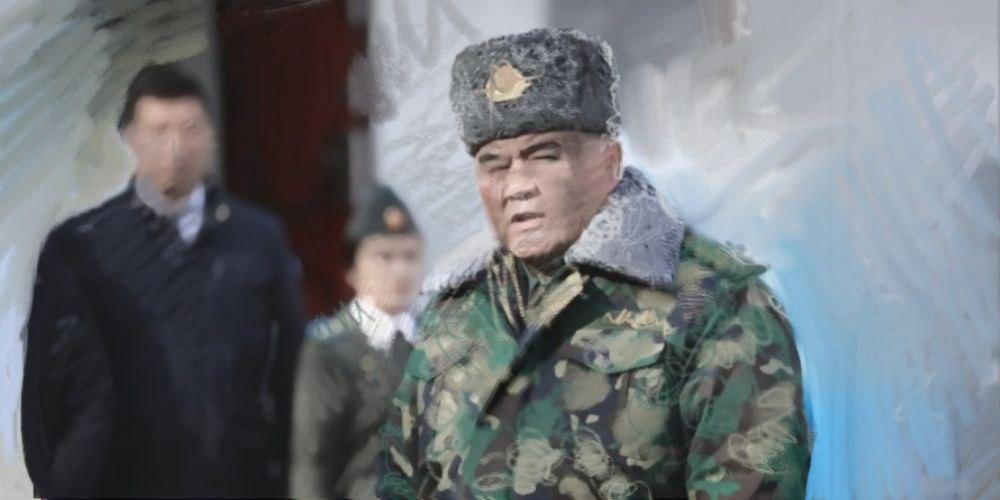
The head of Kyrgyzstan’s State National Security Committee (GKNB), Kamchybek Tashiyev, says someone was plotting to kill him, and it is not the first time, and it is not only Tashiyev people want to assassinate.

On November 20, Tashiyev said he received an anonymous letter with a flash drive that contained a death threat. Tashiyev also remarked that already “5-6 assassination attempts were prepared against me,” and “GKNB officers prevented two attempts on the life of President Sadyr Japarov.”

Normally this would be amazing, even chilling news.

However, Japarov and Tashiyev have been uncovering so many plots, some rather dubious, to overthrow the government since they bulldozed their way to power in late 2020 that it is difficult to gauge the seriousness of these assassination claims.

According to the GKNB, by November 25, those responsible for this most recent threat were already apprehended.

Surveillance cameras outside a GKNB station in Bishkek recorded the person who dropped off the letter with the threat. He turned out to be a homeless man who delivered the letter after a person identified only by his initials “Zh. A. S.” offered him food in exchange for dropping off the letter.

Zh. A. S.  was identified as a former Kyrgyz military pilot who served in the CIS peacekeeping force guarding Tajikistan’s border with Afghanistan in the mid-1990s.

The suspect was convicted twice. It was not mentioned for which crimes, but the GKNB did say he had been plotting “for a long time” to kill Tashiyev.

A report from Kyrgyzstan’s KNEWS media outlet included a curious comment attributed to the GKNB that the suspect was connected to “intelligence services of foreign states and destructive forces, pursuing interests in destabilizing the socio-political situation in the Kyrgyz Republic…“


The Mafia

Since 2023, Japarov’s government has been waging the fiercest campaign in Kyrgyzstan’s history against organized crime, and Tashiyev and the GKNB have been leading this battle.

Tashiyev alluded to this in his November 20 comments.

“When I started fighting organized crime groups and others, I knew that such threats would exist,” Tashiyev said, adding, “I knew they would put pressure on me to give up the fight.”

Certainly, the campaign against organized crime has made the government, and Tashiyev specifically, some powerful enemies.

Raimbek “Millions” Matraimov amassed a fortune when he was deputy chairman of Kyrgyzstan’s Customs Service from 2015-2017, and even then, people knew he was an organized crime leader.

He was so powerful that when Sadyr Japarov was catapulted from a prison cell into the president’s office when unrest broke out in Kyrgyzstan in October 2020, there were suspicions that Matraimov’s wealth and clout backed this meteoric ascent.If that is true, Matraimov misjudged Japarov.

In early October 2023, the GKNB killed Kamchybek Asanbek, alias Kamchy Kolbayev, alias Kolya Kyrgyz, while trying to arrest him at a Bishkek restaurant. Kolbayev was believed to be the top kingpin of the organized criminal world in Kyrgyzstan.

Matraimov fled Kyrgyzstan shortly after that.

Kyrgyz authorities started confiscating Matraimov’s assets in Kyrgyzstan and searching for, and expelling members of parliament who had ties to Matraimov. (One parliamentary deputy was Matraimov’s brother Iskender.)

In late March 2024, the GKNB detained five Azerbaijanis in Bishkek who were identified as members of a transnational organized crime group sent by Matraimov, who was in Azerbaijan, to kill “top government officials.”

The Azerbaijani government extradited Matraimov back to Kyrgyzstan on March 26, where he was immediately taken into custody.


Rare Events

There have been reported assassination plots of government officials before in Kyrgyzstan, though not so many as Tashiyev says have been made against him and President Japarov in the last four years.

In September 2000, Topchubek Turgunaliyev and six others were convicted of plotting to assassinate then-President Askar Akayev. Turgunaliyev was the co-chairman of the opposition Erkin Kyrgyzstan party and a vocal opponent of Akayev.

He had been imprisoned before and named a prisoner of conscience by Amnesty International.

Despite being sentenced to 16 years in prison for plotting the kill the president, Akayev pardoned Turgunaliyev in August 2001.

In September 2002, Kyrgyzstan’s then-Security Council Secretary Misir Ashirkulov was wounded when someone threw a grenade at him as he was driving home.

In March 2005, just after Akayev was ousted in a revolution, there was a reported plot to kill acting President Kurmanbek Bakiyev.

In July that same year, a crowd supporting a presidential candidate whose registration was rejected stormed the government building in Bishkek in protest. The head of Kyrgyzstan’s Security Council at that time, Miroslav Niyazov, said the group planned to killed Bakiyev, and acting-prime ministers Daniyar Usenov and Adakhan Madumarov.

In September 2006, a group of men blocked a road outside Bishkek late at night and waylaid a vehicle in what was reported to be an attempt to kill two members of parliament. The men pulled the two deputies from their car and started beating them, but the deputies were able to fend off their attackers after a fight that allegedly lasted an hour.

The two MPs were Sadyr Japarov and Kamchybek Tashiyev.


Another Assassination Attempt?

Both Japarov and Tashiyev say they have broad public support for the way they are running the country, and this appears to be true.

However, more people have been detained for calling for the overthrow of the government or planning to assassinate top government officials in the four years Japarov has been in power than in the nearly 30 years of Kyrgyzstan’s independence prior to his presidency.

The details of the middle-aged veteran who sent a bum to deliver the threat to Tashiyev are being kept secret while the investigation proceeds.

Raimbek Matraimov, meanwhile, who Tashiyev once called a “good guy,” was released from custody on November 11 after paying back $200 million of the money he stole – Matraimov is alleged to have laundered some $700 million – under condition he not leave Kyrgyzstan.

In most countries plotting to kill top officials is punishable by long prison terms. So is calling for the overthrow of the government.

However, Japarov and Tashiyev seem a bit like the boys who cried wolf at this point.

There really could be people who would like to kill them or oust them from power, but such claims are becoming so common that it is becoming difficult to take them seriously anymore.

Central Asia in the Crosshairs: Experts Warn of Intensifying Global Information Wars

The shift toward a multipolar world is unlikely to spark a nuclear conflict, but it is setting the stage for a global information war, according to Kazakh experts. They predict that Central Asia will soon become the focal point of this confrontation.

At a roundtable in Astana titled “Humanitarian Aspects of Information Security and Soft Power as Factors of Sustainable Development and National Consolidation of Kazakhstan,” participants discussed how Kazakhstan could address these challenges while leveraging “soft power” to its advantage.

The Information Warfront
Yerzhan Bagdatov, director of the information agency Toppress.kz, stated that Kazakhstan has long been a hotspot for hybrid warfare between Russia and the West. This is evident not only in sanctions threatening secondary effects on Kazakh enterprises, but also in external information campaigns targeting the country.

“The methods of information warfare – sabotage, provocations – are already evident in Kazakhstan. A Third World Information War, though unlikely to involve nuclear weapons, could still result in casualties, economic losses, and damage to infrastructure,” said Bagdatov.
Bagdatov noted that media, social networks, and mobile apps have become primary tools in this warfare. Across the globe, specialized information operation centers are deploying these tactics, including in Central Asia.

Kazakhstan has experienced attempts to stoke inter-ethnic tensions, undermine trust in monetary policy, and spread misinformation about health policies, including vaccination. Bagdatov emphasized the urgent need to combat these tactics through better public awareness and “information hygiene.”

He pointed to Russia’s example, where an institute under the Academy of Sciences counters information attacks. He suggested Kazakhstan could expand fact-checking efforts, such as those by stopfake.kz, into a regional network to address cross-border misinformation.

Building Resilience Through Digital Hygiene
Alexander Drogovoz, deputy director of the Alexei Kosygin Institute of International Education in Russia, advocated for a unified approach among Central Asian nations. This includes creating regional communication platforms to reduce reliance on Western platforms that frequently block or ban content from countries like Russia.

Drogovoz also highlighted the need to combat online anonymity, citing Italy’s law enforcement measures to identify anonymous users and prosecute illegal online activity. “Authorities must treat online crimes with the same seriousness as real-world offenses,” he stated.

Galym Baituk, chairman of Manash Kozybaev North Kazakhstan University, underscored Kazakhstan’s unique position at the crossroads of civilizations, making it particularly vulnerable to misinformation and propaganda. He called for the development of national digital platforms to promote the Kazakhstani agenda and state-supported education programs to help citizens distinguish facts from manipulation.

Turning Challenges Into Opportunities
Despite the threats, Aidar Kurmashev of the Kazakhstan Institute for Strategic Studies (KISI) argued that the situation offers Kazakhstan new opportunities to assert itself as a regional leader in “soft power.”

Kurmashev emphasized the growing importance of middle powers, such as Kazakhstan, in a multipolar world. Drawing on the experiences of countries like South Korea and Turkey, he suggested that Kazakhstan could foster coalitions to address global challenges while strengthening its regional position.

Another opportunity lies in engaging with the Kazakh diaspora. Kurmashev proposed studying the needs of Kazakhs abroad and increasing the number of diplomatic attachés focused on diaspora affairs, following the examples of Armenia and Poland.

Kurmashev also stressed the importance of “scientific and educational diplomacy.” By participating in international research initiatives and establishing scientific consortia, Kazakhstan could attract talent, develop cutting-edge technologies, and enhance its global image.

Cultural Diplomacy: A Soft Power Tool
As an example of Kazakhstan’s potential in cultural diplomacy, Kurmashev cited singer Dimash Kudaibergen, whose blend of Kazakh traditions with modern music has gained international acclaim. “Building a sustainable ‘cultural wave’ around such figures could significantly boost Kazakhstan’s global cultural profile,” he said.

Kazakhstan’s ability to navigate these challenges will determine its success in becoming not just a target of global information warfare but an active player capable of shaping the region’s narrative.