• KGS/USD = 0.01144 0%
  • KZT/USD = 0.00212 0%
  • TJS/USD = 0.10456 0.19%
  • UZS/USD = 0.00008 0%
  • TMT/USD = 0.28490 0%
  • KGS/USD = 0.01144 0%
  • KZT/USD = 0.00212 0%
  • TJS/USD = 0.10456 0.19%
  • UZS/USD = 0.00008 0%
  • TMT/USD = 0.28490 0%
  • KGS/USD = 0.01144 0%
  • KZT/USD = 0.00212 0%
  • TJS/USD = 0.10456 0.19%
  • UZS/USD = 0.00008 0%
  • TMT/USD = 0.28490 0%
  • KGS/USD = 0.01144 0%
  • KZT/USD = 0.00212 0%
  • TJS/USD = 0.10456 0.19%
  • UZS/USD = 0.00008 0%
  • TMT/USD = 0.28490 0%
  • KGS/USD = 0.01144 0%
  • KZT/USD = 0.00212 0%
  • TJS/USD = 0.10456 0.19%
  • UZS/USD = 0.00008 0%
  • TMT/USD = 0.28490 0%
  • KGS/USD = 0.01144 0%
  • KZT/USD = 0.00212 0%
  • TJS/USD = 0.10456 0.19%
  • UZS/USD = 0.00008 0%
  • TMT/USD = 0.28490 0%
  • KGS/USD = 0.01144 0%
  • KZT/USD = 0.00212 0%
  • TJS/USD = 0.10456 0.19%
  • UZS/USD = 0.00008 0%
  • TMT/USD = 0.28490 0%
  • KGS/USD = 0.01144 0%
  • KZT/USD = 0.00212 0%
  • TJS/USD = 0.10456 0.19%
  • UZS/USD = 0.00008 0%
  • TMT/USD = 0.28490 0%

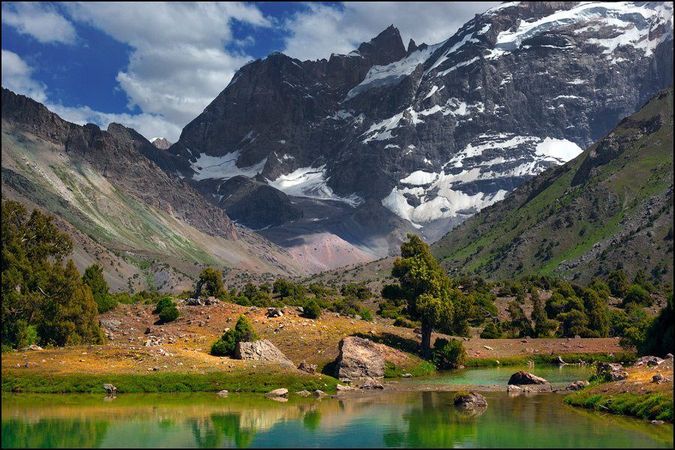
What Is Happening to Tajikistan’s Main Nature Reserve?

International experts have warned of a potential water crisis in the Tigrovaya Balka nature reserve, while Tajik authorities maintain that the situation remains stable and that systematic measures are underway to preserve the ecosystem.

At the center of the debate are the water regime of the Vakhsh River, the condition of the tugai forests, and growing anthropogenic pressure.

In November 2025, the International Union for Conservation of Nature (IUCN) published an assessment describing the state of the reserve, a UNESCO World Heritage Site, as “alarming.”

Experts link the primary risks to changes in the river’s hydrological regime. Regulation of the Vakhsh River through reservoirs and the redistribution of water for agricultural use have significantly reduced natural seasonal flooding, which historically sustained the tugai forests.

According to the IUCN, the ecosystem has become increasingly dependent on surface and drainage groundwater, volumes of which may be insufficient to maintain ecological balance.  The report also notes that approximately one-third of the Vakhsh River’s flow is diverted for irrigation, while part of the remaining water contains wastewater with elevated concentrations of chemical substances.

Authorities Assert the Situation Is Stable

Tajikistan’s Environmental Protection Committee disputes the severity of the assessment.

According to data from the country’s Hydrometeorological Agency, the average annual flow of the Vakhsh River in 2025 reached 468 cubic meters per second, equivalent to 89% of the long-term average. Officials state that such fluctuations fall within acceptable limits.

Water quality monitoring, conducted across 47 chemical indicators, reportedly showed only slight exceedances in sulphates and nitrites. Authorities report no recorded cases of water shortages, mass fish die-offs, or the complete drying of lakes within the reserve.

Committee representatives argue that the international evaluation relies heavily on data from 2017-2019 and does not sufficiently account for more recent developments.

Infrastructure and Anthropogenic Pressure

Scientists also point to historical infrastructure problems as a contributing factor.

Particular concern surrounds a 13-kilometer bypass canal along the northern border of the reserve, which was reportedly not cleaned for nearly three decades following the dissolution of the Soviet Union. As a result, silt accumulation led to rising water levels in certain lakes, flooding tugai forests and rendering parts of the territory unsuitable for species such as the Bukhara deer and pheasants. Some areas reportedly became marshy and overgrown with reeds.

Additional pressure stems from the expansion of settlements along the reserve’s northern boundary. Monitoring data indicate household waste contamination along 13.2 kilometers of shoreline.

Ecological Significance

The Tigrovaya Balka Reserve was established on November 4, 1938, becoming Tajikistan’s first state nature reserve. It covers 49,700 hectares, including 21,400 hectares of wetlands and more than 24,000 hectares of tugai forest.

The reserve is home to more than 30 rare animal species, including the Bukhara deer, gazelle, striped hyena, Central Asian monitor lizard, and Amu Darya shovelnose sturgeon. Over 50 bird species winter in the reserve annually.

In 2023, the site was inscribed on the UNESCO World Heritage List as part of the “Tugai Forests of Tigrovaya Balka” property.

Uzbekistan and Afghanistan Aim to Boost Trade to $5 Billion

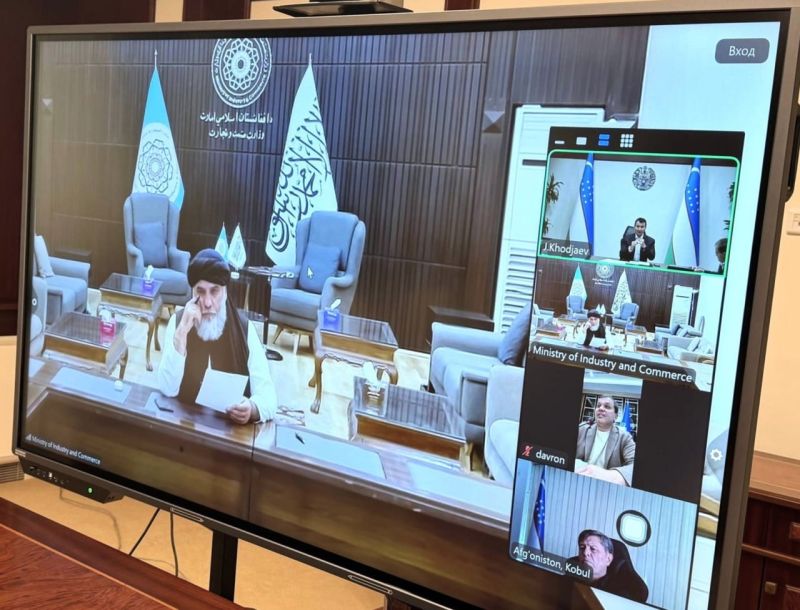
Uzbekistan and Afghanistan plan to accelerate the introduction of a preferential trade regime and significantly expand bilateral trade, Deputy Prime Minister Jamshid Khodjaev said.

In a post on his LinkedIn page, Khodjaev wrote that on February 24 he held a video conference with Afghanistan’s Minister of Industry and Trade, Nuriddin Azizi. “We discussed practical steps to expand trade and economic cooperation and preparations for an upcoming visit of the Afghan delegation to Uzbekistan,” he said.

Khodjaev noted that Uzbekistan values its “friendly and constructive relations” with Afghanistan. According to him, over the past five years bilateral trade has grown 2.5 times, from $653 million in 2021 to $1.7 billion in 2025. “Our shared goal is to increase this figure to $5 billion,” he wrote.

The discussions also addressed the development of interregional ties and the infrastructure needed to promote goods, including showrooms and warehouse facilities. The two sides considered industrial cooperation in agricultural processing, construction materials, and textiles, as well as joint initiatives in food security.

“We agreed to accelerate the entry into force of the Preferential Trade Agreement and to advance projects in investment and industrial cooperation,” Khodjaev stated. He added that, after Ramadan, work would continue in a practical format, including a business forum in Kabul and the preparation of a roadmap outlining priority areas.

Earlier data indicate that in 2024 bilateral trade reached approximately $1.1 billion, with more than $1 billion accounting for Uzbek exports to Afghanistan.

Uzbek Janitor Who Saved Child in St. Petersburg Receives Awards and Ticket Home

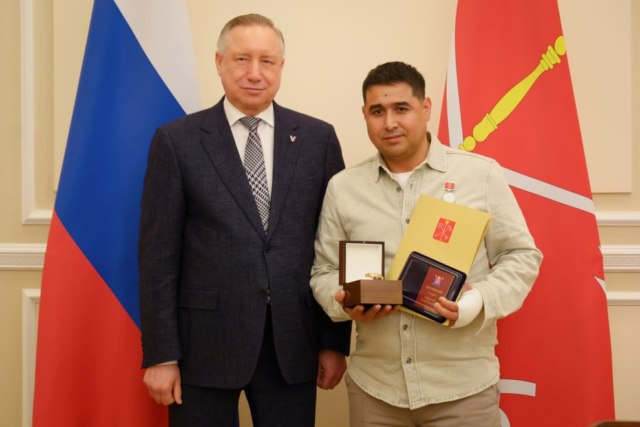
Khayrullo Ibadullayev, an Uzbek migrant worker who saved a child from falling out of a seventh-floor window in St. Petersburg, has received official recognition in both Russia and Uzbekistan, as well as a return air ticket to his home country.

According to the press service of Uzbekistan’s Migration Agency under the Cabinet of Ministers, the agency presented Ibadullayev with a plane ticket to Uzbekistan and thanked him for his bravery. Officials stated that his actions had strengthened the image and reputation of Uzbek citizens working abroad.

Ibadullayev was also awarded the Jasorat medal by President Shavkat Mirziyoyev, a state decoration given for acts of courage. His wife, Gullola Safarova, expressed gratitude to the Uzbek authorities.

“First of all, I want to thank our President for awarding my husband the Jasorat medal and honoring him so highly,” she said. Safarova recalled that when her husband called and told the family he was holding a child in his arms, they were initially alarmed. “When he said he had caught a child who fell from above, the first thing we asked about was the child’s health. We were happy and told him he did the right thing,” she said.

She added that her husband had previously demonstrated similar compassion. In 2025, he reportedly donated blood during a child’s surgery, contributing to saving the patient’s life.

Russian state news agency TASS reported that St. Petersburg Governor Alexander Beglov presented Ibadullayev with the “For Valor in Rescue” distinction during a ceremony at the Smolny government complex. According to the city administration’s press service, Beglov said: “You did not think about yourself. You were injured but saved the life of a seven-year-old child. Our entire city thanks you.”

Ibadullayev, who has been working in St. Petersburg since December 2025 for a cleaning company, also received a commemorative watch from the governor.

The child survived the fall and was hospitalized. Officials have described his condition as stable.

Chinese Firm to Modernize Historic Hydropower Plant Near Bishkek

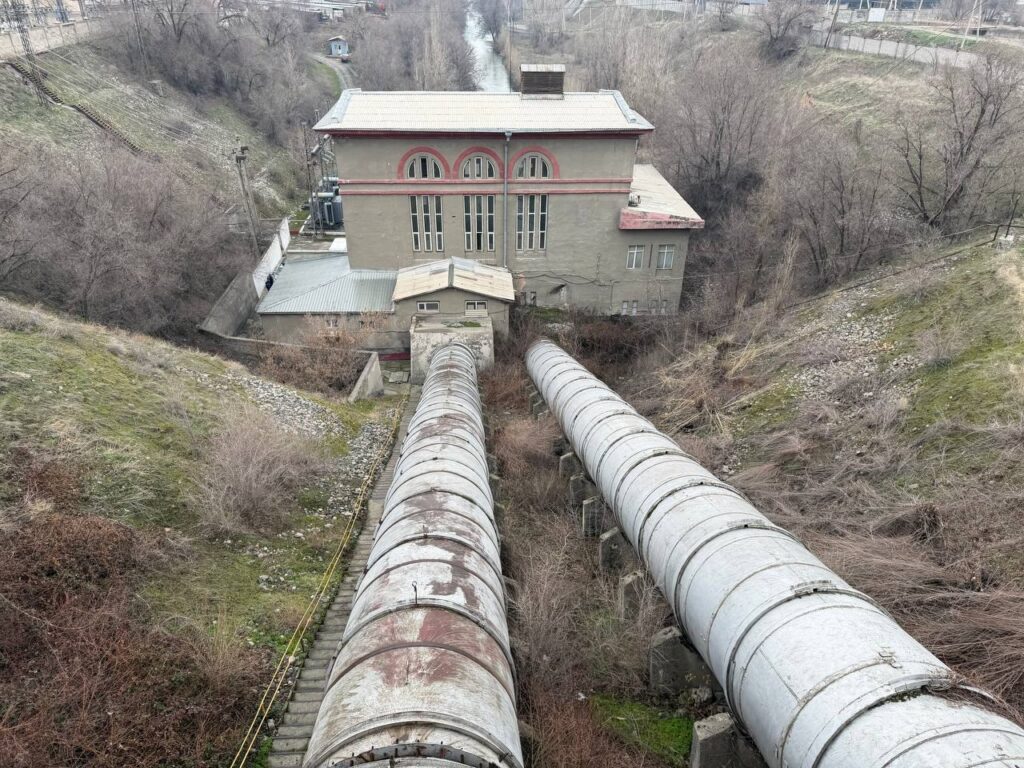
Kyrgyzstan’s state-owned Chakan HPP OJSC has signed a contract with China National Heavy Machinery Corporation (CHMC), which will serve as the general contractor for the modernization of the Lebedinovskaya hydroelectric power plant (HPP) on the outskirts of Bishkek.

The project forms part of the Ministry of Energy’s broader program to upgrade and rehabilitate hydropower facilities in an effort to reduce the country’s chronic electricity shortages and strengthen energy security.

The Lebedinovskaya HPP is the main station of the Alamedin HPP cascade, which comprises eight small hydropower plants located on the Western Big Chui Canal in the Chui region.

According to the Ministry of Energy, the modernization will involve replacing key equipment, increasing generating capacity, and extending the plant’s operational lifespan.

The project involves increasing the plant’s installed capacity from 7.6 megawatts (MW) to 10 MW and raising annual electricity generation from 37.2 million kilowatt-hours (kWh) to 53.5 million kWh.

CHMC has already begun preparing the design and cost-estimate documentation.

Lebedinovskaya HPP is one of the oldest operating hydropower plants in northern Kyrgyzstan. Construction began in May 1942, during World War II. Much of the main construction work was carried out during a harsh winter, when more than 7,000 women and children reportedly excavated frozen soil by hand, transported it across the ice, and stood in icy water to pump out up to 200 cubic meters of groundwater daily to protect the plant’s foundation. Construction was completed in one year and two weeks.

In 1943, the city of Frunze, now Bishkek, began receiving electricity from the plant. The additional power enabled factories evacuated from western parts of the Soviet Union during the war to resume operations at their new location.

The Number of Small Hydropower Plants in Kyrgyzstan Has Doubled in Five Years

Over the past five years, the number of small hydropower plants (HPPs) in Kyrgyzstan has more than doubled. The expansion of small-scale hydropower has become a key priority of state energy policy aimed at reducing electricity shortages and strengthening national energy security.

During this period, 27 small HPPs were commissioned across the country. As a result, 43 such plants are currently in operation. According to government plans, by the end of 2030, an additional 44 small hydropower facilities are expected to come online, effectively doubling the sector’s current capacity once again.

The Ministry of Energy reports that in 2026 alone, 17 new small HPPs are scheduled for construction across all regions of the country, with a combined installed capacity of 1,113.4 megawatts (MW).

Earlier, speaking before the country’s parliament, the Jogorku Kenesh, Prime Minister Adylbek Kasymaliev stated that 19 additional small HPPs with a total capacity of 203.8 MW are planned for commissioning in 2027.

“The electricity shortage is a temporary phenomenon. We are moving toward reducing the gap between electricity consumption and production,” he said.

The projected capacity figures suggest a sharp increase in generation potential. However, the announced 1,113.4 MW capacity for 17 small HPPs in 2026 appears unusually high for facilities categorized as “small” and may require clarification, as small hydropower plants typically operate at significantly lower individual capacities.

According to the Water Resources Service, Kyrgyzstan’s total hydropower potential is estimated at 174 billion kilowatt-hours (kWh), with an overall capacity of 19.8 million kilowatts (19.8 gigawatts).

This indicates that a substantial share of the country’s river-based energy potential remains undeveloped, creating room for further expansion of small-scale hydropower infrastructure.

Given Kyrgyzstan’s mountainous terrain and extensive river network, hydropower remains the backbone of its electricity generation system. The government views small HPPs as a faster and less capital-intensive complement to large hydropower stations, particularly in remote regions.

Syria After Assad: What the New Regional Order Means for Central Asia

The overthrow of Bashar al-Assad in December 2024 fundamentally reshaped Syria’s regional position. The collapse of the old power structure weakened Iran’s entrenched military and economic networks and left Russia’s previously secured foothold uncertain. As Damascus enters a new political phase, external actors are recalibrating their strategies in a landscape that looks markedly different from that of the past decade.

For Central Asian governments, the shift is not merely regional. Syria is becoming a testing ground for how mid-sized states navigate post-conflict environments shaped by larger powers, and a potential arena for economic and diplomatic outreach. As influence is redistributed and new investment and trade corridors are reconsidered, decisions taken in Damascus will increasingly intersect with Central Asia’s own foreign policy and economic calculations. In this emerging landscape, a power vacuum is being filled by states seeking to advance their interests. From the earliest days of Syria’s post-Assad transition, Turkey has been particularly active.

As part of its declared comprehensive support for the new Syrian authorities, Ankara has taken steps to consolidate its position in the Syrian Arab Republic. Turkey is actively participating in infrastructure reconstruction, investing in economic projects, and expanding military-technical cooperation with Damascus. In August 2025, Syria and Turkey signed a military cooperation agreement covering areas including counterterrorism training, cybersecurity, demining, military engineering, logistics, and enhanced coordination between their armed forces.

That same month, the two sides agreed to establish an intergovernmental business council under the Turkish Foreign Economic Relations Board to promote trade and investment cooperation between public and private companies. Turkish exports to Syria reached $3 billion in 2025, reflecting the rapid expansion of Ankara’s economic presence. For Central Asia, Ankara’s activism carries particular weight. Turkey has simultaneously deepened its political, economic, and security cooperation across the Turkic world, meaning its posture in Syria intersects with its broader regional strategy.

A central element of Turkey’s Syria policy remains the issue of refugee returns. However, the prospect of large-scale repatriation is complicated by several factors, notably the long-term presence of around 2.5 million Syrian displaced persons in Turkish society and the absence of stable socio-economic conditions in Syria to support reintegration. Over more than a decade of conflict, a generation of Syrians has grown up in Turkey, many of whom are deeply embedded in the country’s social and economic life.

Turkey’s obligations under the 1951 UN Convention Relating to the Status of Refugees, including the principle of non-refoulement, further constrain policy options. Taken together, these factors make large-scale return unlikely until Syria achieves sustained political stabilization and adequate living conditions. In the longer term, Turkey’s objective of neutralizing what it describes as the Kurdish threat emanating from Syrian territory will continue to shape its strategy.

Israel has also intensified its military and political engagement since the change of power in Damascus. It has taken steps to establish control over areas adjacent to the Golan Heights and to create a buffer zone, arguing that such measures are necessary to safeguard national security against potential terrorist threats. Israeli officials have publicly expressed support for segments of Syria’s Druze community and signaled to the new authorities in Damascus that discrimination against minorities could trigger decisive countermeasures, including military action.

These warnings were underscored in July 2025 amid intercommunal clashes in Suwayda between Druze and Bedouin groups, when Israeli forces conducted strikes against Syrian government units deployed in the area. An airstrike targeting the entrance to the Syrian Armed Forces General Staff building further demonstrated Israel’s readiness to act. Current Israeli policy suggests an intention to retain control over the buffer zone in the Mount Hermon area and along the Golan Heights for the foreseeable future.

The Persian Gulf states, Saudi Arabia, Qatar, and the United Arab Emirates view post-Assad Syria primarily as a destination for large-scale economic investment. Saudi Arabia has announced plans to invest more than $6.4 billion in sectors including airport infrastructure, energy, telecommunications, and transport, signaling a preference for tangible economic engagement over symbolic political gestures.

At the same time, Gulf states regard the new Syrian government as a potential stabilizing factor in the Middle East following the weakening of Iranian influence. Cooperation with Damascus to combat drug trafficking, which has in recent years posed a significant security challenge for Arab monarchies, remains a priority.

European states moved quickly after the political transition to restore diplomatic contacts and outline mechanisms for economic assistance. The European Union has indicated plans to allocate approximately $722 million for humanitarian and reconstruction projects in 2026-2027. For European policymakers, however, the Syrian file remains closely linked to the issue of refugee returns, which often takes precedence over broader geopolitical considerations. The repositioning of Turkey, Israel, the Gulf monarchies, and the European Union creates a new strategic landscape — one that Central Asian states cannot ignore, even if they remain cautious about direct involvement.

Central Asian states are approaching relations with Syria cautiously. During the years of conflict, Syria was widely perceived in the region as a hub of transnational terrorism and a destination for militants, including individuals from Central Asia. This perception has shaped a persistent narrative portraying Syria as a high-risk environment for travel and investment. While the new Syrian leadership has pledged to combat terrorism and distance itself from extremist networks, governments in Central Asia continue to proceed carefully.

A useful point of comparison is Central Asian engagement in Gaza, another politically sensitive conflict environment where humanitarian imperatives intersect with geopolitical risk. At the inaugural Board of Peace meeting in Washington in February 2026, Kazakhstan signaled its willingness to contribute to Gaza’s reconstruction and broader stabilization efforts, including financial support and potential participation in peacekeeping initiatives, while Uzbekistan publicly pledged support for rebuilding efforts through specific projects. No Central Asian state has yet deployed troops directly into Gaza outside these pledges. This pattern of prioritizing humanitarian and reconstruction-oriented engagement through multilateral mechanisms, rather than early military deployments, suggests that Central Asian governments are likely to approach post-Assad Syria in a similarly calibrated manner — emphasizing symbolic diplomacy and multilateral frameworks alongside carefully structured economic cooperation.

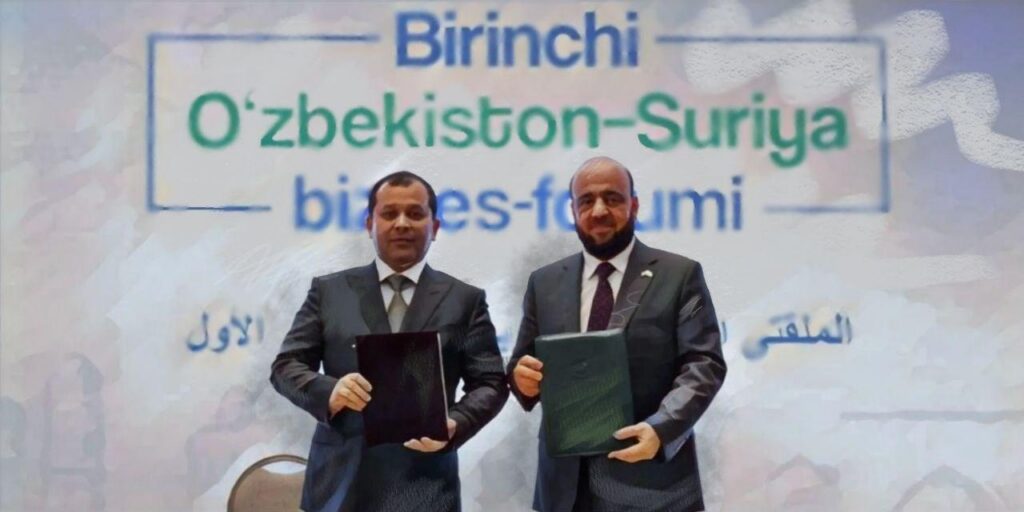
In practice, Uzbekistan appears the most likely Central Asian state to test limited cooperation with Syria first. That cautious outreach is already taking institutional form. In February 2026, Syria and Uzbekistan signed a memorandum of understanding aimed at expanding trade, investment, and economic cooperation. While the agreement does not yet imply large-scale capital commitments, it signals Tashkent’s willingness to establish formal channels with the new Syrian authorities and explore practical engagement within a controlled framework. Tashkent has, in recent years, pursued pragmatic diplomacy across the Middle East, including expanded ties with the Gulf states and Turkey, and has demonstrated a willingness to separate economic cooperation from ideological alignment.

Kazakhstan, with its multi-vector foreign policy and experience balancing relations among competing powers, could follow through humanitarian assistance or multilateral reconstruction mechanisms rather than rapid bilateral investment. Kyrgyzstan and Tajikistan, given fiscal constraints and domestic security sensitivities linked to past fighter flows to Syria, are likely to move more cautiously. Turkmenistan’s traditional neutrality would also suggest a limited, economically framed approach if engagement occurs at all.

Geographical distance and the logistical complexity of establishing cost-effective trade routes between Central Asia and the Levant further constrain immediate economic engagement.

Nonetheless, Syria’s location and the scale of external involvement are positioning it as a potential investment center and, under certain conditions, a transport hub with access to the Mediterranean Sea.

According to statements by the new Syrian authorities, $28 billion in investments were pledged in the six months following the fall of the Assad regime, primarily in infrastructure, energy, and real estate. The United States, Turkey, Qatar, Saudi Arabia, and the United Arab Emirates are reported to be among the largest investors.

Separately, international donors pledged nearly $6.5 billion in support for Syria’s recovery at a conference hosted by the European Union in Brussels in March 2025, aimed at stabilizing the country and supporting a peaceful political transition.

The Syrian authorities have amended laws to permit foreign investors to repatriate profits and transfer capital abroad as part of efforts to improve the investment climate, a change officials describe as enhancing Syria’s attractiveness for long-term capital.

The question is less whether opportunities exist than whether Central Asian governments are willing to absorb the political and reputational risks of early engagement. A phased and pragmatic approach, beginning with humanitarian and cultural aspects and gradually extending to economic cooperation, could allow Central Asian countries to test the waters while managing risk. Syria’s reconstruction needs span sectors in which Central Asian states possess relevant capabilities, including construction and basic infrastructure, energy modernization, irrigation and agricultural development, and technical training.

Historical ties may also serve as a symbolic foundation for renewed dialogue. Figures such as Sultan Az-Zahir Baybars and the philosopher Al-Farabi, associated with the broader historical space of the Great Steppe and the Arab East, are often cited as examples of long-standing cultural and political interconnections.

As Syria’s future is increasingly shaped by external actors, Central Asian states face a strategic choice: to remain marginal to unfolding developments or to seek carefully calibrated participation. Should they fail to engage, the current window of opportunity may close before it is meaningfully explored.