• KGS/USD = 0.01144 0%
  • KZT/USD = 0.00212 0%
  • TJS/USD = 0.10432 -0.29%
  • UZS/USD = 0.00008 0%
  • TMT/USD = 0.28571 0.28%
  • KGS/USD = 0.01144 0%
  • KZT/USD = 0.00212 0%
  • TJS/USD = 0.10432 -0.29%
  • UZS/USD = 0.00008 0%
  • TMT/USD = 0.28571 0.28%
  • KGS/USD = 0.01144 0%
  • KZT/USD = 0.00212 0%
  • TJS/USD = 0.10432 -0.29%
  • UZS/USD = 0.00008 0%
  • TMT/USD = 0.28571 0.28%
  • KGS/USD = 0.01144 0%
  • KZT/USD = 0.00212 0%
  • TJS/USD = 0.10432 -0.29%
  • UZS/USD = 0.00008 0%
  • TMT/USD = 0.28571 0.28%
  • KGS/USD = 0.01144 0%
  • KZT/USD = 0.00212 0%
  • TJS/USD = 0.10432 -0.29%
  • UZS/USD = 0.00008 0%
  • TMT/USD = 0.28571 0.28%
  • KGS/USD = 0.01144 0%
  • KZT/USD = 0.00212 0%
  • TJS/USD = 0.10432 -0.29%
  • UZS/USD = 0.00008 0%
  • TMT/USD = 0.28571 0.28%
  • KGS/USD = 0.01144 0%
  • KZT/USD = 0.00212 0%
  • TJS/USD = 0.10432 -0.29%
  • UZS/USD = 0.00008 0%
  • TMT/USD = 0.28571 0.28%
  • KGS/USD = 0.01144 0%
  • KZT/USD = 0.00212 0%
  • TJS/USD = 0.10432 -0.29%
  • UZS/USD = 0.00008 0%
  • TMT/USD = 0.28571 0.28%

Kazakhstan Restores Populations of Przewalski’s Horse, Turanian Tiger, and Snow Leopard

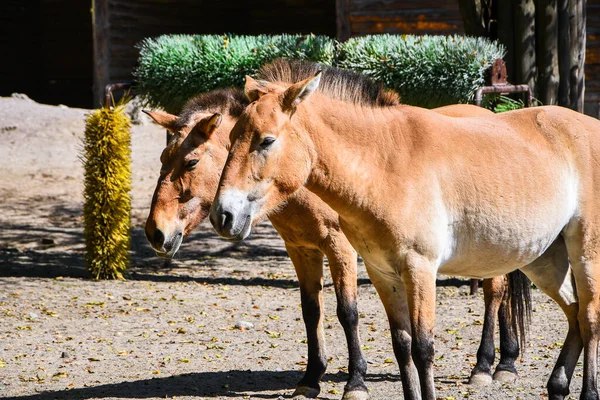
Kazakhstan is making significant strides in wildlife conservation, actively restoring populations of Przewalski’s horse, the Turanian tiger, and the snow leopard. These efforts mark a major step toward reintroducing species that were once native to the region but had either disappeared or faced severe population declines.

Hungary Supports Reintroduction of Przewalski’s Horse

Kazakhstan is continuing its ambitious program to restore endangered species, including Przewalski’s horse, a once-dominant species of the Kazakh steppes that vanished from the wild in the 1960s. Thanks to international conservation programs, their numbers have been preserved in captivity, and now efforts are underway to return them to their natural habitat.

As part of this initiative, Hungary will provide 150 Przewalski’s horses, which will be released into Kazakhstani nature reserves, Hungarian Minister of Agriculture István Nagy announced.

“This step will increase safety for this horse species in case of disease outbreaks,” Nagy stated.

The first seven horses have already been brought from the Prague Zoo to the Altyn Dala Reserve in Kazakhstan’s Kostanay region.

Reintroducing the Turanian Tiger

In parallel, Kazakhstan continues its efforts to bring back the Turanian tiger, a subspecies that disappeared from the region 70 years ago. To support this initiative, the government has established the Ile-Balkhash Nature Reserve, which now serves as a habitat for key prey species.

To date, the reserve has received 205 riparian deer and more than 100 kulans. Authorities have also increased the populations of roe deer and wild boars, ensuring an adequate food supply for the tigers.

In fall 2023, two tigers from the Netherlands arrived at the reserve, and another three to four animals from Russia are expected to be introduced soon.

Snow Leopard Population Doubles

Kazakhstan has also made remarkable progress in snow leopard conservation. According to Daniyar Turgambayev, chairman of the Forestry and Wildlife Committee of the Ministry of Ecology and Natural Resources, the number of snow leopards in the country has now reached 180 individuals, double the population recorded in the 1990s.

“Specially protected natural areas covering 3.6 million hectares have been established in key snow leopard habitats. Currently, about 70% of their range is under official protection,” Turgambayev stated.

The government has deployed photo traps and satellite telemetry to monitor the snow leopard population. Eleven leopards have been fitted with satellite collars, allowing researchers to track their movements and adaptation to the wild.

Expanding Protected Areas

Since gaining independence, Kazakhstan has dramatically expanded its protected natural areas, from 869,000 hectares to 30.9 million hectares. This expansion has not only helped revive endangered species but also significantly strengthened overall biodiversity protection.

With an integrated approach to conservation, Kazakhstan has positioned itself as a leader in Central Asia in the reintroduction of endangered species and the preservation of natural ecosystems.


Bishkek Considers Monorail System to Ease Transport Woes

Bishkek is exploring the possibility of building a monorail system to address its long-standing transport challenges and alleviate traffic congestion in Kyrgyzstan’s rapidly growing capital.

According to the Kyrgyz Ministry of Economy and Commerce, discussions were held on March 19 between Chinese company CRRC Changchun Railway Vehicles, the Bishkek municipality, and Kyrgyzstan’s national railway company Kyrgyz Temir Jolu. The talks focused on assessing the feasibility of constructing a monorail network in Bishkek.

The parties agreed to conduct a detailed study of the project, evaluating its economic and technical viability. As part of this process, the Bishkek municipality will provide sketches of the proposed monorail system for analysis. City officials also emphasized that the project could be implemented as a public-private partnership, creating opportunities to attract foreign investment.

If built, a monorail system could significantly improve Bishkek’s public transport infrastructure, offering a modern and efficient alternative for city residents. The project aims to reduce traffic congestion, shorten travel times, and improve urban mobility.

The idea of constructing a monorail in Bishkek was first proposed in 2020. At the time, then-acting mayor Balbak Tulobaev dismissed skepticism surrounding the project and even suggested that in the future, monorail travel could extend as far as Karakol.

In 2021, a memorandum of cooperation was signed with the Turkish company Sky Ray Ve Oto Yedek Parça Ekipmanlari Üretim Sanayi A.Ş. during President Sadyr Japarov’s official visit to Turkey.

By 2022, the municipality had developed a preliminary plan for high-speed transport lines over the Ala-Archa and Alamedin rivers, which connect the southern and northern parts of the city.

While the monorail remains in the planning stage, the renewed discussions signal a potential step toward modernizing Bishkek’s transport network and easing its growing traffic burden.

Kyrgyzstan’s Largest Gold Deposit: Environmental Disaster on the Horizon?

Concerns over a potential environmental catastrophe at the Kumtor mine, Kyrgyzstan’s largest gold deposit, have gained traction following a recent statement by Adilet Usupbaev, an ecologist from the National Academy of Sciences. According to Usupbaev, a waste dump at the high-altitude mine is shifting toward the Kumtor River, which feeds into the Naryn River and, eventually, the Syr Darya River, raising fears of severe contamination if waste reaches the waterway.

Ecologist Raises Alarm in Parliament

Speaking in Parliament, Usupbaev explained that waste rock dumps, formed as a byproduct of mining operations, are gradually shifting. While several such dumps exist at Kumtor, one in particular is now edging closer to the Kumtor River.

“If the dump reaches the Kumtor River, it will be a disaster. We need urgent measures to stop its movement, planting Caragana shrubs, for instance. As an experiment, we planted them in the area, and they took root. The shrubbery won’t stop the dump entirely, but it’s at least an attempt,” Usupbaev said.

He warned that waste accumulation at mining sites across the country is increasing each year, potentially leading to widespread environmental damage if proper land reclamation is not implemented. Many dumps, he noted, contain harmful chemical compounds.

Mining Company Rejects Claims

The Kumtor Gold Company dismissed the ecologist’s concerns, asserting that his claims lack an objective basis. The company emphasized that the movement of waste dumps is occurring at a slower rate than anticipated.

“At present, actual displacement is within our 2023 forecast and does not yet match the projected values for 2025. The dump remains 160 meters from the 2025 boundary and roughly one kilometer from the Kumtor River,” the company stated.

Kumtor officials insisted that continuous scientific monitoring allows them to assess and manage geotechnical risks, preventing potential hazards such as dump collapses or water contamination. They further argued that the dumps consist solely of waste rock mass, free of harmful chemical elements.

Has This Happened Before?

Kumtor has previously been the cause of significant environmental issues. In 1998, a traffic accident led to almost a ton of cyanide spilling into a river near the village of Barskoon.

In terms of waste dump movements, in 2013, shifting rock masses threatened residential areas, administrative buildings, and a weather station, forcing the company to demolish and relocate infrastructure.

According to Isakbek Torgoev, head of the Geoecological Monitoring Laboratory at the Kyrgyz National Academy of Sciences, the movement of waste rock dumps is a constant process at Kumtor due to the thawing of permafrost beneath them.

“These dumps are always moving, sometimes faster, sometimes slower, but Kumtor’s geotechnical service closely monitors them. The Lysyi Glacier dump is currently the closest to the Kumtor River, but it is still about a kilometer away,” Torgoev told The Times of Central Asia.

Torgoev recalled visiting the mine a decade ago as part of a government commission tasked with inspecting the dumps. At the time, authorities stated that all waste dumps should be stabilized by the mine’s closure, a goal that has yet to be fully achieved.

Future Plans for Stabilization

Torgoev noted that Kumtor has a land reclamation plan for post-closure stabilization, which includes planting vegetation to anchor the rock and prevent further movement — an established practice in the mining industry.

“There are dumps from ten years ago at Kumtor that have become overgrown with wild plants and are now stable. Given this, along with Kumtor’s geo-monitoring efforts and their stated commitment to mine reclamation, an immediate threat to the Kumtor River seems unlikely,” he said.

Tashkent Supermarket Expands to Manhattan, Bringing Central Asian Flavors and Culture to the West Village

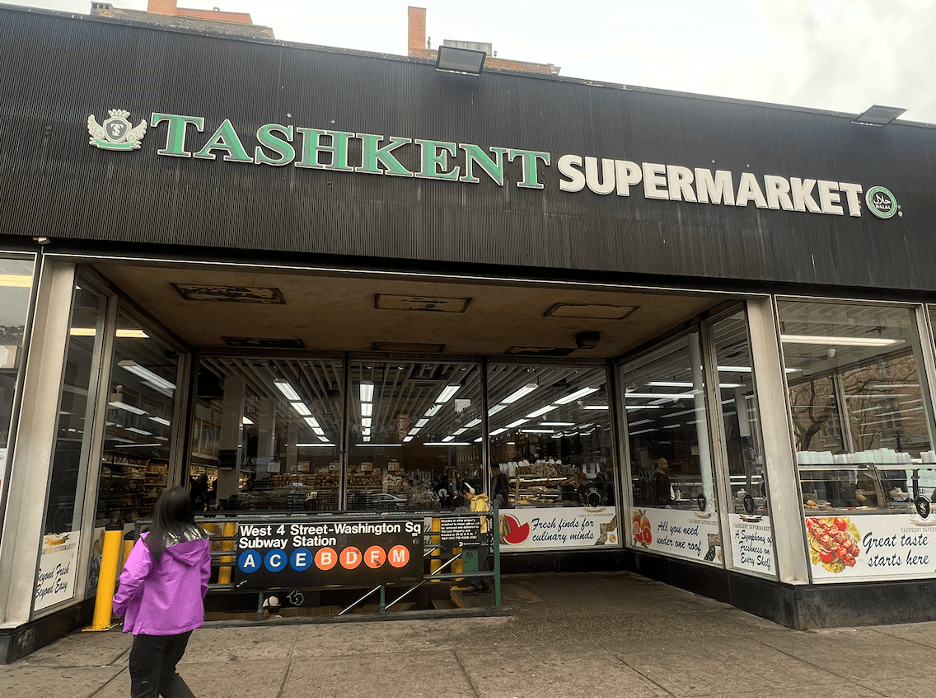
After years of the iconic Brighton Beach grocery store and its ever-fresh hot bar, Tashkent Supermarket announced it would open its first Manhattan location in 2022, spurring excitement and anticipation in the West Village. 378 Sixth Avenue is now home to an intoxicating array of fresh Central Asian foods, imported products, and friendly faces sharing incredible cultures. TCA went to the new Manhattan branch to talk to patrons about their thoughts on the new location, how the food tastes, and their knowledge of Uzbekistan and Central Asia.

We first spoke with Margarita, an ethnic Russian who has lived in New York for the past three years. Before moving to New York, she lived in Tashkent for 16 years.

Located right at the West 4th Street-Washington Square subway stop, Tashkent Supermarket sees a lot of foot traffic

“I’ve been to this location a few times already; it’s good but not quite as big as the flagship store in Brighton,” she told me. “I go for the imported Russian food; their grechka (buckwheat) is the best, and their hot bar tastes exactly like the food I miss from Uzbekistan. I go to their stores thrice a week, and importantly, the prices are very competitive for New York, especially meat and produce.”

Among the American produce and packaged products, Armenian juices, Russian cookies, and Uzbek seasonings line the shelves. Unfamiliar patrons pick up and inspect foreign products and inspect them.

Two girls, who admitted they didn’t know much about Uzbekistan or Central Asia, peered through the store’s window, watching people place syrniki (cottage cheese pancakes) into plastic containers.

“These pancakes really caught my eye,” one said. “I’ve tried Afghan food before, but never Uzbek or other Central Asian cuisine. This supermarket in my neighborhood will help expand my palate and let me try new things.”

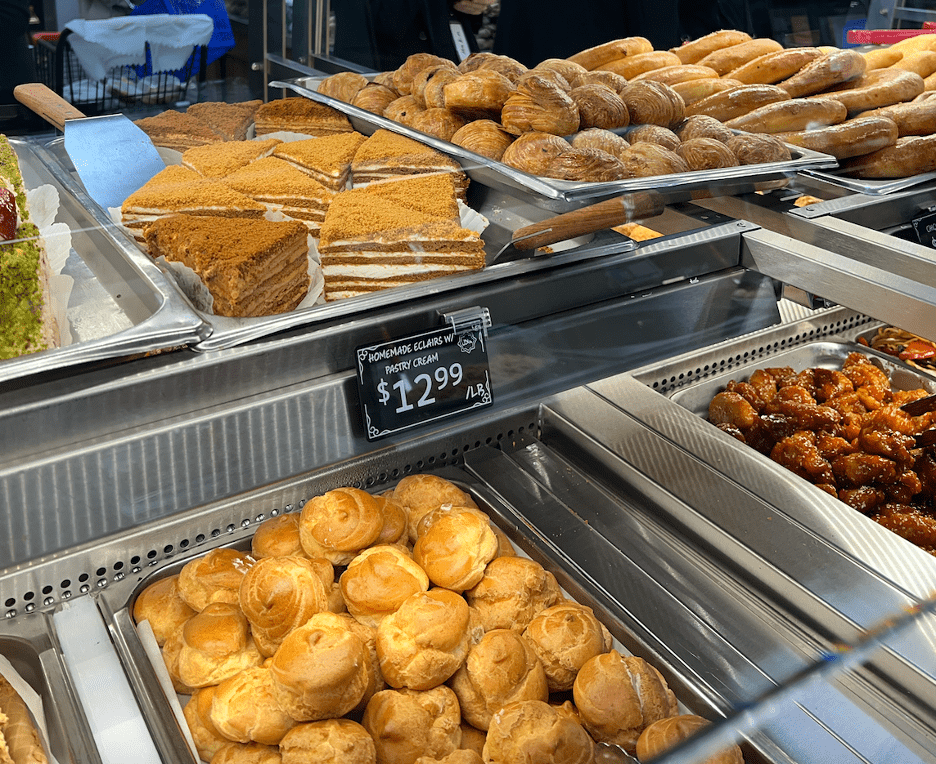
Hot bar food includes fresh salads, chubereki, samsa, manty, and pastries

Ilona, a native of Vilnius, Lithuania, has lived in New York for over 25 years, and her whole family loves Tashkent Supermarket.

“It is a slice of home in New York, and they have a great selection of products from the former Soviet Union. It is the only place in the city where I can find the ingredients I need to make my favorite food. Parsley root, dill, and other herbs are my main purchases here. I love this store and its community so much.”

Aizhan, an ESL teacher from Almaty, has lived in New York for nine years.

“It is my first time at the Manhattan location. It is excellent, and the prices are very reasonable. They are my go-to for catering orders, and everyone is always happy with the quality and taste of the food. They do a phenomenal job making [Central Asian] food. I have not been back [to Kazakhstan] in years, but coming to Tashkent Supermarket makes me feel like I have transported myself back to Almaty.”

Michele, a New York native, traveled to Uzbekistan, Kyrgyzstan, Kazakhstan, and Mongolia last year. She brought her friend to the supermarket to show him the foods she had tried in Central Asia and to inspire him to come on her journey to Kyrgyzstan this coming summer.

“The hot bar here is the best. I am a samsa [savory pastry] fanatic, and their spinach ones hit the spot. Coming here allows me to feel the sense of adventure I felt traveling in Central Asia. The food here is identical to what I ate for three months out there, it’s incredible.”

Three women, visiting New York for the weekend, saw the supermarket in an Eater article.

“I know nothing besides [Uzbekistan] being a former Soviet republic in Asia,” said one. “Today we’re trying manty (dumpling), samsa, markovka (Korean carrot salad), and plov (rice dish). We were so excited to see this supermarket in the Eater article and are excited to try new foods on our trip! That’s the point of visiting New York City!”

Pictures of Uzbek monuments adorn the walls next to pictures of New York City

Larry, a West Village native, said, “It’s just super unique! I don’t know much about Uzbekistan itself, but I come here multiple times a week just for the plov. It’s so rich and flavorful I cannot get enough of it. The raisins are amazing, they tie the flavors together so nicely. I am also a huge fan of the spinach chebureki (deep-fried pastry).”

Katya, a young professional living in Brooklyn, spent the summer of 2024 in Bishkek studying Russian through a language fellowship.

“I’m taking my friend here for the first time to show her what I ate last summer. I’m also here for the candies. I’m excited that I can show my friends a sliver of what my life was like in Bishkek here in New York. This new location is amazing, but their store in Brighton Beach is massive.”

Damon and Sam were enjoying a container of plov on the street. They told me they thoroughly enjoy the Brighton Beach location but are even happier to have this store right around the corner from their apartment.

“It makes you feel like you’re living in New York. Having a supermarket like this where you can try different cultures’ food is amazing. We all celebrate Uzbek culture now, and I could not be happier having this store so close to my home. It also helps that their prices are great!”

Tashkent Supermarket has been an institution amongst the Russian-speaking population in New York City for years. Its first-ever Manhattan location is a step in introducing non-Russian speakers to different cultures, foods, and tastes. Aside from its loyal customer base, many New Yorkers are expanding their horizons and are excited to try Central Asian cuisine and products and learn more about Uzbekistan.

Turkmenistan Government Monitoring Former Law Enforcers and Imposing Travel Restrictions

Turkmenistan’s Ministry of Justice has launched an initiative to collect data on former Interior Ministry officials to track those who have left the country. This move is the latest in a series of efforts by the government to monitor and restrict its citizens’ ability to travel abroad.

Tracking Former Law Enforcement Officers

Since February 2025, the Ministry of Justice has been compiling information on former law enforcement officers who held ranks of major or higher and served between 1991 and 2024. The Ministry of Internal Affairs, the Ministry of National Security (MNS), the Migration Service, and the Prosecutor’s Office have been instructed to assist in the campaign, which is expected to conclude by the end of April. The main objective is to identify retired officers who have relocated abroad.

Several theories have emerged regarding the authorities’ motives. One explanation is that routine inspections revealed cases of former officers settling in other countries after retirement. Another theory links the initiative to the recent controversy surrounding Rustam Inoyatov, the former head of Uzbekistan’s National Security Service, who, along with his family, acquired Vanuatu citizenship through a “golden passport” program. Turkmen security services suspect that similar schemes may have been used by their own former colleagues.

Particular scrutiny is being placed on those who had professional ties with Inoyatov during his tenure. Law enforcement veterans are now required to submit reports detailing their current residence and occupation. In cases where an ex-officer has passed away, their relatives must provide official documentation, including death certificates and burial site information.

New Restrictions on Travel Abroad

Retired law enforcement officers have been informed that they may only leave the country for medical reasons and must obtain official authorization from the Ministry of Health.

This is not the first instance of the government tightening travel restrictions. In September 2024, reports surfaced that public sector employees were being compelled to surrender their biometric passports or provide proof that they did not possess one. 

While officials have not commented on these measures, observers believe they are linked to the increasing number of citizens emigrating in search of work or permanent residency. Additionally, recent reports indicate that some Turkmen nationals have participated in Russia’s war against Ukraine, with some receiving Russian citizenship in return for their military service.

Confiscation of Student Passports

Travel restrictions have also been extended to students. In the fall of 2024, media reports revealed that students enrolling in Turkmen universities were required to surrender their passports to prevent them from traveling abroad. 

Students who refuse to comply and sign a receipt acknowledging the surrender of their passports face the risk of being denied admission. According to sources, this policy has been in place for two years, with passports held by faculty deans for the duration of students’ studies.

Although officials have not provided explanations for these measures, university professors suggest that they aim to curb mass youth migration. Previously, students were only required to sign receipts, but authorities have now escalated their efforts by confiscating passports entirely.

Uzbekistan and Turkmenistan Reach Agreement on Amu Darya Water Usage

A delegation from Uzbekistan’s Ministry of Water Resources visited Turkmenistan on March 13-14 to discuss bilateral cooperation on water management, Dunyo reports. Officials from both countries met in Turkmenabat to address key issues, including the maintenance and modernization of water infrastructure, flood prevention, riverbank reinforcement, and efficient water use. As part of the discussions, the sides reaffirmed their commitment to implementing agreements reached during the fourth Uzbek-Turkmen intergovernmental meeting on water management. They agreed to collaborate on hydrotechnical projects aimed at minimizing water losses in the Amu Darya River and optimizing resource use.

The two countries also plan to conduct joint research on shared water bodies, exchange expertise on water-saving technologies and digital management systems, and enhance training programs for water management specialists.

During the visit, the Uzbek delegation toured the Tuyamoyin hydroelectric complex, where representatives discussed potential improvements to its operations.

Previously, The Times of Central Asia reported that Kazakhstan is set to receive 11 billion cubic meters of irrigation water by April 2025 under an agreement signed in Dushanbe.

Meanwhile, on World Rivers Day of Action, environmental groups raised concerns about growing threats to Central Asia’s rivers and lakes. Organizations such as Rivers Without Boundaries and Friends of the Earth US have called on international financial institutions to reconsider funding for hydropower projects in the region.