• KGS/USD = 0.01144 0%
  • KZT/USD = 0.00192 -0%
  • TJS/USD = 0.10849 0.37%
  • UZS/USD = 0.00008 0%
  • TMT/USD = 0.28571 0.28%
  • KGS/USD = 0.01144 0%
  • KZT/USD = 0.00192 -0%
  • TJS/USD = 0.10849 0.37%
  • UZS/USD = 0.00008 0%
  • TMT/USD = 0.28571 0.28%
  • KGS/USD = 0.01144 0%
  • KZT/USD = 0.00192 -0%
  • TJS/USD = 0.10849 0.37%
  • UZS/USD = 0.00008 0%
  • TMT/USD = 0.28571 0.28%
  • KGS/USD = 0.01144 0%
  • KZT/USD = 0.00192 -0%
  • TJS/USD = 0.10849 0.37%
  • UZS/USD = 0.00008 0%
  • TMT/USD = 0.28571 0.28%
  • KGS/USD = 0.01144 0%
  • KZT/USD = 0.00192 -0%
  • TJS/USD = 0.10849 0.37%
  • UZS/USD = 0.00008 0%
  • TMT/USD = 0.28571 0.28%
  • KGS/USD = 0.01144 0%
  • KZT/USD = 0.00192 -0%
  • TJS/USD = 0.10849 0.37%
  • UZS/USD = 0.00008 0%
  • TMT/USD = 0.28571 0.28%
  • KGS/USD = 0.01144 0%
  • KZT/USD = 0.00192 -0%
  • TJS/USD = 0.10849 0.37%
  • UZS/USD = 0.00008 0%
  • TMT/USD = 0.28571 0.28%
  • KGS/USD = 0.01144 0%
  • KZT/USD = 0.00192 -0%
  • TJS/USD = 0.10849 0.37%
  • UZS/USD = 0.00008 0%
  • TMT/USD = 0.28571 0.28%
11 December 2025

Kazakhstan and China to Double Trade, Increase Cargo Transportation

On November 4, Kazakhstan’s Prime Minister Olzhas Bektenov arrived in Shanghai and held talks with his Chinese counterpart China Li Qiang. They discussed strengthening trade, investment, transport and logistics cooperation, agriculture, energy, and tourism. Kazakhstan and China aim to double bilateral trade turnover from last year’s historic high of $41 billion. In January-September 2024, Kazakh-Chinese trade totaled $33 billion.

Bektenov stressed that Kazakhstan is ready to increase exports to China of 180 high-value-added commodity items worth $1.6 billion. Bilateral agricultural trade increased by 5.8% from January to September 2024, reflecting China’s growing demand for Kazakhstani organic and environmentally-friendly agricultural products. The sides discussed expanding the export of Kazakh grain, crops, and livestock products.

Regarding the transport and logistics sector, the Kazakh and Chinese prime ministers noted that over 80% of land cargo transportation from China to Europe today passes through Kazakhstan. Therefore, Kazakhstan is interested in deepening cooperation within China’s Belt and Road Initiative framework.

Bektenov noted that this globally important project, together with the Trans-Caspian International Transport Route (the Middle Corridor), running through the territory of Kazakhstan, can unlock the potential of the North-South and East-West corridors. In January-September 2024, the traffic volume along the Middle Corridor exceeded the previous year’s figures by 23% and amounted to 3.4 million tons. This figure is expected to increase to 10 million tons annually by 2030.

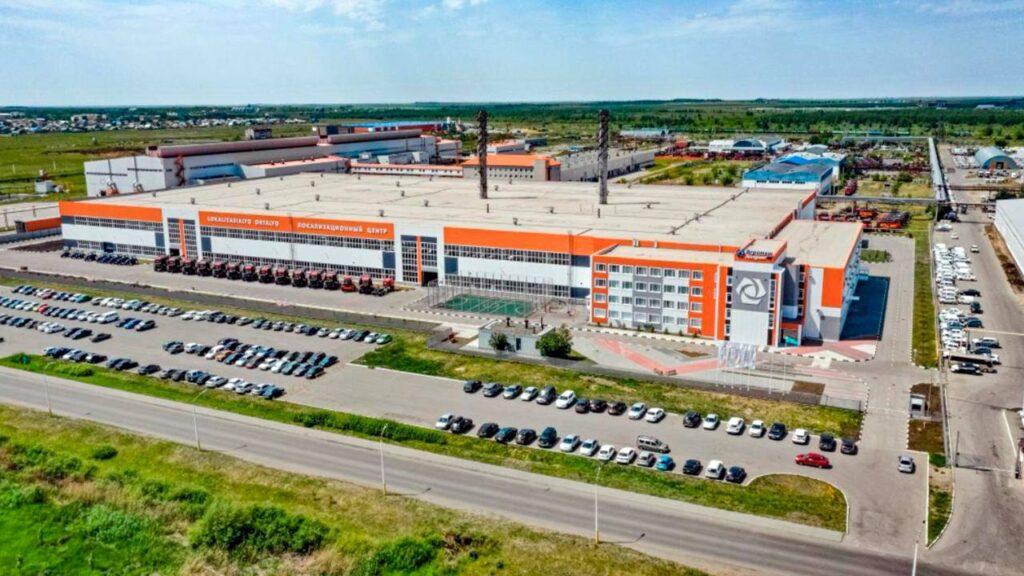
Bektenov also attended the Kazakh-Chinese investment roundtable in Shanghai, which resulted in the signing of commercial agreements with Chinese companies totaling $2.5 billion, including on energy projects and localized automotive production.

Addressing the forum, Bektenov said: “Kazakhstan and China have huge potential for implementing joint investment projects. Together, we can open new horizons for interaction and increase the effectiveness of cooperation. To this end, we should actively work to expand transit opportunities, strengthen industrial cooperation, and build ties between our business communities.”

Kyrgyzstan Backs Turkish Arms Embargo Against Israel

The Turkish authorities have sent a letter to the UN on behalf of 52 countries calling for an arms embargo against Israel in response to the ongoing war in Gaza and Lebanon, Turkish media has reported. In the letter, the Turkish authorities call the “staggering” civilian death toll “unconscionable and intolerable.” In response to the letter, Turkish Ambassador to the UN, Danny Danon stated in uncompromising terms, “What else can be expected from a country whose actions are driven by malice in an attempt to create conflicts with the support of the ‘Axis of Evil’ countries?”

Turkish President Recep Tayyip Erdogan arrived in Bishkek on November 4. During the visit, the Turkish leader will hold talks with the president of Kyrgyzstan and participate in the 11th Summit of the Council of Heads of State of the Organization of Turkic States. Following the summit, several bilateral documents will be signed to expand strategic cooperation between the countries. On the eve of Erdogan’s visit, Kyrgyzstan backed the Turkish resolution in the UN.

The authorities in Turkey have stated that with its military actions against Palestine and Lebanon, Israel has brought the entire region to the brink of a full-scale war. “This is necessary to end Israel’s illegal occupation, to prevent further violations against civilians in the Gaza Strip and the rest of the occupied Palestinian territory, as well as in Lebanon, and to prevent further regional escalation,” Turkey’s permanent representative to the UN, Ahmet Yildiz stated.

The Turkish letter was signed by 52 states, including Russia, Kazakhstan, and China, whilst the Arab League, and the Organization of Islamic Cooperation are also signatories. Kyrgyzstan, along with other Central Asian states, usually adheres to strict diplomatic neutrality regarding the Middle East conflict.

Ashgabat May Have a Metro System by 2035

Vladimir Petruk, managing director of Interbudmontazh Company, told the CIET-2024 international conference that a metro system may be built in Turkmenistan’s capital Ashgabat by 2035.

Petruk said that specialists from the Japanese company Sumitomo, the Japanese Subway Association, and the German consulting group K2 have studied Ashgabat’s geological and seismic conditions. The study’s results confirmed the possibility of building the subway using reinforced concrete structures.

The Ashgabat metro plan calls for an environmentally friendly transportation solution. In the future, it could connect the capital with the “smart city” Arkadag and the settlements of Geokdepe and Anau. According to forecasts, construction could be completed by 2035.

“Given the growing wealth and the increasing number of cars, the metro will become essential to solve the city’s transportation problems,” Petruk emphasized, noting the successful experience of operating metros in seismically active regions.

Consultations with the Ministry of Construction and Architecture of Turkmenistan are ongoing, and the UN mission plans to cooperate with the country to support the urban infrastructure development program.

Turkmenistan currently does not have a metro. The idea of building a metro in Ashgabat has been discussed since 2008 when the city mayor’s office attracted companies from St. Petersburg to the project. In 2014, then-President Gurbanguly Berdymuhamedov instructed the Ukrainian construction association Interbudmontazh to consider the possibility of realizing this project.

In 2020, the company presented the Ashgabat metro construction project developed jointly with Sumitomo and K2. However, specific dates for the start of construction and commissioning of the metro in Ashgabat have not yet been announced.

Tajikistan and ADB Sign Grant for Green Corridor Initiative

On November 1, Tajikistan’s Ministry of Finance signed a grant agreement worth $86.6 million with the Asian Development Bank (ADB) for a “Green Corridor Demonstration Project”.

This project aims to reconstruct 49 kilometers of Tajikistan’s Dangara-Gulistan highway, expand it to four lanes with a “Green Road” element, add 48.8 kilometers of bicycle lanes, and build two charging roads.

The AIIB has approved a $75.5 million loan for Tajikistan to build a 920-meter bridge, connecting 350,000 people in the northeast to Dushanbe and regional towns and the border of Kyrgyzstan.

Grain War: Has Kazakhstan Become Russia’s Victim?

The fall brought two headaches for Kazakhstani farmers: a rich grain harvest that coincided with an oversupply of grain on world markets, and Russia’s ban on exporting Kazakh wheat to and transiting through Russia. Experts complain about the 40% failure of Kazakhstani grain exports, and representatives of farmer associations complain about low prices and high production costs and ask the government to buy their surplus products. The background is talk of a grain war between Moscow and Astana.


Phytosanitary ban

According to Kazakhstan’s Ministry of Agriculture, this year the harvested area of crops amounted to 23.3 million hectares, of which 16.7 million were sown with cereals. Fieldwork has been completed by 99.7%. 26.5 million tons of grain were threshed.

Proponents of the opinion that the agricultural authorities of Kazakhstan and Russia have entered into a hidden confrontation for external grain markets argue that Kazakhstan is a victim of this trade war. They cite the restrictions imposed by Rosselkhoznadzor in October as evidence. On October 1, the Russian agency asked Kazakhstan’s Ministry of Agriculture to suspend the issuance of phytosanitary certificates for grain and its products, tomatoes, peppers, and sunflower seeds exported to the Russian Federation.

On October 3, journalists asked Vice-Minister of Agriculture Ermek Kenzhekhanuly about the stage of fulfillment of this wish. He replied that the Russian side received a reply letter requesting evidence of phytosanitary control violations. According to him, Rosselkhoznadzor had not responded as of October 3.

On October 17, the Russian Federal Service for Veterinary and Phytosanitary Surveillance temporarily banned imports of several types of agricultural goods from Kazakhstan. Transit of wheat, lentils, and oilseed flax seeds through Russia’s territory is allowed. Still, a phytosanitary certificate for the country of final destination must be issued, and grain must be transshipped directly from railcars into the ship’s holds.

At the same time, deliveries of tomatoes, peppers, sunflower seeds, and melons from Kazakhstan are prohibited, even for transit.


Obstacles in response to the ban

However, let’s carefully review the Kazakhstani press. We will find that as early as September 3rd, Kazakhstani farmers sounded the alarm—Russia is pushing our grain out of traditional markets.

Representatives of the Grain Union of Kazakhstan discussed the problems Kazakh traders face with the transit of domestic grain through the territory of the Russian Federation at a session with journalists at the Agricom forum.

However, they cited only two cases of such restrictions but tried to convey another message—Russia has introduced hidden obstacles because of Kazakhstan’s ban on grain imports from the Russian Federation, which was imposed as early as August 1.

As reported by Kazakhstan’s Ministry of Agriculture, the restrictions imply a complete ban on wheat imports by all modes of transportation. Previously, the restrictive measures provided for a ban on imports of goods by road, water, and rail (except for imports to poultry and flour mills) since April. The decision was made because, despite the previous ban, grain imports from Russia exceeded 1.1 million tons in six months.

Experts considered it a rather clumsy way to close the loopholes through which Russian grain gets to the Kazakh market and, in principle, predicted that the Russian Federation would respond no less harshly.


Attempt to reach an agreement

On October 30, two weeks after the ban, the Rosselkhoznadzor leadership negotiated with a Kazakh Ministry of Agriculture representative regarding importing “sanctioned” goods. The talks were held via video link, with Kenzhekhanuly participating.

At the same time, Rosselkhoznadzor disavowed the words of the deputy minister about the expectation of a response letter with evidence of violations. According to the agency, they have yet to receive responses from the Kazakh side to 30 letters from Rosselkhoznadzor. Plus, the actions of the Ministry of Agriculture were called “fraudulent schemes of supply of regulated products to Russia from Kazakhstan.”

Following these talks, Kazakh Agriculture Minister Aidarbek Saparov said the ban on Kazakh grain imports to Russia will probably be lifted within a week. According to him, Kenzhekhanuly had to fly to Moscow for a meeting with the deputy head of Rosselkhoznadzor for this purpose.

Since there has been no news from Kenzhekhanuly, it is unclear whether they reached an agreement with the Russian side. But here is what is remarkable: the day before, on November 4, the government of Kazakhstan held a meeting of the operational headquarters for the harvesting campaign under the chairmanship of Serik Zhumangarin.

At this meeting, it was emphasized that grain transportation through Russia is going on without restrictions, with exports to Russia for two months amounting to 43,000 tons and 104,000 tons in transit.

At the same time, they discussed complaints of “individual farmers” that they cannot deliver grain to elevators. Plus, Zhumangarin was ordered to guarantee grain purchases for farmers.

Representatives of the Grain Union of Kazakhstan suggest buying surplus grain from farmers as a way to solve the problem of a rich harvest and Russian obstacles to its export.

“We should buy these 2 – 2.5 million tons (of grain), and the government should allocate money. This is quite short money on the scale of public finances. This money is 100% repayable; that is, half of this money will return in two or three months in the form of repayment of current obligations of farmers to state financial institutions (Agrarian Credit Corporation, KazAgroFinance, Prodkorporatsiya), the rest – after the sale of grain in the spring-summer of 2025”, said Yevgeny Karabanov, an official representative of the Grain Union of Kazakhstan and founder of the group of companies ‘Northern Grain.’

So, it turns out that if the government had decided to buy grain from Kazakh farmers, it would not have reached an agreement with the Russian side. Apparently, Moscow’s embargo will continue to operate despite Kazakhstan’s “requests.”

Germany Closes Money Laundering Case Against Uzbek-Russian Billionaire Usmanov

The Frankfurt Prosecutor’s Office has completed its money laundering investigation against Uzbek-Russian businessman Alisher Usmanov. The case was settled on October 11, 2024, when Usmanov agreed to pay 1.5 million euros to non-profit organizations and 2.5 million euros to the German treasury. When these payments are completed, the case will be completely closed.

Prosecutors say the alleged actions in question occurred long ago and did not cause financial damage in Germany. This decision was made under section 153a of the German Criminal Procedure Code, which allows cases to be dropped if the crime is minor and prosecution isn’t in the public interest.

Usmanov’s lawyers praised the result, calling it a step towards restoring his reputation. They noted that the investigation found no evidence to support money laundering charges. Usmanov has now decided not to file a counter lawsuit against prosecutors or demand damages.

In 2022, a Frankfurt court deemed the searches of properties linked to Usmanov in Germany illegal, and all seized items were ordered to be returned. However, in 2023, the German Constitutional Court declined Usmanov’s complaint over the searches, stating that he had not exhausted all legal options before filing the complaint.

Previously, The Times of Central Asia reported that the news from the Hamburg court about Usmanov as broadcast by the German TV channel ARD was found to be unreliable. ARD accused Usmanov of creating a system of bribing International Fencing Federation (FIE) judges.

According to the report, the court found the information published by the ARD channel unreliable and banned its distribution as “inappropriate news based on suspicion.” If the court order is violated, the party found to be in violation can be fined up to 250,000 euros per episode or face imprisonment.