• KGS/USD = 0.01144 0%
  • KZT/USD = 0.00194 -0%
  • TJS/USD = 0.10877 -0%
  • UZS/USD = 0.00008 0%
  • TMT/USD = 0.28571 0%
  • KGS/USD = 0.01144 0%
  • KZT/USD = 0.00194 -0%
  • TJS/USD = 0.10877 -0%
  • UZS/USD = 0.00008 0%
  • TMT/USD = 0.28571 0%
  • KGS/USD = 0.01144 0%
  • KZT/USD = 0.00194 -0%
  • TJS/USD = 0.10877 -0%
  • UZS/USD = 0.00008 0%
  • TMT/USD = 0.28571 0%
  • KGS/USD = 0.01144 0%
  • KZT/USD = 0.00194 -0%
  • TJS/USD = 0.10877 -0%
  • UZS/USD = 0.00008 0%
  • TMT/USD = 0.28571 0%
  • KGS/USD = 0.01144 0%
  • KZT/USD = 0.00194 -0%
  • TJS/USD = 0.10877 -0%
  • UZS/USD = 0.00008 0%
  • TMT/USD = 0.28571 0%
  • KGS/USD = 0.01144 0%
  • KZT/USD = 0.00194 -0%
  • TJS/USD = 0.10877 -0%
  • UZS/USD = 0.00008 0%
  • TMT/USD = 0.28571 0%
  • KGS/USD = 0.01144 0%
  • KZT/USD = 0.00194 -0%
  • TJS/USD = 0.10877 -0%
  • UZS/USD = 0.00008 0%
  • TMT/USD = 0.28571 0%
  • KGS/USD = 0.01144 0%
  • KZT/USD = 0.00194 -0%
  • TJS/USD = 0.10877 -0%
  • UZS/USD = 0.00008 0%
  • TMT/USD = 0.28571 0%
16 December 2025

Kumys, Beshbarmak, and Other Wonders of the Kazakh Feast

Autumn in Kazakhstan is traditionally a time of abundant treats. Today, local chefs and experts are trying to break the stereotype of Kazakhstan having a bland and unhealthy national cuisine, and are actively marketing it to foreign guests.

The modern cuisine of Kazakhstan has absorbed a variety of Asian dishes, but also includes dishes from Soviet cuisine. Almost every Kazakhstani family is familiar with borscht and dumplings borrowed from Russians and Ukrainians, pilaf and samsa brought by Uzbeks, shashlik taken from the Caucasian peoples, and funchoza (Asian salad with noodles) and kuksi (cold noodle soup) adopted from Koreans. Of course, as in many parts of the former Soviet Union, Olivier salad is traditionally prepared on New Year’s Eve in Kazakhstan.

Turkish dishes have also become part of the daily diet in the years since independence. For example, it is impossible to imagine today’s fast food without the doner kebab. International fast food, such as pizza, hamburgers, and sushi, have also become popular in big cities. Nevertheless, traditional Kazakh dishes form the basis of the country’s eclectic cuisine.

Beshbarmak is truly a Khan’s dish. Any festive occasion is unthinkable without it, and restaurants specializing in traditional cuisine must include it in their menus. In its original version, beshbarmak is prepared from salted horse meat, including kazy, shujuk, and karta (horse intestines). Unleavened dough, potatoes, onions, and spices are also added. However, today, a variant using beef is also widespread.
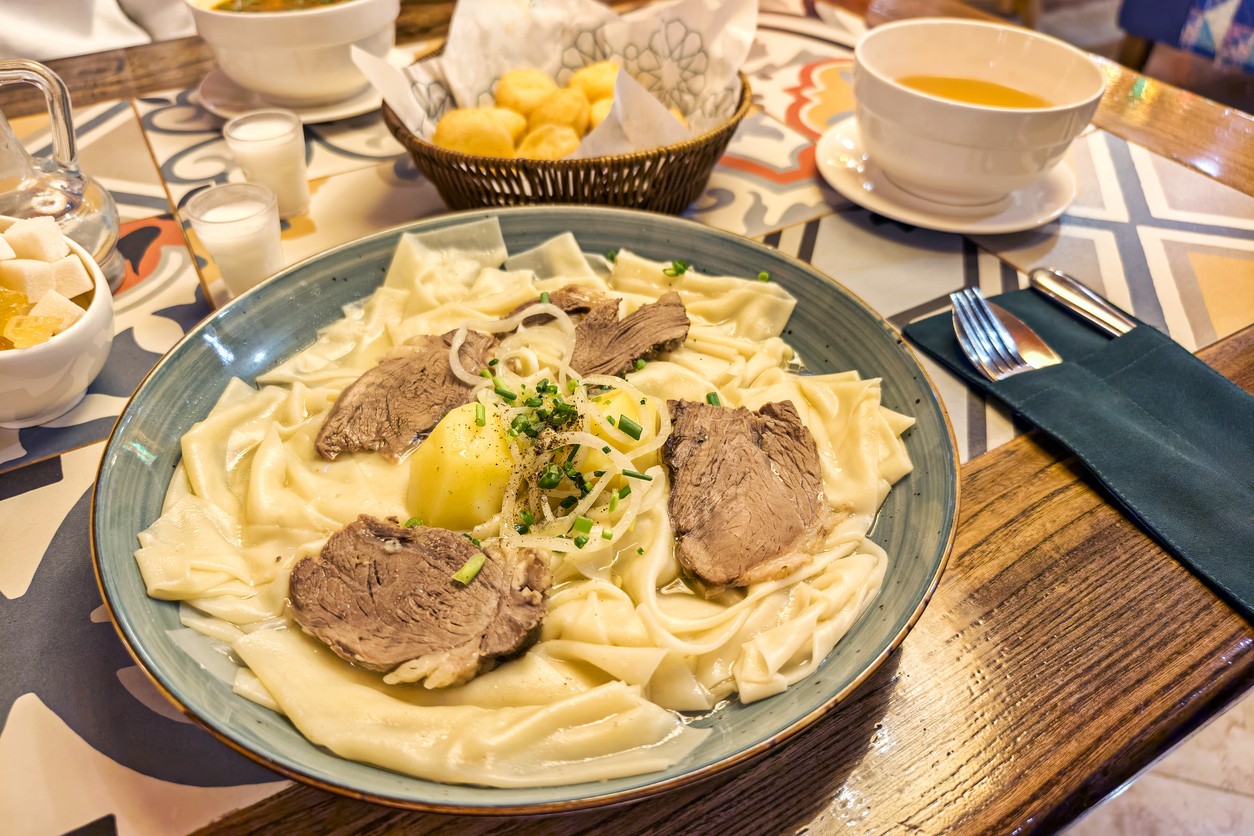
Kazakh national dish, beshbarmak; image: iStock


Beshbarmak, like many Turkic dishes, is the subject of constant dispute between Kazakhs and Kyrgyz. The neighboring peoples will always espouse different views on the question of whom created the dish. The differences in the recipe are not very significant; in Kazakhstan, the dough is usually cut into large rhombuses, and in Kyrgyzstan, into small oblong pieces. Tatarstan and Bashkiria also lay claim to the Khan’s dish. There, mutton rather than beef is most often added to horse meat.

Another pillar of Kazakh cuisine is kuirdak. Each family cherishes its version of the recipe, and kuirdak must be served in any restaurant claiming to serve the national cuisine. The dish starts with cuts of mutton and organ meat, such as heart, liver, and kidneys. These cuts are fried in sheep fat alongside potatoes, onions, parsley, and spices.
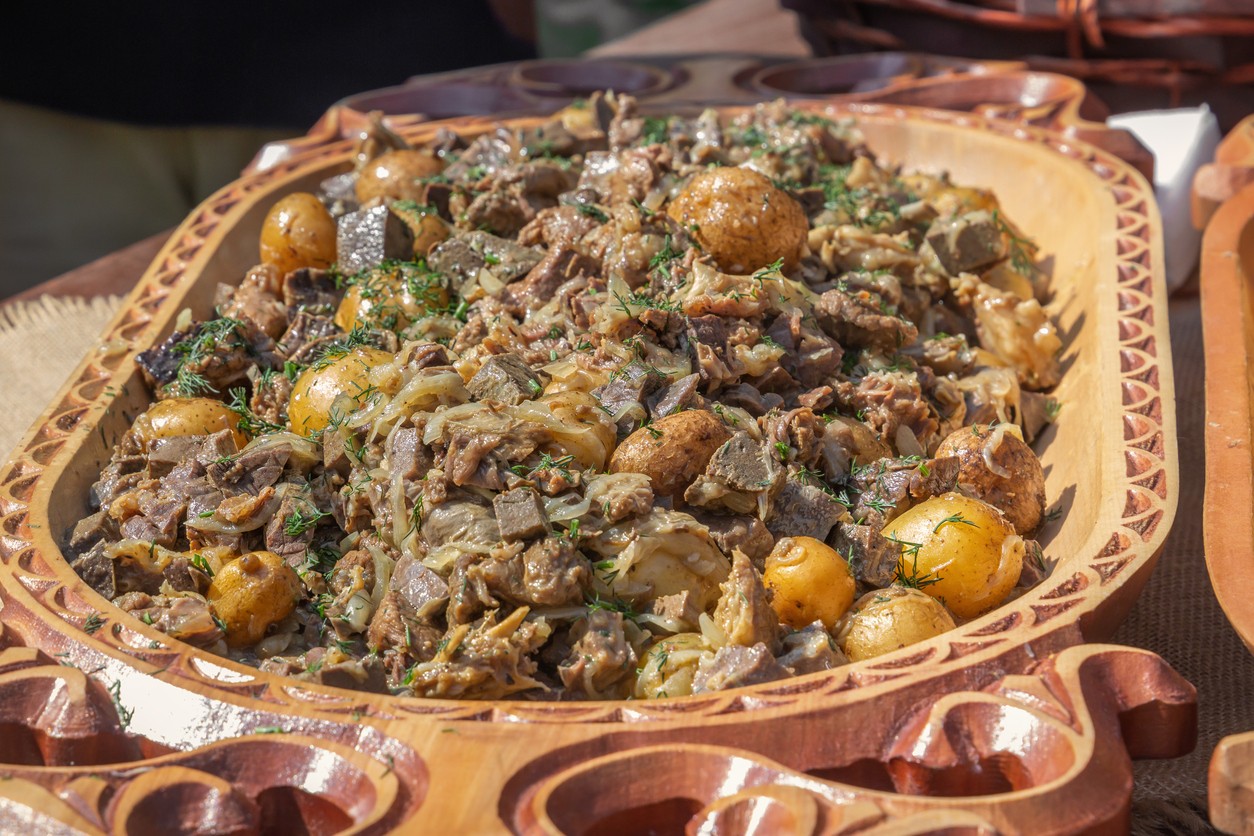
Traditional dish kuirdak; image: iStock


Unfortunately, the most traditional Kazakh dishes are not always available to foreigners, as some can now be tasted only in villages. For example, in honor of the arrival of guests, before the main meal, guests are offered a boiled sheep’s head. It is cut right at the table, and each part (ears, eyes, tongue, etc.) is served according to the status of the guests. Another dish rarely served in restaurants is baked mutton brains.

Ethnographers continue to search for and re-popularize national dishes that were common before the Russian Revolution but have now virtually disappeared in cities. For example, the ritual dish Ylpershek was usually prepared for a daughter leaving home to get married and move into her husband’s house. For this dish, a large animal was slaughtered, and the heart was cut in half so that it opened like a book. Then, it would be cleaned of blood, and salt and pepper were added. The meat and fat of the animal are then cut into thin slices. These slices are stuffed into the heart before it is closed tightly and sewn back together before being stewed. This dish symbolizes that the parents will always be in their daughter’s heart.

Another once-famous dish is zhauzhurek. The traditional food of batyrs (warriors) and children being raised to be batyrs, it is mainly made of lamb liver and fat. As scientists have found, liver is nutrient-dense and helps prevent heart disease. Today, it would be appropriate to serve zhauzhurek as a hot appetizer, but it is still rarely found in restaurants.

In rural areas, the tradition of cooking dishes on the ground, which is widespread among many cattle-breeding peoples, has also been preserved. For example, to cook karynbyrme, lamb meat wrapped in tripe is smeared with clay and placed in a prepared pit, which replaces a modern oven. The meat is then cooked in its own juice for about two hours.

Of course, according to nutritionists, the meat-heavy diet of Kazakh cuisine is not particularly suitable for those who want to lose weight. However, it is important to remember that, like the traditional dishes of other nations, this food was intended for people engaged in hard physical labor. However, horse meat is a nutritious and lean meat, which is one reason it costs more than beef in cities.
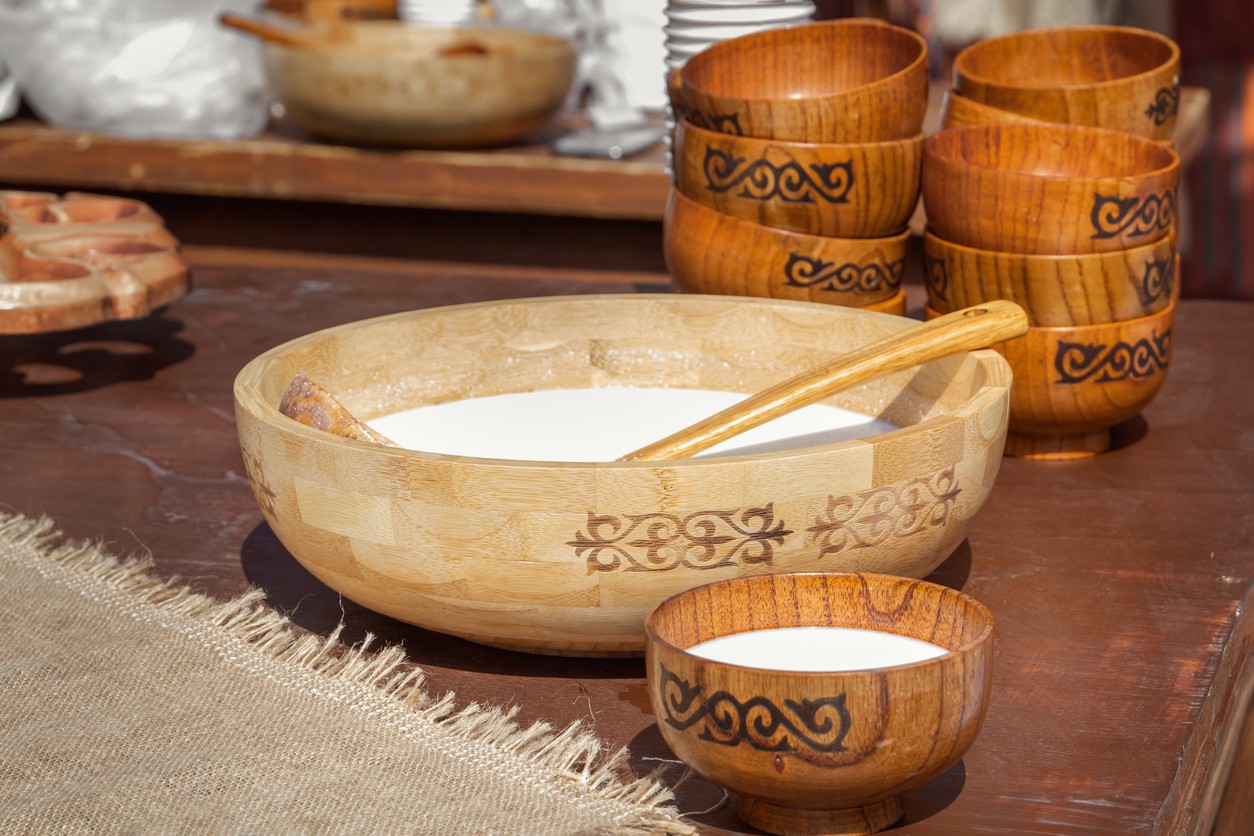
Traditional Asian wooden utensils with kumys; image: iStock.


According to Elena Ushanskaya, a candidate of medical sciences and associate professor at the Department of Nutriciology at the Kazakh Academy of Nutrition named after Sharmanov, “horse meat contains polyunsaturated fats, which are close in structure to vegetable oils, and therefore we can recommend eating horse meat even to patients with heart disease or people suffering from obesity; though not in large quantities, of course.”

Ushanskaya says that Kazakh sour milk products should be singled out as health products. Kumys, fermented horse milk, is an excellent dietary aid that promotes intestinal health. “One liter of kumys contains as much vitamin C as 1.5 kilograms of oranges,” Ushanskaya notes. “It also has a high content of vitamin A and B, which have a favorable effect on immunity. Also, kumys contains antibiotic substances that inhibit the growth of tubercle bacillus.”

In addition to kumys, other products made from mares and camel milk, such as kurt and shubat, are extremely nutritious. Besides dairy products, traditional dishes made from Kazakh cereals: talkan, tary, and zhent serve as excellent sources of amino acids and B vitamins.

During the World Nomad Games held in Astana in September, scientists from Central Asian countries and Russia debated the future of nomadic cuisine. Most concluded that Kazakh cuisine needs to be popularized and supported. Ethnographer Aigerim Musagazhinova said in particular that “we need to develop domestic production, support our farmers, help them get subsidies, and make a collaboration between science and businesses. We can develop gastronomic tourism.”
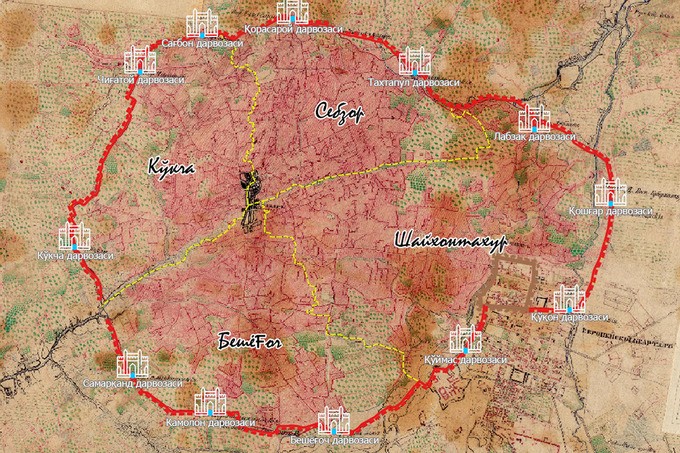

Tashkent Announces International Contest to Design New Entrance Gates

The city authority (hokimiyat) of Tashkent has announced the start of an international competition to develop a sketch concept for four entrance gates to the capital of Uzbekistan. The new gates will be created at the Rohat, Bektemir, Erkin, and Uchkahramon posts.

The project should embody modern and traditional ideas, with construction planned to begin by the end of this year. The competition is open to both Uzbek and international participants, and those wishing to participate can submit their works individually or in teams. The three best works will receive cash prizes from 30 to 100 million UZS ($2,350 to $7,800).

The winner will be announced on November 30.

Until the 19th century, Tashkent was surrounded by a mighty fortress wall divided by 12 gates. At first, the fortress of Binkenta (the former name of Tashkent) had seven gates, but with the city’s expansion by 1864, their number reached 12. Since the shape of the city wall coincided with the system of stars, the gates were built according to the location of 12 stars of the Zodiac according to the cycle of Muchal. Thus, 12 gates were the earthly reflection of heavenly luminaries. Tashkent was the only city in the world with such celestial gates.

These gates were destroyed, and the fortress wall was demolished in the late 19th century. But in recent years, there have been repeated ideas to restore part of the entrance gates. In June 2022, the Tashkent hokimiyat presented the first sketches for the fortress gates.

GTA and Counter-Strike Banned in Tajikistan

Residents of Tajikistan have been ordered to refrain from playing popular computer games such as Grand Theft Auto and Counter-Strike, and owners of computer game clubs have been banned from distributing them.

According to information published by the Dushanbe police press service on Telegram, these games can influence young people and make them more prone to criminal behavior.

“According to the results of the historical and cultural expertise of the Tajik Ministry of Culture, the games Counter-Strike and Grand Theft Auto contain scenes of violence, murder, and robbery,” police said.

Game club owners and parents of children were told to comply with national laws prohibiting violent and unethical video games, and said raids would be conducted at game clubs to detect violations.

A similar initiative has been discussed in Russia. In 2022, the State Duma proposed banning video games containing violent scenes, pornography, and profanity.

Counter-Strike is a multiplayer shooter in which teams of special forces and terrorists perform missions to rescue hostages, clear bombs, or protect VIPs. Grand Theft Auto (GTA) is an adventure game in which the player performs missions in fictional American cities, participating in criminal activities, driving vehicles, and committing robberies to advance the story.

Aging Kyrgyzstan: Economic Challenges and Empowering Seniors

According to the National Statistical Committee of the Kyrgyz Republic, the country’s population is aging quickly. Based on UN data, the agency predicts that the proportion of elderly people (65 and over) in Kyrgyzstan will significantly increase by 2030. According to the analysis, currently, 5.7% of the total population is elderly, and this figure may reach 8% by 2030.

Speaking about the processes associated with an aging population, experts have highlighted social funds related to the payment of pensions, benefits, and other contributions to people who have finished their careers. Additionally, an aging population will produce fewer materials and public goods, and state tax revenues will decrease, which could lead to a decline in the country’s standard of living.

However, economist Kubanychbek Idinov sees this as a manageable problem. The 61-year-old believes that the increase in the average age is indicative of an improvement in Kyrgyzstan’s standard of living.

“The country’s GDP is growing, and state budget spending on social projects is increasing. But we need to give pensioners more opportunities to work. This will be a great help to the revenue side of the budget. People who retire can work elsewhere. This allows them not to rely on their pensions alone, to have additional income,” Idinov told The Times of Central Asia.

Most retirees in Kyrgyzstan continue to work. Idinov said they start small businesses or enterprises and pass on their experience to young people. According to official data, the country currently has about 150,000 working pensioners.

“It is necessary at the state level to support trade unions’ work in attracting retirees to work. It is possible to work at the level of local authorities. Then the issue of small pension growth will not be acute for people and the state,” Idinov said.

On a related matter, Kyrgyz sociologists say that despite a slowdown, the country’s population grew by almost half a million people (+7.8%) over the year. Kyrgyzstan remains the second-largest Central Asian country in terms of population growth after Tajikistan.

“The increase in population, despite a slight decrease in the growth rate, is provided by the excess of births over deaths with a negative balance of external migration,” the report of the National Statistical Committee states. The large number of labor migrants returning home is also helping to combat the decrease in the number of able-bodied people.

In 2007, experts from the UN Demography Department suggested evaluating countries as those with an old population if more than 7% of its citizens are over 65 years old.

U.S. Sanctions Uzbek Companies Supplying Russia with Equipment

The U.S. Department of the Treasury has sanctioned 275 individuals and entities involved in supplying Russia with advanced technology and equipment that it desperately needs to support its war machine. The Uzbek companies Uzstanex and The Elite Investment Group are among the sanctioned entities.

Deputy Secretary of the Treasury Wally Adeyemo emphasized that the U.S. and its allies are committed to halting the flow of essential tools and technologies that enable Russia to pursue its unlawful war against Ukraine. “As demonstrated by today’s actions, we are unwavering in our resolve to weaken Russia’s military capabilities and to penalize those attempting to circumvent or evade our sanctions and export controls,” Adeyemo stated.

Uzstanex is part of the StanexGroup holding. The company sells and adjusts machine tools in Uzbekistan, Kazakhstan, Kyrgyzstan, Tajikistan, and Turkmenistan.

According to the U.S. Treasury Department, the machine tools purchased by Uzstanex were delivered to Russia through the Chinese company Shanghai Winsun Imp and Exp Co Ltd (Shanghai Winsun), which is why sanctions were imposed against it.

The Elite Investment Group is a non-specialized wholesaler. It is noted that from mid-March to May 2024, using GUCLU GLOBAL as a carrier agent, the company delivered approximately $190,000 worth of high-priority goods, including electrical transformers, to companies in Russia, including the GS Group.

Tajik-Born Russian Citizen Sentenced for High Treason in Moscow

The Moscow City Court has sentenced Firuz Dadoboev, a Tajikistan-born Russian citizen, to 13.5 years in a strict regime penal colony on charges of high treason (under Article 275 of Russia’s Criminal Code) for actions benefitting the United States.

According to reports, Dadoboev, an IT specialist at a Moscow-based company, allegedly obtained classified information unlawfully. Investigators claim he intended to pass this information to a U.S. intelligence representative, having reportedly contacted the CIA. The Federal Security Service (FSB) stated that Dadoboev confessed and expressed remorse. Along with the prison term, he was fined 300,000 rubles (about $3,000).

On October 29, TASS released a video showing his arrest and sentencing. His detention was initially reported in December 2022, when he was held in the Lefortovo detention center.

Previously, The Times of Central Asia has reported that Russia is recruiting immigrants to the war with Ukraine. Central Asian migrants say that Russia threatens those who refuse to participate in the war with imprisonment.