• KGS/USD = 0.01143 -0%
  • KZT/USD = 0.00192 -0%
  • TJS/USD = 0.10820 0.19%
  • UZS/USD = 0.00008 0%
  • TMT/USD = 0.28575 0%
  • KGS/USD = 0.01143 -0%
  • KZT/USD = 0.00192 -0%
  • TJS/USD = 0.10820 0.19%
  • UZS/USD = 0.00008 0%
  • TMT/USD = 0.28575 0%
  • KGS/USD = 0.01143 -0%
  • KZT/USD = 0.00192 -0%
  • TJS/USD = 0.10820 0.19%
  • UZS/USD = 0.00008 0%
  • TMT/USD = 0.28575 0%
  • KGS/USD = 0.01143 -0%
  • KZT/USD = 0.00192 -0%
  • TJS/USD = 0.10820 0.19%
  • UZS/USD = 0.00008 0%
  • TMT/USD = 0.28575 0%
  • KGS/USD = 0.01143 -0%
  • KZT/USD = 0.00192 -0%
  • TJS/USD = 0.10820 0.19%
  • UZS/USD = 0.00008 0%
  • TMT/USD = 0.28575 0%
  • KGS/USD = 0.01143 -0%
  • KZT/USD = 0.00192 -0%
  • TJS/USD = 0.10820 0.19%
  • UZS/USD = 0.00008 0%
  • TMT/USD = 0.28575 0%
  • KGS/USD = 0.01143 -0%
  • KZT/USD = 0.00192 -0%
  • TJS/USD = 0.10820 0.19%
  • UZS/USD = 0.00008 0%
  • TMT/USD = 0.28575 0%
  • KGS/USD = 0.01143 -0%
  • KZT/USD = 0.00192 -0%
  • TJS/USD = 0.10820 0.19%
  • UZS/USD = 0.00008 0%
  • TMT/USD = 0.28575 0%
13 December 2025

Kyrgyzstan Begins Construction of Another Small Hydropower Plant

The construction of a small hydroelectric power plant on the Ak-Buura River at the Papan reservoir in Kyrgyzstan’s southern Osh region has begun.

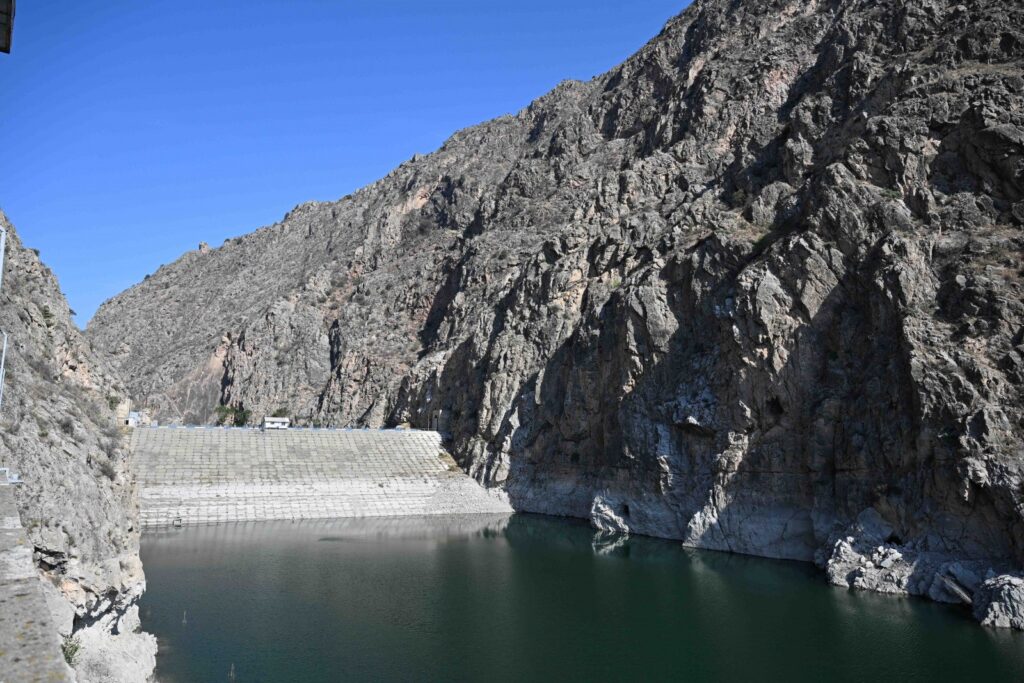
The Ak-Buura River supplies water to Kyrgyzstan’s second-largest city, Osh. The Papan reservoir is located in the Papan Gorge, and the power plant will be constructed in the narrowest part of the Ak-Buura River valley.

The small hydropower plant will have a capacity of 25 MW and will generate 103 million kWh of electricity per year. The project costs $27 million.

“The construction of a small hydroelectric power plant at the Papan reservoir is another strategic step towards the country’s energy independence,” Chairman of Kyrgyzstan’s Cabinet of Ministers Akylbek Japarov stated at the ceremony to launch the construction on October 5.

In recent years, Kyrgyzstan has been working to expand its energy capacity by building small and large hydroelectric plants to address electricity shortages.

Earlier this year, Kyrgyzstan constructed small hydroelectric power plants in Bala-Saruu in the northwestern Talas region and Kok-Art and Kainama small hydropower plants in the southern Jalal-Abad region.

In 2023, Kyrgyzstan met 80% of its electricity demand, which totaled 17.2 billion kilowatt-hours. The remaining 20%, or 3.4 billion kilowatt-hours, was imported.

Energy Minister Taalaibek Ibraev last week stated that despite an increase in water levels at Kyrgyzstan’s largest Toktogul hydroelectric power plant (HPP) reservoir this year, the country would still be facing an electricity deficit of about 3.9 billion kilowatt-hours.

The positive is that Ibraev said in parliament on October 4 that there will be no scheduled blackouts this winter, as his ministry has done a good job preparing the power distribution system for the coming winter. The Energy Ministry has installed new and repaired all the existing transformers nationwide.

In previous years, Kyrgyzstan practiced scheduled restrictions on electricity supply for several hours a day to save electricity during peak consumption hours in winter.

The minister also announced that starting January 1, 2025, Turkmenistan will supply Kyrgyzstan with 1.7 billion kilowatt-hours of electricity.


World Bank Allocates $800 Million to Support Uzbekistan’s Market Economy Transition

The World Bank has allocated $800 million to accelerate Uzbekistan’s transition to an inclusive and stable market economy.

The government’s reform program, supported by the World Bank, aims to improve Uzbekistan’s business environment, increase agriculture, railways, and energy efficiency, improve public finance management, expand social services, and enhance readiness for environmental risks.

Finance provided by the World Bank through highly concessional loans, is reported to offer the government low-cost, long-term repayment options “more favorable than those available in international financial markets.”

The financial package aims to achieve concrete results in the social protection system, combating gender-based violence, land security for farmers, business environment, public finance management, tackling climate change, water resource management, and environmental and climate assessment. It also includes reforming climate-sensitive investment in the railway and energy sectors.

Uzbekistan has received $100 million from the World Bank in May to develop social protections.

On 21 June, it was announced that Uzbekistan is the first country worldwide to receive payment from the World Bank for reducing carbon emissions through a policy crediting program and to date, has been awarded a $7.5 million grant for cutting 500,000 tons of carbon emissions.

Tajikistan and Russia Explore Joint Oil and Gas Development Opportunities

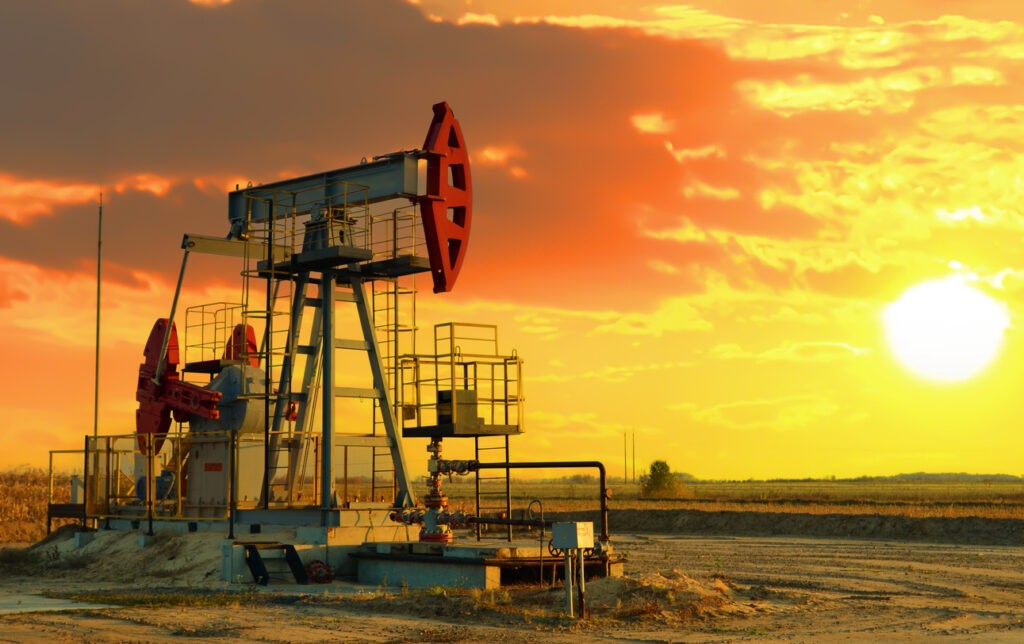
Tajikistan and Russia are studying the possibility of jointly exploiting oil and gas fields in Tajikistan.

At the intergovernmental commission meeting held in Dushanbe, Tajikistan’s Prime Minister, Kohir Rasulzoda, and the Deputy Chairman of the Russian Government, Marat Khusnullin, discussed the development of mines.

“We have given the Russian side a list of promising oil and gas fields in Tajikistan for joint development. We propose to continue working on finding common ground to implement a mutually beneficial project in this area,” Rasulzoda said. He said the Russian side’s opinions were considered when making this decision.

The Statistical Agency of Tajikistan provides information that in 2023, about 18,000 tons of oil were produced in the country, which isn’t enough to supply oil refineries. In this regard, oil products are imported to Tajikistan.

Russia, the leading supplier, provides gasoline and diesel to Tajikistan without customs fees.

Assault on Teacher by Parent in Tajikistan

History teacher Faizikhan Rajabova of School No. 8 in Vahdat city, Tajikistan, was attacked on October 5, on the eve of Teachers Day.

She stated on social media that she was beaten by one of her students’ parents in the classroom in front of the children, following her complaint to the school’s director about the disruptive behavior of the student.

As a result of the attack, she was hospitalized in Vahdat Hospital. In response to her appeal to Dushanbe Mayor Rustam Emomali to take action in the case, Tajikistan’s Ministry of Education and Science said that an investigation is underway with the relevant bodies. Additional information will be provided once it is finalized.

This case is not unique. In September 2024, student Bekhzod Nazarov was detained in Dushanbe for assaulting a teacher, and in Bokhtar, two young men were arrested for beating up a teacher. Criminal cases have been opened against the attackers under the article “hooliganism.”

At a meeting with educators, Tajik President Emomali Rahmon expressed concern about such incidents and ordered the development of a law to raise the status of teachers in society. He said that respect for teachers is vital to the nation’s future, and measures should be taken to improve their working conditions and role in society.

Kyrgyzstan Plans to Stop Importing Coal and Electricity by 2027

Kyrgyzstan plans to abandon coal imports within the next two years and stop buying foreign electricity by 2027.

Speaking at a parliamentary group meeting, Energy Minister Taalaibek Ibraev announced that the country is already preparing to meet these challenges by actively developing the energy sector’s infrastructure.

Ibraev emphasized that the problem with transformers, which was relevant earlier, will be solved next year. Repairs have already been carried out in all 56 RECs (district electric networks), and five spare transformers have been provided for each of them in case of emergencies.

A tender has also been held for purchasing one thousand transformers worth $58 million, of which $25 million are loan funds, $25 million is a World Bank grant, and $8 million is a Swiss grant. In addition, 600 thousand new meters are planned to be purchased. These measures will significantly improve the reliability of the country’s electricity supply.

The minister also noted that the country’s generating capacity deficit is 300 to 400 megawatts. To solve this problem, solar power plants will be launched, allowing the country to scale down electricity imports.

In addition, Ibraev announced plans to refuse coal imports in the next two years. The country is developing projects to introduce alternative energy sources and ensure energy independence.

Problems with transformers in Kyrgyzstan have been acute over the past few years due to worn-out energy infrastructure and equipment shortages. Many transformer stations needed modernization, resulting in power supply failures. The government initiated large-scale transformer replacement and repair projects in response to these challenges.

Kazakhstan Awaits Results of Nuclear Referendum; Exit Polls Indicate a “Yes” Vote

Kazakhstan is awaiting the official results of a referendum on whether to build its first nuclear power plant, though exit polls showed “yes” voters were in the majority, according to state-run media reports. The project could ease chronic energy shortages and reduce reliance on coal-fired facilities but is fraught with concerns about costs, transparency, and the legacy of the human and environmental cost of Soviet nuclear weapons testing decades ago.

Led by President Kassym-Jomart Tokayev, Kazakhstan’s political establishment has backed the idea of peaceful nuclear power as a way to move the country forward and the referendum appears aimed partly at giving people a sense of agency after the trauma of Soviet testing at Semipalatinsk. But some opponents allege that authorities restricted their efforts to organize a “no” campaign with detentions and other pressure designed to lock in an expected vote in favor.

Officials results had not been announced as of early Monday morning. Voting at polling stations in Kazakhstan ended at 8 p.m. on Sunday and turnout among eligible voters was 63.87%, according to the Central Election Commission. The highest turnout was in the Kyzylorda region (82.48%) and the lowest turnout was in the city of Almaty (25.39%). Turnout in Astana, Kazakhstan’s capital, was 50.81%.
“The precinct referendum commissions have begun counting the votes. The counting process at each polling station must not exceed twelve hours from the start of the count,” the commission said.

Additionally, more than 7,358 Kazakh citizens voted at polling stations abroad, including in Asia, South America, Europe, and the United States, according to Roman Vassilenko, Kazakhstan’s Deputy Minister of Foreign Affairs. He noted at a briefing on Sunday night that the referendum had been monitored by observers from regional organizations, including the Shanghai Cooperation Organization, the Organization of Turkic States, and the Astana-based Conference on Interaction and Confidence-Building Measures in Asia.
The heads of the observer missions said the referendum was “open, free, and legitimate, with no violations detected at any polling stations,” Vassilenko said.

Kazakhstan also invited observers from the Organization for Security and Cooperation in Europe, but the OSCE declined to send a delegation “due to heavy workload,” reported the state-run Kazinform news agency. The OSCE sent a mission to observe a 2022 referendum on constitutional changes in Kazakhstan and concluded that it took place “in an environment short of genuine political pluralism.”

One critic of the rules surrounding the nuclear referendum is Tamara Yeslyamova, editor-in-chief of the Uralskaya Nedelya, a newspaper that has sparred with the government over the years. A judge issued her with a fine for 110,760 tenge ($230) after she conducted video interviews about the referendum on nuclear power with half a dozen people on the street, the newspaper reported. It said the judge concluded that the interviews amounted to a public opinion survey; the law says such a poll can only be done by a state-sanctioned entity.