• KGS/USD = 0.01144 0%
  • KZT/USD = 0.00196 -0%
  • TJS/USD = 0.10899 -0%
  • UZS/USD = 0.00008 -0%
  • TMT/USD = 0.28490 0%
  • KGS/USD = 0.01144 0%
  • KZT/USD = 0.00196 -0%
  • TJS/USD = 0.10899 -0%
  • UZS/USD = 0.00008 -0%
  • TMT/USD = 0.28490 0%
  • KGS/USD = 0.01144 0%
  • KZT/USD = 0.00196 -0%
  • TJS/USD = 0.10899 -0%
  • UZS/USD = 0.00008 -0%
  • TMT/USD = 0.28490 0%
  • KGS/USD = 0.01144 0%
  • KZT/USD = 0.00196 -0%
  • TJS/USD = 0.10899 -0%
  • UZS/USD = 0.00008 -0%
  • TMT/USD = 0.28490 0%
  • KGS/USD = 0.01144 0%
  • KZT/USD = 0.00196 -0%
  • TJS/USD = 0.10899 -0%
  • UZS/USD = 0.00008 -0%
  • TMT/USD = 0.28490 0%
  • KGS/USD = 0.01144 0%
  • KZT/USD = 0.00196 -0%
  • TJS/USD = 0.10899 -0%
  • UZS/USD = 0.00008 -0%
  • TMT/USD = 0.28490 0%
  • KGS/USD = 0.01144 0%
  • KZT/USD = 0.00196 -0%
  • TJS/USD = 0.10899 -0%
  • UZS/USD = 0.00008 -0%
  • TMT/USD = 0.28490 0%
  • KGS/USD = 0.01144 0%
  • KZT/USD = 0.00196 -0%
  • TJS/USD = 0.10899 -0%
  • UZS/USD = 0.00008 -0%
  • TMT/USD = 0.28490 0%
08 December 2025

Tashkent Teacher at Center of Political Debate Arrested for Second Violent Outburst

The Times of Central Asia previously reported that оn September 23, a teacher at a school in Tashkent’s Chilonzor district was filmed slapping a student when the child asked for the Russian language class to be taught in Russian. The Children’s Ombudsman of Uzbekistan, Surayyo Rahmonova, has begun an investigation into the incident.

The spokesperson for Russia’s Ministry of Foreign Affairs, Maria Zakharova, said that she was worried about the content of the video published online, and asked Uzbekistan to make a legal assessment of this incident. In response, Alisher Qodirov, the leader of Uzbekistan’s Milli Tiklanish (National Revival) party and deputy speaker of the lower house of parliament, urged Russia not to interfere in Uzbekistan’s domestic affairs, commenting that “it would be better for [Russia] to deal with their own affairs [which are] full of problems than to deal with our internal issues.”

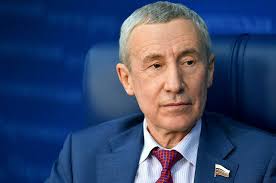
Russian Senator Andrei Klimov reponded to Qodirov’s statement, saying that “inter-ethnic relations are very delicate” between Uzbeks and Russians. He called the teacher’s actions “an offense, maybe more” and expressed bewilderment at Qodirov’s remarks.

The teacher has since committed other offenses. On September 24, she went to her daughter’s school in another district of Tashkent, where she argued with the school administration and used physical force against the deputy director. When officers from the National Guard and the Interior Administration intervened to restore order, the teacher resisted their demands. She was later sentenced to seven days of administrative detention and fined.

Uzbekkosmos and NASA Unite for World Space Week Celebrations in Uzbekistan

The Uzbekkosmos agency has announced a series of events in celebration of World Space Week, which will take place in Uzbekistan from October 4 to 10. This global event, commemorated in nearly 100 countries, was established by a UN General Assembly resolution in 1999, recognizing the importance of space exploration.

As part of the World Space Week festivities, Uzbekkosmos is launching several major initiatives. A key highlight is a special exhibition on space history at the Tashkent City Mall Trade and Entertainment Center, which will open its doors on October 4.

In addition, on October 5 and 6, Uzbekkosmos, in collaboration with NASA, will host the NASA Space Apps Challenge 2024 hackathon. This event will take place at the Turin Polytechnic University in Tashkent, where over 200 young innovators, organized into approximately 40 teams, will showcase their creative projects.

Did DIY Butchers Cause Twenty-One Meat Poisonings in Turkmenistan?

A hospital in the eastern Turkmen town of Sayat has admitted 21 people with symptoms of food poisoning, after eating at a restaurant where they were given infected meat. All the patients were kept in hospital for several days, Chronicles of Turkmenistan reports.

An outbreak of a disease among camels and cattle, presumably animal pox, was recently recorded in Sayat. The virus began to spread rapidly but has since been halted by epidemiological and veterinary services.

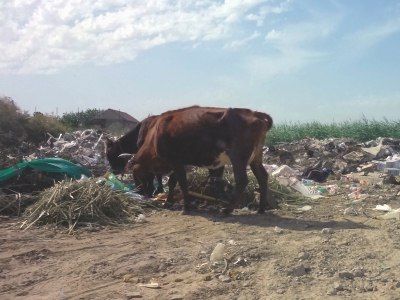
The way that dead animals are disposed of in Turkmenistan poses an additional threat. The authorities do not control this process, and many people bury cattle corpses on their own in wastelands or throw them into bushes. Due to this, a new problem has emerged: people, dubbed giçki maslykçylar (“night scavengers”) find recently dead animals, skin them, and cut out the parts of the carcass that have not rotted away. This meat is then sold to cafes and restaurants for 50 manats per kilogram, slightly cheaper than the market price of 60-65 manats for fresh meat.

Viral animal pox is spreading among camels and cattle in some countries of Central Asia, including Turkmenistan. The virus causes skin lesions, including papules and pustules, which can lead to mass infections in livestock. If not treated promptly, the disease can spread among farm animals, which can cause mass mortality. In most cases, animal pox does not pose a serious threat to humans, but some strains can be transmitted to people.

Diseases such as cowpox and sheeppox can be transmitted to humans through contact with infected animals. These viruses cause skin rashes and can affect mucous membranes, making them potentially dangerous to humans, especially if precautions are not taken when in contact with them.
Local authorities have started inspecting stores and markets selling meat and fish. Sellers who sell products without appropriate certificates from sanitary-epidemiological services are being fined 3,000 to 5,000 manats ($850 to $1400).

Big Fire at Top University in Uzbekistan; No Casualties Reported

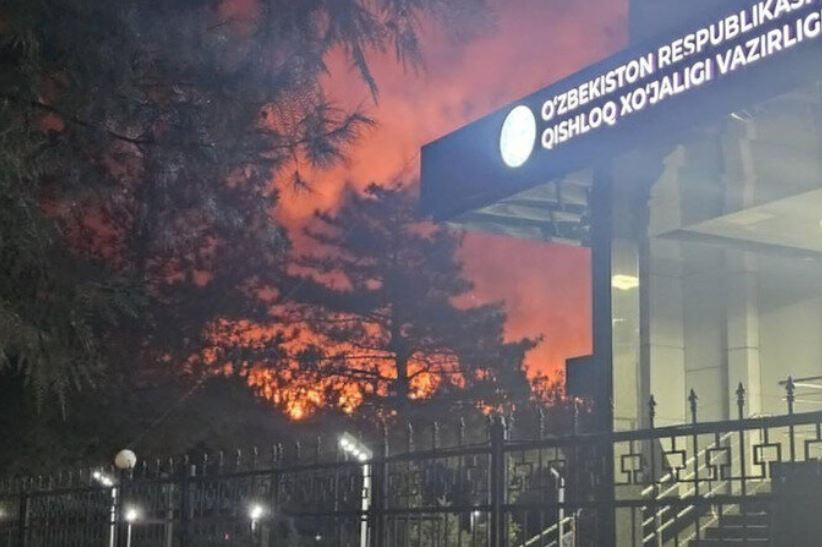
Firefighters in Uzbekistan have extinguished a large blaze that broke out at the Tashkent State Agrarian University, a leading institution in Central Asia that has extensive international links and whose sprawling grounds include offices of some Uzbek government agencies.

Videos of the fire on Monday evening showed flames almost completely engulfing a building and burning on other structures as well. Smoke billowed into the night sky. Sirens were heard as emergency responders converged on the area.

“No information has been received about any injuries or fatalities as a result of the incident,” Uzbekistan’s Ministry of Emergency Situations said in a statement.

Firefighting crews received a report of a fire at the university at 8:10 p.m. and were on the scene at 8:17 p.m., according to the ministry. It said the fire was completely extinguished by 10:10 p.m. and that its minister, Maj. Gen. Abdulla Kuldashev, personally oversaw efforts to put out the fire.

There were no immediate reports on the cause of the blaze.

The fire started on the roof of the Forestry Agency building and affected three buildings in total, according to Gazeta.uz reporters who were on the scene. The Uzbek media outlet said the 28-hectare campus is also home to Agriculture Ministry offices and facilities of some international organizations.

Forbes Ag, a North Carolina-based agricultural consulting firm, said last week that it was assisting the “bright young minds” at the Tashkent State Agrarian University on issues of sustainable farming. USAID said in August that seven students from the Tashkent university were in a two-month research program at the University of Missouri.

Last week, a member of the U.N. Food and Agriculture Organization visited the campus to discuss dangerous chemicals and pesticides, and a university delegation was traveling in China. The university has had contacts with numerous other countries.

In a statement, Bobur Tolaganov, spokesperson for the Tashkent Regional Department of Internal Affairs, said that a criminal investigation has been launched into the cause of the fire.

The Geopolitical Battle for Kazakhstan’s First Nuclear Power Plant

Nuclear power plants currently operate in only 32 countries in the world. Kazakhstan seems poised to join their ranks in the near future; but what does this shift mean for the energy-rich Central Asian nation?

Following the collapse of the Soviet Union in 1991, Kazakhstan has been a strong advocate for nuclear non-proliferation and disarmament. Astana not only eliminated its nuclear arsenal, which was one of the largest in the world at the time, but also closed the Semipalatinsk nuclear test site, where the Soviet Union conducted more than 450 nuclear tests over 40 years.

Thousands of people in Kazakhstan experienced birth defects and cancer linked to nuclear testing. This history makes the construction of a nuclear power plant in the former Soviet republic a particularly sensitive issue. Nevertheless, a majority of the population in Kazakhstan is expected to support building a nuclear facility in the national referendum scheduled for October 6. But what comes after the vote?

If the citizens of Kazakhstan approve the government’s plans to go nuclear, the country might get its first nuclear power plant no earlier than 2035. In the meantime, Astana will have to find a strategic partner to participate in the development of the facility. Building and operation a nuclear power plant requires advanced technology, engineering expertise, and rigorous safety standards – areas where Kazakhstan currently lacks experience.

“As a result, the country will likely need to rely on international partners to design, build, and possibly even operate its first nuclear power plant,” said James Walker, CEO and Head of Reactor Development at NANO Nuclear Energy, in an interview with The Times of Central Asia.

Although most policymakers in Kazakhstan would like Western companies to build a nuclear power plant in Ulken, on the western shore of Lake Balkhash, at this point the Russian State Nuclear Energy Corporation Rosatom seems to have the best chance of playing a key role in the project. In Walker’s view, Russia has a long history of cooperation with Kazakhstan in the nuclear sector and could be a logical partner, especially given its extensive experience in building and operating nuclear power plants in other countries.

“Rosatom has been actively involved in Kazakhstan’s nuclear sector for years, including uranium mining and nuclear fuel cycle activities. This established presence, coupled with Russia’s geopolitical influence in Central Asia, makes Rosatom a strong contender,” stressed the CEO of NANO Nuclear Energy, pointing out that Chinese corporations are also very interested in the potential construction of the first Kazakh nuclear power plant.

Indeed, according to reports, the China National Nuclear Corporation offered to build a 1.2 GW nuclear power plant unit in Kazakhstan for $2.8 billion, with the construction taking five years. Another candidate for the project is South Korea’s Korea Electric Power Corporation. The largest electric utility in the East Asian nation reportedly proposed building a water-cooled power reactor –using water as a coolant to transfer heat away from the core.

Walker, however, argues that while South Korea has a competitive edge due to its reputation for building cost-effective and high-quality nuclear reactors, such as those in the United Arab Emirates, it lacks the deep geopolitical ties to Kazakhstan that Russia and China possess.

“This may make Seoul a less likely candidate, unless Kazakhstan seeks to diversify its energy partnerships,” Walker emphasized, claiming that energy security and diversification are major reasons why Astana is pushing for the construction of a nuclear power plant.

As he sees it, developing a robust nuclear energy sector would ensure a stable, long-term supply of electricity, particularly as energy demands grow with economic development. It would also allow Kazakhstan to export excess electricity to neighboring countries, further solidifying its role as a key energy player in the region.

“By developing nuclear energy, Kazakhstan can diversify its energy mix, reducing dependence on fossil fuels and enhancing energy security. Moreover, it would enhance Kazakhstan’s position in the global nuclear energy market, transitioning from a raw material supplier to a country with advanced nuclear technology capabilities,” the NANO Nuclear Energy expert stressed.

Presently, nearly 80% of electricity in Kazakhstan is generated by burning coal, approximately 15% is produced by hydropower, and the remainder comes from renewable energy sources. Although Astana is seeking to develop its green energy sector, hoping to eventually begin exporting “green electricity” to Europe, it is unlikely it can achieve such an ambitious goal without nuclear power.

As the US author Michael Shellenberger highlighted in his 2016 New York Times article, the only countries that have successfully moved from fossil fuels to low-carbon power have done so with the help of nuclear energy. It is, therefore, no surprise that the European Union, particularly France, which is very interested in Kazakh energy, is aiming to develop a nuclear partnership with Astana.

But will French, or other European corporations, be involved in the construction of the first Kazakh nuclear power plant?

“Companies like EDF (Électricité de France) or Framatome have significant experience and a reputation for high safety and environmental standards. However, European involvement would likely come with strict regulatory requirements and potentially higher costs, which might be less attractive to Kazakhstan compared to the more financially flexible and geopolitically aligned options presented by Russia or China,” Walker concluded.

It is no secret that Russian companies officially control about 25% of Kazakhstan’s uranium, and that Rosatom plans to build a small nuclear plant in neighboring Uzbekistan. Also, the fact that Russian President Vladimir Putin and his Kazakh counterpart Kassym-Jomart Tokayev discussed energy cooperation amid Astana’s plans to hold a referendum on the construction of a nuclear power plant, clearly indicates that Moscow has significant nuclear ambitions in Kazakhstan.

The Kremlin is undoubtedly aiming to preserve Central Asia in its energy sphere for influence, fully aware that its potential involvement in the construction of a nuclear power plant in Kazakhstan would make Astana dependent on Rosatom’s maintenance. Consequently, the former Soviet republic would, at least in the field of energy, remain in Moscow’s geopolitical orbit.

Uncategorized

Children’s Blood Lead Levels in Kyrgyzstan to be Investigated

Kyrgyzstan has started preparing for its first comprehensive study on blood lead levels in children between the ages of 1 and 6.

This project is being implemented by the National Institute of Public Health, the National Center for Health Promotion and Mass Communication, and with the support of the Ministry of Health and the Department of Disease Prevention.

The study will focus on three key areas. First, an information and education campaign to raise awareness among parents and healthcare providers about the risks of lead poisoning will be launched. Second, the prevalence of lead in children will be assessed to determine the extent of the problem. Third, the study will address environmental analysis to identify sources of lead contamination.

Exposure to lead is hazardous for children, as this toxic metal can cause serious health problems even at low levels of exposure. Lead affects brain development, leading to decreased cognitive function, developmental delays, behavioral issues, impaired learning, and reduced concentration ability. Children exposed to lead can also develop kidney and blood pressure problems.

On September 26-27, in preparation for the project, specialists from the Health Promotion Cabinets attended a communications training where they studied theoretical and practical aspects of the impact of lead on the body, methods of prevention, and the importance of public awareness. The problem of lead contamination in Kyrgyzstan is still understudied despite many sources of contamination, including tailing ponds, old batteries, and cottage industries.

The study is being conducted within the framework of the project “Reducing the Risk of Lead Poisoning in Children” and was made possible through the cooperation of Kyrgyzstan’s Ministry of Health, the Pure Earth project, and the public association “ECOIS-Bishkek.” The results of this study will become the basis for the development of targeted programs aimed at minimizing the impact of lead on children’s health.