• KGS/USD = 0.01144 0%
  • KZT/USD = 0.00192 -0%
  • TJS/USD = 0.10849 0.37%
  • UZS/USD = 0.00008 0%
  • TMT/USD = 0.28490 0%
  • KGS/USD = 0.01144 0%
  • KZT/USD = 0.00192 -0%
  • TJS/USD = 0.10849 0.37%
  • UZS/USD = 0.00008 0%
  • TMT/USD = 0.28490 0%
  • KGS/USD = 0.01144 0%
  • KZT/USD = 0.00192 -0%
  • TJS/USD = 0.10849 0.37%
  • UZS/USD = 0.00008 0%
  • TMT/USD = 0.28490 0%
  • KGS/USD = 0.01144 0%
  • KZT/USD = 0.00192 -0%
  • TJS/USD = 0.10849 0.37%
  • UZS/USD = 0.00008 0%
  • TMT/USD = 0.28490 0%
  • KGS/USD = 0.01144 0%
  • KZT/USD = 0.00192 -0%
  • TJS/USD = 0.10849 0.37%
  • UZS/USD = 0.00008 0%
  • TMT/USD = 0.28490 0%
  • KGS/USD = 0.01144 0%
  • KZT/USD = 0.00192 -0%
  • TJS/USD = 0.10849 0.37%
  • UZS/USD = 0.00008 0%
  • TMT/USD = 0.28490 0%
  • KGS/USD = 0.01144 0%
  • KZT/USD = 0.00192 -0%
  • TJS/USD = 0.10849 0.37%
  • UZS/USD = 0.00008 0%
  • TMT/USD = 0.28490 0%
  • KGS/USD = 0.01144 0%
  • KZT/USD = 0.00192 -0%
  • TJS/USD = 0.10849 0.37%
  • UZS/USD = 0.00008 0%
  • TMT/USD = 0.28490 0%
11 December 2025

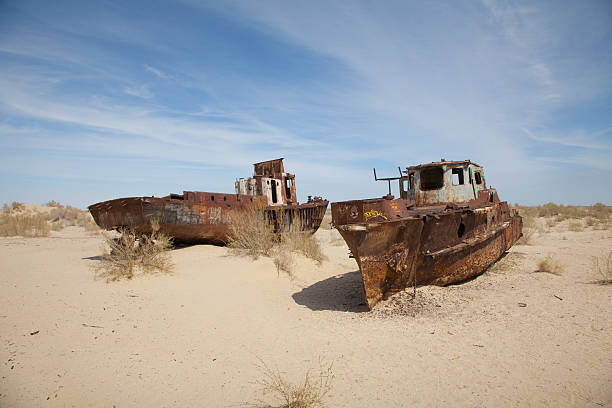
Kazakhstan to Use Innovative Drone Technology for Aral Seabed Reforestation

On October 29, a new initiative titled “Improving the Ecosystem of the Aral Seabed” was launched by Korkyt Ata Kyzylorda University, the University of California, Berkeley, the Kazakh Directorate of the International Fund for Saving the Aral Sea (IFAS), and the Bulat Utemuratov Foundation. 

The project seeks to rehabilitate the dried Aral Sea bed using innovative E-seed technology developed by scientists at UC Berkeley. The method involves aerial seeding with drones that distribute self-burying seeds encased in biodegradable material, an approach designed to accelerate greening, increase plant survival rates, and reduce labor costs.

Once the world’s fourth-largest inland sea, the Aral Sea covered 68,000 square kilometers across Kazakhstan and Uzbekistan. Beginning in the 1960s, large-scale irrigation projects diverted water from the Amu Darya and Syr Darya rivers to support cotton farming. By 2007, the sea had shrunk to just 10% of its original size.

Today, the Aral Sea is a symbol of one of the world’s most severe environmental disasters. Salt-laden dust from the exposed seabed, estimated in the tens of billions of tons, is carried by wind as far as the Arctic and the Himalayas. This toxic dust, infused with pesticides and heavy metals, contaminates soil, water, and air, threatening regional public health and food security.

“The Aral Sea is a wound on the planet that cannot be ignored. We are launching a project that will create a barrier against salt and toxic dust, improve human health, and contribute to the future of the entire Earth,” said Ainur Karbozova, Director of the Bulat Utemuratov Foundation. “The uniqueness of this technology is that it can be applied worldwide from restoring burned-out forests to transforming deserts into green oases.”

A test planting on a one-hectare site is planned for March-April 2026. In 2027, the second phase will expand the pilot to 50 hectares.

“The use of the innovative E-seed technology will strengthen the soil structure, reduce dust and salt emissions, and ultimately increase the region’s biodiversity,” said Rakhat Kurmanbayev, Associate Professor at Korkyt Ata Kyzylorda University. “By 2040, we plan to stabilize the ecosystem over at least 50 square kilometers. The project will reduce air temperatures by 1-2°C and improve the microclimate.”

The initiative aligns with broader environmental goals outlined under Kazakhstan’s 2024-2026 chairmanship of IFAS, during which large-scale afforestation efforts aim to green more than 1 million hectares of the Aral seabed.

The Times of Central Asia previously reported the construction of a saxaul nursery in the Kyzylorda region. Located directly on the former seabed, the facility is expected to produce 1.5 million drought-resistant saxaul saplings per year.

According to the Ministry of Ecology and Natural Resources, Kazakhstan plans to afforest 1.1 million hectares of the dried seabed with saxaul. Between 2021 and 2024, 475,000 hectares were afforested, including 127,000 in 2024 alone. An additional 428,000 hectares are scheduled for planting in 2025.

By the end of 2025, Kazakhstan expects saxaul to cover approximately 40% of its portion of the dried Aral seabed. 
Glacier-Dependent Central Asian States to Benefit from ADB Climate Program

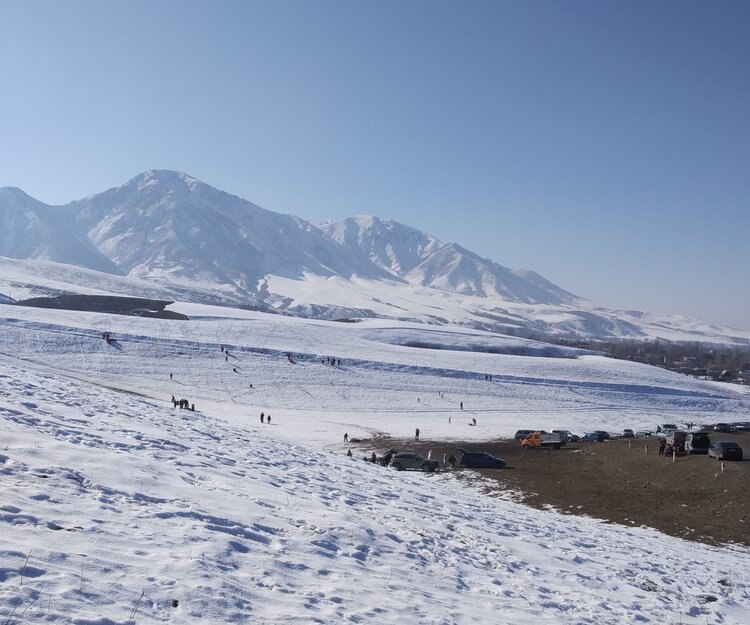
On October 29, the Green Climate Fund approved $250 million for Glaciers to Farms, a major adaptation initiative led by the Asian Development Bank (ADB) to build climate-resilient water and agricultural systems in glacier-dependent regions of Central Asia, the South Caucasus, and Pakistan.

The funding, provided mostly as grants, will complement a broader $3.25 billion investment by ADB over the next decade. The program spans nine countries: Armenia, Azerbaijan, Georgia, Kazakhstan, Kyrgyzstan, Pakistan, Tajikistan, Turkmenistan, and Uzbekistan. These states rely heavily on glacier- and snow-fed rivers for agriculture, drinking water, and electricity. Accelerated glacial melt poses a direct threat to ecosystems and rural livelihoods, particularly in areas where one in four jobs depends on agriculture.

By improving irrigation efficiency, expanding water storage, and investing in watershed management, the program seeks to reduce the growing frequency of droughts and floods linked to glacial melt.

Glaciers to Farms will focus on four major glacier-fed river basins: the Naryn and Pyanj in Central Asia, the Kura in the South Caucasus, and the Swat in Pakistan. These basins cover about 27 million hectares and are home to an estimated 13 million people.

The program will support glacier and climate assessments, upgrade monitoring networks, and introduce early warning systems to help communities prepare for glacial lake outburst floods and prolonged droughts.

Beyond infrastructure, Glaciers to Farms will strengthen the capacity of local banks to finance agricultural enterprises, particularly those led by women, as part of its inclusive development approach.

Climate-induced glacial retreat is a pressing concern for Central Asia, where glaciers supply up to 70 percent of river flows. The region contains more than 4,500 glacial lakes, many formed as a result of retreating ice. These lakes increase the risk of natural disasters such as lake outburst floods, avalanches, and landslides, threatening vulnerable mountain communities.

Recognizing the urgency, the United Nations General Assembly has declared 2025 the International Year of Glacier Preservation. Tajikistan hosted the International Conference on Glaciers’ Preservation in Dushanbe in May, highlighting the region’s central role in global climate adaptation efforts.

Uzbekistan Suspends New Gas Connections for Homes to Conserve Energy

Uzbekistan has halted the issuance of technical permits for new natural gas connections in residential and commercial buildings that use gas exclusively for heating or cooking. Minister of Energy Jurabek Mirzamahmudov announced the decision on October 28, according to Gazeta.uz.

The measure applies to newly built properties that consume gas purely for combustion rather than industrial production. “This does not concern only apartment buildings,” Mirzamahmudov said. “According to a Cabinet of Ministers resolution, starting this year, technical permits for gas connection are no longer issued to consumers who use gas solely for burning. However, if gas is used to create added value in industry, that is allowed, because resources are limited.”

Existing buildings already connected to the gas network will not be affected. In new developments, gas stoves will be replaced with electric ones, and heating will be provided through centralized or local boiler systems. The minister said that the rational use of resources has become a national priority, particularly given the country’s reliance on certain external energy supplies. “Since there are alternative sources, such as electric stoves for cooking and electricity for heating, they serve the same purpose,” he added.

Mirzamahmudov said that the country’s centralized heating network is being expanded during the current heating season, with several projects under development through public-private partnerships. “Urban networks are being modernized, and cogeneration facilities are under construction. For example, on November 18 in Samarkand, during an international forum, we plan to sign a heating supply agreement based on a public-private partnership with a Saudi company,” he noted, likely referring to a project in Nukus involving the Emirati firm Tadweer.

The policy shift comes amid a continued decline in domestic gas output. Uzbekistan’s natural gas production fell by 4.2% in the first two months of 2025 compared to the same period last year. Production has steadily dropped from 61.59 billion cubic meters in 2018 to 44.59 billion in 2024. The new restrictions reflect the government’s growing efforts to conserve resources and improve nationwide energy efficiency.

Uzbek Parliament Ratifies Border Agreement with Kyrgyzstan and Tajikistan

On October 28, the Legislative Chamber of Uzbekistan’s parliament, the Oliy Majlis, ratified a law approving a trilateral agreement on the junction point of the state borders of Uzbekistan, Kyrgyzstan, and Tajikistan, according to the chamber’s press service.

The agreement was initially signed on March 31 in the Tajik city of Khujand during a high-level meeting between Presidents Shavkat Mirziyoyev of Uzbekistan, Emomali Rahmon of Tajikistan, and Sadyr Japarov of Kyrgyzstan. The leaders also took part in a remote inauguration of the Dostlik (Friendship) stele, which now marks the exact location where the borders of the three countries meet.

Lawmakers emphasized that Central Asia is increasingly becoming a region of constructive dialogue, mutual trust, and regional cooperation, moving past a legacy of closed borders and unresolved territorial disputes.

Umid Yakubkhodjayev, a member of the parliamentary committee on international affairs, defense, and security, stated that the agreement formally establishes the precise location of the tri-border junction and the delineation of border lines in the area. He noted that the deal would bolster good-neighborly relations, reinforce trust and strategic partnerships, and contribute to the international stature of the Central Asian region.

The agreement also lays a legal foundation for expanding cross-border cooperation, enhancing trade, and launching joint infrastructure initiatives in neighboring regions. These efforts are expected to create jobs and raise living standards.

The draft law was passed in its first reading and, by exception, was adopted immediately in all three readings. It has now been forwarded to the Senate and will enter into force upon presidential signature.

Kyrgyzstan Unveils New Gold Storage Facility Built to International Standards

Kyrgyzstan has launched its own gold storage facility, built to international standards and capable of holding up to 1,000 tons of gold. Until now, the country stored its gold reserves abroad. President Sadyr Japarov announced the development during the October 28 inauguration of the new National Bank of the Kyrgyz Republic (NBKR) building in Bishkek. 

Japarov stated that Kyrgyzstan can now not only securely store its gold domestically but also offer storage services to foreign partners.

According to the National Bank, Kyrgyzstan’s international reserves, comprising gold and foreign currency, have reached a historic high of $7.55 billion.

Data from the World Gold Council shows that Kyrgyzstan’s gold reserves rose by 4.68 tons in the second quarter of this year, totaling 38.95 tons.

Japarov reaffirmed that maintaining the stability of the national currency, the som, remains the National Bank’s top priority. “This is a responsible mission that directly affects the lives of every citizen and the well-being of every family. Public trust in the som is an indicator of the state’s strength,” he said, noting that the currency is now regarded as one of the most stable in Central Asia.

During the ceremony, officials announced that domestic printing of 20- and 50-som banknotes will begin on November 17, with production of all other denominations scheduled to start by mid-2026

Currently, Kyrgyzstan circulates banknotes in denominations of 20, 50, 100, 200, 500, 1,000, 2,000, and 5,000 som.

Previously, the country’s banknotes were produced in several European countries. The new series will be printed by the Bishkek-based company Uchkun (Open Joint Stock Company) and will meet international standards for security and counterfeit protection.

World Happiness Index: Central Asian Countries Stand Out With “Warm Social Climate”

Kazakhstan has been named the happiest country in Central Asia, according to the World Happiness Report 2025 published by the Oxford Wellbeing Centre. Ranking 43rd globally, Kazakhstan outperformed its regional neighbors in metrics such as social support, trust, and freedom of choice. 

The report evaluates national well-being based on six key indicators:

  • GDP per capita
  • Social support (help from family, friends, and society)
  • Healthy life expectancy
  • Freedom to make life choices
  • Generosity (willingness to help others)
  • Perceived absence of corruption

Kazakhstan scored 6.38 out of 10, demonstrating especially strong performance in trust and honesty. The country ranked 30th globally for the likelihood of returning a wallet to a neighbor and 42nd for returning it to a stranger.

Uzbekistan followed at 53rd place with a score of 6.2. The country stood out for its high levels of charitable giving (29th) and public trust in law enforcement (19th).

Kyrgyzstan ranked 75th with 5.9 points and was recognized as the regional leader in helping strangers. Tajikistan placed 90th with a score of 5.4 but made the global top four in volunteering, an indicator linked to longstanding traditions of mutual aid. Turkmenistan was excluded from the ranking due to insufficient data.

The report highlights that Central Asian countries exhibit some of the world’s highest levels of kindness. The region’s mutual aid index ranges from 0.30 to 0.36, compared to the global average of 0.33.

“Despite economic differences, the region maintains strong social ties and a culture of collectivism, where helping others and participating in community life remain important values,” the report notes.

According to the authors, happiness is influenced less by income than by trust, stability, and personal freedom. Central Asia, they conclude, fosters a “warm social climate,” where interpersonal kindness often offsets institutional shortcomings and economic hardship.

Globally, Finland topped the 2025 rankings, followed by Denmark, Iceland, Sweden, and the Netherlands. At the bottom of the list were Sierra Leone (146th) and Afghanistan (147th), where happiness levels remain the lowest worldwide.