• KGS/USD = 0.01144 0%
  • KZT/USD = 0.00194 -0%
  • TJS/USD = 0.10883 0%
  • UZS/USD = 0.00008 0%
  • TMT/USD = 0.28571 0%
  • KGS/USD = 0.01144 0%
  • KZT/USD = 0.00194 -0%
  • TJS/USD = 0.10883 0%
  • UZS/USD = 0.00008 0%
  • TMT/USD = 0.28571 0%
  • KGS/USD = 0.01144 0%
  • KZT/USD = 0.00194 -0%
  • TJS/USD = 0.10883 0%
  • UZS/USD = 0.00008 0%
  • TMT/USD = 0.28571 0%
  • KGS/USD = 0.01144 0%
  • KZT/USD = 0.00194 -0%
  • TJS/USD = 0.10883 0%
  • UZS/USD = 0.00008 0%
  • TMT/USD = 0.28571 0%
  • KGS/USD = 0.01144 0%
  • KZT/USD = 0.00194 -0%
  • TJS/USD = 0.10883 0%
  • UZS/USD = 0.00008 0%
  • TMT/USD = 0.28571 0%
  • KGS/USD = 0.01144 0%
  • KZT/USD = 0.00194 -0%
  • TJS/USD = 0.10883 0%
  • UZS/USD = 0.00008 0%
  • TMT/USD = 0.28571 0%
  • KGS/USD = 0.01144 0%
  • KZT/USD = 0.00194 -0%
  • TJS/USD = 0.10883 0%
  • UZS/USD = 0.00008 0%
  • TMT/USD = 0.28571 0%
  • KGS/USD = 0.01144 0%
  • KZT/USD = 0.00194 -0%
  • TJS/USD = 0.10883 0%
  • UZS/USD = 0.00008 0%
  • TMT/USD = 0.28571 0%
16 December 2025

More Mudflows Flood Homes in Kyrgyzstan’s Issyk-Kul Region

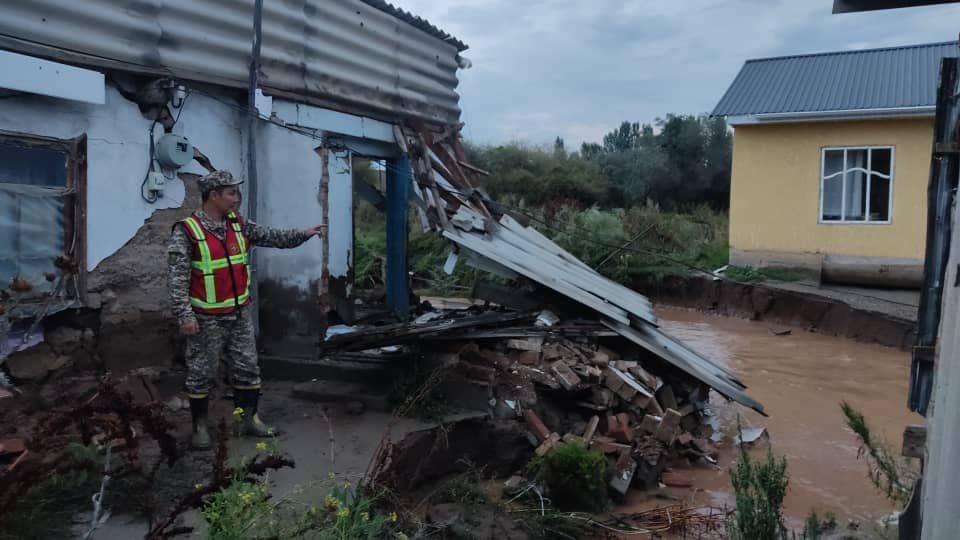
Powerful mudslides caused by heavy rains are again causing damage in Kyrgyzstan’s northern Issyk-Kul region. A state of emergency has been declared in three districts.

The mudflows descended in several locations in the south and north of the Issyk-Kul region, flooding highways and mountain passes. In the town of Cholpon-Ata, water from the canal has reportedly flooded the streets. Several resorts and vacation homes have also been flooded, and there are power outages in the region. Eyewitnesses have reported that Lake Issyk-Kul has turned green.

It is known that dozens of people have been evacuated from the flooded areas.

Seven hundred fifty-five rescuers and military personnel are clearing up the damage, but heavy rains are still forecast for the coming days. Other parts of Kyrgyzstan, such as Naryn and Jalal-Abad in the center of the country, are also susceptible to mudflows.

“We urge citizens to be vigilant and observe precautionary measures,” rescuers have appealed to citizens.

Russia Wants to Ban Migrants’ Families

Russia is considering a bill that could restrict the right of migrant workers to bring their families into the country. The initiative from LDPR deputies, led by Leonid Slutsky, has already sparked active discussions among politicians and society.

The main goal of the proposed law is to reduce the inflow of uncontrolled migration and the ensuing public tension. Particular reference is made to the many migrant families living in Russia who accumulate debts for public utilities and create enclaves where local laws and customs are often ignored. The bill suggests that with the exception of highly qualified specialists, the presence of a work contract or a patent, should no longer be a reason for migrants to move their families to Russia.

This bill is not the only measure aimed at tightening the migration policy in Russia. In 2022, a “controlled stay” system was introduced, strengthening control over migrants on the country’s territory.

In recent years, Russia has also introduced labor migration quotas limiting the number of jobs available to foreign nationals, especially in construction, trade, and other low-skilled sectors. These quotas were further tightened, resulting in fewer migrants entering the country.

Another measure was the introduction of compulsory health insurance for migrants, adding a financial burden to those coming to work in Russia. In addition, strict language and cultural integration requirements have been introduced, including mandatory Russian language training and exams on the country’s history and culture.

Such actions have drawn criticism from human rights activists, who believe that the restrictions could increase social tensions and make life difficult for migrants already living in Russia.

New York NGO Calls on Tajik Authorities to Release Journalist Ahmad Ibrohim

The New York-based press freedom NGO the Committee to Protect Journalists (CPJ) has called on the Tajik authorities to release journalist Ahmad Ibrohim. Ibrohim is the founder and editor-in-chief of Paiq, the only independent newspaper in Tajikistan’s Khatlon region.

According to Radio Ozodi sources, Ibrohim was detained on August 12. CPJ expressed concern that his arrest underscores the dangers journalists in Tajikistan face.

CPJ’s Program Coordinator for Europe and Central Asia, Gulnoza Said, said Tajik authorities should release Ibrohim and seven other journalists imprisoned for their professional activities, and ensure media freedom.

Officials have not yet provided information about Ibrohim’s detention, and his relatives refuse to comment. However, a source in the security services said that a criminal case had been opened against him under Article 320 of the Criminal Code (bribery), allegedly for attempting to bribe a government official to extend Paiq’s registration.

This is not the first instance of government pressure on Paiq. In 2014, the regional prosecutor’s office stopped the newspaper from operating, citing problems with renewing its registration. Despite this, Ahmad Ibrohim continued to work, remaining one of the few independent journalists in the region.

Kazakhstan and China in Talks on Feeding Lake Balkhash

The Kazakh Ministry of Water Resources and Irrigation announced on August 19 that Kazakhstan and China are drafting an agreement on dividing trans-boundary river waters between the two countries.

The main objective of the agreement is to ensure that the water in Kazakhstan’s Lake Balkhash remains at an optimal level.

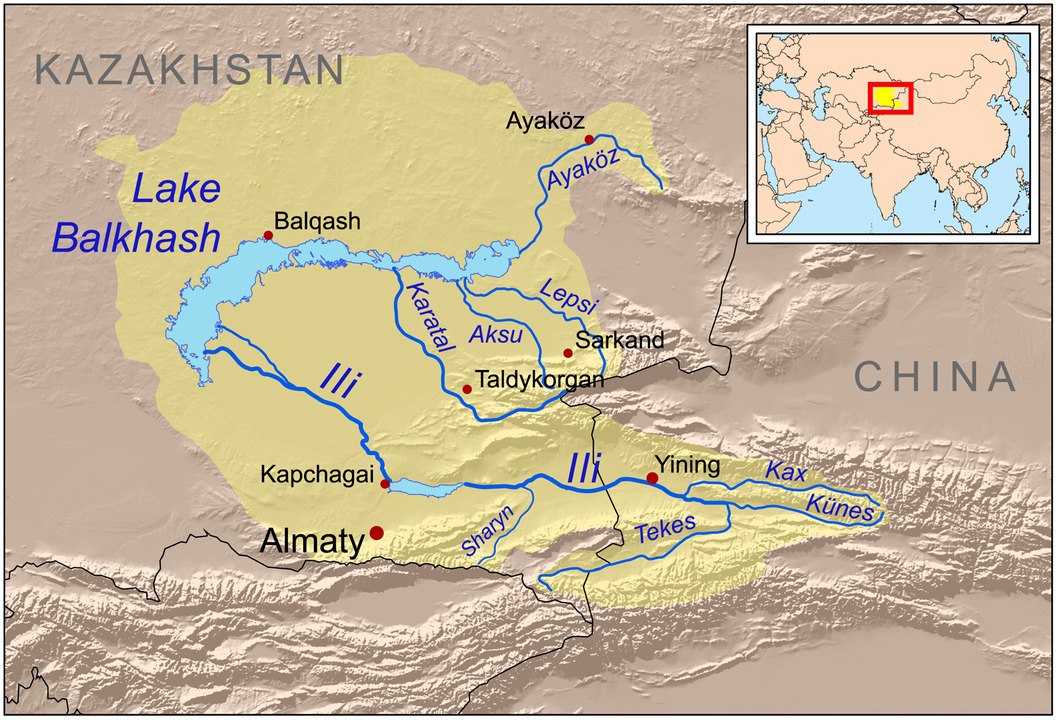
Located 280km northwest of the country’s largest city, Almaty, Lake Balkhash is the fifteenth largest lake in the world. It is fed by several trans-boundary rivers flowing from China, the largest of which is the Ili River, which provides about 80% of the lake’s water.

Image: Wikimapia

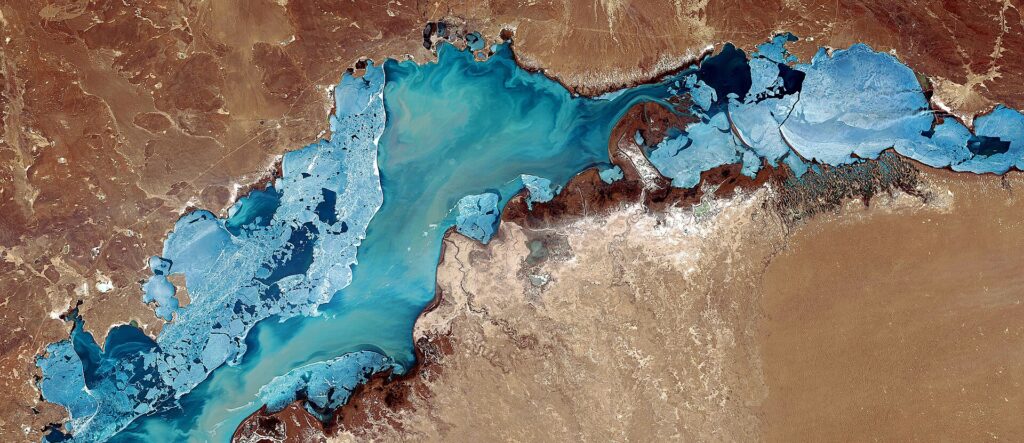
Environmentalists in Kazakhstan have been concerned about Lake Balkhash’s shallowing. Balkhash has been gradually drying up in recent years, including due to the decline in water volumes in the Ili River. Upstream China has extensively diverted the river over the past half century to produce hydroelectric power and agricultural crops on irrigated land. According to research, as of 2021 China was blocking 40% of the river’s inflow.

Moldir Abdualieva, a spokesperson of the Kazakh Ministry of Water Resources and Irrigation, said that the ministry has been paying great attention to providing Lake Balkhash with the necessary volume of water. “Since the beginning of this year, more than 12 billion cubic meters of water have been sent to the lake,” she said.

In May, it was reported that the water level in Balkhash had risen by 23cm since the beginning of the year due to increased rainfall and floods caused by snow melt this past spring.

Turkmenistan Tourism: Dinosaur Footprints, a Mystical Crater and Healing Lakes

Dotted with historical and cultural sites, and blessed with beautiful nature and a good climate, Turkmenistan is beginning to develop its tourism industry.

Turkmen authorities are expanding tourist itineraries, and improving the infrastructure and quality of services. Measures are also in place to provide a clean environment, safe drinking water and better food hygiene.

Turkmenistan has a variety of natural wonders. The unique landscapes of Kopetdag, the Karakum desert, the Amu Darya river, Koytendag, the subtropics of south-western Turkmenistan and the Turkmen coast of the Caspian Sea are ideal spots for ecological tourism.

The Aydere Gorge in western Kopetdag is also popular with travelers. Here there are dozens of picturesque valleys with pure springs, as well as ancient fortresses and historical monuments that guard the secrets of ancient times. Koytendag, located in the south-east of the country, attracts tourists seeking the traces of dinosaurs that lived here in prehistoric times.

The Sumbar Gorge in the south-west of the country also offers great opportunities for tourism development. Its beautiful mountain valleys, life-giving springs, and diversity of animal life make this place especially attractive.

The national tourist zone Avaza on the Caspian Sea coast attracts tourists from all over the world. Its comfortable climate, therapeutic mud, and mineral springs create ideal conditions for the development of ecotourism.

The Caspian Sea coast, with its amazing nature, changing in every season, impresses one with its beauty and charm.

Places that are also worth visiting in Turkmenistan:

Darvaza


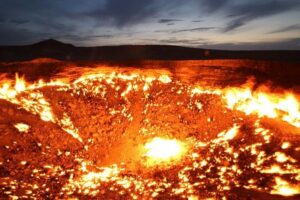
In the heart of Turkmenistan’s Karakum Desert is the Darvaza gas crater, which looks like a gateway to the underworld. The fire pit results from unsuccessful drilling conducted by Soviet geologists in 1971.

To prevent the natural gas from harming people and livestock, the geologists decided to set it on fire. The fire, which was supposed to go out in a few days, is still burning to this day. The tongues of flame, reaching ten meters in height, can be seen from several kilometers away. The crater is about 60 meters in diameter and 20 meters deep.

Darvaza is located 266 kilometers north of Ashgabat and 90 kilometers north of the village of Erbent.

Several sinkholes can be found in the vicinity of the crater; one of them is filled with a bright turquoise liquid.

The most impressive sight is Darvaza in the early evening light. Arriving before sunset, you can enjoy a fantastic contrast: the crater, bathed in the orange rays of the setting sun, gradually sinks into darkness, illuminating the desert landscape with bright flames. Other sinkholes are best viewed during daylight hours, but one should be careful as the loose earth near the edges crumbles and chunks of earth fall into the abyss. There is a strong smell of gas near the pit, and the temperature is quite high, so staying here for a long time is not recommended.

Yekedeshik

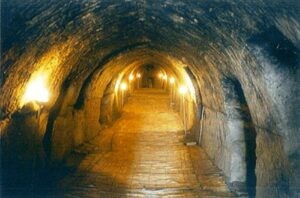
Yekedeshik, or “one hole,” is a mysterious cave city located near the village of Takhta Bazar in Mary province, on the left bank of the Murghab River. This two-level labyrinth of cave dwellings is a unique creation of ancient craftsmen.

The caves, united by a long gallery-corridor with a semi-cylindrical vault, are dug into clay sandstone at a height of 100 meters above the river. A single entrance leads to the underground city, which gives the place its name.

Yekedeshik is an understudied monument. Research on the site continues to this day. Scientists assume that it was created around the first century BC.

Researchers believe that in the early Middle Ages a large number of families lived here together, as the underground complex was a spacious enough and well-protected dwelling that was hidden from prying eyes. There are 44 caves in the complex.

Abiverd

@advantour.com

Abiverd is a mysterious city located near the Turkmen town of Kaka, which was called Kaahka until the end of the 20th century.
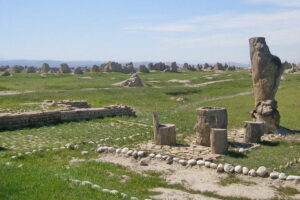
This rare archaeological monument, dating back to the Sassanid era, bears the romantic name Abiverd. The ancient city was part of the frontier line of Iranian cities that held back the onslaught of barbarian tribes deep into Inner Asia.

Excavations have shown that fierce battles took place near the walls of Abiverd. Historical sources mention it as a rural settlement with a warlike population due to its border location.

Gonur-Depe

In 1974, archaeological excavations of a unique urban settlement of the Bronze Age, known as Gonur-Depe, began in south-eastern Turkmenistan.

The excavations uncovered amazing structures, including majestic temples and a large city palace. This indicates that Gonur-Depe was a major metropolitan center with a developed culture.

The inhabitants of Gonur-Depe practiced Zoroastrianism. Archaeological finds confirm the active trade of the city with the states of the East. Seals from Mesopotamia, locally produced clay vessels, and various types of luxurious jewelry were found within the settlement.

Lake Kov-Ata


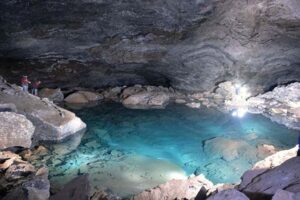
Located 60 kilometers west of Ashgabat, in the famous Baharden Cave, there is an underground lake, Kov-Ata, which means “father of caves” in Turkmen.

The descent into the cave begins with a steep staircase. At a depth of 60 meters you can see a small part of Kov-Ata Lake.

The water of Kov-Ata Lake is rich in minerals, including iodine, magnesium, iron, bromine, potassium, sodium, sulfate, and other elements.
There is a legend that during the Parthian kingdom, mortally wounded rebellious slaves were healed in the lake’s waters.

Ancient Merv

The Merv oasis is one of the most ancient regions of Central Asia, where irrigation was mastered in ancient times. It is not surprising that one of the largest cities of the ancient world, Merv, emerged there.

The first written references to the city are found in the Avestan chronicles, which date back to the 8th and 7th centuries B.C. Chroniclers called it “the soul of the king,” “the mother of the cities of Khorasan,” and “the city on which the universe rests.”

Great thinkers of the Middle Ages lived and worked here, including Omar Khayyam, As-Samani, and Imamaddin-Isfahani.

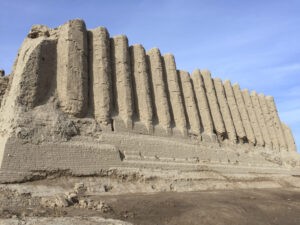
The modern ruins of Merv include five ancient settlements: Erk-Kala, Gyaur-Kala, Sultan-Kala, Abdullahan-Kala, and Bayramalikhan-Kala. Most of them are badly destroyed, and some are left only as crumbling mounds of earth, but even with this, Merv remains one of the most unique monuments of history.

The World Nomad Games: Capturing a Sense of the Great Steppe

The 5th World Nomad Games, set to be hosted in Astana from September 8-13, is Central Asia’s largest national sports competition and, complemented by unique cultural and scientific programs, attracts participants and spectators from throughout the world. As reported by TCA, there is a distinctive festive fizz in the air as the city prepares to welcome visitors, with streets, shopping centers, public spaces and even buses already festooned with flags and colorful decorations.

Ablai Kondybaev, the Deputy Head of the Directorate responsible for preparing and organizing the 5th World Nomad Games, spoke to The Times of Central Asia about how the event allows visitors to experience the spirit of the Great Steppe.

TCA: The geographical scope of the Nomad Games is steadily expanding worldwide. How many countries will participate this year and how many tourists and spectators are expected to attend?

AK: The Games have a ten-year history. Having originated in Kyrgyzstan in 2014, they have since been held three times in the Kyrgyz city of Cholpon-Ata and on the shores of Lake Issyk-Kul. Over the relatively short period since it began, the event has grown dramatically. The first Games attracted participants from 19 countries mainly from Central Asia where there is a historic nomadic culture, whereas the 4th Nomad Games hosted by Iznik, Turkey, in 2022, saw athletes competing from 81 countries.

It’s very interesting to track the geography of engagement. In previous Games, for example, countries such as New Zealand and Madagascar participated. Superficially, they have nothing to do with nomadic culture, yet consider themselves descendants of nomads. Such things bring us closer together; in the distant past, all humanity was nomadic. To date, we have received applications for participation from 89 countries to compete in this year’s event.

The Nomadic Games are a new and interesting phenomenon, offering unique and highly engaging spectacular sports, unfamiliar and exotic to European and Western audiences. As such, the Games are becoming increasingly popular abroad. Today’s geographical representation of athletes is expansive, with countries including Venezuela, Ireland, Gambia, and Brunei participating for the first time. For ten years, countries from literally all continents have joined the event and perhaps in the future, we will reach a point where interest in our national sports is on a par with the Olympics or soccer championships.
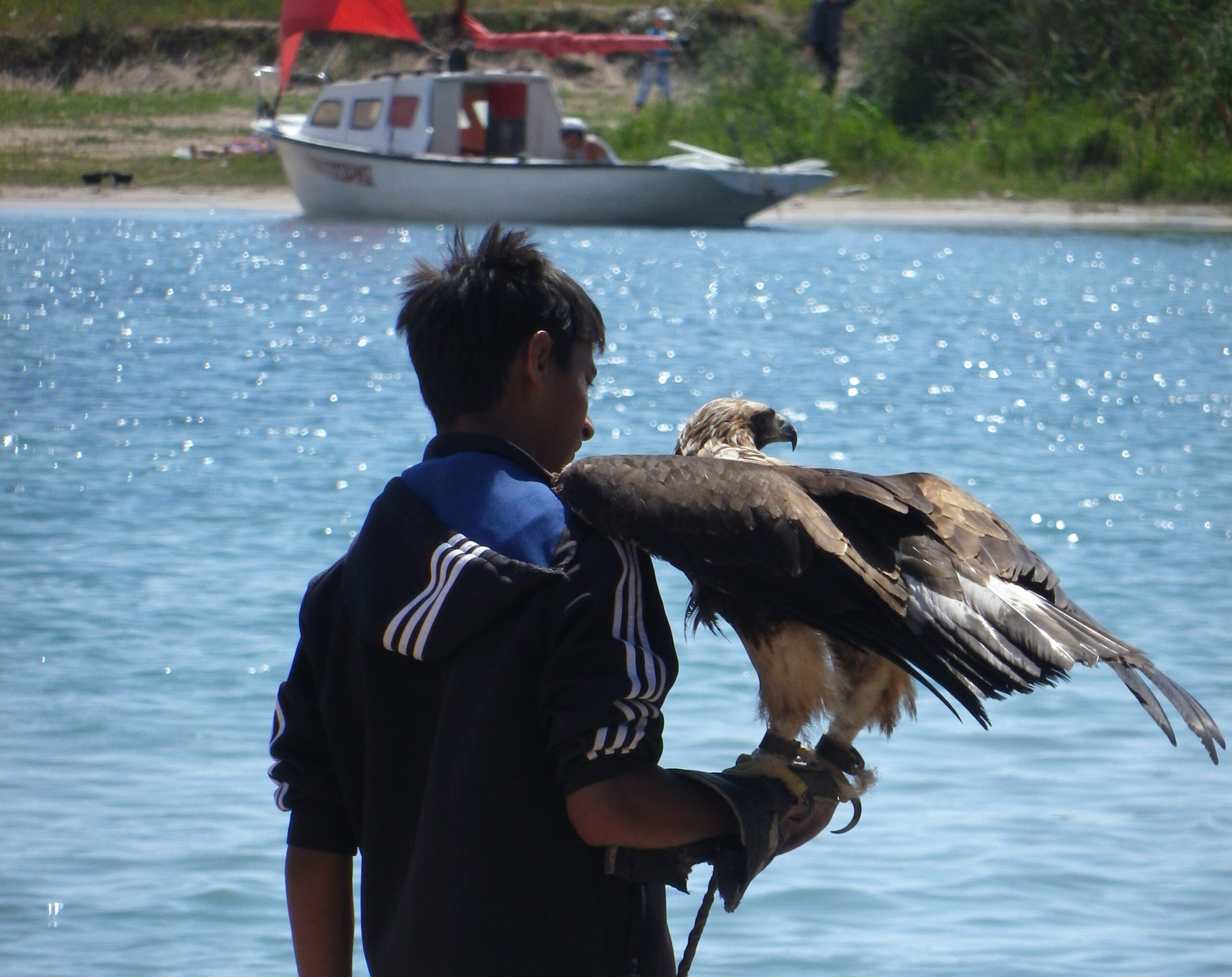
Falconry in Cholpon-Ata, Kyrgyzstan; image: Stephen M. Bland


TCA: Is it significant that the month of September was chosen for the Games?

AK: Absolutely. September is when nomads traditionally celebrate the completion of the migration with their caravan of yurts and animals from their summer to winter camp with a toi ; an event comprising  feasts, rituals, games and competitions.

TCA: Which competitions generate the most excitement amongst spectators: Horse racing, archery, wrestling?

AK: Nomadic life is directly related to horses, and year on year we observe how people who know nothing about steppe culture are particularly fascinated by our equestrian sports. Always spectacular and challenging, they take the audience’s breath away. But to single out some separate competitions is very difficult; they are all interesting. Each is unique, and each has its audience and fans. Nevertheless, according to ticket sales, it is obvious that horse races – baige – are extremely popular.

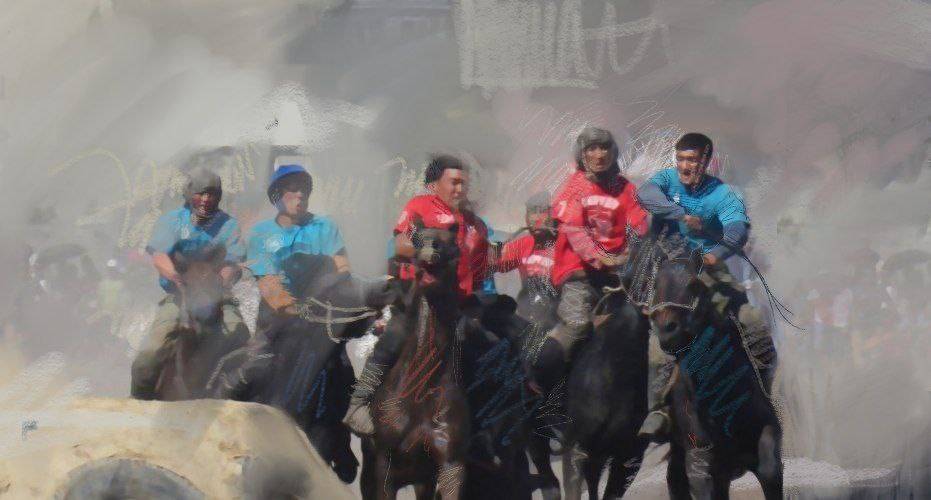
Kazakhs have long held horse races at major events and competitions. We have seven courses in the program. Three are flat races, similar to those held worldwide and in particular, in England, Arab countries and Japan. The other four, Kunan baige, Alaman baige, Top baige, and Ұshkyr baige, are traditional nomadic races over different distances and terrains.  There are also equestrian team competitions, the most famous of which are  Kokpar and Kokboru; traditional games akin to polo played with sheep or goat carcasses. Long popular among Turkic people, especially in Central Asia, these fast and furious competitions attract record numbers of spectators. According to forecasts, the finals of Kokpar and Kokboru will be held between Kazakhstan and Kyrgyzstan.

I should also mention Zhamby Atu, a mesmerizing and highly skilled competition involving horseback archery traditionally played by warriors on festive occasions. Other riding events include Audaryspak and Tehre Ilu, in which  the rider must pick up a bag of coins whilst on the gallop.

Equestrian events aside, the Games feature traditional wrestling events – Kazakh Kuresi , Kyrgyz Alysh, as well as Tatar and Uzbek forms of the sport – alongside contests of strength and power, such as weightlifting sports developed in Scandinavian countries, and, of course, competitions in traditional archery. Competitions in hunting with birds of prey, are always of great interest and in high demand amongst foreign guests.

Another sport which never fails to delight audiences is Arkan tartys, an emotionally charged tug-of-war, and Asyk Atu , a game of dice; both familiar to everyone’s childhoods. Intellectual sports also feature, but unfortunately, chess tournaments and board games such as  Togyzkumalak from Kazakhstan, Owari from West Africa, and Mangala from Turkey, are not open to spectators.

TCA: What distinguishes the Nomad Games from traditional sporting competitions and how do they impact on interest in Kazakhstan and nomadic culture?

AK: Thanks to the Games, ethno-sports are developing all over the world. The World Nomadic Games contribute to the establishment of common rules of competitions historically conceived in nomadic countries. One of our key tasks is to systematize the rules and adjust the details to reach a common understanding and give impetus for further development. Of course, first and foremost is attracting spectators. Given the high volume expected from Kazakhstan and Central Asian regions and because travel agencies, as in the UK, sold out tickets for the Games within six months, we anticipate audience numbers to reach 100,000. This figure will also be swelled by the recent announcement that Kazakhstan’s most famous singer, Dimash Kudaibergenov will perform at the Games on 13-14 September.
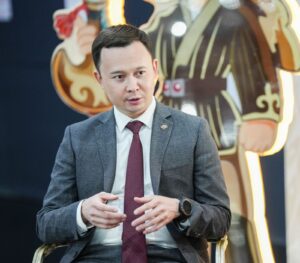
Ablay Kondybayev, the Deputy Head of the Directorate responsible for preparing and organizing the 5th World Nomad Games

TCA: What can you tell us about the activities offered by the ethno-aul, created within the framework of the Games on a ten-hectare site close to the Kazanat hippodrome?

AK: The Games consist of three areas – sport, culture, and science. The ethno-aul is the main site for cultural events, which follows the concept that the Nomad Games includes participation by of all Kazakhstan’s regions to allow visitors to immerse themselves in the the country’s heritage.

The ethno-aul will be launched on the first day of the Games with  Shattyk kerueni, a grand parade showcasing the cultural heritage of the Kazakh people, and thereafter, host evening performances by artistic ethno-collectives, concerts, regional competitions of  aytys  (folk poetry), exhibitions of unique work by some 200 master craftspeople, fairs and bazaars selling souvenirs and jewelry, masterclasses for visitors , children’s playgrounds, and of course, national cuisine. General admission is free.

Special attention is being paid to the younger generation, as one of the goals of the Games is to pass on traditions and revive national sports and national culture. We can already see a growing interest amongst young people in archery. Equestrian sports have become particularly popular, and to meet demand clubs are opening in Almaty and Astana. Reduced rates have been set for children attending the Games and to further develop sport amongst young people, we have signed a memorandum with UNICEF on several areas of cooperation.

TCA: What level of service awaits participants and tourists alike?

AK: We are currently putting the finishing touches in place. I think that everyone who attends the opening ceremony at the Astana Arena will be pleasantly surprised by the work of Kazakh producers and directors and moreover, get a true sense of our country’s hospitality and an authentic experience the nomadic spirit.