• KGS/USD = 0.01143 -0%
  • KZT/USD = 0.00192 -0%
  • TJS/USD = 0.10820 0.19%
  • UZS/USD = 0.00008 0%
  • TMT/USD = 0.28575 0%
  • KGS/USD = 0.01143 -0%
  • KZT/USD = 0.00192 -0%
  • TJS/USD = 0.10820 0.19%
  • UZS/USD = 0.00008 0%
  • TMT/USD = 0.28575 0%
  • KGS/USD = 0.01143 -0%
  • KZT/USD = 0.00192 -0%
  • TJS/USD = 0.10820 0.19%
  • UZS/USD = 0.00008 0%
  • TMT/USD = 0.28575 0%
  • KGS/USD = 0.01143 -0%
  • KZT/USD = 0.00192 -0%
  • TJS/USD = 0.10820 0.19%
  • UZS/USD = 0.00008 0%
  • TMT/USD = 0.28575 0%
  • KGS/USD = 0.01143 -0%
  • KZT/USD = 0.00192 -0%
  • TJS/USD = 0.10820 0.19%
  • UZS/USD = 0.00008 0%
  • TMT/USD = 0.28575 0%
  • KGS/USD = 0.01143 -0%
  • KZT/USD = 0.00192 -0%
  • TJS/USD = 0.10820 0.19%
  • UZS/USD = 0.00008 0%
  • TMT/USD = 0.28575 0%
  • KGS/USD = 0.01143 -0%
  • KZT/USD = 0.00192 -0%
  • TJS/USD = 0.10820 0.19%
  • UZS/USD = 0.00008 0%
  • TMT/USD = 0.28575 0%
  • KGS/USD = 0.01143 -0%
  • KZT/USD = 0.00192 -0%
  • TJS/USD = 0.10820 0.19%
  • UZS/USD = 0.00008 0%
  • TMT/USD = 0.28575 0%
14 December 2025

Rise in Uzbekistan’s Foreign Trade Turnover

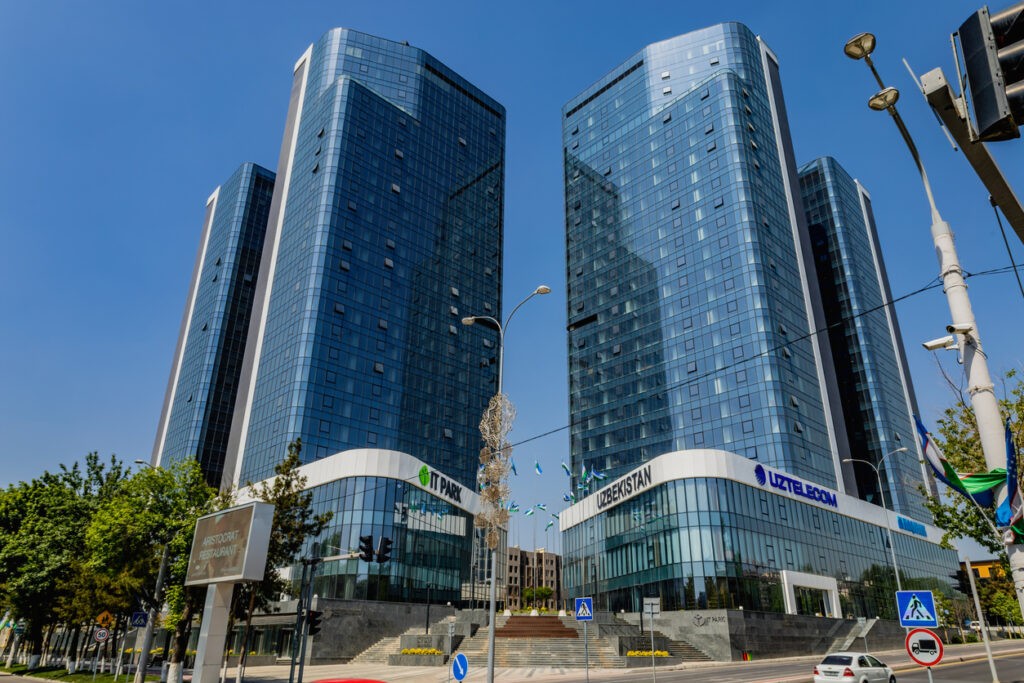
According to a report  published by the Statistics Agency of Uzbekistan on the country’s socio-economic situation for the first  half of 2024, the gross domestic product amounted to 567.4 trillion UZS ($44.93 billion), an increase of 6.4% compared to the same period last year.

The industrial network grew by 7.8%; agriculture, forestry, and fisheries by 3.8%, and construction by 10.1%. Local enterprises produced industrial products worth 370.0 trillion UZS ($29.30 billion) and the volume of agricultural, forestry, and fishery products totalled 170,297.3 billion UZS ($13.49 billion).

The rate of inflation in Uzbekistan’s consumer sector was 5.2%.

Foreign trade turnover amounted to $31,828.2 million, an increase of $2,486.7 million or 8.5% compared to 2023. Exports reached $12,992.7 million, an increase of 5.5%, and imports, reached $18,835.5 million, an increase of 10.6% compared to the previous year.

In July 1, 2024, 455,600 enterprises (excluding farms and peasant farms) were operating in the country, of which 387,100 are small enterprises and micro firms.

Between January and June, 42,400 new enterprises and organizations were established, of which 41,000 were small enterprises and micro firms, and by July, of the 13,880 enterprises operating with foreign capital, 4,221 were joint ventures, and 9,659, solely international.
 

British Publisher Promotes Kyrgyz Artists

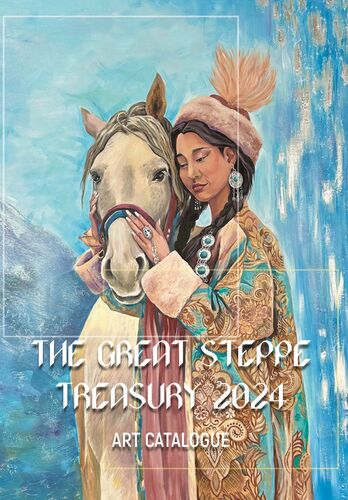
The second issue of ‘The Great Steppe Treasury’, released in July by British publisher Hertfordshire Press, includes the addition of work by three artists from Kyrgyzstan: Seid Atambaev, Larisa Pak, and Gulmira Ayipova.

The art catalogue which promotes the diversity of Eurasia’s contemporary art, culture, and creativity, represents 24 artists from the UK, Kyrgyzstan, Lithuania, Belarus, Kazakhstan, Russia, Germany, and Crimea.

Regarding the second edition, publisher Marat Akhmedjanov commented,  “We are glad to be able to give artists from Kyrgyzstan the opportunity to share their creativity with an international audience through our unique project. And we especially admire how Seid Atambaev, as a deputy, combines his political activities with promoting his country through creativity, demonstrating the variety of ways to support the growth and representation of Kyrgyzstan.”

Copies of the catalogue will be sent to significant galleries in the UK and plans are in place for participants to present their work in Glasgow, London, Almaty, Minsk, St. Petersburg, and Batumi.

Kazakhstan to Increase Municipal Waste Processing

On July 24, Kazakhstan launched its first project to build a technological eco-park for processing solid municipal waste and producing electricity from biogas.

According to the Ministry of Ecology and Natural Resources of Kazakhstan, the new facility will be equipped to sort 120 thousand tons of solid municipal waste and 120 thousand tons of large-sized waste, and process 80 thousand tons of organic waste per year.

In response to an instruction by the head of state in February to secure investment for the construction of waste processing plants in Kazakhstan, the government has secured a pool of 94 investment projects to  increase municipal waste processing from 1 million to 2.2 million tons annually.

In March, the government announced plans to build 37 new municipal solid waste processing plants and modernize eight existing plants.

To support the initiative aimed to improve the country’s environment, the government has given approval for an Industrial Development Fund, with an interest rate of 3 percent and loan terms from 3 to 15 years,  for projects related to waste management, including the purchase of rubbish trucks and the launch of sorting lines and processing facilities.

Prime Minister Olzhas Bektenov reported that recycling solid waste is profitable worldwide and Kazakhstan too, must exploit its potential in this field.

Kyrgyz Labor Migrants Now Welcome in Sardinia

The Center for Employment of Citizens Abroad has signed a partnership agreement with the Italian association of farmers, Coldiretti Sardegna, which stipulates that labor migrants from Kyrgyzstan can work in Sardinia. The Italian association is interested in attracting Kyrgyz citizens to work in agriculture, with preference being given to married couples.

A representative from the Center for Employment of Citizens Abroad stated that “social packages were discussed, including housing, legal presence, and health insurance. Moreover, after moving to Italy, employers expressed that training in the Italian language will be provided.”
Baktybek Kudaberdiyev, director of the Center, said this is the first agreement with Italian companies on hiring Kyrgyz people. “We are confident that this agreement will become the basis for successful and long-term cooperation, benefiting both sides,” Kudaberdiyev stated.

The cooperation agreement was organized by the Kyrgyz ambassador to Italy, Taalai Bazarbayev. Coldiretti Sardegna is a trade union representing Italian enterprises working in Sardinia’s agriculture and agri-food sectors.

Turkey Seeks Deal on Turkmen Gas

Turkey is at the final stage of negotiations on an agreement to transit Turkmen gas, Turkish Minister of Energy and Natural Resources Alparslan Bayraktar has announced in an interview with Bloomberg. Bayraktar said that “Turkey is studying the possibility of importing gas from Turkmenistan through a gas swap via neighboring Iran,” adding that a final agreement could be reached during an upcoming visit to Turkmenistan.

It is expected that gas supplies from Turkmenistan will be carried through Iran in the amount of 1.5-2 billion cubic meters per year. In addition, the Minister did not rule out the possibility of using the Iran-Azerbaijan gas pipeline to deliver “blue fuel” to Turkey, from where it will be pumped into the Trans-Anatolian gas pipeline (TANAP).

In March of this year, Ashgabat and Ankara signed a memorandum of cooperation in the field of natural. In early June, the state oil company of Azerbaijan (SOCAR) and the Turkish state gas company, Botas signed a cooperation agreement to supply Turkmen gas through Azerbaijan and third countries to Turkey.

China to Help Kazakhstan Plant Artificial Forests on the Aral Sea

On July 23, Kazakhstan’s minister of ecology and natural resources Erlan Nysanbayev met scientists from the Xinjiang Institute of Ecology and Geography, part of the Chinese Academy of Sciences, to discuss the creation of artificial forest plantations on the dried base of the Aral Sea.

Following a proposal to establish a joint Kazakh-Chinese center to resolve environmental issues on the Aral Sea, the Chinese scientists will visit the Kyzylorda region to closely examine work being undertaken on the dried sea base.

Spanning across Kazakhstan and Uzbekistan, the Aral Sea was once the fourth largest inland body of water in the world, covering 68,000 km². The destruction of the Aral Sea first dates back as far as the U.S. Civil War, when, finding his supply of American cotton under threat, the Russian tsar decided to use the sea’s tributaries to irrigate Central Asia and create his own cotton bowl. With 1.8 million liters of water needed for every bale of cotton, the water soon began to run out. By 2007, the Aral had shrunk to one-tenth its original size.

Up until the late-1990s, the land surrounding the Aral Sea was still cotton fields; today, it’s largely an expanse of salinized grey emptiness. The desiccation of the landscape has led to vast toxic dust-storms that ravage around 1.5 million square kilometers. Spreading nitrates and carcinogens, these storms – visible from space – used to occur once every five years, but now strike ten times a year.

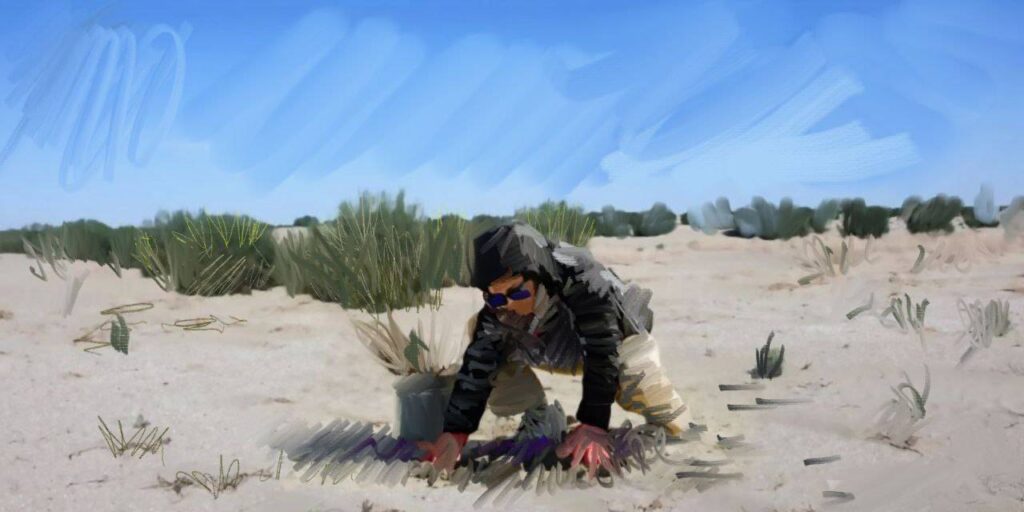
According to reports, Kazakhstan intends to plant saxaul shrubs on 1.1 million hectares of dried-up sections of the Aral Sea by 2025. Through joint efforts of the Ministry of Ecology and Natural Resources and the region’s administration, 544,500 hectares of saxaul have been sown over the past three years, with a further 275,000 hectares to be planted on the former seabed this year.

Wind-borne salt and dust cause significant damage to areas adjacent to the Aral Sea and their inhabitants. Every year, over 100 million tons of salt, dust, and sand are blown from the bottom of the former Aral Sea and mixed into the air.