• KGS/USD = 0.01144 0%
  • KZT/USD = 0.00212 0%
  • TJS/USD = 0.10456 0.19%
  • UZS/USD = 0.00008 0%
  • TMT/USD = 0.28490 0%
  • KGS/USD = 0.01144 0%
  • KZT/USD = 0.00212 0%
  • TJS/USD = 0.10456 0.19%
  • UZS/USD = 0.00008 0%
  • TMT/USD = 0.28490 0%
  • KGS/USD = 0.01144 0%
  • KZT/USD = 0.00212 0%
  • TJS/USD = 0.10456 0.19%
  • UZS/USD = 0.00008 0%
  • TMT/USD = 0.28490 0%
  • KGS/USD = 0.01144 0%
  • KZT/USD = 0.00212 0%
  • TJS/USD = 0.10456 0.19%
  • UZS/USD = 0.00008 0%
  • TMT/USD = 0.28490 0%
  • KGS/USD = 0.01144 0%
  • KZT/USD = 0.00212 0%
  • TJS/USD = 0.10456 0.19%
  • UZS/USD = 0.00008 0%
  • TMT/USD = 0.28490 0%
  • KGS/USD = 0.01144 0%
  • KZT/USD = 0.00212 0%
  • TJS/USD = 0.10456 0.19%
  • UZS/USD = 0.00008 0%
  • TMT/USD = 0.28490 0%
  • KGS/USD = 0.01144 0%
  • KZT/USD = 0.00212 0%
  • TJS/USD = 0.10456 0.19%
  • UZS/USD = 0.00008 0%
  • TMT/USD = 0.28490 0%
  • KGS/USD = 0.01144 0%
  • KZT/USD = 0.00212 0%
  • TJS/USD = 0.10456 0.19%
  • UZS/USD = 0.00008 0%
  • TMT/USD = 0.28490 0%

One Person Killed, Five Wounded in Incident on the Tajik-Afghan Border

On the night of November 18, an attack occurred on the Tajik-Afghan border in Zarbuz Gorge, Shamsiddin Shokhin District, resulting in the death of a Chinese citizen and injuries to five others, including four Chinese nationals and a local resident. The incident was reported by Radio Ozodi, citing sources familiar with the situation. Tajik officials have not yet issued a statement on the matter.

Details of the Attack

According to sources, the attack originated from the Afghan side of the border, though it remains unclear whether the perpetrators were drug smugglers or militants. The injured were transported to the Shamsiddin Shokhin District Hospital, and law enforcement officials have launched an investigation at the scene.

The presence of Chinese citizens in the area is connected to the operations of a gold mining enterprise located in the Dashti-Jum Nature Protection Zone, which adjoins the Zarbuz Gorge. The region is near the Sari Ghor border outpost, making it particularly susceptible to incursions from Afghan territory.

A History of Tensions

The Shamsiddin Shokhin section of the Tajik-Afghan border, stretching over 100 kilometers, has long been one of the most problematic areas. It has witnessed numerous incidents, including hostage-takings and attacks on Tajik citizens and military personnel. The region was also the site of the infamous 1993 attack on the Sari Gore border post, when Islamist militants targeted Russian border guards. This latest incident, however, marks the first time a Chinese citizen has fallen victim to violence at the border.

Despite assurances from the Taliban that Afghan territories will not harbor terrorist groups, the Tajik authorities remain concerned about instability in the neighboring country. In 2023, there were multiple incidents involving drug smugglers and militants crossing into Tajikistan.

On August 6, Tajikistan’s State Committee for National Security (SCNS) reported the killing of three members of the extremist group Ansarullah. The SCNS stated that the individuals had smuggled weapons, ammunition, explosives, and communications equipment into Tajikistan, which were later discovered in caches.

Independent verification of the November 18 attack is difficult, but the incident highlights Tajikistan’s ongoing vulnerability to threats from Afghanistan.

Caspian Sea Water Decline Requires Urgent Action, Says UNEP Chief

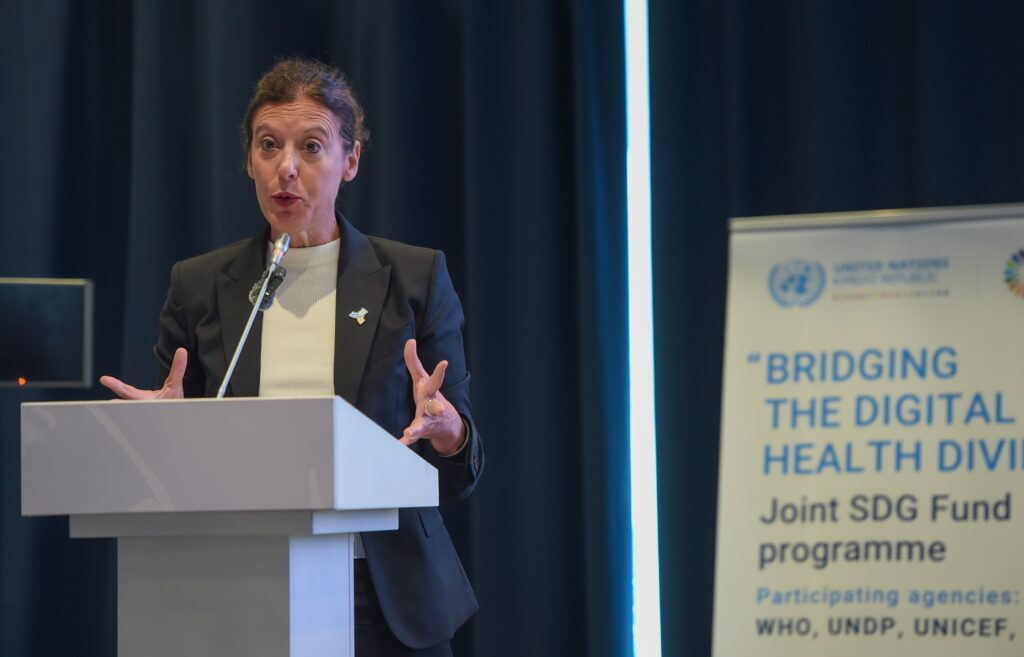
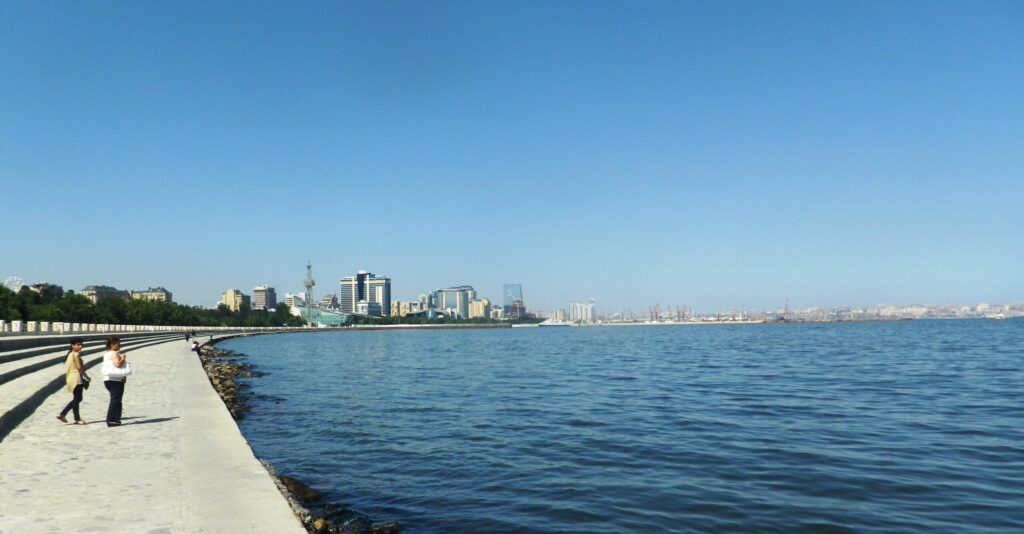
By the end of this century, the water levels of the Caspian Sea could drop by up to 18 meters, a decline that would devastate ecosystems and species, threaten livelihoods, and jeopardize food security and regional stability. Inger Andersen, Under-Secretary-General of the United Nations and Executive Director of the United Nations Environment Programme (UNEP), highlighted this concern during the event, “Caspian Sea Water Decline in Light of Climate Change” at COP29 in Baku, Azerbaijan, on November 18.

According to Andersen, the Caspian Sea, the largest enclosed body of water on Earth, “is under siege from the triple planetary crisis: the crisis of climate change, the crisis of nature, land and biodiversity loss, and the crisis of pollution and waste.” Andersen warned that without urgent action, this environmental and human crisis may result in as many as five million people being displaced from the Caspian basin by the middle of the century.

Inger Andersun; image: UNEP

The UNEP chief mentioned the impacts of the Caspian crisis: declining fisheries, salinization threatening agriculture, and the critically endangered Caspian seal — a species found nowhere else on Earth — facing extinction. Andersen emphasized the critical importance of the Tehran Convention — “the cornerstone for regional cooperation on the Caspian Sea.” The Framework Convention for the Protection of the Marine Environment of the Caspian Sea (Tehran Convention) was signed by the five Caspian littoral states — Azerbaijan, Iran, Kazakhstan, Russia, and Turkmenistan — in 2003 and entered into force in August 2006 after being ratified by all five governments.

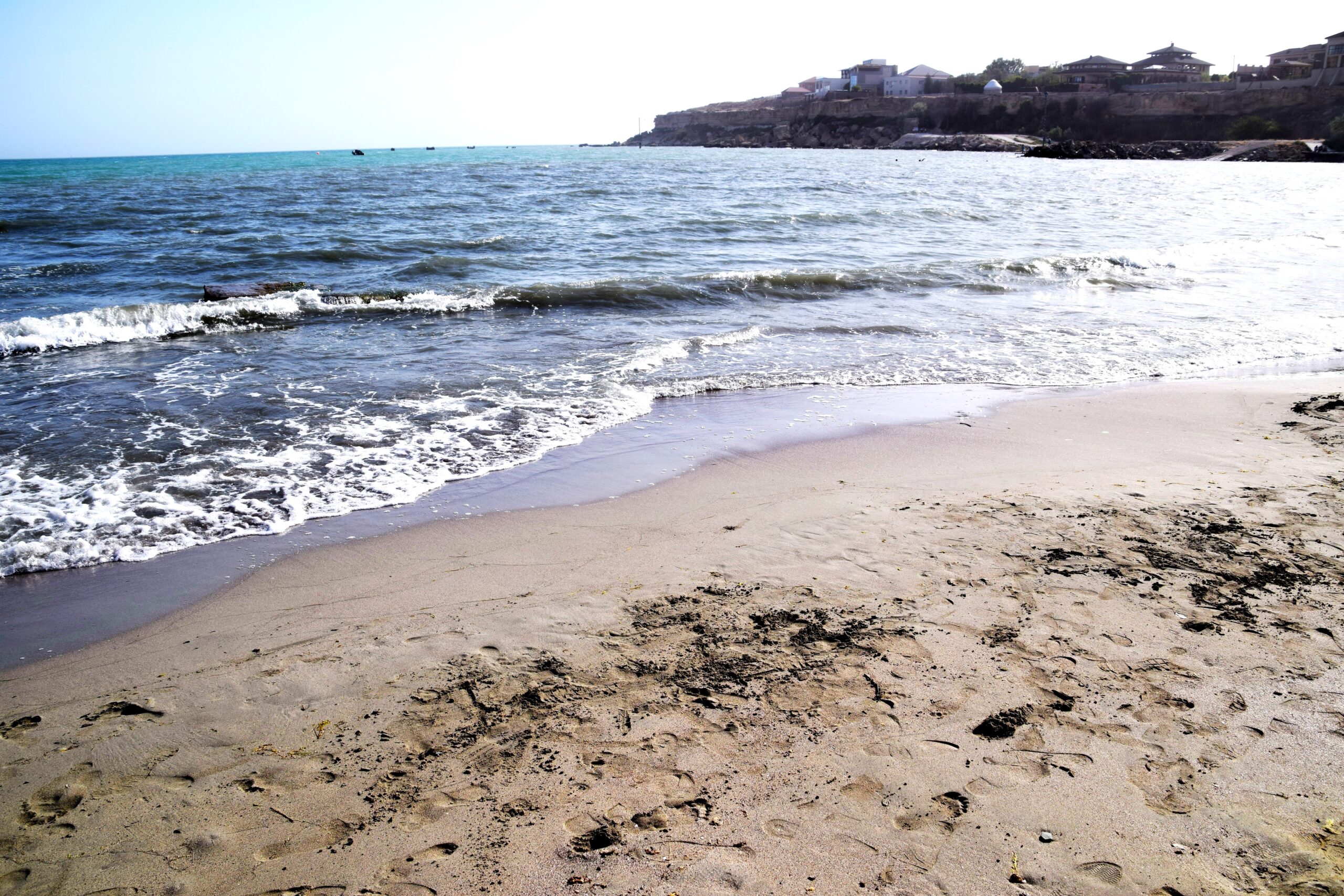
Aktau, Kazakhstan; image: TCA, Ola Fiedorczuk

The Tehran Convention “provides a platform to align our efforts, to unite science and policy, and to prioritize sustainable development across this unique region. As the interim Secretariat of the Tehran Convention, UNEP is proud to support these vital efforts and remains firm in its commitment to providing technical expertise, fostering collaboration, and supporting innovative financing mechanisms to address this urgent challenge,” said Andersen, emphasizing that robust monitoring and predictive models are essential to understanding and managing the drivers of Caspian water level changes.

“Science must inform every decision we take, whether on climate adaptation, biodiversity protection or pollution control,” Andersen stated, calling for regional cooperation to be strengthened. “The challenges the Caspian faces transcend borders. Solutions must do the same. Through trans-boundary collaboration, we can craft integrated solutions that safeguard ecosystems, support livelihoods, and promote equitable economic growth,” she stated.

The Times of Central Asia earlier reported that the abundant floodwater in April-May 2024 raised Kazakhstan’s Caspian Sea water level by over a meter. On July 1, Kazakhstan’s Ministry of Water Resources and Irrigation announced that the water level in the northeastern part of the Caspian Sea had risen by 119 cm since the beginning of 2024.

The COP29 summit has been widely criticized for its “theatrics,” “slow progress,” and handing out the “red carpet” treatment to fossil fuel bosses.

Unified Digital Health System to Transform Kyrgyzstan’s Healthcare

The United Nations Office in Kyrgyzstan, in collaboration with the Ministry of Health, has launched a program to create a unified digital health system in the country.

The Ministry of Health stated that the digitization initiative aims to harmonize Kyrgyzstan’s healthcare system. By providing easier access to medical information, the program is expected to expedite the delivery of medical services, even to the most remote and underserved communities. As part of this effort, specialists will enhance government e-services and telemedicine.

According to the UN, the project will require an investment of over $4 million, and is scheduled to run until 2027. “One of the key features of the program is to improve the digital health profile, giving citizens access to information about their health,” the Ministry of Health noted in a press release.

The authorities plan to integrate a unified registry of citizen vaccinations, which currently holds approximately 3 million records, with a national electronic medical records platform.

The program will also focus on supporting vulnerable groups. For example:
• 120,000 people will receive digital disability certificates; and
• 280,000 people will gain access to digital sick leave documentation, reducing hospital queues and making medical services faster and more convenient.

Telemedicine will be expanded to 10 districts, offering medical consultations to more than 700,000 children under the age of 14.

Additionally, 60 healthcare facilities will provide specialized care to 140,000 mothers and newborns, all connected to the unified electronic health records (EHR) platform.

“This digital health initiative is an important step forward for Kyrgyzstan. By improving access to important medical information, we can make healthcare more efficient and improve outcomes for all,” said Bakyt Dzhangaziev, Deputy Minister for Digital Development of Kyrgyzstan.

UN Resident Coordinator in Kyrgyzstan Antje Grave added: “Digital technologies are transforming our world, opening up new opportunities. It is necessary to bridge the digital divide between countries, promote the goals of sustainable development, and ensure that no one is left behind.”

The program is being implemented with support from international organizations, including the World Health Organization (WHO), UNICEF, the UN Population Fund, and the UN Development Programme (UNDP).

EDB Conference in Almaty to Focus on Sustainable Development in Central Asia

The Eurasian Development Bank (EDB) will host its annual conference, titled “Promoting Sustainable Development in Central Asia,” on December 6 in Almaty, Kazakhstan.

The EDB, an international financial institution focused on fostering economic cooperation and development across Eurasia, counts Armenia, Belarus, Kazakhstan, Kyrgyzstan, Russia, and Tajikistan among its member countries. Kazakhstan alone accounts for nearly 60% of the Bank’s investment portfolio, reflecting its pivotal role in regional development efforts.

The conference will focus on the EDB’s most pressing priorities for 2024, including the urgent need for sustainable and rapid economic growth to alleviate poverty in Central Asia. Discussions will address the persistent challenges of transport connectivity, which are particularly acute for the landlocked countries of the region.

Additionally, the event will explore the integrated development of the water, energy, and food nexus, which the EDB views as essential for ensuring the region’s security, peace, and sustainable development.

Participants will also examine trade facilitation, investment strategies, and innovative solutions for infrastructure development. These topics are considered crucial for advancing the region’s economic prospects and improving the quality of life for its citizens.

The conference will host representatives from leading international organizations, including the World Bank, the Islamic Development Bank (IsDB) and its Institute, the World Food Programme, and the UN Development Programme. Other participants include the Development Bank of Kazakhstan, the UN Economic and Social Commission for Asia and the Pacific (ESCAP), and the UN Climate Technology Centre & Network (CTCN), alongside government officials and regional stakeholders.

This annual event is expected to provide a platform for actionable discussions, fostering collaboration among key players and paving the way for sustainable economic development in Central Asia.

Gold Reserves in Kyrgyzstan May Reach Up to 4,000 Tons

Kyrgyzstan holds over 5,000 deposits of various minerals, including valuable resources such as gold, rare earth elements, uranium, and thorium. This was announced by Deputy Minister of Natural Resources Narynbek Satybaldiev during a briefing.

According to official state data, Kyrgyzstan has just over 1,000 tons of confirmed gold reserves. However, geologists estimate that the country’s total potential exceeds 4,000 tons. Many deposits are complex, containing other metals such as antimony, copper, and zinc alongside gold.

Satybaldiev highlighted that the recent lifting of a moratorium on deposit development presents new opportunities for mining gold and other strategically important metals essential for the global economy.

The Kyrgyz government is developing a comprehensive strategy to fully utilize its mineral resources. The plan includes exploration, mining, and processing initiatives, with a particular focus on rare earth metals. These resources are critical for producing high-tech products and advancing green energy technologies.

The implementation of this strategy is expected to boost mining revenues, strengthen Kyrgyzstan’s economic independence, and attract foreign investment.

In June 2024, Kyrgyzstan lifted a ban on developing uranium and thorium deposits, a restriction that had been in place since 2019. The decision reflects the government’s aim to balance environmental safety with the need to harness strategically important resources for economic growth.

The policy change is expected to attract investment, create jobs, and increase revenues from mineral exports.

Tajik MMA Fighter Chorshanbiev, Imprisoned For Criticizing Authorities, Faces New Charges

In Tajikistan, the well known MMA fighter and prominent blogger Chorshanbe Chorshanbiev, already serving an 8.5-year prison sentence, has been handed an additional four years on new charges. Journalist Anora Sarkorova reported the development on November 18, which was later confirmed by sources at Radio Ozodi.

Chorshanbiev, known for criticizing Tajik authorities in the Gorno-Badakhshan Autonomous Region while residing in Russia, was deported to Tajikistan in December 2021. By May 2022, he was convicted of “public calls for violent change of the constitutional order” and sentenced to 8.5 years in prison. Details of the additional sentence remain unclear, but it is speculated to be related to either violations of prison regulations or involvement in a fight. Recently, Chorshanbiev was transferred from a penal colony in Khujand to a pre-trial detention center in Dushanbe.

Chorshanbiev’s legal troubles began in December 2021 when he was deported from Russia for traffic violations. Upon his arrival in Dushanbe, he was arrested, and the Tajik prosecutor’s office initiated charges against him, alleging incitement of social and national discord and calls to overthrow the state system. However, during the investigation, the first charge was dropped.

His trial garnered significant public attention. Prominent athletes in Russia voiced their support for him, and his defense team argued that the case rested on a single piece of evidence: a video recorded in November 2021. In the video, Chorshanbiev commented on violent clashes in Khorog, during which three people were killed and dozens injured. The prosecution claimed his statements amounted to incitement of protests against the government.

A political scientist’s analysis, presented during the trial, characterized Chorshanbiev’s remarks as a call for rebellion. However, his lawyers contested this interpretation and requested a re-evaluation of the video. In court, Chorshanbiev maintained that he had no intention of destabilizing the country.

Despite the divided expert opinion, Chorshanbiev was convicted, and his case continues to provoke debate.