• KGS/USD = 0.01144 0%
  • KZT/USD = 0.00213 0%
  • TJS/USD = 0.10456 0.19%
  • UZS/USD = 0.00008 0%
  • TMT/USD = 0.28490 0%
  • KGS/USD = 0.01144 0%
  • KZT/USD = 0.00213 0%
  • TJS/USD = 0.10456 0.19%
  • UZS/USD = 0.00008 0%
  • TMT/USD = 0.28490 0%
  • KGS/USD = 0.01144 0%
  • KZT/USD = 0.00213 0%
  • TJS/USD = 0.10456 0.19%
  • UZS/USD = 0.00008 0%
  • TMT/USD = 0.28490 0%
  • KGS/USD = 0.01144 0%
  • KZT/USD = 0.00213 0%
  • TJS/USD = 0.10456 0.19%
  • UZS/USD = 0.00008 0%
  • TMT/USD = 0.28490 0%
  • KGS/USD = 0.01144 0%
  • KZT/USD = 0.00213 0%
  • TJS/USD = 0.10456 0.19%
  • UZS/USD = 0.00008 0%
  • TMT/USD = 0.28490 0%
  • KGS/USD = 0.01144 0%
  • KZT/USD = 0.00213 0%
  • TJS/USD = 0.10456 0.19%
  • UZS/USD = 0.00008 0%
  • TMT/USD = 0.28490 0%
  • KGS/USD = 0.01144 0%
  • KZT/USD = 0.00213 0%
  • TJS/USD = 0.10456 0.19%
  • UZS/USD = 0.00008 0%
  • TMT/USD = 0.28490 0%
  • KGS/USD = 0.01144 0%
  • KZT/USD = 0.00213 0%
  • TJS/USD = 0.10456 0.19%
  • UZS/USD = 0.00008 0%
  • TMT/USD = 0.28490 0%

Image of Kelin in Kazakh Films

In Kazakh culture, a special place is occupied by the traditional relationship between yene (mother-in-law) and kelin (daughter-in-law). This relationship is a reflection of family values and cultural norms that have developed over the centuries. In recent years, the theme of yene and kelin has been actively developed in Kazakh cinematography, where directors and screenwriters reveal the depth of these relationships, emphasizing their complexity and multifaceted nature.

In a traditional Kazakh family, yene plays an important role. She not only passes on domestic and cultural traditions to the younger generation but also helps the kelin to adapt to the new family. In turn, the kelin is responsible for managing the household and caring for the family, which is perceived as an important and honorable part of her social role.

However, this relationship, based on mutual respect and support, is often not without its difficulties. As in any culture, traditions are sometimes the cause of conflict and tension. These complexities, caused by societal expectations and personal ambitions, are reflected in Kazakhstan films, which increasingly focus on the role of the kelin in modern life.

The cinematography of Kazakhstan has become a powerful tool for researching and discussing traditional family relations. One of the most popular films on this topic is the comedy film Kelinka Sabina. In this film, the main focus is on the difficulties a young kelin faces when she enters a traditional family. The movie not only demonstrates the clash of cultures but also shows how the characters learn to accept each other despite the differences in outlook and habits.

Kelinka Sabina became a sensation in Kazakhstan, not only for its comedic scenes but also for its heartfelt and poignant moments that invite viewers to reflect on family values. The film explores the dynamics between mother-in-law and daughter-in-law while humorously addressing the integration of modernity and tradition, highlighting the challenges of adapting to new ways of life.

Another landmark film on this subject is Daughter-in-law is Also Human, which takes a more serious and in-depth look at the issue of female self-identification in traditional society, touching on important topics such as gender stereotypes, prejudice against women, and their role in modern Kazakhstan. The main character has to face the fact that she is expected to fully commit to the traditional role of a kelin, but she strives to maintain her personal space and rights. Her story of self-assertion serves as an example of how young Kazakh women can fight for their rights and change established stereotypes and expectations set by generations.

Another film in the same series, Kelinka is Also a Person 2, takes a significant step in addressing the role of women in Kazakh society by broadening perceptions of what it means to be a kelin in the modern world and opening up a discussion on gender roles and women’s rights.

The image of the kelin in Kazakh films epitomizes the complex and multifaceted aspects of Kazakh culture. The relationship between yene and kelin extends beyond a simple family connection; it represents a significant and evolving cultural code.


Uzbekistan Hosts IV Tashkent Anti-Corruption Forum

On October 17, 2024, Uzbekistan hosted the IV Tashkent Anti-Corruption Forum, gathering over 250 participants, including officials, international experts, and representatives from civil society. The event was organized by Uzbekistan’s Anti-Corruption Agency and partners including the European Union, GIZ (German International Cooperation), and the United Nations Development Programme (UNDP).

The forum highlighted Uzbekistan’s progress in fighting corruption and improving its position in key international rankings, such as Transparency International’s Corruption Perceptions Index. Uzbekistan’s successful completion of the OECD’s 2023 anti-corruption evaluation, scoring over 86 points, making it the highest ranked country in Central Asia, was also praised. Key achievements include implementing a national anti-corruption program, creating a long-term strategy for 2030, and actively involving civil society in the fight against corruption.

At the forum, a major milestone was the signing of an agreement between Uzbekistan’s Anti-Corruption Agency and the World Bank’s Integrity Vice Presidency to work together on training, projects, and research to combat corruption. The forum also featured discussions on using new technologies to prevent corruption, building a culture to resolve social conflicts, and addressing conflicts of interest through compliance systems.

Tajikistan Court Issues Harsh Sentences to Opposition Group 24 Leader and Associate

A Dushanbe court has handed down sentences to two opposition activists: Sukhrob Zafar, leader of the banned Group 24 (G24), and his associate Nasimjon Sharifov. Zafar was sentenced to 30 years and Sharifov to 20 years in prison. The verdict was announced on October 10 behind closed doors in the Dushanbe pre-trial detention center, and according to Radio Ozodi sources, it fully complies with the state prosecution’s request. Official structures still need to confirm this information.

Representatives of G24 say the sentences relate to the charges of “calls for violent change of the constitutional order” spread through the Internet. They consider these accusations unfounded and call the case politically motivated. In their opinion, the trial was conducted under pressure from the authorities and was a manifestation of Emomali Rahmon’s government’s repressive policy.

Both activists previously lived in Turkey, where they were hiding from the Tajik authorities. Suhrob Zafar had been there since 2014 and had received repeated threats. He was detained several times at Tajikistan’s request but was soon released. Sharifov had also been living in Turkey since 2015 and was detained three times but released each time. In March 2024, they mysteriously disappeared, and only in August it became known that they were taken to Dushanbe, where an investigation against them began.

The trial, according to G24 representatives, was yet another example of human rights violations and political repression. The organization claims that the trial was held under tremendous pressure and calls the authorities’ actions an act of suppression of dissent. Supporters believe that the repression of activists continues as part of the anti-opposition policy that the Tajik authorities have been pursuing for years.

G24 is an opposition organization founded in 2012 by businessman Umarali Kuwwatov, who left Tajikistan after conflicts with the authorities. The movement opposes President Emomali Rahmon’s policies, accusing him of corruption and authoritarianism. In 2014, Tajikistan’s Supreme Court declared the organization extremist after calls for protests and banned its activities, including websites and publications. The group’s founder was killed in 2015 in Turkey, raising suspicions of involvement by Tajik authorities.

Kyrgyzstan Removes Restrictions on Sale of Gold

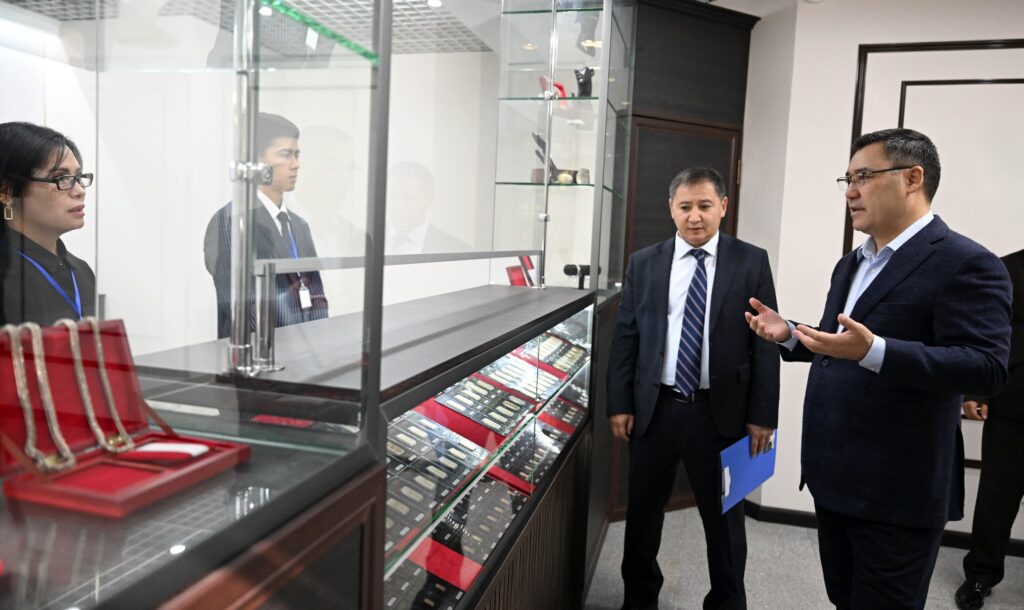
In early September, a state-owned store selling gold bars opened in Bishkek where gold can be bought without the presentation of a passport.

Kyrgyzaltyn OJSC has already reported record sales, topping 50 million KGS ($585 thousand), and providing the store with a net income of 3 million KGS ($35 thousand).

Changes in the law which previously allowed gold bars to only be bought in limited amounts through the National Bank of Kyrgyzstan, were instigated by President Sadyr Japarov of Kyrgyz, who explained:

“The National Bank does not sell bullion without a passport. Businessmen and rich people approached me –  worried that if they started showing their documents – the whole of Kyrgyzstan would know about it, including robbers. Businessmen said they would have to stay in their houses and guard the gold,”

Having lifted restrictions, Sadyr Japarov called on citizens to buy domestic gold, recommending it as a reliable and profitable investment.

The Kyrgyzaltyn store sells gold bars weighing from 1 to 100 grams, each carrying an individual QR code confirming the gold’s origin. Prices for the sale and repurchase of gold are set daily, based on London Bullion Exchange quotations.

Kyrgyz economists believe that the growth of investment in gold indicates an increase in confidence in this asset.

“In Kyrgyzstan, this trend is influenced by several factors. Global instability and fluctuations in currency markets make people look for more reliable assets. Declining yields on bank deposits are also pushing for alternatives. In addition, inflation expectations encourage people to convert their savings into gold,” economist Nurgul Akimova told The Times of Central Asia.

Kyrgyzstan has about 380 gold deposits, the largest of which is Kumtor in Issyk-Kul Oblast. The republic’s mining sector produced over 20 tons of gold in 2023.

Kuwaiti Companies Invited to Participate in Privatization of State-Owned Companies in Uzbekistan

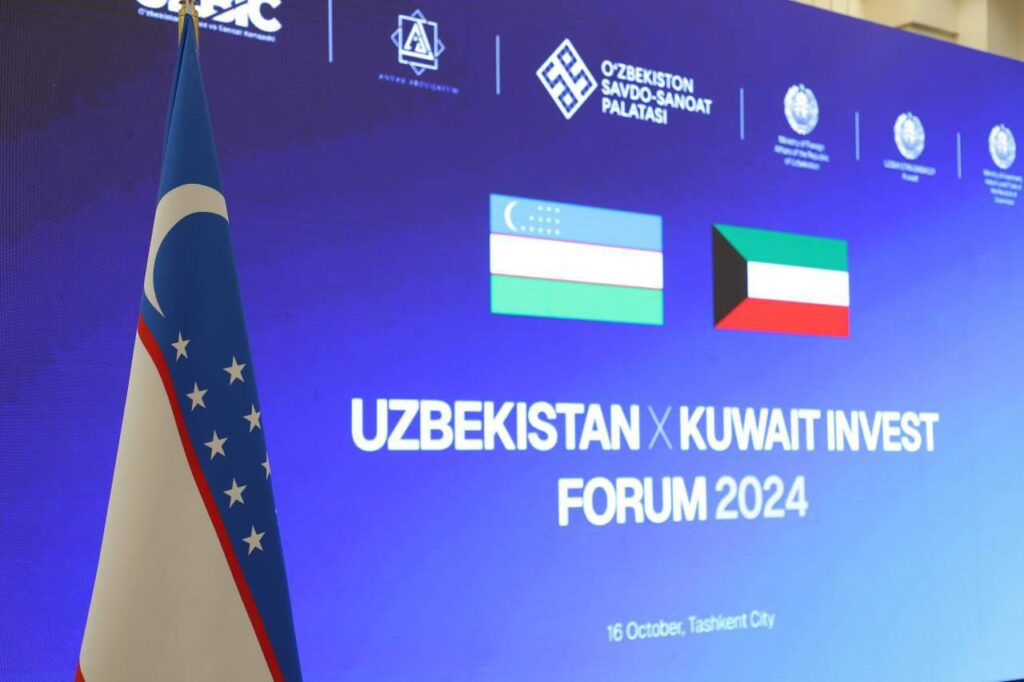
At a business forum dedicated to strengthening ties between Uzbekistan and Kuwait, in Tashkent on October 16, Deputy Minister of Investment, Industry, and Trade of Uzbekistan Akram Aliyev noted the importance of partnership with Kuwaiti businessmen, especially in healthcare, agriculture, and tourism.

The forum focused on prospects for joint projects mining, energy, textile industry, and logistics. Proposals were also mooted for Kuwaiti investors to participate in the privatization program of over 1,000 state-owned companies in Uzbekistan and improve logistics infrastructure to turn Central Asia into an international trade hub.

Over recent years, there have been several developments in cooperation between Uzbekistan and Kuwait. At an investment and trade forum hosted by Kuwait in August and attended by business and ministry representatives from both countries, Uzbek Foreign Minister Bakhtiyor Saidov encouraged Kuwaiti investors to explore prospects for partnership in agriculture, light industry, medical products, and renewable energy. The foreign ministers then met again, in New York in September 2024, to discuss further steps to strengthen bilateral cooperation, including the establishment of joint trade committees and new initiatives in logistics and infrastructure.

Archaeologists unlock Secrets of Ancient Civilization in Turkmenistan

Large-scale archaeological research continues in the Karakum desert at the ancient site of Gonur-Depe. This unique monument, discovered in 1972, is the key to unlocking the mysteries of the ancient civilization Margush, which flourished in the delta of the Murghab River about four millennia ago.

The Turkmen-Russian Margush Archaeological Expedition, operating under the international agreement, is nearing the end of another field season. The scientists uniting specialists from the Institute of Ethnology and Anthropology of the Russian Academy of Sciences, the Institute of History of Material Culture of the Russian Academy of Sciences, and Turkmen researchers continue painstaking work to study and describe numerous artifacts found at this ancient settlement.

The excavation season brought some interesting findings. Among them, a miniature cylindrical seal made of talc-agalmatolite, a fragment of a clay bulla with imprints of a snake-shaped seal, and a unique clay lid from a vessel with imprints of a rope and a cloisonné seal stands out.

Of particular interest are sets of semi-precious stone beads found in five burials. The skill of ancient jewelers has astonished modern researchers—some lapis lazuli beads have a diameter of only 1 millimeter.

Archaeologists have also conducted research aimed at studying the technologies of ancient builders. For the first time, a gypsum kiln was described in detail, making it possible to reconstruct the technological process of producing building materials in ancient Gonur-Depe.

The results of these studies will be presented at an international scientific conference in Ashgabat, where scientists from different countries will discuss the discoveries and their significance as regards understanding the history of the ancient civilization of Margiana.

The discoveries made in Gonur-Depe not only shed light on the life of the ancient inhabitants of these places but also emphasize the importance of international cooperation in archaeology and history. Each discovery brings us closer to understanding the rich cultural heritage left by an ancient civilization in the heart of the Karakum desert.