• KGS/USD = 0.01144 0%
  • KZT/USD = 0.00194 0%
  • TJS/USD = 0.10886 -0.09%
  • UZS/USD = 0.00008 0%
  • TMT/USD = 0.28490 0%
  • KGS/USD = 0.01144 0%
  • KZT/USD = 0.00194 0%
  • TJS/USD = 0.10886 -0.09%
  • UZS/USD = 0.00008 0%
  • TMT/USD = 0.28490 0%
  • KGS/USD = 0.01144 0%
  • KZT/USD = 0.00194 0%
  • TJS/USD = 0.10886 -0.09%
  • UZS/USD = 0.00008 0%
  • TMT/USD = 0.28490 0%
  • KGS/USD = 0.01144 0%
  • KZT/USD = 0.00194 0%
  • TJS/USD = 0.10886 -0.09%
  • UZS/USD = 0.00008 0%
  • TMT/USD = 0.28490 0%
  • KGS/USD = 0.01144 0%
  • KZT/USD = 0.00194 0%
  • TJS/USD = 0.10886 -0.09%
  • UZS/USD = 0.00008 0%
  • TMT/USD = 0.28490 0%
  • KGS/USD = 0.01144 0%
  • KZT/USD = 0.00194 0%
  • TJS/USD = 0.10886 -0.09%
  • UZS/USD = 0.00008 0%
  • TMT/USD = 0.28490 0%
  • KGS/USD = 0.01144 0%
  • KZT/USD = 0.00194 0%
  • TJS/USD = 0.10886 -0.09%
  • UZS/USD = 0.00008 0%
  • TMT/USD = 0.28490 0%
  • KGS/USD = 0.01144 0%
  • KZT/USD = 0.00194 0%
  • TJS/USD = 0.10886 -0.09%
  • UZS/USD = 0.00008 0%
  • TMT/USD = 0.28490 0%
15 December 2025

USAID Supports Central Asian Women Working in Hospitality

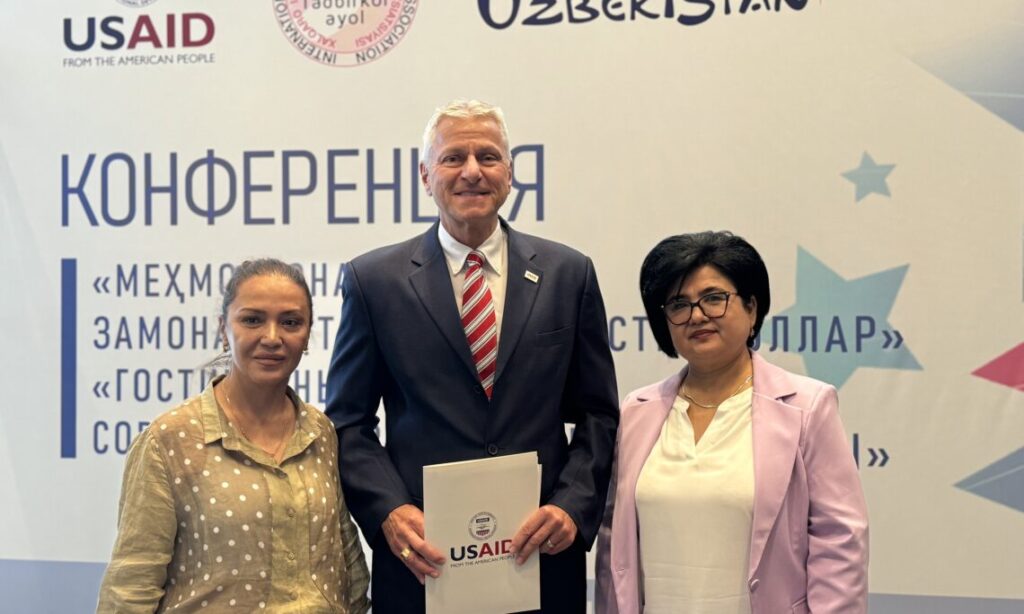
The U.S. Agency for International Development (USAID) and the International Association of Businesswomen “Tadbirkor Ayol” last week hosted a Central Asian Conference on “Women of Central Asia in the Hospitality Business: Current Challenges and Opportunities”.

The event in Tashkent attracted some 200 women entrepreneurs, professionals, and industry experts from Uzbekistan, Tajikistan, and Kyrgyzstan to discuss achievements, trends, and challenges in the region’s hospitality sector.

As reported by the U.S. Embassy in Uzbekistan, the conference focused on service quality, digitalization, and modern standards in tourism, culminating in recommendations to enhance regional cooperation in tourism and hospitality.

Praising the resilience and creativity of women in the hospitality industry and emphasizing their role in the sector’s future, Edward Michalski, USAID Deputy Mission Director in Uzbekistan, commented: “Investing in women and girls is essential to transforming communities. When women do better, families do better, communities do better, and countries do better.”

Gulnora Makhmudova, Chairwoman of “Tadbirkor Ayol,” noted that the growing importance of the region’s hotel business and the increasing involvement of women, had spurred the association into launching “Women in the Hotel Business: Hospitality from the Future;” a project aimed to introduce innovation and digitalization in the hospitality sector.

Since its launch in April 2024, with support from USAID, the project has provided training for 115 women in modern hotel management in Tashkent, Andijan, and Samarkand.


Kazakhstan Set to Develop Halal Market

From 4 to 12 June, over 100 certification and accreditation specialists from Kazakhstan attended a training seminar on Halal standards in Astana. Over the duration of the course, participants received training on Halal requirements and OIC/SMIIC international standards set by international experts in Halal accreditation and certification.

In her address, Zhanna Esenbekova, Chairperson of the Technical Regulation and Metrology Committee of the Ministry of Trade and Integration of Kazakhstan, emphasized the importance of national legislation adapted to ISO SMIIC standards for Kazakhstan’s economy as well as the need for trained specialists to promote and monitor compliance with Islamic requirements and standards.

“Halal standards are receiving increasing attention worldwide and the areas of Halal standardization are expanding. Not so long ago, Halal concerned only a few types of everyday products, but today Halal has expanded its boundaries to areas such as transport and logistics, finance and credit, tourism and hospitality, clothing and footwear production, restaurant business and many others,” reported Esenbekova.

One of the seminar’s lecturers, international expert Emre Kırıcıoğlu, added: “Today, the Halal market has over 1.8 billion consumers worldwide and a turnover of 2 to 5 trillion dollars, with regard to Halal financing. Kazakhstan has a reputation for self-sufficiency in food supply. Local meat, grain and vegetables are fine in quality and grown under favourable conditions. Given the profile of a large sector of the population, your country is well positioned to compete in international markets in products acceptable by Islam.”


Kazakhstan and Central Asia Present Investment Opportunities to Swedish Parliament

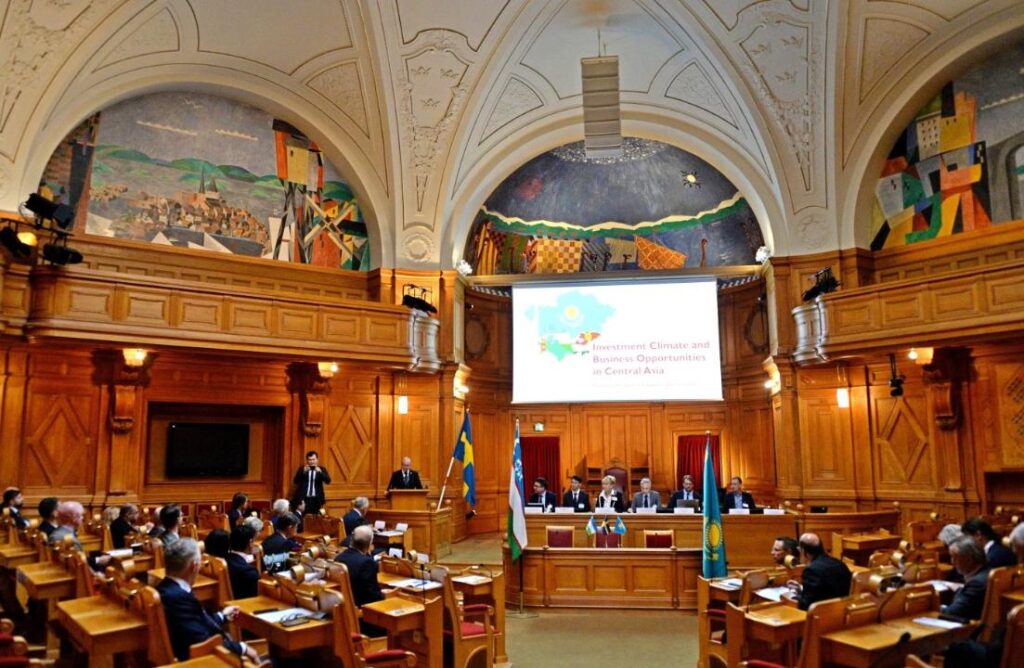
The first business seminar on the investment climate and business opportunities in Kazakhstan and Central Asia was held last week in Stockholm, Sweden.

As reported by Kazakhstan’s Foreign Ministry, the event was attended by Chairman of the Sweden–Central Asia Friendship Group of the Riksdag (Swedish Parliament) Bjorn Soder, Ambassador of Uzbekistan to Sweden Nodir Ganiev, Ambassador of Sweden to Kazakhstan Ewa Polano, Ambassador of Sweden to Uzbekistan Tomas Danestad, Chairman of the Swedish Chamber of Commerce for Eurasia Heinz Sjogren, and representatives of Swedish ministries and large companies.

Speaking at the event, Bjorn Soder noted the strategic importance of enhancing cooperation between Sweden’s and Central Asia’s public and private sectors. Attention was drawn to Central Asia’s huge potential for strengthening trade and economic relations with Sweden, and the limitless prospects for expanding investment partnership.

Ewa Polano and Tomas Danestad shared their views on the dynamic development of Central Asia, emphasizing that Kazakhstan and Uzbekistan are the “core-countries” of the region. Referencing growing competition in the region, the two ambassadors called on the Swedish business community to invest in Central Asia, as well as expand its presence in the region.

Representative of Scania AB, Fredrik Wijkander, outlined the Swedish company’s presence in Kazakhstan where it has been operating since 2007. In 2023, the assembly of Scania trucks was launched in Saran, in the Karaganda region, and in 2024, Scania AB set up Scania Central Asia as an independent business unit in the region with its head office in Almaty.

Fredrik Wijkander said that despite the high competition from Chinese automakers, the Swedish company will continue to strengthen its presence in Central Asia and expand production. To this effect, he confirmed plans for the assembly of trucks and buses, and establish local production in Kazakhstan.


Kyrgyzstan’s President Says Acquitted Protesters Deserved “At Least a Fine or Probation”

International rights groups welcomed the recent acquittal of more than 20 Kyrgyz activists and political figures who would have faced long jail sentences if convicted of plotting riots and other crimes, but Kyrgyzstan’s president says the defendants should have been fined or put on probation.

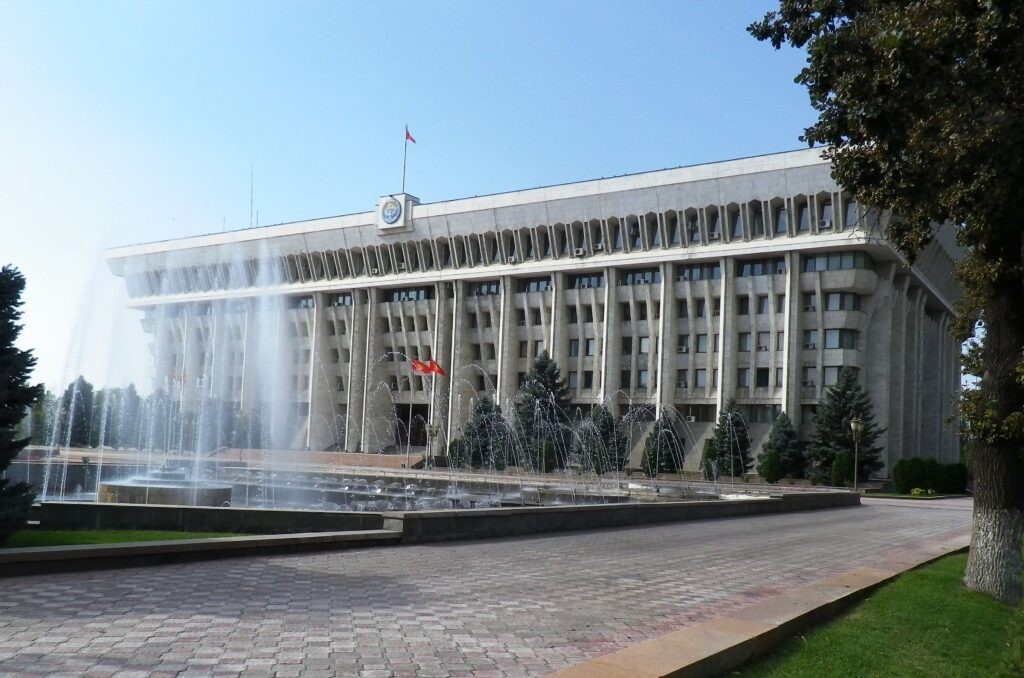
President Sadyr Japarov commented about the case on Saturday in an interview with the official Kabar News Agency, one day after the activists were acquitted because of insufficient evidence. The activists were arrested in 2022 after protesting against a border demarcation agreement with Uzbekistan that involved the Kempir-Abad Dam and surrounding lands.

“The court is a separate branch of government,” Japarov said. “I have been saying since the beginning that no one has the right to interfere in the work of the court. We must all obey the court’s decision. We have no right to criticize whether it is legal or not. Whatever the court decides, whether it is right or wrong, we must agree.”

Japarov continued: “But now, after the decision of the court, I can express my opinion. If I were a judge, I would give the organizers of this case some kind of punishment, at least a fine or probation.”

The Kyrgyz president said the activists deserved a penalty because, in his view, they misled people into thinking that Kyrgyzstan was losing the entire dam in the border deal, when in fact it is being jointly managed with Uzbekistan.

Prosecutors were seeking 20-year jail terms for the defendants. Several were also charged with trying to violently seize power.

“We didn’t expect it, at all. We were crying from surprise,” Rita Karasartova, one of the accused activists said of the acquittal. She was quoted by Amnesty International, which described the charges as politically motivated.

The prosecutions in the Kempir-Abad case fed into worries that Kyrgyzstan, under Japarov’s leadership, is walking back the relative freedoms that it has enjoyed in comparison to some of its Central Asian neighbors. Critics point to prosecutions of journalists and a new law that tightens control of foreign-funded non-governmental groups as signs of growing authoritarianism.

Japarov has described some of the international criticism as an exercise in double standards and meddling in the country’s internal affairs.

Dreaming of Paris, Fighting for Power: Electricity in Central Asia

The COP28 UN Climate Change Conference in December 2023 highlighted the important role of developing countries – which include the Central Asian republics – in reducing dependence on fossil fuels thanks to the use of cleaner, renewable energy sources. Indeed, Central Asia is believed to have something to offer the world in the fight against climate change, being home to numerous sources of clean energy, including solar, wind, and hydropower.


The “electricity ring”

Last year, fossil fuels accounted for 95% of the total energy supply in the five Central Asian countries, according to the UN. To meet their commitments under the Paris Agreement and the transition to a low-carbon and sustainable energy system, the region will need to make a giant leap from fossil fuels to renewable energy sources. The main issue is that this transition must be made by different electrical grids across Central Asia, most of which are linked to the Central Asian Power System (CAPS).

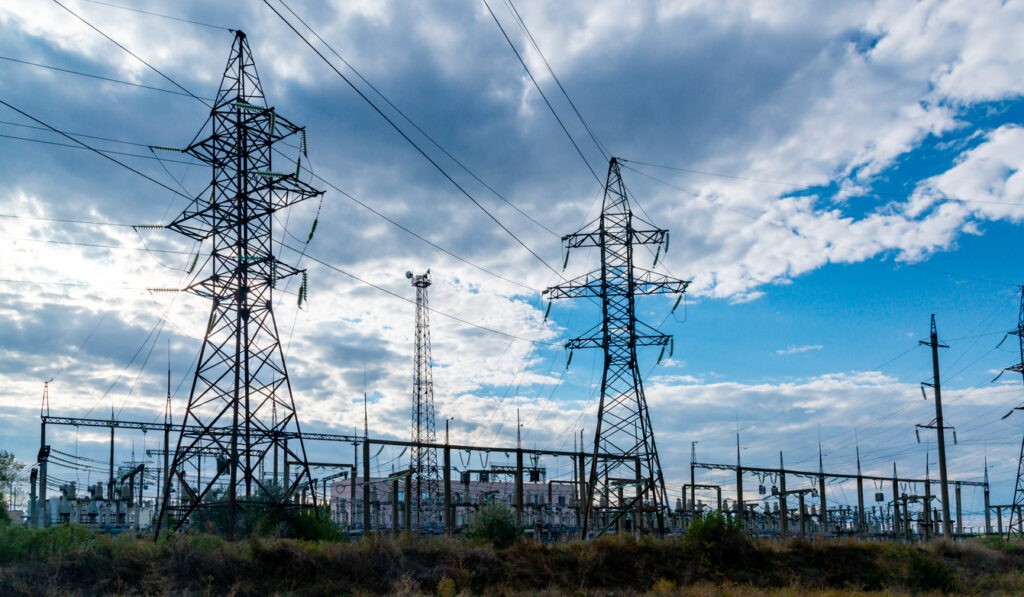
CAPS, also known as the “electricity ring,” is a joint power transmission network connecting Uzbekistan, Tajikistan, Turkmenistan, Kyrgyzstan, and some southern parts of Kazakhstan. It was created in 1960, with the aim of ensuring the reliable transmission of electricity and steady cooperation between the republics. The energy systems of these regions are united into a single structure, which allows for parallel operation even when individual sections of the grid go down, meaning that if one part of the ring goes down, the other parts continue to function, improving reliability and efficiency.

This system plays an important role in ensuring energy security and promoting cooperation and interaction. The creation and maintenance of any power system requires coordinated work by all participants. In the past, some countries temporarily withdrew from CAPS for various reasons, but in most cases, they sought to resume cooperation and their link to the “electricity ring.”


Blackout

On January 25, 2022, consumers in the ring experienced a blackout.

The lights went out almost instantly in the south of Kazakhstan (the city of Almaty, as well as Turkestan, Kyzylorda, Almaty and Zhambyl regions), in Kyrgyzstan (the cities of Bishkek and Osh and the Issyk-Kul region) and Uzbekistan (the city of Tashkent, the Fergana Valley and Syr Darya, Jizzakh, Samarkand, Navoi and Kashkadarya regions). The widespread power outage paralyzed transportation, shut down important social infrastructure, and spurred popular discontent in the three countries affected.

The Kazakhstani pundit Petr Svoik, a former professional power engineer who ran a thermal power plant (TPP), described the blackout as an unprecedented event, noting, however, that the technology worked perfectly and that the sudden loss of 1,500 MW of electricity did not lead to any major consequences.

The Kazakhstani energy system consists of two insufficiently connected parts – north and south. The north is actually a continuation of the Russian power system, part of the Russian “energy bridge” – though, of course, it also has importance for the whole of Kazakhstan – whilst the south is part of the Central Asian ring.

Looking at the arrangement of the substations in the base ring, one sees a system of looping networks. What happened in January 2022, apparently in Uzbekistan, was a sharp drop in generation which placed an additional burden of about 1,500 MW on the north-south connection in Kazakhstan, which is more than the capacity of lines going from north to south. “As a result, as power engineers say, there was a power surge on this line to compensate, and the north was disconnected from the south, or, well, the south from the north, automatically,” explained Svoik.

In other words, there is a system that was created at a time when the participating republics were not sovereign, and no one expected a drop in the number of specialists, or that the participating republics would quickly reach the point where they could not keep the “electricity ring” in working order. Kazakhstan, for example, has had to negotiate with Russia to have Russian specialists come and build three TPPs. Indeed, every winter Kazakhstan braces for spontaneous power and heat outages, even though Kazakhstan is richer in natural resources than its neighbors in Central Asia – but what good are these resources if they cannot be put to use? Looking to Asian Tigers such as Singapore and Korea, and naturally, China, Kazakhstan’s answer to this has been to attract foreign investment, along with companies and technology. An important positive result of attracting foreign direct investment for the country’s economy may be the receipt and subsequent dissemination of more advanced production and management technologies.


Electricity production by country

In Uzbekistan, the electric power industry includes large TPPs like Syr Darya (generating 3,215 MW), Tashkent (2,230 MW), Novo-Angren (2,100 MW), Navoi (2,068 MW) and Talimarjan (1,700 MW), as well as Urta-Chirchik cascade hydropower plants (HPPs) like Charvak (666 MW), Khodzhikent (165 MW) and Gazalkent (120 MW). Other renewable energy sources have a small share in Uzbekistan’s energy system. In 2023, solar energy capacity accounted for 253 MW and wind only 1 MW.

In addition, Rosatom is building a 330 MW nuclear power plant (NPP) in Uzbekistan, with commissioning scheduled for 2029.

In Kazakhstan, meanwhile, the government has yet to launch a nationwide discussion about building an NPP; the issue is expected to be put to a referendum.

Turkmenistan claims to be developing its electric industry at an “accelerated pace.” In 2006, the country produced 13.65 billion kWh of electricity (gross), exceeding the 1992 level by 3.5%, and the previous-years’ level by 6.5%. From 2006-2015, average annual growth in production was reported at 5.8%; from 2015-2021, however, the volume did not change – 22.534 billion kWh – which, of course, gives no indication of the real development of the energy sector, but rather serves to again underscore how closed-off the country is.

Tajikistan, meanwhile, is looking to realize its hydropower potential, estimated at 527 billion kWh overall, with 202 billion kWh technically feasible, and of that, 172 billion kWh economically feasible.

The country already has many HPPs: Nurek (capacity 3,000 MW), Sangtuda 1 (670 MW), Baipazinskaya (600 MW), the first unit at Rogun (600 MW), Sangtuda 2 (220 MW), Golovnaya (240 MW), Kairakkum (126 MW), Perepadnaya (29.9 MW) and Central (15.1 MW). In addition, there is the Varzob cascade HPPs (Varzob 1, 2, 3) on the Varzob River with a combined capacity of 25.7 MW, as well as several dozen small (with a capacity of up to 1.5 MW) and micro HPPs (with a capacity of up to 0.1 MW). Tajikistan also has a few TPPs: Dushanbe 1 and 2 (198 MW and 400 MW capacity, respectively) and Yavanskaya (120 MW).

Tajikistan exports electricity to Uzbekistan, Kyrgyzstan, and Afghanistan. After the Rogun HPP is fully launched, the country is expected to supply energy to Pakistan, too.

The energy sector of Kyrgyzstan is in the worst shape. The country has difficulty meeting the needs of the domestic market, and energy production is not keeping pace with consumption growth. In difficult periods, it must buy electricity from its neighbors. According to statistics, almost 15 billion kWh of electricity is generated annually in Kyrgyzstan. There are seven large HPPs operating: Toktogul, Kurpsai, Shamaldysay, Tash-Kumyr, Uch-Kurgan, Kambarata 2 and At-Bashinskaya. The general wear of HPP machinery is estimated at 80%. There are two TPPs, in Bishkek and Osh, where wear is thought to be 60%.

Thus, to support the overall electricity ring, investment is urgently required in the energy system of Kyrgyzstan. The infrastructure needs to be significantly upgraded, but the country lacks the funds to do this itself.

As for the implementation of the Paris Agreement by the Central Asian countries, given the overall state of energy systems in the region, the obligations for significantly reducing harmful emissions still look like a distant dream.

Cannes Award-Winning Film, “Anora” Vexes Uzbek Public

American director Sean Baker’s film “Anora” was awarded the Palme d’Or at the 77th Cannes Film Festival for the comedy-drama genre. The film, which is about a prostitute, has sparked discussions in Uzbekistan on social networks.

Starring Mikey Madison, Mark Eidelshtein, and Yura Borisov, the film premiered on May 21st, 2024, at the 77th Cannes Film Festival. The audience applauded the filmmakers for nine minutes after the screening. As a result, the film was awarded the “Golden Palm Leaf” on May 25th.

The movie’s events take place in Brooklyn, New York, USA. The main character, Anora, introduces herself as Ani, a 23-year-old girl working as a dancer and sex worker in a nightclub. Ani meets a Russian, Vanya, in a club and starts a conversation. Vanya brings Ani to a luxurious house, where they drink alcohol, play video games, and enjoy the night together. The audience then learns that Vanya is the son of a wealthy Russian oligarch, and suddenly, he offers Ani the chance to fly to Las Vegas and marry him, presenting her with a four-carat diamond ring as proof of his intentions. Ani agrees, but the story does not end happily. Having learned about his son’s plan, Vanya’s father and his wife immediately fly from Russia to New York to persuade their son to cancel the marriage.

The interpretation of Ani has caused much conversation in Uzbekistan, with many expressing their displeasure with the movie’s portrayal of her. Baker has described the character, Anora, both as “Russian-American” and as from a post-Soviet state. However, Anora is rarely ever used in Russia but is fairly common in Uzbekistan, where it means “red” and also “pomegranate”.

“I didn’t see any image or reality in this film or in the comments about the film that indicate that Anora is Uzbek,” journalist Chori Latipov wrote. “I didn’t even read such a concept in the review. On the contrary, the comments talk about the novel of an American woman and a Russian man. Russian commentators are currently criticizing the subject of this film as an attempt to confuse Russian life without knowing Russian life. So, the heroes are an American woman and a Russian man, and the word Uzbek comes from the name only.”

Social network users in Uzbekistan, however, are worried that the film portrays Uzbek girls in a negative light. Lochinbek Amanov remarked, “This is a complicated issue for an honorable nation.”

“There can be various reasons why such a film is developed and won at the festival,” journalist and screenwriter Sarvar Rahimi stated. “First of all, they are angry that we are holding onto national and religious values instead of following their lead. Secondly, they have wrong assumptions about our nation.”

Shahrukh Abdurasulov, senior researcher in the Department of Theater and Choreography of the Academy of Sciences of the Republic of Uzbekistan and Doctor of Philosophy (PhD) in Art Studies, told The Times of Central Asia that it is true that some Uzbek girls make a living as prostitutes not only in the USA but in dozens of corners of the world. “This is the tragedy of our nation. However, many of our girls have studied at the world’s top universities and achieved the status of scholars, who are showing the intellectual power of Uzbek women to the world,” he stated.

Abdurasulov cites the example of Aziza Shonazarova, who became a professor at Columbia University at the age of 32. “Neither U.S. nor European filmmakers [create] a film about women scientists, not even a few minutes, and even if they do, the prestigious Cannes jury would never award it with the Palme d’Or and rate such films highly. Uzbeks are remembered only when prostitutes and dirty characters like that need a prototype.”

Abdurasulov also cited Russian film director Pavel Lungin’s saying, “Какое кино – такой народ!” (Movies reflect the people in the country). With this, he expressed his concern that the character “Anora” would become the image of Uzbek girls.

“One can judge the nation by looking at the movie. Moreover, art, or cinematography, is a typifying (generalizing) phenomenon. You don’t have to be very smart to predict that the audience of those who consider Uzbekistan to be a country that exports prostitutes will increase several times when ‘Anora’ comes out on the big screen,” he said.

The movie has yet to be shown on the big screen. Its premiere is scheduled for October 18th.