• KGS/USD = 0.01144 0%
  • KZT/USD = 0.00192 -0%
  • TJS/USD = 0.10866 0.18%
  • UZS/USD = 0.00008 0%
  • TMT/USD = 0.28571 0%
  • KGS/USD = 0.01144 0%
  • KZT/USD = 0.00192 -0%
  • TJS/USD = 0.10866 0.18%
  • UZS/USD = 0.00008 0%
  • TMT/USD = 0.28571 0%
  • KGS/USD = 0.01144 0%
  • KZT/USD = 0.00192 -0%
  • TJS/USD = 0.10866 0.18%
  • UZS/USD = 0.00008 0%
  • TMT/USD = 0.28571 0%
  • KGS/USD = 0.01144 0%
  • KZT/USD = 0.00192 -0%
  • TJS/USD = 0.10866 0.18%
  • UZS/USD = 0.00008 0%
  • TMT/USD = 0.28571 0%
  • KGS/USD = 0.01144 0%
  • KZT/USD = 0.00192 -0%
  • TJS/USD = 0.10866 0.18%
  • UZS/USD = 0.00008 0%
  • TMT/USD = 0.28571 0%
  • KGS/USD = 0.01144 0%
  • KZT/USD = 0.00192 -0%
  • TJS/USD = 0.10866 0.18%
  • UZS/USD = 0.00008 0%
  • TMT/USD = 0.28571 0%
  • KGS/USD = 0.01144 0%
  • KZT/USD = 0.00192 -0%
  • TJS/USD = 0.10866 0.18%
  • UZS/USD = 0.00008 0%
  • TMT/USD = 0.28571 0%
  • KGS/USD = 0.01144 0%
  • KZT/USD = 0.00192 -0%
  • TJS/USD = 0.10866 0.18%
  • UZS/USD = 0.00008 0%
  • TMT/USD = 0.28571 0%
12 December 2025

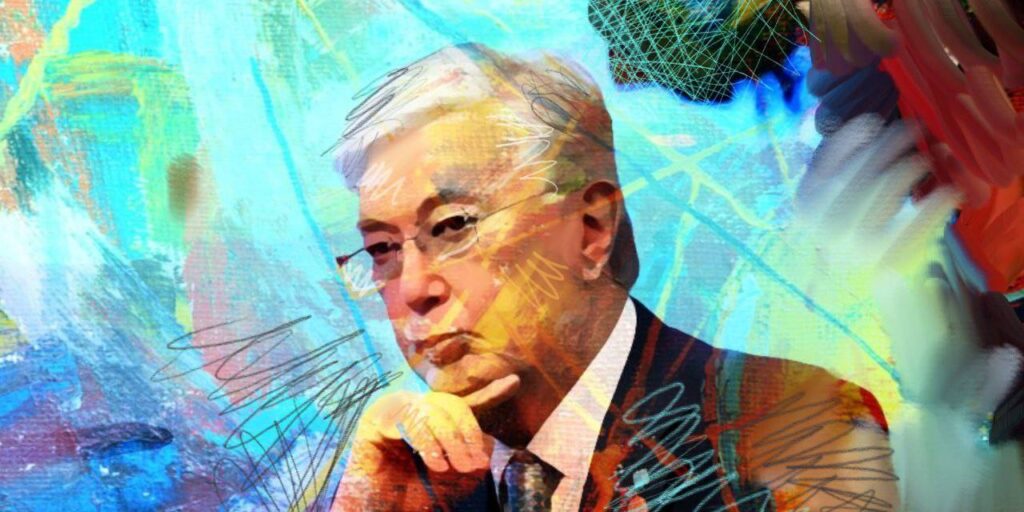
Kazakhstan’s President Tokayev Foresees a Bigger Role for Middle Powers in Solving the World’s Problems

Middle powers, sometimes called “swing states”, may rank below superpowers and great powers in terms of their international influence and capacity, but are still quite instrumental in world affairs as they can often remain neutral in big conflicts and benefit from such factors as their geostrategic location, natural resource wealth, diplomatic and economic strength, and/or military capabilities. They can play a key role in overcoming fragmentation of the world economy and secure supply chains through such transit routes as the Middle Corridor. Today, middle powers have the agility to navigate complex political situations in many parts of the world that greater powers simply lack whether due to their own internal dynamics or because they lack the trust of the parties involved in certain conflicts and issues. In terms of realizing the green transition, middle powers can help secure supplies of critical minerals and other key materials. These countries are also often proponents of finding multilateral solutions to international problems. 

Kazakhstan is currently among the world’s influential middle powers. On the positive role his country can play, President Kassym-Jomart Tokayev recently wrote in a Euronews opinion piece that, “nations like ours possess the economic strength, military capabilities, and, perhaps more importantly, political will and diplomatic acumen necessary to exert significant sway in the global arena on issues ranging from food and energy security, green transition, and IT to the sustainability of supply chains.” These strengths are particularly relevant amidst a global discord where, in Tokayev’s words, “the traditional powerhouses – the world’s economic and political behemoths – are increasingly unable to work together”. Countries like Kazakhstan, on the other hand, “can ensure stability, peace and development in their immediate regions and beyond” and “carve paths toward compromise and reconciliation”.

Kazakhstan has deepened its cooperation with other middle powers within Central Asia and the Caucasus to address cross-border challenges such as water security and countering terrorism and narcotrafficking. Its collaboration with Azerbaijan and Turkey has been critical to actualizing the Middle Corridor project that opens Central Asia to Western markets. Kazakhstan is working closely with European states to guarantee their energy needs. For Asian countries, Kazakhstan has come into focus as an attractive foreign investment destination. These middle power collaborations have been formalized through highest-level bilateral meetings. Tokayev has carried out dozens of such meetings in 2024 year alone. 

Having come from a long diplomatic career himself, it is encouraging to see President Tokayev’s ongoing support for multilateralism and international cooperation. Kazakhstan will co-chair the inaugural One Water Summit later this year with France to address the global water crisis including the effects of climate change, biodiversity loss and pollution. The event is key to bringing together affected countries and communities from around the world. Additionally, leading regional efforts to counter the effects of climate change, Kazakhstan has offered to host a UN Regional Centre for Sustainable Development Goals on Central Asia and Afghanistan. The country is also undertaking initiatives to advance peace talks between Armenia and Azerbaijan.

“With major powers increasingly unwilling to trust the multilateral process and smaller countries lacking the necessary influence, it is the duty of middle powers to lead the charge”, Tokayev argues. With its unique strengths and a seasoned diplomat as its leader at the helm, Kazakhstan may help lead the way to a new era of strengthened multilateralism, more secure supply chains and greater peace and stability.
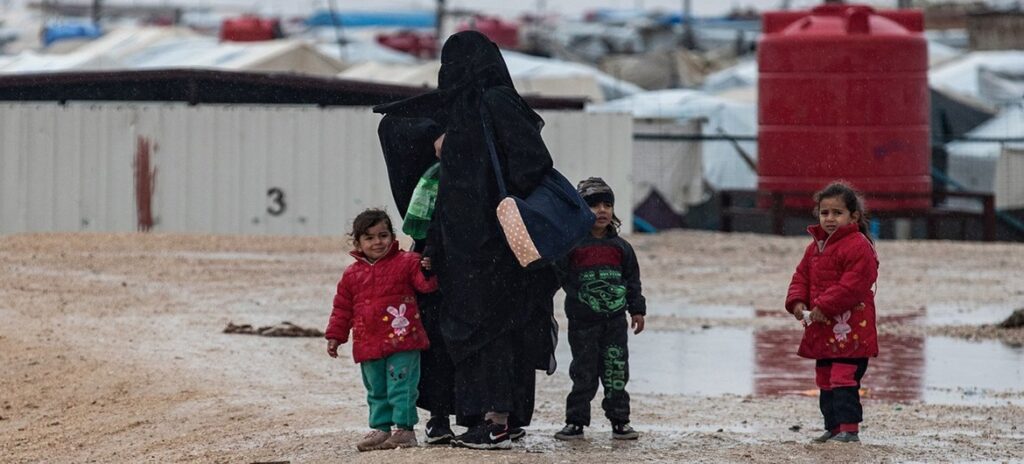
Peace for Women and Children Returning from Syria to Tajikistan

Dozens of women and children returning from Syria have now been reunited with their loved ones in Tajikistan and according to the  Ministry of Health, are adapting to a peaceful life.

The return of Tajik citizens, primarily women and children, who left for Syria’s combat zone and fell prey to terrorist organizations, has continued  since 2022.

On 27 September 2023, the Government of Tajikistan introduced a program to aid their rehabilitation.

According to , Kudratullo Kurbonzoda, head of the Social Protection Department of Tajikistan’s Ministry of Health and Social Protection,  over the past two years, 334 people, including 259 children, have been returned from Syrian prisons to their homeland and having passed through the program’s three stages, are settling in well.

“Their health and mental state have recovered,” commented Kurbonzoda Ku, adding that thanks to the program, even those without documents, such as passports or birth certificates, have been able to contact their families wherever they are in the country.

A further 47 people who returned in April are currently  under the supervision of the agency’s specialists and receiving assistance from doctors and psychologists, as well as from education and internal affairs officials.

Referencing  the program’s guidelines, Kurbonzoda added that in addition to financial and material assistance, the government  recommended the placement of  the children in schools and kindergartens, and provision of training and jobs for women.

Protecting Women and Children Helps Preserve, Not Contradict, Traditional Family Values in Kazakhstan

In today’s rapidly evolving world, traditional values can sometimes clash with progressive movements advocating for inclusivity and modern perspectives in many areas of life. While these values are often seen as barriers, they can instead serve as a source of stability and continuity when thoughtfully upheld. President Kassym-Jomart Tokayev is aligning legislative reforms with Kazakhstan’s family values while integrating them with the society’s progressive aspirations.

At a recent meeting with young scientists in Almaty, President Tokayev took aim at domestic violence calling it “a manifestation of backwardness and moral degradation.”  He added that “only a society that values ​​and respects women can be considered truly civilized and cultured.” 

Regulatory actions

In his speech, Tokayev placed “strengthening of the institution of the family” at the center of modernizing Kazakhstani society. “After all, comprehensive protection of the rights of women and children does not at all contradict the preservation of traditional family values ​​and, on the contrary, contributes to their further strengthening”, he said.

“From the first days of my presidency, I have been paying great attention to protecting the rights of women and children. We are consistently taking legislative and institutional measures in this direction,” he noted. 

This is not a new issue for the President, who in his September 2022 address, had already ordered stricter penalties for domestic violence. His agenda to strengthen protective measures sped up following the high-profile murder of Saltanat Nukenova in November 2023 by her husband, an influential former minister. 

The events following this tragedy helped bring about new laws, inspired a culture of zero tolerance for any form of violence, and perhaps even opened the way for further reforms. On April 15, 2024, Tokayev signed a landmark law criminalizing violence against women and children, reversing a 2017 decriminalization. In two weeks, these amendments will be put into effect. The government’s response to the death of Nukenova and to the events following it, including the public reaction, has garnered international praise. 

Promoting a values-based society

Tokayev in his Almaty speech expressed that “not all problems can be solved by passing or tightening the law,” and adding that “everyone must start with themselves changing for the better”. “Family values ​​should be established in every home”, he said, highlighting the key role of women in raising the new generation.  Tokayev also prescribed enforcing good values in educational institutions while acknowledging that the country’s education system still had shortcomings.

This is another example of how the leadership’s rhetoric matters in advancing a society. Tokayev continues to set the tone for his country on women’s rights. As the Washington Post wrote on May 13, 2024, “Kazakhstan’s President Kassym-Jomart Tokayev has repeatedly spoken about strengthening protections for women.” 

Tokayev’s messaging of values has indeed been consistent – with a focus on rule of law as a basis for the protection of rights of all citizens. 

The future

The President’s actions have already begun inculcating a culture of no tolerance for aggression against women. “Today, the problem of domestic violence is widely discussed in the public space. This speaks of a positive transformation of the value system of our society, which is becoming more and more intolerant of any form of aggression and cruelty” said Tokayev in his Almaty meeting.

Such public discussion manifested broadly on social media before and during the Nukenova trial. Kazakhstan’s openness has since given courage to women in Russia and other Central Asian states to open up about their grievances.

While what constitutes core values for a society may differ between East and West, and North and South, it should be universally agreed that legislative advancements working with these notions rather than against them have a better chance of succeeding.

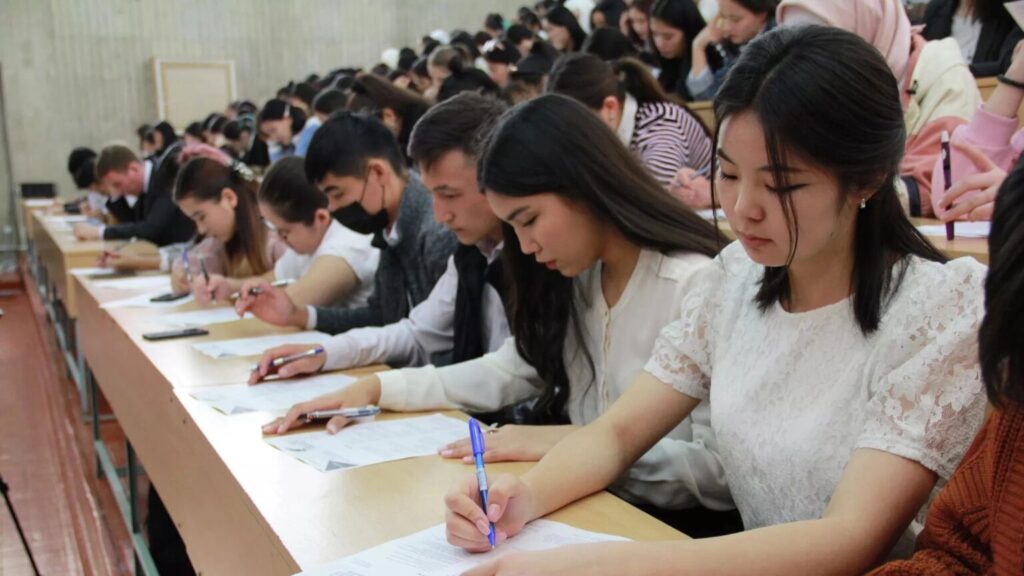
International Development Association Allocates $25 million to Kyrgyz Universities.

The International Development Association (IDA) has announced it will  provide Kyrgyzstan with a $25 million interest-free loan over 50 years, with a ten-year grace period.

The loan includes an allocation of $19.7 million to be divided between  five of the country’s universities.

The Academy of Medicine will receive $4 million, $1.3 million of which will be invested in laboratories for biochemical research, genetics, and molecular biology; $900,000 on equipment for pathomorphological research, and $800,000 on equipment for a laboratory for pharmaceutical bioequivalence studies. The remaining $1 million will be spent on laboratories, IT equipment, and software for new and expanded educational programs.

Kyrgyz State Technical University will be allocated $3.2 million,  $2.2 million of which will be used for equipment and software for three laboratories, IT equipment, and software.

The Kyrgyz National University (KNU) will also receive $3.2 million with $1.7 million allocated for scientific and IT equipment and software for teaching laboratories. The remaining $1.5 million will be spent on laboratories, IT equipment, and software for educational programs.

Osh State University (OSU) will receive $2.8 million, with $300,000 reserved for the purchase of an ultrasound machine for breast examination, $1.5 million for an MRI machine, and $1 million for laboratory and IT equipment and software programs.

The University of Agriculture has been allocated  $3.75 million, with $800,000 to be used to purchase equipment for an infectious animal disease diagnostic laboratory, $1.2 million for molecular genetic equipment, $550,000 for equipment for a histology and immunohistochemistry laboratory, $400,000 for equipment for the Department of Veterinary Medicine and Food Safety, and $800,000 for laboratory and IT equipment and software.

The national budget will cover $5.3 million of the loan funds whilst the universities will pay off the remaining amount through revenue provided by laboratory services.

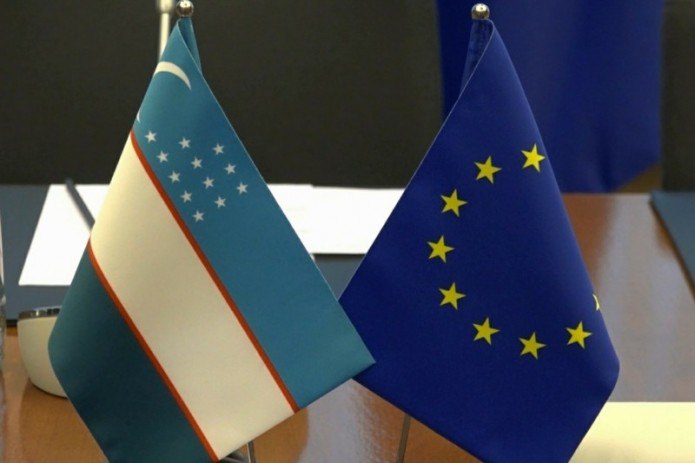
Uzbekistan-EU Trade Reaches 5.13 billion Euros

In 2023, the trade turnover between Uzbekistan and the European Union increased by 11% to 5.13 billion euros.

As reported by  EU Ambassador to Uzbekistan, Charlotte Adrian, exports from the EU to the Republic of Uzbekistan amounted to 4.35 billion euros, and imports from Uzbekistan to the EU,  780 million euros.

By way of comparison, she then stated that in 2022,  EU exports to Uzbekistan reached 3.77 billion euros, an increase of 63.9%, and imports from Uzbekistan to the EU rose by 77.1% to 845 million euros, resulting in around 70%  growth of trade turnover.

“Behind these figures,” announced Adrian, ” are stories of how our businesses have made bold decisions to invest in Uzbekistan.”

  This year celebrates the 30th anniversary of diplomatic relations between Uzbekistan and the European Union and on behalf of the EU, the ambassador praised  Uzbekistan’s “ambitious path of reforms” and pledged:   “We will continue to assist Uzbekistan using all the instruments at our disposal, including the Generalized Scheme of Preferences Plus (GSP+). We will also continue to support Uzbekistan’s accession to the World Trade Organization or EPCA (European Petrochemical Association), which will open a new chapter of our partnership.”

She added that by following its the path of reforms, Uzbekistan will create a level playing field which she hoped would encourage more interest from European companies.

Kazakhstan’s Constitution Now Published in Braille

The Kazakh Constitutional Court has presented the first edition of the country’s Constitution printed in Braille, making it accessible to the visually-impaired.

The initiative to translate copy of Kazakhstan’s Basic Law into Braille (relief-dot tactile font) was realized with support from the OSCE Program Office in Astana and the Ministry of Culture and Information.

Welcoming the move, Chair of the Constitutional Court of Kazakhstan Elvira Azimova stated: “The Constitutional Court will continue to promote equality, dignity, and justice for everyone according to the Constitution of Kazakhstan and the Universal Declaration of Human Rights. The publication of the Braille text of the Constitution is our joint contribution to promoting this policy.”

Volker Frobart, Head of the OSCE Programme Office in Astana, emphasized the Kazakh authorities’ commitment to valuing human rights  and demonstrating an inclusive approach to ensure equal access to information.

Publications in Braille will be distributed  to 56 institutions, including national and regional libraries, training centers, and specialized schools.

According to the World Health Organization,  Kazakhstan is currently home to 160 thousand visually- impaired citizens.