• KGS/USD = 0.01144 0%
  • KZT/USD = 0.00214 0%
  • TJS/USD = 0.10508 0.48%
  • UZS/USD = 0.00008 0%
  • TMT/USD = 0.28490 -0.28%
  • KGS/USD = 0.01144 0%
  • KZT/USD = 0.00214 0%
  • TJS/USD = 0.10508 0.48%
  • UZS/USD = 0.00008 0%
  • TMT/USD = 0.28490 -0.28%
  • KGS/USD = 0.01144 0%
  • KZT/USD = 0.00214 0%
  • TJS/USD = 0.10508 0.48%
  • UZS/USD = 0.00008 0%
  • TMT/USD = 0.28490 -0.28%
  • KGS/USD = 0.01144 0%
  • KZT/USD = 0.00214 0%
  • TJS/USD = 0.10508 0.48%
  • UZS/USD = 0.00008 0%
  • TMT/USD = 0.28490 -0.28%
  • KGS/USD = 0.01144 0%
  • KZT/USD = 0.00214 0%
  • TJS/USD = 0.10508 0.48%
  • UZS/USD = 0.00008 0%
  • TMT/USD = 0.28490 -0.28%
  • KGS/USD = 0.01144 0%
  • KZT/USD = 0.00214 0%
  • TJS/USD = 0.10508 0.48%
  • UZS/USD = 0.00008 0%
  • TMT/USD = 0.28490 -0.28%
  • KGS/USD = 0.01144 0%
  • KZT/USD = 0.00214 0%
  • TJS/USD = 0.10508 0.48%
  • UZS/USD = 0.00008 0%
  • TMT/USD = 0.28490 -0.28%
  • KGS/USD = 0.01144 0%
  • KZT/USD = 0.00214 0%
  • TJS/USD = 0.10508 0.48%
  • UZS/USD = 0.00008 0%
  • TMT/USD = 0.28490 -0.28%

Karakalpak Activist Loses Asylum Bid in Kazakhstan

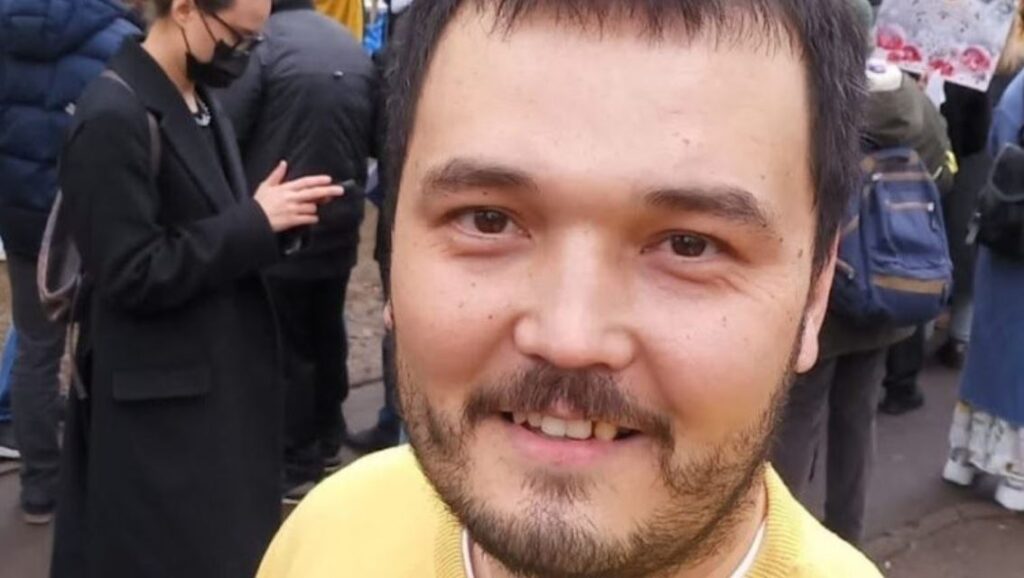
An Uzbek activist who has campaigned for the rights of people in the Uzbek region of Karakalpakstan faces possible extradition after Kazakhstan denied his asylum request, according to the activist´s supporters.

Aqylbek Muratbai, who has lived in Kazakhstan for years, was arrested in February at the request of Uzbek authorities and a Kazakh commission ruled against his asylum request on Friday, his supporters said. New Kazakh regulations allow Muratbai to be moved to Uzbekistan “at any time,” according to Muratbai’s account on the X platform. His lawyer plans to appeal.

Karakalpakstan is an arid, semi-autonomous area in the northwest of Uzbekistan that was the scene of deadly violence in 2022. Protesters marched in opposition to planned constitutional changes that would have removed that autonomous status, and security units used force to disperse the demonstrations. At least 21 people were killed, including 4 law enforcement officers, according to Human Rights Watch.

Uzbek authorities have since prosecuted Karakalpak activists for crimes including the instigation of riots and sentenced some to long prison terms. At the same time, the government has launched an investment program to develop the long-neglected region.

The Karakalpakstan question is particularly sensitive for Uzbekistan because the national constitution allows the region’s people to choose secession through a referendum.

Muratbai’s camp had said that he would likely face unfair prosecution if he is extradited to Uzbekistan and that the Kazakh asylum process should take that possibility into account, even if maintaining good relations with the Uzbek leadership is also important.

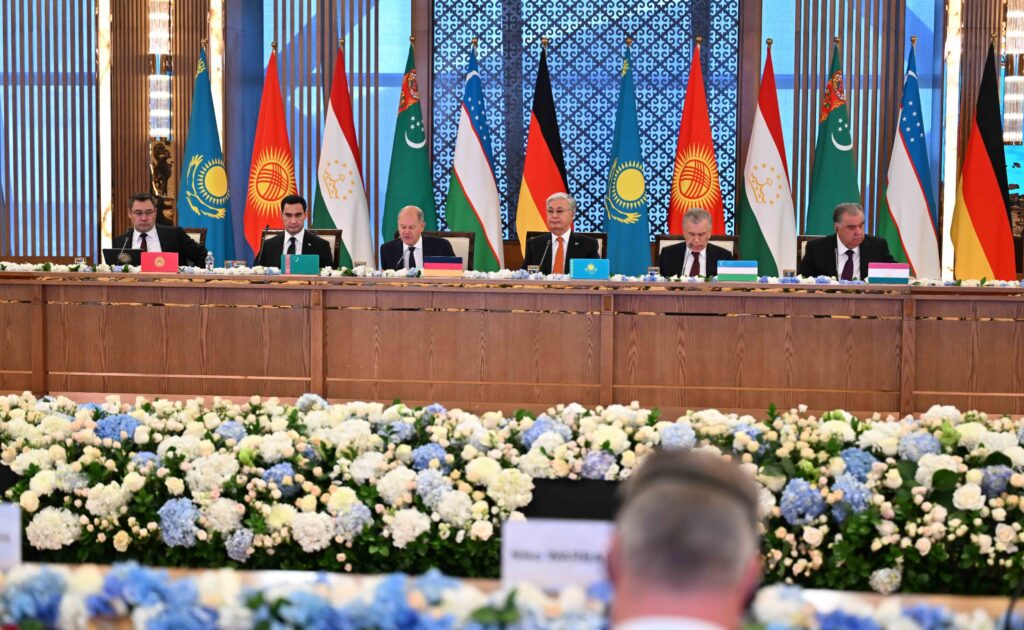
Kazakhstan Hosts Summit of Central Asian Countries and Germany

Opening the summit in Astana, Kazakh President Kassym-Jomart Tokayev expressed gratitude to Federal Chancellor Olaf Scholz and Central Asian leaders for their participation and support of regional cooperation.

Noting the strengthened relationship following the high-level dialog launched in Berlin last September, he stated, “I believe this is evidence of interest and aspiration from the Central Asian states and Germany for comprehensive development of strategic partnerships. Our meeting is called to summarize joint work and outline new ways to deepen cooperation. Today, we will discuss important trade, investment, energy, ecology, transportation and logistics, education, and science issues. I am confident that our constructive discussions will lead to concrete solutions that will benefit all our countries.”

According to the President of Kazakhstan, Germany’s socio-economic, scientific, and technological progress is an example for many countries. The positive impact of German technologies and investments in various spheres of the economy cannot be overestimated. Hence, full-scale partnership with Germany, one of the world’s most developed countries and the largest economy in the European Union, is a priority for Kazakhstan and other Central Asian states.

The most promising areas of cooperation between Central Asian states and Germany include increasing trade turnover, cooperation in the energy sector, development of industrial cooperation, transportation and logistics interconnection, and development of scientific and educational ties.

With reference to the above, Tokayev stated: “Wide investment prospects are opened by the development of the Middle Corridor, including the modernization and digitalization of the Caspian Sea ports and construction of cargo terminals. Further integration of Central Asian and European transportation and logistics systems remains urgent. Kazakhstan welcomes the decision of European partners to allocate 10 billion euros under the Global Gateway program for the development of the Middle Corridor. We count on Germany’s assistance connecting this route with the Trans-European Transport Network (TEN-T) and the Global Gateway strategy.”

Citing the need for sustained focus on strengthening and ensuring international security and stability,  Tokayev then emphasized: “Our countries closely cooperate in a multilateral format, including within the framework of the United Nations. We intend to continue to strongly support the efforts of this non-alternative universal Organization in the fight against terrorism, extremism, illegal migration, climate change, peacekeeping, and disarmament. Kazakhstan is ready to participate in the UN reform process. We believe that several developed countries, including Germany, certainly deserve a place as permanent members of the UN Security Council. I want to take this opportunity to wish the Kyrgyz Republic success in promoting its candidacy for the post of a non-permanent member of the UN Security Council for 2027-2028. I am confident that Kyrgyzstan will be able to significantly contribute to strengthening stability and security in Central Asia and beyond.”

Following speeches by Federal Chancellor of Germany Olaf Scholz, President of Kyrgyzstan Sadyr Japarov, President of Tajikistan Emomali Rahmon, President of Turkmenistan Serdar Berdimuhamedov and President of Uzbekistan Shavkat Mirziyoyev, a Joint Declaration was adopted by the Heads of the Central Asian states and the Federal Chancellor of Germany.

Mirziyoyev and Scholz Agree to Grow Uzbekistan-Germany Cooperation

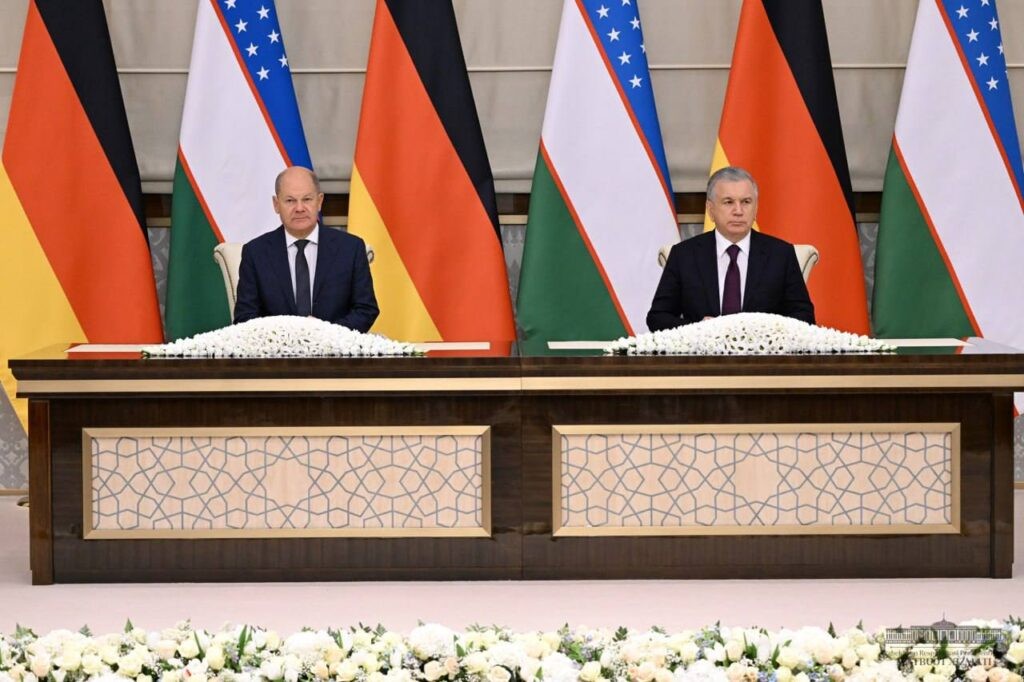
On September 15, German Chancellor Olaf Scholz met with Uzbek president Shavkat Mirziyoyev in Samarkand.

Last year the volume of trade between Uzbekistan and Germany exceeded 1 billion euros for the first time. Since the beginning of 2024, German companies have invested over 800 million euros into the Uzbek economy, while in June, the eighth meeting of the Uzbek-German Business Council was successfully held in Tashkent.

At the end of the negotiations, Mirziyoyev and Scholz signed eight bilateral documents, including agreements in the fields of migration, use of water resources, essential minerals, transport and climate change.

Additionally, Mirziyoyev and Scholz participated in the opening ceremony of the new Academy of Public Administration, which the Uzbek government has recently built in cooperation with the Hans Seidel Foundation and the Bavarian School of Public Administration.

Scholz will also participate in a C5+1 meeting in Kazakhstan on September 17 with the leaders of Kazakhstan, Kyrgyzstan, Uzbekistan, Turkmenistan, and Tajikistan.

Uzbekistan Signs Customs Agreement With U.S.

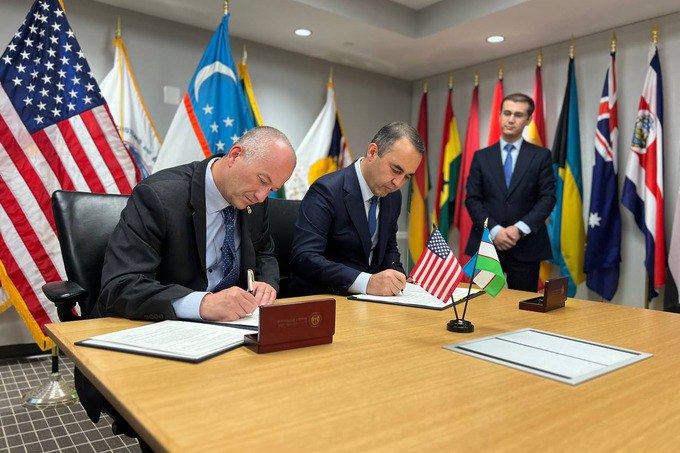
The heads of the Uzbek and American customs services have signed an agreement “On Cooperation and Mutual Assistance,” an essential legal basis of cooperation in customs. The deal was signed in a bilateral meeting between the Chairman of the Uzbekistan’s Customs Committee, Akmalkhuja Mavlonov, and the Commissioner of the U.S. Customs Border Service, Troy Miller.

Prior to Uzbekistan, the United States had signed such bilateral agreements on customs cooperation with only 17 other countries.

After establishing diplomatic relations between Uzbekistan and the USA, an official face-to-face meeting between the heads of the customs services of the two countries is being held for the first time in the past 32 years.

Uzbekistan’s foreign trade in goods with the USA has increased by 48% in the last six years. In the first eight months of this year, this indicator increased by 64% compared to 2023.

Establishing cooperation and information exchange between the two countries’ customs services can further increase foreign trade. That’s why negotiations focused on urgent issues such as risk monitoring in customs, digitalization of customs procedures, and effective use of human resources.

The negotiations addressed the potential for U.S. Border and Customs Service specialists to be brought to Uzbekistan, as well as opportunities for Uzbek specialists to enhance their skills in the United States.

The Times of Central Asia has previously written that an American think tank, the Center for Strategic and International Studies (CSIS), has recently called on American politicians to turn Uzbekistan into a valuable partner.

Kyrgyzstan’s Cholpon-Ata and Turkey’s Antalya Become Twin Cities

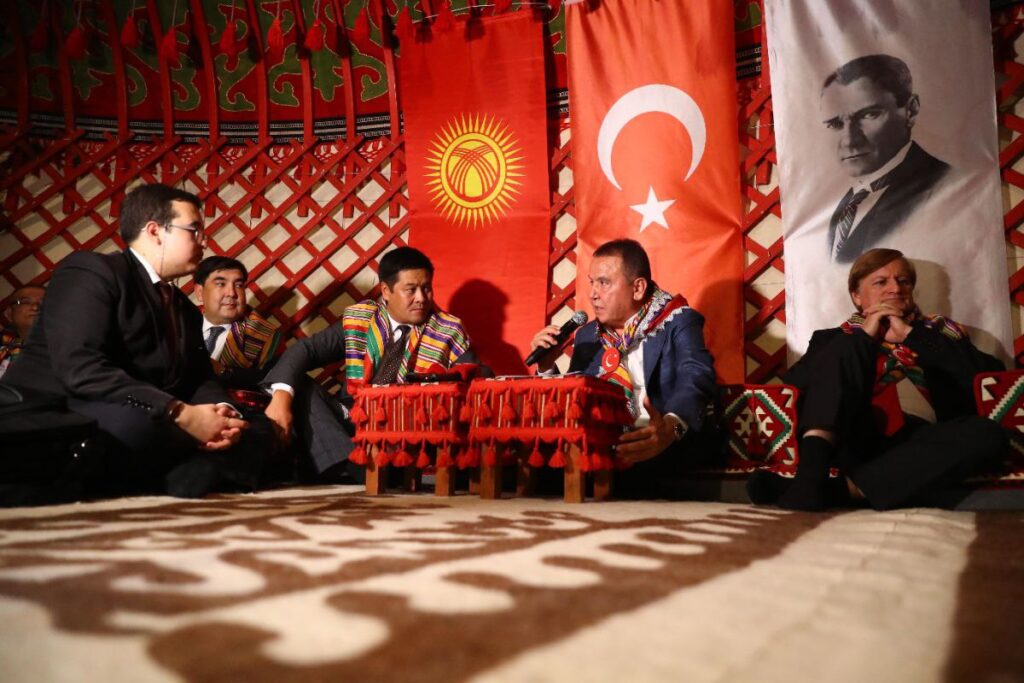
Turkey’s Antalya and Kyrgyzstan’s Cholpon-Ata have become twin cities; the official ceremony on the establishment of ties was held in Turkey.

According to the Kyrgyz Foreign Ministry, the corresponding document between the resort towns of the two countries was signed by the mayors of the cities. Both sides believe that cooperation between Cholpon-Ata and Antalya will open up opportunities for tourism and infrastructure development projects.

“Special attention in the framework of future interaction will be paid to the exchange of experience in the development of urban infrastructure and the coastal zone of Lake Issyk-Kul, construction technologies, as well as environmentally friendly solutions to protect the environment,” representatives of the Foreign Ministry stated.

Diplomats believe signing a protocol on “twin” relations will create favorable conditions for attracting Turkish investment in Kyrgyzstan’s tourism sector and implementing joint initiatives.

The Kyrgyz side also proposed to the Antalya authorities that a Turkish educational center be built in Cholpon-Ata to train tourism specialists.

Kyrgyzstan Seeks Legalization of Traditional Medicines and Practices

Kyrgyzstan’s Health Ministry has devised an initiative to legalize traditional folk medicine.

A draft decree of the Cabinet of Ministers on the procedure for training specialists has now been submitted for public discussion.

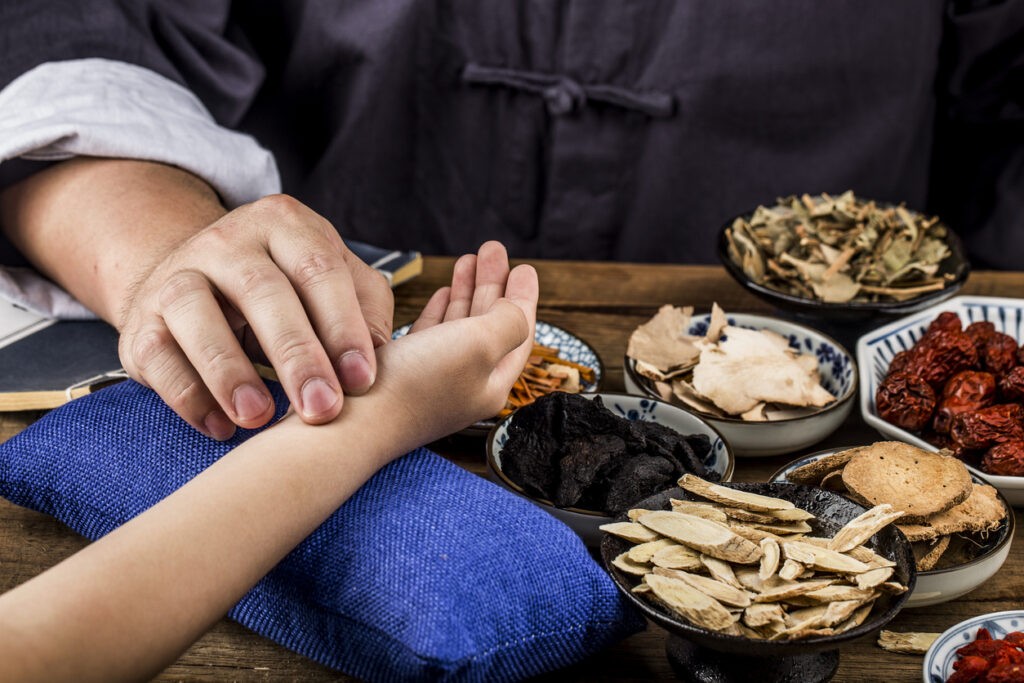
Proposed by Minister of Health Alymkadyr Beishenaliev, the initiative concerns the study of traditional healing methods such as phytotherapy, massage, acupuncture, apitherapy, and hippotherapy, conducted through specialist training programs.

He has also mooted the establishment of a research institute or Academy of Traditional Kyrgyz Medicine offering courses in theoretical and practical skills taught by professionals in the field, alongside the foundation of a dissertation council for the defense of academic degrees in the discipline.

Central to the project, is the introduction of a budget for traditional medicine specialists, such as acupuncturists and physiotherapists, in all medical institutions of the country. There are also plans to open a research institute to test the efficacy of medicinal plants and conduct clinical trials. In addition, the Cabinet of Ministers has proposed the implementation of medicinal herb plantations for the subsequent production of related medical drugs.

It is worth noting that in both several former Soviet Union and countries worldwide, traditional medicine has been legalized and integrated into state healthcare systems. For example, Russia and Belarus practice traditional treatments, including phytotherapy, acupuncture, alongside modern medical procedures. Traditional Chinese medicine is widely practiced in China, Japan, and Korea, and Ayurveda and Yunani are actively being developed in India. The World Health Organization also supports the development of traditional medicine by helping countries develop recognized international standards.