• KGS/USD = 0.01144 0%
  • KZT/USD = 0.00212 0%
  • TJS/USD = 0.10456 0.19%
  • UZS/USD = 0.00008 0%
  • TMT/USD = 0.28490 0%
  • KGS/USD = 0.01144 0%
  • KZT/USD = 0.00212 0%
  • TJS/USD = 0.10456 0.19%
  • UZS/USD = 0.00008 0%
  • TMT/USD = 0.28490 0%
  • KGS/USD = 0.01144 0%
  • KZT/USD = 0.00212 0%
  • TJS/USD = 0.10456 0.19%
  • UZS/USD = 0.00008 0%
  • TMT/USD = 0.28490 0%
  • KGS/USD = 0.01144 0%
  • KZT/USD = 0.00212 0%
  • TJS/USD = 0.10456 0.19%
  • UZS/USD = 0.00008 0%
  • TMT/USD = 0.28490 0%
  • KGS/USD = 0.01144 0%
  • KZT/USD = 0.00212 0%
  • TJS/USD = 0.10456 0.19%
  • UZS/USD = 0.00008 0%
  • TMT/USD = 0.28490 0%
  • KGS/USD = 0.01144 0%
  • KZT/USD = 0.00212 0%
  • TJS/USD = 0.10456 0.19%
  • UZS/USD = 0.00008 0%
  • TMT/USD = 0.28490 0%
  • KGS/USD = 0.01144 0%
  • KZT/USD = 0.00212 0%
  • TJS/USD = 0.10456 0.19%
  • UZS/USD = 0.00008 0%
  • TMT/USD = 0.28490 0%
  • KGS/USD = 0.01144 0%
  • KZT/USD = 0.00212 0%
  • TJS/USD = 0.10456 0.19%
  • UZS/USD = 0.00008 0%
  • TMT/USD = 0.28490 0%

Kyrgyz Foreign Minister: Demarcation of Tajik Border Will Be Completed in October

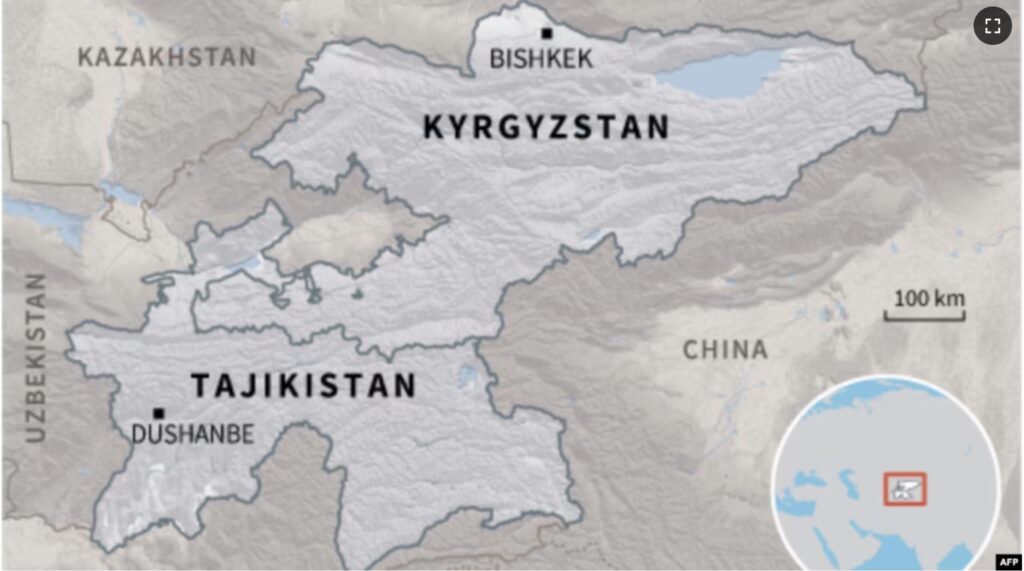
At a press conference in Bishkek, Kyrgyz foreign minister Zheenbek Kulubaev said that 90% of the state border has already been demarcated.
Kulubaev said that, as the border issue is very sensitive for Kyrgyzstan and Tajikistan, working groups from the two countries have been holding weekly meetings, alternating between Bishkek and Dushanbe.

“We are still harmonizing several points. The heads of state have an understanding and instructed us to finalize the border issue shortly. I assume the issue will be resolved in the coming months,” Kulubaev said.

The foreign minister emphasized that the negotiations will likely be completed by October.

The length of the state border between the countries is 980 kilometers, and negotiations on delimitation have been going on since late 2002. Failure to settle this issue has periodically led to border conflicts, including with the use of firearms. Still, the border between Kyrgyzstan and Tajikistan remains closed. The reason behind the closure is the military clashes between border guards in 2022. At that time, heavy weapons were used, and dozens of people were killed.

ADB Grants $21 Million to Modernize Hydropower Plant in Tajikistan

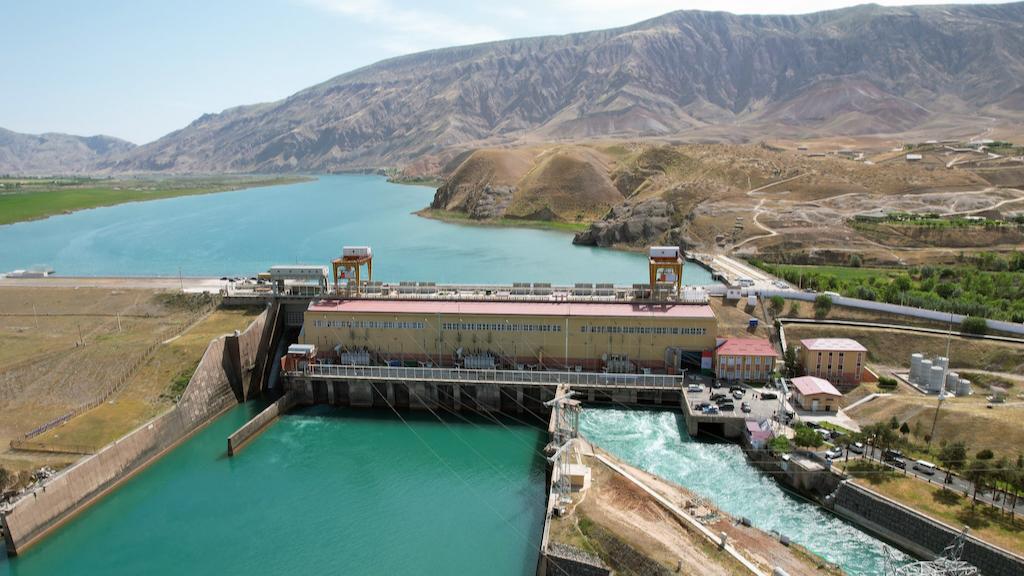
The Asian Development Bank (ADB) announced on August 6 that it had approved a $21 million grant as additional financing to modernize the Golovnaya hydropower plant in Tajikistan.

The additional financing will replace the power generation unit 4 at the Golovnaya hydropower plant. Unit 4, which was not part of ADB’s original project approved in 2013, ceased operations in 2019 due to damage to its mechanical equipment.

ADB’s original project provided a $136 million grant to replace five of the plant’s six power generation units. It also rehabilitated switchyards at the Golovnaya hydropower plant, modernized the Vose substation, and constructed the Rudaki substation and a transmission line connecting the Rudaki and Vose substations in southern Tajikistan.

The hydropower plant’s modernization will increase its installed capacity from 240 megawatts in 2012 to 274 megawatts by 2026.

ADB Director General for Central and West Asia, Yevgeniy Zhukov, commented: “The electricity from the Golovnaya hydropower plant goes to national and regional grids, benefiting Tajikistan and neighboring countries. ADB’s support improves regional energy security, contributing to inclusive, sustainable economic growth and balanced regional development.”

Late in December 2023, Tajik president Emomali Rahmon stated that Tajikistan’s energy capacity exceeded 6,000 megawatts in 2023, and electricity production amounted to 22 billion kilowatt-hours, 4.8 billion kilowatt-hours or 28% more than in 2017.

Rahmon also said that by 2032, electricity production in the country would be entirely from renewable sources; that is, 100% will be provided by “green energy, and Tajikistan will truly become a green country.”

Climate Council Established in Uzbekistan

Uzbek media is reporting that a Climate Council is being established in the country. The council will coordinate activities to combat climate change, develop policy in this area, and ensure the country’s fulfillment of its obligations under the Paris Agreement.

The main functions of the Council will also include:

— Development of the National Strategy for Climate Change Mitigation and Adaptation, as well as coordination of government agencies in this area;

— Monitoring the implementation of Uzbekistan’s obligations under the UN Framework Convention on Climate Change and the Paris Agreement;

— Support for projects to combat climate change, including using green technologies, scientific research, and innovation.

The National Center for Green Transformation and Adaptation to Climate Change under the Ministry of Ecology has been renamed the National Center for Climate Change. This center will serve as the working body of the Climate Council, and coordinate Uzbekistan’s preparation for international and regional climate events.

Kazakhstan Completes Annual Anti-Locust Measures

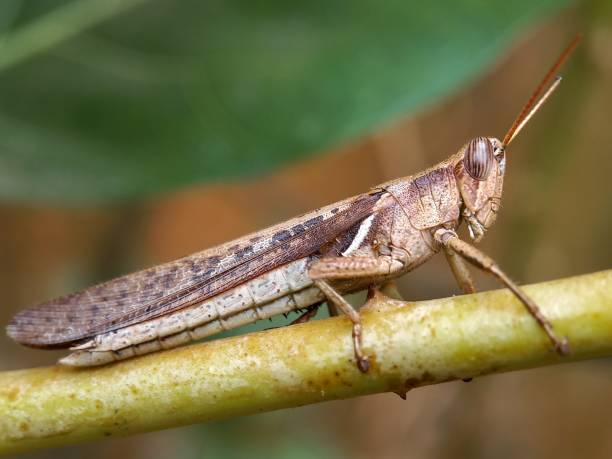
This year’s locust control measures have been completed in all regions of Kazakhstan. As a result, farmers’ crops have not been damaged by swarms of the grasshopper pests.

Over 3.1 million hectares of land have been treated against locusts, 23% more than the planned 2.5 million hectares. Monitoring work will continue in some regions for another week.

The amount of agricultural land affected by locusts has dramatically increased in recent years, from 514,000 hectares in 2020 to 1.6 million hectares in 2023. According to the UN’s Food and Agriculture Organization, locust outbreaks pose a severe threat to agriculture in the South Caucasus and Central Asia, with more than 25 million hectares and 20 million people in the region vulnerable to damage.

Kazakhstan has cooperated closely with agricultural authorities of bordering countries, including Russia, to monitor the potential spread of locusts. Next year the government plans to purchase 100 drones to monitor the birthplaces of locust larvae and more drones to treat fields.

Amid Russia-Ukraine War, Top EU Diplomat Promises Closer Cooperation with Central Asian States

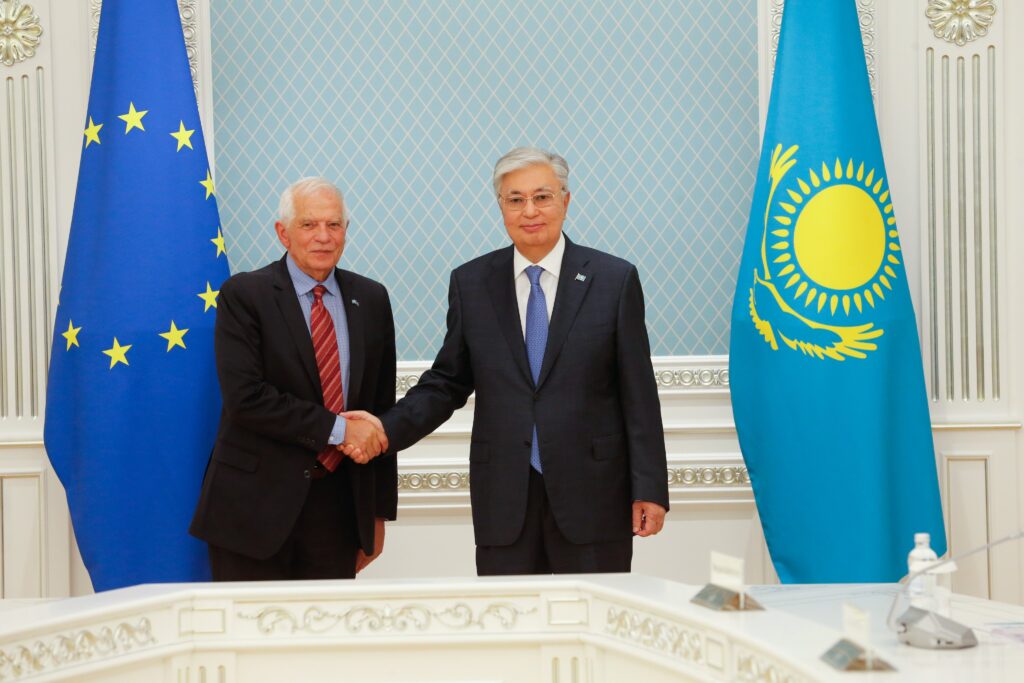
Josep Borrell, Vice-President of the European Commission and High Representative of the European Union for Foreign Affairs and Security Policy, visited Central Asia to meet with the presidents of Kazakhstan and Kyrgyzstan. This trip by Borrell, whose term ends in October 2024, underscores the region’s growing global importance in terms of trade and energy security, especially given the ongoing war between Russia and Ukraine.

Borrell arrived in Kazakhstan for an official visit on August 1, marking his second diplomatic trip since his appointment as the EU’s foreign affairs chief. Explaining the purpose of the visit, he said “as my mandate as a representative of the European Union ends in three months, it was very important for me to come here to Astana to reaffirm the strong interest and commitment of the European Union to strengthen cooperation with Central Asia in general and with Kazakhstan in particular as the strongest country in the region.”

Europe’s realization of Central Asia’s strategic value has recently become more apparent. In a presentation to investors on January 29, 2024, Borrell detailed the EU’s growing interest in Central Asia, citing Russia’s conflict with Ukraine as a driving force behind this policy reorientation. Borell asserted that the EU regarded Russia as a security concern and is committed to lessening its dependence on Russia. He impressed the same point on Central Asian audiences and called for strengthening trade relationships as well as diminishing reliance on Russia through the Global Gateway, a strategy by the European Union to invest in infrastructure projects worldwide.

Notably, the primary land routes from Central Asia to the EU currently traverse Russian territory. The EU’s preferred corridor, known as the Trans-Caspian International Transport Route, is in high demand with volume of cargo transportation in 2023 of more than 2.7 million tons, 86% higher than in 2022. This capacity is projected to rapidly expand as infrastructure investments become operational.

“I used to say that four years ago, when I came to Brussels, Central Asia was a little bit in the middle of nowhere – and now, you are in the middle of everything… Everything that matters between Europe and Asia goes through you”, said Borrell.

Borrell’s first trip to Kazakhstan as the EU’s top diplomat was in November 2022. Since that time, the country has become increasingly significant for Europe as a transport corridor, an alternative energy partner (oil, green hydrogen, and nuclear), and a supplier of scarce critical materials used for the development of technology products.

In this regard, Kazakhstan is not only crucial for Europe and its Western allies but also for Russia and especially China, both of which are competing for trade and investments in the country and in the broader region. For Uzbekistan, Russia is boosting its gas exports and is planning to construct nuclear power plants. China has invested billions of dollars in transport infrastructure investments in Central Asia under its Belt and Road Initiative, which has significantly enhanced regional connectivity.

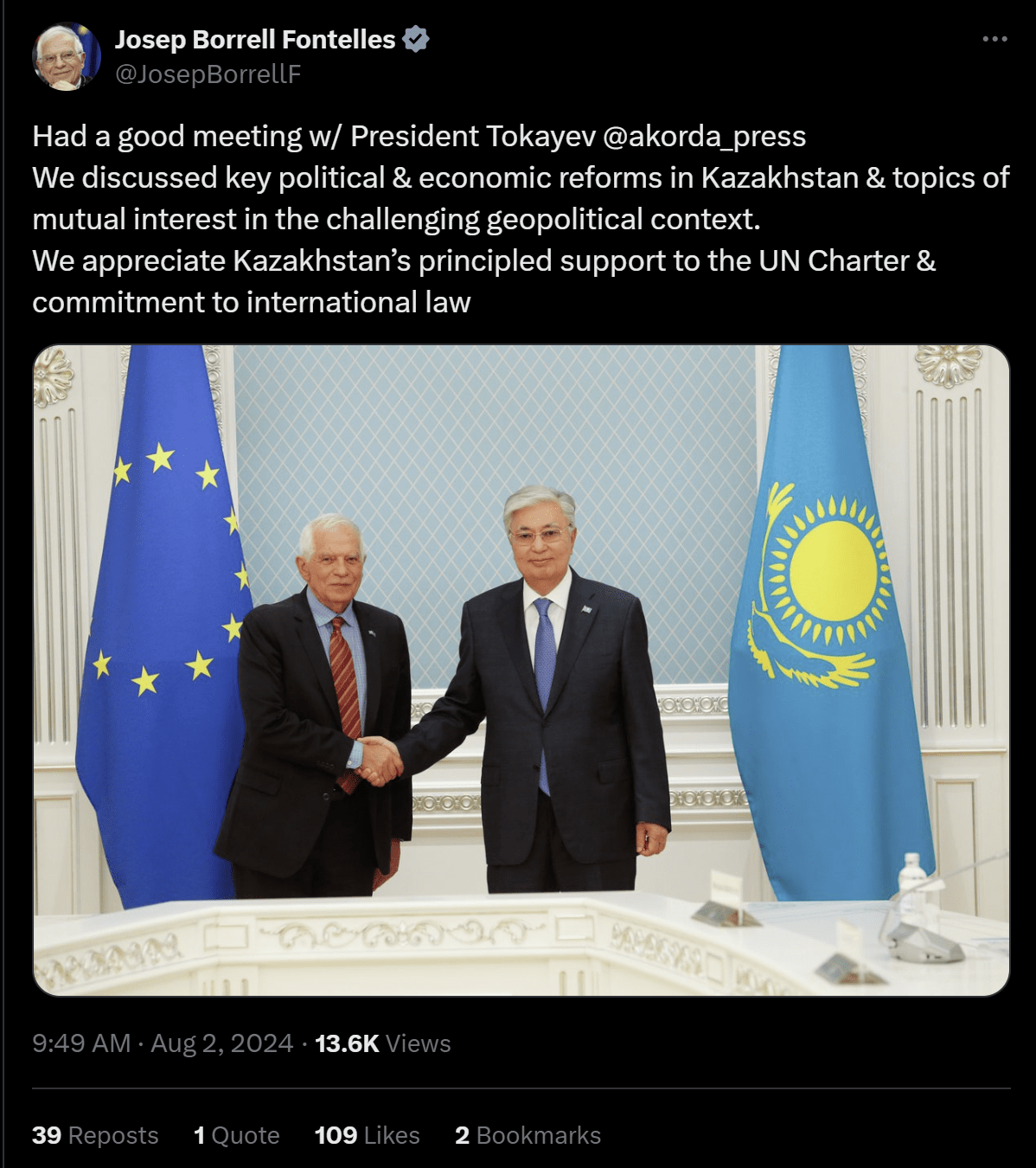
Rather than aligning exclusively with one power bloc, Kazakhstan’s leadership seeks to diversify the country’s diplomatic relationships. The Partnership and Enhanced Cooperation Agreement initiated in 2015 with the EU has served as a key platform to strengthen ties. During his visit, Borrell met with President Kassym-Jomart Tokayev to discuss the progress of this comprehensive accord aimed at enhancing political, economic, and social collaboration between the EU and Kazakhstan.
Josep Borrell Twitter-X

The EU High Representative said, “It was important to me to come here, to Astana, to reaffirm our strong commitment to strengthen our cooperation with Central Asia as a whole, and Kazakhstan in particular. Under the leadership of President Tokayev, Kazakhstan has embarked on the path of the wide range of political and economic reforms that we support”.

Borrell also met with the Minister of Foreign Affairs of Kazakhstan, Murat Nurtleu. Speaking about the Ukraine war, Borrel stated: “We encourage you to take further steps in order to make this war reach an end, and to use your influence for that.”

Traveling to Kyrgyzstan next, Borell met with President Sadyr Japarov and Foreign Minister Ruslan Kazakbaev. Kyrgyzstan also has an Enhanced Partnership and Cooperation Agreement with the EU, as does Uzbekistan. During this visit, Borrell expressed the EU’s commitment to deepening cooperation with Kyrgyzstan and highlighted that the Enhanced Partnership and Cooperation Agreement creates new opportunities for bilateral relations.

For his part, President Japarov acknowledged the EU as a reliable partner since Kyrgyzstan’s independence and encouraged European investors to engage in projects related to hydropower, transport, and digitization sectors in the country.

Josep Borrell Twitter-X

Josep Borrell’s visit to Central Asia underscores the European Union’s recognition of the region’s growing strategic importance, especially in terms of promoting trade and energy security amid the ongoing Russia-Ukraine conflict. His meetings with the presidents of Kazakhstan and Kyrgyzstan, both of which have Enhanced Partnership and Cooperation Agreements with the EU, demonstrate a commitment to deepening bilateral relations and reducing Europe’s dependency on Russia. While such frameworks help enable cooperation for Central Asia to play a pivotal role as a transport corridor and energy partner, Europe must move beyond mere talk and start making tangible investments. Only then will they solidify the region’s role as a crucial link between Europe and Asia.

Tajikistan and Uzbekistan Discuss Using Lake Sarez For Drinking Water

On August 3, a Tajik-Uzbek working group on the shared use of water from Central Asia’s transboundary rivers met in Dushanbe.

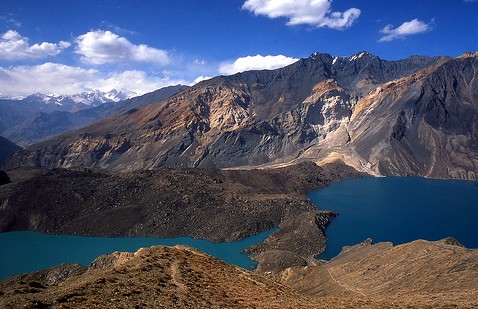
Participants discussed the potential for using the water from Lake Sarez, in the Tajik National Park in the east of the country, to provide Central Asian countries with clean drinking water. Other potential joint projects between Tajikistan and Uzbekistan in the field of water management were also considered.

In 2018, the presidents of Tajikistan and Uzbekistan, Emomali Rahmon and Shavkat Mirziyoyev, first discussed using the Sarez freshwater as drinking water, during a visit by Rahmon to Uzbekistan. The nations subsequently commissioned a feasibility study from the Intergovernmental Joint Commission on Trade and Economic Cooperation.

Rahmon has repeatedly emphasized that Tajikistan has ample freshwater resources, and has previously used speeches at political forums to suggest using the Sarez mountain lake to provide Central Asian countries with drinking water. The Tajik government has also offered to supply drinking water from Sarez to Iran, Jordan, and the United Arab Emirates.

The Times of Central Asia has previously written that Central Asia will face severe water shortages in the coming years. More than 80% of the available water in Central Asia is used for irrigation, 40% of which is lost during delivery in the fields. With the commissioning of the Qosh Tepa canal in Afghanistan, the water shortage will become even more serious from 2028. The chairman of the Eurasian Development Bank, Nikolay Podguzov, has warned that the Qosh Tepa’s construction could threaten Central Asia’s water balance.