• KGS/USD = 0.01144 0%
  • KZT/USD = 0.00197 -0%
  • TJS/USD = 0.10904 0%
  • UZS/USD = 0.00008 0%
  • TMT/USD = 0.28490 0%
  • KGS/USD = 0.01144 0%
  • KZT/USD = 0.00197 -0%
  • TJS/USD = 0.10904 0%
  • UZS/USD = 0.00008 0%
  • TMT/USD = 0.28490 0%
  • KGS/USD = 0.01144 0%
  • KZT/USD = 0.00197 -0%
  • TJS/USD = 0.10904 0%
  • UZS/USD = 0.00008 0%
  • TMT/USD = 0.28490 0%
  • KGS/USD = 0.01144 0%
  • KZT/USD = 0.00197 -0%
  • TJS/USD = 0.10904 0%
  • UZS/USD = 0.00008 0%
  • TMT/USD = 0.28490 0%
  • KGS/USD = 0.01144 0%
  • KZT/USD = 0.00197 -0%
  • TJS/USD = 0.10904 0%
  • UZS/USD = 0.00008 0%
  • TMT/USD = 0.28490 0%
  • KGS/USD = 0.01144 0%
  • KZT/USD = 0.00197 -0%
  • TJS/USD = 0.10904 0%
  • UZS/USD = 0.00008 0%
  • TMT/USD = 0.28490 0%
  • KGS/USD = 0.01144 0%
  • KZT/USD = 0.00197 -0%
  • TJS/USD = 0.10904 0%
  • UZS/USD = 0.00008 0%
  • TMT/USD = 0.28490 0%
  • KGS/USD = 0.01144 0%
  • KZT/USD = 0.00197 -0%
  • TJS/USD = 0.10904 0%
  • UZS/USD = 0.00008 0%
  • TMT/USD = 0.28490 0%
08 December 2025

Dushanbe Hosts Central Asia-Russia Summit and CIS Heads of State Meeting

Dushanbe has become the center of Eurasian diplomacy this week as it hosts the “Central Asia-Russia” summit alongside the meeting of the Council of CIS Heads of State. Over two days, leaders from across the region are set to discuss security, economic ties, transport infrastructure, energy cooperation, and new models of regional integration.

The inaugural “Central Asia-Russia” meeting took place in Astana in October 2022, focusing on counterterrorism, support for small and medium-sized enterprises, and initiatives in energy, industry, and digitalization. Analysts note that the current summit does not duplicate the functions of existing integration frameworks such as the Eurasian Economic Union (EAEU) or the Collective Security Treaty Organization (CSTO). Instead, it complements them by offering a more flexible and pragmatic platform for dialogue.

“The Central Asia-Russia format has the potential to become not just a venue for political signaling, but an instrument for the rapid implementation of infrastructure and regulatory solutions,” said Alibek Tazhibaev, Director of the Center for Eurasian Monitoring. He noted that the region has become a natural zone of industrial cooperation and logistics for Russia, with mutual economic interdependence deepening under the pressure of sanctions.

Among the key priorities being discussed are the development of North-South and East-West transport corridors, Russian gas transit through Kazakhstan, and the construction of new energy facilities. In 2024, trade turnover between Central Asian countries and Russia totaled $44.7 billion, an increase of 11.3% from the previous year.

Tazhibaev also argued that Central Asia could emerge as an independent “Eurasian hub” if it transitions from a simple transport corridor to a region that integrates added value. “Central Asia can offer a ‘door-to-door’ logistics service if it builds digital gateways, assembly warehouses, and unified logistics standards. This would help retain profit margins and manage standards within the region,” Tazhibaev said.

CIS: Pragmatism and New Initiatives

The second major component of Dushanbe’s diplomatic agenda is the summit of the Commonwealth of Independent States (CIS). Despite persistent criticism, the CIS continues to serve as a relevant platform for cooperation.

Taisiya Marmontova, Associate Professor at Astana International University and Director of the Institute for Regional Integration Studies, noted that the CIS has “preserved a space for dialogue and joint projects after the collapse of the USSR.”

According to the CIS Executive Committee, the combined GDP of member states is growing at an average annual rate of 4.5%, while internal trade has risen by 40% over the past five years. Kazakhstan remains a key player, with trade turnover with CIS countries reaching $37.3 billion in 2024, including $4.3 billion in services.

During the summit, leaders are expected to consider several initiatives proposed by Kazakh President Kassym-Jomart Tokayev, including the creation of a “CIS+” dialogue format and the launch of the “Commonwealth Fair” intergovernmental program. The first such fair is scheduled to take place in Taraz in 2026.

Member states have also agreed on the Strategy for Transport Corridor Digitalization, the Strategy for Scientific and Technological Development until 2035, and a new Concept for Construction Pricing.

“Integration and communication are the path to navigating the geopolitical storm we are witnessing today,” Marmontova emphasized.

Experts note that the CIS Council is maintaining a balance between pragmatism and collaboration. New mechanisms, from a free trade agreement on services to the digitalization of multimodal transport, are contributing to what some are calling a “second wind” for the organization. In this context, Central Asia is emerging not only as a bridge between Europe and Asia but also as a new center of gravity in an increasingly multipolar world.

Environmental Review of Sea Breeze Uzbekistan Resort at Charvak Still in Progress

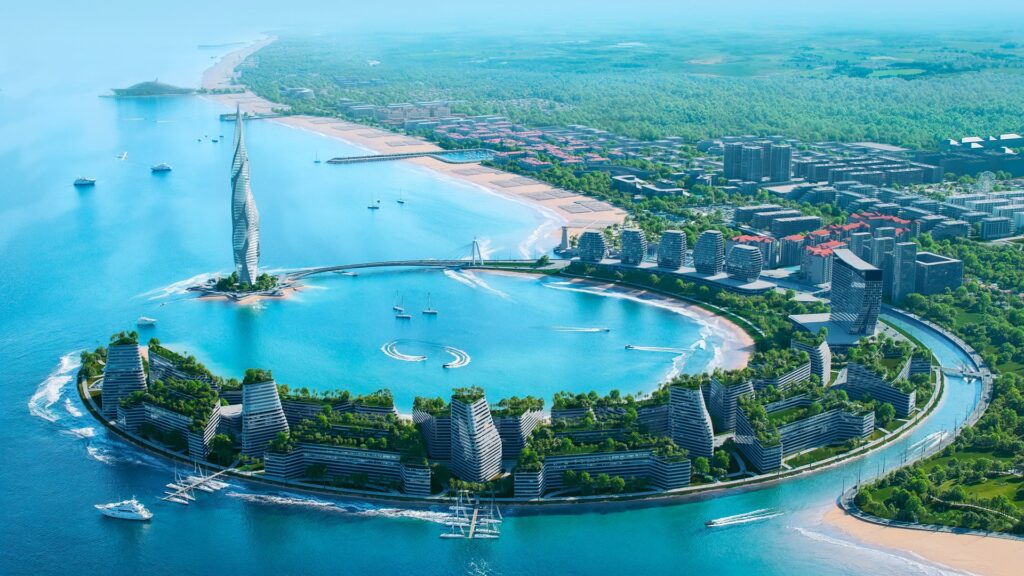
The environmental review for the multi-billion-dollar Sea Breeze Uzbekistan resort on the shores of the Charvak Reservoir is still in progress, Spot.uz reported, citing the press service of Sea Breeze Uzbekistan.

According to the company, initial site preparations, including land clearing and waste removal, are underway. “As for the environmental assessment, this process is not yet complete. We are awaiting the results and remain open to any inquiries from the Ministry of Ecology, Environmental Protection, and Climate Change of Uzbekistan,” the company said in a statement.

Emin Agalarov, president of Azerbaijan’s Agalarov Development and the main investor behind the project, addressed the status of construction in a recent interview. He noted that the primary challenges involve infrastructure, specifically access to water, gas, and electricity.

“We have gone a long way to secure our project and make sure that nothing will be discharged into the environment. Wastewater will be collected in special facilities. Ecology is a fundamentally important issue. We are now going through all the required procedures in Uzbekistan, at Charvak,” Agalarov said.

As previously reported by The Times of Central Asia, Agalarov plans to develop Sea Breeze Uzbekistan as a $5 billion all-season tourist complex spanning 500-700 hectares along Charvak Lake in the Tashkent region. The project is set to include hotels, villas, swimming pools, sports and leisure zones, retail spaces, restaurants, and a bridge linking both sides of the reservoir. The resort is also expected to host cultural events, festivals, and concerts year-round.

Despite mounting public scrutiny and criticism from environmental activists, the Uzbek government has approved the project. In August, Prime Minister Abdulla Aripov signed Cabinet Resolution No. 490, granting Sea Breeze Uzbekistan LLC a 25-year direct lease on 577 hectares of land for development.

Environmental experts note that the results of the ecological review will be pivotal in determining the project’s future, as Charvak remains one of Uzbekistan’s most vital freshwater and recreational assets.


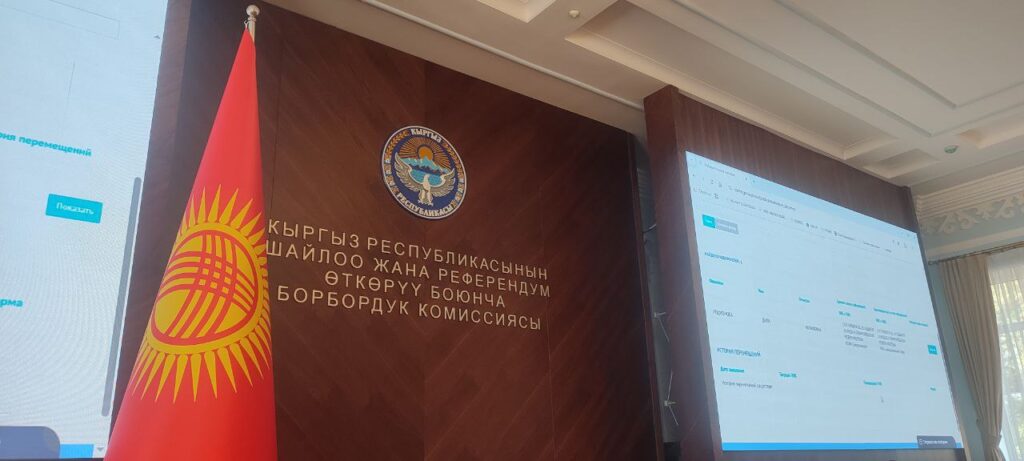
Kyrgyzstan to Open 100 Overseas Polling Stations for 2025 Parliamentary Elections

The Central Election Commission and Referenda (CEC) of Kyrgyzstan will open 100 polling stations abroad for the parliamentary elections scheduled for November 30, 2025, nearly double the number established during the previous election cycle, when 51 polling stations operated globally. The announcement was made by CEC Chairman Tynchtyk Shainazarov during a press conference in Bishkek.

According to Shainazarov, the largest number of polling stations will be set up in Russia, 40 in total, including seven in Moscow and others across major Russian cities. Approximately 400,000 Kyrgyz citizens are officially registered as residing in Russia, the highest figure among all foreign countries.

Additional polling stations will be opened in Turkey (8), the United States (6, including two in Chicago), South Korea (4), Italy (3), and in Germany and China (2 each). Several other capital cities worldwide will also host single polling stations.

Shainazarov noted that the CEC has already dispatched five teams to Russian cities to conduct trial runs of the voting process. Test elections will be held on October 10, 20, and 30 in both Kyrgyzstan and Russia to identify potential technical or procedural issues.

“I urge our citizens living in Russia to come and observe how the new system will function, how the equipment operates and how it prints ballots corresponding to the voter’s home district. Seeing the process firsthand will help people understand how the upcoming elections will be conducted,” Shainazarov said.

Responding to a question from The Times of Central Asia about whether Kyrgyz citizens abroad would be able to vote remotely, Shainazarov confirmed that remote (electronic) voting has been fully suspended for the 2025 parliamentary elections. The decision, he said, was made to reduce the risk of vote-buying and electoral manipulation.

“Electronic voting allows people to vote from home using a smartphone. Technically and legally, we are ready for it, but the risk of vote-buying remains too high; a candidate could pay voters and verify how they voted. That is unacceptable,” he explained.

An exception will be made for voters who are physically unable to travel to polling stations due to medical reasons. In such cases, election commission staff will visit voters at home with the necessary equipment, provided a prior request is submitted to the CEC.

This year’s elections will also introduce a new voting system: ballots for candidates from different constituencies will be printed directly at polling stations. According to the CEC, this measure is intended to help prevent ballot fraud and enhance transparency.


Kyrgyzstan Releases Its First Climate Action Transparency Report

On October 7, Kyrgyzstan’s Ministry of Natural Resources, Environment, and Technical Supervision unveiled its first Biennial Climate Action Transparency Report, marking a key step in aligning with international climate obligations.

The report was developed with contributions from government agencies, academic institutions, the private sector, and civil society, with support from the United Nations Development Programme (UNDP). It outlines the country’s progress in addressing climate change, current greenhouse gas (GHG) emissions, climate risk preparedness, and the external support it has received.

According to the report, Kyrgyzstan’s total GHG emissions in 2023 amounted to 19.38 million tons of CO₂ equivalent. At the same time, the country’s forests, soils, and other ecosystems absorbed 10.31 million tons, resulting in net emissions of 9.07 million tons of CO₂ equivalent. The report notes that this “climate safety net” provides a valuable natural buffer that should be protected and expanded.

The energy sector remains the largest source of emissions, accounting for more than half of the total. However, emissions from transport, electricity generation, and heating have declined significantly since the early 1990s, largely due to the adoption of cleaner technologies and improved energy efficiency. Agriculture is the second largest contributor to emissions, primarily driven by livestock farming, with levels remaining relatively stable over recent decades.

The submission of the transparency report is a requirement under the Paris Agreement, the international climate treaty signed by Kyrgyzstan in 2016.

Beyond fulfilling a global commitment, transparent reporting is also a pathway to unlocking funding from international financial institutions, climate funds, and private investors. According to the report, improved transparency can help attract investment in energy efficiency, renewable energy, sustainable water management, climate-smart agriculture, and disaster risk reduction, critical elements in Kyrgyzstan’s strategy to achieve carbon neutrality by 2050.

Kazakhstan and Germany Partner on Sustainable Water Management

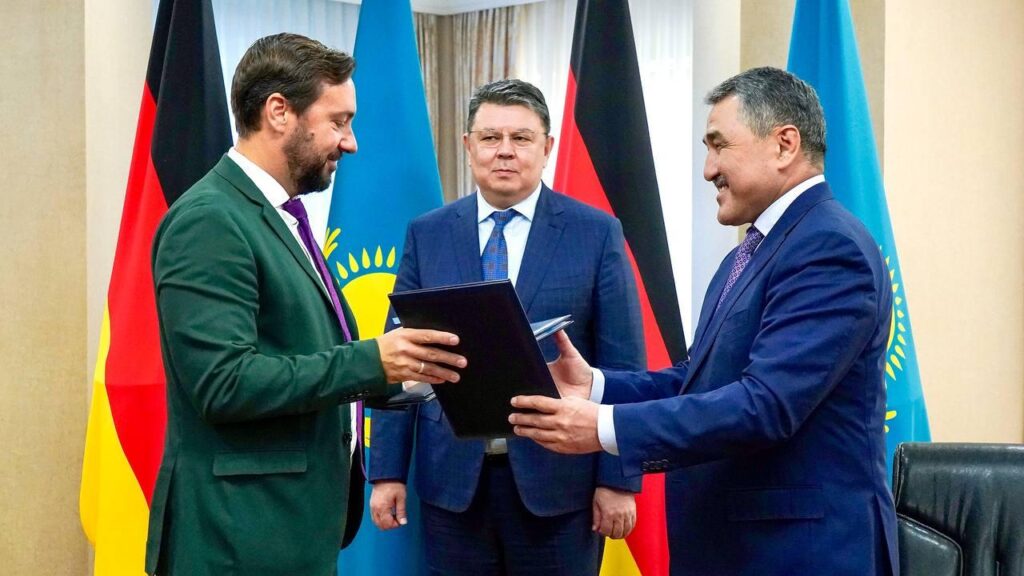
Kazakhstan’s Ministry of Water Resources and Irrigation and the German Water Partnership (GWP) signed a Strategic Partnership Agreement on October 8 aimed at enhancing bilateral cooperation in sustainable water management.

The agreement will allow Kazakhstan to adopt international best practices and advanced water-saving technologies, strengthen climate resilience in the water sector, improve flood and drought response, and expand training for water-sector professionals.

GWP is Germany’s leading water-sector network with a strong international focus. It brings together around 300 companies, trade associations, and institutions from business, science, and research.

German expertise is already contributing to Kazakhstan’s digital projects in water resource forecasting, modeling, and accounting. German technologies are also being used in the construction of hydraulic infrastructure across the country.

Following the signing, Deputy Prime Minister Kanat Bozumbayev and GWP Managing Director Boris Greifeneder discussed plans to deepen cooperation. One key proposal was the establishment of a Kazakh-German Water Innovation Hub, to be housed at the Information and Analytical Center of the Ministry of Water Resources and Irrigation, with GWP’s support.

In a related initiative, the Kazakh-German University (DKU), the National Academy of Sciences of Kazakhstan, and the Kazakh National Agrarian Research University, supported by Germany’s Hanns Seidel Foundation, recently launched a new scientific and educational hub: the Kazakh-German Nexus Institute.

Headquartered in Almaty, the Nexus Institute will focus on developing evidence-based policies for sustainable land and water use in Central Asia.

Water resource management remains a critical priority for Kazakhstan, particularly in the country’s arid southern regions where agriculture depends heavily on efficient irrigation systems.

Kazakh Lawmakers Propose Extending Import Benefits for Electric Vehicles

Olzhas Nuraldinov, a member of the Mazhilis, Kazakhstan’s lower house of parliament, has proposed that Prime Minister Olzhas Bektenov extend the country’s preferential import regime for electric vehicles (EVs). Under the Customs Union Commission’s Decision No. 130 of November 27, 2009, electric vehicles can currently be imported into Kazakhstan duty-free. However, the regulation imposes a quantitative cap, no more than 15,000 EVs in total, and is set to expire on December 31, 2025.

As of September 25, 2025, more than 13,000 electric vehicles had been imported under the scheme, accounting for 87.2% of the quota, according to Kazakhstan’s State Revenue Committee. Lawmakers argue that it is unlikely the 15,000 vehicle threshold will be reached by year’s end and are therefore urging the government to extend the deadline.

“Once the preferential regime expires, electric vehicle prices will rise by 30-40%, which will reduce demand and slow the development of eco-friendly transport,” Nuraldinov said in a formal parliamentary appeal to the prime minister. “We propose extending the preferential import regime for at least three more years and, if necessary, raising the issue with the Eurasian Economic Commission.”

According to Nuraldinov, EV imports increased twelvefold in two years, from 1,245 units in 2022 to 15,700 in 2024. Some of these imports occurred outside the preferential framework, as roughly 1,900 vehicles can still be imported duty-free under the current quota.

Despite this growth, electric vehicles still represent just 0.5% of all registered vehicles in Kazakhstan, compared to 35% in China and more than 22% in the European Union. Kazakhstan has over 6.4 million registered vehicles, more than 70% of which are over ten years old and emit five to seven times more pollutants than newer models, Nuraldinov noted. “Ending these benefits would undermine efforts to improve air quality and worsen environmental conditions,” he warned. “In Almaty, where the population exceeded 2.3 million this year, 80% of air pollution comes from vehicle emissions. Meanwhile, the electric transport sector has begun forming its own ecosystem, creating jobs, service centers, assembly sites, and a growing network of charging stations. Their number has increased from 200 to 1,200 nationwide.”

As The Times of Central Asia previously reported, some lawmakers voiced concern in February about the potential strain that a growing EV fleet could place on Kazakhstan’s energy infrastructure.