• KGS/USD = 0.01144 0%
  • KZT/USD = 0.00196 -0%
  • TJS/USD = 0.10899 -0%
  • UZS/USD = 0.00008 -0%
  • TMT/USD = 0.28490 0%
  • KGS/USD = 0.01144 0%
  • KZT/USD = 0.00196 -0%
  • TJS/USD = 0.10899 -0%
  • UZS/USD = 0.00008 -0%
  • TMT/USD = 0.28490 0%
  • KGS/USD = 0.01144 0%
  • KZT/USD = 0.00196 -0%
  • TJS/USD = 0.10899 -0%
  • UZS/USD = 0.00008 -0%
  • TMT/USD = 0.28490 0%
  • KGS/USD = 0.01144 0%
  • KZT/USD = 0.00196 -0%
  • TJS/USD = 0.10899 -0%
  • UZS/USD = 0.00008 -0%
  • TMT/USD = 0.28490 0%
  • KGS/USD = 0.01144 0%
  • KZT/USD = 0.00196 -0%
  • TJS/USD = 0.10899 -0%
  • UZS/USD = 0.00008 -0%
  • TMT/USD = 0.28490 0%
  • KGS/USD = 0.01144 0%
  • KZT/USD = 0.00196 -0%
  • TJS/USD = 0.10899 -0%
  • UZS/USD = 0.00008 -0%
  • TMT/USD = 0.28490 0%
  • KGS/USD = 0.01144 0%
  • KZT/USD = 0.00196 -0%
  • TJS/USD = 0.10899 -0%
  • UZS/USD = 0.00008 -0%
  • TMT/USD = 0.28490 0%
  • KGS/USD = 0.01144 0%
  • KZT/USD = 0.00196 -0%
  • TJS/USD = 0.10899 -0%
  • UZS/USD = 0.00008 -0%
  • TMT/USD = 0.28490 0%
08 December 2025

US Helps Kyrgyzstan Prepare for Future Pandemics

A Global Health Security and Pandemic Preparedness Program was launched last week. The joint initiative between the United States, the Kyrgyz Republic, the Food and Agriculture Organization, the World Health Organization, and a consortium of other organizations, aims to improve Kyrgyzstan’s resilience against public health emergencies and coordinates with the United Nation’s ‘One Health’ policy linking human, animal, and environmental health.

As reported by the U.S. Embassy in Bishkek, the program will target seven key areas in Kyrgyzstan: tracking and reducing antimicrobial resistance; monitoring zoonotic diseases transmissible between animals and humans; strengthening national laboratory systems; disease surveillance; building capacity within the healthcare workforce; developing risk communication and community engagement strategies; and bolstering health emergency management.

U.S. Ambassador to the Kyrgyz Republic Lesslie Viguerie stated, “The United States Government ranks global health security among its top five priorities. Today’s event marks the next chapter in our long collaboration for improving Kyrgyz health care. We worked side-by-side during the COVID-19 pandemic and continued to do so in the pandemic recovery phase. We have made tremendous advancements in detecting and treating tuberculosis and HIV/AIDS. Many lives have been saved thanks to the collaborative efforts between our governments. With the timely launch of the National Action Plan for Health Security last year, the Kyrgyz Republic is taking a lead role to prepare its health systems for any future pandemics.”

The Deputy Minister of Health of the Kyrgyz Republic Bubuzhan Arykbaeva further endorsed the initiative saying, “We are confident that with USAID funding this program will play a critical role in supporting key technical areas of the National Action Plan for Health Security. The implementation of the Global Health Security program in the Kyrgyz Republic will allow our country to create a more stable foundation for future response to threats in the field of public health.”
EBRD Supports Expansion of Kazakhstan’s Salt Production

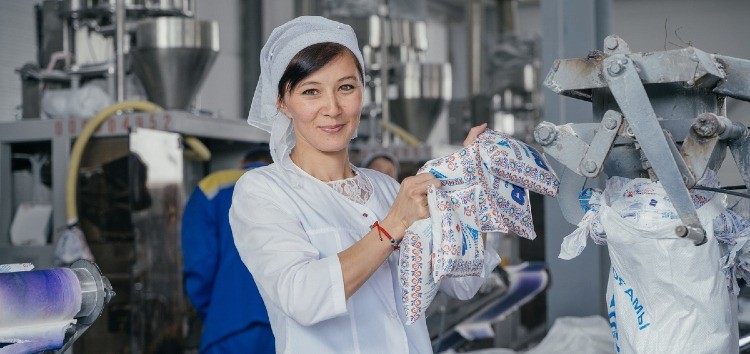
The European Bank for Reconstruction and Development (EBRD) has provided a convertible loan of up to KZT 5.5 billion (€11 million) to Araltuz, a leading Kazakhstan-based producer of table and low-grade industrial salt in Central Asia.

The funds will be lodged with Salt Industry Ltd., a joint-stock company operating under the jurisdiction of the Astana International Financial Centre and a holding company of Araltuz.

The loan will enhance the company’s investment program and support construction of new manufacturing facilities for Kazakhstan’s production of vacuum salt, also known as evaporated or culinary salt.

It will also help Araltuz diversify and expand exportation to Europe, the Middle East and China, and implement a corporate governance action plan.

With more than €10.1 billion invested in the country to date through 320 projects, Kazakhstan is the EBRD’s largest and longest-running banking operation in Central Asia.

Potential Impact of EU Carbon Tax on Kazakhstan’s Industries

From 2026, transboundary carbon regulations will be imposed on European Union countries. The introduction of a new EU carbon tax will also affect export of products from Kazakhstan .

After the transition period, which began on January 1st 2024 and will run until the end of 2026, payment will be increased on emissions.

Following discussions at a seminar for Kazakhstan’s industrial exporters on March 15th, the Kazakh Ministry of Trade and Integration reported that the new legislation will affect six industrial sectors including the production of ferrous metals and aluminum, cement, fertilizers, hydrogen, and electricity.

Nurlan Kulbatyrov, Deputy Director General of QazTrade JSC stated that since Kazakhstan has an Enhanced Partnership and Cooperation Agreement with the EU, the country will be impacted by both the EU Green Deal and carbon border adjustment tax. To prepare for the changes, he reported that since last year, QazTrade, in collaboration with the Ministry of Trade and Integration, has been conducting awareness-raising activities on carbon taxation for export-oriented companies.

An expert from the European Commission explained that cross-border regulation will mainly affect sectors associated with iron, steel and aluminum, which accounted for between 0.8 – 0.9% of Kazakhstan’s total exports to the EU in 2022. EU countries currently account for 39% of Kazakhstan’s exports, including oil, petroleum products, ferroalloys, coal, uranium and wheat. In 2023, Kazakhstan exported goods valued at $41.4 billion to the EU, including $388 million worth of carbon-intensive products.

In the first phase, industrial enterprises will be required to submit quarterly reports to the European Commission comprising data on export volumes, greenhouse gas emissions connected to production and quotas used. After 2025, carbon regulation will come into force, and free quotas gradually levelled out. Charges will initially target direct emissions, but could later be extended to other sectors with risks of carbon leakage, such as oil refineries and chemical plants.

Ainur Amirbekova, Director of the International Integration Department of QazTrade JSC, added that the introduction of a carbon tax by EU countries will inevitably affect the cost of Kazakhstan’s exports, and thus heighten competition. Since rising prices could potentially close markets for particular goods, Kazakh enterprises have been forewarned to address both decarbonization and the transition to alternative technologies as soon as possible.

Kazakhstan and Uzbekistan Set to Increase Trade

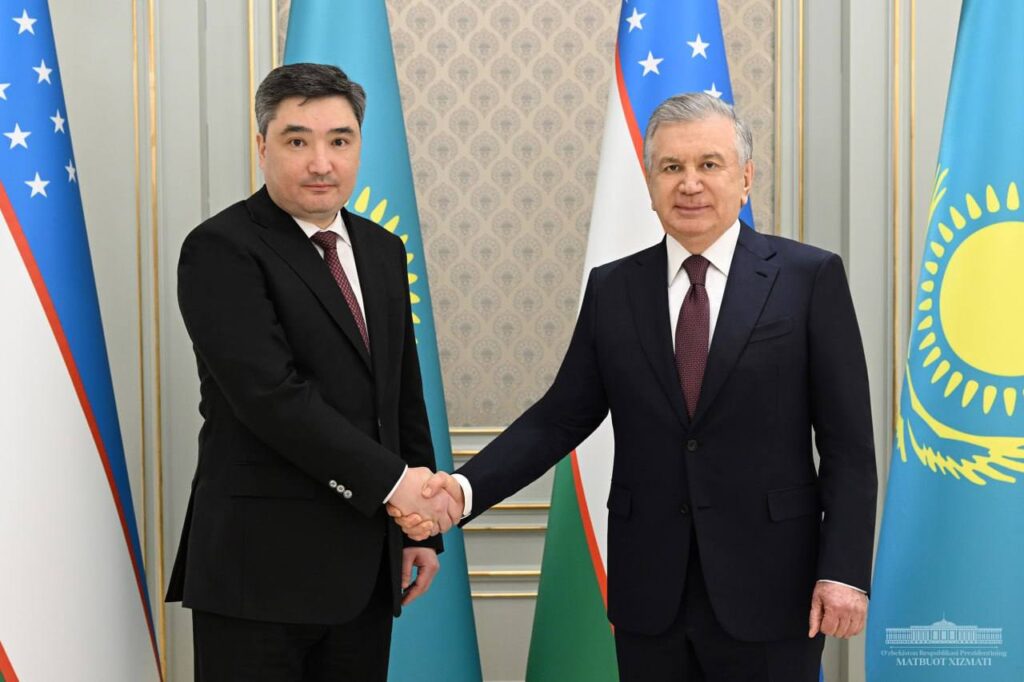
On March 15th, Kazakh Prime Minister Olzhas Bektenov and Uzbek President Shavkat Mirziyoyev and Prime Minister Abdulla Aripov met in Uzbekistan to discuss the expansion of Uzbek-Kazakh cooperation to increase the volume of mutual trade.

The key sectors in the strategic partnership include industry, transport, and logistics and last year, trade turnover between Kazakhstan and Uzbekistan amounted to $4.5 billion.

Negotiations with the Prime Minister of Uzbekistan Abdulla Aripov focused on measures to increase trade, investment, water, energy, transit, transport, and cultural cooperation, as well as strengthening interaction in the field of agriculture.

The Kazakh prime minister placed emphasis on the need to increase the region’s potential regarding transit and transport as well as the use of water. He also announced Kazakhstan’s readiness to expand export to Uzbekistan through the addition of 255 commodities in the amount of almost $500 million.

Both parties noted significant progress in the industrial sector which has led to the implementation of 60 projects worth $2.6 billion and the creation of over 13,000 jobs.

Optimism Meets Reality at the B5+1 Forum in Almaty

The inaugural B5+1 Forum, a conference dedicated to strengthening business between the five Central Asian republics and the United States, came to a close today in Almaty after a second well received day of panel discussions.

The B5+1 Forum was created by the Center for International Private Enterprise (CIPE), which aims to use public-private partnerships to create a better environment for business and trade. The B5+1 platform brings international and local companies together with high-ranking government officials from all six countries, to learn about the difficulties that each side faces, and suggest new ways to attract partners and investment.

Following an opening day focused on “Looking within Central Asia”, today’s speakers brought attention to “Central Asia’s place in the world economy”. The morning began with a keynote speech by Eurasian affairs expert S. Frederick Starr, who argued that because the five countries are now members of different trade blocs, the revival of the Central Asian Economic Union could break down their existing barriers to business and trade with the United States.

During a morning session on international partnerships, foreign experts brainstormed ways to speed up the Central Asia region’s economic integration with the rest of the world. To an audience of business leaders whose overall mood was optimistic, the EU’s ambassador to Kazakhstan Kestutis Jankauskas and World Bank economist David Knight brought a dose of realism, by explaining that business in Central Asia is not performing as well as in other emerging regions. This, they both said, is because the governments – and business owners – have mostly still not let go of self-defeating ways of approaching markets and investment.

The middle session went into more detail about the investment landscape, particularly in terms of IT and fintech. Jennifer Miel, executive director for Kazakhstan for the US Chamber of Commerce, mentioned that all five Central Asian countries have seen healthy increases in foreign direct investment since 2021. This was soon tempered by Anatoly Motkin of the agency StrategEast, who said that to achieve further sustainable growth, the region must unify its legislation and best practices, so that foreign investors can treat it as a single market as much as possible.

The Forum’s closing session explored the role of business associations in public-private dialogue. The panel was moderated by Eric Hontz, CIPE’s director for accountable investments, and featured the executive directors of the US Chambers of Commerce in Kyrgyzstan, Tajikistan and Uzbekistan – Aisuluu Sydygalieva, Nilufar Bulbulshoeva and Tatyana Bystrushkina. Discussion centered on best practices and solutions for effective member representation.

The B5+1 Forum forms part of CIPE’s program called “Improving the Business Environment in Central Asia” (IBECA). CIPE themselves are affiliated to the US Chamber of Commerce – the catalyst behind the B7 and B20 platforms – and receive funding from the US Department of State.

Early indications are that the B5+1 Forum in 2025 will be held in Bishkek, Kyrgyzstan.

Hundreds of Cargo Trucks Queued Up at Kyrgyzstan Border to Enter Kazakhstan

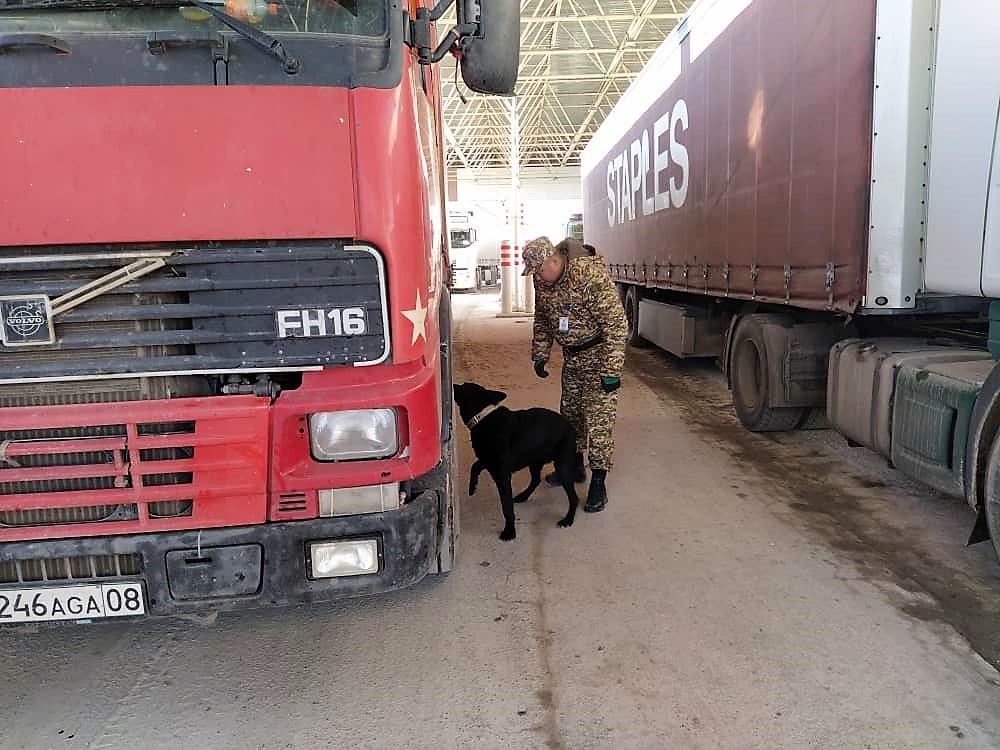
At the main vehicle checkpoint in Kyrgyzstan for crossing into Kazakhstan, the Ak-Tilek checkpoint, border guards counted 430 trucks queuing, while only 342 vehicles passed through the checkpoint yesterday. At the neighboring checkpoint on the border with Kazakhstan, about 90 trucks are in line.

Customs officers on both sides deny involvement in the traffic jams that have formed at the border. All checkpoints on the Kyrgyzstan-Kazakhstan state border are operating normally, according to the Information and Communications Department of the Border Guard Service of the State National Security Committee of Kyrgyzstan. “Both from the side of the Border Service of the Kyrgyz Republic and from the side of the Border Service of the Republic of Kazakhstan there are no restrictions for the passage of cargo vehicles,” the Kyrgyz Border Service said.

Border guards attributed the queue at the border to the start of the spring season. Following the New Year holidays (February 10th-17th) in China, the transit of goods to Russia through Kyrgyzstan usually increases in spring, and agricultural products begin to appear, first meat and later, vegetables and fruit.

According to Kyrgyz border guards, cargo vehicles with perishable products and animals are crossing the checkpoint out of turn. For every day of idle time, merchants say, they lose more than a hundred dollars.

Queues of trucks are not uncommon at the Kyrgyz-Kazakh state border. There have been cases when truckers from Kyrgyzstan carrying cargo to Russia had to wait at the border for weeks. The reasons for these long queues can be attributed to numerous causes. For example, last summer about 500 trucks queued at the border, and representatives from the Eurasian Economic Commission came to the site to sort out the situation. Kazakh customs officers attributed the long wait to a special operation to catch drug traffickers. Another time, Kazakhstan’s customs officers didn’t allow trucks from Kyrgyzstan to pass without navigation seals – which are GPS-enabled locks on cargo containers – which would have helped Kazakhstani authorities track the movements of goods. Each time, the two sides blamed the other.

The Kyrgyz side believes that the Kazakhs artificially create obstacles at the border to weaken competition from Kyrgyzstan, and the Kazakh authorities accuse Kyrgyz truckers of unwillingness to comply with Astana’s requirements and submitting fraudulent documents for cargo. Because of this, both truck drivers and cargo owners suffer, especially if they are transporting fresh fruits and vegetables, which can spoil before reaching their destination, which is most often in Russia. Kyrgyz merchants claim to be looking for alternative routes to deliver their cargo to Russia.