• KGS/USD = 0.01144 0%
  • KZT/USD = 0.00212 0%
  • TJS/USD = 0.10456 0.19%
  • UZS/USD = 0.00008 0%
  • TMT/USD = 0.28490 0%
  • KGS/USD = 0.01144 0%
  • KZT/USD = 0.00212 0%
  • TJS/USD = 0.10456 0.19%
  • UZS/USD = 0.00008 0%
  • TMT/USD = 0.28490 0%
  • KGS/USD = 0.01144 0%
  • KZT/USD = 0.00212 0%
  • TJS/USD = 0.10456 0.19%
  • UZS/USD = 0.00008 0%
  • TMT/USD = 0.28490 0%
  • KGS/USD = 0.01144 0%
  • KZT/USD = 0.00212 0%
  • TJS/USD = 0.10456 0.19%
  • UZS/USD = 0.00008 0%
  • TMT/USD = 0.28490 0%
  • KGS/USD = 0.01144 0%
  • KZT/USD = 0.00212 0%
  • TJS/USD = 0.10456 0.19%
  • UZS/USD = 0.00008 0%
  • TMT/USD = 0.28490 0%
  • KGS/USD = 0.01144 0%
  • KZT/USD = 0.00212 0%
  • TJS/USD = 0.10456 0.19%
  • UZS/USD = 0.00008 0%
  • TMT/USD = 0.28490 0%
  • KGS/USD = 0.01144 0%
  • KZT/USD = 0.00212 0%
  • TJS/USD = 0.10456 0.19%
  • UZS/USD = 0.00008 0%
  • TMT/USD = 0.28490 0%
  • KGS/USD = 0.01144 0%
  • KZT/USD = 0.00212 0%
  • TJS/USD = 0.10456 0.19%
  • UZS/USD = 0.00008 0%
  • TMT/USD = 0.28490 0%

Construction of HPP in Talas region of Kyrgyzstan Allocated $32.6 Million

The amount it will cost to build the Bala-Saruu HPP in the Talas region of Kyrgyzstan has been announced, 24.kg reports. Ulan Astarkulov, Director of Chakan HPP, told Birinchi Radio that the Ministry of Finance of the Kyrgyz Republic has allocated a budget loan of 2 billion som ($22.7 million). Later, the Russian-Kyrgyz Development Fund allocated an additional 882 million som.

According to Astarkulov, the production capacity of the HPP will cover 60-70% of the electricity demand in the Talas region. A presidential order on the construction of the HPP was signed on July 2, 2021.

The Bala-Saruu HPP construction project involves the construction of a HPP with three generators with a total capacity of 25 megawatts and an average annual electricity production of 92 million kWh. The operation mode of the HPP will be regulated under the irrigation regime and water flow from the Kirov Reservoir. The feasibility study of the project was developed by a Norwegian company. Equipment has been imported from Austria, Russia, and Uzbekistan.

Japanese Company to Develop Urban Master Plan for Bishkek

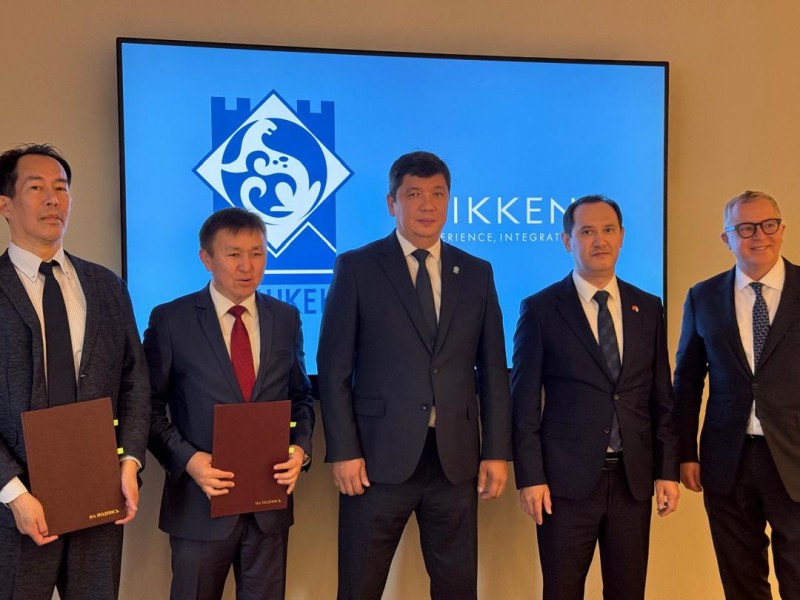
A Memorandum of Cooperation in urban planning and architecture has been signed between the Bishkek municipality and Nikken Sekkei Ltd, a Japanese architectural, planning and engineering firm.

Based on a survey of amenities required by the capital’s citizens, the project represents the Japanese company’s first foray into urban planning in Central Asia.

The project was approved by the Chief Architect of Bishkek, Urmat Karybaev, who accompanied Mayor of Bishkek Aibek Junushaliev during their attendance at SusHi Tech Tokyo 2024. Hosted by Tokyo last week, the large-scale event brought together leaders from cities in five continents to exchange ideas and discuss advanced technologies and strategies aimed at sustainable urban development.

As reported by the municipality’s press service, the deal substantially satisfied Bishkek’s goal to establish new partnerships, exchange knowledge and adopt best practices for the further development of the city.


Ruins of a Sixth-Century Castle Discovered in Tajikistan

Archaeologists have found the ruins of an ancient castle in the Tajik city of Penjikent, the National Museum of Tajikistan has reported on its social networks. The ruins were found by an archeology specialist from the museum, Muhsin Bobomulloyev.

The castle likely consisted of two floors, the first made from wood, the second constructed from raw bricks.

“The historical period corresponds to the VI-VIII centuries, the castle was destroyed and burned because of the invasion of foreigners. Ashes and traces of soot on the walls of the memorial corridor are proof of this,” the museum says.

Also, small objects – copper and silver coins, rings, and ornaments — have been uncovered. The museum plans to add the castle to the register of historical and cultural monuments in Tajikistan.

“The work does not end there: in July-August of this year, Tajik archaeologists will conduct additional research on the monument together with specialists of the State Hermitage of Russia,” the museum adds.

Turkmenistan Bans People From Talking About the Weather

For almost ten days Turkmenistan’s capital Ashgabat has been flooded with rain, in what local meteorologists think have been the worst downpours since the 1970s. The rain has caused significant damage to the city’s infrastructure.

The Akhal province has also been badly affected, with agricultural land flooded. Mudflows hit the cities of Anev and Kahka, and in many areas electricity and part of the rail network were shut down.

However, there have been no reports in Turkmen media about the rains and the damage they are causing.

Turkmenistan’s law enforcement agencies have taken unprecedented measures to prevent photos and videos of the downpours from appearing on social networks. According to Radio Azatlyk, internet speed has slowed down, working VPNs are blocked, and IMO messenger has almost stopped working.

A Turkmenabad police officer, who spoke on condition of anonymity, said of the order from above: “We have been ordered to prevent the leakage of defamatory photos and videos abroad. It was explained to us that if defamatory information gets into the hands of the West or the U.S. State Department, this information can be used to destabilize the domestic situation.”

The situation is the same in Ashgabat. Security services are identifying and taking to police stations citizens who have shared photos and videos on social media of the rains, and the damage caused by the rains in Ashgabat and the provinces.

“In Ashgabat, cars could not move along the streets, people were swept away by the water pressure, and some of them were badly hurt. In the suburbs, houses and farms were flooded, farmers may be left without any income. There are many casualties, but there are no fatalities among the residents. Now the situation is gradually normalizing, and the authorities are eliminating the consequences of the flooding,” one Ashgabat resident told The Times of Central Asia.

A Demographic Phenomenon in Kazakhstan — the Population is Rapidly Getting Younger

Kazakhstan stands out sharply on the demographic map of the world, according to Alexei Raksha, a Russian demographer. The republic’s government supports high birth rates, which not only bring significant benefits but can also be a source of risk.

Independent demographer Raksha has repeatedly said that Kazakhstan does not fit into global fertility trends. By all parameters (relatively high GDP, rising living standards, urbanization, etc.), the republic belongs to countries that should have already completed the first demographic transition. This term means a decline in mortality and fertility due to improved nutrition and medicine, resulting in simple generational replacement. That is, women no longer give birth to 10-15 children, hoping that two or three of them will survive.

The first demographic transition has ended almost everywhere except in Africa, scientists believe. Nevertheless, according to Raksha, Kazakhstan — along with Israel — shows other indicators. In both countries, both religion and the desire for some kind of historical justice play a role. However, the demographer emphasizes that Kazakhstan’s fertility figures are unevenly distributed regionally and ethnically. The fertile southern and western regions contrast sharply with the north, where the population is aging.

Raksha recently commented on Kazakhstan’s birth rate by women’s ethnicity in 2022-2024. “If Kazakhs, Uzbeks and Uyghur women have birth rates at 2.9 to 4.2 children per woman, then representatives of European nations have an average of 1.3-1.5 children (average European level). It is obvious that there is a deep difference in cultural attitudes, both in the degree of social conservatism and in the level of religiosity,” he wrote online.

According to his data, in recent years, Kazakhstan has been steadily overtaking Uzbekistan, formerly considered the regional leader in population “production”. This is confirmed by the data of the study of the leading medical journal The Lancet “Institute for Health Metrics and Evaluation” (IHME) on fertility in 204 countries and territories in the period from 1950 to 2021 with forecasts up to 2100. According to the report, Kazakhstan has surpassed all its neighbors in Central Asia and all countries in the Northern Hemisphere in terms of fertility over 70 years.

For contrast, Raksha constantly cites data on prolonged depopulation in Europe, North America, China, Korea, and Japan. Countries whose population is inexorably aging and whose birth rate is below the level of simple reproduction (less than two children per woman) are doomed to attract labor migrants, the expert believes. In addition, the SWO plays a destructive role in the post-Soviet space. Russia has faced precisely unrecorded but obvious demographic losses, while Ukraine is on the verge of social catastrophe.

Kazakhstan will not face the fate of an endangered country in the coming generations. In late April, the Bureau of National Statistics of Kazakhstan reported that the total fertility rate in 2023 amounted to 19.52 per 1000 people. In 2022 it was at the level of 20.57 births per 1000 people. The highest birth rates are noted in Mangistau region (26.74 people per 1000 people), Turkestan region (26.18) and Shymkent city (25.70). For comparison, the birth rate in Russia is 8.9 per 1,000 people; in Italy – 6.2; in South Korea and Hong Kong – less than 6 people.

In surveys, many Kazakhstani women say they want to have “as many children as God gives”. Raksha in one of his interviews pointed out that women are pushed to increase the number of children by the memory of mass deaths during the famine of the 30s (the so-called “Great Dzhute”, when many Kazakhs died of hunger due to collectivization or were forced to flee to China). In addition, the republic also remembers that during the Soviet period, due to the mass, albeit often involuntary migration to Kazakhstan of Russians, Ukrainians, Belarusians and other peoples, Kazakhs were a minority in their own land.

Nevertheless, political scientists and sociologists warn against blind enthusiasm about birth rate records. In particular, the situation in Mangistau and Turkestan regions and the city of Shymkent is dire. Political scientist Daniyar Ashimbayev said recently: “The southern regions dump their excess population into megacities, where opportunities for socialization and employment have long been exhausted. It should be recalled that we are talking about the population of not even “labor-surplus” regions, but frankly poor, poorly educated and unemployed.

We can talk all we want about the state’s obligation to develop the social sphere and create jobs, but the fact is that population growth is systematically outpacing both. Resettlement programs in the northern regions, where birth rates are falling and death rates are rising, are not working”.

In addition, Kazakhstan continues to receive ethnic migrants mainly from similarly poor and overpopulated regions of Central Asia. In fact, the only scenario to avoid further “Palestinianization” of Kazakhstan is to regulate population growth. A complete transition from ethnic migration to professional migration.

While the government realizes that encouraging the birth rate leads to a weakening of the social infrastructure, it will not give up its dream of increasing the population to 35-40 million in the next few decades. Kazakhstan is the world’s ninth-largest country by territory and should have a population to match, officials have said.

The government is actively encouraging this strategy through child allowances. Although the number of payments is small, if a family has 5-7 children, they allow parents not to work.

Central Asian Views on Pro-Palestinian Protests in the West

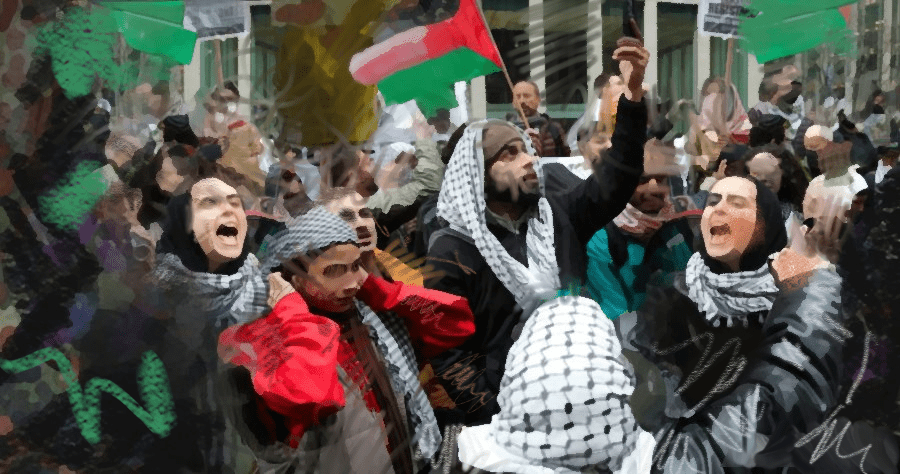
Pro-Palestinian protests erupted in university campuses and other locations worldwide in response to the ongoing conflict involving the Israeli Defense Forces and Palestinians in Gaza. European cities, including in the United Kingdom, the Netherlands, Switzerland, Germany, and Belgium, have been major flashpoints where, in some cases, the police resorted to using batons, shields and tear gas on protestors. In the U.S., The New York Times has reported on May 13 that since April 18, over 2,500 individuals had been arrested or detained at 54 college campuses nationwide.

The increasingly violent nature of the protests causes alarm. A poll conducted by USA Today and Suffolk University, published on May 8, has revealed that almost 32% of Americans express “very concerned” sentiments about the potential for the protests to lead to violence, while slightly over 35% say they are “somewhat concerned”.

Some of the messaging coming out of the protests has also been characterized as antisemitic, leading to a congressional bill in the U.S. known as the Antisemitism Awareness Act, which aims to expand the legal definition of antisemitism to curb any speech that provokes violence. Free speech advocates, including some international human rights organizations, have challenged these measures.


Remembering their own turbulent times, Central Asians generally support state measures to maintain order

Central Asians’ perspectives on the pro-Palestinian protests sweeping through Western cities, and the way various governments respond to them, are naturally influenced by their own historical and political contexts, shaped by decades of political transition and international rivalry. Emerging as new democracies just three decades ago, these nations have witnessed a tumultuous mix of violent power struggles among oligarchs, and intense competition from foreign actors vying for control over the region’s abundant natural resources and strategic geopolitical position.

At the same time, the region hosts a large Muslim population who may sympathize with the Palestinians, even though many do not know the history of the conflict in the Middle East, according to Daniyar Kumpekov, a 46-year-old economist in Kazakhstan. “The Arab-Israeli conflict is beyond the attention of most citizens,” says 21-year-old Kazakhstani student, Anar Zhakupova, adding that they are more concerned about the confrontation between Ukraine and Russia. In Kyrgyzstan, 29-year-old merchant, Dmitry Povolotsky, says that there were only small rallies in support of the Palestinians.

There also seems to be a sense of skepticism towards the protests. Kumpekov, for instance, draws attention to a trend of “Islamization” in Kazakhstan’s society”.  Mahmut Orozbayev, a Kyrgyz civil servant in his 50s, cautions about terrorist cells in the country, which, he says, “should be feared” from a security perspective. “We have a majority of Muslim citizens. They can gather and condemn Israel’s actions. But all this [should be done] within the limits of what is permissible, so that there is no unrest,” he adds. According to Donokhon Ruziboyeva, an Uzbekistan resident in her 20s, pro-Palestinian protests raise awareness, but “they don’t stop the conflict in Palestine”. While the devastation in the Gaza Strip seen on social networks deeply moves Ruzboyeva, she thinks holding demonstrations calling for an end to the war will not benefit the Palestinians. “I don’t think it’s the right decision to hold protests in Uzbekistan either,” she asserts.

The region is no stranger to widespread (and often violent) unrest. The Andijan events in Uzbekistan in 2005, for instance, was triggered by protests over the trial of 23 businessmen for alleged Islamic extremism, escalating into a violent confrontation. In the same year, Kyrgyzstan’s “Tulip Revolution” saw protesters seizing government buildings, resulting in President Akayev fleeing the country, followed by the 2010 uprising that led to over 80 deaths. In January 2022, Kazakhstan experienced a violent insurrection incited by coup organizers, where government buildings were stormed and burned, causing over 200 fatalities. Tajikistan witnessed violent clashes in the Gorno-Badakhshan Autonomous Region (GBAO) in 2012 between government forces and local groups after a security official’s murder. Meanwhile, Turkmenistan’s authoritarian regime maintains strict media control and swiftly quells dissent, effectively suppressing public protests.

The views of the region’s citizens reflect these memories. Kumpekov points out that authorities are notified of all rallies in Kazakhstan, and they have a right to refuse if the procession is destructive in nature. “This is a preventive practice,” he says, as “all the more Kazakhstanis remember the events of January 2022 when peaceful rallies turned into uncontrolled pogroms”. Authorities have the right to stop actions that lead to violence “so that the actions, for example, do not turn into anti-Semitic pogroms, as in the airport in Makhachkala [in Russia]”, he adds. Sharing a similar view, Zhakupova says that “Kazakhstanis do not want a repeat of the January 2022 events. The coup attempt and the ensuing chaos frightened citizens. The authorities are trying to establish a dialog with the residents [and] prevent social unrest”. In contrast to the January 2022 events, pro-Ukraine gatherings in Kazakhstan were peaceful, where citizens expressed their opinion and dispersed, and the police simply observed law and order, according to Kumpekov.


Freedom of expression should be allowed but not at the expense of national security

In Zhakupova’s opinion, any calls for violence should be condemned and it is unacceptable for a group of people to demand infringement on the rights and freedoms of others, but peaceful demonstrations should not be censored. “A person should realize that aggressive actions will cause a response,” Kumpekov argues. This sentiment is repeated elsewhere in the region. According to Ruziboyeva in Uzbekistan, “Speech that encourages violence should be restricted to prevent harm”; however, there is a balance; “censorship should be handled cautiously to maintain order while respecting freedom of speech”. Anwar, an Uzbek teacher in his 50s (who chose not to provide his last name), agrees: “Any speech inciting violence should be prohibited. I admit the need for censorship during aggressive protests in order to prevent threats and danger to the civilians.” In Kyrgyzstan, which has an article in its Criminal Code that punishes incitement of discord, Povolotsky says, “this is right, you can’t call for violence”, but adds that people should be allowed to “speak the truth” and be able to “see and hear everything” when it comes to protesting.


A familiar woe for Central Asia plagues the West: Suspicions of external involvement and prejudiced campaigns

Protests in the West, while overall more peaceful than those in Central Asia, have also seen protestors openly defy government orders and make statements that incite violence. In general, both Western and Central Asian supporters of protestors have used video footage from such confrontations to construct a narrative that accuses government forces of human rights violations and portray all protestors as victims. These clips, usually showing forceful detentions and altercations between the security apparatus and the civilians, are seen as use of excessive force undermining the right to peaceful assembly. The depiction of tear gas and water cannon use as well as the handcuffing of individuals is often framed not as a crowd control tactic, but as state oppression.

The current situation presents Western officials with a scenario reminiscent of the more tumultuous protests Central Asian authorities have handled in the past. The ongoing challenge for Western governments remains how to curb the escalation of such protests, combat increasingly harmful disinformation campaigns, and prevent a dangerous spread of violence while simultaneously protecting the rights of assembly and free speech.

Adding to the difficulties of managing this process, the commercialization of the human rights arena, and the resulting bias in what is reported on the protests, spark worry given the apparent involvement of NGOs and foreign actors in providing financial and other support. These concerns prompt scrutiny over whether their contributions are driven by interests that are contrary to those of Western host countries. In the U.S., questionable sources of funding used to mobilize non-students at university campuses as well as for the procurement of uniformly colored tents point to a well-coordinated and sponsored operation, possibly with the involvement of outside actors. Adding a layer of complexity, a report by Wired has suggested that Russia is capitalizing on college campus protests to foment unrest in the U.S., repeating claims that foreign assistance may be bolstering the agitators.

For their part, Central Asian countries have previously raised concerns about the weaponization of human rights activism as a tool used by kleptocrats and foreign states to gain diplomatic leverage over regional governments. These worries have a basis. The so-called “Qatargate” scandal in the EU that broke out in 2022 exposed how European officials have been compromising their authority on human rights issues by selectively condemning or endorsing human rights records of third-party states in exchange for cash payments and other perks from outside actors.


No perfect path, but possibility for progress

Regardless of a country’s East-West alignment or its position on the democratic spectrum, it should remain a universally accepted fact that when protesters flout a country’s laws and engage in frenzied acts, they encroach on the rights of other citizens and threaten peace and security. The balancing act for governments between protecting fundamental rights and maintaining the safety of state institutions and all its citizen remains precarious. So far, few (if any) have been able to get it just right. In the wake of its own recent large-scale protests, the West can perhaps better relate to Central Asia’s challenges. With such empathy, all sides may be able to give credence to the historical context as well as to the influences of internal and external bad actors in defining such events and the risks they bring to each country’s domestic peace and security.