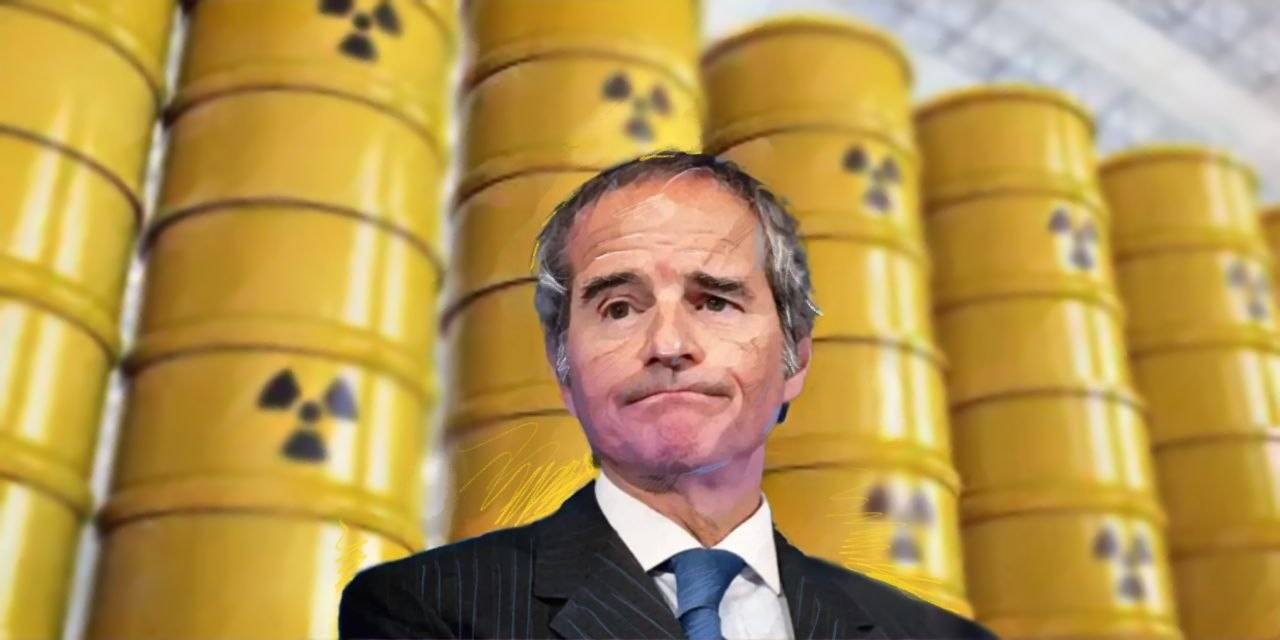
On May 26, President Kassym-Jomart Tokayev received IAEA Director General Rafael Grossi in Astana. The meeting pointed beyond bilateral nuclear cooperation toward Kazakhstan’s possible role in wider nuclear-security problems. Tokayev welcomed a roadmap for deepening Kazakhstan’s cooperation with the International Atomic Energy Agency through 2036, alongside documents on nuclear medicine and science.
Grossi’s visit also followed Kazakhstan’s referendum on its first post-independence nuclear power plant, which has widened the civilian side of the country’s nuclear profile. Iran was not the subject around which the meeting was organized, but it is the issue that gives the meeting strategic weight. In particular, Kazakhstan’s established IAEA relationship could help give nuclear diplomacy a practical form if political agreement first creates a need for technical implementation.
The potential is real, but it is narrow. Any political resolution of the Iran nuclear issue turns on decisions by Tehran, Washington, Israel, regional states, and the IAEA. The parties must first agree politically on an IAEA-led arrangement for Kazakhstan to enter the scene. Tokayev’s own formulation was appropriately limited: Kazakhstan’s assistance would be a gesture of good faith, and only if appropriate international agreements exist. Its involvement would come after the political bargain, not before it.
Kazakhstan’s nuclear profile begins with the Soviet nuclear testing site at Semipalatinsk, which made nuclear policy a shared public memory before it became a diplomatic profile. Between 1949 and 1989, this site became one of the central locations of the Soviet nuclear-weapons program. The Nevada–Semipalatinsk movement, founded in 1989 by Olzhas Suleimenov, turned public opposition to testing into a political force before the site was closed in August 1991. Kazakhstan’s nuclear policy still expresses a public memory of Soviet testing and its public-health consequences.
That memory does not make Kazakhstani society simply anti-nuclear, but it means that the country’s nuclear policy carries a sensitive history. From the Soviet Union, Kazakhstan inherited on its territory one of the world’s largest nuclear arsenals. That arsenal included strategic nuclear warheads associated with intercontinental missiles and long-range bombers. Kazakhstan did not merely surrender an arsenal; it made renunciation part of its international profile.
The country chose non-nuclear status, transferred the weapons to Russia, and joined the Treaty on the Non-Proliferation of Nuclear Weapons as a non-nuclear-weapon state. This renunciation gave political restraint an institutional form and gave Kazakhstan a special status in nuclear affairs. That standing has also appeared in earlier Iran-related diplomacy. Kazakhstan hosted two rounds of P5+1 nuclear talks with Iran in Almaty in 2013, and in 2015 Kazatomprom supplied Iran with 60 metric tons of natural uranium as part of the internationally coordinated implementation of the JCPOA.
That standing now operates most clearly through Kazakhstan’s long cooperation with the IAEA. The Tokayev-Grossi meeting and the 2026–2036 cooperation roadmap make Kazakhstan’s nuclear development part of a continuing institutional relationship. Grossi’s visit also included agreements on nuclear science, healthcare delivery, and agricultural applications under IAEA programs.
Tokayev and Grossi are not improvising a political solution to Iran; they are strengthening an institutional channel through which technical solutions can be made usable. The clearest technical example of that channel is the IAEA Low Enriched Uranium (LEU) Bank at the Ulba Metallurgical Plant in Oskemen. The Bank is owned and controlled by the IAEA and consists of 90 metric tons of low-enriched uranium hexafluoride, intended as an assurance-of-supply reserve for eligible IAEA member states. Ulba shows that Kazakhstan can host nuclear-fuel arrangements under defined legal and safeguards rules.
The LEU Bank became operational in 2019 after years of legal preparation, transport planning, regulation, and construction of purpose-built storage. This long antedates any immediate Iran function; what Ulba shows is that Kazakhstan can host nuclear-fuel arrangements under defined legal and safeguards rules.
The limits of the LEU Bank are as important as its existence. It is a low-enriched uranium reserve for assurance of supply; it is not a facility authorized to receive, store, process, or downblend Iranian highly enriched material. Its legal framework and technical purpose are particular to low-enriched uranium for peaceful reactor fuel. Any future arrangement involving Iranian uranium would require new legal documents, financing, custody rules, and probably separate infrastructure. The LEU Bank is not a ready-made Iran mechanism. The precedent is real; the mandate is not.
Iran’s refusal to accept the mechanisms currently under discussion keeps Kazakhstan outside the operational field for now. Earlier reporting indicated disagreement over whether the material would remain in Iran or be exported, diluted, downblended, or placed under verified custody.
According to a May 24 Reuters report, a senior Iranian source said that Tehran had not agreed to hand over its highly enriched uranium stockpile, and that the nuclear file was not even part of the preliminary arrangement then under discussion with the United States. The IAEA has separately reported that its ability to verify Iran’s stockpile is impaired.
If such an arrangement does take shape, Kazakhstan’s value would lie in helping make it technically credible and operationally usable. Here, the country’s nonproliferation record, IAEA cooperation, and Ulba experience could make a difference. These cannot substitute for political agreement, but they could support implementation after one.
Akorda’s readout of the Tokayev-Grossi meeting says Grossi referred to Kazakhstan’s political authority, relevant infrastructure, and scientific-technical base. That does not mean Kazakhstan has been selected for an Iran-related task. It means Kazakhstan can become relevant at the point of implementation, if the IAEA and the parties first create a rules-based arrangement.
Such an off-ramp is not a political solution to the overall Iran issue, but it would have practical value: Washington and Jerusalem could see tighter control over the stockpile; Tehran would avoid the appearance of surrender; nearby states would gain some insulation against escalation; and the IAEA would return the issue to verification under agreed rules. Kazakhstan’s role would be to support such an arrangement without becoming a political patron of Tehran or an instrument of an outside power.
Kazakhstan cannot turn the Iran problem into a diplomatic solution. The country’s nuclear history, its IAEA relationship, and the Ulba precedent do not solve the Iran question. They do show why Kazakhstan could provide a practical platform for an IAEA-led arrangement, once political agreement makes one possible. It can help the IAEA make a future nuclear-risk-reduction arrangement credible enough to use. Kazakhstan’s role lies not in enlarging the diplomacy, but in making a limited agreement usable if one finally exists.