• KGS/USD = 0.01144 0%
  • KZT/USD = 0.00216 0%
  • TJS/USD = 0.10456 0%
  • UZS/USD = 0.00008 0%
  • TMT/USD = 0.28490 0%
  • KGS/USD = 0.01144 0%
  • KZT/USD = 0.00216 0%
  • TJS/USD = 0.10456 0%
  • UZS/USD = 0.00008 0%
  • TMT/USD = 0.28490 0%
  • KGS/USD = 0.01144 0%
  • KZT/USD = 0.00216 0%
  • TJS/USD = 0.10456 0%
  • UZS/USD = 0.00008 0%
  • TMT/USD = 0.28490 0%
  • KGS/USD = 0.01144 0%
  • KZT/USD = 0.00216 0%
  • TJS/USD = 0.10456 0%
  • UZS/USD = 0.00008 0%
  • TMT/USD = 0.28490 0%
  • KGS/USD = 0.01144 0%
  • KZT/USD = 0.00216 0%
  • TJS/USD = 0.10456 0%
  • UZS/USD = 0.00008 0%
  • TMT/USD = 0.28490 0%
  • KGS/USD = 0.01144 0%
  • KZT/USD = 0.00216 0%
  • TJS/USD = 0.10456 0%
  • UZS/USD = 0.00008 0%
  • TMT/USD = 0.28490 0%
  • KGS/USD = 0.01144 0%
  • KZT/USD = 0.00216 0%
  • TJS/USD = 0.10456 0%
  • UZS/USD = 0.00008 0%
  • TMT/USD = 0.28490 0%
  • KGS/USD = 0.01144 0%
  • KZT/USD = 0.00216 0%
  • TJS/USD = 0.10456 0%
  • UZS/USD = 0.00008 0%
  • TMT/USD = 0.28490 0%

Big Names in Chess Praise Sindarov, Now Candidates Frontrunner

The chess world knew Javokhir Sindarov was dangerous heading into the FIDE Candidates Tournament this year, even though he was making his debut at the prestigious event and, at 20 years old, is the youngest of the eight elite contenders.

But few people expected the Uzbekistani phenomenon to tear through the field in the first week of the event, racking up five wins and two draws so far in the 14-round tournament. Sindarov has six points out of a possible total of seven, and a 1.5 point lead over second-placed Fabiano Caruana of the United States. He is the strong frontrunner to win the event and earn the right to challenge the current world champion, India’s Gukesh Dommaraju, later this year.

Monday was a rest day and there are still seven games to go at the candidates tournament being played this year in Cyprus. But some of the biggest names in chess are in awe over Sindarov’s aggressive, resourceful performance.

“Incredible result so far!” former world champion Garry Kasparov said on X on April 3 after Sindarov’s wins over second-ranked Caruana and third-ranked Hikaru Nakamura. “Do not underestimate the boost that confidence plays after a strong start. You trust your instincts more, a positive cycle of intuition and performance. Meanwhile, your opponents doubt themselves against you.”

Judit Polgár, often described as the best female chess player of all time, said that Sindarov will be at the top of the game for many years regardless of what happens at this year’s candidates tournament.

“He is 20 years old, a fearless player, a genius in management,” said Polgár, who is the subject of a Netflix documentary titled Queen of Chess. “Can he keep calm and stay focused until the very end of the tournament? Will he be able to handle the pressure of being so close to becoming the next World Championship challenger?”

Nigel Short of Britain, who rose to third in the world in the late 1980s and is currently FIDE director of chess development, compared Sindarov to a young Boris Spassky, the former world champion from Russia who died in 2025.

Sindarov, Short said on Facebook, is “a classical player with an excellent feeling for the initiative, who stays calm and trusts his own judgement in dynamic positions.”

Sindarov, who won the 2025 World Cup in Goa, India, was one of Uzbekistan’s youngest national champions in history, achieving that goal at the age of 13. Still, right now, compatriot Nodirbek Abdusattorov is the higher-ranked player. Abdusattorov didn’t qualify for this year’s candidates tournament, though he recently won several consecutive tournaments.

Magnus Carlsen of Norway currently doesn’t play in the candidates tournament format even though he is the top-ranked classical chess player in the world. But he is also keeping an eye on Sindarov, saying “nobody” expected such a strong start to the event.


Food Spending Remains High in Kazakhstan Households

A high share of household spending on food remains a key indicator of living standards in Kazakhstan, according to analysts at Finprom.kz.

By the end of 2025, average annual spending on food and non-alcoholic beverages reached $1,292 per person, up 13.9% year-on-year and nearly six times higher than in 2010.

At the same time, the structure of spending has remained largely unchanged. In 2025, food accounted for 47.8% of total expenditures, only slightly below the pre-pandemic level of 50.4%. As a share of income, food expenditures rose to 42.5%, compared to 40.7% a year earlier, suggesting that income growth is being largely offset by inflation.

Consumption patterns also remain relatively rigid. Meat and meat products account for 34.4% of food spending, approximately $444 per person, with prices in this category rising by 18.1% over the year.

Bread and cereal products (14.7%) and dairy products (10.6%) also make up a significant share. Combined, these categories account for about 60% of total food expenditures.

Spending on fruit and vegetables is increasing in absolute terms by 15.3% and 22.8%, respectively, but their shares remain relatively low at 9.1% and 7.7%, pointing to limited diversification in consumption.

Fish and seafood account for 4.4% of spending, and eggs for 2.1%, further reflecting a concentration on staple foods.

According to analysts, inflation remains the main driver of rising expenditures. In February 2026, prices for food and non-alcoholic beverages increased by 12.6% year-on-year, compared to 6.3% a year earlier. This level is close to the highest rates recorded over the past decade, with the exception of February 2023, when growth reached 26.4%.

Analysts warn that if current inflation trends persist, the share of spending on food in 2026 could again exceed 50%, limiting households’ ability to spend on non-food goods and services and placing additional pressure on living standards.

The Iran War Is Repricing Central Asia’s Connectivity

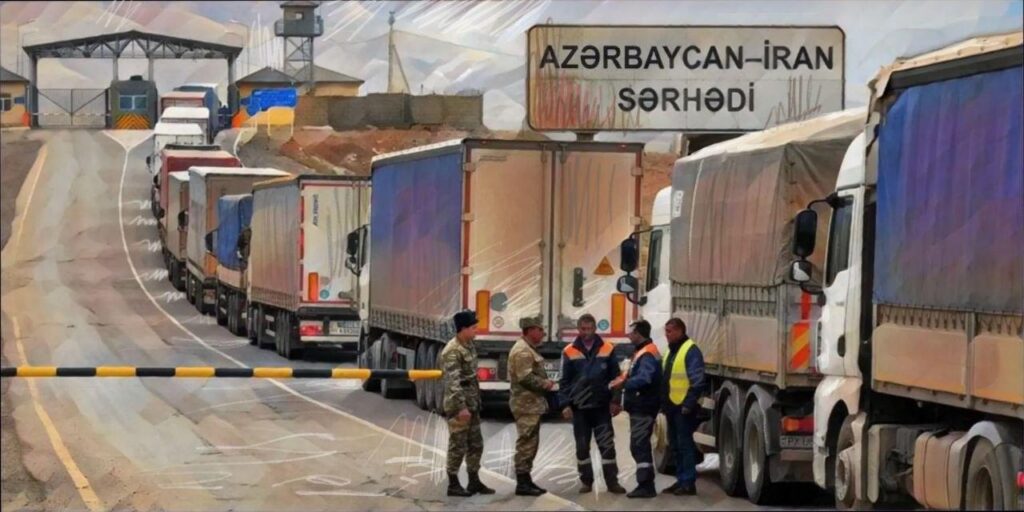
Europe’s aviation regulator has extended its current conflict-zone bulletin for the Middle East and Persian Gulf through April 10 and continues to advise operators to avoid Iranian and adjacent airspace at all altitudes. Reuters reported soon after that the squeeze on normal flight paths was pushing more traffic into narrower routes, notably over Azerbaijan and Central Asia. The Strait of Hormuz, meanwhile, has not returned to normal commercial use. A limited number of exempted vessels have crossed, but passage remains selective, politicized, and uncertain rather than routine.

The question, consequently, is no longer only whether Central Asia has alternatives to single-route dependence but whether those alternatives remain commercially usable, taking into account the increased risk, delay, insurance, fuel burn, and congestion. What has changed is the cost of maintaining reliable connectivity.

The Cost of Reliability

The Iran conflict imposes higher operating costs on the wider Eurasian air corridor that is now taking displaced traffic. EUROCONTROL estimates that about 1,150 flights a day continue to be affected by re-routing linked to the Middle East crisis. These add roughly 206,000 kilometers of flying and 602 tons of extra fuel burn per day.

Maritime trends are similar. In March, war-risk premiums in or near the Gulf had risen more than tenfold in some cases, with hull war premiums moving from about 0.25% of vessel value to as much as 3%. Air-freight rates on some routes rose by as much as 70% as shippers redirected urgent cargo away from disrupted sea lanes and restricted airspace. Higher surcharges and narrower margins for operational error can make routes lose commercial value even if they remain formally open.

The wider macroeconomic setting has also made resilience more expensive. Higher oil prices make every detour costlier, raising freight charges, power costs, and production costs across the region’s trading partners. Even where Central Asian cargo does not move through Iranian waters, the same pattern is still present. Asian policymakers were already confronting a combined oil-price and currency shock at a moment when roughly 80% of the oil shipped through Hormuz normally goes to Asia.

The World Bank’s March food and nutrition security update notes that around 20% of global oil supplies and about one-third of global fertilizer trade transit the Strait of Hormuz. Urea prices, for example, surged by nearly 46% month on month between February and March 2026. Importers in Central Asia, as well as in Europe and the South Caucasus, remain under pressure from higher household food costs and tighter producer margins. The price of resilience is now showing up in increased costs for farm inputs, food costs, and household budgets.

How the Burden Falls

Kazakhstan remains the best placed in the region to absorb the shift. The CPC pipeline still carries about 80% of Kazakhstan’s oil exports; oil income contributes 52% of the state budget. Earlier disruptions had constrained Kazakhstan to reroute 300,000 tons of crude, and the country continues to rely on supplementary outlets such as Ust-Luga, the Baku–Tbilisi–Ceyhan pipeline, and China when its main system is stressed. For Kazakhstan, higher oil prices cushion part of the blow, but it still has to pay more to keep redundancy commercially credible.

Turkmenistan’s proximity to Iran increases its notional strategic relevance. It also makes the country immediately more vulnerable to interruption. Prices for key Iranian goods in Ashgabat have jumped sharply as cross-border trade dried up; some Iranian products are now selling for 50% to 70% higher, and some staples have doubled. The World Bank explains that Turkmenistan, as a landlocked country, depends on workable external connectivity in its search for diversification.

Uzbekistan offers the clearest example of the general trend in Central Asia at large. According to a January statement by President Shavkat Mirziyoyev, the competitiveness of national manufacturers had already declined because the cost of transporting Uzbekistan goods to Europe had doubled amidst the geopolitical situation. In March, the World Bank approved a $200 million transport project and said Uzbekistan’s road capacity would need to expand by around 500% by 2030 to accommodate projected freight growth. Routes also have to remain stable and inexpensive enough to preserve export margins and delivery reliability.

Kyrgyzstan and Tajikistan are less able to turn the shock to advantage. The Eurasian Development Bank reported in February that remittance inflows to Kyrgyzstan reached a record $3.5 billion in 2025, equal to 15.4% of GDP and up 16.8% from 2024. World Bank data put Tajikistan’s remittance ratio at 47.9% of GDP in 2024. About 80% of Tajikistan’s fuel imports came from Russia in 2025, and Iran remains a link in the North-South corridor through which Tajikistan reaches Persian Gulf ports. Higher oil prices and regional instability are thus likely to raise shipping costs, lengthen delivery times, and intensify inflationary pressure. In the smaller Central Asian economies, the repricing of connectivity has less to do with corridors and more to do with household budgets, as they affect fuel, food, freight, and purchasing power.

Beyond Route Multiplication

The shock changes the adaptation problem. Corridor multiplication alone no longer suffices. What is required is greater reliability through customs modernization, digitization, lower border friction, and more dependable transit administration. In Tajikistan, for example, a web-based, computerized customs management system developed by UNCTAD to automate, manage, and modernize international trade procedures, called ASYCUDA World, was deployed nationwide on October 1, 2025. It replaces the old customs system by automating, managing, and modernizing international trade procedures with 24/7 electronic submission of cargo manifests and customs declarations. This has already lowered average clearance times for imports and exports well below baseline.

Likewise, the CAREC Advanced Transit System (CATS) and Information Common Exchange (ICE), a digitally harmonized regional initiative supported by the Asian Development Bank to modernize and simplify customs transit, has been implemented. Officials from Azerbaijan, Georgia, Turkmenistan, and Uzbekistan met in Tashkent in April to review conformance testing and agree further transit scenarios for rollout.

The implications of the Iran conflict and Central Asia’s response extend well beyond the region. For the European Union, they bear on whether east-west diversification beyond Russian routes can remain commercially credible. For China, they affect the cost and reliability of westbound overland connectivity. For Turkey, they raise the value of the trans-Caspian and South Caucasus corridor system linking Anatolia more tightly to Central Asia. For the United States they reinforce the strategic case for route pluralization and lower dependence on any single maritime chokepoint. The Iran war has ceased merely to stress-test Central Asia’s southern corridors. It is now raising the price of resilience across regional connectivity systems as a whole.

Kyrgyzstan Plans Central Asia’s First Live-Line Energy Training Center

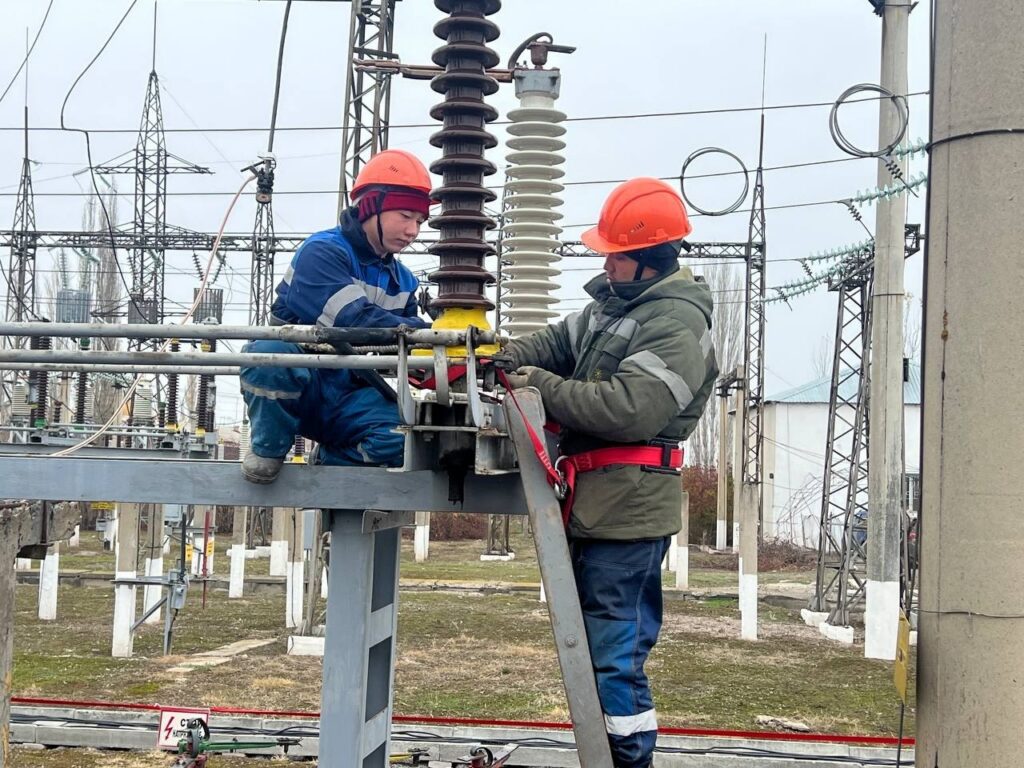
Kyrgyzstan plans to establish a competence center for live-line working technologies, with the aim of developing it into a regional hub for training highly qualified specialists from Kazakhstan, Uzbekistan, and Tajikistan. The center will focus on maintaining power grids and electrical equipment without de-energizing high-voltage lines.

The National Electric Network of Kyrgyzstan has signed a cooperation agreement with Grid Company of Tatarstan (Russia) to develop and introduce live-line working technologies, including the creation of a specialized training center.

The agreement was signed during the Energoprom-2026 international electric power forum in Kazan and was attended by Kyrgyz Energy Minister Taalaibek Ibrayev and Russian Energy Minister Sergey Tsivilyov.

The initiative aims to enable maintenance of electrical grids without disconnecting consumers. This is expected to reduce the frequency and duration of power outages, lower technical losses, and improve the reliability and quality of electricity supply for households and businesses.

The project is particularly relevant for Kyrgyzstan, where electricity supply is frequently interrupted due to the maintenance needs of aging infrastructure.

Authorities say the initiative could help modernize the country’s energy sector and strengthen its role in regional cooperation. The partnership with Russia also provides for the supply of electrical equipment and the localization of production in Kyrgyzstan, including cables, switchgear, and metering devices.

The project is also expected to position Kyrgyzstan as a regional training and competence hub for the electric power industry.

Uzbekistan’s Cotton Sector: Focus Shifts to Farmers as Dialogue Continues

The Times of Central Asia previously published an interview with Komoliddin Ikromov, head of the Agribusiness Association, addressing recent land disputes, legal processes, and ongoing reforms in Uzbekistan’s agricultural sector. In a separate conversation, Umida Niyazova, founder of the Uzbek Forum for Human Rights, has offered an additional perspective, focusing on the conditions faced by cotton and wheat farmers.

Her remarks come in the context of a recent joint report by the Uzbek Forum and Human Rights Watch examining structural issues in the agricultural system. While the report has drawn international attention, Niyazova emphasized that its primary focus differs from earlier discussions centered on cotton pickers.

Focus on farmers rather than pickers

Niyazova said public debate in recent years has largely focused on forced labor among cotton pickers, particularly prior to reforms introduced after 2019. However, she noted that the new report shifts attention to another group.

“Our recent report on the cotton sector in Uzbekistan does not focus on cotton pickers, but rather on cotton and wheat producers, farmers,” she told The Times of Central Asia. “This is a different segment of workers whose problems have, for decades, remained overshadowed by the issue of forced labor of cotton pickers… The central finding of our report is that the working conditions of farmers producing cotton and wheat in Uzbekistan place them at risk of forced labor.”

Basis for assessing risk

Niyazova explained that this conclusion is based on eleven indicators developed by the International Labour Organization, “which define warning signs that individuals may be at risk.”

However, the report does not conclude that specific cases constitute forced labor.

“We did not have sufficient information to determine that any particular farmer is working under forced labor conditions,” she told TCA. “However, we were able to conclude that cotton and wheat farmers in general are at risk due to the conditions in which they work.”

These indicators include factors such as vulnerability, intimidation, threats, withholding of wages, and abusive working conditions.

At the same time, she acknowledged that Uzbekistan has made progress in addressing earlier concerns related to cotton picking.

Changes in cotton picking practices

Niyazova said the situation for cotton pickers has changed significantly in recent years.

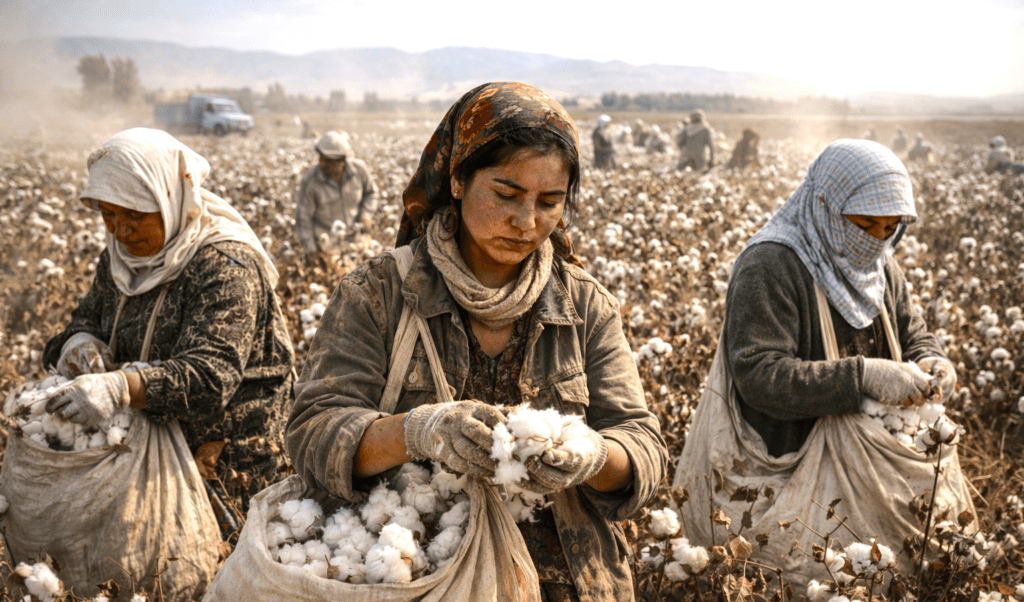
“These are seasonal workers, primarily rural residents, who are recruited by farmers or mahallas (neighborhoods) to harvest cotton over a two-month period,” she said. “Since the 2020 harvest, payment rates for manual cotton picking have increased. This has been an important, though not the only, factor in attracting voluntary laborers.”

According to the Ministry of Agriculture, a recommended price of 2,000 UZS ($0.16) per kilogram of hand-picked cotton was set for 2025. During the harvest, prices may also be determined through agreements between cluster operators, farms, and pickers.

Niyazova said additional reforms have contributed to changes in the sector, including the introduction of private clusters, increased mechanization, and government oversight.

“Mechanization has increased year by year, reducing the need for manual labor,” she said, adding that by 2025, more than 50% of the harvest was carried out by machines.

On March 13, a presidential decree on providing the agricultural sector with modern machinery was adopted, prioritizing increased mechanization, particularly in cotton harvesting. The authorities aim to raise the share of machine-harvested cotton to 70% by 2026.

Niyazova also pointed to awareness campaigns and enforcement measures.

“The government conducted information campaigns emphasizing the prohibition of forced labor, and the labor inspectorate held local officials accountable for coercion,” she said.

“Taken together, these measures contributed to the end of large-scale, systematic forced labor of cotton pickers.”

Engagement with authorities

During a visit to Uzbekistan in March, Niyazova said she discussed the report’s findings with representatives of several ministries.

“Overall, I assess these meetings very positively,” she told TCA, despite some disagreements, particularly over how the current system should be described.

“Some government representatives maintain that there is no longer a state order for cotton production,” she said, while adding that the report finds elements of a centralized system still exist in practice, sometimes referred to as a “forecast.”

“Disagreement does not preclude continued dialogue,” Niyazova said, emphasizing that there is common ground among stakeholders.

“Our goal is for Uzbek cotton to be fully free of its legacy of coercion,” she said.

Digital Gold Trading Launches on Kyrgyz Stock Exchange

On April 3, the Kyrgyz Stock Exchange, Kyrgyzaltyn, and Central Depository CJSC signed an agreement enabling the purchase and sale of precious metals, particularly gold.

The initiative aims to provide equal access to exchange-based gold trading for all categories of investors. The exchange will ensure automated and transparent transactions, with prices formed in real time based on supply and demand.

Participants in the trading include commercial banks, jewelry and brokerage firms, and other entities registered with the Department of Precious Metals under the Ministry of Finance.

“Using exchange infrastructure automates processes and guarantees equal access to the asset for all categories of investors,” said Aida Chodulova, CEO of the Kyrgyz Stock Exchange. She added that gold will function as both a digital and physical asset, with transactions recorded in the exchange’s automated system.

Officials say the platform will allow investors to trade gold without the need for physical transportation, while also offering a tool for long-term capital preservation.

Gold remains Kyrgyzstan’s main export commodity. In 2025, the country exported 6.2 tons of gold worth $682.8 million, according to preliminary data cited by local media.

According to the Ministry of Economy, gold accounted for nearly 24% of total exports.

The country’s largest deposit, Kumtor, is located in the Issyk-Kul Region at an altitude of about 4,000 meters. It is one of the world’s largest gold deposits and was nationalized in 2021 after previously being owned by Centerra Gold.

The mine is operated by Kumtor Gold Company, which is fully owned by Kyrgyzaltyn. In 2025, the company produced 12,081 kg of gold, generated $1.434 billion in revenue, and reported net profit of more than $706 million, while paying $246.5 million in taxes and other payments.