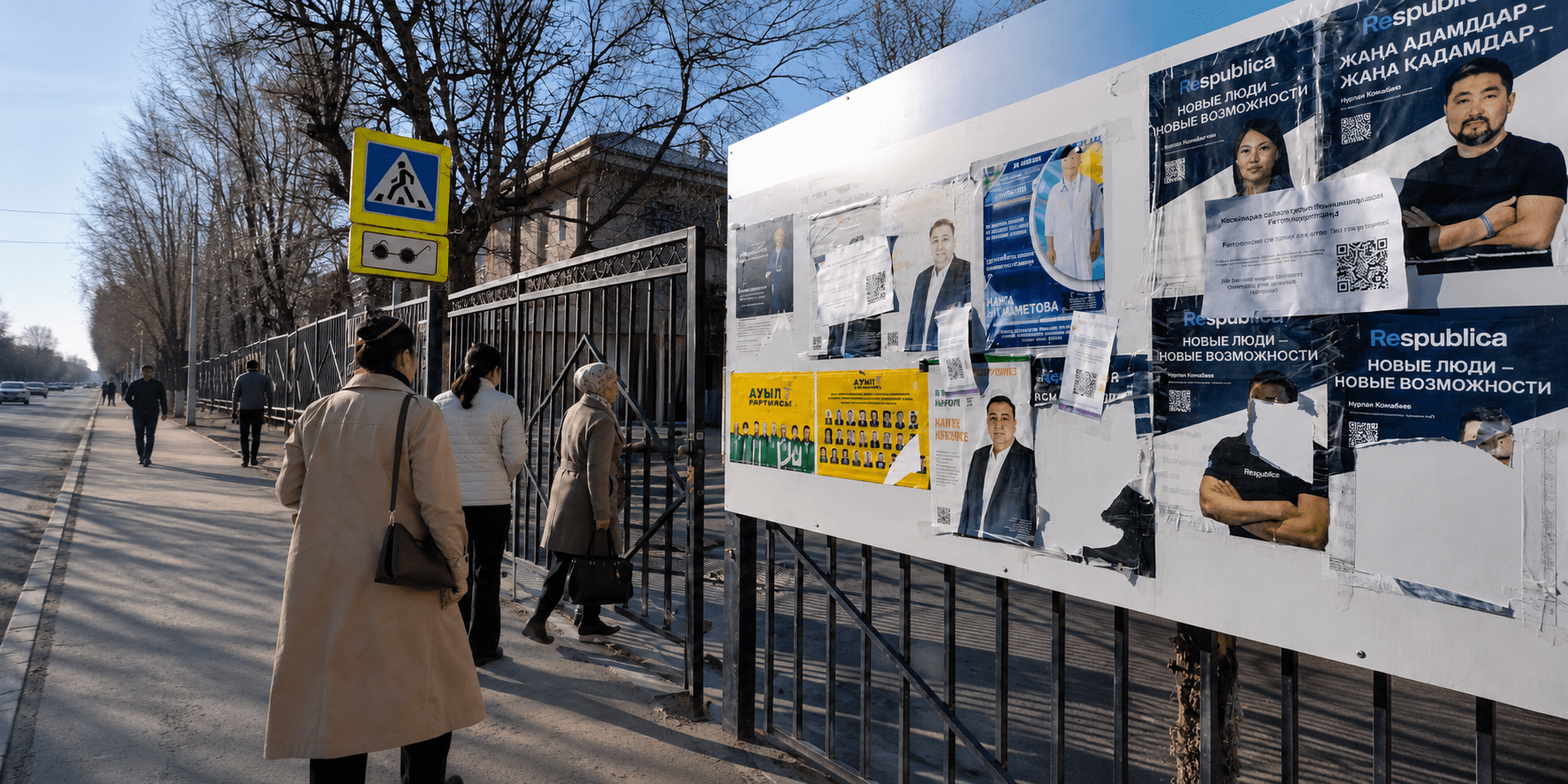
Kazakhstan’s new Constitution entered into force on July 1. On August 23, voters will elect the country’s first unicameral Kurultai, a 145-member legislature that replaces the former Mazhilis and Senate. Political parties are already submitting their lists, with nominations open from July 2 to July 13.
Those lists must meet an inclusion requirement that has taken on new significance under the new electoral system: at least 30% of candidates must come from three combined categories, women, young people, and people with disabilities.
How many women will actually enter the new parliament will become clear only after the votes are counted. But it is already possible to assess what the rule can achieve, and where its weaknesses lie.
What the Law Requires
The quota is less straightforward in practice. It does not guarantee that 30% of seats will go to women. The rule sets a combined 30% target that includes women alongside young people and people with disabilities.
A party could comply with the rule while doing relatively little to increase women’s representation, if enough candidates from the other eligible categories are included.
The rule carries added weight because Kazakhstan’s new Kurultai will be elected through a nationwide proportional party-list system. Under this model, placement on party lists can count as much as the overall number of women nominated.
Kazakhstan has also lowered the threshold for registering political parties from 40,000 to 20,000 members, a change intended to make it easier for new political forces to participate. Seven parties have been cleared to compete in the August 23 election.
Kazakhstan’s Starting Point
Before the transition to the new unicameral legislature, women’s representation in Kazakhstan’s parliament remained limited. By the end of 2025, women held 17 seats in the Mazhilis, or 17.3% of the chamber. As of July 2025, women held 10 of 50 seats in the Senate, or 20%.
By comparison, the global average for women’s representation in national parliaments stood at 27.5% at the end of 2025, after rising by just 0.3 percentage points over the year.
Kazakhstan enters its first Kurultai election from a position below the global average.
How Neighboring Countries Have Addressed the Issue
The region already offers examples of how differently gender quotas can work.
In Uzbekistan, the quota for women candidates in elections to the Legislative Chamber was raised from 30% to 40% and applied for the first time in the 2024 elections. Unlike Kazakhstan’s rule, Uzbekistan’s quota applies specifically to women rather than to a combined group.
The result was noticeable: the number of women MPs rose from 48, or 32%, to 57, or 38%, out of 150 seats. As of July 2025, women also held 16 of 65 Senate seats in Uzbekistan, or 24.6%.
An even sharper increase took place in Kyrgyzstan. In the 2025 parliamentary elections, women’s share of seats rose by 12.9 percentage points, the largest increase among countries that renewed their parliaments that year.
The change came from a redesign of the electoral system rather than from a symbolic quota. Under the new rules, no gender can hold more than two of the three seats in any constituency. Across all 30 constituencies, that effectively guarantees women at least one-third of parliamentary seats.
Quota Wording and Election Outcomes
The difference between Kazakhstan’s and Uzbekistan’s models is more than a technical detail. It may determine the final outcome in August.
Kazakhstan’s quota covers three categories and does not set a minimum specifically for women. In Uzbekistan, the law directly requires at least two women in every group of five candidates on a party list.
Kyrgyzstan uses another model: a binding rule governing how seats are allocated within constituencies. That approach has proved more effective than a quota imposed at the nomination stage.
A quota for nominated candidates is also different from a quota for women elected to parliament. A party list may formally comply with the requirement, while women can still be placed in lower, less competitive positions. The final distribution of mandates may then look very different from the original list.
As parties in Kazakhstan assemble their candidate lists, the outcome will emerge only after the August 23 vote. The new Kurultai must hold its first session no later than 30 days after the election results are published.
Kazakhstan is entering these elections with women’s representation below the global average and below recent levels recorded in the lower houses of parliament in Uzbekistan and Kyrgyzstan. The combined quota could widen participation, but unlike the models used in Uzbekistan and Kyrgyzstan, it does not guarantee a specific rise in the share of women in parliament. What it produces in practice will become clear after August 23.