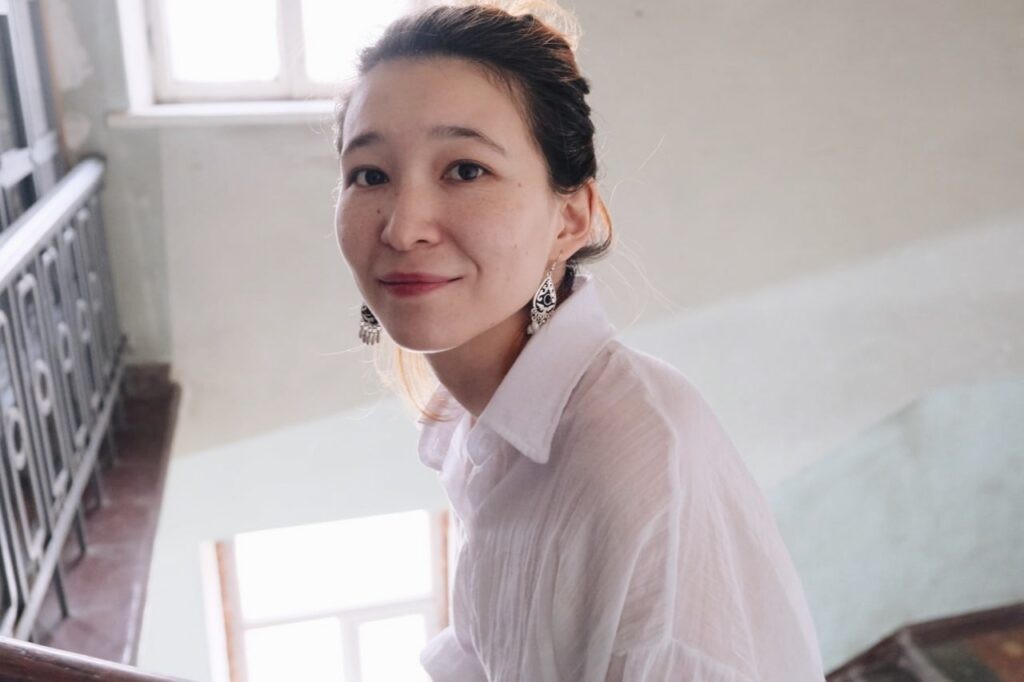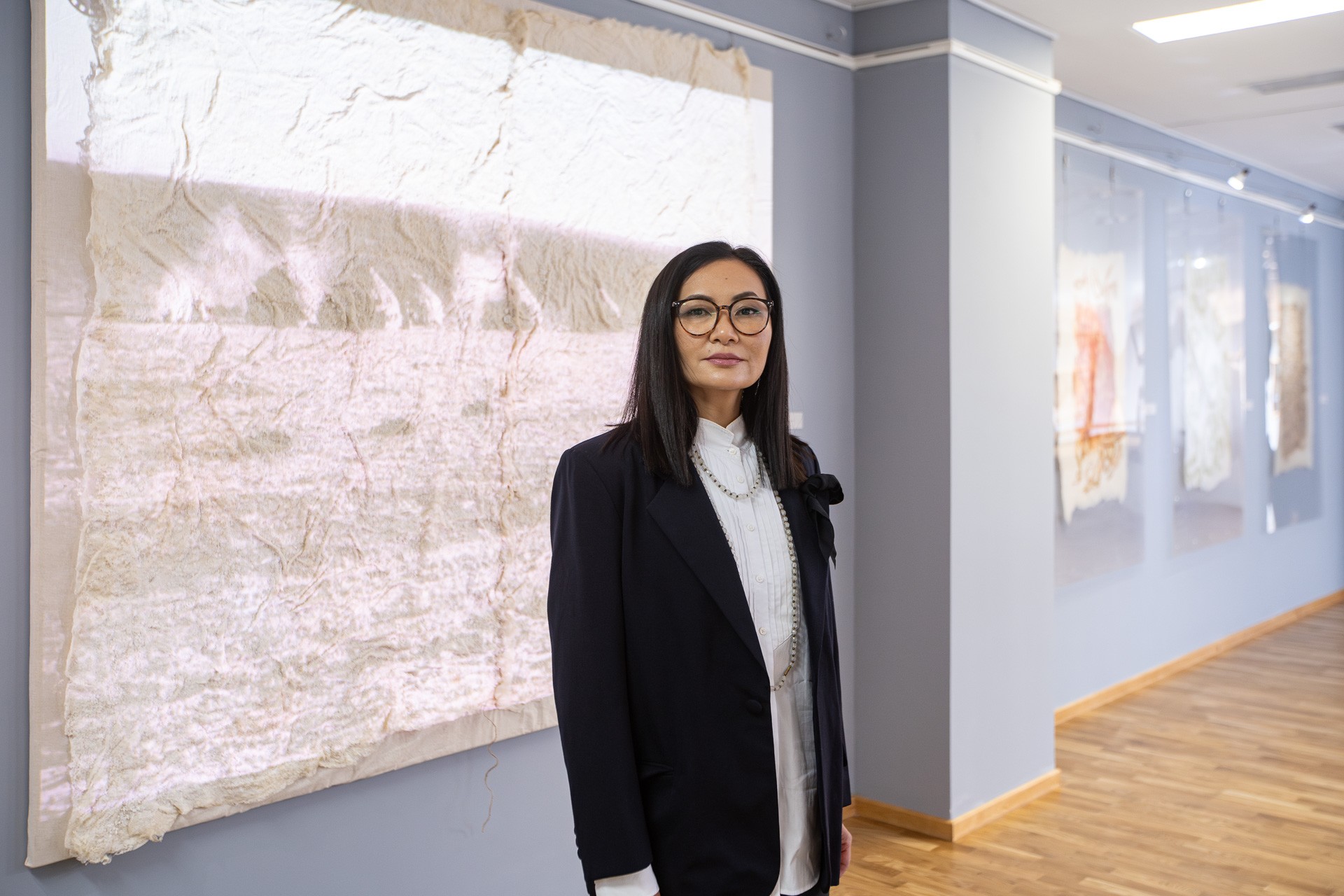
On July 24, Almaty’s Kasteyev Museum of Arts hosted the opening of Gauhar Bisengalieva’s solo exhibition, Matter of Memory. The artist, who works under the name Arukhan, recently returned from Italy, where her solo exhibition, The Spirit of the Steppe, was presented at the historic Palazzo Marchesale, in Italy’s southern Apulia region.
Her new project at the Kasteyev Museum continues her exploration of memory. Working with felt, steppe grasses, and other organic materials, Arukhan’s work explores the processes of time and the transformation of matter.
In an interview with The Times of Central Asia, Gauhar Bisengaliyeva discusses her artistic practice and the ideas behind Matter of Memory.
TCA: The title of the exhibition is Matter of Memory. What does the idea of memory as matter mean to you? At what point did memory cease to be an abstract concept for you and become an artistic medium?
Gauhar Bisengaliyeva: For me, Matter of Memory is a space that I create, a space for reflection.
Felt is the foundation of my artistic language. For me, felt is a material that preserves the memory of the steppe. It embodies the energy of the earth, the wisdom of generations, and humanity’s connection to nature. Through it, I feel my roots.
For me, the steppe is not an image of the past, but a living force that nourishes me, allows me to grow, and determines the direction of my creativity.
That is why my works are neither a return to the past nor an attempt to preserve it. I am interested in memory as a living substance that continues to act in the present and becomes a source of the future.
That is why Matter of Memory is not an exhibition about the past. It is a space where memory becomes a living matter, capable of nourishing a person, bringing them back to their roots, and revealing new meanings.
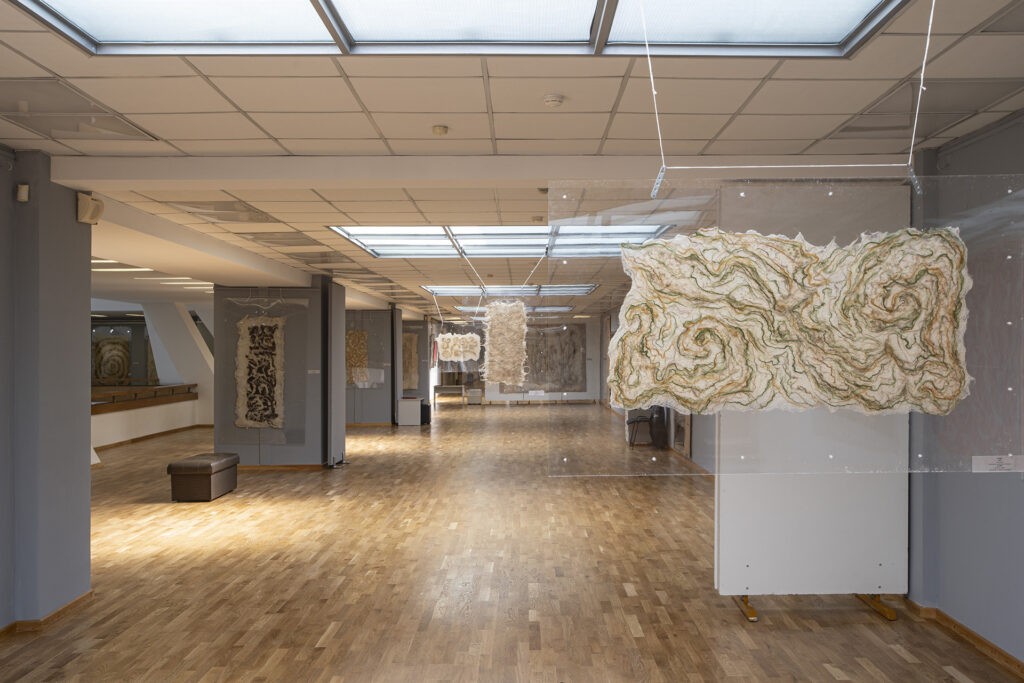
Photo: Theo Frost
TCA: In your works, you use felt, steppe grasses, and other organic materials. Why have these particular materials become your primary means of expression?
Gauhar Bisengaliyeva: I work with natural materials, each of which goes through its own life cycle and therefore possesses its own memory. Felt, steppe grasses, wool, plants – they have already lived their lives, absorbing time, light, wind, and earth.
Working with time holds a special place in my practice. Using my own innovative methods of processing wool, I explore how time can manifest itself in the material. For me, time cannot be seen directly, but it can be felt through changes in texture, light, structure, and the very state of the felt.
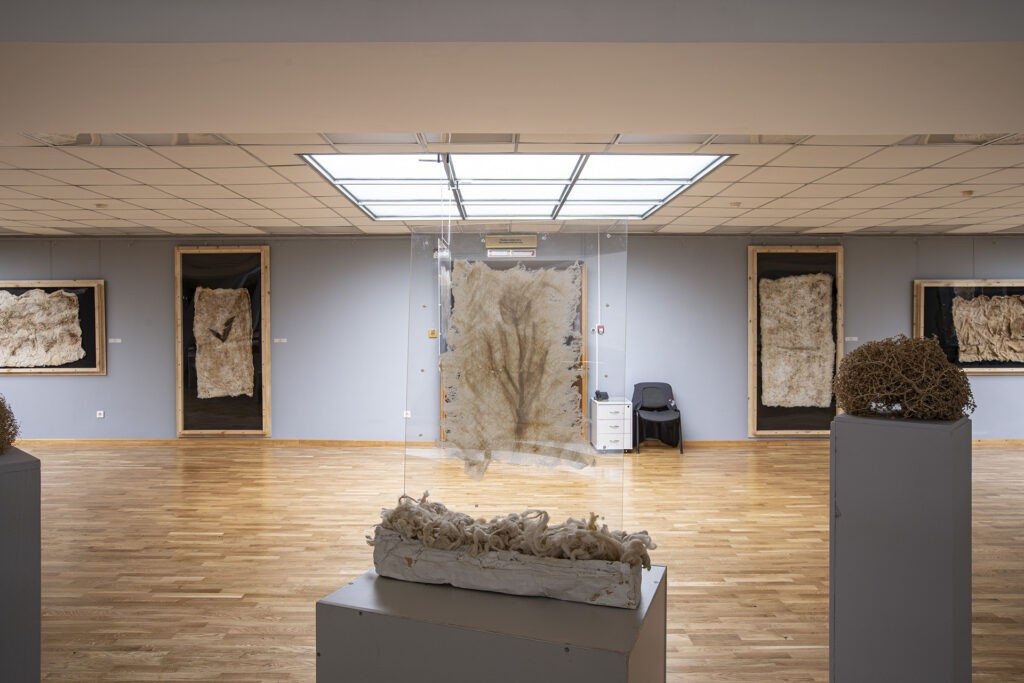
Photo: Theo Frost
TCA: You have been collaborating with the State Archive of Film, Photo, and Audio Documents of Kazakhstan for many years. How does working with archives influence your art?
Gauhar Bisengaliyeva: It all began with my family archive. Later, this personal story led me to collaborate with the State Archive of Film, Photographic, and Audio Documents of Kazakhstan. For me, an archive is not merely a collection of documents, but a space for research, immersion, and discovery. It is within this space that many of my works were born.
Working with archives has become one of the most important aspects of my creative practice. I am interested not only in the documents themselves, but also in what lies between them: people’s lives, lost connections, and the silence of time. Archives help me see how personal memory becomes collective and then takes on a new life in art.
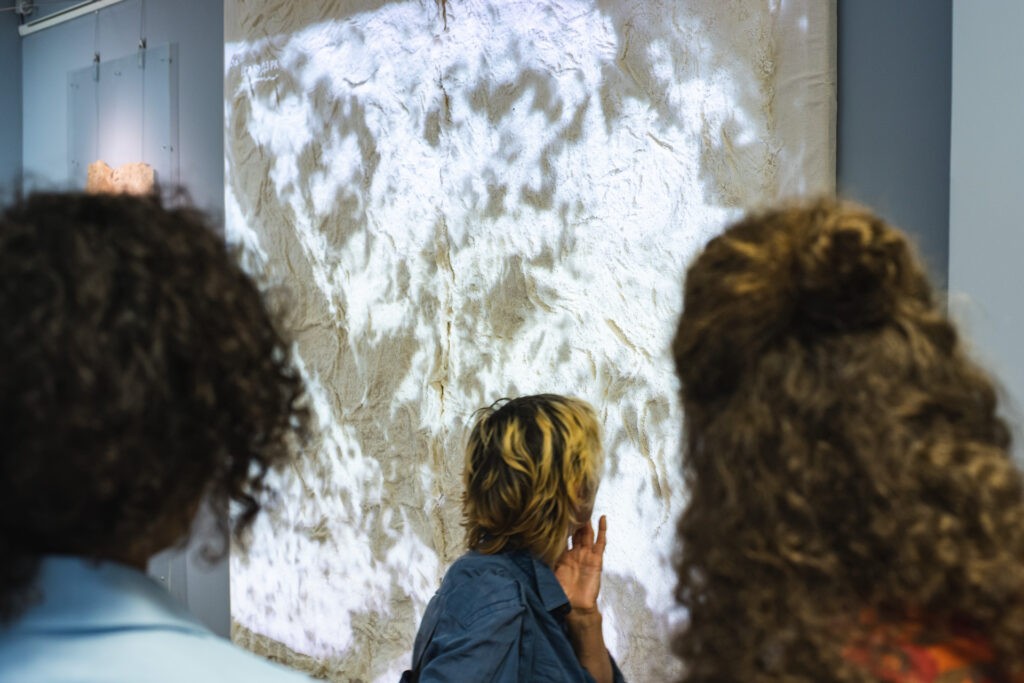
Photo: Theo Frost
TCA: You recently presented the project The Spirit of the Steppe in Italy, and now you’re opening an exhibition at the Kasteev Museum. Do you notice a difference in how international and Kazakhstani audiences perceive your work?
Gauhar Bisengaliyeva: In Italy, I presented the project The Spirit of the Steppe, which focused on conveying the spirit, energy, and philosophy of the steppe. The exhibition Matter of Memory at the Kasteev Museum continues this exploration, but this time through the themes of memory and time.
Of course, viewers perceive the works differently. In Kazakhstan, many recognize a part of their own culture and personal memory in the felt and steppe grasses. An international audience may not always be familiar with this cultural context, but they have a very subtle sense of the power of the material, the light, the silence, and the emotional presence.
It was important for me to see that, despite our different experiences, my work resonates in both places. This confirms that the language of natural materials, memory, and connection to the earth can be understood without translation.
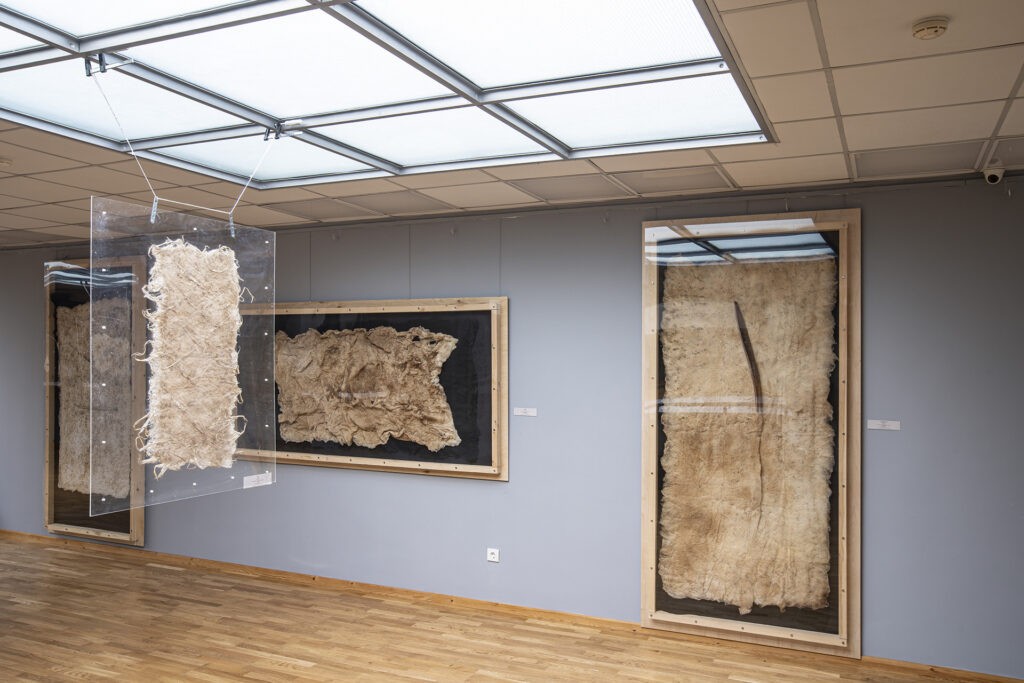
Photo: Theo Frost
TCA: Your works speak not only to personal memory but also to collective memory. In your opinion, what role can contemporary art play in preserving Kazakhstan’s cultural heritage?
Gauhar Bisengaliyeva: I believe that contemporary art can be one way to carefully preserve and pass on our cultural heritage. For me, traditions are the foundation. I have great respect for them and see them as a living source that continues to inspire artists.
It is precisely through respect for traditions that we gain the ability to speak about them in a contemporary language without losing their depth and meaning. It is precisely in this continuity that I see the value of art.
TCA: Your work often asks viewers to slow down and notice traces that would otherwise go unseen. In a culture increasingly shaped by speed and digital consumption, do you see your practice as a form of resistance?
Gauhar Bisengaliyeva: I view my artistic practice a little differently. For me, it is first and foremost a space of silence and memory.
It’s important to me to create a space where the viewer can slow down, immerse themselves in silence, and be alone with their feelings and memories. It is in silence, I believe, that new meanings are born.
When I work with felt and natural materials, I let them speak for themselves. They already hold the memory of time, the earth, and humanity. My task is to create a space where this memory becomes tangible, and where the viewer can have their own inner experience.
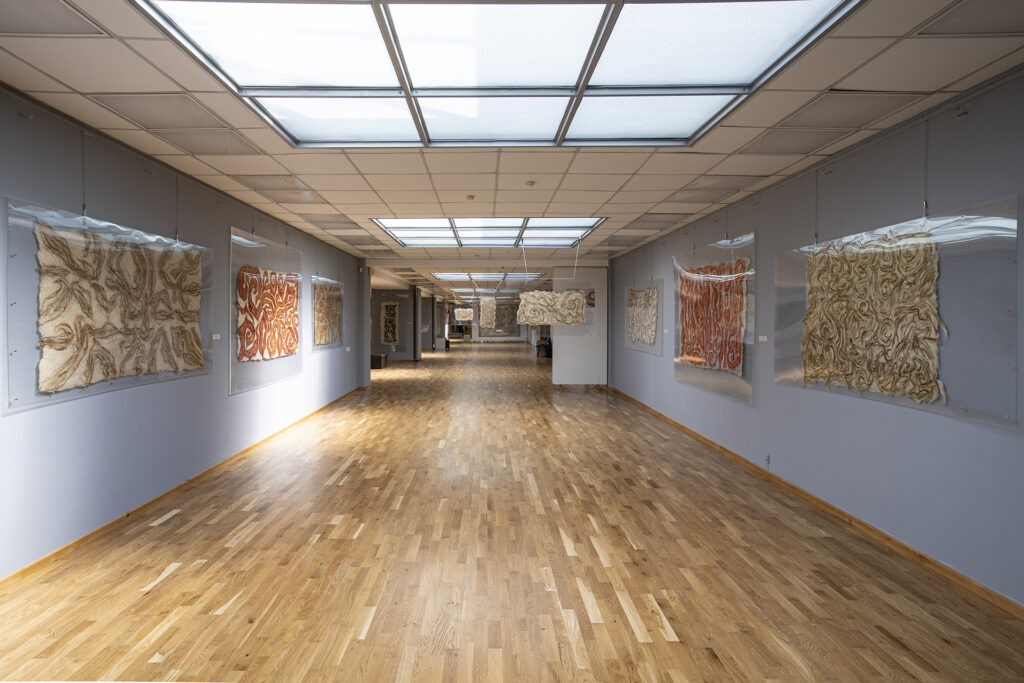
Photo: Theo Frost
TCA: Many artists use archives to preserve the past, but your work seems equally interested in what is forgotten or allowed to disappear. Do you think forgetting can be as meaningful as remembering?
Gauhar Bisengaliyeva: Yes. Forgetting is just as important as remembering. We can’t hold on to everything, but that doesn’t mean the meaning disappears. Sometimes it’s precisely what’s been lost that compels us to search, feel, and remember more deeply.
I’m interested not only in the stories that have been preserved, but also in what remains between them: the traces of time, silence, and absence. It is precisely in this space that new meanings are born. That’s probably why my work isn’t so much about preserving the past as it is about trying to sense what continues to live on, even when it can no longer be seen.
TCA: This exhibition was developed in collaboration with curator Akzharkyn Kumarbayeva. How did your dialogue shape the final concept of Matter of Memory? Were there ideas that emerged through your conversations that weren’t part of the project initially?
Gauhar Bisengaliyeva: We met Akzharkyn Kumarbayeva during my first solo exhibition at the Kasteev Museum in 2024, where she was the curator. This is already our second collaborative project, so she is very familiar with my work and understands it well.
The theme of memory has been with me from the very beginning of my artistic journey: starting with my choice of the artist name Arukhan in memory of my grandmother. During our meetings and discussions, Akzharkyn suggested the title, and I immediately sensed how accurately it reflects my artistic journey.
I think the most valuable aspect of our collaboration is our shared vision. Akzharkyn was able to accurately grasp the inner logic of my creative process and identify the thread that has run through my work from the very beginning. Thanks to this, our collaboration has become a full-fledged creative dialogue. She has woven the meanings already present in my works into a cohesive curatorial statement.
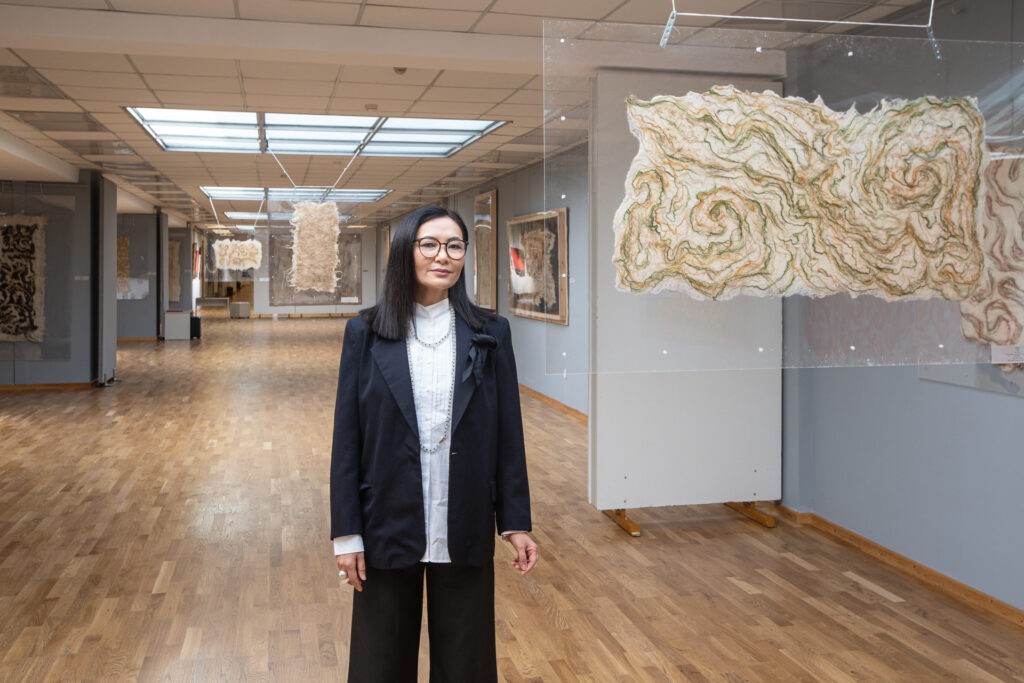
Photo: Theo Frost
TCA: You adopted the name Arukhan in honor of your grandmother. How has her influence continued to shape not only your work, but also the artist you’ve become?
Gauhar Bisengaliyeva: When I chose the name Aruhan, it was an act of deep love and respect for my grandmother. She was a woman of deep meaning, and it was probably then that memory first became part of my own identity.
Her influence lives on not only in my work but also in how I understand art. Love for my homeland, respect for nature, for the traditions of felt-making, and for manual labor – all of this has become the foundation of my artistic worldview. For me, wool is not just a material, but a sacred substance that preserves memory.
Over time, I came to realize that memory is not only what we carefully preserve, but also what we pass on. Having become a grandmother myself, I felt this connection between generations particularly keenly. I want to pass on to my granddaughter the same love for our homeland, for nature, and for traditions that my grandmother once passed on to me.
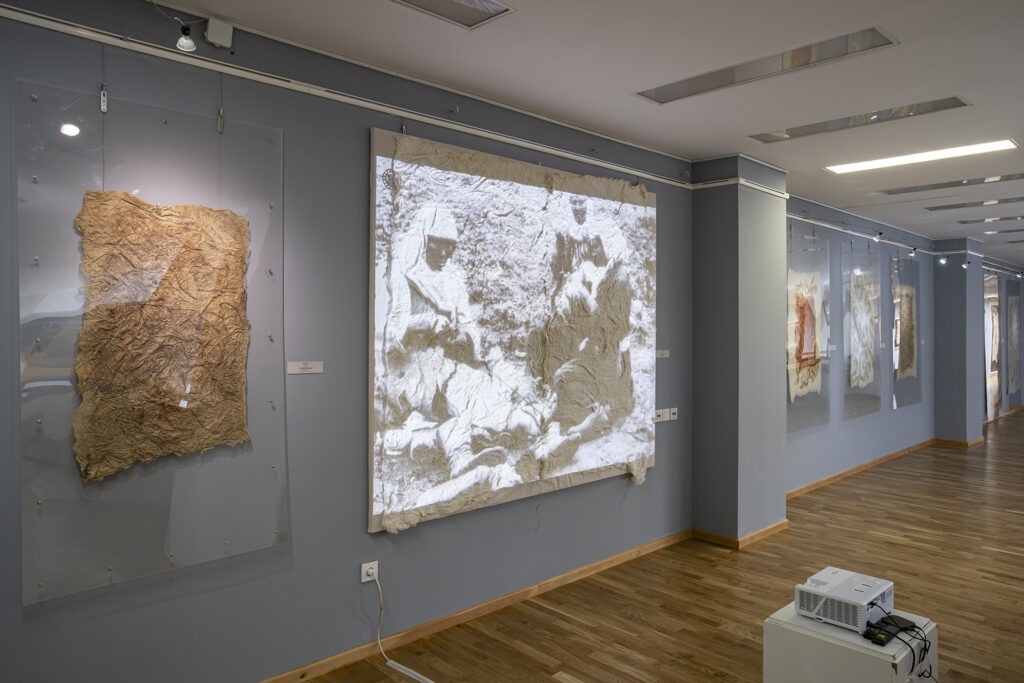
Photo: Theo Frost
TCA: Your grandmother seems to be at the heart of both your artistic identity and your practice. Is there a lesson, memory, or value she passed on that you find yourself returning to whenever you create?
Gauhar Bisengaliyeva: The most vivid memory I carry with me is of my grandmother’s hands, framed by wool. Every time I start working with felt, I see those hands again. For me, it’s a living connection that doesn’t fade with time.
As I work with wool, I continue our silent dialogue. It seems to me that memory lives on as long as we are able to continue this inner dialogue. Perhaps that is why each of my works is not a conclusion, but rather a new encounter with memory, with the material, and with that love that continues to live on, passing from generation to generation.