After decades of delays, the TAPI gas pipeline has moved closer than ever to actual gas sales – but first to the smallest of its intended markets. Turkmenistan is preparing to supply gas to Afghanistan’s Herat province, while the timeline for extending the pipeline to Pakistan and India remains uncertain.
On August 10, state-owned Turkmengaz and Afghan Gas signed a memorandum covering the purchase of gas through TAPI. The document does not itself set a price or supply volume, but it brings closer the prospect that Afghanistan could become the first TAPI customer actually to receive gas.
Afghanistan was already part of TAPI’s original customer base. Afghan Gas and Turkmengaz signed a gas sale-and-purchase agreement in 2013. What has changed is that the pipeline is now approaching a market it can physically serve.
On August 27, Herat Governor Islam Jar said the local section of TAPI was expected to be commissioned within two months. Turkmenistan has not announced an equally specific date for the start of commercial gas supplies.
TAPI was conceived as an approximately 1,800-kilometer pipeline running from Turkmenistan’s giant Galkynysh gas field through Afghanistan and Pakistan to the Indian border. Its planned capacity is 33 billion cubic meters of gas a year. At full capacity, Pakistan and India are each allocated 14 billion cubic meters of gas a year, while Afghanistan is allocated 5 billion.
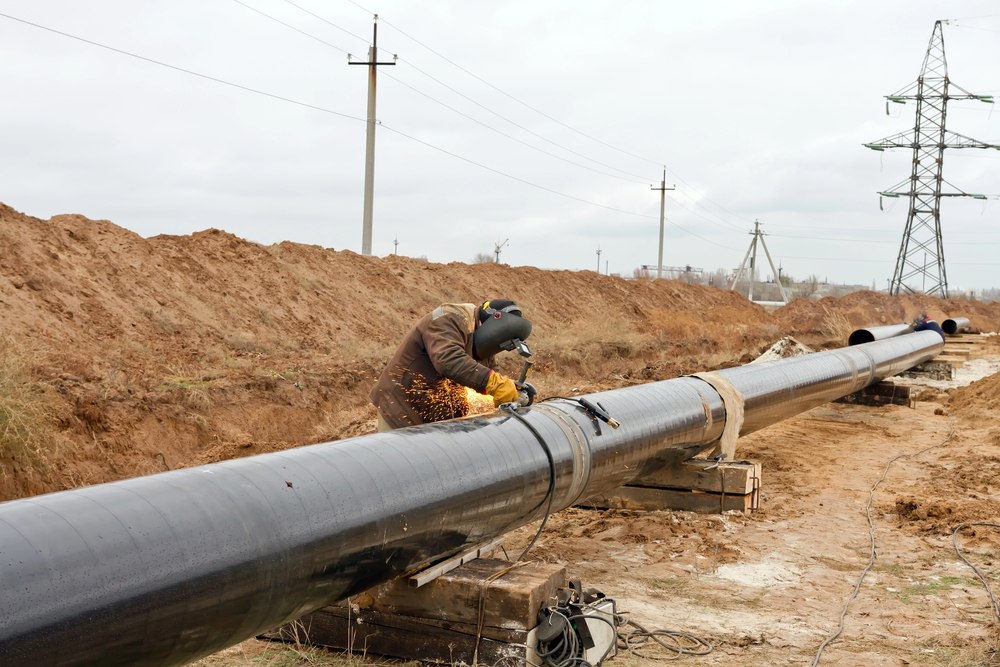
But after decades of planning, the pipeline has still not reached its principal intended customers. Construction of the 153-kilometer section from the Turkmen border toward Herat began in September 2024. Earlier this year, Turkmenistan said it expected to complete the section by the end of 2026, but no timetable has been announced for extending the pipeline farther south.
According to the Afghan side, 116 kilometers of pipeline had been laid by early August.
The August agreement also envisages the infrastructure needed to use the gas locally. Turkmen and Afghan officials have agreed to develop infrastructure in Herat to supply gas to industrial facilities, power plants, and households.
The volumes involved would be modest compared with the roughly 30 billion cubic meters of gas Turkmenistan exports to China each year. But even limited sales through TAPI would give Ashgabat another export outlet. In February, Turkmenistan’s still-influential former president Gurbanguly Berdimuhamedov described diversification of gas exports as one of the country’s main priorities.
For TAPI itself, however, the first gas sales could matter even if the volumes are modest. Writing for The Times of Central Asia, Central Asia analyst Bruce Pannier noted that amid strained relations between Afghanistan and Pakistan, as well as between Pakistan and India, completion of the entire TAPI pipeline remains a distant prospect. He argued that supplying Herat alone could demonstrate to potential investors that the pipeline actually works.
The memorandum signed on August 10 has offered little clarity on price, volumes and start dates. Afghanistan has separately proposed negotiating a long-term contract and pricing formula, while the gas distribution network in Herat still needs to be developed.
The governor’s statement that the Herat section of TAPI could be operational within two months therefore does not necessarily mean that commercial deliveries to end users will begin at the same time. The trunk pipeline section must first be completed, commercial terms agreed, and local distribution infrastructure prepared.
TAPI may therefore begin operating long before it becomes the four-country pipeline originally envisaged. After decades of delays, its first functioning section could effectively be a Turkmenistan-Afghanistan pipeline serving Herat.