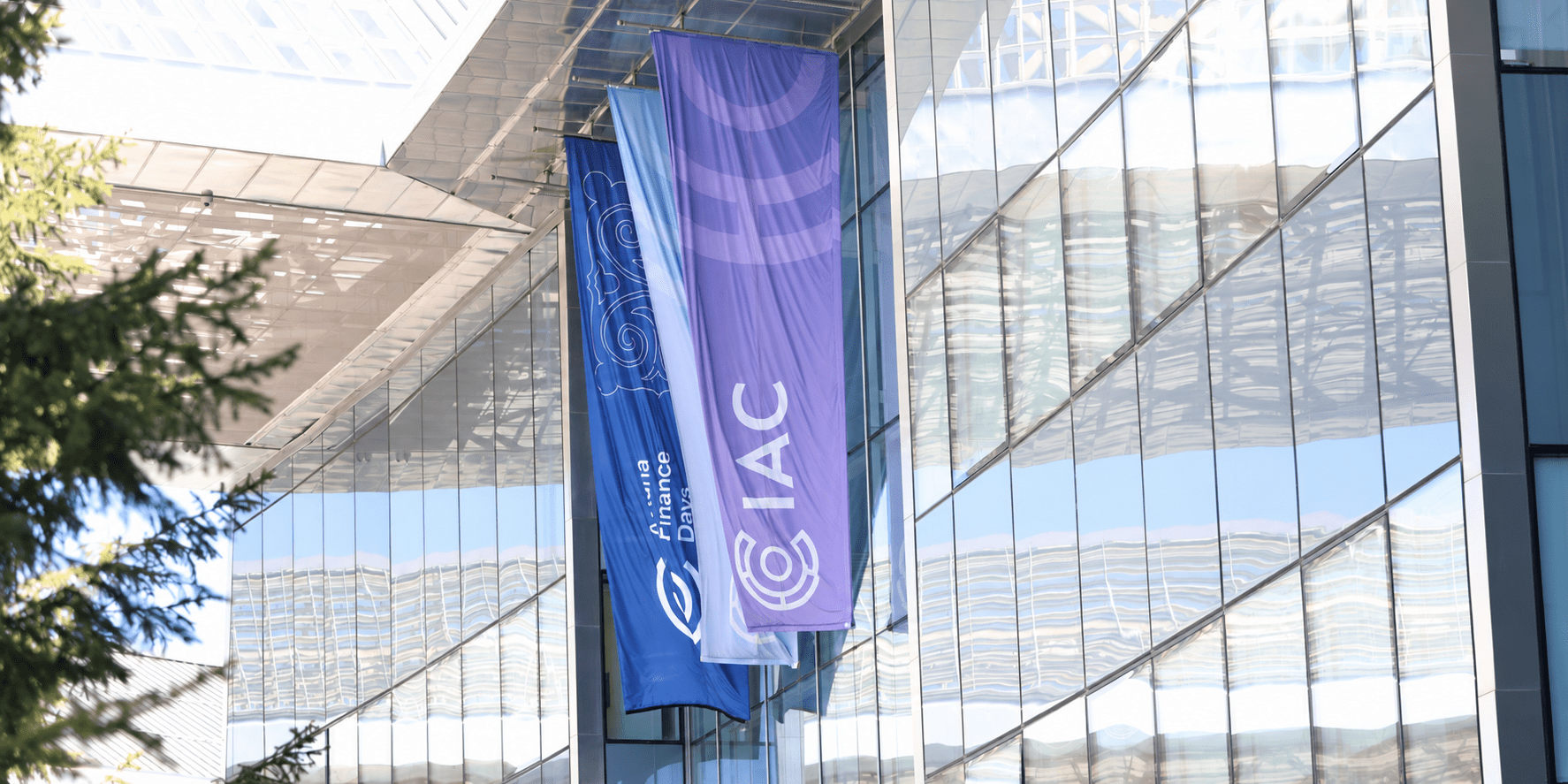
On the second day of Astana Finance Days, Kazakhstan was trying to answer the question that follows almost every discussion about new railways, power plants, data centers, and factories: where will the money come from? International banks, asset managers, and stock exchanges gathered in Astana, and the conversation quickly reached a point – foreign capital is interested in the country, but its domestic stock market remains too small for many large investors.
From Transit to Transactions
The title of the first major discussion of the second day – “From Transit to Transactions” – neatly captured the idea.
Kazakhstan already earns money from its position between China and Europe and is investing billions in railways, ports, and energy infrastructure. Now Astana wants financial transactions to move alongside the freight, and some of that capital to remain in the country.
The Astana International Financial Centre (AIFC), where the forum is being held, was created partly for that purpose. It is a separate financial jurisdiction within Kazakhstan, with its own regulator, court, and legal framework based on the principles of English common law. According to the center, by June 2026 its platform had helped attract $25.3 billion in investment to Kazakhstan, while the number of registered companies had exceeded 5,800.
But the presence of international companies does not necessarily mean they are ready to invest.
Jad Ellawn, Managing Partner for the Middle East at Brookfield, one of the world’s largest alternative asset managers, began with three conditions.
“The fundamental principles for an investor looking to enter a country consist of three components. First is having the proper legislation. Second is respect for capital: a country needs to demonstrate that capital is important to it not only domestically, but beyond its borders. Third is scalability,” he said. “In addition to energy resources, Kazakhstan has many other natural resources, and your country is the ninth-largest country in the world. This means you have many potential industries that you could develop, unlike the Gulf.”
Yilmaz Kocagoz of Goldman Sachs, one of the largest U.S. investment banks, looked at Kazakhstan through the lens of manufacturing and infrastructure.
“For Kazakhstan to diversify its economy beyond commodities, it needs to develop manufacturing and infrastructure,” he said.
Kocagoz also pointed to Kazakhstan’s relatively low government debt burden. For an investor, that means a smaller share of the country’s future revenues is already committed to servicing a large public debt.
Nurlan Zhakupov, the CEO of Kazakhstan’s sovereign wealth fund Samruk-Kazyna, put a price tag on the country’s investment program: more than 100 projects worth $105 billion.
“We see demand from local businesses and enormous interest from foreign partners. We are also seeing growing consumption of electricity and natural gas, as well as demand for the transportation of electricity, oil, gas, and petroleum products,” Zhakupov said.
He ended with an invitation: “Overall, Kazakhstan currently has a good business climate, and now is a good time to enter the Kazakh economy.”
The next discussion in the same building helped explain why that does not always happen.
International Capital Is Available. Stocks Are Scarce
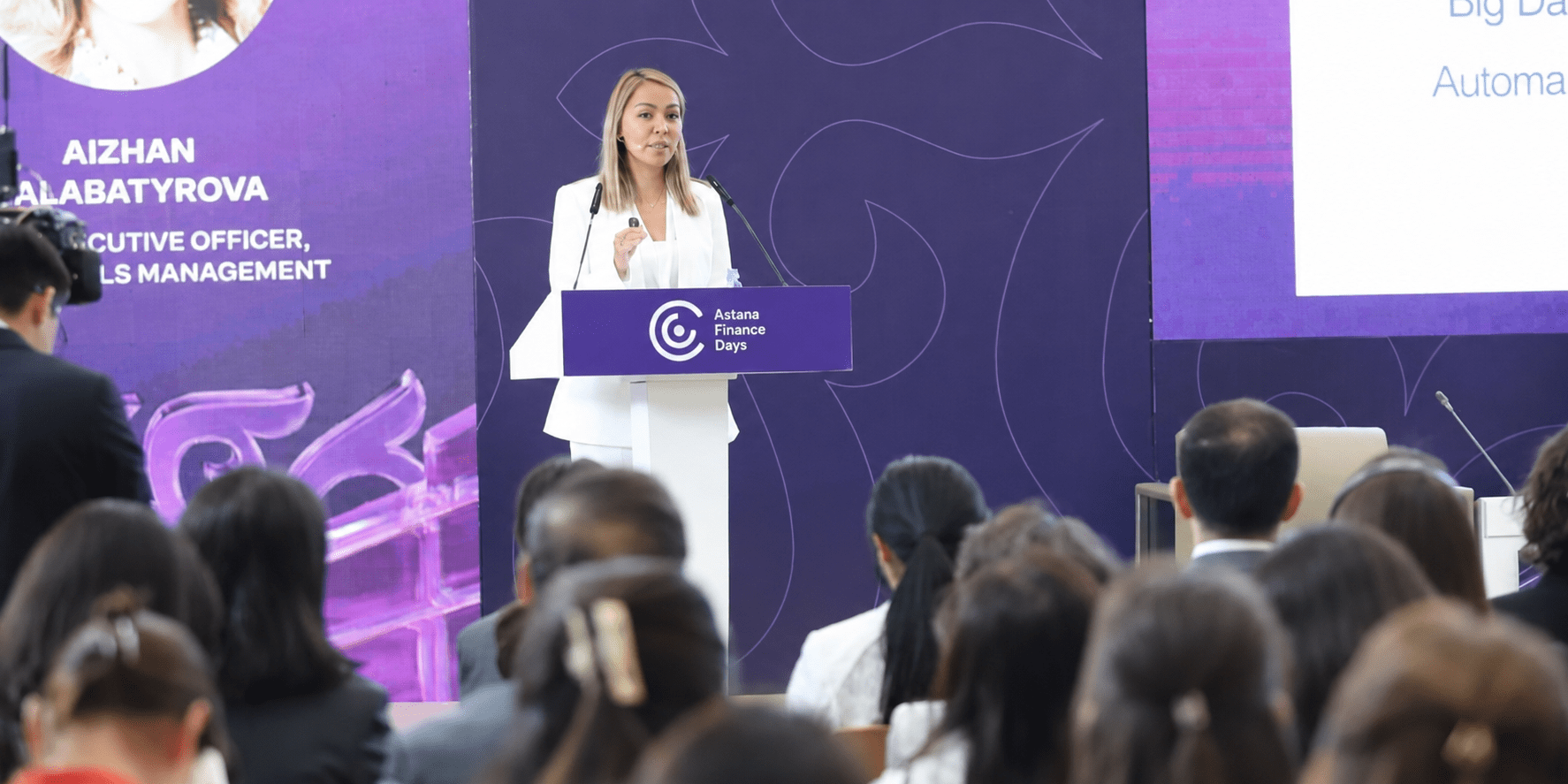
In the AIX Trading Hall, the conversation shifted from investment projects to Kazakhstan’s capital market itself.
The Astana International Exchange (AIX) is the AIFC’s stock exchange, where companies and public-sector entities issue shares and bonds. By mid-2026, securities from nearly 200 issuers were traded on the exchange, while around $15 billion had been raised through AIX since its launch.
David Sol represented FTSE Russell, one of the world’s leading providers of stock market indexes. Its classifications are used by international asset managers, meaning that the category assigned to a country can affect which investment funds are willing or able to invest there.
Kazakhstan is currently classified as a frontier market – a category generally used for smaller capital markets with fewer investable companies and relatively limited trading volumes.
It is the only country in Central Asia or the South Caucasus included in either MSCI’s or FTSE Russell’s equity-market classifications, with both placing it in the frontier category. Kazakhstan also meets FTSE Russell’s qualitative criteria for Secondary Emerging Market status.
The next step is emerging-market status.
“Kazakhstan is currently classified as a frontier market. What Kazakhstan is missing right now to move to the next level is liquidity. We do not see sufficient volumes, and market capitalization remains relatively small,” Sol said.
Liquidity is the ability to buy or sell a large block of securities quickly without significantly moving the price. For a small investor, the difference may barely be noticeable. For a fund managing billions of dollars, it is critical.
“This is important for international asset managers, for banks, for advisers who either track indexes as passive investors or use an index to improve their performance,” Sol explained. “If you want to move to emerging-market status, then you need to attract a completely different investor base.”
Kazakhstan’s figures look better than they did several years ago. Elena Bakhmutova, Chair of the Council of the Association of Financiers of Kazakhstan, said the total value of listed shares had more than doubled in four years. Foreign investors have also become more active buyers of government securities.
But she returned to the same obstacle: “The turnover ratio for shares and bonds is not particularly high. Liquidity still leaves much to be desired.”
Why Businesses Stay Behind Closed Doors
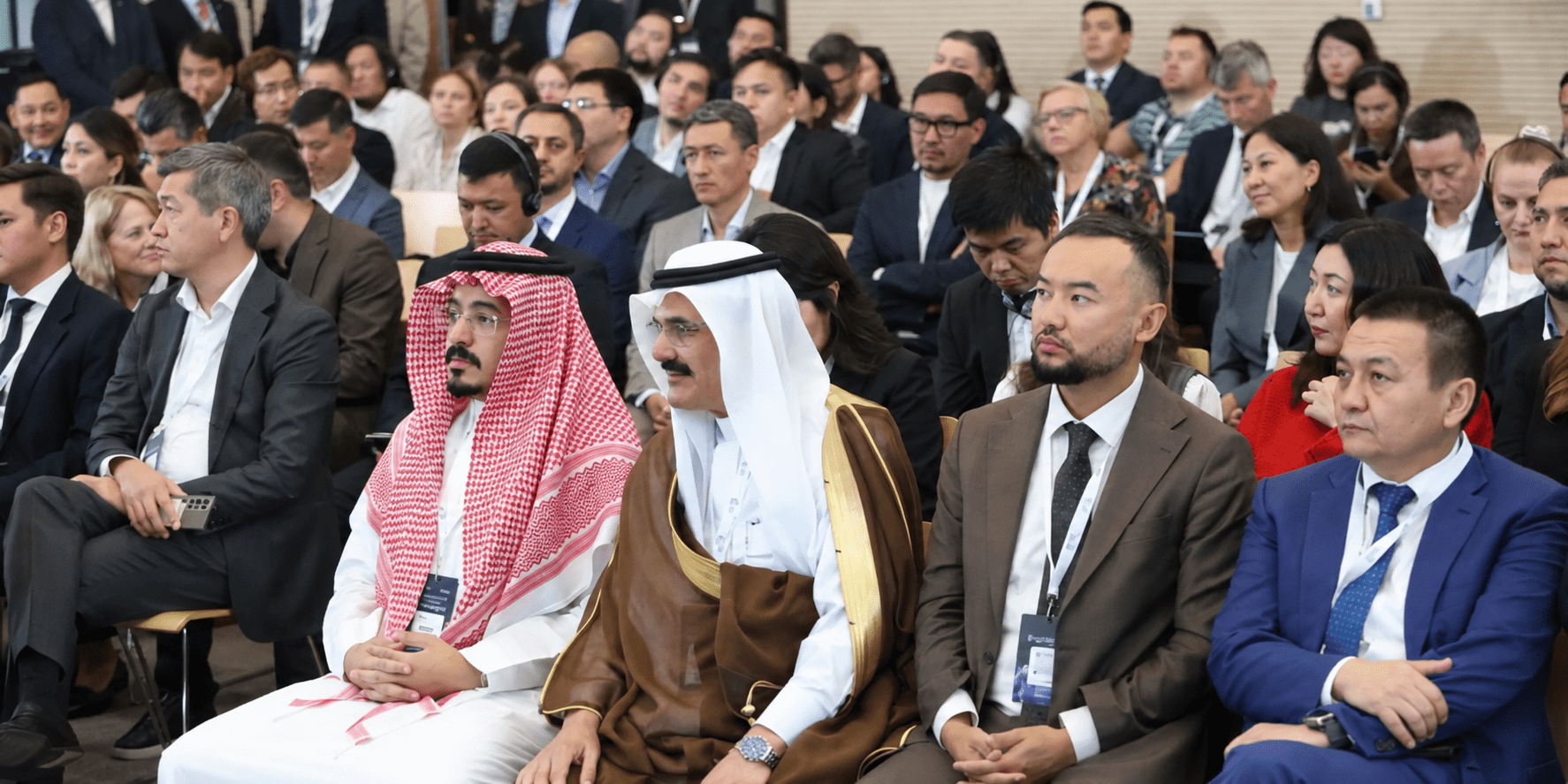
A little later, the people who bring companies to the market every day took the floor. Talgat Salikhov, head of Kazakhstan-based investment bank Teniz Capital, does not believe the country lacks businesses large enough to list.
“Kazakhstan has enough medium-sized and large companies that could easily enter the equity market. The issue is different: owners do not want publicity, and they do not want transparency,” he said. “There are several reasons for this. Some do not want to lose control, while others cannot agree with the market on price.”
Going public means disclosing financial statements, accepting new shareholders, and regularly explaining corporate decisions to the market. For many Kazakh business owners, the benefits are still not compelling enough.
“The fundamental reason is that, today, the economics of remaining closed provide advantages. There are not enough incentives for businesses to open up,” Salikhov said.
One option under discussion is to link tax incentives to free float – the proportion of a company’s shares that is actually available for public trading.
Salikhov pointed to Saudi Arabia: “The Saudi Exchange tells its participants directly that if they want preferences in major government procurement, they need to enter the equity market. If you want higher limits in subsidized government financing – enter the equity market. These are effective measures that are already working in other countries.”
Sergey Lukyanov of Freedom Finance argued that Kazakhstan does not necessarily have to wait for international index providers to move it into the next category. According to his figures, trading in shares and other equity instruments on AIX and the Kazakhstan Stock Exchange (KASE), the country’s two main exchanges, amounted to around $1.5 billion in 2025.
“There is another way – developing the market using our own resources,” Lukyanov said.
One potential source is pension savings. Roman Lokhov of European investment firm Roemer Capital argued that placing part of these assets under private management could bring investors into the market that are more willing to buy equities and corporate bonds.
Chinese Capital Is Already Taking Another Route
After the discussion about investors, attention in the AIX Trading Hall turned to China.
Representatives of AIX, the Shanghai Stock Exchange, Hong Kong Exchanges and Clearing – the operator of the Hong Kong stock exchange – and CICC, one of China’s largest investment banks, appeared on the same stage.
Here, the discussion was no longer about whether Chinese capital would come to Kazakhstan, but about which financial instruments could be used to attract it.
Kazakh borrowers have begun tapping Chinese markets directly. At the center of the discussion were Panda bonds – yuan-denominated bonds issued by foreign companies and governments in mainland China – and Dim Sum bonds, yuan-denominated securities issued outside mainland China, particularly in Hong Kong.
The connection is no longer theoretical. Kazakh issuers are using AIX, Hong Kong, and China’s interbank market to raise capital. The exchanges are now discussing how to make such placements more regular and facilitate investor access between the markets.
That brought the forum back to the morning discussion about transforming Kazakhstan from a route between East and West into a place where the transactions themselves are structured.
The same idea was then applied to individual industries.
The Aircraft Stays in the Sky, the Deal Comes to Astana
In Al Farabi Hall, bankers and stock indexes gave way to airlines, airports, and aircraft owners.
Ibrahim Canliel, CEO of Air Astana Group, explained the market’s appeal through geography. Air Astana Group comprises Kazakhstan’s largest airline, Air Astana, and its low-cost carrier FlyArystan.
“Geographic location is our major advantage over competitors in the industry. Our company is the leader in Central Asia and the Caucasus in terms of transportation. Capacity in these regions has tripled in recent years. That is why we now see even greater potential in transit markets and cooperation with the Caucasus, Europe, India, and China.”
More traffic means more aircraft. Airlines do not necessarily have to buy them outright: a large share of the global commercial fleet belongs to specialized leasing companies that rent aircraft to carriers under long-term agreements.
At the forum, participants announced a transaction for Kazakhstan’s cargo airline Jupiter Jet with a U.S. lessor. The AIFC helped structure the terms and negotiations.
For the financial center, the significance goes beyond a single aircraft. Astana wants to build a platform through which aircraft financing and leasing transactions can be structured for the wider region.
At the same roundtable, the AIFC presented its first report on aviation finance in Central Asia and the Caucasus and signed an agreement with the Development Bank of Kazakhstan on SAF projects – sustainable aviation fuel, a lower-carbon alternative to conventional jet fuel.
From Aircraft to Songs
After the aviation discussion, the logic of the forum’s second day became clearer.
The AIFC is trying to create markets in areas where Kazakhstan previously had few established mechanisms for attracting private capital.
In the technology hall, Nurkhat Kushimov, General Manager of Binance Kazakhstan, said that for some younger customers, crypto assets are becoming their first introduction to finance.
“Historically, a customer would first enter traditional finance and only later discover crypto assets. We are now seeing the opposite trend: for a new generation of users, crypto is increasingly becoming the first point of entry into the financial system,” he said.
The discussion then moved on to payments made by AI-based software.
Jianbin Huang, founder of CodeCoin, suggested that such programs could eventually select services and pay for them on a user’s behalf. For banks, this creates a new question: how can they establish who gave the software permission to spend the money?
“For this, reliable digital identification is essential – without it, full participation in the digital financial environment is impossible,” Huang said.
A few halls away, music itself was becoming an investment asset.
The AIFC Tech Hub and Kazakhstan’s ōzen agreed to develop a platform for tokenizing music royalties – future payments to authors and rights holders when their work is streamed or otherwise used.
The idea is straightforward: part of the future income from a song can be divided into digital units and sold to investors. The creator receives money earlier; the investor receives a claim on a share of future revenue.
At Creative Pitch Day, 19 projects from more than 100 applications in film, music, gaming, and digital content made it to meetings with investors.
Putting a Price on Carbon
Toward the end of the forum, another market appeared on AIX itself.
The exchange is launching trading in carbon credits issued under the international Verified Carbon Standard.
One Verified Carbon Unit represents one metric ton of greenhouse gas emissions reduced or removed, measured in carbon dioxide equivalent. A project that achieves and verifies such reductions can generate credits that can then be purchased and retired by businesses seeking to offset part of their emissions.
AIX’s carbon platform has been operating since 2025 and already works with renewable energy certificates. It is now adding exchange-based trading in internationally recognized carbon credits.
The AIFC is also developing a framework for financing water infrastructure.
Together with international organizations, the AIFC is developing Kazakhstan’s first “blue” taxonomy – a classification system defining projects related to water security. Guidelines for blue bonds are expected to follow, providing a framework through which private investors could finance water supply, wastewater treatment, and modernization of water infrastructure.
By evening, it was easier to understand why Chinese bonds, aircraft, cryptocurrencies, music, water, and carbon had all ended up on the agenda of a single financial forum.
Astana is trying to do the same thing with very different assets: create rules, build a marketplace and a financial instrument, and then bring investors to them.
Behind all of it was the same attempt: to turn things that were once difficult to sell to investors into financial assets they can understand.
For more on our special coverage of Astana Finance Days, click here.