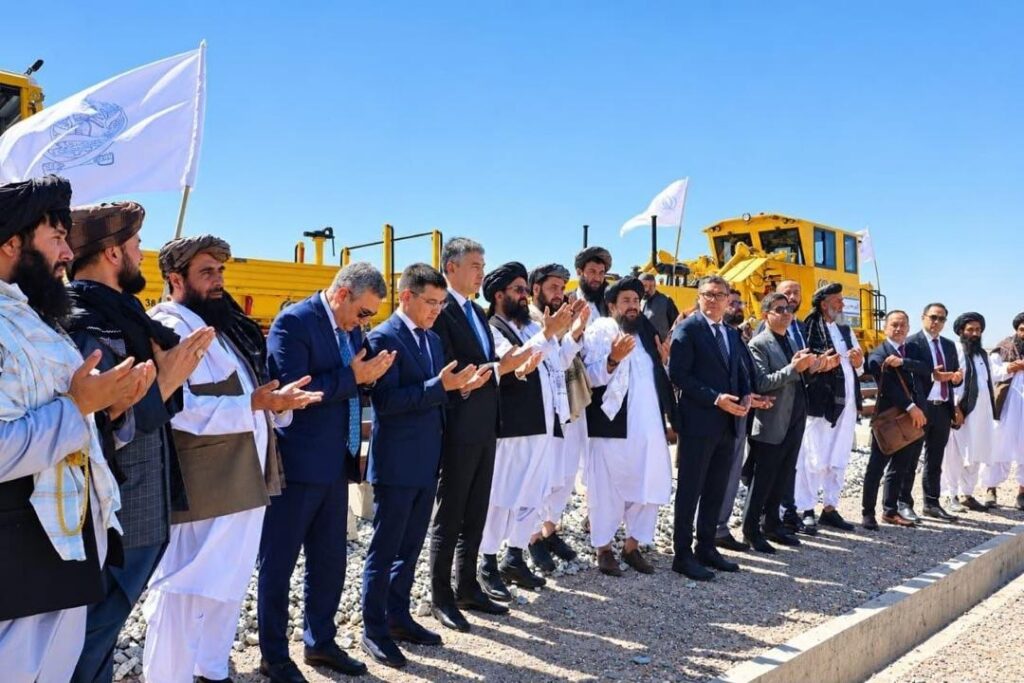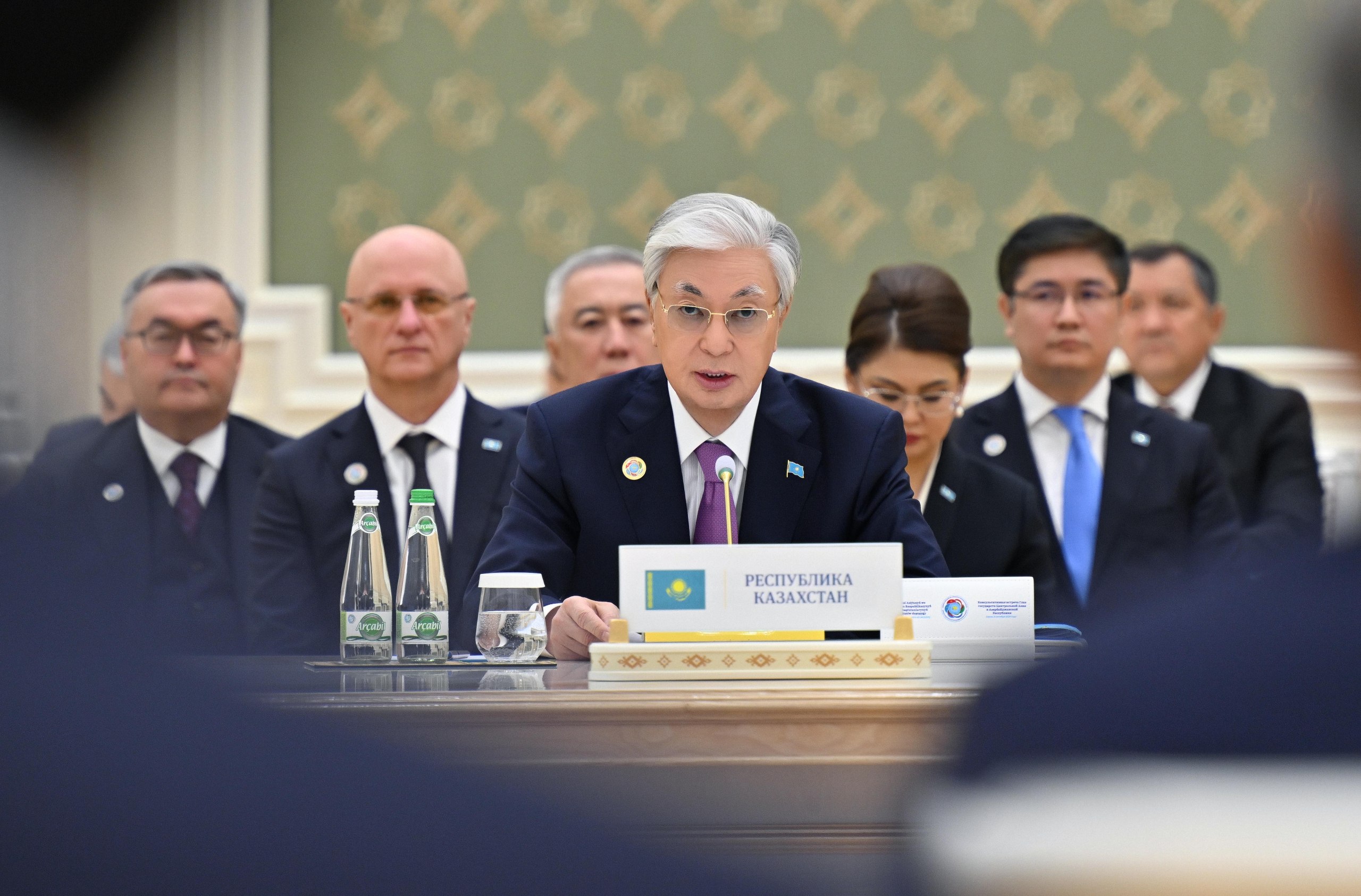
The leaders of Central Asia and Azerbaijan met in Turkmenistan on October 8, with expanding trade between their countries high on the agenda. Kazakhstan’s President Kassym-Jomart Tokayev called for trade among the six countries to rise to at least $20 billion, up from approximately $13 billion in 2025.
The eighth Consultative Meeting of the Heads of State of Central Asia and Azerbaijan was held in the resort of Avaza, with Azerbaijan participating as a full member of the grouping for the first time. According to Tokayev, trade between the six countries accounted for just 8% of their combined trade turnover last year. He proposed that governments develop a joint action plan to increase that share.
Other leaders put forward proposals for closer economic ties. Uzbekistan’s President Shavkat Mirziyoyev called for greater cooperation in manufacturing and a Central Asia-Azerbaijan Business Forum in 2027, while Kyrgyzstan’s President Sadyr Japarov proposed creating a shared e-commerce platform to make regional products more accessible.
One problem is the insufficient integration of national markets. Even where countries share a border, trade is hampered by logistical constraints and differences in business operating conditions. Tokayev proposed bringing existing and planned cross-border trade and logistics complexes and industrial centers into a single network. The idea is to enable businesses from different countries to sell finished products to one another and produce them jointly.
However, Kazakhstan’s major transport projects are not designed solely for its neighbors. Astana is investing in railways and highways to increase freight transit between China, Central Asia, and Europe. The projects include the Moyynty–Kyzylzhar, Darbaza–Maktaaral, and Bakhty–Ayagoz railway lines, as well as the Aral–Caspian highway project.
The Middle Corridor holds a particularly important place in these plans, running from China through Kazakhstan, the Caspian Sea, Azerbaijan, and Georgia to Europe. It allows freight to bypass Russian territory and is viewed as an alternative to traditional northern routes.
Kazakhstan is now proposing to explore linking the Middle Corridor with the Trump Route for International Peace and Prosperity (TRIPP), a transport project through Armenia intended to connect mainland Azerbaijan with Nakhchivan. Plans for the route were outlined during talks in Washington in August 2025, and Armenia and the United States signed a framework agreement in June 2026. The route is to remain under Armenian sovereignty and jurisdiction.
Astana has already established a technical group to assess its potential participation in TRIPP. For now, Tokayev is proposing that the integration of the two transport initiatives be discussed only at the expert level.
However, an increase in freight traffic through Central Asia does not in itself mean that trade among its countries will grow. For that to happen, local producers need access to neighboring markets.
The summit also addressed cooperation over shared water resources, with Tokayev proposing a regional framework convention on water use.
Kazakhstan proposed creating a Central Asian partnership program in artificial intelligence (AI) so that universities, research centers, and technology companies could exchange developments and expertise.
Astana also called for a declaration on the responsible use of AI with Azerbaijan’s participation. Tokayev believes the countries need to develop joint rules for oversight of critical technologies.
The six leaders adopted a joint statement at the conclusion of the summit. However, the challenge will be turning proposals for closer economic cooperation into practical measures that reduce trade barriers and encourage businesses to work across national borders.