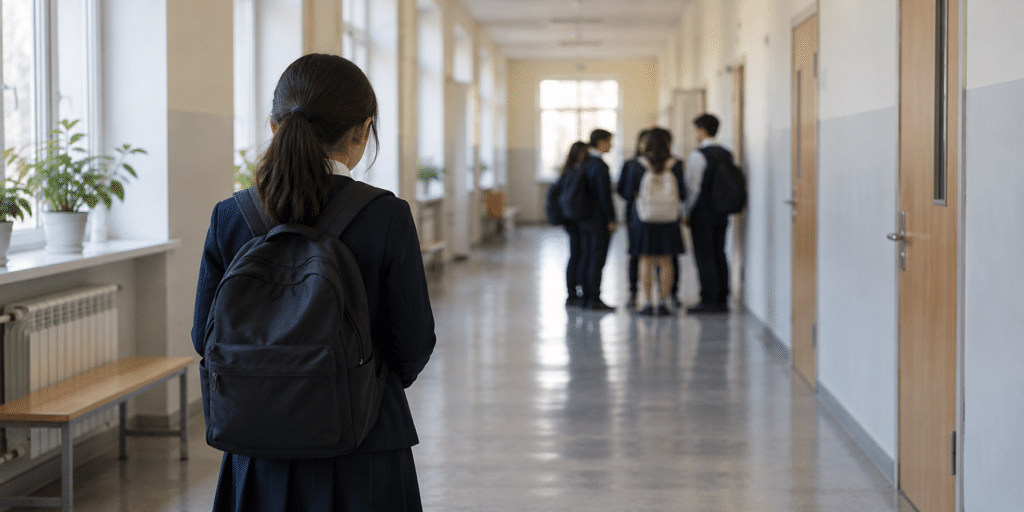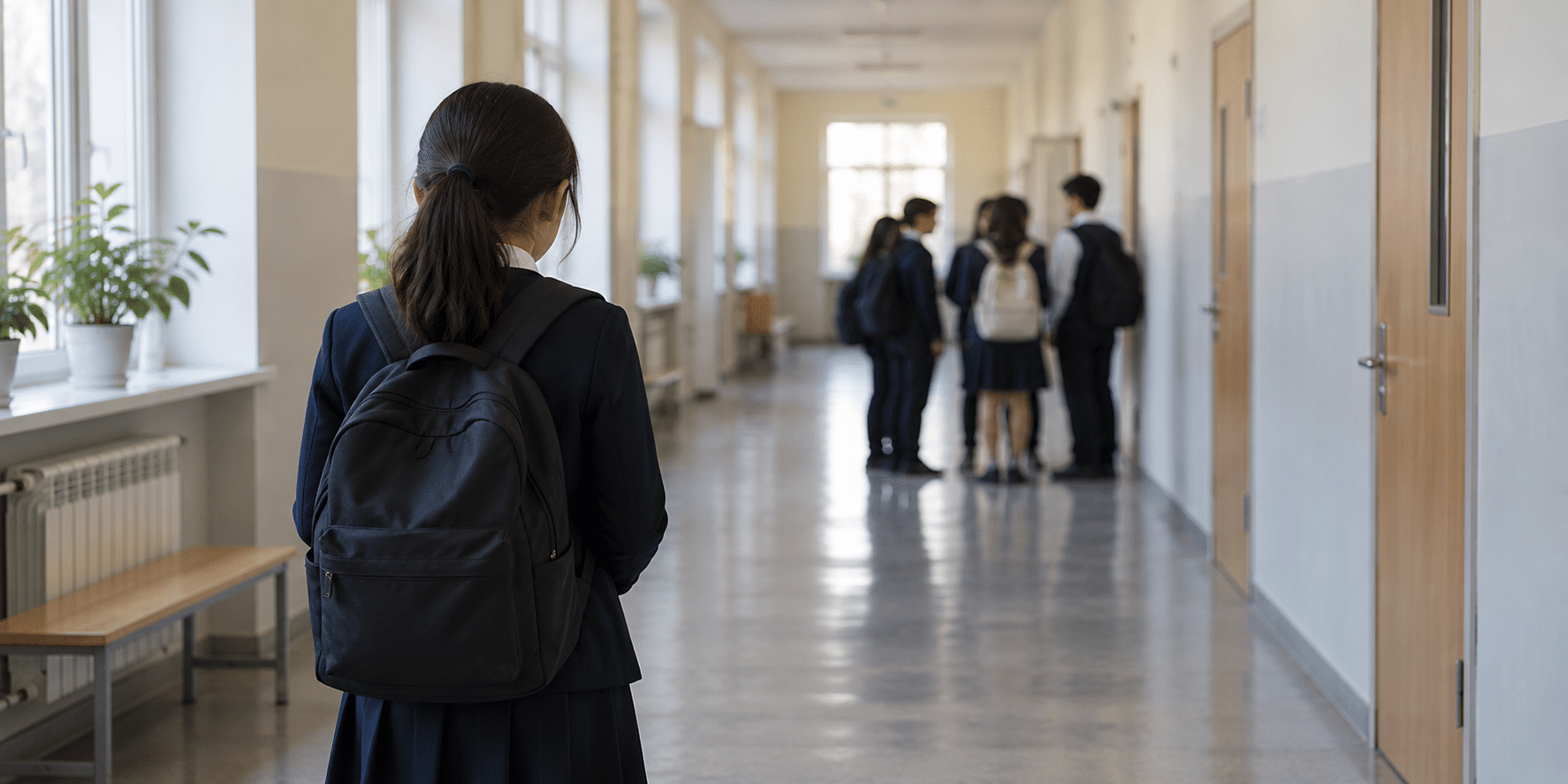
In schools across Kazakhstan’s Zhambyl region, children told visiting inspectors about beatings, extortion, and threats. Some described incidents involving brass knuckles and stun guns. But reports from those same schools recorded no bullying.
The scale of the problem was exposed in October 2025, when Kazakhstan’s commissioner for children’s rights, Dinara Zakiyeva, published the findings of inspections across the region. An interagency team identified more than 200 cases of bullying and extortion in the Baizak and Zhambyl districts alone. During the first nine months of that year, 14 suicides involving minors were recorded in the region.
Prosecutors have introduced the position of deputy principal for legal affairs at 190 schools in the region. They say the initiative has helped reduce crime involving minors. The Prosecutor General’s Office now wants to extend it nationwide.
But the proposal raises a question about how schools handle violence. Children do not always trust adults, teachers often prefer to resolve conflicts themselves, and school administrators may see public disclosure as a threat to their institutions’ reputations.
Why Bullying Goes Unreported
In November 2024, regional prosecutor Nurgalym Abdirov reported that recorded offenses counted against schools in performance rankings, giving administrators an incentive to conceal incidents. Following intervention by prosecutors, this indicator was removed from the evaluation system.
But changing reporting criteria proved easier than changing school practices. In the fall of 2025, inspections again uncovered violence that children had disclosed only after outside specialists intervened.
Similar incidents have been uncovered in other regions. In the Atyrau region, five school principals were held accountable for concealing beatings and other unlawful acts committed by older students.
Kazakhstan introduced a legal definition of bullying in 2022, and administrative liability for bullying took effect in 2024. In 2025, authorities registered 438 administrative cases and held 272 people accountable. By October 22, 2026, authorities had received more than 2,000 reports of bullying that year.
A study published in 2013 by the United Nations Children’s Fund found that 66% of children surveyed had witnessed, experienced, or perpetrated school violence or discrimination during the preceding year. The 2022 Programme for International Student Assessment found that 12% of students in Kazakhstan did not feel safe in their classrooms, while 14% felt unsafe in school hallways, cafeterias, and restrooms. Both figures exceeded the averages for countries belonging to the Organisation for Economic Co-operation and Development.
The gap between official reports and children’s experiences was also evident during an independent evaluation of the DosbolLike anti-bullying program, introduced in all schools and colleges across the country in September 2025. The findings, reported in August 2026, showed that students often denied that bullying occurred when completing questionnaires but described harassment during group discussions. Some said teachers or psychologists had asked them to redo their questionnaires.
Researchers also examined whom children were willing to trust with reports of violence. Nearly 90% of respondents named their homeroom teacher, 55.3% named their parents, and 18.4% selected the 111 child-protection helpline. None of the students surveyed on this question selected the police.
One teacher compared the arrival of law enforcement officers to a devastating blow to the school’s reputation. The researchers found that teachers often preferred to resolve even serious conflicts themselves. As a result, cases can remain within the school until they escalate or become public.
According to the Ministry of Education, more than 14,000 specialists work in child protection, including school psychologists, social workers, and guardianship officials. Juvenile police officers are also assigned to schools.
Kazakhstan has tested KiVa, a Finnish anti-bullying program. It has also established regional psychological support centers and launched the 111 contact center. In October 2026, the Ministry of Education announced the introduction of the Balazhan digital platform to track children who need assistance. Additional specialists to support victims are under discussion, along with the use of artificial intelligence to analyze school surveillance footage.
According to Zakiyeva, now deputy chairperson of the Kurultai, Kazakhstan’s parliament, authorities have identified more than 800,000 instances of children needing assistance, a figure that includes repeat identifications.
A Deputy Principal Versus the School System
The Prosecutor General’s Office announcement attributed a 24.7% fall in crimes against minors to preventive measures in the Zhambyl region. It also reported a 3.4% decline in crimes committed by adolescents and a 54.5% drop in sexual offenses.
However, the announcement did not specify the comparison periods or provide school-level data, making it difficult to determine how much of the decline can be attributed to the new positions. National figures published in April 2025 had already shown longer-term declines in juvenile crime. The Ministry of Education reported that juvenile crime had fallen to one-third of its level ten years earlier, while the Ministry of Internal Affairs cited a 30% reduction over five years.
A deputy principal for legal affairs could oversee the handling of complaints, compliance with legislation, and timely reporting to law enforcement agencies. But the reporting structure will prove especially important: if the specialist is entirely dependent on a principal who wants to avoid complaints, the position alone will not protect them from administrative pressure. If, instead, the specialist is required to report violations independently, schools would gain an additional mechanism of external oversight.
The initiative could also be assessed by comparing complaints, response times, and repeat incidents at the 190 participating schools with those at other schools. The announcement contains no such comparison.
Before the position is introduced nationwide, a crucial question remains: will these officials be able to act independently of school administrators, particularly when violence has been concealed?