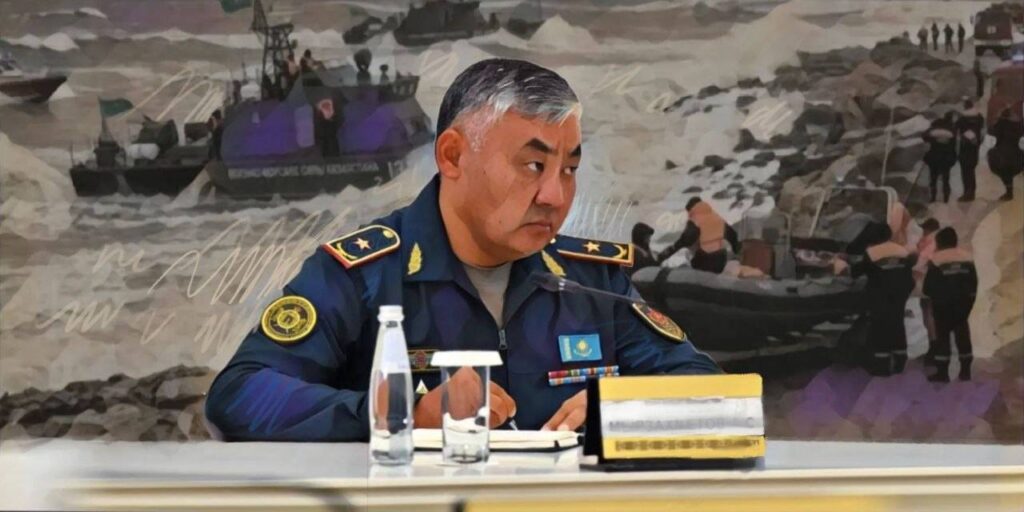
Kazakhstan’s plans to develop the Trans-Caspian transport route face a growing environmental challenge as the Caspian Sea shrinks. Environmentalist Vadim Ni questioned the coordination behind those plans in an interview with The Times of Central Asia.
“Negotiations on the Trans-Caspian Corridor are taking place at the presidential level and among the economic ministries, while the Ministry of Ecology still does not know what its role is within this route. It only recently became involved in negotiations on the issue. But how can you develop the Trans-Caspian Corridor if the sea continues to shrink?” he emphasized.
Ni, an environmental law specialist and founder of the Save the Caspian Sea movement, also called for greater domestic environmental spending. Kazakhstan and Uzbekistan should increase their own funding rather than relying primarily on international climate funds, he argued.
His comments come as the 31st Conference of the Parties to the United Nations Framework Convention on Climate Change (COP31) opens on November 9 in Antalya, Turkey. The conference runs through November 20.
The Caspian Sea Is Shrinking as Transport Ambitions Grow
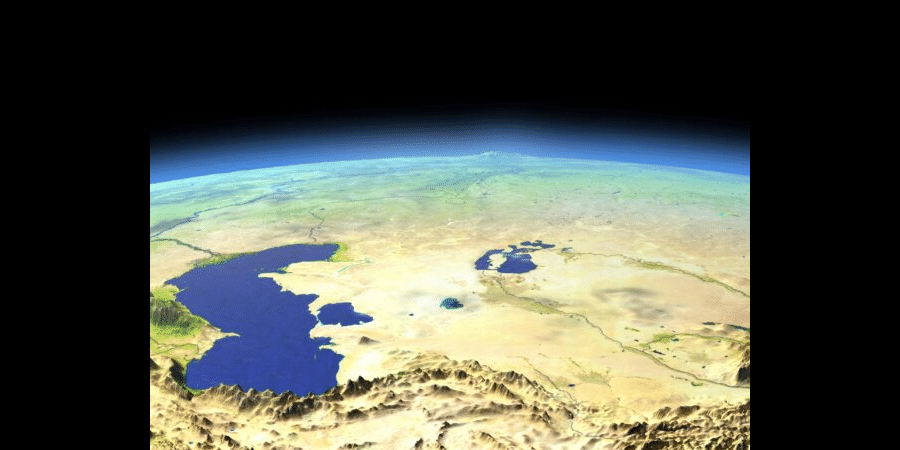
The falling water level of the Caspian Sea is already affecting coastal ecosystems, fisheries, and transport infrastructure. For Kazakhstan, the problem has taken on additional economic significance because of the development of the Trans-Caspian International Transport Route, which connects China and Central Asia with Europe via the Caspian Sea and the South Caucasus.
According to the Kazakh Research Institute of the Caspian Sea, water levels in Kazakhstan’s sector fell by 2.45 meters between 1996 and 2025. In July 2026, the monitoring station on Kulaly Island recorded a level of 29.42 meters below the reference elevation datum, the lowest reading in the observation record.
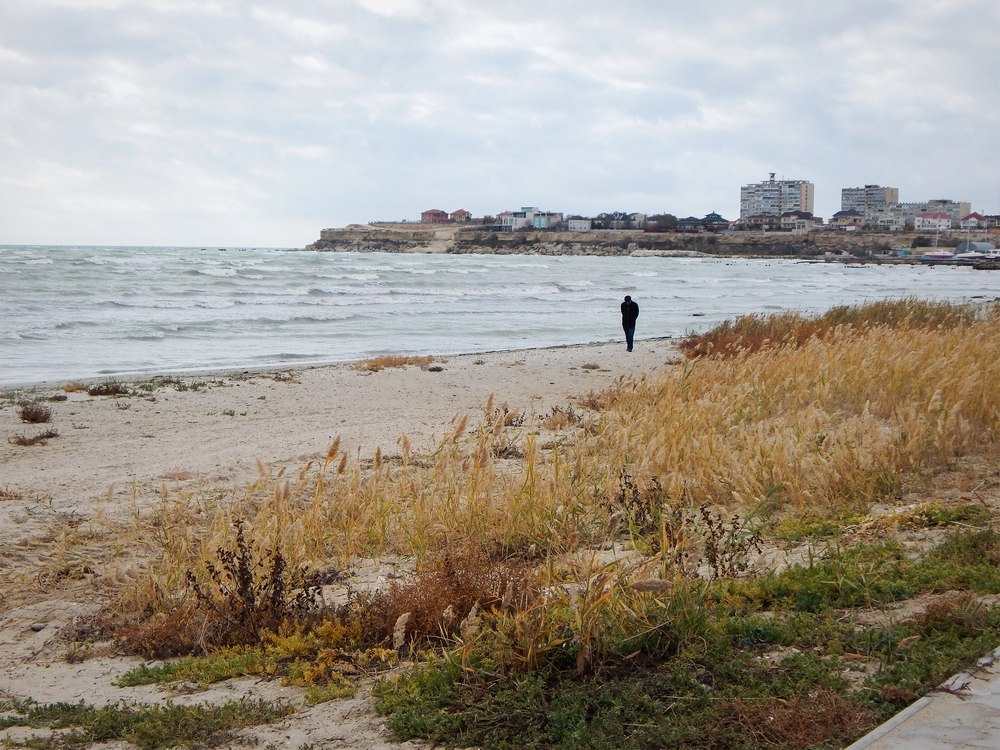
Between 2016 and 2025, the sea’s surface area shrank by approximately 11,200 square kilometers. Along some sections of the northeastern coast, the shoreline retreated by more than 20 kilometers.
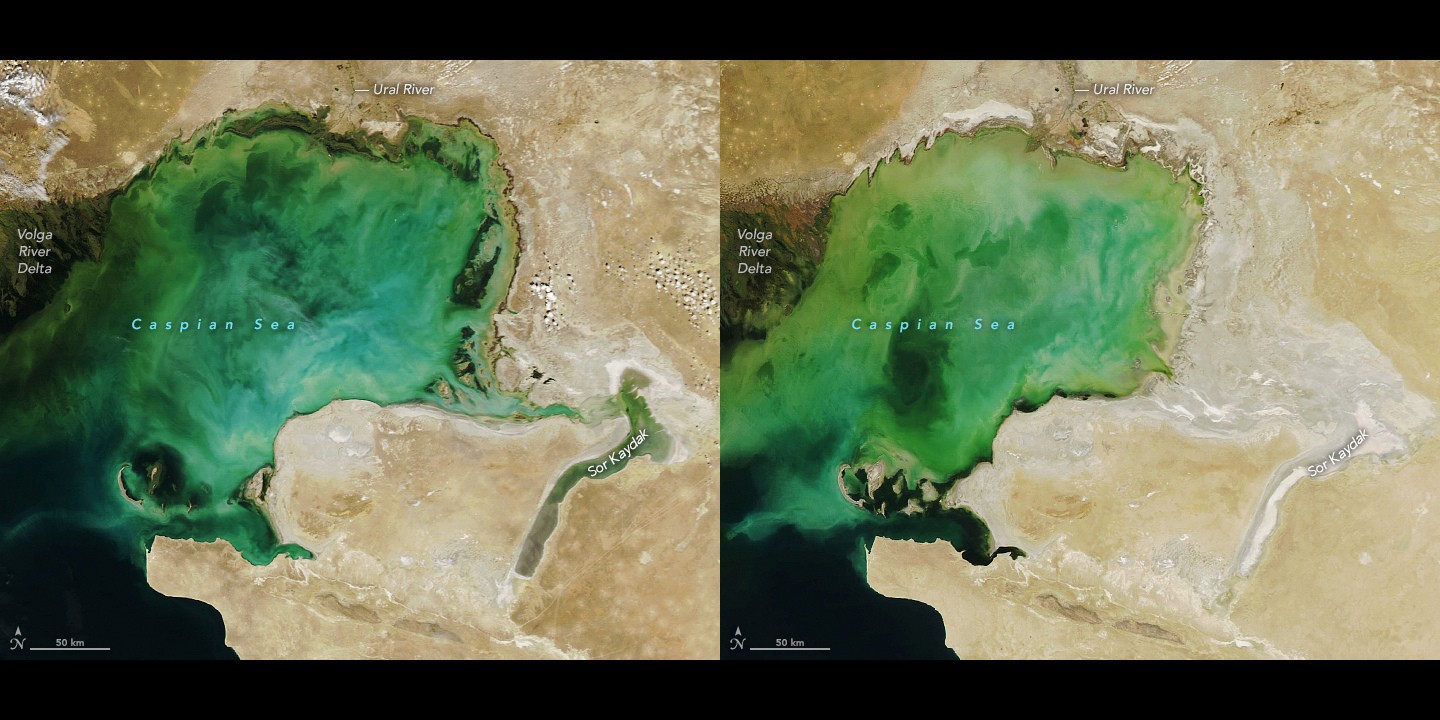
Satellite images show the northern Caspian Sea on September 20, 2006, and September 19, 2022, revealing exposed land as waters receded. Credit: NASA Earth Observatory/Lauren Dauphin, using MODIS data from NASA EOSDIS LANCE and GIBS/Worldview.
In October, Kazakhstan began large-scale dredging operations at the Port of Aktau. The project involves removing about 1.3 million cubic meters of sediment and deepening the port area to 6–7 meters. According to the Ministry of Transport, this could increase freight volumes along the route by up to 30% and reduce maritime transportation costs by 10–15%.
Ni believes the shrinking Caspian Sea has received the political attention it needs, although the problem cannot be resolved without coordinated action by the countries bordering the sea.
“The issue of the Caspian Sea’s falling water level is being addressed relatively well because it has been raised to the highest level – that of Kazakhstan’s president. The same can be said of the Aral Sea. There are many difficulties, and the problem depends on coordinating decisions among several countries, but progress is being made,” he explained.
He also warned about the environmental consequences of the retreating water.
“Inland bodies of water are generally very vulnerable. Reduced river inflows and falling water levels expose the seabed. This, in turn, will lead to dust and salt storms. That applies to both the Caspian and Aral seas, where the Aralkum Desert has already formed,” the environmentalist said.

The former ship graveyard near Zhalanash, Kazakhstan, photographed in 2014 before the wrecks were dismantled for scrap. Image: Stephen M. Bland.
Water and Environmental Diplomacy
The challenges of international cooperation extend beyond the Caspian Sea. Kazakhstan depends on transboundary rivers, including the Ili, which originates in China and feeds Lake Balkhash.
According to Ni, Kazakhstan has limited room for maneuver over Beijing’s decisions on water use.
“Countries where river runoff originates are in an advantageous position. There are no real levers of influence over them,” he said.
He is critical of the international work of Kazakhstan’s Ministry of Ecology and Natural Resources. In his view, the ministry lacks a strategic approach to negotiations that go beyond individual environmental projects. Major decisions are more often advanced through the Ministry of Foreign Affairs and economic agencies.
Ni has hopes following the appointment of Alibek Kuantyrov as Minister of Ecology and Natural Resources in September 2026. Kuantyrov previously worked at the Ministry of Foreign Affairs and the Ministry of National Economy.
He considers the establishment of a separate Ministry of Water Resources and Irrigation in 2023 a more successful institutional decision. It raised the standing of Kazakhstan’s representatives in negotiations over transboundary waters.
But diplomacy is also constrained by natural processes. Climate warming is changing the flow patterns of rivers that feed Central Asia’s bodies of water.
Melting Glaciers in the Tien Shan
“Inland bodies of water such as the Caspian Sea and Lake Balkhash suffer both from evaporation and from water withdrawals by upstream countries. Shrinking glaciers further reduce river flows,” Ni said.
Melting glaciers can initially increase river flows, but as ice reserves diminish, less water becomes available, particularly during summer. For Kazakhstan and neighboring countries, glacier retreat in the Tien Shan and Pamir mountains threatens water supplies, agriculture, and hydropower generation.
According to a study published in the scientific journal Environmental Research Letters, the region experienced particularly severe glacier mass loss in 2025. Researchers estimate that ice reserves in the Tien Shan and Pamir mountains declined by approximately 30 cubic kilometers in a single year, equivalent to around 2% of the remaining volume.
Another study, published in February 2026 in Water Resources Research, projects that Tien Shan glaciers could lose about one-third of their volume by 2040. By the end of the century, losses could range from 69% to 93%, depending on the climate scenario.
For Central Asian countries, these changes create additional challenges in allocating water among agriculture, energy production, and household needs. Declining glacier reserves make agreements on shared river use increasingly important, particularly during dry periods.
Why Kazakhstan Should Not Rely Solely on Foreign Assistance
International climate conferences allow countries to discuss financing for environmental protection and climate adaptation projects. But Ni believes Kazakhstan relies too heavily on foreign support.
“Unfortunately, we have not learned to invest our own money in environmental protection. We keep pinning our hopes on environmental and climate funds, but contributions to these funds are declining worldwide. Countries are increasing their military budgets, while environmental spending is taking a back seat. Existing grants may help get some problems moving toward a solution, but beyond that, we must act on our own,” he told TCA.
In Ni’s assessment, Kazakhstan and Uzbekistan can no longer be considered poor countries and therefore cannot expect the same priority in the allocation of international assistance as less affluent nations. In Central Asia, he believes Kyrgyzstan and Tajikistan have stronger grounds for expecting such support.
For Kazakhstan, this means increasing domestic funding for environmental programs and pursuing more active negotiations with neighboring countries. The use of transboundary rivers, preservation of the Caspian Sea, and adaptation to glacier retreat all require solutions that go beyond individual grant-funded projects.