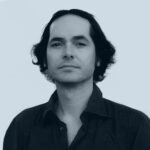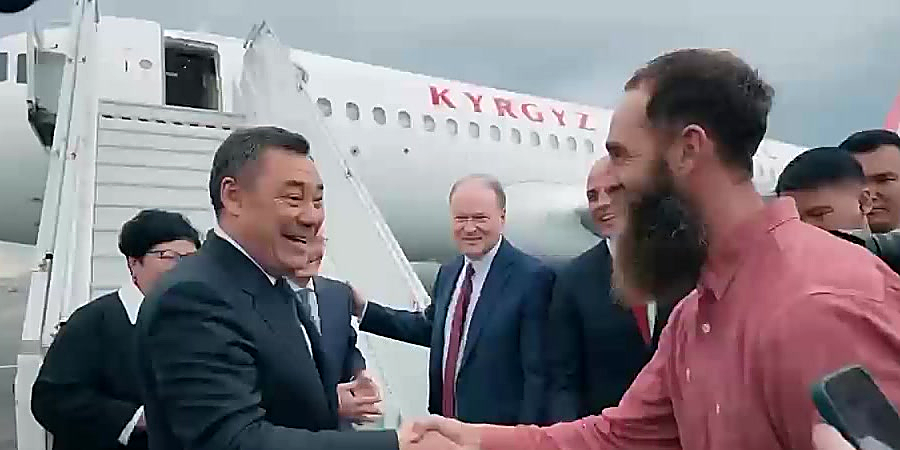
For Jonathan Campion, a journalist and contributor to The Times of Central Asia, months of anticipation and two weeks of hurried training ended rather more quickly than expected at the World Nomad Games in Cholpon Ata.
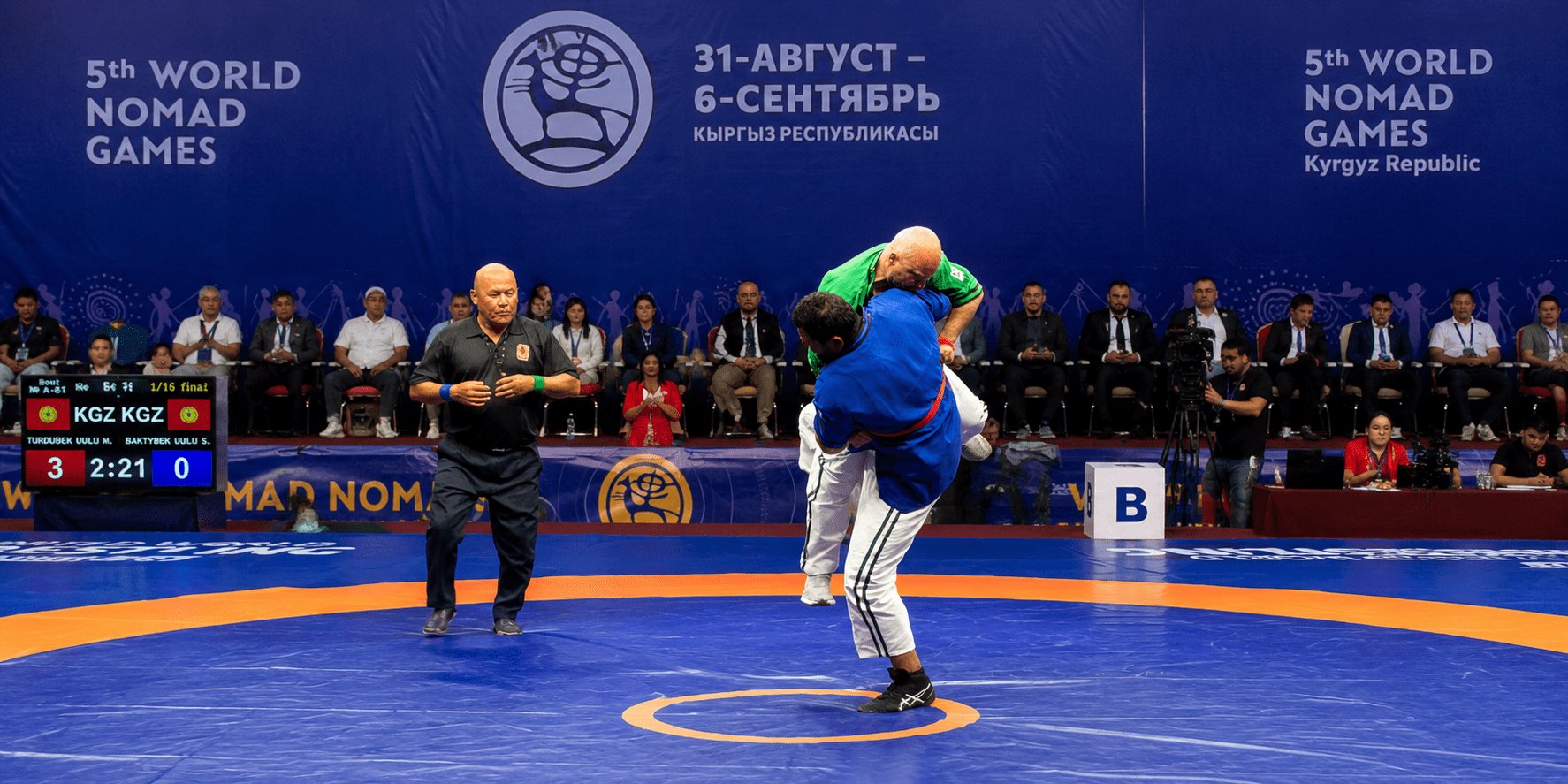
Inside the airless Gazprom sports complex on Wednesday, the stands were packed to the rafters as wrestlers competed in Alysh, the traditional Kyrgyz form of belt wrestling. Representing Great Britain, Campion entered both the classic and freestyle competitions.
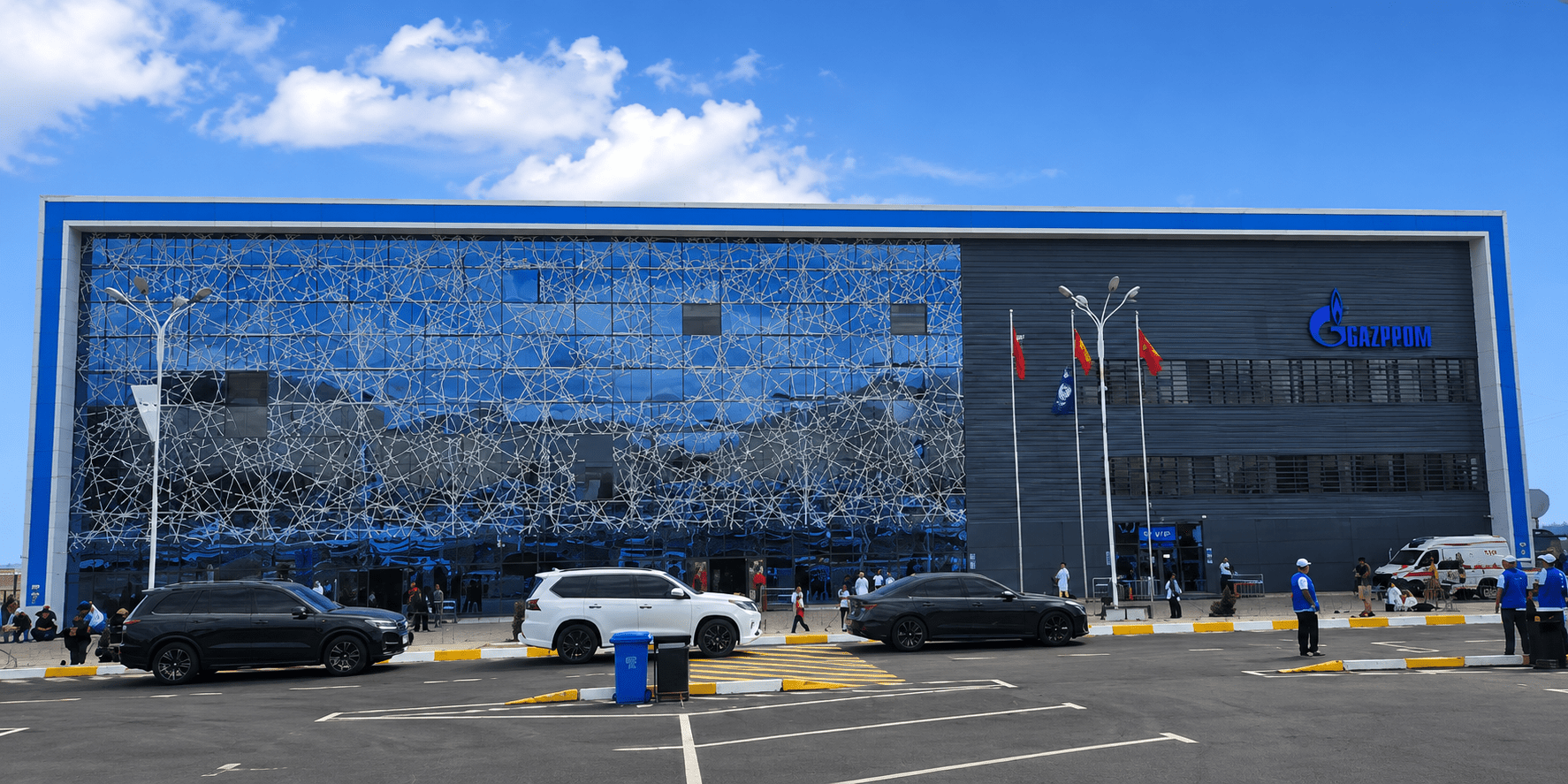
Image: TCA
The rules leave little room for retreat. Wrestlers remain standing and must keep hold of their opponent’s belt while trying to throw them onto their back. In classic Alysh, wrestlers cannot actively use their legs against an opponent, while freestyle allows trips and other leg techniques. The sport is one of Kyrgyzstan’s oldest traditional forms of wrestling, according to the official rules.
Wearing the green jacket, white trousers, and red belt prescribed by the sport, Campion found himself locked chest-to-chest with opponents who had considerably more experience. His first bout, against a Belarusian wrestler, lasted four seconds. His second, against an Afghan opponent, was shorter still.
Bruised but unbowed after his introduction to competitive Alysh, Campion spoke to The Times of Central Asia about why he entered the Games, what two weeks of preparation could and could not teach him, and what it felt like to march into the opening ceremony as a member of the Great Britain team.
TCA: Why did you decide to compete in Alysh at the World Nomad Games?
Jonathan Campion: I’ve been to Central Asia a lot, especially Kyrgyzstan. Whenever I’ve been here, people have always wanted to learn about my culture. They’ve wanted to speak in my language and talk to me about the Beatles and English football.
I’ve always felt a little ashamed and embarrassed that British people may not even know where Kyrgyzstan is, and certainly don’t know anything about its culture. I love sport, and I thought a good way to become closer to Kyrgyz culture, and to show people that British people can also take an interest in Kyrgyz culture, would be to participate in these Games.
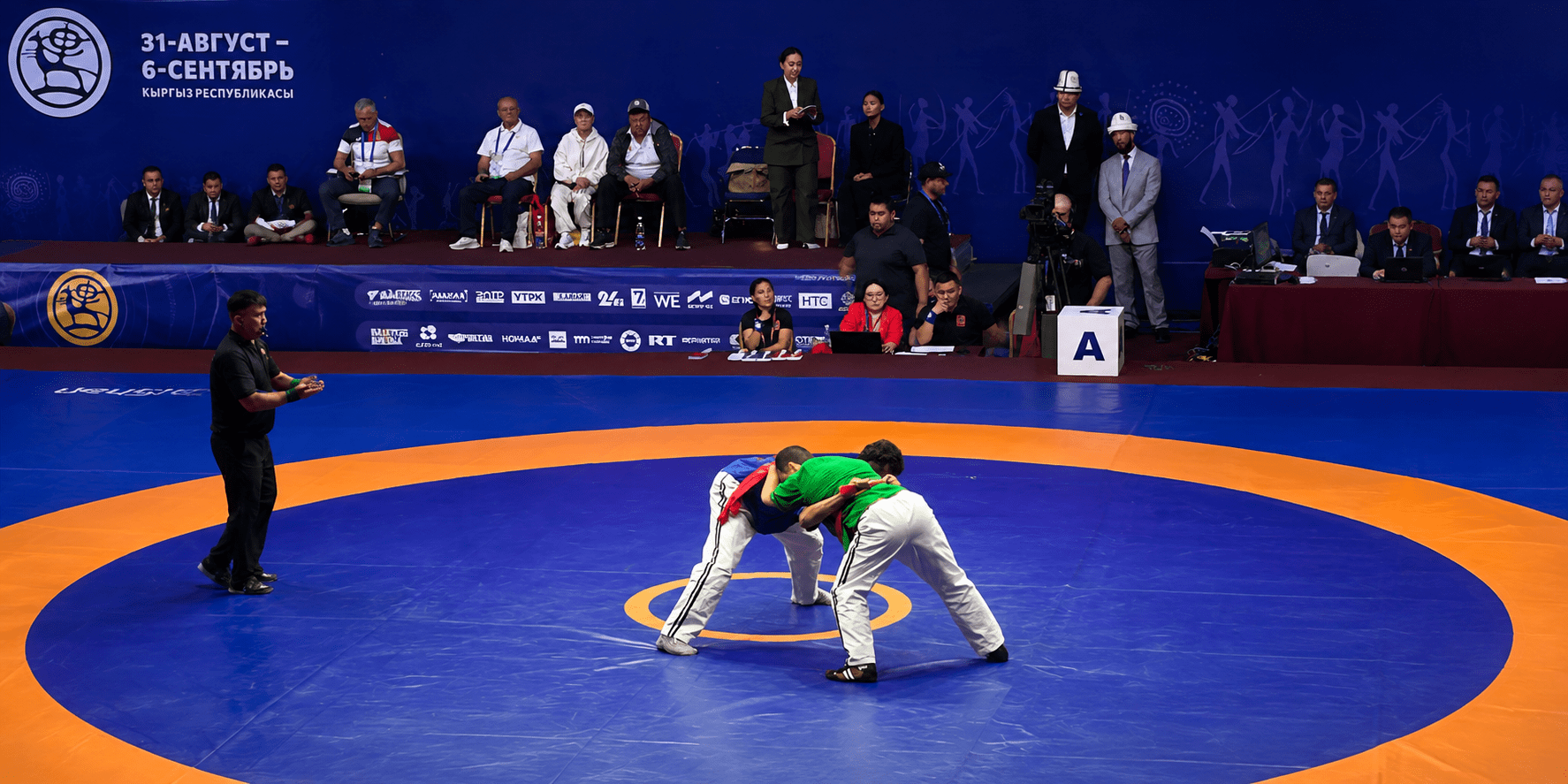
Image: TCA
TCA: Because you’d never done this before, how did you find the training, and how were your matches?
Jonathan Campion: Before my first fight today, it had only been about two weeks since I really began practicing. I was lucky to find an amazing martial arts teacher in Norwich, where I live, who did absolutely everything he could with me, using his knowledge of judo, taekwondo, and other martial arts. I feel he got me to a point where I had prepared as much as I physically could.
But nothing can prepare you for standing on the mat with a very strong opponent opposite you in a real fight.
TCA: Who did you fight, and what were the scores today?
Jonathan Campion: This morning I fought in the Alysh classic-style tournament. I was drawn against a Belarusian fighter who threw me onto my back and won in four seconds.
This afternoon I entered the freestyle Alysh competition, which basically means you can use your legs as well. I was drawn against an Afghan fighter, Afghanistan’s number one, and he threw me onto my back in, I think, less than one second.
So I’ve had two fights today lasting about five seconds in total.
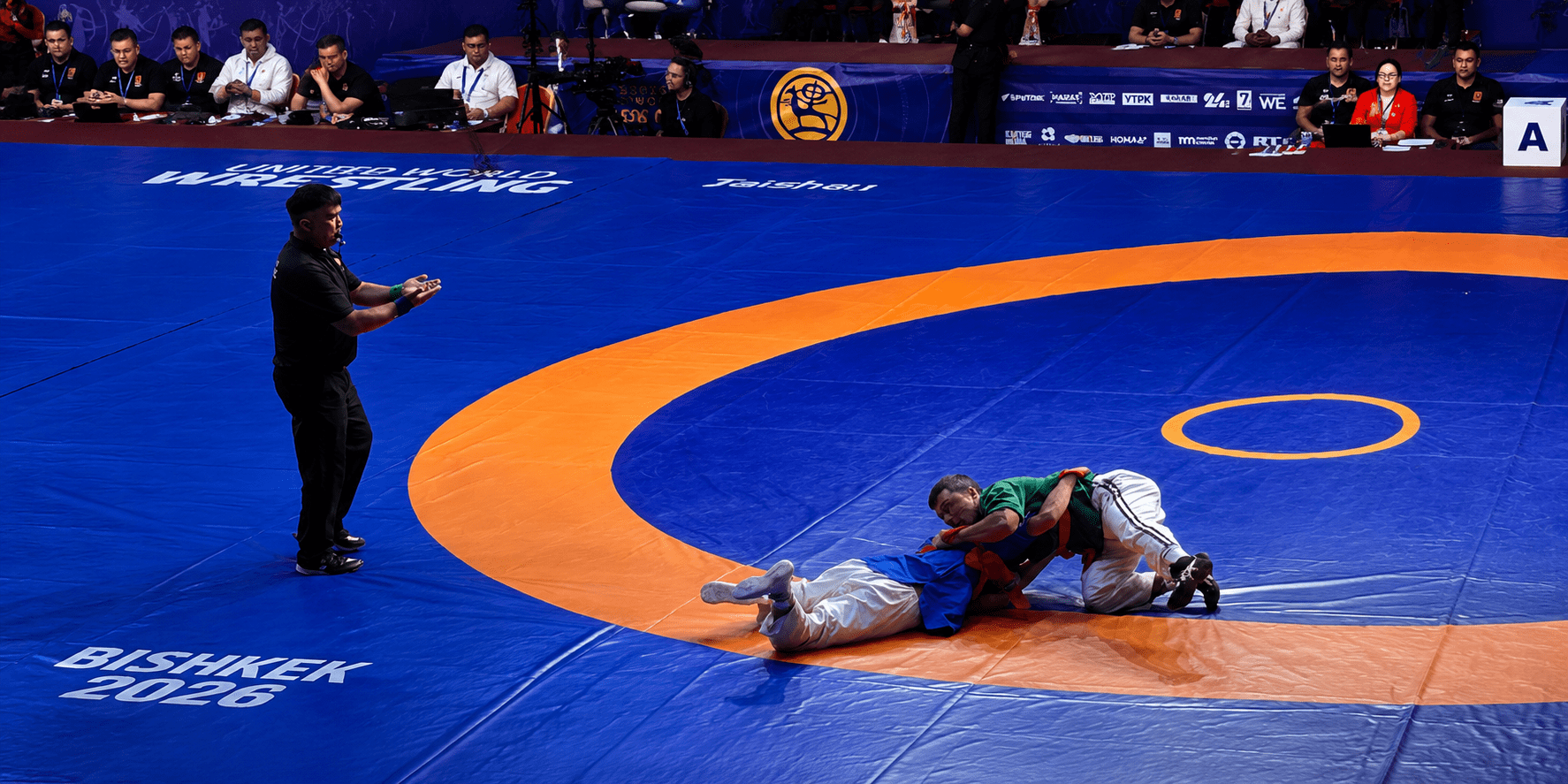
Image: TCA
TCA: What has your experience been of being on the athlete side rather than the media side?
Jonathan Campion: It’s a word that’s overused, but it’s been a real honor. Firstly, to represent Great Britain at these Games. It’s a privilege just to be able to represent your country, to put on a tracksuit with your country’s flag and your name on it, to be part of the opening ceremony, and then to be part of the parade through the stadium with the Great Britain team.
In terms of my very modest sporting career, it is the absolute highlight of a lifetime.
It’s also been absolutely fantastic to meet athletes from all over the world. In Kyrgyzstan, of all places, I’ve been able to meet and make friends with guys from Indonesia, Malta, Belarus, Afghanistan, Brazil, and Ukraine.
As an event that brings together more than 100 countries, I think it shows something. It’s a cliché that sport brings people together. It’s often used by executives without there really being any meaning behind it. But at these World Nomad Games, it really has brought the world together.
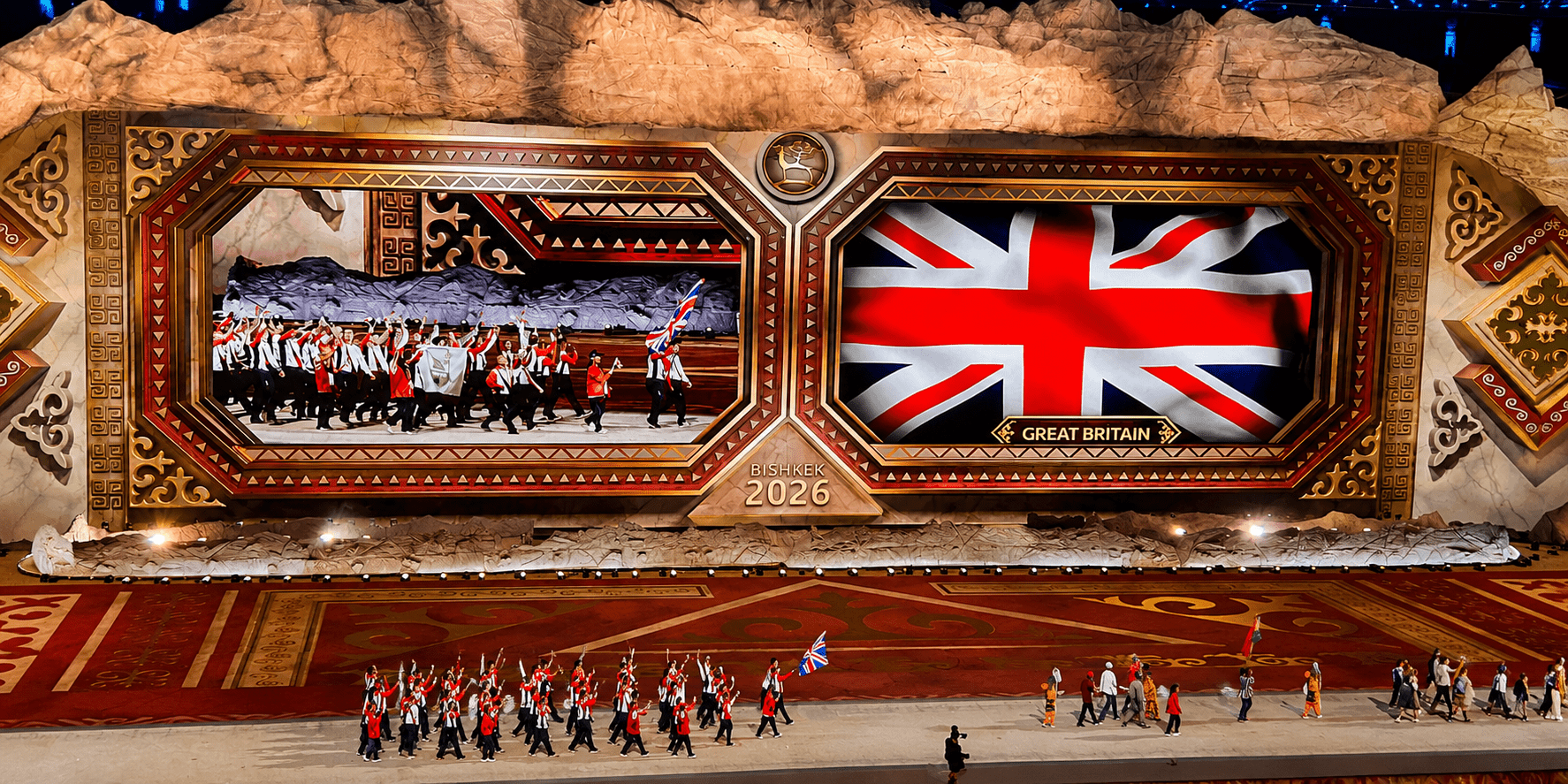
Image: TCA
The World Nomad Games continue across the Issyk-Kul region until September 6, with the closing ceremony on the shore of Lake Issyk-Kul.
For more from our World Nomad Games 2026 special coverage, click here.