• KZT/USD = 0.00212
  • TJS/USD = 0.10810
  • UZS/USD = 0.00008
  • TMT/USD = 0.29760
  • KZT/USD = 0.00212
  • TJS/USD = 0.10810
  • UZS/USD = 0.00008
  • TMT/USD = 0.29760
  • KZT/USD = 0.00212
  • TJS/USD = 0.10810
  • UZS/USD = 0.00008
  • TMT/USD = 0.29760
  • KZT/USD = 0.00212
  • TJS/USD = 0.10810
  • UZS/USD = 0.00008
  • TMT/USD = 0.29760
  • KZT/USD = 0.00212
  • TJS/USD = 0.10810
  • UZS/USD = 0.00008
  • TMT/USD = 0.29760
  • KZT/USD = 0.00212
  • TJS/USD = 0.10810
  • UZS/USD = 0.00008
  • TMT/USD = 0.29760
  • KZT/USD = 0.00212
  • TJS/USD = 0.10810
  • UZS/USD = 0.00008
  • TMT/USD = 0.29760
  • KZT/USD = 0.00212
  • TJS/USD = 0.10810
  • UZS/USD = 0.00008
  • TMT/USD = 0.29760

Viewing results 7 - 12 of 399

As Azerbaijan Pushes Back Against Moscow, Central Asia Watches

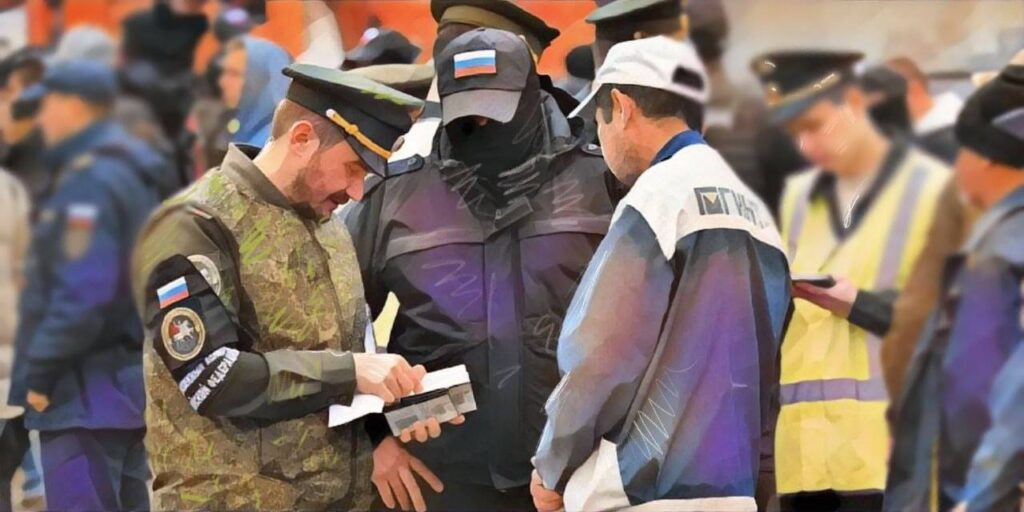
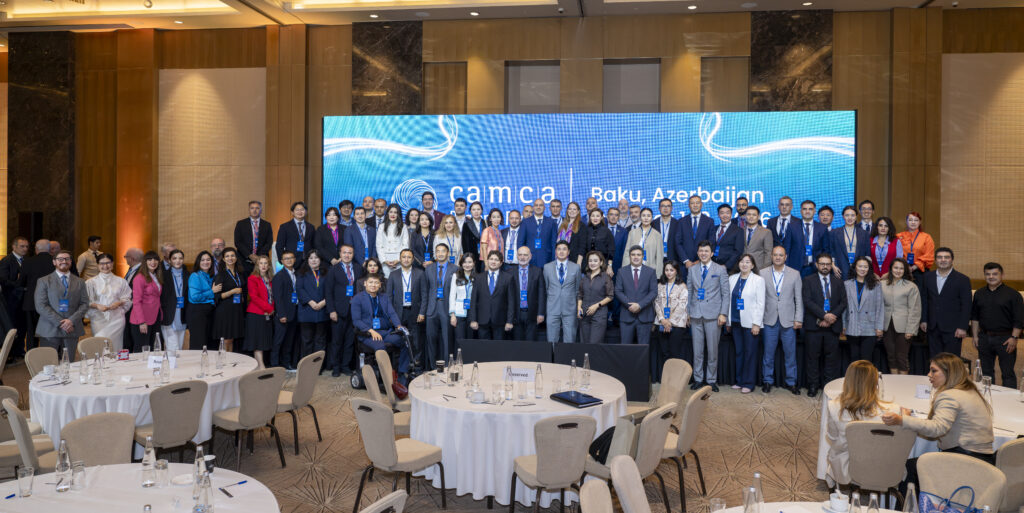
The recent diplomatic escalation between Azerbaijan and Russia appeared to have run its course in April, after Moscow agreed to pay compensation over the Azerbaijan Airlines crash in Kazakhstan. Instead, the dispute has entered a new phase, and its implications now reach beyond the South Caucasus. On July 6, Azerbaijan’s Ministry of Foreign Affairs summoned Russian Ambassador Mikhail Yevdokimov and handed him a formal note of protest over what Baku described as a Russian drone strike on a fuel station owned by Azerbaijan’s state energy company SOCAR in Ukraine’s Mykolaiv region on the evening of July 5. The Azerbaijani Foreign Ministry said the attack on SOCAR facilities in Ukraine was not an isolated incident. It cited previous strikes on the company’s gas distribution compressor station and oil depot in Odesa, which caused material damage and injured employees. Baku also pointed to earlier damage to the Azerbaijani embassy building in Kyiv and the honorary consulate in Kharkiv, calling on Moscow to investigate and comply with its obligations to protect civilian infrastructure and diplomatic missions. At the same time, Shusha — known to Armenians as Shushi, retaken by Azerbaijan during the 2020 Karabakh war, and still regarded by many Armenians as occupied — hosted an international conference devoted to what participants described as Russia’s “colonial policy,” the “Circassian genocide,” and the situation of non-Russian peoples within the Russian Federation. The conference declaration called on Moscow to “recognize its historical crimes, abandon its chauvinistic policies, and end the forced recruitment of ethnic minorities into the war against Ukraine.” Experts from Azerbaijan, the United States, France, Lithuania, Poland, the Czech Republic, Germany, Israel, Türkiye, and Georgia attended the conference. None of the Central Asian republics was represented. That absence was telling. Central Asian governments may be distancing themselves from Moscow in certain areas, but they remain reluctant to participate in openly anti-Russian political initiatives. For Astana, Tashkent, Bishkek, Dushanbe, and Ashgabat, the question is not whether Russia’s position has weakened, but how far they can move without provoking pressure from Moscow. For Central Asia, the dispute is not a distant quarrel in the South Caucasus. Azerbaijan is now a central link in the westward routes that Kazakhstan, Uzbekistan, Turkmenistan, and Kyrgyzstan are trying to strengthen as alternatives to Russian territory. The Middle Corridor runs from China through Central Asia, across the Caspian Sea, and onward through Azerbaijan, Georgia, and Türkiye to Europe. Any deterioration in Azerbaijan-Russia relations therefore has practical implications for Central Asian transit, energy, and diplomatic room for maneuver. The first major rupture in relations between Baku and Moscow came after Azerbaijan Airlines Flight J2-8243, traveling from Baku to Grozny, was damaged by Russian air-defense fire over Russian territory on December 25, 2024. The aircraft later crashed while attempting an emergency landing near Aktau, Kazakhstan, killing 38 people. Azerbaijan blamed Russia and demanded an apology, accountability, and compensation. Relations deteriorated further in June 2025 following the detention of ethnic Azerbaijanis in Yekaterinburg and reports of torture. The most prominent victims were the...

Central Asian Governments Join Mourning for Iran’s Late Supreme Leader

Central Asian delegations have traveled to Iran for the funeral of Iranian Supreme Leader Ali Khamenei, who was killed in an airstrike on Feb. 28, the first day of U.S.-Israeli airstrikes on Iran. The gesture reflects how Central Asia countries want to preserve and expand longstanding ties with Iran, even as they build trade and diplomatic relationships with the United States.   President Emomali Rahmon of Tajikistan expressed condolences and hopes for peace during a meeting with Iranian President Masoud Pezeshkian inTehran on Friday, Tajikistan’s presidential office said. “It was noted that the volume of trade between the two countries has increased eightfold in the past five years, approaching almost five hundred million dollars in 2025,” the Tajik statement said. “At the same time, it was stated that there are all the necessary opportunities to bring this figure to one billion dollars in the near future.” Gurbanguly Berdymukhamedov, the former president of Turkmenistan who shares power with his son and successor, Serdar, was also in Tehran on Friday. In a meeting, Mohammad Bagher Ghalibaf, speaker of Iran’s parliament, told him that Iran wanted to expand links with Turkmenistan, according to Iranian state news agency IRNA. Berdymukhamedov said trade between the two countries should increase and “expressed confidence that Iran would achieve favorable results in future negotiations with the United States,” IRNA said. Other Central Asian delegations attending funeral ceremonies in Tehran were led by Foreign Minister Yermek Kosherbayev of Kazakhstan; Nuriddin Ismailov, speaker of Uzbekistan’s parliament; and Marlen Mamataliev, head of Kyrgyzstan's legislative assembly.   A fragile ceasefire between Iran and the United States is in place and negotiations aimed at reaching a lasting settlement to a conflict that impacted the global economy are underway. Delegations from dozens of countries are in Iran for the funeral, which includes events over several days. The mourning is an opportunity for the Iranian leadership to demonstrate international stature after many of its key figures were killed in the U.S.-Israeli attacks. Khamenei was replaced by his son, Ayatollah Mojtaba Khamenei. Some reports say the younger Khamenei was injured in the attack that killed his father and he has not been seen in public since the beginning of the conflict. The extent of his injuries has not been confirmed, though Iran has acknowledged that he was hurt.   - For a complete chronology of the crisis and its implications for Central Asia, explore our continuously updated timeline and special coverage.

Pakistani Airstrikes in Afghanistan Kill at Least 28 Civilians, UN Says

The United Nations says at least 28 civilians were killed and 49 injured in Pakistani airstrikes in several provinces in Afghanistan, as violence continues in the border region following ceasefire efforts that have repeatedly broken down. Women and children were among the casualties in the airstrikes in Paktia, Paktika, and Kunar provinces on Sunday night, the United Nations Assistance Mission in Afghanistan (UNAMA) said on Monday. UNAMA said the figures were preliminary and that the toll could increase as hospitals treat the injured. Hamdullah Fitrat, a spokesman for the ruling Taliban in Afghanistan, announced a higher casualty toll than the UN. At least 36 civilians were killed and 163 others were injured, Fitrat said on X. Pakistan’s Information Minister Attaullah Tarar said the airstrikes hit militant hideouts and strongholds on the Afghan side of the border, killing at least two dozen militants in retaliation for attacks on targets in Pakistan. Pakistan accuses Afghanistan of providing sanctuary to militants who carry out attacks against Pakistani security forces, an allegation that the Taliban in Afghanistan denies. Besides humanitarian concerns, the ongoing violence is also a concern for Central Asian governments and business groups that are working to develop trade corridors and infrastructure projects linking their region with South Asia. Those projects, which would require close collaboration between Afghanistan and Pakistan, include the Trans-Afghan Railway, the TAPI natural gas pipeline, and the CASA-1000 electricity project.

Turkmenistan, Azerbaijan Tighten Ties, Supporting Middle Corridor

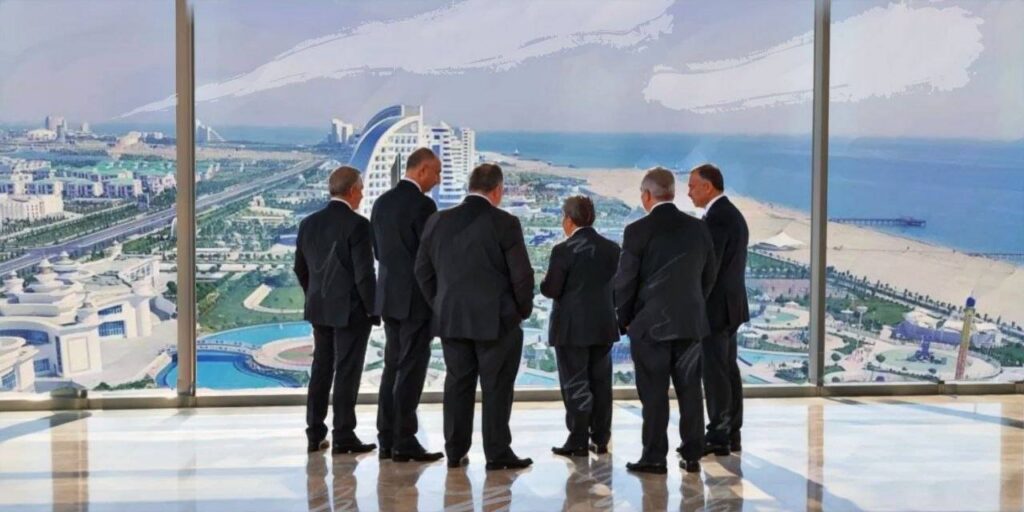
The main maritime route between Turkmenistan and Azerbaijan is about 300 kilometers long, linking the area around the Azerbaijani capital of Baku on the west coast of the Caspian Sea to Turkmenbashi port on the east coast. Now the leaders of the two countries are pursuing a years-long effort to bring their nations closer together – economically and diplomatically. The growing cooperation has broader implications for international trade because the Caspian Sea route is a critical part of a trade network dubbed the Middle Corridor, which connects China and Europe via Central Asia, the Caucasus, and Türkiye. The Middle Corridor has become more important because Russia and Iran, two other countries that have Caspian coastlines, have seen their economies and trade links come under pressure because of war, regional tension, and sanctions. North of Turkmenistan, Kazakhstan also borders the sea and views it as a key alternative to more traditional trade routes through Russia that have become problematic because of Western sanctions aimed at punishing Moscow over its war with Ukraine. President Serdar Berdimuhamedov of Turkmenistan visited Azerbaijan earlier this week and was welcomed by President Ilham Aliyev, who noted the value of their governments’ collaboration on transport and logistics to the wider world. “Of course, cooperation between our countries in this area is already long-term, I would even say that it is of strategic importance not only for us, not only for our neighbors, but also for a wide geography,” Aliyev said on Monday. “Because today in the world there are not so many very reliable, safe transport routes connecting countries that cooperate with each other.” Aliyev thanked Turkmenistan for welcoming Azerbaijan into the Consultative Council of Heads of State of Central Asia, even though the South Caucasus country is not geographically part of Central Asia. The step, the Azerbaijani president said, recognizes cultural and historical ties as well as regional challenges, creating “the prerequisites for the recognition of the great Central Asia as a single geopolitical and geoeconomic region.” Turkmenistan’s state media said upgraded port facilities in Baku and Turkmenbashi were making the transit of cargo between Asia and Europe more efficient. The leaders of Azerbaijan and Turkmenistan signed deals on energy, trade, and agriculture during Berdimuhamedov’s visit. Several years ago, the two countries resolved a dispute over an offshore oil and gas field in the Caspian, agreeing to jointly develop it in a deal that removed a hurdle to warmer relations. There were also personal touches by the two men, both of whom succeeded their fathers as president. Berdimuhamedov laid flowers at the grave of Heydar Aliyev, a former Soviet official who became president of Azerbaijan and was succeeded after his 2003 death by Ilham, his son. The Turkmen president then paid tribute to Zarifa Aliyeva, a prominent ophthalmologist who was Heydar Aliyev’s wife and the mother of the current president. She died in 1985. On Thursday, after Berdimuhamedov´s visit to Azerbaijan, the Turkmen president’s father discussed “priority areas” of the relationship between the two countries in...

The Fragile U.S.–Iran Truce: What Central Asia Stands to Gain and Lose

The preliminary memorandum signed in mid-June between the United States and Iran, followed by renewed talks between Washington and Tehran, has extended a U.S.–Iran truce and opened a 60-day window for negotiations on a final agreement. The nuclear terms remain unresolved, while Israel’s continued military presence in southern Lebanon, despite U.S. pressure for a withdrawal, underscores how fragile the broader regional de-escalation remains. At the end of this period, the parties may sign a final agreement, return to hostilities, or mutually agree to extend the interim arrangement. Kazakhstan, Uzbekistan, Kyrgyzstan, and Tajikistan, along with neighboring Azerbaijan, have welcomed efforts to de-escalate the conflict between the United States and Iran. The fighting briefly boosted demand for alternative routes through Central Asia, but prolonged instability would disrupt trade, raise transport and insurance costs, and increase security risks. The question now is what the region could gain if the pause holds. Those effects would vary across the region. Turkmenistan and Uzbekistan stand to benefit most directly from safer southern rail access through Iran to the Persian Gulf and Türkiye. Kyrgyzstan and Tajikistan, which are less directly connected to these corridors and less exposed to oil price swings, would feel the consequences mainly through freight costs, fuel prices, and wider regional trade. For Azerbaijan, a sustained pause would reinforce its role as the Caspian link between Central Asia, the South Caucasus, and Türkiye, while renewed instability would push more freight toward Trans-Caspian alternatives. That interest is not merely theoretical. Tajik-Iranian trade reached $119.6 million in the first quarter of 2026, while Tajikistan and Kyrgyzstan are developing access to Iranian maritime infrastructure through Uzbekistan and Turkmenistan. The opportunity, however, is conditional. A truce can reduce military risk, but it does not by itself remove the banking, insurance, and compliance problems that have long complicated trade through Iran. For Central Asian exporters and logistics companies, the question is not only whether routes are physically open, but whether carriers, lenders, insurers, and buyers are prepared to use them during a temporary 60-day window. Analysts interviewed by Deutsche Welle said the framework leaves several important provisions unresolved, making a final agreement uncertain. For Central Asia, the most immediate economic variable is the Strait of Hormuz. Kazakh historian and political analyst Sultan Akimbekov identifies its reopening as the key to easing global supply fears. A durable reopening, combined with the temporary U.S. waiver allowing Iranian oil sales through August 21, could put downward pressure on global energy prices. The effects would vary across Central Asia: weaker prices could strain hydrocarbon revenues, while lower fuel, fertilizer, and freight costs could ease imported inflation in Uzbekistan, Kyrgyzstan, and Tajikistan. For Kazakhstan, lower global oil prices would have significant implications. National Bank Governor Timur Suleimenov has said oil generates more than 50% of the country’s export revenues and over 30% of the state budget and National Fund revenues. That would reverse one of the conflict’s few short-term economic benefits for Kazakhstan. Higher crude prices had briefly improved the outlook for export revenues,...

U.S.-Iran Framework Could Reopen Central Asia’s Southern Route

The United States and Iran said on June 15 that they had reached a framework to end their war, halt the U.S. naval blockade of Iranian ports, and reopen the Strait of Hormuz. The sides said a memorandum of understanding could be signed on June 19 in Switzerland. The exact terms were not immediately known, with Iran’s nuclear program and sanctions relief left for later talks. Pakistani Prime Minister Shehbaz Sharif said the pact called for “the immediate and permanent termination of military operations on all fronts, including in Lebanon.” Trump posted, on Truth Social, “Ships of the World, start your engines. Let the oil flow!” Brent crude fell by more than 4% in early trading, and Asian stock markets advanced. Reuters later said shippers remained cautious after one LNG tanker passed through Hormuz on June 15. A reopened strait would not restore normal traffic immediately, with freight flows depending on mine clearance, insurance rules, port inspections, and shipping guidance for vessels entering the area. Kazakhstan was the first Central Asian state to publicly welcome the latest announcement. President Kassym-Jomart Tokayev praised the political will of the parties, saying they had helped “restore trust and mutually acceptable solutions.” Azerbaijan also issued a supporting statement praising Pakistan’s mediation and saying further talks could support “lasting peace and stability.” Central Asian governments had previously welcomed the U.S.-Iran ceasefire in April, with Kazakhstan, Uzbekistan, Kyrgyzstan, and Tajikistan calling for de-escalation and diplomacy. For Central Asia, oil prices are only part of the story. The larger question is whether de-escalation can reopen practical access to southern trade routes, ports, and markets beyond the Caspian. Since Russia’s full-scale invasion of Ukraine in 2022, the region has paid closer attention to alternatives to routes through Russia. Iran offers one of its shortest paths to the Gulf, the Indian Ocean, Türkiye, and India. But sanctions, banking risk, war insurance, and U.S. policy shifts have kept that path fragile. Chabahar is the clearest example. In May 2024, India signed a 10-year contract with Iran to develop and operate the port on the Gulf of Oman. India’s shipping minister, Sarbananda Sonowal, called Chabahar “a vital trade artery connecting India with Afghanistan and Central Asian Countries.” The port allows Indian cargo to reach Afghanistan and Central Asia without crossing Pakistan, and gives Central Asian exporters another route toward India and the Indian Ocean. The sanctions picture remains uncertain. On October 30, 2025, Washington granted India a six-month waiver that allowed operations at Chabahar to continue. No public replacement had been announced by June 15. The new framework could make another waiver easier to justify, but banks and insurers will wait for signed text, U.S. guidance, and proof that Hormuz and Iranian ports are safe. Reuters cited a senior Iranian official who said the draft framework included no new U.S. sanctions before a final deal, a temporary oil sanctions waiver, and the release of $25 billion in frozen Iranian assets. The same source said Iran would refrain from further enrichment and...