• KGS/USD = 0.01144 0%
  • KZT/USD = 0.00196 -0%
  • TJS/USD = 0.10899 -0%
  • UZS/USD = 0.00008 -0%
  • TMT/USD = 0.28490 0%
  • KGS/USD = 0.01144 0%
  • KZT/USD = 0.00196 -0%
  • TJS/USD = 0.10899 -0%
  • UZS/USD = 0.00008 -0%
  • TMT/USD = 0.28490 0%
  • KGS/USD = 0.01144 0%
  • KZT/USD = 0.00196 -0%
  • TJS/USD = 0.10899 -0%
  • UZS/USD = 0.00008 -0%
  • TMT/USD = 0.28490 0%
  • KGS/USD = 0.01144 0%
  • KZT/USD = 0.00196 -0%
  • TJS/USD = 0.10899 -0%
  • UZS/USD = 0.00008 -0%
  • TMT/USD = 0.28490 0%
  • KGS/USD = 0.01144 0%
  • KZT/USD = 0.00196 -0%
  • TJS/USD = 0.10899 -0%
  • UZS/USD = 0.00008 -0%
  • TMT/USD = 0.28490 0%
  • KGS/USD = 0.01144 0%
  • KZT/USD = 0.00196 -0%
  • TJS/USD = 0.10899 -0%
  • UZS/USD = 0.00008 -0%
  • TMT/USD = 0.28490 0%
  • KGS/USD = 0.01144 0%
  • KZT/USD = 0.00196 -0%
  • TJS/USD = 0.10899 -0%
  • UZS/USD = 0.00008 -0%
  • TMT/USD = 0.28490 0%
  • KGS/USD = 0.01144 0%
  • KZT/USD = 0.00196 -0%
  • TJS/USD = 0.10899 -0%
  • UZS/USD = 0.00008 -0%
  • TMT/USD = 0.28490 0%
08 December 2025

Heads Roll After Surprise School Visit by Tajikistan’s Education Minister

Several education officials in Tajikistan have been dismissed following an unannounced inspection by Minister of Education and Science Rahim Saidzoda, according to the ministry’s press service.

On September 19, the minister conducted surprise visits to schools in the Yavan and Rudaki districts, inspecting teaching quality, student and staff discipline, classroom attendance, foreign language proficiency, and readiness for the autumn-winter season.

At School No. 16 in Yavan, only half the students were present, and eighth and ninth-grade classes had been improperly combined. Of 21 available computers, only three were operational. Students were unable to answer basic questions in Russian and English and struggled to define “information technology.”

The minister also reported poor discipline, unsanitary conditions, and inadequate winter preparedness. School director Munira Mirzozoda, who had served for over 11 years, was dismissed for what the ministry described as “irresponsible fulfillment of official duties.”

At School No. 14 in Rudaki, the director was absent at the time of the visit. Classrooms were in disrepair, the transition to a 10-point grading system was delayed, and foreign language instruction was found lacking.

At the kindergarten attached to the same school, the head was also absent, and the teaching staff received criticism for performance issues. On September 22, the ministry announced the dismissal of School No. 14 director Amriddin Rahmonov and kindergarten head Zarragul Faizova.

Following the Yavan inspection, the ministry reported that all school computers were repaired, IT usage was improved, attendance increased, and class schedules were brought into compliance with national standards. The unauthorized practice of combining different grade levels was halted.

The ministry emphasized that quality education depends on “strict compliance with standards and high responsibility from all employees of the system from management to support staff.”

This was not Saidzoda’s first surprise visit. He previously inspected schools in the town of Hisor and kindergartens in Dushanbe, where similar issues were observed, including poor discipline, unsanitary conditions, and low student engagement.

Experts continue to highlight long-standing problems in Tajikistan’s education sector, including shortages of qualified teachers, inadequate school infrastructure, and limited access to learning materials. Parents frequently voice concerns over the quality of instruction and are often asked to contribute funds for school maintenance and repairs.

Multimodal Transport: What Makes Modern Logistics Flexible and Efficient?

Kazakhstan has set itself the task of developing the country’s transport and transit potential. The national railway network operator, as well as the country’s main freight and passenger rail carrier, is now engaged in organizing multimodal transportation that combines rail, maritime, air, and road transport, along with providing logistics services at international cargo hubs.

In August, it was announced that KTZ Express JSC, a subsidiary of KTZ JSC, had been established as Kazakhstan’s first national air freight carrier, and that modern sea vessels were being built to develop the domestic fleet. We spoke with Damir Kozhakhmetov, CEO of JSC “KTZ Express,” about the prospects for developing aviation and maritime competencies within the framework of a multimodal operator.

Mr. Kozhakhmetov, could you tell us about your company’s plans for creating a national cargo airline under JSC “KTZ Express”?

– First, I would note that establishing a national cargo airline means building a modern, competitive freight carrier.

The project is coordinated by the Samruk-Kazyna Sovereign Wealth Fund, while our company is designated as the lead implementer. This effort will allow Kazakhstan to strengthen its position as a key transit hub of Eurasia and deepen integration into global transport chains.

In terms of goals, the priority is to ensure Kazakhstan has stable access to international markets. The new carrier will not only handle transit cargo but also open new opportunities for businesses, especially where delivery speed is critical. Aviation, in particular, offers capabilities that no other mode of transport can match.

As you know, the global air cargo market is growing rapidly. On the one hand, this is driven by the expansion of e-commerce; on the other, by rising transit flows between China and Europe. Kazakhstan’s unique geographic location gives us an advantage, and our task is to turn that into concrete, competitive services.

The process of building the airline is structured in stages, and we have already started practical implementation. Research results confirm strong potential on routes between China and Europe, the Middle East and Central Asia, and in transit shipments via Kazakhstan. These routes will form the backbone of a sustainable network and the company’s long-term growth, aligned with current market trends, competition, and projected demand.

In parallel, we have begun organizational structuring, regulatory compliance, and the development of manuals and documentation required to obtain an Air Operator Certificate (AOC). These documents are essential for launching any airline, as they confirm that the carrier has the necessary structure, staff, aircraft, and procedures that meet aviation law and safety standards.

To ensure the project is built on solid ground and delivers real impact, we are engaging international consultants and leading industry experts.

At the first stage, we plan to launch regular flights and establish a reliable route network. Priority will, of course, be given to the China-Europe corridor, which is one of the fastest-growing segments with strong and stable demand. At the next stage, the fleet will expand, and operations will extend to Southeast Asia, North America, the Middle East, and Africa.

We expect to increase flight frequency, introduce additional client services, and manage the route network flexibly depending on market conditions. This will improve aircraft utilization, optimize operating costs, and strengthen our presence in the most promising market segments.

The airline’s priority cargo will include high-value goods, e-commerce shipments, industrial components, pharmaceuticals, and agricultural products that require fast delivery and, in some cases, temperature control.

This direction will also be strengthened by integration into multimodal logistics chains that combine aviation with rail and maritime transport, where the company already has a strong presence. Thus, the airline will function not only as a competitive player in international air freight but also as a strategic element of Kazakhstan’s multimodal transport system, offering comprehensive solutions for clients and enhancing the country’s transit potential.

̶  You mentioned fleet expansion. What types of aircraft is the company considering?

̶  Aircraft selection depends on many factors: market availability, leasing terms, technical condition, as well as suitability for planned routes and cargo volumes.

Based on the optimal balance of capacity and flexibility, our preliminary concept envisions aircraft that can effectively serve regional flows with high frequency and low costs while also performing nonstop long-haul flights. This will improve competitiveness by reducing delivery times and optimizing fuel use.

Yes, we are also considering passenger-to-freighter conversions. However, technical condition and remaining service life are key. The final decision on aircraft types will be made after further evaluation.

̶  Let’s also discuss KTZ Express’s plans for expanding its maritime fleet. What are your forecasts and prospects here?

̶  Today, KTZ Express Group operates two vessels (through its subsidiary LLP “KTZ Express Shipping”). But these resources are insufficient for growing transit volumes. A program is underway to expand the fleet to eight vessels.

Currently, both Kazakh and foreign vessels operate along the maritime segment of the Trans-Caspian International Transport Route (TITR) in the Caspian Sea. At the same time, increasing demand from shippers is creating a need to establish a sustainable schedule and expand transport capacity.

For example, in the last two years alone, the volume of traffic has increased by tens of percent, and container traffic on the route has shown significant growth. As a result, in 2024, 358 container trains traveled from China along the Trans-Caspian route, which is 33 times more than a year earlier. In the near future, it is planned to increase this volume to 600 container trains, with a strategic goal of 3,000 per year.

The new fleet will ensure regular TITR service across both the Caspian and Black Seas. The vessels will carry bulk and general cargo as well as containers, fully integrated into multimodal supply chains. This will create entirely new opportunities: Kazakhstan will not only link the markets of Europe, the Caucasus, and Central Asia but also provide end-to-end logistics solutions “from port to final customer.” The route will cover key hubs in Azerbaijan and Kazakhstan on the Caspian Sea, as well as Georgia, Turkey, Romania, and other Black Sea ports, making it one of the most sought-after transport corridors in Eurasia.

A key part of this strategy is expanding port infrastructure. For instance, Aktau Port is actively building capacity by enlarging container terminals and deepening waters, thereby increasing throughput. Combined with the creation of a national fleet, this will raise TITR’s capacity and resilience to a new level.

Building a modern fleet is not only an economic step but also a strategic one. For Kazakhstan, it is about transport security, control over key logistics links, and supply chain resilience. Moreover, having its own fleet opens up the opportunity to offer partners competitive and predictable terms of cooperation, building trust and, of course, strengthening the country’s position in international logistics.

– Will these vessels be managed by KTZ Express Shipping, and what tasks will the company prioritize in maritime transport development?

̶  KTZ Express Shipping has been operating in the maritime transport market since 2014, with its own cargo base and strong client relationships.

Yes, all new vessels will be managed by this specialized subsidiary, which will handle operations and logistics. Fleet expansion will allow the company to move from limited participation to full-scale maritime freight operations, increasing market share, revenue, and standing in liner services.

At the same time, with TITR continuity as a top priority, the main focus will be on ensuring stable transport conditions, building long-term client loyalty, and adapting flexibly to market dynamics. This will also be supported by integration with NC KTZ’s infrastructure and a well-calibrated pricing policy.

̶  Given the problem of declining Caspian water levels, are current and future sea conditions being factored into vessel design?

̶  Yes, when designing the fleet, the key factor is first and foremost the adaptation of ships to the conditions of the Caspian Sea. Draft requirements are particularly important. Our technical specifications call for a draft of about 4.7 meters, which ensures safe operation despite Caspian shallowing trends.

When designing the fleet, we pay special attention to parameters such as dimensions, cargo capacity, speed, and type of vessels. Each of these factors directly affects the operational efficiency and competitiveness of the future fleet. For example, the hull characteristics are 140×17 meters, and the capacity of the vessels is up to 500 containers in twenty-foot equivalent units, which will ensure an optimal combination of maneuverability and load capacity. The designed cruising speed of 10-12 knots will allow regular liner services and meet transit route needs. Moreover, the fleet will consist of multipurpose vessels capable of handling various cargo types, ensuring adaptability to market conditions.

Importantly, we have engaged an independent international technical consultant to ensure transparency in shipyard selection and guarantee that the vessels fully meet international standards and safety requirements.

For reference: KTZ Express is a subsidiary of JSC “NC KTZ.” The company provides a full range of transport and logistics services across all modes, integrating rail, maritime, air, and road transportation, along with port and airport infrastructure, and a global network of warehouses and terminals. It operates its own terminals at Lianyungang Port in China and at Khorgos on the Kazakhstan-China border, and is currently building facilities in Russia, Belarus, Hungary, and Azerbaijan.

Global Conflicts Fuel a Wave of Cancellations in Central Asia’s Cultural Scene

On September 20, performers from Kazakhstan, Uzbekistan, Tajikistan, and Kyrgyzstan took part in the international “Intervision-2025” contest in Moscow, a music competition often described as the Eurasian counterpart to Eurovision. Originally launched in the 1970s by countries of the Eastern Bloc, Intervision has been periodically revived as a stage for showcasing regional talent and cultural diversity, with recent editions aiming to strengthen cultural exchange across Eurasia. At the event, last held in Sochi, Russia, in 2008, the Kyrgyz performers, Nomad, earned second place. But even as regional talent competes on the global stage, a parallel trend is intensifying at home: artists, especially Russians, are increasingly being “canceled” across Central Asia. The root cause, observers say, is Russia’s war in Ukraine.

Mounting Controversies

Concert cancellations, particularly in Kazakhstan, have become so frequent that international artists are growing wary. On September 17, organizers for Canadian pop star The Weeknd announced the cancellation of his planned show in Almaty. They cited a broader pattern of artist cancellations in the country. “In light of recent events and online discussions, we have decided to consider hosting the concert elsewhere,” the statement read.

Sources suggest the cancellation was indirectly linked to the backlash over an upcoming concert by Russian rapper Timati, who has publicly supported the war in Ukraine. The online campaign has reportedly cast a shadow over unrelated performances, including The Weeknd’s.

At the same time, anti-war artists are also being blocked. Belarusian rapper Max Korzh saw his Almaty show canceled, despite his public criticism of the war. The decision may have been influenced by riots at his August concert in Warsaw, where Ukrainian Insurgent Army (UPA) symbols were seen. In Russia, the UPA is classified as an extremist group; in Poland, it is accused of wartime atrocities against Poles. Following the event, the Polish authorities deported 57 Ukrainians and 6 Belarusians. Kazakh officials, observers say, are keen to avoid similar controversies.

The War’s Cultural Fallout

Ideological divides are reshaping Central Asia’s cultural landscape. Once welcome, Russian performers now frequently face petitions and protests. In August, an online campaign demanded the cancellation of pop singer Polina Gagarina’s November concert in Kazakhstan. Petitioners argued her public support for Moscow’s policies contradicted international law and risked provoking social unrest.

Russian rock singer Zemfira reportedly canceled her June concert at the request of venue owners. Other Russian artists, including Grigory Leps, Vladimir Presnyakov, and the Turetsky Choir, have been barred due to perceived support for the war. The “Zhara” music festival was also scrapped following online criticism, with the Kazakh Minister of Culture citing “political propaganda and attempts to divide society” as the reasons behind the decision.

Meanwhile, anti-war comedians and musicians are facing hurdles. Maksim Galkin, designated a “foreign agent” by Russia and now living in Israel, has complained of bans in Kazakhstan. Outspoken rapper Alisher Morgenstern canceled concerts in Almaty and Astana last year, while both his and Leps’ shows were prohibited in Kyrgyzstan. Officials in Bishkek cited moral concerns, accusing Morgenstern of undermining “Kyrgyz traditions and values.”

The rock band Bi-2 previously canceled a 2024 concert in Almaty amid fears of arrest and extradition to Russia. In February 2025, two performances by the Russian punk band Naiv were disrupted in Kazakhstan, despite the group’s vocal anti-war stance.

Comedy and Controversy

One of the most high-profile cancellations involved the Russian comedy troupe Kamyzyaki in 2023. Though several members are ethnically Kazakh, the group’s visit to Donetsk (in occupied Donbas) sparked a backlash in Kazakhstan. Their tour was officially canceled due to “negative public feedback.”

Uzbekistan followed suit in August 2025, banning a tour by Russia’s Comedy Club. Reports suggest the Ministry of Culture objected to the group’s portrayal of family and gender roles, which were deemed inconsistent with “national spirituality.”

Writers and Exhibitions Draw Fire

The plethora of cancellations has extended beyond music and comedy. In July, a talk planned in Tashkent by Russian-Israeli writer Dina Rubina was called off. Although she has lived in Israel for years, Rubina remains well-known in the region. In an earlier interview, she had controversially suggested “building a parking lot” over Gaza and dissolving its population “in hydrochloric acid,” adding that there were “no civilians” in the territory. Although Rubina later claimed her comments were taken out of context, the reaction from Muslim communities was swift.

In mid-September, an exhibition of Taiwanese artists at Kazakhstan’s Central State Museum was also canceled. While officials cited “museum reconstruction” and a terminated contract, Taiwan’s Ministry of Foreign Affairs attributed the decision to Chinese pressure. Taiwanese lawmaker Michelle Lin said Beijing “has never stopped exerting pressure,” even in the realm of cultural diplomacy.

A Shifting Cultural Axis

The wave of cancellations reflects deeper regional shifts. Many Central Asia countries are steadily distancing themselves from Russia’s cultural orbit, even as global conflicts exert influence far beyond their borders. In this environment, governments are increasingly risk-averse, wary that a single performance could spark social unrest or even a diplomatic fallout.

The clash between cultural expression and geopolitics is redefining the arts across Central Asia. Intervision-2025 showcased regional creativity on an international stage, but the surge in cancellations underscores how artists are now caught in the crossfire of shifting allegiances and public sentiment. As governments tighten their grip, cultural diplomacy risks giving way to cultural fault lines—making the stage itself a mirror of broader geopolitical divides.

Kazakhstan Reclaims Role as Kyrgyzstan’s Main Wheat Supplier

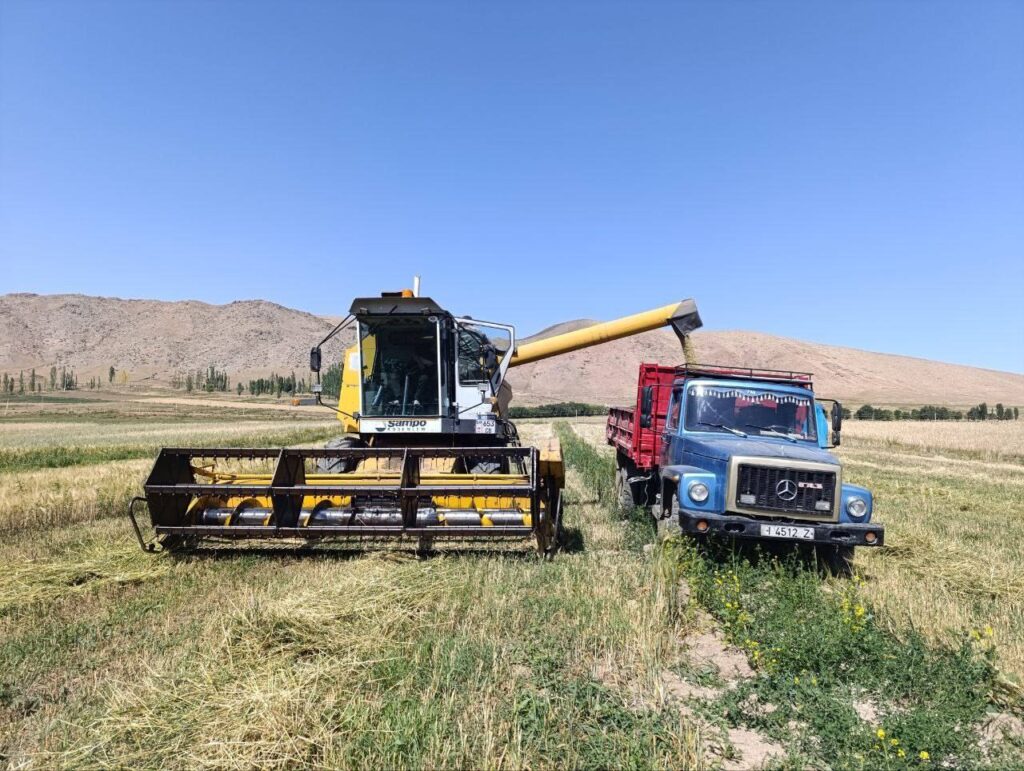
Bishkek has sharply increased wheat imports from Kazakhstan, reversing a three-year reliance on Russian supplies.

According to the National Statistics Committee, Kyrgyzstan imported 132,000 tons of wheat from Kazakhstan during the first seven months of 2025, an eightfold increase from previous years, when Kazakh wheat had nearly vanished from the local market.

The Ministry of Agriculture reported that 90% of Kyrgyzstan’s wheat crop had been harvested by the end of August, yielding 550,000 tons of grain. However, with national consumption exceeding 1.1 million tons of flour annually, domestic production remains insufficient.

In 2022, Kyrgyz importers pivoted toward Russian suppliers, citing lower costs. Imports from Kazakhstan fell from 82,500 tons to just 3,500 tons, while purchases from Russia soared to nearly 240,000 tons.

By 2025, the trend had reversed. Kazakhstan now accounts for 72.5% of Kyrgyz wheat imports. In monetary terms, imports surged even more dramatically, rising 8.8 times. Between January and August, Kyrgyzstan spent $27.2 million on Kazakh wheat at an average price of $206 per ton. The rest came from Russian suppliers.

The shift has been driven largely by pricing. Russian wheat, which cost just over $160 per ton in 2023, rose to $203 in 2024 and is now priced around $220 per ton. In contrast, Kazakhstan’s record 2024 harvest, 26.5 million tons overall, including 18 million tons of wheat, enabled it to offer more competitive rates, despite traditionally being more expensive than Russian grain.

Sources in the Kyrgyz Association of Millers told TCA that the strengthening of the ruble, recovering from years of sanctions-induced weakness, has pushed Russian wheat prices higher. As the ruble appreciates, Russian grain becomes less affordable for importers.

The resurgence of Kazakh wheat underscores Kyrgyzstan’s ongoing reliance on imports to meet domestic food demand. While the national harvest is nearing completion, local output still covers only about half of annual consumption.

For Bishkek, the return to Kazakh suppliers is not merely economic, it’s also a matter of food security, amid rising global market volatility and Russia’s continued exposure to external shocks.

Billion-Dollar Agreements and a Boeing Deal: Inside Mirziyoyev’s Visit to New York

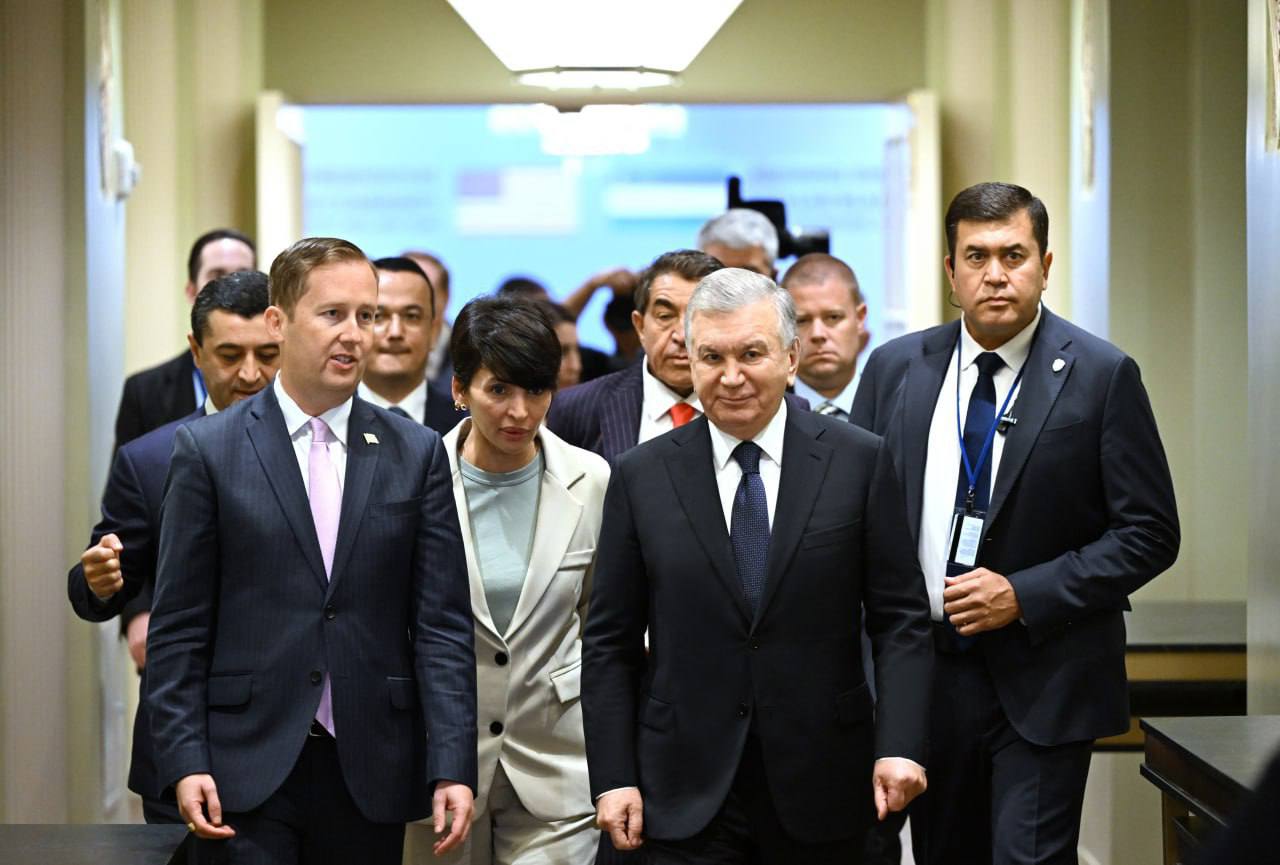
On September 20, President of Uzbekistan Shavkat Mirziyoyev arrived in New York to participate in events marking the 80th session of the UN General Assembly. At John F. Kennedy Airport, he was welcomed by Paolo Zampolli, Special Envoy of the U.S. President for Global Partnerships, Carolyn Lamm, Chair of the American-Uzbekistan Chamber of Commerce, and other officials.

Finance and Critical Minerals Cooperation

On September 22, Mirziyoyev held a series of high-level meetings with executives from leading corporations and international institutions. Uzbekistan is seeking to position itself as a reliable supplier in the global critical minerals chain. With reserves of copper, gold, uranium, and rare earths, officials have prioritized foreign partnerships to accelerate exploration and processing capacity, while also ensuring environmental and governance standards are met.

In talks with IMF Managing Director Kristalina Georgieva, the two sides discussed expanding cooperation on monetary policy, statistical reform, and educational programs. Georgieva commended Uzbekistan’s economic reforms and reaffirmed the Fund’s support.

A $1 billion package of initiatives was finalized with Traxys, the Colorado School of Mines, FLSmidth, McKinsey, and Go Green Partners. These projects focus on critical minerals mining and processing, alongside the creation of a Competence Center in Uzbekistan.

Discussions with BlackRock board member Adebayo Ogunlesi centered on establishing a joint infrastructure fund. With Citigroup Chairman John Dugan, the president addressed IPOs of state-owned enterprises, Eurobond issuance, and trade finance mechanisms.

Franklin Templeton CEO Jenny Johnson confirmed agreements related to the transformation of state-owned companies and the development of the Tashkent Stock Exchange. President Brian Friedman of the New York-based global investment banking and capital markets firm, Jefferies, meanwhile, expressed interest in helping attract strategic investors to Uzbekistan’s National Investment Fund.

Franklin Templeton’s management of Uzbekistan’s $1.7 billion National Investment Fund signals growing trust in U.S. asset managers. Meanwhile, Jefferies’ potential involvement in attracting strategic investors highlights the rising role of global capital markets in Uzbekistan’s privatization and modernization agenda.

NASDAQ CEO Adena Friedman discussed the modernization of the Tashkent Stock Exchange and the introduction of a government bond trading platform. Oppenheimer Holdings CEO Robert Lowenthal pledged support for Uzbekistan’s private sector and participation in Eurobond issuance.

Image: president.uz

Strategic Agreements Signed

A signing ceremony was held in the presence of President Mirziyoyev and U.S. Presidential Special Envoy Sergio Gor. Agreements were exchanged with Boeing, FLSmidth, Cleveland Clinic, Citigroup, Cargill, Pangea Filtration Technology, SLB, Biologic International, and others.

During a meeting with WTO Director-General Ngozi Okonjo-Iweala, Mirziyoyev reaffirmed Uzbekistan’s commitment to aligning its legislation with international standards, with the goal of completing WTO accession by 2026. Uzbekistan’s WTO accession is being closely watched in Central Asia, as its success could set a precedent for other countries still outside the organization. For investors, WTO membership would mean greater legal predictability and integration into global trade frameworks.

The president also met with Air Products CEO Eduardo Menezes. The company has already invested over $1 billion in Uzbekistan, with projects at the GTL plant, Ferghana Refinery, and “Navoiazot.” Both parties agreed to expedite the construction of a gas-chemical complex in Bukhara.

Boeing and Uzbekistan Airways Ink Landmark Deal

A standout announcement came from U.S. President Donald Trump, who revealed a major agreement between Uzbekistan Airways and Boeing on Truth Social. According to Trump, Uzbekistan will purchase 22 Boeing 787 Dreamliner aircraft valued at more than $8 billion. Trump noted that the deal will support over 35,000 jobs in the United States.

“President Mirziyoyev is a man of his word, and we will continue to work together on many other issues,” Trump stated.

According to a May 2025 report by Ranking.kz, Uzbekistan places among the top three post-Soviet countries in both its number of airlines and the size of its aircraft fleet. As of that date, the former Soviet nations had approximately 1,100 aircraft and 96 airlines. Russia led with 39 carriers and 748 planes. Uzbekistan held second place by number of airlines (12) and third in fleet size (93 aircraft). Kazakhstan followed with 10 airlines and 98 planes, surpassing Uzbekistan in aircraft count but trailing in carrier numbers.

Deepening Engagement

Mirziyoyev’s program in New York underscores Uzbekistan’s expanding engagement with global corporations, financial institutions, and international organizations. The agreements signed mark a significant step forward in investment, energy, infrastructure, and aviation, reinforcing the country’s strategic pivot toward global economic integration.

Mirziyoyev’s New York visit demonstrates Uzbekistan’s determination to anchor itself more firmly in global markets. The combination of multibillion-dollar aviation and energy deals, commitments from major U.S. financial institutions, and progress on WTO accession illustrates how Tashkent is blending domestic reform with international engagement. For Washington, the agreements also reflect a deepening U.S. stake in Central Asia’s most populous country, one positioned as both a logistics hub and a rising source of critical resources. If implemented effectively, the initiatives announced in New York could accelerate Uzbekistan’s transformation into one of the region’s most dynamic economies and a key partner in the evolving Eurasian trade and investment landscape.

Survey Reveals 41% of Bishkek Residents Use Private Cars, Exacerbating Air Pollution

As part of preparations for a new urban development plan, Bishkek’s municipal authorities have conducted a comprehensive survey to understand how residents of the capital and its suburbs navigate the city.

According to the results, 41% of respondents rely on private transportation, including personal vehicles and taxis, while 38% use municipal public transport, primarily buses. The remaining 21% get around on foot, by bicycle, or by scooter, including electric scooters.

The most frequented destination for city residents is the downtown area, which accounts for the majority of work-related and other daily trips.

The Bishkek City Administration stated that the survey data will be used to design a more efficient and balanced urban transportation system aimed at enhancing public transit services.

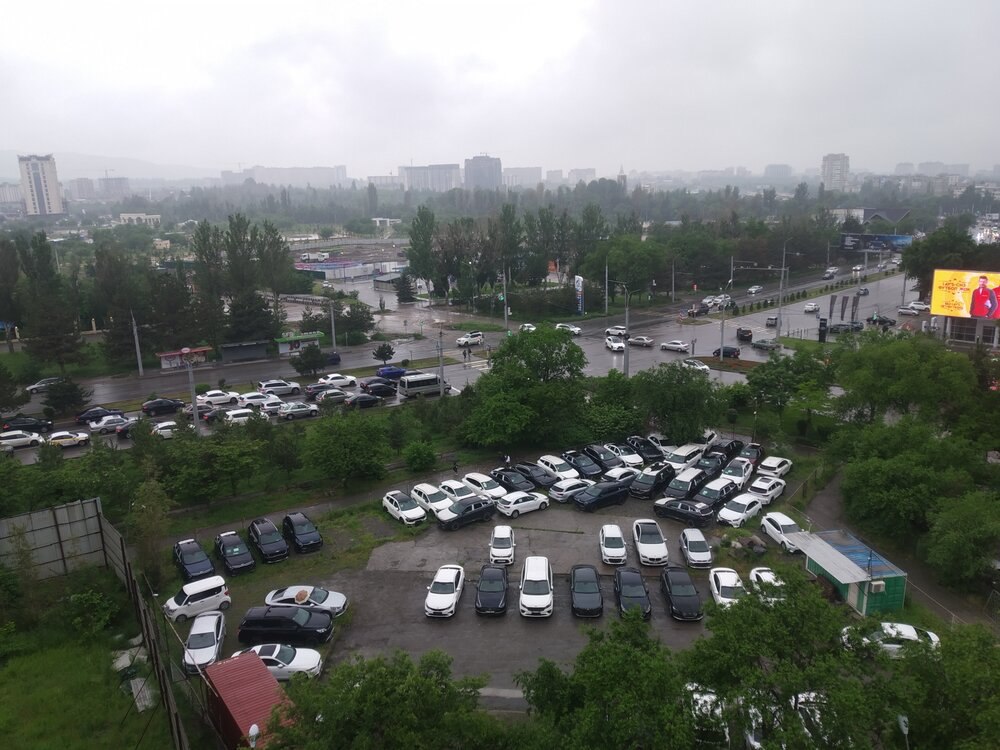
Traffic congestion remains a critical issue in Bishkek, a city experiencing rapid population growth. According to the Ministry of Natural Resources, Ecology, and Technical Supervision, motor vehicles, particularly older models lacking catalytic converters, are responsible for approximately 30% of the city’s air pollution.

Vehicle numbers in the capital have surged in recent years. Bishkek now hosts more than 700,000 vehicles, nearly double the road infrastructure’s intended capacity of 350,000. Over 300,000 of these vehicles are more than 15 years old, making them significant contributors to harmful emissions.

In response, the city has taken steps to modernize its public transportation fleet. Recent initiatives include replacing diesel-powered buses with larger, more environmentally friendly models powered by liquefied petroleum gas (LPG).