• KGS/USD = 0.01144 0%
  • KZT/USD = 0.00196 -0%
  • TJS/USD = 0.10899 -0%
  • UZS/USD = 0.00008 -0%
  • TMT/USD = 0.28490 0%
  • KGS/USD = 0.01144 0%
  • KZT/USD = 0.00196 -0%
  • TJS/USD = 0.10899 -0%
  • UZS/USD = 0.00008 -0%
  • TMT/USD = 0.28490 0%
  • KGS/USD = 0.01144 0%
  • KZT/USD = 0.00196 -0%
  • TJS/USD = 0.10899 -0%
  • UZS/USD = 0.00008 -0%
  • TMT/USD = 0.28490 0%
  • KGS/USD = 0.01144 0%
  • KZT/USD = 0.00196 -0%
  • TJS/USD = 0.10899 -0%
  • UZS/USD = 0.00008 -0%
  • TMT/USD = 0.28490 0%
  • KGS/USD = 0.01144 0%
  • KZT/USD = 0.00196 -0%
  • TJS/USD = 0.10899 -0%
  • UZS/USD = 0.00008 -0%
  • TMT/USD = 0.28490 0%
  • KGS/USD = 0.01144 0%
  • KZT/USD = 0.00196 -0%
  • TJS/USD = 0.10899 -0%
  • UZS/USD = 0.00008 -0%
  • TMT/USD = 0.28490 0%
  • KGS/USD = 0.01144 0%
  • KZT/USD = 0.00196 -0%
  • TJS/USD = 0.10899 -0%
  • UZS/USD = 0.00008 -0%
  • TMT/USD = 0.28490 0%
  • KGS/USD = 0.01144 0%
  • KZT/USD = 0.00196 -0%
  • TJS/USD = 0.10899 -0%
  • UZS/USD = 0.00008 -0%
  • TMT/USD = 0.28490 0%
08 December 2025

Kinship Clans in Modern Kazakhstan: Historical Continuity and New Realities

Ancestral ties are seemingly embedded in the DNA of every Kazakh. This tradition, rooted in antiquity, reflects the clan structure that historically shaped Kazakh society. The notions of zhuz (a set of clans) and ru (clan) largely determined the social organization of the nomadic lifestyle. Kazakh society traditionally consisted of three zhuzes, the Older, Middle, and Younger which in turn united many clans.

The zhuzes were large tribal unions, a kind of higher-level “horde” that included dozens or even hundreds of distinct clan groups (ru), while ru referred specifically to a group of close blood relatives. Such clan structures formed the basis of traditional society.

Historical Roots: The System of Zhuzes and Shezhire

The origin of the three Kazakh zhuzes remains a subject of historical debate. In early written sources from the 17th century, the names of the zhuzes had not yet been formalized. Chronicles described only a geographic custom: those living in the upper reaches of a river were called the “Big zhuz,” those in the middle the “Middle zhuz,” and those in the lower reaches the “Younger zhuz.”

The 16th-century work Majmu al-Garaib mentions Kazakhs but notes that the terms Uly zhuz, Orta zhuz, and Kishi zhuz were not yet in use.

The classical three-zhuz system only fully formed by the late 17th to early 18th century, during the reign of Tauke Khan (1680-1715), when the Kazakhs united under a single Kazakh Khanate. According to a legend recorded by traveler G. N. Potanin, one ruler gathered 300 warriors and divided them into three groups: the first hundred, Uly zhuz, were settled upstream along the Syr Darya; the second hundred, Orta zhuz, in the middle; and the last hundred, led by the chief Alshin, downstream as Kishi zhuz.

These legends provide a cultural explanation for the emergence of the zhuzes, though historians stress there is no single agreed version. Hypotheses range from military-administrative divisions into “wings” to the influence of geography and climate across Semirechye, Saryarka, and Western Kazakhstan.

Alongside the zhuz system, clan identity was reinforced through genealogical chronicles, shezhire, in which Kazakhs recorded their ancestors’ names and clan history. Knowledge of seven generations (jeti ata) was obligatory for every Kazakh and was absorbed “with mother’s milk”.

These genealogies had practical implications: knowing one’s lineage helped determine kinship laws, including prohibitions on marrying within the same clan.

The clan was not just a social structure, but a fundamental part of identity. As publicist Khakim Omar wrote: “The main idea of the shezhire is revealed in the close connection of ancestors’ and descendants’ names, in the continuity of generations,” allowing a person, through genealogy, “to define their place in the world”.

Transformation of Tradition in the Soviet Era

Under Soviet rule, internationalism and a break from “tribalism” were officially promoted. Yet in practice, the clan system continued to operate informally as a mechanism of social mobility and legitimacy. While divisions into zhuzes and clans were no longer legally recognized, they endured as a way of thinking, a cultural filter through which many Kazakhs understood the world.

Historian Nurbulat Masanov noted: “Zhuzes – clans – tribes in Kazakhstan never functioned as organizational structures… In Kazakhstan, this was primarily a way of interpreting processes through kinship ties”. In other words, kinship continued to play the role of an “invisible hand,” particularly in informal settings.

Perceptions of leaders were often shaped by clan affiliation. For instance, Dinmukhamed Kunaev, First Secretary of the Communist Party of Kazakhstan in the 1960s-1980s, was seen by many as “their own” because he came from the Older zhuz, ysty clan. Many in that zhuz felt pride that “their” person led the republic, while others felt less connection.

Informal patronage also persisted: historians note that Kunaev often surrounded himself with trusted associates from similar regional or clan backgrounds.

Even though kinship was not openly discussed in Soviet times, the practice of agaiynshylyk (nepotism) quietly endured.

Modern Perception: How Kinship Ties Live Today

To understand how zhuzes and clans are viewed today, The Times of Central Asia, spoke with citizens from different regions of Kazakhstan. Despite globalization, many still see these traditional affiliations as an important part of personal and collective identity, even as their meanings evolve.

Aigerim Ospanova, 24, lawyer:

“When I studied at university in Aktobe, I often heard the question: ‘What clan are you from?’ It wasn’t about connections or privileges, more a way to quickly find common ground. Clan is like a password in the system: it opens access to trust.”

In larger cities like Almaty and Astana, young people generally pay less attention to formal clan affiliation, seeing it more as cultural knowledge, a link to the past.

Daniyar Olkhabek, 20, IT specialist (Astana):

“My grandmother still asks what ru my friends are from. While I don’t give it much importance, I understand that for the older generation it’s a way to preserve tradition. It doesn’t bother me, on the contrary, it reminds me where I come from.”

In western and southern Kazakhstan, especially in rural areas, kinship ties remain visible. However, even here, the meaning is shifting from exclusion to informal networks of trust and support.

Yerlan Baktybaev, 31, logistics specialist (Atyrau region):

“If someone is from my ru, it doesn’t mean I’ll promote him at work through connections. But we’ll likely be friends, if he’s really competent. It’s simply part of our culture of mutual support.”

For many young Kazakhs, especially those abroad, knowledge of genealogy remains a source of pride and solidarity. Shared ancestry can quickly build bridges between strangers.

Alen Ismailov, 25, master’s student (Almaty):

“When I went to study in Turkey, I met a guy from my ru. We instantly felt kinship, even though we were complete strangers. In a foreign country, that became a point of support, a very valuable feeling.”

Today’s youth tend to approach clan identity with flexibility. For most, it is a part of cultural heritage, not a rigid social label. Many prioritize personal achievement, education, and professional success over lineage.

Assel Akhmetova, 22, student (Taraz):

“I like knowing my zhuz and ru, it’s part of my identity. But I believe a person should be defined by their actions, not their clan. It’s good to know who you are and where you’re from, but you need to live with your own mind.”

Modern Kazakh youth stand at a crossroads between tradition and a globalized future. On one hand, they are raised to respect family and elders. On the other, post-Soviet generations are increasingly individualistic and ambition-driven. Research confirms this duality: many young Kazakhs simultaneously uphold family traditions and seek independence.

According to official surveys, 88% of young people say they trust their family members the most, demonstrating the enduring strength of traditional family values.

Yet, there is also a strong emphasis on competitiveness. Young people aspire to quality education, language skills, career advancement, and fair competition both at home and abroad.

In practice, this shift is evident in job-seeking behavior: young people rarely rely on relatives’ connections, instead trusting their own merit. Surveys show that more than 80% of urban youth oppose using zhuz or ru ties for employment, skills and professionalism matter more. At the same time, even the most “progressive” youth retain traditional knowledge: many still know their shezhire up to the seventh generation, respect marriage taboos within clans, and honor elders.

Today, two value systems coexist and are gradually reconciling in Kazakhstan. One is the traditional collectivist model, with its deep-rooted family and clan networks, ethnocultural codes, and the principle of ozimizdin adam (“our person”). The other is a modern individualist ethos, emphasizing education, mobility, and openness to the wider world.

These models are not mutually exclusive. Respect for ancestral heritage can go hand in hand with a pursuit of personal achievement in the 21st century. Perhaps in this synthesis, where a young Kazakh knows their roots but builds their future on their own merit, lies the formula for the country’s ongoing development.
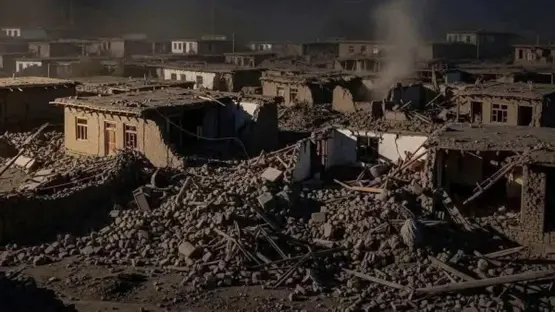
In Aftermath of Afghanistan Earthquake, Uzbekistan Delivers 256 Tons of Aid

As United Nations officials warn of shrinking resources for humanitarian work, Uzbekistan has handed over 256 tons of medicine and food to Afghanistan to help survivors of an August 31 earthquake that killed at least 2,200 people. 

The aid was organized in the Uzbek city of Termez and delivered in a convoy of 14 trucks to Hairatan, a city in Balkh province in Afghanistan that lies just across the border from Termez, Uzbekistan’s Ministry of Foreign Affairs said. A ceremony was held in Hairatan on Saturday to mark the handover.   

This assistance was directed in response to the devastating earthquake that shook the eastern provinces — primarily Kunar and Nangarhar, as well as certain areas of Laghman, Nuristan, and Panjshir,” the Uzbek ministry said

It said that officials from Afghanistan and Uzbekistan “agreed on mechanisms to ensure the targeted delivery and fair distribution of humanitarian assistance.”

Some international donors have previously expressed concern that Afghanistan’s Taliban government diverts aid for its own purposes rather than delivering it to those most in need. 

Turkmenistan said it sent humanitarian aid to Afghanistan from Ashgabat International Airport on Friday.

Turkmenistan’s Ministry of Foreign Affairs said in a statement that food, clothing and other essential goods were sent “primarily to children and residents affected by the natural disaster,” though it didn’t say how much assistance was provided. 

Other countries have also provided aid or made pledges to do so. The Iranian Red Crescent Society has sent several shipments, each containing dozens of tons of humanitarian assistance, to Afghanistan. China has said it will provide about $7 million in aid. The European Union has said it approved 1 million euros in humanitarian emergency funding and was also donating 130 tons of relief supplies to Afghanistan.

But Tom Fletcher, the U.N.’s relief chief, said that the relief supplies provided so far and critical initial funding isn’t enough to deal with the quake’s massive destruction and displacement of large numbers of people. 

“Failing to rally resources now will mean deeper suffering and more lives lost, with winter fast approaching,” Fletcher said on Friday. 

The Taliban government has imposed rules making it difficult for female aid workers to help with quake relief efforts, according to the Human Rights Watch group.

However, Dr. Abdul Mateen Sahak, a local leader of the U.N. World Health Organization in Afghanistan, said women as well as men were involved in rescuing people in the first few days after the earthquake, indicating that the disaster “briefly broke down barriers,” according to a U.N. account

Sahak said he did not see female patients being denied care. But he said a big problem is the exodus from the country of female specialist doctors and other professional women since the Taliban took power again in 2021, making it hard to find staff to help with such disasters.  


Uzbekistan and United States Leaders Discuss Expanding Strategic Partnership

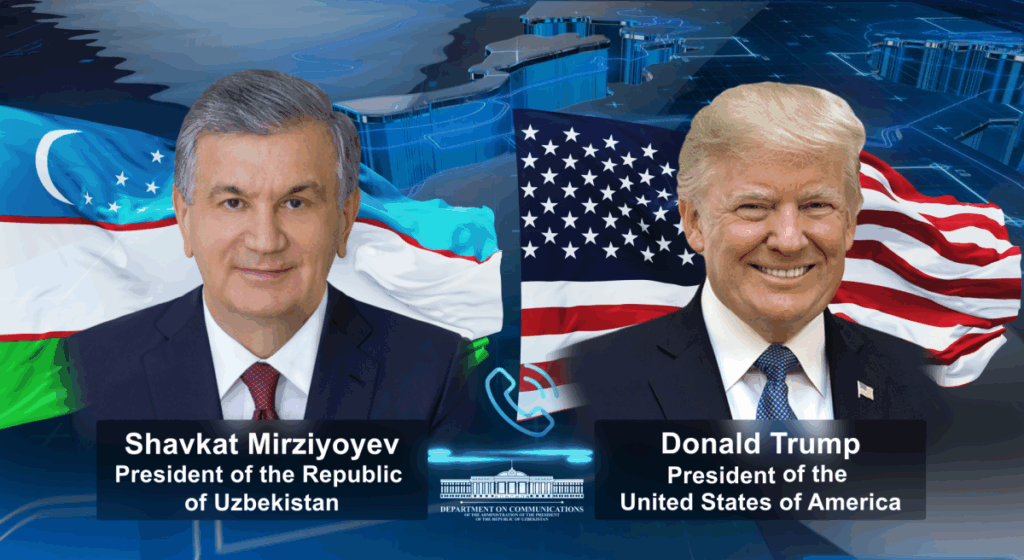
According to the office of President Shavkat Mirziyoyev, the Uzbek and U.S. presidents held a telephone conversation on Friday, focusing on ways to deepen their countries’ strategic partnership across economic, security, and cultural fields. The details of the call were provided by the Uzbek president’s office.

Strengthening Economic Ties

The presidential office reported that both leaders emphasized opportunities to expand trade and investment. Bilateral trade grew by 15% in 2024, and the two sides signaled interest in building on that momentum. Prospective projects span civil aviation, mineral resources, energy, agriculture, digital technologies, finance, and education. Later this month, meetings are expected between Uzbek representatives and leading U.S. companies to explore long-term cooperation.

Security and Regional Cooperation

According to the statement, security issues also featured prominently in the conversation. The two presidents noted ongoing joint work against terrorism, extremism, and illegal migration. They also exchanged views on regional cooperation in Central Asia, highlighting the role of the “C5+1” dialogue format that brings together the United States and five Central Asian countries.

Cultural and Humanitarian Exchanges

The Uzbek president’s office noted that the discussion touched on expanding cultural and educational links. Branches of U.S. universities are operating in Tashkent, providing new opportunities for academic exchange. Looking ahead, the leaders noted with satisfaction that Uzbekistan’s national football team will participate for the first time in the 2026 World Cup, which the United States will be the main host of.

A Growing Partnership

Since Mirziyoyev assumed the presidency in 2016, Uzbekistan has pursued a more open foreign policy and a program of internal reforms aimed at modernizing the economy and improving governance. These changes have created new opportunities for cooperation with Washington.

The United States, for its part, has supported regional initiatives through the C5+1 framework, while also seeking closer ties with Tashkent in areas such as counterterrorism, economic development, and education. American universities and companies have increased their presence in Uzbekistan, and cultural exchanges have expanded steadily in recent years.

Next Steps

The president’s office stated that President Mirziyoyev invited President Trump to pay an official visit to Uzbekistan. Both leaders agreed to maintain high-level contacts and continue advancing joint projects and programs.

According to the Uzbek president’s office, the conversation was held in a constructive and friendly atmosphere, underscoring a shared interest in further strengthening Uzbek-American relations.

Trans-Afghan Railway: Can Uzbekistan Build a Railway Through Afghanistan to Reach the Sea?

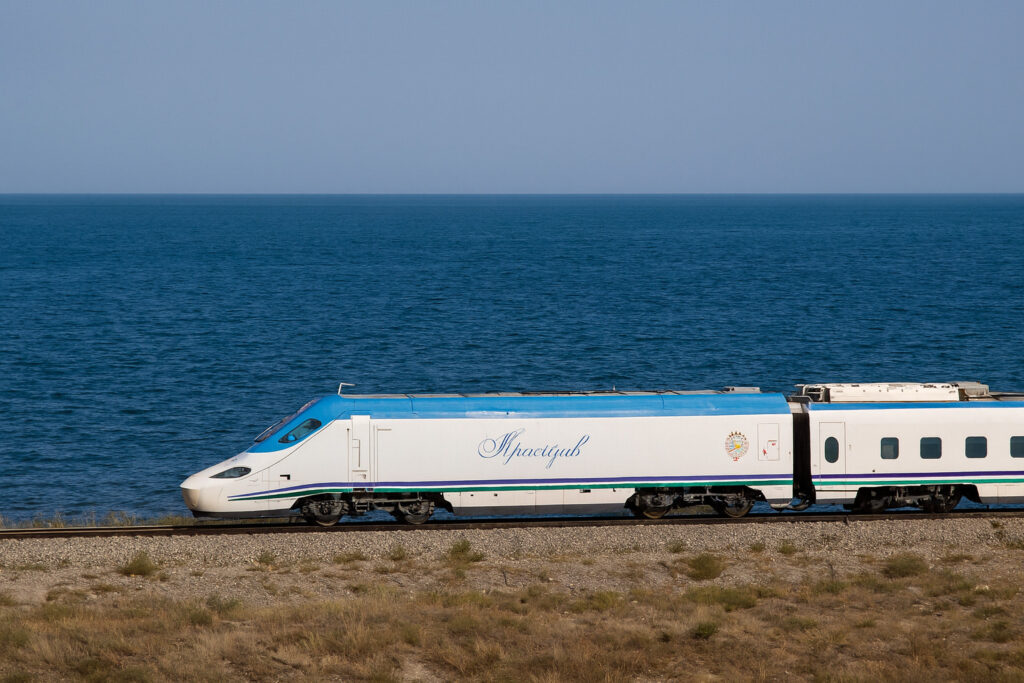
For years, Uzbekistan has planned to gain access to the sea by passing through Afghanistan: The Trans-Afghan Railway is one of the country’s top transport projects. The railway could not only bring Uzbekistan to the sea, but also turn it into a transit hub connecting the north and south. However, no matter how promising the project looks, existing obstacles leave its fate uncertain. The Taliban has not yet established full control over Afghan territories, and many of its state assets are frozen. This leaves the construction costs to Uzbekistan and Pakistan. The Taliban government’s lack of recognition may also complicate attracting international institutions and companies to the project, even after its completion. So how realistic is Uzbekistan’s new Trans-Afghan railway project?

Why Is the Railway Needed?

Proposed by Uzbekistan in December 2018 for the first time, the Trans-Afghan railway project aims to extend Afghanistan’s rail network from Mazar-i-Sharif through Kabul and Logar, before crossing into Pakistan via Kharlachi – replacing the earlier plan to run through Nangarhar Province. The railway would cross the Torkham border and pass through Peshawar into Pakistan. Once in Pakistan, cargo would be linked to the Pakistani railway system, reaching the country’s seaports of Karachi, Gwadar, and Qasim. However, in July 2023, Uzbekistan, Pakistan, and Afghanistan finalized a different route: Termez → Naibabad → Maidanshahr → Logar → Kharlachi. This means the corridor will not pass through the Torkham border as originally described.

Now construction scheduled to start within five months, the railway is expected to handle up to 20 million tons of cargo annually and reduce transit time from Uzbekistan to Pakistan from 35 days to 3–5 days once operational.

Financial Obstacles

The line is planned to be 647 km long, with an estimated construction cost of $6.9 billion according to more recent Uzbek statements (though earlier estimates ranged from $4.6 to $7 billion). This figure remains subject to change until the final feasibility study is complete. Given Afghanistan’s complex ecological terrain, estimated costs could rise significantly.

Pakistan has stated it would raise funds for the construction and financing of the part of the line to be built on Afghan territory. Observers believe the first issue to resolve before construction starts is the provision of security by the Taliban. Independent political analyst Yunus Sharifli argues that statements made by ISIS and threats targeting countries cooperating with the Taliban are further delaying construction.

“At present, the deterioration of Afghanistan’s security situation makes it even harder to secure credit lines with financial institutions. The Taliban continues to struggle to establish legitimacy in Afghanistan. Yet the country as a whole remains bogged down in ethnic conflicts,” Sharifli stated.

The Taliban’s policies toward women are also seen as one of the reasons complicating access to international financing mechanisms.
Multilateral financial institutions and donor states condition their support on certain governance principles. This has become one of the main challenges in securing financing and attracting Western investors.

Geographic Obstacles

Part of the line is planned to cross the Salang Pass in the Hindu Kush mountains at an altitude of 3,500 meters, making it one of the highest railways in the world. Observers note that the Salang Pass is prone to heavy snowfall in winter, which could leave the railway inoperable for long periods. For this reason, some argue that a tunnel under the mountains will also need to be built.

Such geographic and weather-related challenges could impose infrastructure limitations and increase delivery times. In particular, Uzbek journalist Yuri Chernogaev, who runs the Telegram channel “Na Vostoke ne vse kak kazhetsya” (“In the East, Not Everything Is as It Seems”), wrote that the region’s terrain poses a huge engineering challenge. The post questions whether it is realistic to build railways across mountains reaching up to 3,000 meters high, requiring 1,200 structures – including 360 bridges and tunnels totaling 70 km in length.

“Builders are especially focused on tunnels. The figures we are being told are absolutely unrealistic. Compare: Europe, with its advanced technologies, built the Gotthard railway tunnel in a much more ‘favorable’ location than the Hindu Kush, but it still took 15 years. Its length is 51 km, and its cost was $10 billion,” Chernogaev wrote.

None of the parties involved in the project has provided detailed information on how the announced total costs will be distributed or where construction sites will be located. However, some observers and activists speculate that the development will require much more funding than has previously been announced.

Nevertheless, the project is not limited to Uzbekistan, Pakistan, and Afghanistan. Although Western countries have not shown serious interest, other nations – particularly Russia – are paying special attention to its construction. But why does Russia, which has opposed Uzbekistan’s other transport projects, including the China–Kyrgyzstan–Uzbekistan railway, see this project as promising? What could the Trans-Afghan railway offer Russia, a country under sanctions? Still, Russia’s role so far has been mostly rhetorical. While Moscow expressed support and held talks in earlier years, it did not participate in the July 17, 2025, framework intergovernmental agreement signed in Kabul, which only included Uzbekistan, Afghanistan, and Pakistan.

Why Is Russia Interested?

According to some observers, Russia’s main strategic interests are expanding its influence in Central Asia and countering Western presence in the region. *While the European Union is seeking to build the Trans-Caspian corridor in the region, Moscow could use participation in the Trans-Afghan infrastructure project to strengthen its position as the main external power around Afghanistan.

The project, stretching from the far north to the far south, may also offer Central Asian countries an alternative to China’s Belt and Road Initiative,” Sharifli stated, emphasizing that the railway fits Russia’s broader goals, particularly at a time when the country is under international sanctions. “Economically, Russia views the Trans-Afghan railway as an opportunity to enter South Asian markets and open new trade routes. This railway would allow Russia to export energy, minerals, and industrial goods to Pakistan, India, and other South Asian states.”

Moscow is one of the few major powers that has formal diplomatic relations with the Taliban and was among the first governments to remove it from the list of terrorist groups.

“By supporting infrastructure development, Russia can strengthen its position as a pragmatic partner ready to work with Afghanistan’s current leadership and secure long-term strategic advantages at a time when the West is staying away,” Sharifli says. He believes Moscow’s aim with this project is to maintain international trade, reduce the economic impact of sanctions, and strengthen its influence over Central and South Asia. In this way, Moscow seeks to establish a regional economic network independent of Western-dominated trade systems, he says.

At the same time, Tashkent has also advanced other initiatives, including a broader Russia-Kazakhstan-Uzbekistan-Afghanistan-Pakistan transport corridor project, which began taking shape in 2023 and is now moving toward launch.

Can the railway be built?

Although discussions about the project have been ongoing for years, there is no open information about when the main phase of construction will begin or who will be accountable. In early July, Deputy Transport Minister Jasurbek Choriev told the Uzbekistan 24 TV channel that laying of the railway could begin within the next six months.

In reality, construction cannot begin that quickly. The six-month timeline applies to completing the feasibility study only. Afterward, Uzbekistan and partners will need to seek investors, form a consortium, and carry out other preparatory steps before physical construction could start.

“Before starting construction, we set certain deadlines between the parties. I think these deadlines are very short, but they include grand plans – we set six months. Normally, developing such projects takes one or two years,” Choriev said. However, no specific information about major international partners currently interested in the project was provided. On the contrary, Choriev stressed his hope that such interest would materialize after the project began.

“Considering the confidence of the parties in implementing this quickly, we want to accelerate the process. After this stage, we can present the feasibility study to other countries, show forecasts and potential, attract interest, and implement the project jointly,” Choriev stated.

Experts believe three decisive factors are required: attracting sufficient financing and technical expertise, achieving broader international recognition of the Afghan government, and ensuring security guarantees along the route.

In the short term – within the next 5 years – the likelihood of the project being implemented is low because security, financing, and diplomatic isolation create too many uncertainties,” says Yunus Sharifli. In his view, only if the Afghan government gains international recognition will the political and financial conditions necessary for the construction of the railway appear.

Russia’s Gasoline Export Ban: Limited Shock, Broader Lessons for Central Asia

Russia’s decision to prolong restrictions on gasoline exports has raised concerns in energy markets, but for Central Asia, the immediate fallout appears limited. The true significance lies in what the move reveals about structural dependencies, the role of the Eurasian Economic Union (EAEU), and the region’s long-term push to diversify energy supplies.

Moscow Extends Ban

On September 2, Russian officials confirmed that the government may prolong its gasoline export ban for oil producers into October, extending measures first introduced in late summer. Deputy head of the Federal Antimonopoly Service, Vitaly Korolev, told state media that the authorities were weighing a one-month extension beyond the current deadline of September 30. As reported by Reuters, the aim is to stabilize domestic fuel supplies following refinery outages and a seasonal spike in demand. Ukrainian drone strikes have also damaged key refineries, reducing Russia’s production capacity by an estimated 10–17%.

The ban affects a relatively small share of Russia’s overall fuel output but highlights the state’s readiness to intervene in energy markets. Previous restrictions in 2023 and 2024 temporarily halted shipments to stabilize domestic prices. The latest decision reflects similar concerns: tightening inventories, growing demand from the agricultural sector, and pressure to prevent inflation ahead of winter.

While Moscow insists the measure is temporary, traders and governments across post-Soviet space are watching closely. Russia remains one of the world’s largest fuel exporters, and even marginal policy changes can cause significant ripples.

Fuel Security in Central Asia

For Central Asia, the impact of the ban will be blunted by exemptions. As members of the EAEU, both Kazakhstan and Kyrgyzstan continue to import Russian gasoline without interruption. Kazakhstan’s Ministry of Energy issued a statement stressing that the country is self-sufficient, pointing to its refineries in Pavlodar, Shymkent, and Atyrau. “For countries that have signed the relevant intergovernmental agreement… these restrictions do not apply,” Minister of Energy, Yerlan Akkenzhenov, stated.

Kyrgyzstan is highly dependent on Russian imports. However, according to Kyrgyzstan’s Ministry of Energy, the 1.6 million tons of fuel the country consumes annually, 93% of which is imported from Russia under intergovernmental agreements, will remain unaffected by the export ban. Since mid-summer, gasoline and diesel prices have climbed, driven by rising global oil benchmarks and repair work at several Russian refineries. Talks are already in progress to set revised supply volumes for 2026.

Non-EAEU states face a different challenge. Uzbekistan sources fuel through state-brokered contracts with Russian companies, ensuring stability for now, but smaller private importers outside of these deals have reported difficulties accessing volumes. Late last year, the Chairman of Uzbekistan’s Central Bank warned that the country’s growing reliance on Russian fuel imports could increase vulnerability to supply shocks, which may translate into limited competition and rising prices.

Tajikistan remains heavily dependent on Russian fuel through bilateral import agreements, and its virtually non-existent refining capacity makes it highly susceptible to external price fluctuations, a vulnerability underscored by seasonal diesel shortages and repeated spikes in domestic fuel prices. Turkmenistan, meanwhile, continues subsidizing its energy sector heavily: citizens receive free or deeply discounted electricity, gas, and heat under a policy extending through 2030, even as the authorities explore scaling back subsidies to curb domestic demand and bolster export capacity. As previously reported by The Times of Central Asia, Turkmenistan is also struggling with rampant fuel smuggling as domestic fuel is significantly cheaper than in neighboring states.

EAEU Integration: Shield and Shackle

The EAEU has shielded its members from the immediate effects of Russia’s gasoline ban. Kazakhstan and Kyrgyzstan continue receiving supplies, highlighting the bloc’s role in cushioning shocks. Yet the arrangement underscores a paradox: while integration provides stability, it also locks members into asymmetric dependencies.

Kazakhstan, the region’s largest producer, is steadily upgrading its refining base and aligning production with export markets. Its 2040 energy strategy foresees refined products accounting for a rising share of exports. In 2024, Kazakhstan was the third-largest crude oil supplier to the EU, exporting approximately 1.05 million barrels per day, roughly 11.5% of the bloc’s total. But even Astana acknowledges that Russia’s domestic policies can create disruptions, especially for joint ventures and pipeline flows.

Despite its status as a major oil producer, Kazakhstan continues importing refined products from Russia due to persistent structural constraints and logistical considerations. While Kazakhstan is pursuing a long-term refining strategy to support growing regional energy demand and boost exports, domestic refineries currently remain optimized for heavier or specific crude grades, and demand is unevenly spread, particularly in northern and eastern regions more easily supplied via rail from Russia. This serves to make Russian fuel imports a practical supplement, especially under favorable EAEU terms.

Kyrgyzstan illustrates the opposite end of the spectrum. Despite its EAEU membership, it remains structurally vulnerable because of its near-total dependence on Russian imports. The EAEU guarantees access, but not price stability, leaving Bishkek exposed to shifts in Moscow’s domestic market priorities.

Diversification: From Rhetoric to Imperative

Russia’s export ban has renewed calls for diversification. Kazakhstan is pursuing a multi-vector strategy that includes refining upgrades, supply diversification, and expanded export routes. Projects linked to the Trans‑Caspian International Transport Route (TITR), also known as the Middle Corridor, are designed to connect Kazakh fuel exports westward via the Caspian Sea. Astana is also cultivating Chinese and Indian markets for petroleum and petrochemical products, leveraging its geographic position as a transit hub between Asia and Europe. For instance, Kazakhstan is advancing its oil exports via the Baku–Tbilisi–Ceyhan (BTC) route, with a 12 % increase in shipments in H1 2025 and discussions underway with Turkey to expand capacity – measures intended to diversify beyond Russian routes. India is also exploring the Middle Corridor – with Kazakhstan as a central hub – as an alternative link to Europe as it seeks greater strategic autonomy beyond China’s Belt and Road infrastructure.

In the near term, Uzbekistan remains structurally dependent on Russian gasoline. When Russia imposed a six-month ban on gasoline exports to safeguard its domestic market in early 2024, Uzbekistan was exempted under intergovernmental agreements, even though it is not a member of the EAEU. Tashkent holds only observer status in the bloc and has stated that it currently has no plans to pursue full membership.

Tajikistan, meanwhile, is betting on hydropower centered on the massive Rogun Dam project to reduce its reliance on fossil fuels. However, without refining capacity or diversified fuel supply contracts, it remains tethered to Russian gasoline. Turkmenistan also continues to face persistent fuel shortages due to domestic pricing subsidies that encourage smuggling.

Why the Ban Matters Symbolically

Russia’s gasoline export ban, while limited in its immediate scope, is a symbolic reminder of Moscow’s leverage. With a relatively minor policy shift, it has demonstrated an ability to disrupt expectations and expose the fragility of regional supply chains. Though the official rationale – domestic stabilization amid refinery outages and seasonal demand – has been emphasized by the Russian authorities, the ban reveals deeper structural vulnerabilities in Central Asia’s energy architecture.

For Kazakhstan, the exemption is a validation of its partial self-sufficiency, but also serves as a reminder that refinery upgrades and export diversification are crucial to insulate against external shocks. Despite being shielded by EAEU mechanisms, Kyrgyzstan is still facing price fluctuations due to its overwhelming reliance on Russian fuel, meaning it effectively has protection without autonomy. Uzbekistan’s exemption via bilateral agreements offers short-term relief, but reinforces its dependence. In Tajikistan and Turkmenistan, where domestic refining is virtually absent or underperforming, reliance on subsidized or imported fuel continues to distort markets and delay reform.

Rethinking Dependency

While no immediate fuel shortages are expected in Central Asia, the episode serves as a stress test. EAEU exemptions, bilateral deals, and domestic production buffers will mitigate short-term risks, but future export bans, refinery outages, or geopolitical shifts could trigger deeper disruptions, especially for states with limited refining capacity or inflexible sourcing strategies. Fuel security is no longer an abstract issue; it is increasingly treated as an element of national sovereignty. Kazakhstan’s and Uzbekistan’s push through the Middle Corridor, therefore, signals a meaningful shift.

Kazakhstan’s Rare Earth Reserves Surpass Projections Following New Geological Surveys

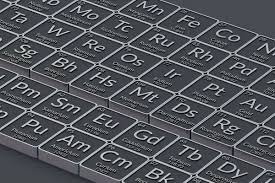
Geological exploration at Kazakhstan’s largest rare earth metal deposit, Kuirektykol, in the Karaganda region, has revealed significantly higher reserves than previously estimated. The latest data suggests that the site holds 28.2 million tons of commercially viable rare earth elements, up from an initial estimate of 20 million tons.

Exploration work began in 2022, and by November 2024, geologists had already confirmed significant concentrations of cerium and other lanthanides across four key zones at depths of up to 300 meters.

Regional Potential Expands

Alibek Aldeney, Deputy Akim of the Karaganda region, said that the surveys also revealed new prospective sites for gold, copper, and tungsten.

“Foreign companies are already conducting surveys. This will allow us to expand our mineral resource base and create new production facilities for processing rare earth and precious metals,” Aldeney said.

Industry experts have long maintained that Kazakhstan holds the potential to ensure stable supplies of critical minerals amid rising global demand.

Strategic Priorities and Government Support

In August, Prime Minister Olzhas Bektenov convened a meeting to discuss the development of Kazakhstan’s rare earth sector. He emphasized the need to modernize production, adopt advanced technologies, and increase scientific research.

According to the Ministry of Industry, rare and rare earth metals currently account for 2.4% of the country’s metallurgical sector. Since 2018, the government has invested KZT 67 billion (approximately $124 million) in the industry.

Kazakhstan is currently exploring 25 promising rare earth sites across a combined area of 100,000 square kilometers. In 2024 alone, 38 new deposits of solid minerals were identified.

Production of beryllium, tantalum, niobium, scandium, titanium, rhenium, and osmium is already underway, along with the extraction of associated elements such as bismuth, antimony, selenium, and tellurium.

Future Outlook and Strategic Concerns

There are emerging industrial opportunities include the production and recycling of battery materials, heat-resistant alloys, semiconductors, and permanent magnets. However, as The Times of Central Asia previously reported, with the sector’s strategic value increasing, members of parliament have called for tighter regulation of rare earth exports to safeguard national interests.