• KGS/USD = 0.01144 0%
  • KZT/USD = 0.00212 0%
  • TJS/USD = 0.10456 0.19%
  • UZS/USD = 0.00008 0%
  • TMT/USD = 0.28490 0%
  • KGS/USD = 0.01144 0%
  • KZT/USD = 0.00212 0%
  • TJS/USD = 0.10456 0.19%
  • UZS/USD = 0.00008 0%
  • TMT/USD = 0.28490 0%
  • KGS/USD = 0.01144 0%
  • KZT/USD = 0.00212 0%
  • TJS/USD = 0.10456 0.19%
  • UZS/USD = 0.00008 0%
  • TMT/USD = 0.28490 0%
  • KGS/USD = 0.01144 0%
  • KZT/USD = 0.00212 0%
  • TJS/USD = 0.10456 0.19%
  • UZS/USD = 0.00008 0%
  • TMT/USD = 0.28490 0%
  • KGS/USD = 0.01144 0%
  • KZT/USD = 0.00212 0%
  • TJS/USD = 0.10456 0.19%
  • UZS/USD = 0.00008 0%
  • TMT/USD = 0.28490 0%
  • KGS/USD = 0.01144 0%
  • KZT/USD = 0.00212 0%
  • TJS/USD = 0.10456 0.19%
  • UZS/USD = 0.00008 0%
  • TMT/USD = 0.28490 0%
  • KGS/USD = 0.01144 0%
  • KZT/USD = 0.00212 0%
  • TJS/USD = 0.10456 0.19%
  • UZS/USD = 0.00008 0%
  • TMT/USD = 0.28490 0%
  • KGS/USD = 0.01144 0%
  • KZT/USD = 0.00212 0%
  • TJS/USD = 0.10456 0.19%
  • UZS/USD = 0.00008 0%
  • TMT/USD = 0.28490 0%

Kyrgyzstan Signals Possible End to EU Aviation Ban

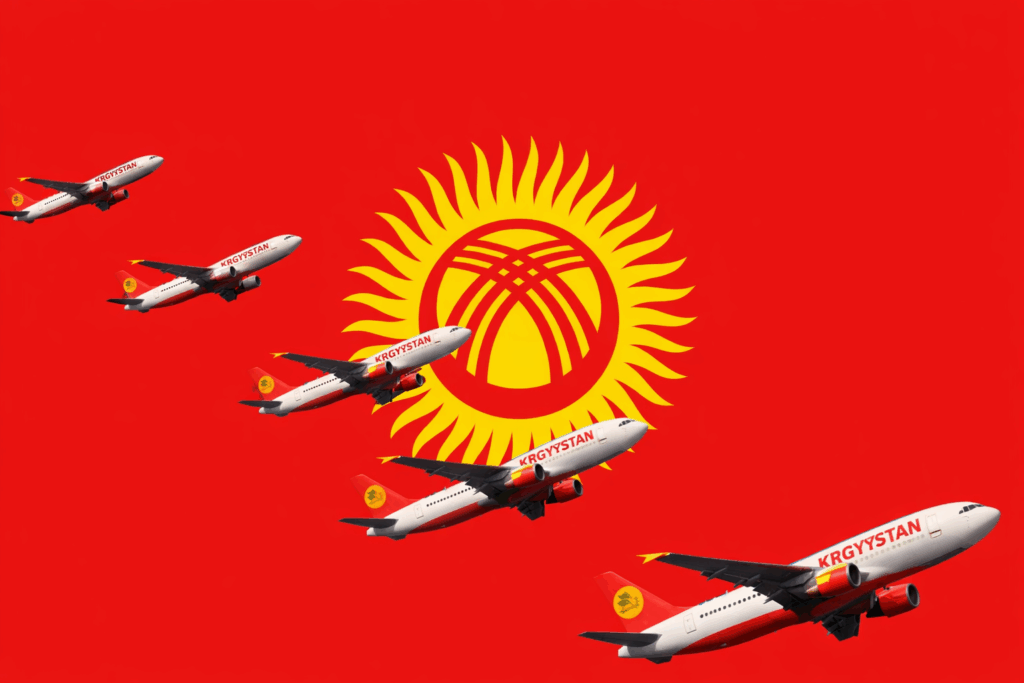
Kyrgyzstan says it is close to ending a near two-decade ban that has kept its airlines off European routes, after President Sadyr Japarov said the country has reached a “critical point” in efforts to leave the European Union’s air safety blacklist. The comments come as Kyrgyz officials push for international recognition of reforms in aviation oversight and airport infrastructure.

Japarov said Kyrgyzstan has been developing civil aviation “on its own initiative,” investing “billions of soms,” buying aircraft for domestic and international routes, and building new airports. He described the effort as a state priority and added: “Kyrgyzstan has reached a critical point in its exit from the European Union’s ‘blacklist’… with God’s help, the skies of Europe will open to Kyrgyzstan.”

The EU Air Safety List is the bloc’s mechanism for restricting airlines that, in the EU’s assessment, do not meet international safety standards. Airlines on the list are banned from operating “to, in and from the EU,” and the EU can also apply restrictions to all carriers certified in a country if national oversight is deemed inadequate, according to the European Commission’s official Q&A on the EU Air Safety List. Updates are prepared with support from the EU Air Safety Committee and the European Union Aviation Safety Agency (EASA), and are based on standards set through the International Civil Aviation Organization (ICAO), the Commission says.

Kyrgyz airlines have been on the EU list since 2006. The EU’s most recent comprehensive update, published on December 8, 2025, still includes Kyrgyzstan among the countries whose airlines are banned because of “a lack of safety oversight by the aviation authorities,” according to the Commission’s December 2025 materials and the linked EU Air Safety List documentation. Kyrgyz airlines would be allowed to apply for operations linked to the European Union if the country is removed from the EU Air Safety List. Any carrier seeking to fly to, from, or within the EU needs to meet European safety requirements, including obtaining Third Country Operator authorization from the European Union Aviation Safety Agency, according to the European Commission’s air safety rules.

Kyrgyzstan’s public messaging has framed the potential removal as an economic lever, with Japarov stating it would support tourism, attract investment, and improve the country’s international image. It could also lead to more direct scheduled flights between Kyrgyzstan and EU destinations, rather than relying on connections via third countries.

The EU has not announced a decision to remove Kyrgyzstan, and any change would require a formal update to the list after technical review. Past EU updates show that changes can cut both ways. In June 2025, for example, the Commission added all carriers certified in Suriname and Tanzania after identifying serious shortcomings in national oversight, in an official announcement on its Mobility and Transport site.

For now, Japarov’s statement signals confidence that Kyrgyzstan believes it has supplied the documentation and reforms the EU expects. Whether that will translate into removal will depend on the EU’s technical findings and the next formal update cycle of the Air Safety List.
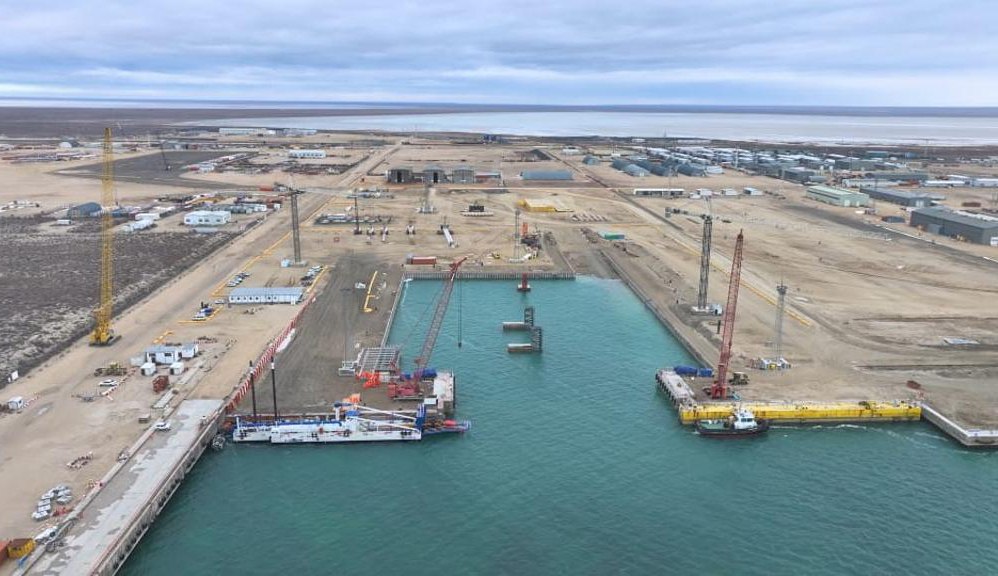

Kazakhstan Deepens Kuryk Port on Trans-Caspian Transport Corridor

Kazakhstan has launched a strategic dredging project at the ERSAI industrial port, part of the Caspian Sea’s Kuryk Port, aimed at boosting its cargo-handling capacity and reinforcing its role as a key transit hub along the Trans-Caspian International Transport Route (TITR). Also known as the Middle Corridor, the TITR connects China to Europe via Central Asia and the South Caucasus.

According to the Ministry of Transport, the project will deepen the port’s waters and approach channel to five meters, enabling year-round navigation.

The initiative is fully financed by ERSAI, which is constructing its own Cutter Suction Dredger (CSD 650), named ERSAI 5, to carry out the dredging works between January and June 2026.

Dredging is a core component of ERSAI’s broader expansion strategy, which also includes launching a new container terminal and expanding shipbuilding and repair operations.

Located on the eastern coast of the Caspian Sea, south of the Aktau port, Kuryk’s ferry complex handles a variety of cargo, including grain, oil products, fertilizers, and chemicals. However, falling water levels in the Caspian have forced vessels to operate below full capacity to avoid grounding.

As of early 2025, the Caspian Sea’s water level had declined by roughly two meters since 2006, posing growing challenges for Kazakhstan’s maritime logistics.

In response, Kazakhstan has prioritized dredging efforts. In May 2025, the Ministry of Transport began deepening the Aktau port by 1.5 to 2 meters to expand its terminal capacity.

Kuryk has already undergone a previous phase of deepening, completed in November 2024, which increased the port’s depth to 7-8 meters.

The latest dredging project reflects Kazakhstan’s broader strategy to strengthen its maritime infrastructure and maintain the competitiveness of its ports amid shifting environmental and logistical conditions in the Caspian region.

Kazakhstan Becomes Regional Leader in AI Readiness

Kazakhstan has ranked 60th out of 195 countries in the Government AI Readiness Index 2025, published by the international analytical centre Oxford Insights, emerging as the leader in Central Asia for government preparedness to adopt and manage artificial intelligence. The ranking was highlighted by Kazakhstan’s Ministry of Artificial Intelligence and Digital Development.

The Government AI Readiness Index evaluates governments’ ability to apply AI across public administration, economic activity and social sectors, as well as to create conditions for its safe, responsible and sustainable use. The index covers 195 countries and is the only international ranking focused exclusively on the role of the state in fostering AI development.

Over the past year, Kazakhstan climbed 16 positions in the ranking, improving its standing from 76th place in the previous edition. Regionally, the country now leads all Central Asian states, reinforcing its reputation as one of the most advanced digital economies in the region. According to the ministry, the rise reflects strengthening institutional capacity, expanded infrastructure and the active integration of AI solutions in public services.

Kazakhstan’s strongest performance was in the Public Sector Adoption category, where it scored 73.59 points. This metric highlights the widespread use of digital technologies within government services, the development of egovernment platforms and the shift toward proactive digital interaction with citizens and businesses.

The Oxford Insights report notes that Kazakhstan’s competitive edge is rooted in its welldeveloped digital and telecommunications infrastructure. National digital platforms, high internet penetration and a mature ecosystem of egovernment services provide a strong foundation for scaling AI solutions nationwide. The report also cites the country’s political and managerial readiness: a suite of strategic policy documents, an emerging regulatory framework and sustained government focus on AI have enabled the development of a longterm and systematic national strategy.

Despite progress, both the report’s authors and the ministry identify key areas for further growth. The next phase of Kazakhstan’s AI ecosystem development will require accelerating the commercialisation of AI technologies, strengthening the private technology sector and startup ecosystem, and expanding business access to data and financing instruments.

Earlier this year, The Times of Central Asia reported that Kazakhstan launched the most powerful supercomputer in Central Asia, a cornerstone of its strategy to position AI as a driver of both local and global economic growth.

Mangistau Region Aims to Replace Up to 60% of Kazakhstan’s Salmon Imports

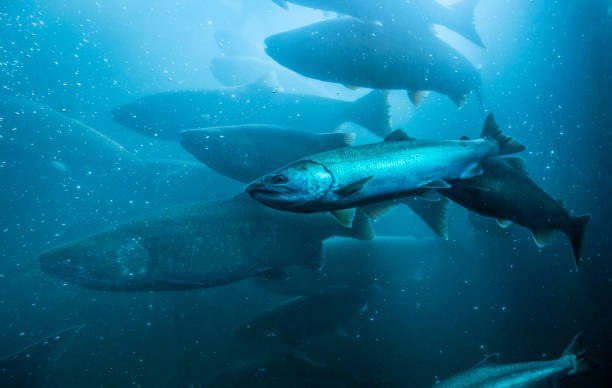
Authorities in Kazakhstan’s Mangistau region, located on the Caspian Sea coast, have announced plans to significantly expand domestic salmon farming, with the aim of replacing up to 60% of the country’s salmon imports within five years.

At a press conference in Astana, regional governor Nurdaulet Kilybay said fisheries are emerging as a key pillar in efforts to diversify the regional economy. Between 2025 and 2027, four major aquaculture projects are planned, including the industrial farming of marine salmon species in offshore cage systems. Currently, Kazakhstan imports over 8,000 tons of salmon annually, primarily from European suppliers.

“Next year, by producing 1,300 tons of salmon, we will reduce imports by about 16%. By 2029, we aim to increase production to 5,000 tons, which will replace about 60% of the country’s imports,” Kilybay said.

Kazakhstan’s Ministry of Agriculture has previously highlighted cage fish farming, raising fish in controlled, semi-open water environments, as one of the most promising aquaculture formats in the country.

A flagship project in Mangistau is being implemented by Organic Fish LLP, with a planned capacity of 5,000 tons of sea trout per year. The company has received preferential financing for equipment and sea cage installation. In autumn, approximately 10,000 juvenile trout were released into the Caspian Sea, with some expected to reach market size by next year.

Since 2021, 44 cage farms have been launched across Kazakhstan, concentrated in the East Kazakhstan, Almaty, and Turkestan regions. Of the country’s total annual fish production, estimated at 20,000 tons, about 3,500 tons now come from cage farming. By 2027, 39 new aquaculture projects are planned under the national fisheries development strategy. In total, roughly 600 fish farms of various types currently operate across the country.

According to official data, Kazakhstan’s fish market grew by 9.3% in 2024, reaching 96,600 tons, up from 88,300 tons the previous year.

However, exports declined by 11% to 23,400 tons, despite consistent demand for Kazakhstani fish in over 20 countries. The drop has been attributed to changes in logistics and rising delivery costs to the European Union.

As previously reported by The Times of Central Asia, a new fish processing facility opened in the Kyzylorda region in October, marking another milestone in the recovery of Kazakhstan’s fishing industry, including in the Aral Sea basin.

Kazakhstan and Uzbekistan Launch Study to Revise Irrigation Regimes in Syr Darya River Basin

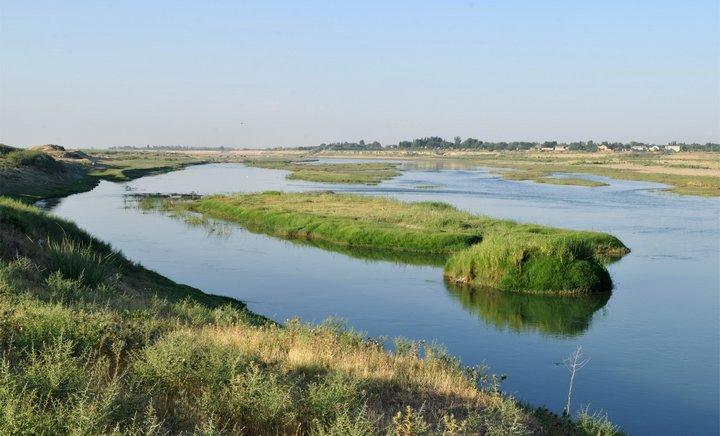
With grant funding from the French Development Agency (AFD), Kazakhstan and Uzbekistan have launched a joint initiative to revise irrigation regimes in the Syr Darya River basin. The project, coordinated by the Executive Committee of the International Fund for Saving the Aral Sea, aims to optimize agricultural water use and improve environmental outcomes, according to Kazakhstan’s Ministry of Water Resources and Irrigation.

In Kazakhstan, the study covers 550,000 hectares of irrigated farmland in the Turkestan Region and 254,000 hectares in the Kyzylorda Region. Ground-level measurements are underway alongside satellite-based remote sensing to collect precise and comprehensive data.

The findings will inform updated irrigation schedules and help increase crop yields, reduce soil salinization and land degradation, and enhance water-use efficiency across the Syr Darya River basin. The project involves both the Kazakh Research Institute of Water Management and Uzbekistan’s Scientific Information Center of the Interstate Commission for Water Coordination (ICWC) of Central Asian countries. Completion is scheduled for 2026.

Talgat Momyshev, Kazakhstan’s Deputy Minister of Water Resources and Irrigation, noted that the Aral-Syr Darya basin supplies water to over 35% of Kazakhstan’s irrigated land, with 98% of withdrawals going to agriculture. He emphasized the urgency of revising hydro modular zoning, which hasn’t been updated in four decades. “The existing zoning does not account for major changes in climate, soil conditions, and land reclamation status over the past 40 years. A revision is essential,” he said.

The Syr Darya and Amu Darya rivers are vital for irrigating agricultural land throughout Central Asia. At a November meeting in Ashgabat, ICWC members from Kazakhstan, Kyrgyzstan, Tajikistan, Turkmenistan, and Uzbekistan approved new water distribution quotas for the non-growing season from October 1, 2025, to April 1, 2026.

During the non-growing season, water is stored in reservoirs to meet irrigation needs for the following spring and summer. For the Syr Darya River, the total withdrawal quota for this period has been set at 4.219 billion cubic meters, allocated as follows:

  • Uzbekistan: 3.347 billion m³
  • Kazakhstan: 460 million m³ (via the Dustlik Canal)
  • Tajikistan: 365 million m³
  • Kyrgyzstan: 47 million m³

In the 2025 growing season, actual usage by country was as follows:

  • Kazakhstan: 644 million m³ (out of a 909 million m³ quota)
  • Uzbekistan: 7.012 billion m³ (of 8.8 billion m³)
  • Tajikistan: 1.454 billion m³ (of 1.9 billion m³)
  • Kyrgyzstan: 191 million m³ (of 270 million m³)

The revision effort underscores growing regional cooperation around sustainable water management in one of Central Asia’s most critical river basins.

After Leaders’ Calls with Trump, Kazakhstan and Uzbekistan’s G20 Invitations Are a Signal to Central Asia

Reports of telephone conversations between the presidents of Kazakhstan and Uzbekistan with U.S. President Donald Trump came the day before a notable event on the international agenda. Trump has publicly announced his intention to invite the leaders of the two most influential Central Asian countries to the G20 summit, which the U.S. plans to hold in Miami in 2026.

Despite the brevity of the official releases, they indicate not only the steady development of bilateral relations, but also a broader geopolitical signal.

This statement has attracted increased interest from the international media, from the Los Angeles Times and Chicago Tribune to Agenzianova and Economic Times, which in itself highlights the increased attention to the Central Asia region.

The report by Akorda, Tokayev’s press service, on the conversation between him and the U.S. president emphasizes that the conversation was “lengthy”. Tokayev noted the complexity of resolving the war in Ukraine, expressing his view that the territorial issue remains key and requires compromises, taking into account the real situation “on the ground.” 

In this regard, Kazakhstan called on all parties to show patience and flexibility, stressing that it does not seek to act as a mediator but is ready to provide a platform for negotiations if necessary.

It is noteworthy that the topic of peace talks is reflected in the Kazakh release but is absent from Trump’s own statement. At the same time, the Akorda statement makes no mention of a possible invitation to Kazakhstan to attend the G20 summit.

The situation is similar with the official statement from the administration of Shavkat Mirziyoyev. It focuses on the growth in political contacts, the launch of joint projects worth tens of billions of dollars, the creation of an American-Uzbek business and investment council, as well as the development of regional cooperation and the C5+1 format. However, possible participation in the G20 summit is also not mentioned.

Meanwhile, Trump himself wrote directly on his social network Truth Social that the U.S. will host the G20 summit next year and intends to invite the presidents of Kazakhstan and Uzbekistan as guests.

At this point, it appears to be only an intention, not a formal invitation. Nevertheless, even this signal indicates a noticeable shift in the priorities of U.S. foreign policy towards Central Asia. If Kazakhstan and Uzbekistan receive an official invitation (even as guests), this will be a de facto recognition of their role as “middle powers” in contemporary world politics.

The context of what is happening also deserves attention. The telephone conversations with Trump took place immediately after an informal meeting of CIS leaders in St. Petersburg, an event that was more of a ritual in nature. 

The last summit was notable for the conspicuous absence of the president of Azerbaijan, Ilham Aliyev, despite previously announced meetings in the Kremlin. Officially, Baku explained that this was due to Aliyev’s busy schedule.

Although there is still considerable time before the G20 summit, preparations for it have already begun. In mid-December, the first meeting of G20 “sherpas” was held in Washington, featuring representatives of the world’s leading economies and international associations. 

Poland was the only full guest of the U.S. presidency this year. The U.S. State Department announced that Washington had identified the key priorities for the upcoming summit: stimulating economic growth, access to reliable and affordable energy, and the development of innovative technologies.

The G20 is not an international organization in the classical sense. In essence, it is a forum whose decisions are advisory in nature and are often complicated by the divergent interests of its participants. However, even under such conditions, the possible participation of Kazakhstan and Uzbekistan would open up a rare opportunity for them to directly convey their position to the leaders of the world’s leading economies. 

This is especially true given that the countries of Central Asia have their own agenda and resources that they are ready to offer, in the context of global economic development and sustainable growth.