• KGS/USD = 0.01144 0%
  • KZT/USD = 0.00192 -0%
  • TJS/USD = 0.10849 0.37%
  • UZS/USD = 0.00008 0%
  • TMT/USD = 0.28571 0.28%
  • KGS/USD = 0.01144 0%
  • KZT/USD = 0.00192 -0%
  • TJS/USD = 0.10849 0.37%
  • UZS/USD = 0.00008 0%
  • TMT/USD = 0.28571 0.28%
  • KGS/USD = 0.01144 0%
  • KZT/USD = 0.00192 -0%
  • TJS/USD = 0.10849 0.37%
  • UZS/USD = 0.00008 0%
  • TMT/USD = 0.28571 0.28%
  • KGS/USD = 0.01144 0%
  • KZT/USD = 0.00192 -0%
  • TJS/USD = 0.10849 0.37%
  • UZS/USD = 0.00008 0%
  • TMT/USD = 0.28571 0.28%
  • KGS/USD = 0.01144 0%
  • KZT/USD = 0.00192 -0%
  • TJS/USD = 0.10849 0.37%
  • UZS/USD = 0.00008 0%
  • TMT/USD = 0.28571 0.28%
  • KGS/USD = 0.01144 0%
  • KZT/USD = 0.00192 -0%
  • TJS/USD = 0.10849 0.37%
  • UZS/USD = 0.00008 0%
  • TMT/USD = 0.28571 0.28%
  • KGS/USD = 0.01144 0%
  • KZT/USD = 0.00192 -0%
  • TJS/USD = 0.10849 0.37%
  • UZS/USD = 0.00008 0%
  • TMT/USD = 0.28571 0.28%
  • KGS/USD = 0.01144 0%
  • KZT/USD = 0.00192 -0%
  • TJS/USD = 0.10849 0.37%
  • UZS/USD = 0.00008 0%
  • TMT/USD = 0.28571 0.28%
11 December 2025

Russia’s Gasoline Export Ban: Limited Shock, Broader Lessons for Central Asia

Russia’s decision to prolong restrictions on gasoline exports has raised concerns in energy markets, but for Central Asia, the immediate fallout appears limited. The true significance lies in what the move reveals about structural dependencies, the role of the Eurasian Economic Union (EAEU), and the region’s long-term push to diversify energy supplies.

Moscow Extends Ban

On September 2, Russian officials confirmed that the government may prolong its gasoline export ban for oil producers into October, extending measures first introduced in late summer. Deputy head of the Federal Antimonopoly Service, Vitaly Korolev, told state media that the authorities were weighing a one-month extension beyond the current deadline of September 30. As reported by Reuters, the aim is to stabilize domestic fuel supplies following refinery outages and a seasonal spike in demand. Ukrainian drone strikes have also damaged key refineries, reducing Russia’s production capacity by an estimated 10–17%.

The ban affects a relatively small share of Russia’s overall fuel output but highlights the state’s readiness to intervene in energy markets. Previous restrictions in 2023 and 2024 temporarily halted shipments to stabilize domestic prices. The latest decision reflects similar concerns: tightening inventories, growing demand from the agricultural sector, and pressure to prevent inflation ahead of winter.

While Moscow insists the measure is temporary, traders and governments across post-Soviet space are watching closely. Russia remains one of the world’s largest fuel exporters, and even marginal policy changes can cause significant ripples.

Fuel Security in Central Asia

For Central Asia, the impact of the ban will be blunted by exemptions. As members of the EAEU, both Kazakhstan and Kyrgyzstan continue to import Russian gasoline without interruption. Kazakhstan’s Ministry of Energy issued a statement stressing that the country is self-sufficient, pointing to its refineries in Pavlodar, Shymkent, and Atyrau. “For countries that have signed the relevant intergovernmental agreement… these restrictions do not apply,” Minister of Energy, Yerlan Akkenzhenov, stated.

Kyrgyzstan is highly dependent on Russian imports. However, according to Kyrgyzstan’s Ministry of Energy, the 1.6 million tons of fuel the country consumes annually, 93% of which is imported from Russia under intergovernmental agreements, will remain unaffected by the export ban. Since mid-summer, gasoline and diesel prices have climbed, driven by rising global oil benchmarks and repair work at several Russian refineries. Talks are already in progress to set revised supply volumes for 2026.

Non-EAEU states face a different challenge. Uzbekistan sources fuel through state-brokered contracts with Russian companies, ensuring stability for now, but smaller private importers outside of these deals have reported difficulties accessing volumes. Late last year, the Chairman of Uzbekistan’s Central Bank warned that the country’s growing reliance on Russian fuel imports could increase vulnerability to supply shocks, which may translate into limited competition and rising prices.

Tajikistan remains heavily dependent on Russian fuel through bilateral import agreements, and its virtually non-existent refining capacity makes it highly susceptible to external price fluctuations, a vulnerability underscored by seasonal diesel shortages and repeated spikes in domestic fuel prices. Turkmenistan, meanwhile, continues subsidizing its energy sector heavily: citizens receive free or deeply discounted electricity, gas, and heat under a policy extending through 2030, even as the authorities explore scaling back subsidies to curb domestic demand and bolster export capacity. As previously reported by The Times of Central Asia, Turkmenistan is also struggling with rampant fuel smuggling as domestic fuel is significantly cheaper than in neighboring states.

EAEU Integration: Shield and Shackle

The EAEU has shielded its members from the immediate effects of Russia’s gasoline ban. Kazakhstan and Kyrgyzstan continue receiving supplies, highlighting the bloc’s role in cushioning shocks. Yet the arrangement underscores a paradox: while integration provides stability, it also locks members into asymmetric dependencies.

Kazakhstan, the region’s largest producer, is steadily upgrading its refining base and aligning production with export markets. Its 2040 energy strategy foresees refined products accounting for a rising share of exports. In 2024, Kazakhstan was the third-largest crude oil supplier to the EU, exporting approximately 1.05 million barrels per day, roughly 11.5% of the bloc’s total. But even Astana acknowledges that Russia’s domestic policies can create disruptions, especially for joint ventures and pipeline flows.

Despite its status as a major oil producer, Kazakhstan continues importing refined products from Russia due to persistent structural constraints and logistical considerations. While Kazakhstan is pursuing a long-term refining strategy to support growing regional energy demand and boost exports, domestic refineries currently remain optimized for heavier or specific crude grades, and demand is unevenly spread, particularly in northern and eastern regions more easily supplied via rail from Russia. This serves to make Russian fuel imports a practical supplement, especially under favorable EAEU terms.

Kyrgyzstan illustrates the opposite end of the spectrum. Despite its EAEU membership, it remains structurally vulnerable because of its near-total dependence on Russian imports. The EAEU guarantees access, but not price stability, leaving Bishkek exposed to shifts in Moscow’s domestic market priorities.

Diversification: From Rhetoric to Imperative

Russia’s export ban has renewed calls for diversification. Kazakhstan is pursuing a multi-vector strategy that includes refining upgrades, supply diversification, and expanded export routes. Projects linked to the Trans‑Caspian International Transport Route (TITR), also known as the Middle Corridor, are designed to connect Kazakh fuel exports westward via the Caspian Sea. Astana is also cultivating Chinese and Indian markets for petroleum and petrochemical products, leveraging its geographic position as a transit hub between Asia and Europe. For instance, Kazakhstan is advancing its oil exports via the Baku–Tbilisi–Ceyhan (BTC) route, with a 12 % increase in shipments in H1 2025 and discussions underway with Turkey to expand capacity – measures intended to diversify beyond Russian routes. India is also exploring the Middle Corridor – with Kazakhstan as a central hub – as an alternative link to Europe as it seeks greater strategic autonomy beyond China’s Belt and Road infrastructure.

In the near term, Uzbekistan remains structurally dependent on Russian gasoline. When Russia imposed a six-month ban on gasoline exports to safeguard its domestic market in early 2024, Uzbekistan was exempted under intergovernmental agreements, even though it is not a member of the EAEU. Tashkent holds only observer status in the bloc and has stated that it currently has no plans to pursue full membership.

Tajikistan, meanwhile, is betting on hydropower centered on the massive Rogun Dam project to reduce its reliance on fossil fuels. However, without refining capacity or diversified fuel supply contracts, it remains tethered to Russian gasoline. Turkmenistan also continues to face persistent fuel shortages due to domestic pricing subsidies that encourage smuggling.

Why the Ban Matters Symbolically

Russia’s gasoline export ban, while limited in its immediate scope, is a symbolic reminder of Moscow’s leverage. With a relatively minor policy shift, it has demonstrated an ability to disrupt expectations and expose the fragility of regional supply chains. Though the official rationale – domestic stabilization amid refinery outages and seasonal demand – has been emphasized by the Russian authorities, the ban reveals deeper structural vulnerabilities in Central Asia’s energy architecture.

For Kazakhstan, the exemption is a validation of its partial self-sufficiency, but also serves as a reminder that refinery upgrades and export diversification are crucial to insulate against external shocks. Despite being shielded by EAEU mechanisms, Kyrgyzstan is still facing price fluctuations due to its overwhelming reliance on Russian fuel, meaning it effectively has protection without autonomy. Uzbekistan’s exemption via bilateral agreements offers short-term relief, but reinforces its dependence. In Tajikistan and Turkmenistan, where domestic refining is virtually absent or underperforming, reliance on subsidized or imported fuel continues to distort markets and delay reform.

Rethinking Dependency

While no immediate fuel shortages are expected in Central Asia, the episode serves as a stress test. EAEU exemptions, bilateral deals, and domestic production buffers will mitigate short-term risks, but future export bans, refinery outages, or geopolitical shifts could trigger deeper disruptions, especially for states with limited refining capacity or inflexible sourcing strategies. Fuel security is no longer an abstract issue; it is increasingly treated as an element of national sovereignty. Kazakhstan’s and Uzbekistan’s push through the Middle Corridor, therefore, signals a meaningful shift.


Kazakhstan’s Rare Earth Reserves Surpass Projections Following New Geological Surveys

Geological exploration at Kazakhstan’s largest rare earth metal deposit, Kuirektykol, in the Karaganda region, has revealed significantly higher reserves than previously estimated. The latest data suggests that the site holds 28.2 million tons of commercially viable rare earth elements, up from an initial estimate of 20 million tons.

Exploration work began in 2022, and by November 2024, geologists had already confirmed significant concentrations of cerium and other lanthanides across four key zones at depths of up to 300 meters.

Regional Potential Expands

Alibek Aldeney, Deputy Akim of the Karaganda region, said that the surveys also revealed new prospective sites for gold, copper, and tungsten.

“Foreign companies are already conducting surveys. This will allow us to expand our mineral resource base and create new production facilities for processing rare earth and precious metals,” Aldeney said.

Industry experts have long maintained that Kazakhstan holds the potential to ensure stable supplies of critical minerals amid rising global demand.

Strategic Priorities and Government Support

In August, Prime Minister Olzhas Bektenov convened a meeting to discuss the development of Kazakhstan’s rare earth sector. He emphasized the need to modernize production, adopt advanced technologies, and increase scientific research.

According to the Ministry of Industry, rare and rare earth metals currently account for 2.4% of the country’s metallurgical sector. Since 2018, the government has invested KZT 67 billion (approximately $124 million) in the industry.

Kazakhstan is currently exploring 25 promising rare earth sites across a combined area of 100,000 square kilometers. In 2024 alone, 38 new deposits of solid minerals were identified.

Production of beryllium, tantalum, niobium, scandium, titanium, rhenium, and osmium is already underway, along with the extraction of associated elements such as bismuth, antimony, selenium, and tellurium.

Future Outlook and Strategic Concerns

There are emerging industrial opportunities include the production and recycling of battery materials, heat-resistant alloys, semiconductors, and permanent magnets. However, as The Times of Central Asia previously reported, with the sector’s strategic value increasing, members of parliament have called for tighter regulation of rare earth exports to safeguard national interests.

Cardiff University Opens Campus in Astana

On September 3, Cardiff University in Wales officially inaugurated Cardiff University Kazakhstan in Astana, its first overseas branch campus and the only campus of a Russell Group research university in Central Asia. The event marked a milestone in the growing educational partnership between Kazakhstan and the United Kingdom.

At the opening ceremony, Kazakh Minister of Science and Higher Education Sayasat Nurbek emphasized the country’s ambitions:

“Kazakhstan is developing as a regional academic hub. This year, more than 31,000 foreign students came to our country. At the initiative of the head of state, a large-scale strategy is being implemented in higher education and science. One of its areas is the opening of branches of leading foreign research universities in our country. Over the past three and a half years, about 40 foreign universities have come to Kazakhstan, five of them have decided to open their campuses.”

Cardiff University’s Vice-Chancellor, Professor Wendy Larner, described the launch as a pivotal step in the institution’s global ambitions:

“I was delighted to officially open our branch campus in Astana our first international branch campus of Cardiff University. We look forward to welcoming our first cohort of academically excellent students later this month. We are the UK’s first Russell Group university to open a campus in Kazakhstan, marking an important step in our future global ambition.”

Beginning in late September, the campus will enroll students in four-year undergraduate programs in computer science, business management, civil engineering, and exploration geology. Courses will be taught in English by faculty from both Cardiff University and its Astana campus, with the branch operating under Cardiff’s direct academic governance to ensure international standards are upheld.

The newly appointed British Ambassador to Kazakhstan, Sally Axworthy, also attended the ceremony and welcomed the development:

“It is a great honour to be participating in the grand opening of Cardiff University here in Astana as one of my first engagements as British Ambassador to Kazakhstan. The opening marks a new chapter in UK-Kazakhstan educational collaboration, bringing more world-class British academic excellence to Kazakh students and further strengthening the ties between our countries.”

The arrival of Cardiff University reflects a broader national initiative to attract world-class institutions. As previously reported by The Times of Central Asia, several other prominent universities are also expanding into Kazakhstan. Russia’s prestigious Moscow State Institute of International Relations (MGIMO) is planning to open a branch in Astana in September 2025. South Korea’s Woosong University is preparing to launch its campus in the Turkestan region this year.

Meanwhile, Germany’s Anhalt University of Applied Sciences has already opened a branch in Almaty, and Italy’s Marche Polytechnic University of Ancona has inaugurated its campus at Zhetysu University in Taldykorgan.

Looking ahead, France’s Grenoble INP – Phelma, UGA, an elite engineering school, plans to open a branch in Almaty in 2026. In the same year, the United States’ Colorado School of Mines is scheduled to launch its first international campus in Zhezkazgan, a key center for Kazakhstan’s geological industry.

Uzbekistan Says Border Troops Acted Lawfully in Shooting of Two Kyrgyz Citizens

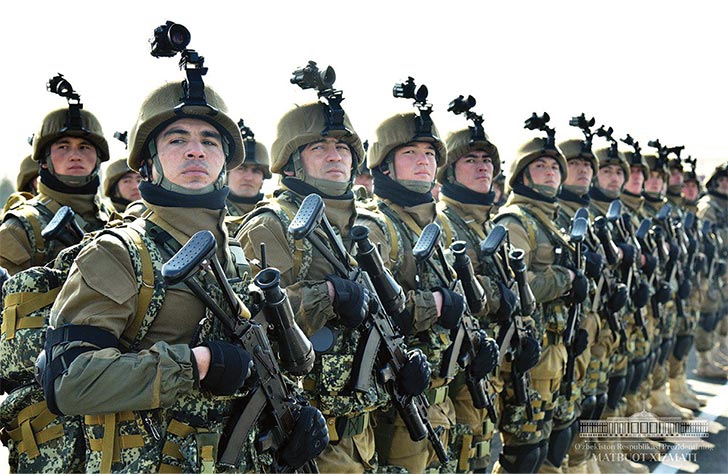
Uzbekistan’s Border Troops have confirmed that Uzbek servicemen acted lawfully during a fatal shooting near the Kyrgyz-Uzbek border on August 15, which resulted in the deaths of two Kyrgyz nationals. The official statement was released by the press service of the Border Troops under the State Security Service on September 4.

According to the report, the incident occurred near the Ugam-Chatkal nature reserve in Tashkent region’s Bostanlyk district. Border patrol officers reportedly spotted two unidentified individuals in a restricted area near the state boundary. When ordered to stop, the individuals attempted to flee. Border guards fired several warning shots into the air, but the individuals continued moving toward the border. Weapons were then used “as a last resort,” according to the statement.

Both individuals were wounded and died at the scene, despite first aid being administered by border personnel. A search of the area revealed a tent, three horses, food supplies, and tracks indicating the presence of a third individual who reportedly fled back into Kyrgyz territory.

The border services of both Kyrgyzstan and Kazakhstan were immediately notified. On August 31, authorities confirmed the deceased were Kyrgyz citizens, and their bodies were returned to their families. A joint site inspection by Uzbek and Kyrgyz border officials was conducted on September 2-3.

Following the inspection, a bilateral commission concluded that the Uzbek border patrol had acted in accordance with national law and that the individuals had illegally crossed the state border. Both sides agreed to continue investigating the identity of the third individual and to pursue further action as appropriate.

QazTrade Opens Office in Tianjin to Strengthen Kazakhstan-China Trade Ties

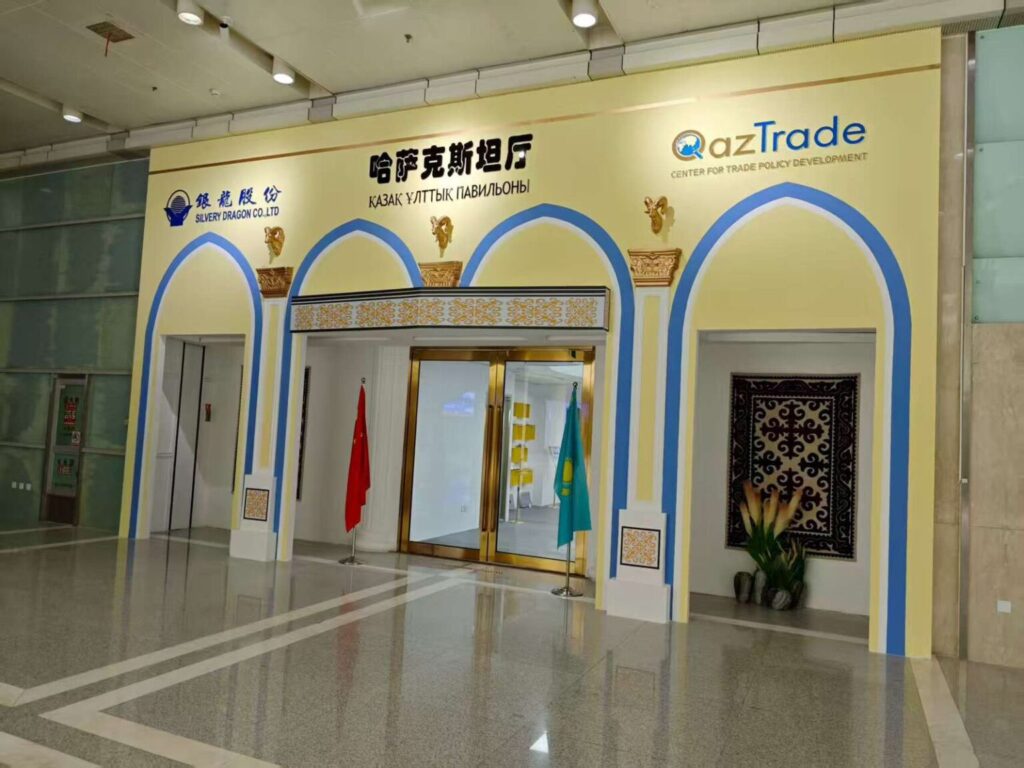
Kazakhstan’s QazTrade Center for Trade Policy Development has opened a new office, Kazakhstan Hall, at the International Trade and Shipping Service Center in Tianjin, one of northern China’s leading industrial and port cities.

Spanning 100 square meters, the office is designed primarily to showcase Kazakhstani food products and facilitate trade promotion in the Chinese market. It is currently operating in pilot mode, with an expanding exhibition area and ongoing preparations to formally register QazTrade’s representative office. The official opening ceremony is expected later this autumn.

According to QazTrade, trade turnover between Kazakhstan and Tianjin reached $347.9 million in 2023 and rose to $474 million in 2024, a sign of steady growth in bilateral commerce.

Tianjin serves as a key logistics and trade hub for Shanghai Cooperation Organization (SCO) member states. It offers Kazakhstan access to a “green-light corridor” for SCO countries, multimodal transport links between Asia and Europe, and a variety of investment and financial services.

“The opening of the QazTrade office in Tianjin is an important step for us,” said QazTrade Director General Aitmukhammed Aldazharov. “Through the Tianjin port, we will be able to deliver Kazakhstani goods to any country in the world faster and more efficiently.”

Growing Bilateral Trade

Kazakhstan-China trade continues to gain momentum. During a meeting with Kazakh Minister of Trade and Integration Arman Shakkaliyev on August 20 in Beijing, Chinese Minister of Commerce Wang Wentao stated that bilateral trade reached $43.8 billion in 2024, a 9.2% increase compared to the previous year. In the first half of 2025 alone, trade turnover totaled $21.8 billion.

Kazakhstan and China have set a joint target to double bilateral trade by 2030, with expanded cooperation in logistics, agriculture, energy, and manufacturing forming the core of future initiatives.

Gasoline Prices Rise in Kyrgyzstan Amid Heavy Dependence on Russian Imports

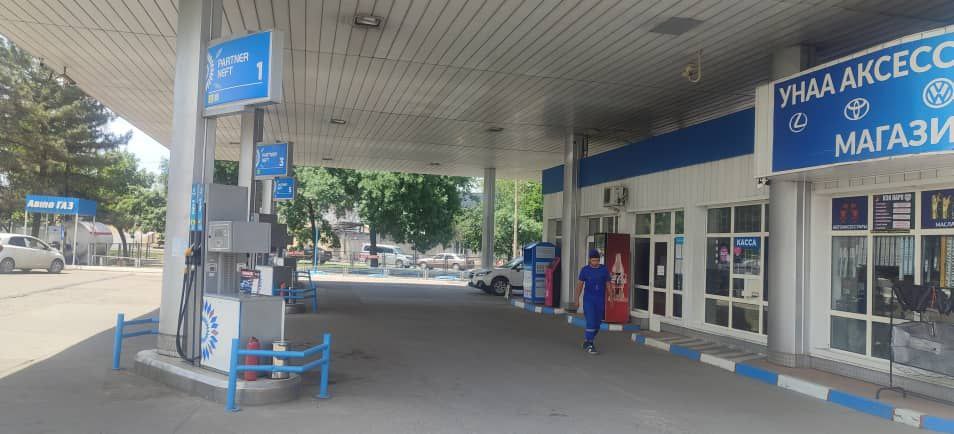
Gasoline prices in Kyrgyzstan have continued to rise in recent months, despite official assurances that fuel reserves remain sufficient. The Kyrgyz Ministry of Energy reports that domestic supplies and ongoing fuel imports from Russia are currently adequate to meet national demand.

According to the ministry, Kyrgyzstan consumes approximately 1.6 million tons of fuel annually, with over 90 percent of its gasoline imported from Russia. Each year, export volumes are negotiated between Moscow and Kyrgyz oil traders. When those volumes are exhausted, prices typically begin to increase.

“The agreed volumes for 2025 have not yet been fully met, but oil products are being supplied as usual and without interruption. At the same time, work is underway to agree on new volumes for 2026,” the ministry stated.

Officials attribute the recent price hikes to global market trends and disruptions in Russian refinery operations. Several refineries have undergone scheduled maintenance, while others were forced to halt operations following drone attacks linked to the conflict in Ukraine.

Despite a recently announced gasoline export ban by Russian authorities, the restriction does not apply to countries within the Eurasian Economic Union (EAEU), including Kyrgyzstan.

Industry Concerns About Future Supply

Kanat Eshatov, head of the Kyrgyz Oil Traders Association, told The Times of Central Asia that local traders remain cautious, anticipating further price increases by the end of September.

“The first half of the year was fairly calm on the fuel market, with only a slight increase in prices. But in June and July, prices rose sharply due to scheduled repairs at refineries in Russia. A total of 20 plants were shut down for repairs. Five of them underwent unscheduled repairs due to attacks by Ukrainian drones. Some Russian regions are experiencing a shortage of fuel. The Russian government is now redistributing its reserves,” Eshatov said.

The association is concerned about Kyrgyzstan’s limited fuel buffer. Major oil companies in the country reportedly hold only two months’ worth of gasoline reserves. Any significant supply interruption from Russia could quickly lead to a national shortage.

Comparative Prices in the Region

Eshatov noted that, due to Kyrgyzstan’s exemption from export duties on Russian gasoline, fuel prices remain lower than in neighboring countries. For example, in Tajikistan, gasoline prices have increased by $0.27 per liter this year, and diesel by $0.22. In Uzbekistan, gasoline is up by $0.26 per liter and diesel by $0.11.

To ensure continued supply stability, Kyrgyz oil traders are also exploring alternative import routes and are currently in negotiations with Kazakhstan and Azerbaijan.