• KGS/USD = 0.01144 0%
  • KZT/USD = 0.00196 -0%
  • TJS/USD = 0.10904 0%
  • UZS/USD = 0.00008 0%
  • TMT/USD = 0.28490 0%
  • KGS/USD = 0.01144 0%
  • KZT/USD = 0.00196 -0%
  • TJS/USD = 0.10904 0%
  • UZS/USD = 0.00008 0%
  • TMT/USD = 0.28490 0%
  • KGS/USD = 0.01144 0%
  • KZT/USD = 0.00196 -0%
  • TJS/USD = 0.10904 0%
  • UZS/USD = 0.00008 0%
  • TMT/USD = 0.28490 0%
  • KGS/USD = 0.01144 0%
  • KZT/USD = 0.00196 -0%
  • TJS/USD = 0.10904 0%
  • UZS/USD = 0.00008 0%
  • TMT/USD = 0.28490 0%
  • KGS/USD = 0.01144 0%
  • KZT/USD = 0.00196 -0%
  • TJS/USD = 0.10904 0%
  • UZS/USD = 0.00008 0%
  • TMT/USD = 0.28490 0%
  • KGS/USD = 0.01144 0%
  • KZT/USD = 0.00196 -0%
  • TJS/USD = 0.10904 0%
  • UZS/USD = 0.00008 0%
  • TMT/USD = 0.28490 0%
  • KGS/USD = 0.01144 0%
  • KZT/USD = 0.00196 -0%
  • TJS/USD = 0.10904 0%
  • UZS/USD = 0.00008 0%
  • TMT/USD = 0.28490 0%
  • KGS/USD = 0.01144 0%
  • KZT/USD = 0.00196 -0%
  • TJS/USD = 0.10904 0%
  • UZS/USD = 0.00008 0%
  • TMT/USD = 0.28490 0%
08 December 2025

Kyrgyzstan Restores Irrigation System Amid Growing Water Demand

In the dry and hot year of 2025, Kyrgyz farmers received one billion cubic meters more water than in 2024, according to the Ministry of Water Resources, Agriculture, and Processing Industry.

Despite the challenging weather conditions, 7 billion cubic meters of water were delivered during the growing season, enabling the irrigation of over 1.1 million hectares of agricultural land. Chronic water shortages during the irrigation season have long plagued Kyrgyzstan’s agriculture, frequently sparking disputes in rural areas.

The primary cause is the aging irrigation infrastructure, much of it dating back to the Soviet era. Many canals are clogged or damaged, leading to significant water losses. In 2025, the ministry reported that 429.5 kilometers of canals were repaired and cleaned, alongside the restoration of 302 hydraulic structures, 123 water gauges, 91 pumping stations, and 156 pumping units. Nine units were fully replaced, and 53.5 kilometers of collector and drainage systems were cleaned.

To modernize the network, the government plans to construct 106 daily and ten-day water regulation basins by 2030. These facilities are intended to improve water storage and distribution across farms. Ten basins have already been commissioned this year, with 12 more under construction.

Officials are also combining modern and traditional solutions to address irrigation challenges. Sprinkler systems, popular in the 1980s, are being revived due to their efficiency, they require 500 to 1,000 cubic meters of water per hectare, compared to two to three times more with the traditional ary system. However, most farmers continue to rely on the ary method due to the high cost of sprinkler and drip irrigation equipment.

According to the ministry, drip and sprinkler systems are now in use on 8,365 hectares: 1,702 hectares on state-owned land and 6,663 hectares on private farms.

Restoration of old wells and construction of new canals also continue. This year, work began on a plant to manufacture concrete linings for irrigation canals, with a target of producing 500,000 square meters of concrete canal linings in 2025.

Tajikistan to Introduce 10-Point Grading System in Schools

Beginning September 1, secondary schools in Tajikistan will adopt a new 10-point grading system, the country’s Minister of Education and Science, Rahim Saidzoda, announced at a press conference today, according to Khovar.

Saidzoda stated that preparations are already underway for the system’s implementation, including the development of new grade books. The reform is part of a broader effort to align Tajikistan’s educational standards with international practices.

Experts emphasize that one of the key objectives is to standardize national grading in line with global benchmarks, making Tajik school diplomas more readily accepted abroad. This change is expected to facilitate Tajik students’ admission to universities in both neighboring and more distant countries.

The ministry noted that the new 10-point scale will enhance classroom assessments and examinations by introducing clearer and more consistent evaluation criteria, aligned with advanced education systems.

Multi-point grading systems are already widely used in developed nations such as Japan, South Korea, the United States, and France, where 10, 12, or even 20-point scales are standard. In contrast, neighboring Central Asian countries continue to rely on the traditional five-point grading model. For instance, Kyrgyzstan has confirmed that it will retain the five-point scale, according to 24.kg. Uzbekistan also maintains a system ranging from “5” (excellent) to “1” (poor).

Kazakhstan to Boost Oil Exports to Turkey via BTC Pipeline

Kazakhstan plans to increase crude oil exports to Turkey through the Baku-Tbilisi-Ceyhan (BTC) pipeline, President Kassym-Jomart Tokayev announced following bilateral talks with Turkish President Recep Tayyip Erdoğan in Ankara.

“Currently, 1.4 million tons of Kazakh oil are transported annually to Turkey through the BTC pipeline. We discussed the possibility of expanding volumes and welcomed Turkish Petroleum’s plans to enter the Kazakh market. Kazakhstan is also interested in Turkish companies’ investment potential and expertise in energy diversification and power plant construction. We are ready to implement large-scale joint projects,” Tokayev stated at a joint press conference.

Kazakhstan began exporting oil via the BTC pipeline in 2008, initially at just 300,000 tons per year. Expansion has since been limited by the pipeline’s capacity, 50 million tons annually, with Kazakhstan allocated a quota of 1.5 million tons and by the restricted tanker fleet of KazTransOil, the transport subsidiary of the national oil and gas company KazMunayGas (KMG), which ships crude across the Caspian Sea from the port of Aktau.

In 2022, President Tokayev prioritized the development of the Trans-Caspian corridor as part of Kazakhstan’s export diversification strategy. That same year, Azerbaijan signaled readiness to raise Kazakhstan’s BTC quota to 2.2 million tons. As a result, shipments surged 5.5-fold to 1.392 million tons in 2023 and surpassed 1.4 million tons in 2024. The government now aims to reach 1.5 million tons in 2025.

During the Ankara visit, KMG Chairman Askhat Khasenov met with Turkish Petroleum Corporation (TPAO) President Ahmet Türkoğlu to discuss potential cooperation in exploration, transport, and oil and gas sector development.

“Currently, KMG and TPAO working groups are assessing prospects for joint initiatives in geological exploration in Kazakhstan,” the press release stated. Khasenov emphasized that strengthening ties with Turkey’s leading energy firms aligns with Kazakhstan’s strategic foreign policy. He expressed confidence that enhanced collaboration with TPAO would boost economic relations between the two countries.

As previously reported by The Times of Central Asia, Kazakhstan has encountered growing challenges in transporting oil via Russian ports due to new regulations and export bottlenecks.

Kazakhstan and Turkey Reshape Their Eurasian Partnership

President Kassym-Jomart Tokayev’s visit to Ankara consolidated bilateral ties, but it also marked a deeper strategic inflection. The visit marks a broader regional convergence between two major Eurasian actors as they coordinate a strategic regional architecture. Thus, Tokayev’s language emphasized an “expanded strategic partnership,” signaling a move beyond traditional trade or cultural diplomacy. Ankara, for its part, went well beyond symbolic gestures in its response, with binding institutional agreements and substantive infrastructural commitments.

The timing of the visit underscores its significance against the current geopolitical backdrop, where Central Asia is once again the object of keen attention from external actors vying for footholds and influence. In this context, the Kazakhstan–Turkey axis appears not as a knee-jerk reaction to outside machinations but as a deliberate autonomous regional vector that enhances the agency of both countries.

Strategic Depth of the Tokayev Visit

Tokayev’s trip to Turkey represents an assertion of multidimensional regional agency: Kazakhstan’s long-standing multi-vector foreign policy was once a balancing act among great powers, but it has now entered a phase of selective consolidation.

This bilateral intensification indexes a shift in the configuration of Eurasian geoeconomics, as strategic weight disperses across an increasingly differentiated agentic field. The Astana–Ankara alignment means that both countries can act with diminished external dependence, even as global architectures become more unstable and contested.

Tokayev’s diplomacy suggests the emergence of an equilibrium strategy anchored in regional connectivity rather than bloc affiliation. Ankara’s perspective is equally structural. The shared vocabulary — “coordination,” “deepening,” “integration” — signals a logic of long-horizon strategic cooperation.

Complementarities Across the Bilateral Core

The current Kazakhstan–Turkey relationship exhibits a structurally complementary relationship rarely sustained at this depth between two regional powers so geographically distant from one another. On one side, Kazakhstan brings economic scale, resource depth, and transit centrality to the Middle Corridor. On the other, Turkey brings not only industrial experience and defense sector credibility but maritime access, NATO membership, and a flexible political reach into Europe, the Middle East, and the Mediterranean basin.

The evolution of mutual strategic trust based on converging structural interests binds these capacities of the two sides together. For Kazakhstan, Turkey provides logistical continuity and downstream industrial expansion; Ankara also diversifies Astana’s international geoeconomic network. For Turkey, Kazakhstan provides resource access, eastward corridors, and meta-regional relevance beyond the Black Sea.

These structural interests converge across multiple material economic sectors: energy, defense-industrial cooperation, agrotechnology, education, and digital logistics. Nor is this convergence driven solely by state policy: both countries’ private sectors increasingly perceive each other as entry points into economic systems adjacent to one another.

The Organization of Turkic States (OTS) as an Institutional Amplifier

The Organization of Turkic States (OTS), now maturing into an institutionalized platform for regional legitimacy with a shared symbolic and infrastructural vocabulary, enables Kazakhstan–Turkey cooperation to transcend the limits of bilateralism while maintaining its coherence. Joint positions on transport, trade, education, and foreign policy are advanced and discussed within a common multilateral setting where proposals are negotiated horizontally with other Turkic states.

Through OTS, Astana and Ankara operate not only as partners but as co-architects of an increasingly materialized Eurasian network. The OTS now serves as a coordinating platform for meta-regional planning and harmonization of standards, both multilaterally through the Middle Corridor and bilaterally in other economic sectors such as energy.

Customs and investment rules are being gradually aligned to reduce transactional friction. The OTS does not merely amplify bilateral relations but “thickens” them, transforming discrete initiatives into parts of a coherent meshwork. The Kazakhstan–Turkey vector, in this context, is less an axis than a principal strand woven into a developing regional fabric that OTS itself has begun to structure.

Transport and Infrastructure Triangulation

Kazakhstan’s geography has long been strategically important; today, it drives regional reconfiguration. With its east–west corridors linking China to the South Caucasus and Europe, and its direct access to the Caspian Sea, Kazakhstan is structurally embedded as an integrative node in the Eurasian transport network and a stabilizer of it. As the western terminus, Turkey reciprocates with access to Mediterranean and European markets.

Much more than a supply chain, however, is at stake here. The Kazakhstan–Turkey transport partnership extends across port modernization, multimodal logistics, digital freight tracking, and the integration of customs and rail systems. This is not just about bilateral cooperation but about co-developing interoperability.

What is under construction here is a jointly constructed logistical spine of infrastructure and connectivity, where projects sequentially realign themselves to optimize function. This means enhancing not just trade flows but also institutional coupling, leading to strategic visibility, which promotes commercial predictability.

Economic and Investment Convergence

This infrastructural coherence forms the chassis upon which Kazakhstan and Turkey are now constructing an increasingly integrated economic body. The economic dimension of the Kazakhstan–Turkey partnership no longer rests on basic trade flows or sectoral alignment. What has emerged is a network comprising tightly nested channels of capital and industrial function.

Bilateral trade exceeded $5 billion in 2024, but more telling is the diversification of that portfolio: construction, manufacturing, logistics, energy, digital services, and agriculture are now all operative zones of convergence. Turkish firms are increasingly present in the build-out of Kazakhstan’s infrastructure, not just as contractors but as long-term equity participants in port and railway upgrades.

At the same time, Kazakhstan-based companies are seeking access to Turkish industrial expertise and Mediterranean connectivity, particularly in sectors like petrochemicals and food processing. The shared desiderata are to structure commercial routes bypassing traditional chokepoints and reducing geopolitical friction. The partnership now forms a common geoeconomic interface.

Multi-Vector Strategy in Systemic Recomposition

Kazakhstan’s deepening partnership with Turkey confirms Astana’s continuing commitment to its long-held doctrine of a multi-vector foreign policy. What distinguishes its current phase is the increasing structural differentiation among Kazakhstan’s strategic partnerships, each now defined by sectoral logic rather than generalized orientation. These partnerships are not functional redundancies but targeted offsets, each securing resilience in a distinct geopolitical register.

Relations with Russia continue along energy and institutional vectors. Kazakhstan remains active in the Eurasian Economic Union (EAEU) and Collective Security Treaty Organization (CSTO), even as it pursues deeper economic and logistical integration with Turkey and others. China remains a vital infrastructure and trade partner, with Kazakhstan functioning as both a corridor and a supplier within the Belt and Road Initiative (BRI). The EU engages Kazakhstan through investment frameworks and regulatory harmonization, particularly in green energy, extractive industries, and transport.

Turkey occupies a distinct sectoral zone in the multi-vector space of Kazakhstan’s international relations. This includes defense-industrial collaboration, logistical systems development, and cultural and diplomatic engagement. In this manner, Tokayev’s foreign policy subtly reaffirms Kazakhstan’s centrality to the Eurasian system by layering complementarities to maximize national resilience while diffusing external pressures.

Kazakhstan’s Evolving Diplomatic Identity

Kazakhstan’s diplomatic identity has undergone a quiet but decisive shift. The country was once seen primarily as a “post-Soviet” buffer or stabilizer; now, it has established itself as a modulator shaping the frameworks that channel regional interactions. This shift is visible not only in policy language but in Kazakhstan’s chosen roles as convenor of intra-regional dialogues and host of sensitive multilateral negotiations.

The Tokayev presidency has reinforced this transition. Language now emphasizes constructive engagement and embedded sovereignty. Kazakhstan does not seek equidistance between powers, but functional insertion into differentiated networks: Russian-led security systems, Chinese-led trade flows, European regulatory zones, and Turkic cultural infrastructures.

Kazakhstan’s differentiated insertion into multiple networks defines it as an actor structuring its external engagements normatively, through internal priorities designed to regulate outside pressures. Tokayev’s visit to Ankara marks a deeper transformation: Kazakhstan no longer follows scripts composed abroad, but co-authors its own narratives, using a grammar it has increasingly shaped in concert with peer regional partners.

Ukraine Eyes Central Asia: Can War-Weary Kyiv Forge New Regional Alliances?

Despite the ongoing war with Russia, Ukraine is attempting to intensify its diplomatic and economic ties with Central Asia. Kyiv is seeking the region’s de facto political support against Moscow, and aiming to rebuild trade relations with the former Soviet republics. But how do the Central Asian nations view Ukraine’s regional ambitions?

Ukraine’s Ministry of Foreign Affairs has recently launched a new department focused on Central Asia – a region that has traditionally been in Russia’s zone of influence. The move comes as no surprise, given that Kyiv is also actively seeking to make diplomatic inroads in Africa, a continent where the Kremlin harbors significant geopolitical ambitions.

But unlike in Africa, which represents relatively new ground for Ukraine — and where it struggles to compete with Russia’s growing influence — Kyiv appears to be in a stronger position in Central Asia. Ukraine and the countries of Central Asia share a common Soviet past, which has left its mark on their relations in various areas, including the economy, culture, and education. A Ukrainian diaspora also lives in all of the Central Asian states and serves as an important link between the nations.

That, however, does not mean that Kyiv’s diplomatic initiative will go flawlessly. Besides the ongoing war, geography is one of the biggest obstacles to Ukraine’s efforts to increase its presence in Central Asia. As a result of the conflict, the Eastern European nation can no longer use its old transport and trade routes to Central Asia through Russia.

Since 2022, trade between Ukraine and the regional countries has dropped significantly, as sending goods back and forth has become more expensive. To bypass Russian territory, products from Ukrainian manufacturers are now transported to Central Asia through countries such as Romania, Bulgaria, Turkey, Azerbaijan, and Georgia. Although these routes are functional, their profitability remains questionable.

Moreover, statistics show that Ukraine’s industrial production index collapsed from 101.7% in December 2021 to 69.3% in December 2024, which is why the war-torn nation is no longer among Central Asia’s major trading partners. In 2012, long before the war, trade turnover between Ukraine and Kazakhstan – Central Asian largest economy – amounted to $5.5 billion, while in 2023 it was only $391 million. At the end of 2023, Ukraine ranked 35th in Kazakhstan’s list of trading partners, while before the war, in 2021, it was the energy-rich nation’s 15th largest trade partner.

Economic ties between Ukraine and Kyrgyzstan are faring no better. According to Idris Kadyrkulov, Kyrgyzstan’s Ambassador to Ukraine, trade between the two countries has “mostly stopped” because many Ukrainian businesses have been hurt by the war, and shipping goods between Ukraine and Kyrgyzstan has become “at least three times more expensive than before the Russian invasion.”

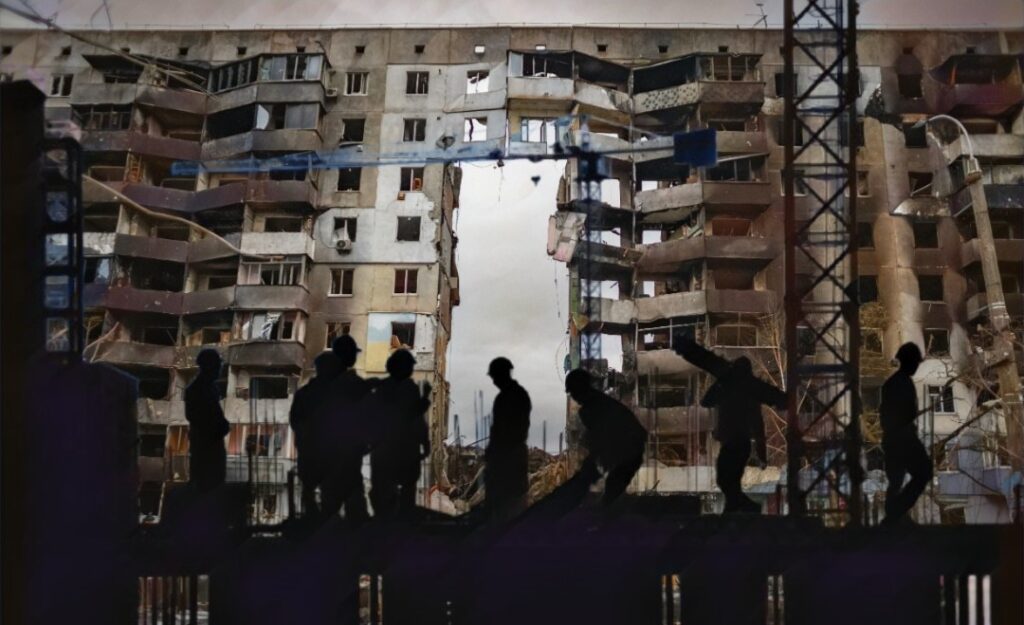
That is why, under the current circumstances, strengthening economic ties between Ukraine and the Central Asian states does not seem realistic. Fully aware of this, Kyiv is counting on the regional nations’ economic support in the post-war era – an area in which Kazakhstan has already shown interest.

According to Viktor Maiko, the Ukrainian Ambassador to Kazakhstan, the largest Central Asian country, can take part in the post-war reconstruction of Ukraine, especially in areas such as energy, infrastructure, housing, hospitals, and schools. “Given the scale of destruction, Ukraine is looking for reliable and experienced partners,” Maiko stressed, expressing hope that Ukrainian companies will also come to work in Kazakhstan.

Indeed, despite the war, many Ukrainian enterprises continue to operate in Kazakhstan. As of August 1, 2024, 1,330 active firms with Ukrainian participation were registered in the largest Central Asian economy. The Ukrainian company UBC Group has even invested €60 billion ($69,5 billion) into the construction of a refrigerator plant in the Turkestan region.

Besides economic ties, Kyiv also appears to be seeking closer political relations with Central Asia. Last year, Ukrainian President Volodymyr Zelensky gave his first interview to Central Asian media, while last month he received credentials from Kazakhstan’s newly appointed ambassador to Ukraine, Tolezhan Barlybayev. Previously, in 2023, Zelensky’s top aide, Andriy Yermak, indirectly called on the Central Asian states to reconsider their multi-vector foreign policies, and “join the sponsors of a new, fairer, and safer world order.”

Ambassador Maiko, on the other hand, seems to have a more balanced approach regarding Central Asia.

“I will continue to stand by the position that Central Asia is a major, self-sufficient, and promising partner – politically, economically, and in terms of cultural and humanitarian cooperation – not only for Europe as a whole, but also for Ukraine,” he stressed.

The coming months will reveal whether Kyiv’s decision to focus more attention on Central Asia will lead to tangible progress in political and economic cooperation with Kazakhstan, Kyrgyzstan, Tajikistan, Turkmenistan, and Uzbekistan, or if it is primarily aimed at securing their support against Russia.

One thing is for sure – the countries of Central Asia will seek to continue cooperation with Russia when it serves their interests, while simultaneously strengthening ties with Western powers, China, and Turkey, as well as with Ukraine. But to preserve this delicate balance, they will likely have to refine their strategies and apply the most effective diplomatic measures.

U.S. Senator Says Epstein Targeted Women, Girls in Turkmenistan, Other Countries

Is there a Central Asia connection to the Jeffrey Epstein sex trafficking investigation?

U.S. Senator Ron Wyden, a Democrat, is urging the U.S. Department of Justice to trace financial transactions that he says show Epstein used Russian banks to process payments in a sex trafficking scheme that targeted women from Turkmenistan and other countries.

Wyden, the top Democrat on the Republican-controlled Senate Finance Committee, said in a statement this month that committee investigators were allowed to look at some Epstein records in the Treasury Department building while President Joe Biden was in office last year. The files detail several thousand wire transfers totaling more than $1 billion going in and out of just one of Epstein’s bank accounts, he said.

“The file shows Epstein used multiple Russian banks, which are now under sanctions, to process payments related to sex trafficking,” Wyden said. “A lot of the women and girls he targeted came from Russia, Belarus, Turkey, and Turkmenistan. You shudder to think about the kinds of people who must have been involved in trafficking these women and girls out of those countries and into Epstein’s web of abuse.”

The administration of President Donald Trump had promised openness in the Epstein case but has since angered some supporters by declining to release more documents about the disgraced financier, who died in jail in 2019 while awaiting trial after being charged with the sex trafficking of minors. The official cause of death was suicide. Conspiracy theories have swirled over the circumstances of Epstein’s death, his relationships with wealthy and influential people, and how he was able to avoid scrutiny for so long.

Investigative journalist Julie K. Brown, who conducted key reporting on the Epstein case, noted Wyden’s efforts as well as what she described as “some resistance” from justice and treasury officials. She spoke in an interview with The Daily Beast podcast this week.

“Senator Ron Wyden is looking into the financial aspect of Epstein’s crimes and there’s some evidence that he was doing business overseas and I think that’s the next front that we have to look at, is to follow the money – how he made his money, who he was paying, who he was getting money from,” said Brown, author of Perversion of Justice: The Jeffrey Epstein Story.

Turkmenistan has not made significant efforts to meet basic standards for the elimination of human trafficking but has taken some steps to address the problem, according to a U.S. Department of State report in 2024.