The leaders of Central Asia convened in Tashkent on November 16 for a high-level Consultative Meeting, marking a significant step toward deeper regional integration. The summit welcomed Azerbaijan as a full participant and endorsed a roadmap to formalize cooperation in trade, infrastructure, security, and water management. Hosted by Uzbekistan’s President Shavkat Mirziyoyev, the summit brought together the presidents of Kazakhstan, Kyrgyzstan, Tajikistan, Turkmenistan, and Azerbaijan, alongside a United Nations representative.
Ahead of the meeting, Tashkent’s central streets were adorned with national flags and floral installations, underscoring the political and symbolic significance the Uzbek government placed on the event.
Mirziyoyev hailed Azerbaijan’s accession as “a truly historic day,” as the country became a full member of the Consultative Meeting of the Heads of State of Central Asia. He proposed forming a “Community of Central Asia,” establishing a rotating Secretariat, appointing special presidential envoys for coordination, and creating a Council of Elders to promote cultural and humanitarian dialogue.
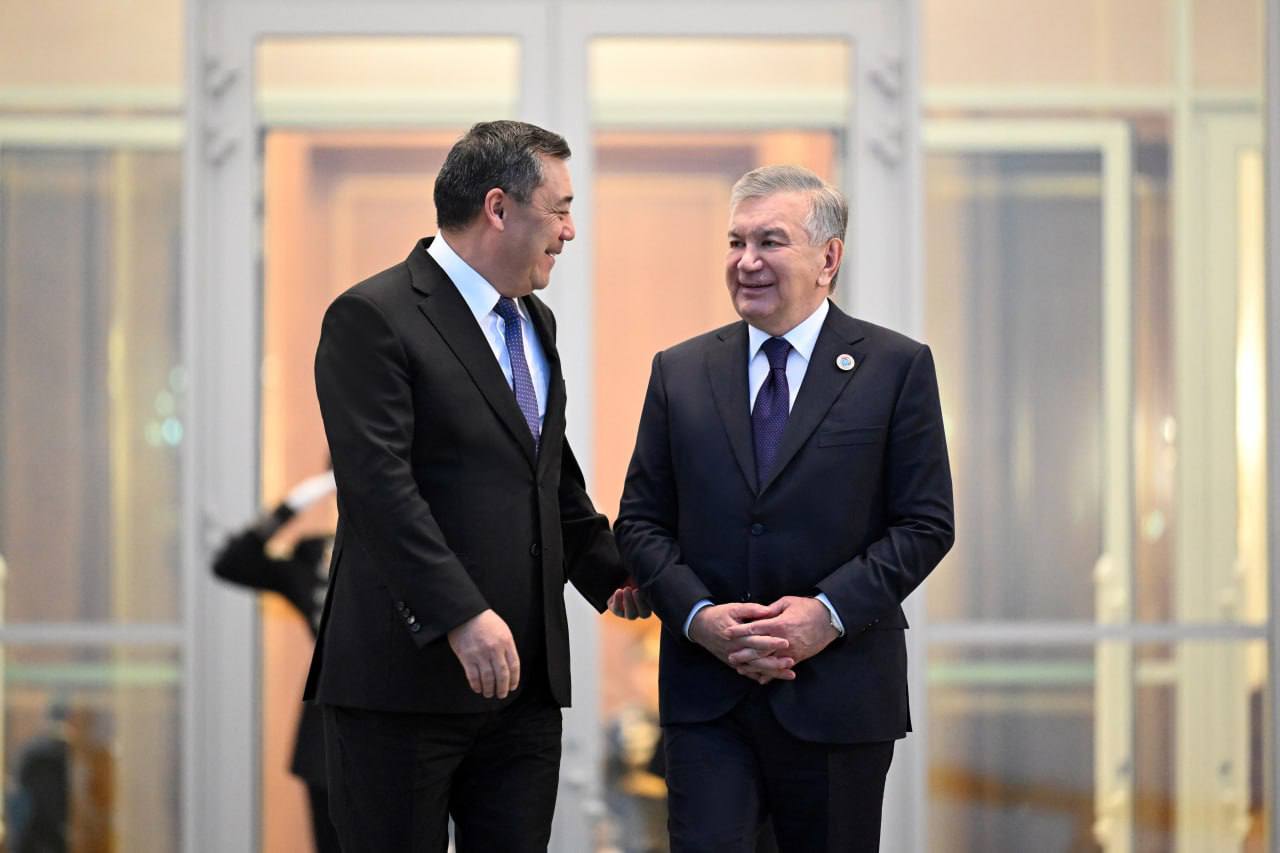
Image: president.uz
Regional Economic and Connectivity Agenda
Economic cooperation dominated the multilateral agenda. Leaders agreed to develop a Comprehensive Regional Program for Trade and Economic Cooperation through 2035 and to draft a Declaration on a Common Investment Space.
“In essence, we will build a strong bridge between Central Asia and the South Caucasus and pave the way for the formation of a single space of cooperation, which will undoubtedly strengthen the strategic interconnectedness and stability of both regions,” said Mirziyoyev.
Kazakhstan’s President Kassym-Jomart Tokayev also highlighted deepening bilateral ties with Uzbekistan. Trade between the two countries has reached $4 billion in 2025, with plans to increase it to $10 billion through expanded industrial cooperation and import substitution. Over 6,500 joint enterprises now operate between the two countries, with new projects worth more than $8 billion under development. Several initiatives, such as the Silkway Central Asia logistics center, new industrial facilities, and cultural programs, were launched in Tashkent during the visit.

Image: president.uz
Tajikistan’s President Emomali Rahmon met with Mirziyoyev on the sidelines of the summit. The two leaders noted the steady growth in political dialogue and agreed to expand cooperation in energy, industry, agriculture, and innovation. Bilateral trade surpassed $440 million in the first nine months of 2025. They also discussed regional security, including collaboration against terrorism, extremism, cybercrime, and drug trafficking.
Security, Water, and Cultural Cooperation
To advance regional integration, Tashkent also hosted the first meeting of the Council of Ministers of Trade and Investment of Central Asian countries and Azerbaijan on November 13. Ministers discussed boosting trade, investment, and industrial cooperation, with the goal of increasing regional trade turnover to $20 billion. Plans were also made to develop joint production platforms under a “Made in Central Asia” label. Uzbekistan’s trade with Central Asian partners rose from $3.2 billion in 2017 to $6.9 billion in 2024, while trade with Azerbaijan has grown by 13% this year.
Connectivity remained a focal point. Participants reaffirmed their commitment to the China-Kyrgyzstan-Uzbekistan railway and the Trans-Afghan corridor. Azerbaijan’s President Ilham Aliyev highlighted the growing significance of the Middle Corridor, noting that Azerbaijani ports handled a substantial share of trans-Caspian cargo in 2023, reflecting the rise in freight traffic between Central Asia and Europe.
In the security domain, the leaders endorsed a Concept of Regional Security and Stability, calling for coordinated efforts to counter terrorism, extremism, cyber threats, and transnational crime. They also discussed mechanisms to monitor vulnerabilities in water and energy infrastructure.
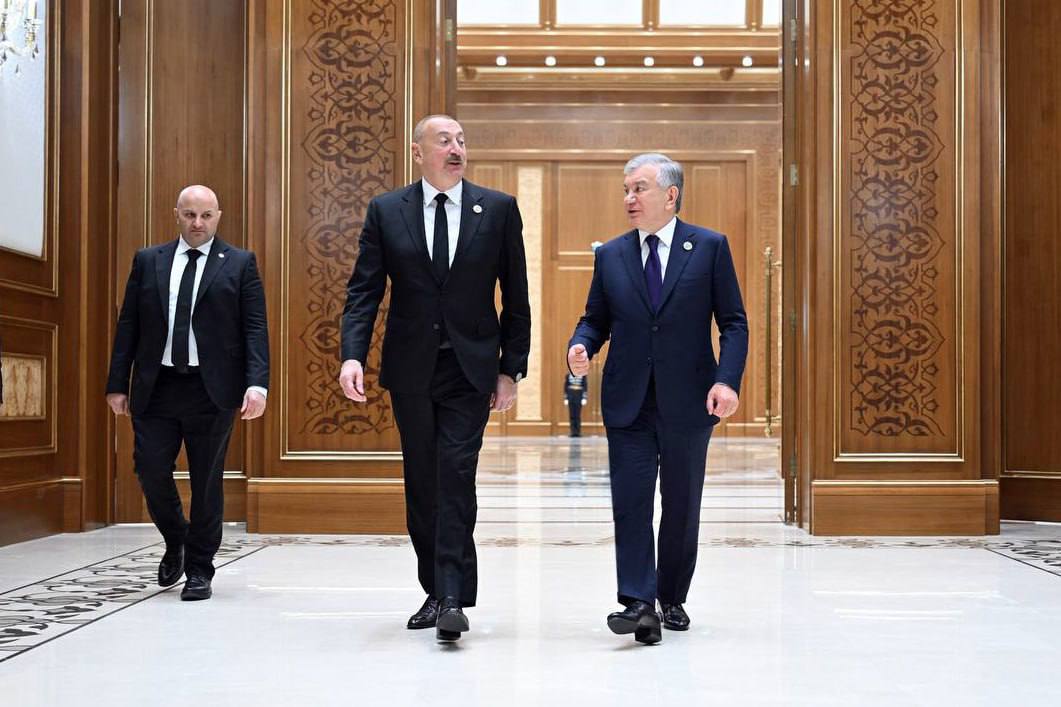
Image: president.uz
Environmental cooperation featured prominently. Uzbekistan proposed declaring 2026–2036 as the “Decade of Practical Actions for the Rational Use of Water in Central Asia.” Mirziyoyev also proposed establishing a Regional Centre of Competencies in Water Management in Tashkent to support professional training and basin management. He urged deeper cooperation with Afghanistan on joint use of the Amu Darya basin, positioning the initiative as a response to growing water scarcity and a complement to broader climate adaptation efforts.
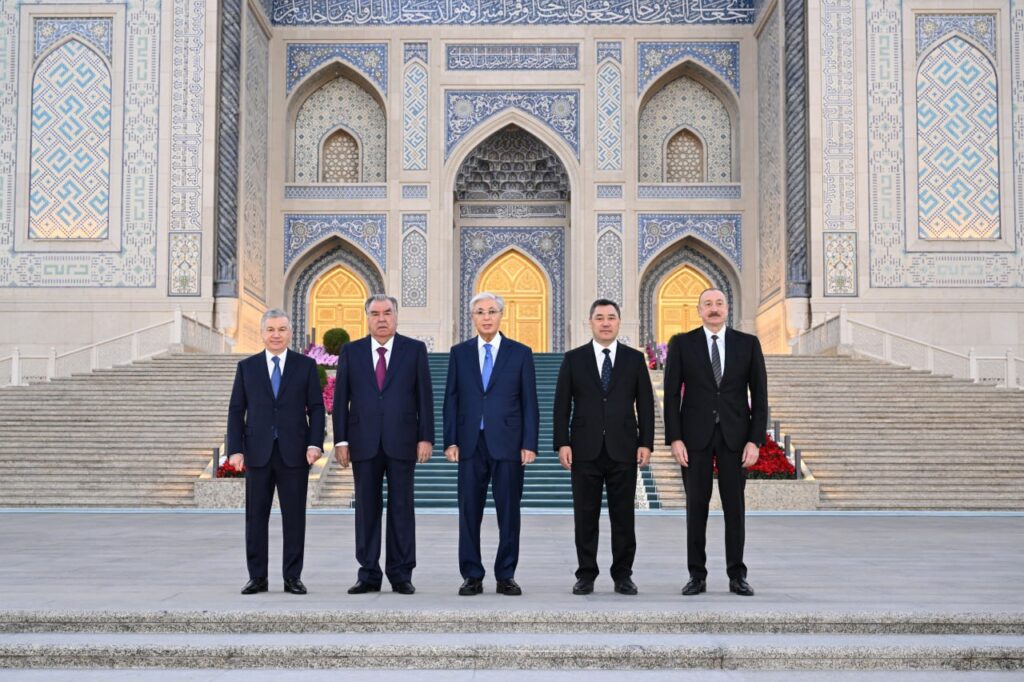
Cultural diplomacy also featured. Leaders visited the newly opened Centre for Islamic Civilization in Tashkent on November 15. The complex blends traditional and modern architectural styles, with four 34-meter portals and a 65-meter central dome. Uzbekistan proposed hosting an International Congress on Spiritual Heritage and called for support for a UN General Assembly resolution recognizing the contributions of Central Asian scholars to global culture.
Why Hosting the Seventh Consultative Meeting Matters to Uzbekistan
Political analyst Mukhtar Nazirov told The Times of Central Asia that hosting the seventh Consultative Meeting holds particular importance for Uzbekistan, not only as part of the rotating schedule but due to Tashkent’s leadership role in initiating this format. He said Uzbekistan is strongly committed to institutionalizing and legally strengthening the platform for long-term cooperation.

Image: president.uz
Nazirov emphasized that the success of the initiative is vital for Uzbekistan and that the government made significant efforts in preparation. He added that the Consultative Meeting is increasingly aligning with the region’s broader “Central Asia Plus” dialogues, enhancing the region’s ability to engage with external partners and address shared challenges.
Azerbaijan’s Accession: Risk or Opportunity?
According to Nazirov, Azerbaijan’s full participation has sparked both optimism and concern.
Some experts argue that since the format is named “Central Asia,” membership should be geographically limited. They worry that Azerbaijan’s inclusion could shift the platform’s original identity. Nazirov cited past examples, such as the “Central Asian Cooperation Organization,” which lost its independent status after Russia joined and eventually merged into the Eurasian Economic Community.
Concerns have also been raised over Turkey’s influence, given Azerbaijan’s close ties with Ankara, with some experts fearing that the format might drift toward the broader “Turkic world” institutional space.
However, Nazirov argues that Central Asia should be understood not only geographically, but also as a civilizational and economic space. Azerbaijan’s involvement, he said, expands the region’s connectivity and strengthens its resilience against external pressures, accelerating projects like the trans-Caspian corridors, and the China-Kyrgyzstan-Uzbekistan railway.
Nazirov added that Azerbaijan’s participation may reduce the dominance of Russia and China in regional connectivity, while boosting Turkey’s presence. This, he noted, aligns with the “Greater Central Asia” concept debated in Washington, which envisions a broader, interconnected regional space that includes Azerbaijan.

Image: president.uz
Afghanistan and Regional Water Security
Nazirov also addressed whether Afghanistan might eventually join regional platforms, should stability improve. He recalled Mirziyoyev’s past calls, as early as the 2003 Aral Sea summit, for Afghanistan’s inclusion in regional water dialogues, noting that Afghanistan shares transboundary water resources but lacks a legal framework for their use. At this year’s Aral Culture Summit, The Times of Central Asia reported on new efforts to restore the Aral Sea region. Nazirov referenced ongoing concerns about Afghanistan’s construction of the Qosh Tepa Canal, which could affect water flow to downstream regions such as Bukhara, Navoiy, Khorezm, and Karakalpakstan. In response, Uzbekistan and neighboring states have stepped up their engagement with the Taliban.
Finally, Nazirov observed a growing trend of regional coordination in dialogue with global powers such as Washington and Moscow, arguing that integrating Afghanistan into regional infrastructure, particularly Trans-Afghan corridors, could increase Kabul’s responsibility and promote more constructive engagement. More broadly, he concluded, the logic supporting Azerbaijan’s inclusion could, under the right conditions, also apply to Afghanistan in the future.