• KGS/USD = 0.01144 0%
  • KZT/USD = 0.00213 0%
  • TJS/USD = 0.10607 0.57%
  • UZS/USD = 0.00008 0%
  • TMT/USD = 0.28530 0%
  • KGS/USD = 0.01144 0%
  • KZT/USD = 0.00213 0%
  • TJS/USD = 0.10607 0.57%
  • UZS/USD = 0.00008 0%
  • TMT/USD = 0.28530 0%
  • KGS/USD = 0.01144 0%
  • KZT/USD = 0.00213 0%
  • TJS/USD = 0.10607 0.57%
  • UZS/USD = 0.00008 0%
  • TMT/USD = 0.28530 0%
  • KGS/USD = 0.01144 0%
  • KZT/USD = 0.00213 0%
  • TJS/USD = 0.10607 0.57%
  • UZS/USD = 0.00008 0%
  • TMT/USD = 0.28530 0%
  • KGS/USD = 0.01144 0%
  • KZT/USD = 0.00213 0%
  • TJS/USD = 0.10607 0.57%
  • UZS/USD = 0.00008 0%
  • TMT/USD = 0.28530 0%
  • KGS/USD = 0.01144 0%
  • KZT/USD = 0.00213 0%
  • TJS/USD = 0.10607 0.57%
  • UZS/USD = 0.00008 0%
  • TMT/USD = 0.28530 0%
  • KGS/USD = 0.01144 0%
  • KZT/USD = 0.00213 0%
  • TJS/USD = 0.10607 0.57%
  • UZS/USD = 0.00008 0%
  • TMT/USD = 0.28530 0%
  • KGS/USD = 0.01144 0%
  • KZT/USD = 0.00213 0%
  • TJS/USD = 0.10607 0.57%
  • UZS/USD = 0.00008 0%
  • TMT/USD = 0.28530 0%

Stalking in Kazakhstan: Why People Have Only Started Talking About It Now

Until recently, stalking in Kazakhstan was widely perceived as something more typical of movies, TV dramas, or social media discussions than of everyday life.

Persistent phone calls, dozens of messages, or being followed near one’s home or workplace were often not seen as a serious threat. Such behavior was frequently excused with phrases like “he just can’t let go,” “he’s just being too persistent in courting her,” or “that’s how he shows his feelings.” But in recent years, attitudes toward this issue have begun to change, and on September 16, 2025, amendments came into force in Kazakhstan, introducing a separate Article 115-1, “Stalking,” into the Criminal Code.

Under this article, stalking is defined as the unlawful pursuit of a person, expressed in attempts to establish contact with and/or track them against their will, without the use of violence, but causing substantial harm.

What Exactly Is Considered Stalking?

In practice, stalking is not limited to following someone on the street. Kazakhstan’s Ministry of Internal Affairs includes repeated phone calls, constant messaging, intrusive attempts to establish contact, harassment through social media, and other actions against a person’s will in this category. Official explanations also state that stalking may include threats, insults, defamation, online surveillance, reading private correspondence, monitoring through cameras, and GPS trackers. All of this causes fear, anxiety, and a sense of insecurity.

For a long time, society did not view stalking as a separate problem for several reasons. First, many people still held the dangerous belief that persistence is almost normal, especially in the context of former relationships or attempts to “win over” someone’s attention. Second, psychological harm was often underestimated: if there were no bruises or obvious physical violence, it was assumed that there was no serious problem. Third, before a separate article appeared in the law, it was harder for people to explain exactly what was happening to them and why it deserved a legal response.

The introduction of a clear legal norm helped call the problem by its proper name, and this matters not only for the police and courts, but also for the victims themselves.

What Changed After the Law Was Adopted?

In reality, stalking is not about feelings and not about “love that is too strong.” Its purpose is control, intrusion into another person’s personal boundaries, and forcing one’s presence upon them. The Ministry of Internal Affairs directly emphasizes that such actions cause serious harm to personal safety and psychological well-being.

Stalking causes fear, stress, and anxiety about one’s life and health, and in some cases may escalate into more serious crimes, including violence, bodily harm, or property damage.

The introduction of Article 115-1 showed that the state no longer regards intrusive harassment as something minor or as “a private story between two people.” The penalties for stalking include a fine of up to 200 monthly calculation indices (MCI), community service for up to 200 hours, or arrest for up to 50 days.

If the harassment is accompanied by violence, threats, blackmail, or the unlawful dissemination of information about a person’s private life, the acts are additionally classified under other articles of the Criminal Code. In this way, the law established an important principle: the answer “no” must be respected unconditionally, and the right to privacy and safety does not depend on whether the people involved had a relationship in the past.

Is the Law Working in Practice?

Judging by the initial data, the new provision has not remained merely on paper. The Ministry of Internal Affairs reported that since the criminalization of stalking, 51 cases have been sent to court, and in 36 of them the suspects were placed in temporary detention facilities.

The agency also noted separately that investigations of such cases are under the ministry’s supervision, and that before the article came into force, preparatory work had been carried out: methodological guidelines were developed and staff training was conducted. This is an important indication that the law does not merely exist formally, but is actually being enforced: complaints are recorded, materials are investigated, suspects are detained, and cases are transferred to court.

There are also already specific examples showing that people are in fact being held accountable. According to the Ministry of Internal Affairs, in the West Kazakhstan Region, a former husband systematically stalked a woman, continued calling and messaging her even after being blocked and after she changed her number, came to her place of residence and threatened her; the court found him guilty and sentenced him to 100 hours of community service.

In Astana, another man stalked a woman for six months, came to her workplace and home, filmed her without consent, and the court also found him guilty: he was sentenced to 100 hours of community service and ordered to pay compensation for moral harm. Moreover, because he violated the terms of a previously imposed restriction of freedom, the unserved part of that sentence was replaced with actual imprisonment. In Semey, according to the Ministry of Internal Affairs, another man who had been following a girl for a long time was also brought to justice.

What This Says About Society’s Attitude

The fact that people have started talking about stalking only now is connected not only to the new law, but also to a gradual change in the public understanding of personal boundaries. More and more people understand that intrusive harassment is not “a sign of attention,” not “persistence,” and not “a family drama,” but a real threat to a person’s safety and psychological well-being. When someone is forced to live in fear, change their phone number, avoid familiar routes, or be afraid to leave home, this is no longer about feelings; it is about a violation of rights and freedoms.

Stalking in Kazakhstan has become a visible topic only now because society and the state have finally begun to see it not as everyday intrusiveness, but as a real threat. The new article in the Criminal Code gave this problem a clear legal definition, and the first results of its application show that the law is genuinely working: cases are being registered, reaching the courts, and perpetrators are being punished.

This means that intrusive harassment is no longer considered something that should simply be “tolerated” or “kept private.” It is a violation of personal boundaries, privacy, and safety, for which specific liability is now provided.


Uzbekistan Leases 4,000 Hectares in Belarus, Signs 60,000-Ton Export Deal

Uzbekistan’s Kashkadarya region has agreed to lease 4,000 hectares of farmland in Belarus and signed a major export contract as part of efforts to expand agricultural cooperation between the two countries, according to Dunyo Information Agency.

The agreements were reached during a working visit to Belarus by a delegation from Kashkadarya region. As part of the trip, Uzbek representatives visited livestock and retail facilities in the Vitebsk region, including the districts of Braslav, Shumilino, and Postavy, where they studied local production practices.

Talks with the leadership of the Vitebsk Regional Executive Committee focused on strengthening economic ties and building joint production chains. One of the key outcomes was a deal between Uzbek companies “Asl Yuksalish Savdo” and “Muborak qorako‘lchilik” and the Belarusian “Sirotinsky” livestock farm.

Under the agreement, the Uzbek side will lease farmland on a long-term basis to launch an agricultural project. The first stage involves breeding 1,000 head of cattle, marking the beginning of a broader investment in livestock production.

At the same time, Uzbekistan is expanding its export presence in the Belarusian market. “Asl Yuksalish Savdo” signed a contract with the retail chain CJSC “Dobronom” to supply 60,000 tons of agricultural products annually. The shipments will include dried fruits, legumes, melons, and grapes.

The visit also included discussions on tourism and cultural cooperation. The two sides agreed to organize study tours for tourism sector representatives to boost travel exchanges. Cultural ties are also expected to deepen, with plans for performances by the Kashkadarya Regional Theater in Minsk ahead of an upcoming high-level visit.

The agreements build on broader economic cooperation between the two countries. Earlier this year, Belarus announced plans to increase bilateral trade with Uzbekistan to $2 billion by 2030. Speaking after talks with Uzbek Prime Minister Abdulla Aripov, Belarusian Prime Minister Aleksandr Turchin described the target as “ambitious but achievable,” noting that trade turnover is already approaching $1 billion.

Kazakhstan Seeks to Strengthen Industrial Base Through Local Locomotive Manufacturing

Kazakhstan is expanding its railway engineering sector as a key pillar of its industrial policy aimed at reducing import dependence and strengthening technological sovereignty.

The machinery industry remains one of the main indicators of an economy’s technological maturity. For Kazakhstan, its development represents not only domestic industrialization but also the strengthening of the country’s position as an exporter of high-value-added products. Railway engineering plays a particularly important role in this system.

One of the anchor investors in the sector is Wabtec Corporation. Recently, Kazakhstan signed contracts with the company worth $4.2 billion. These agreements include the supply of 300 locomotives through 2036, as well as service maintenance, the implementation of digital systems, and equipment repair.

On the sidelines of the 13th Forum of Machine Builders of Kazakhstan, Shyngys Altayuly, Product Director at Wabtec Corporation LLP, told The Times of Central Asia about the expansion of production localization and plans to manufacture a new generation of locomotives.

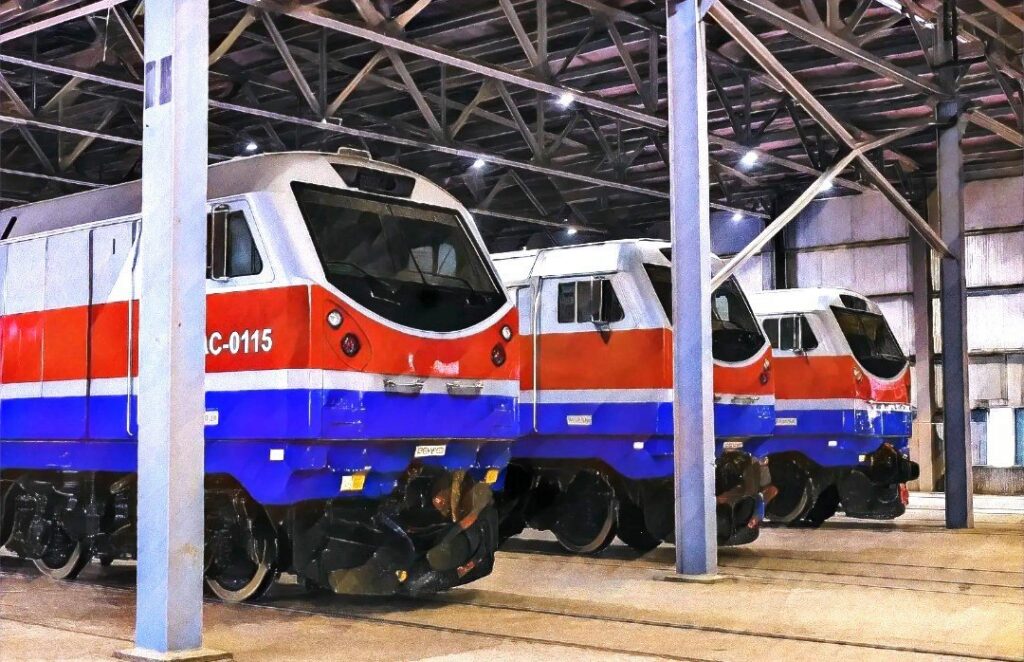
Since 2009, the “Locomotive Kurastyru Zauyty” plant in Astana has been producing freight TE33A(S) Evolution locomotives, passenger TEP33A models, and shunting TEM11 units. Over this period, more than 700 locomotives have been manufactured for the state railway company Kazakhstan Temir Zholy, including over 40 units exported to CIS countries and neighboring markets.

“With the introduction of our Evolution series TE33A locomotives in Kazakhstan, lifecycle costs have been reduced while ensuring high operational readiness across the country’s locomotive fleet,” Altayuly noted.

He also emphasized that over the past 25 years, 75% of all mainline AC diesel locomotives purchased globally have been produced by Wabtec.

From Imports to Sovereignty

The plant has localized the production of all major components, including the main frame, diesel compartment, driver’s cab, generator, equipment and air compartments, bogie frame, and other elements. This reduces dependence on external suppliers amid unstable global logistics.

At the same time, the facility is expanding cooperation with local suppliers. Kazakh enterprises produce elements of the running gear, safety systems, electronics, and a range of other components, including metal structures, driver’s cabins, wheels, and safety system components.

“In this way, we are building a domestic value-added engineering chain. This includes not only locomotive production itself but also the entire component base used in assembly,” Altayuly explained.

According to him, the localization level has already reached 40%, and further expansion is underway. Components planned for future localization include casting, lighting systems, heated windshields, driver’s seats, piping products, and cable systems.

“Once a company becomes a supplier to JSC ‘LKZ,’ it gains access to international markets. Wabtec operates in 50 countries, and our products are used in more than 100 countries worldwide. Therefore, any enterprise that completes this process and becomes a reliable supplier will gain access to global markets,” Altayuly added.

Debut of a New Locomotive

The next stage of development will be the launch of the new T33AT locomotive, scheduled for production in 2027. The project is being implemented as part of the Wabtec-KTZ partnership and reflects a strategy of integrating global technologies into the national industry.

“The improved performance of Evolution locomotives already covers up to 77% of train weights on the network of Kazakhstan Temir Zholy. Going forward, through a set of solutions to enhance all-weather traction performance, we plan to increase traction indicators and average train weights by 9%, bringing the figure to 86%. Given the national company’s shift toward transit traffic and containerization, which reduces average train weights, the corporation has set an ambitious goal of reaching 100%,” he said.

Key improvements in the new locomotive include the use of traction motors with increased pulling power, a new bogie design, and enhanced adhesion systems adapted to Kazakhstan’s climatic conditions.

“Each modification made for this locomotive responds to specific operating conditions in Kazakhstan and the challenges faced by freight operators. These include harsh climate conditions, heavy loads, varying traction modes, and extended service distances,” Altayuly explained.

Engine Production as a Breakthrough

One of the key announcements was Wabtec’s decision to launch production of GEVO diesel generator units in Kazakhstan. This will be the first production of engines of this level outside the United States.

“Today, as we increasingly hear about the need to transition to hybrid systems and greener technologies, Wabtec believes that diesel engine technologies have not yet fully exhausted their potential. We are working to improve fuel efficiency and environmental performance,” the company representative stated.

According to him, GEVO12 engines have already proven their effectiveness, offering improved fuel efficiency and reduced emissions.

“Since the introduction of TE33A locomotives with GEVO12 engines in Kazakhstan, fuel consumption for our customer, Kazakhstan Temir Zholy, has been reduced by up to 43%,” he noted.

Localization of engine production will help create a regional center of expertise and further reduce dependence on imports.

“Previously, no similar products were assembled in the country. Initially, our plant focused only on major repairs, but by 2027-2028 we will transition to full-scale production. This will be a significant statement of Kazakhstan’s ambitions as an industrial power,” Altayuly emphasized.

How Young Professionals from Central Asia Are Building Global Careers

Beyond opportunity, a new generation of Central Asians is learning how to compete, adapt, and fit into global work environments.

“I felt like I would understand what real work is much faster by living in the U.S.,” Ruzana Ileuova says.

Many people view building a career abroad as an opportunity. However, for Central Asian professionals, it also entails constantly adapting to new identities and expectations. While logging in to work every day from a location that feels both familiar and unfamiliar, Ruzana learns to trust her abilities and adapt to unspoken expectations. She says that pressure increases when working remotely, as it requires a high level of self-discipline.

“I always feel like I have to do more to prove myself,” she says. Despite strong language skills and academic preparation, she describes an ongoing sense of self-doubt, particularly in high-performance environments. “Even the language barrier still gives me imposter syndrome,” she adds. “And I’m the youngest on my team.”

Her narrative highlights a crucial aspect of this generation: success overseas requires constant negotiation of confidence, identity, and location, in addition to opportunity.

Reinventing the Path

For others, the path to an international career begins not with a plan, but with chance.

Originally from Bishkek, Kyrgyzstan, Aman Arykbaev did not imagine a global career. His journey began when he was unexpectedly selected for the green card lottery.

“I used to think the green card was not a real thing until I saw that I was selected,” he says.

His early years were characterized by uncertainty, as he arrived in the United States with little money and no guidance.

“I worked almost two years installing heating, ventilation, and air conditioning. At that time, my English was very weak,” Arykbaev recalls.

After attending a six-month IT boot camp, he was able to enter a new field and land his first tech job in a matter of weeks. “I had several interview stages, and by the end of the week, I got an offer.”

Arykbaev, who is currently a senior quality engineer, exemplifies a characteristic of this generation: the ability to change course. Careers are now rebuilt, sometimes from the ground up, rather than fixed.

Breaking Into Global Systems

The route was more regimented, but no less difficult, for Aldiyar Bekturganov, an Amazon software engineer. He followed a well-known path of internships, networking, and applications after relocating to the U.S. for college. However, the process was anything but easy.

“I failed my first interview completely,” he says.

That setback accelerated his learning curve. Even after landing a job, entering the workforce was not without its challenges. The shift from university to professional life, he explains, was immediate. “You suddenly realize the work actually matters,” he says. “If something is delayed, people are waiting on you.” Unlike academic settings, where mistakes are part of the process, professional environments demand results that affect teams and timelines.

While Bekturganov represents a more traditional corporate trajectory, Dameli Bozzhanova offers a contrasting perspective shaped by entrepreneurship and flexibility.

Working in London’s startup scene, Bozzhanova’s path has been characterized by experimentation and curiosity.

“It wasn’t a grand plan; it was a sequence of small yeses. In 10th grade, I was set on studying law in Kazakhstan, had already chosen a university, and had even done a legal project I was proud of. But the more I reflected, the more I realised I was drawn to something broader: business, how companies work, how value is created. My father had studied in the UK himself and had always encouraged me to consider studying abroad. So when the two things came together – my shift toward business and his advice – the decision felt natural. I got into Cardiff Sixth Form College, then the London School of Economics, and everything followed from that,” she says.

Her path from studying in the UK to joining an early-stage startup reflects a different kind of ambition, one rooted in building rather than following.

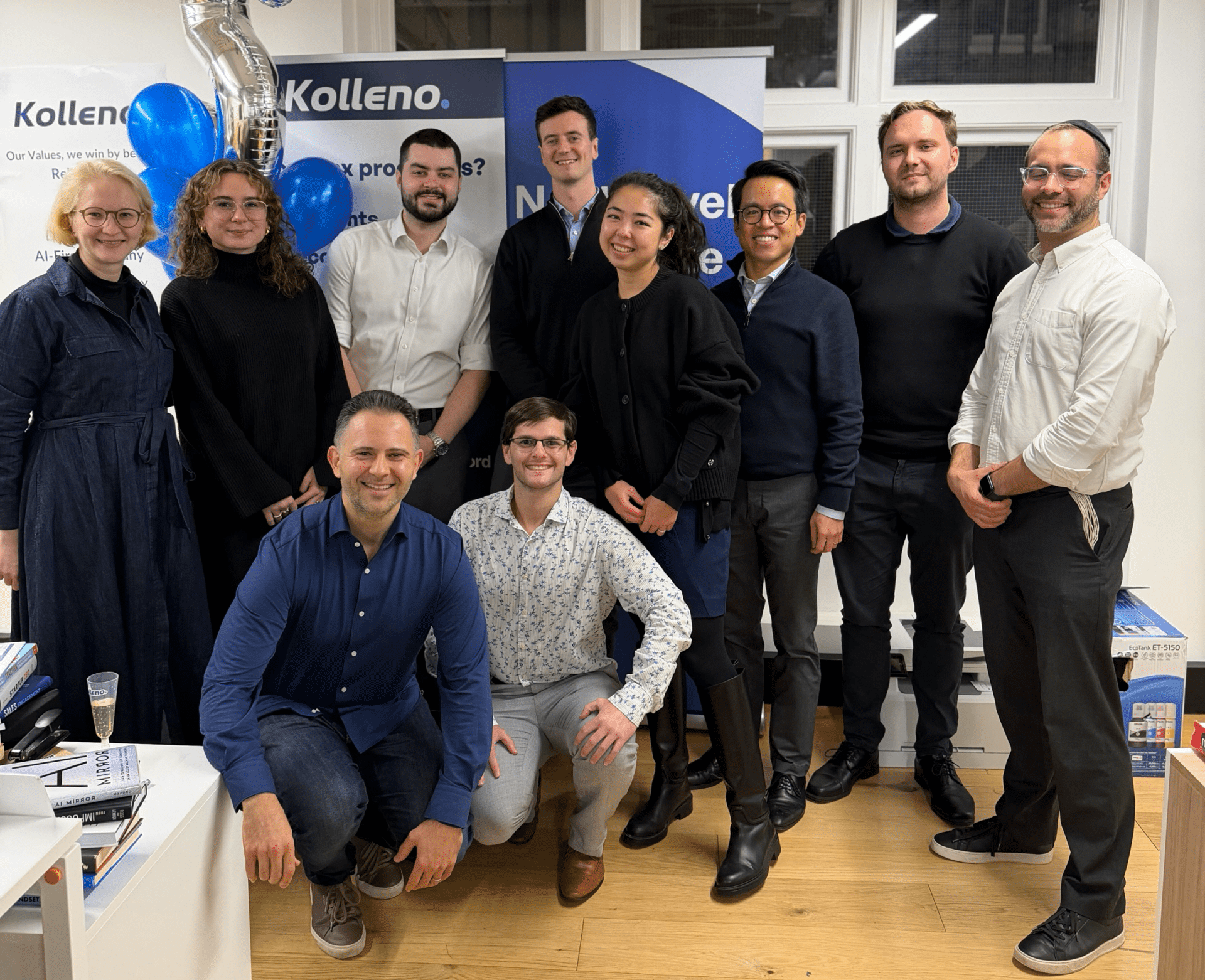
“I’ve always admired entrepreneurship, the idea that you can build something from almost nothing. That curiosity eventually led me toward the startup world. I tried to build my own health app, learned an enormous amount from that experience, and it ultimately led me to Kolleno, which I joined when there were four people and no revenue. Five years later, we’re a cash flow-positive software company,” she explains.

Image: Dameli Bozzhanova

When asked if she felt connected to her Central Asian heritage despite living overseas, Bozzhanova said, “Yes, very much so. London has a wonderful community of Kazakh friends, and I also have family here who came to study and work. That keeps the connection very real and present, it’s not something I have to seek out. It’s just part of my daily life here.”

Adapting and Thinking Globally

For Bozzhanova, adapting meant changing one’s viewpoint rather than trying to fit in. Her deliberate choice to stay open rather than defensive in unfamiliar situations enabled her to navigate a new environment more successfully.

“Being curious rather than defensive. When something confused me or felt unfamiliar, I got interested in it rather than retreating to what I knew.”

“London is simply one of the most competitive cities in the world to study, work, and build anything. That’s just the reality of the environment. For excellent results, you need to put in excellent, or more than excellent, effort. That’s become part of how I operate. It’s not a burden; it’s just my understanding of how things work.”

Bozzhanova presents the pressure as a normal part of a highly competitive environment rather than something related to her home country. In this sense, the need to prove oneself is not an exception but an expectation that shapes both performance and mindset.

“Our generation is increasingly connected through international projects, building startups that are getting recognised in global media, and founding companies that are attracting real investment and attention. The region is producing founders and professionals who are operating at a global level and being acknowledged for it. That visibility matters. It creates a feedback loop: when young people from Kazakhstan see others like them succeeding on the world stage, it expands what feels possible.”

Image: Dameli Bozzhanova

“Right now, I’m focused on what’s in front of me professionally and personally. Where that leads geographically, I’m genuinely open.”

Bozzhanova does not define her future in terms of a specific location, even though she has spent years developing her career overseas. Instead, she remains open, balancing professional ambition with a continued connection to home.

A Generation That Is More Global

A recurring theme in these accounts is that this generation’s perspectives are changing as a result of their exposure to international environments.

“When you work abroad, your thinking becomes more global,” Ruzana Ileuova says.

At the same time, identity itself is evolving.

“You carry your identity with you rather than rooting it in one place,” Dameli Bozzhanova reflects.

Advice for the Next Generation

Bozzhanova emphasizes action over hesitation for those in Central Asia considering a similar path. Instead of overplanning, she advises starting before feeling fully prepared and learning through experience.

“Don’t be afraid to try, don’t overthink it, just start and learn as you go. Doing so teaches you things that no amount of planning or preparation ever will. You’ll make mistakes, you’ll course-correct, and you’ll end up somewhere better than whatever you had mapped out in your head. The path that’s right for you looks different from the one that looks good on paper and learning that difference early saves a lot of time.”

A similar perspective is shared by Ileuova, who emphasizes persistence even in moments of uncertainty:

“The most crucial thing is to keep going and taking action, even when it seems like nothing is working. Stay curious if you’re not sure what to do next. Unexpected opportunities can arise through networking, recommendations, and simply placing oneself in the right environments. You will learn and adapt as you go, so it’s important not to obsess over what is right or wrong at any given time. However, once you’ve made this decision, the only thing left to do is move forward.”

Redefining Success

This generation’s definition of success is arguably the most significant shift. Today’s young professionals are more inclined to experiment, change course, and take risks than their parents, who often followed more linear and predictable career paths.

“Older generations followed a linear path; our generation is more exploratory,” Bozzhanova says.

Many believe the future is no longer tied to a single place.

Aldiyar Bekturganov defines success as adaptability; Bozzhanova views identity as mobile rather than fixed; Aman Arykbaev’s journey exemplifies flexibility in its most literal sense; and Ileuova’s experience underscores the pressure and perseverance required to build a career abroad.

As Central Asians become more globally engaged, their presence in international spaces is evolving. Rather than waiting to be accepted, a new generation is actively reshaping its role in the global workforce, redefining success on its own terms.

Uzbekistan Joins World Bank’s “Water Forward,” Aiming to Reach 1 Billion People by 2030

The World Bank Group has launched a new global platform aimed at improving water security, as Uzbekistan continues to expand cooperation with international financial institutions on infrastructure development.

In a statement released on April 15, the World Bank announced the launch of “Water Forward,” an initiative developed in partnership with multilateral development banks and other institutions. The platform aims to improve access to reliable water services for 1 billion people by 2030 by aligning policy reforms, financing, and international partnerships.

For Uzbekistan, where water management remains closely tied to agriculture and regional climate conditions, such initiatives come as the country continues to modernize its infrastructure and attract international financing.

Earlier, on March 23, the World Bank’s Board of Executive Directors approved a $200 million project to upgrade transport infrastructure in Uzbekistan’s Surkhandarya region. According to the bank, the project is intended to improve connectivity, support economic activity, and enhance access to services in the southern part of the country.

“Water is foundational to how economies function. When water systems work, farmers produce, businesses operate, and cities attract investment,” World Bank Group President Ajay Banga said. “Our task now is to align reform, financing, and partnerships to deliver reliable water services at scale.”

According to the World Bank, around 4 billion people globally experience water scarcity, despite water supporting health systems, agriculture, energy production, and an estimated 1.7 billion jobs. Weak regulations, unclear policies, and underfunded utilities have slowed investment in many countries, particularly in developing economies.

The new platform will focus on country-led “water compacts,” under which governments set priorities for reforms, strengthen institutions, and outline investment strategies for the sector. Fourteen countries have already announced such compacts, while additional agreements are expected.

The initiative also brings together a wide range of financial institutions, including the Asian Development Bank, the European Bank for Reconstruction and Development, and the Islamic Development Bank, to coordinate funding and technical expertise. The World Bank said it aims to help deliver water security to 400 million people directly, with partner contributions expected to raise the total to over 1 billion.

Kyrgyz Minister Sydykov Courts Investment in Washington

On the occasion of the annual IMF/World Bank meetings in Washington this week, the Prime Minister of Kyrgyzstan, Adylbek Kasymaliev, led a delegation to Washington D.C. for World Bank and IMF meetings, the Department of State Annual Bilateral Consultations, a meeting with Secretary of State Rubio, Deputy Secretary Landau and Under Secretary Hooker, as well as a number of other constructive dialogues and engagements with scholars, researchers, and authors.

This trip marks the second high-level U.S. visit in a year, signaling Washington’s strategic interest and Kyrgyzstan’s willingness to deepen cooperation.

Bakyt Sydykov, Kyrgyzstan’s Minister of Economy and Commerce, accompanied the Prime Minister. The delegation’s visit to Washington reinforces President Sadyr Japarov’s statement to President Donald Trump during the November 2025 C5+1 Summit, “I am confident that this event will provide an excellent opportunity for U.S. businesses to expand cooperation in sectors such as agriculture, e-commerce, information technology, transportation and logistics, tourism, and banking.”

Following Japarov’s lead, Sydykov is actively engaging private and multilateral partners; state and Commerce meetings are meant to keep things moving and steady investor confidence.

This shift towards deeper diplomatic, investment, and development ties is striking and certainly welcome in Washington. The shift reflects both an evolving Central Asian geopolitical landscape, post-Afghanistan dynamics, economic needs, diversification goals, and troubles in West Asia. Deeper engagement is also driven by ambitions to enhance regional transport and logistics integration. Kyrgyzstan’s approach departs from zero-sum logic, prioritizing win-win pragmatism and mutual gains.

Minister Sydykov

In an interview with The Times of Central Asia, Minister Sydykov said that this visit builds on the International Monetary Fund’s (IMF) recent official mission to Bishkek (March 18–April 1, 2026) and that “our banking sector is strong and well capitalized, as affirmed by the IMF, and we are well prepared against risk, enhancing oversight in the context of global volatility.”

Commenting on the government’s fiscal management following the IMF’s guidance, Sydykov said: “To expand fiscal flexibility, we are mobilizing revenue across a range of standard taxation measures and raising expenditure efficiency with responsible internal wage policies, rationalized energy subsidies, and public investment management. We are pinpointing more prudent debt management measures, enhancing risk oversight, and rolling out tracking metrics to uphold long-term sustainability and credibility.”

⁠Looking forward, Sydykov noted that Kyrgyzstan is monitoring outlook risks related to external volatility, while also insisting that “we are working to hold down domestic inflation – always a challenge with rapid economic growth – and lower fiscal pressures. We assess that these endogenous variables remain manageable, even with increased exposure to cross-border trade and capital flows. While external volatility lies beyond our direct control, Kyrgyzstan is working with the IMF, other multilaterals, and domestic banks to maintain and build resilience. We are therefore strengthening buffers, recalibrating policies, and advancing accounting reforms to support performance and sustainable growth.”

Responding to the ADB’s latest forecasts, Sydykov said Kyrgyzstan’s economy is moving toward greater stability and growth. After an 11.1% surge in 2025, growth is expected to slow to 8.9% in 2026 and 8.4% in 2027, while inflation rises from 8.2% to 10.3% before easing to 8.5%, driven by tariff hikes and exchange rate volatility. Key drivers include new electricity and heating tariffs, along with exchange rate volatility.

Sydykov stressed that “Kyrgyzstan has made significant progress in the implementation of state investment projects and infrastructure development, with tangible results. In 2025, a total of 119 industrial projects were successfully commissioned. The total volume of investments attracted to these projects amounted to $715.7 million, which resulted in the creation of 8,471 new jobs across the country.”

Growth and Inflation

Asked about the interplay between growth and inflation, Sydykov stated: “We are assessing policy options to curb overheating risks in Kyrgyzstan while supporting economic development. Potential steps include monetary tightening, fiscal consolidation through lower deficits and controlled spending, and targeted macroprudential and FX measures if required – we have not yet decided. Ongoing consultations with the Jogorku Kenesh (parliament), the financial sector, and international partners aim to ensure future actions are well-calibrated and aligned with global standards.”

The Trump administration has taken a more transactional approach to foreign relations, prioritizing deals, reciprocity, and core national interests over values-driven diplomacy, an approach that aligns with Sydykov’s response: “Kyrgyzstan shows readiness for a more quid-pro-quo U.S. engagement, particularly when it brings concrete deliverables in mining, hydropower, logistics, and ICT. A deal-driven U.S. posture directly complements opportunities in critical minerals, infrastructure, public-private partnerships, and SME finance. For a long-term partnership that benefits both sides, we understand that priorities must include, for example, secured investment corridors, export facilitation, and energy modernization, along with expanding U.S. preferential commercial access and consolidating its regional position in Central Asia. Of course, the details are what matter most.”

Since President Trump took office, the U.S. Department of State has been actively engaged in the region. While other Central Asian countries have landed significant U.S. deals involving locomotives, aircraft, and mining, for example, Kyrgyzstan is hoping to draw in more U.S. and other foreign investors. Sydykov highlighted: “Driven by our growth momentum, we aim, especially through private-sector outreach, to attract more investors and grow trade under a framework similar to America First—by opening up infrastructure projects, logistics hubs, and agriculture to the capital markets and entrepreneurs—creating employment opportunities in both Kyrgyzstan and the U.S.”

Responding to questions regarding tourism, Sydykov lit up as if it were one of his favorite topics: “Kyrgyzstan, often called the ‘Switzerland of Central Asia,’ offers a unique combination of peaceful coexistence, mountain trekking, financial stability, and affordable access, attracting visitors and supporting regional integration and long-term growth. We are also expanding rail tourismlinked to the Middle Corridor – through partnerships, new routes, and improved services linking destinations like Issyk-Kul and events such as the World Nomad Games. Despite infrastructure constraints, we are capitalizing on rising demand for scenic and cross-border rail travel and invite your participation in these endeavors.”

Regarding commercial rail initiatives, particularly the China–Kyrgyzstan–Uzbekistan line tied to the Middle and North–South corridors, the government has said that progress is on track. Sydykov concurred, stressing that advancing rail for economic integration is a top government priority: “We plan to expand the rail network by over 700 km and complete the China–Kyrgyzstan–Uzbekistan corridor and key domestic lines by 2030. This will require major capital mobilization despite engineering and financing hurdles. While Chinese financing is important, we are open to PPPs, sovereign-linked infrastructure financing, equity joint ventures, and international infrastructure funds. Complementary upstream and downstream developments will support long-term viability. Interested investors should contact my (Sydykov’s) office.”

When asked about the link between foreign and economic policy, Sydykov underscored that “Kyrgyzstan maintains balanced relations with major powers and neighbors, including Russia, China, and the United States, while prioritizing sovereignty, regional stability, and economic cooperation. Having said that, my focus is on strengthening the domestic economy to serve citizens, one family and one neighborhood at a time. The economy is my wheelhouse, and I am confident in our future.”