• KGS/USD = 0.01144 0%
  • KZT/USD = 0.00192 -0%
  • TJS/USD = 0.10866 0.18%
  • UZS/USD = 0.00008 0%
  • TMT/USD = 0.28571 0%
  • KGS/USD = 0.01144 0%
  • KZT/USD = 0.00192 -0%
  • TJS/USD = 0.10866 0.18%
  • UZS/USD = 0.00008 0%
  • TMT/USD = 0.28571 0%
  • KGS/USD = 0.01144 0%
  • KZT/USD = 0.00192 -0%
  • TJS/USD = 0.10866 0.18%
  • UZS/USD = 0.00008 0%
  • TMT/USD = 0.28571 0%
  • KGS/USD = 0.01144 0%
  • KZT/USD = 0.00192 -0%
  • TJS/USD = 0.10866 0.18%
  • UZS/USD = 0.00008 0%
  • TMT/USD = 0.28571 0%
  • KGS/USD = 0.01144 0%
  • KZT/USD = 0.00192 -0%
  • TJS/USD = 0.10866 0.18%
  • UZS/USD = 0.00008 0%
  • TMT/USD = 0.28571 0%
  • KGS/USD = 0.01144 0%
  • KZT/USD = 0.00192 -0%
  • TJS/USD = 0.10866 0.18%
  • UZS/USD = 0.00008 0%
  • TMT/USD = 0.28571 0%
  • KGS/USD = 0.01144 0%
  • KZT/USD = 0.00192 -0%
  • TJS/USD = 0.10866 0.18%
  • UZS/USD = 0.00008 0%
  • TMT/USD = 0.28571 0%
  • KGS/USD = 0.01144 0%
  • KZT/USD = 0.00192 -0%
  • TJS/USD = 0.10866 0.18%
  • UZS/USD = 0.00008 0%
  • TMT/USD = 0.28571 0%
12 December 2025

Kyrgyz Authorities Step Up Pressure on Kloop: Searches, Arrests, and International Outcry

In late May, Kyrgyz security forces conducted coordinated raids on the homes of eight current and former employees of the independent media outlet Kloop. Operatives from the State Committee for National Security (GKNB) simultaneously entered apartments in Bishkek and Osh.

Video journalist Alexander Alexandrov and former cameraman Joomart Duulatov were detained and remain in custody on charges of “public calls for mass unrest” under Article 278 of the Criminal Code. The other six individuals were released after hours of interrogation but were compelled to sign non-disclosure agreements.

According to Kloop’s editorial staff, five minutes before the raids began, the outlet received an anonymous email with the subject line: “You have crossed the line.” The incident drew swift condemnation from human rights groups. The Committee to Protect Journalists (CPJ) demanded an immediate end to what it described as persecution, while other international organizations called for the charges to be dropped.

From Student Project to Investigative Powerhouse

Founded in 2007 by journalists Bektur Iskender and Rinat Tukhvatushin, Kloop began as a training platform for aspiring reporters. The outlet gained prominence during its around-the-clock reporting on the 2010 uprising. It later evolved into a leading investigative publication, exposing high-profile cases such as the 2017 “Samaragate” voter data scandal and the 2019 financial network linked to customs official Raiymbek Matraimov.

Despite legal threats, including lawsuits from the Matraimov family that were later withdrawn, Kloop’s reporting bolstered its credibility and amplified its visibility, making it increasingly unwelcome in official circles.

Escalating Crackdown

Tensions escalated in August 2023 when the Bishkek Prosecutor’s Office filed a lawsuit to dissolve the Kloop Media Foundation, accusing it of “negative coverage of government activities.” The Oktyabrsky District Court approved the request in February 2024, and the Supreme Court upheld the decision that July in a closed session. The ruling remained classified for a month.

The Ministry of Culture subsequently ordered Kloop’s website to be blocked within Kyrgyzstan, despite assurances that the foundation’s removal from the official register would not impede freedom of expression. In response, the editorial team relocated servers abroad and registered a new legal entity. Nevertheless, the authorities resumed the pressure in January 2024 with searches targeting other independent outlets, including Temirov Live and 24.kg. By May, the security forces were back at Kloop.

The investigation now alleges that Kloop continued to operate illegally post-liquidation, publishing materials purportedly aimed at “inciting public discontent.” This echoes the case against Temirov Live, where several journalists were imprisoned, including director Makhabat Tazhibek Kyzy, who is serving a six-year sentence. Human rights advocates argue the charges are part of a broader strategy to criminalize dissent.

International Reactions

The arrests have provoked international condemnation. Amnesty International, Human Rights Watch, Civil Rights Defenders, and Reporters Without Borders were among more than a dozen NGOs that issued a joint statement decrying a “new wave of repression” threatening the future of independent journalism in Kyrgyzstan.

The statement urged the immediate release of detained journalists and called on international partners, particularly the European Union, to adopt a more assertive stance.

Domestic Voices

Amid the foreign outcry, the voices of Kyrgyz citizens reflect the extent of public concern.

Akmaral, a 25-year-old freelance designer from Bishkek, recalled how a former Kloop video editor and his partner were arbitrarily detained: “They even took people who had long since left Kloop or were just acquaintances. Some were forced to record coerced ‘confessions’ renouncing journalism,” she told The Times of Central Asia.

Akmaral emphasized the influence of Kloop: “They exposed corruption in state security, illegal land deals, and even implicated the president. The courts couldn’t silence them, nor could the internet blocks.”

Marat, a 30-year-old driver from the Osh region, told TCA, “I don’t follow politics, but when the only site exposing corruption is blocked, you know anyone can be silenced next.”

Gulnara, a 23-year-old dance teacher, said: “These are not criminals. The injustice is coming from the state. It’s painful to watch our country regress.”

Beksultan, a student programmer in Bishkek, summed up the atmosphere: “You don’t have to be a journalist anymore. Make an election app or share an article, and you’re an enemy of the state.”

What’s Next?

As of June 24, 2025, Alexandrov and Duulatov remain in GKNB custody. Legal appeals have failed within Kyrgyzstan, prompting Kloop’s lawyers to prepare a complaint to the UN Human Rights Committee, a process that could take years.

Despite the ongoing crackdown, Kloop continues its work from abroad. The site remains accessible in Kyrgyzstan via mirror domains, and the team has opened a podcast studio in Georgia. Kloop’s leadership has pledged to persist, promising to deliver “the most incisive investigations, the most objective news, and the boldest commentary.”
Opinion: Regional Power Starts at Home – Central Asia’s Path to Autonomy

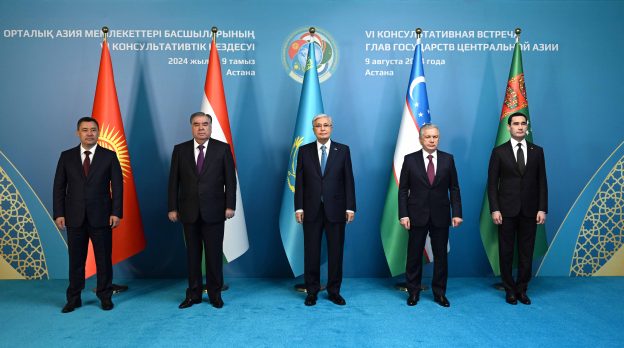
The world is once again in a phase of systemic uncertainty. As conflicts proliferate and global governance splits, small and medium states must grapple with the consequences. For Central Asia, these external crises are not distant events; they are transmitted through trade, remittances, energy prices, and diplomatic pressure. But while exposure is unavoidable, dependence is not. The region’s future lies not in aligning with competing hegemons, but in constructing durable institutions of regional cooperation and self-governance.

Over the last two decades, Central Asian countries have existed in a delicate balance. Security guarantees from Russia, infrastructure finance from China, and development assistance from the West provided a measure of stability, but they also bred institutional inertia. Today, that equilibrium is breaking down. Russia is preoccupied and sanctioned. China’s external ambitions are increasingly self-serving. The West is distracted. The resulting vacuum could leave Central Asia either exposed or, more optimistically, empowered to shape its own destiny.

Uzbekistan’s Institutional Recalibration

Uzbekistan’s pivot after 2016 was more than a diplomatic rebranding. It marked a nascent effort to build regional institutional trust, which was long absent in Central Asia. For the first time since independence, disputes over borders, transit, and trade were addressed not through coercion or isolation, but negotiation. The Khujand Declaration, signed by Uzbekistan, Kyrgyzstan, and Tajikistan, offered a blueprint for how local capacity, rather than external mediation, can resolve long-standing frictions.

This was a decisive shift from extractive bilateralism to inclusive multilateralism. But diplomatic normalization is only a prelude. The deeper question remains: Can Central Asia institutionalize integration? Can it create shared rules and enforcement mechanisms strong enough to withstand both internal and external shocks?

If Central Asian countries want to succeed, they should invest in four areas of regional institution-building, which will bring collective autonomy to the region.

  1. Mobility without bureaucracy

Mobility is not just about tourism or convenience; it is about labor markets, political identity, and state capacity. Central Asia must move toward the full elimination of intra-regional visa and registration requirements. A legally binding regional agreement should guarantee the right of all citizens to live, work, and invest across borders without administrative friction.

  1. Strategic alignment through membership discipline

Membership in multilateral organizations is not costless. It binds countries to external norms and power hierarchies. Uzbekistan’s exit from the CSTO and its calibrated WTO accession strategy demonstrate the value of selectively aligning with institutions that advance national and regional interests. Central Asian countries should have the political will to reconsider all memberships that harm their prosperity. Instead, a coordinated foreign policy doctrine between countries could increase their authority and bargaining power on the global stage.

  1. Energy security through joint investment and governance

Energy independence is the main concern in Central Asia. Therefore, a Central Asian Energy Association should be established to coordinate grid connectivity, renewable development, and strategic reserves. Collective energy governance would reduce dependency on Russian and Chinese systems, while enabling scale economies in transition technologies.

  1. Investment in Afghanistan as a regional stability mechanism

The marginalization of Afghanistan has always undermined regional stability. What Central Asia lacks is not capacity, but coordination. A Central Asian Infrastructure and Development Fund should be established to jointly finance roads, electricity, and higher education in Afghanistan, buffering spillovers while building cross-border institutions.

The question is no longer whether Central Asia can integrate; it is whether it can do so before external volatility overwhelms internal capacity. The foundations have been laid. Uzbekistan opened the doors for the unity of Central Asia. Now it is time to act accordingly.


The views expressed in this article are those of the author and do not necessarily reflect the official policy or position of the publication, its affiliates, or any other organizations mentioned.

Road Deaths of Demining Team Are Remembered in Tajikistan

This week, a Swiss humanitarian group with a leading role in the disposal of unexploded ordnance in Tajikistan is commemorating the deaths of five of its Tajik workers in a 2016 vehicle accident in the Central Asian country.

“On this day, we take a moment to honour their memory,” the Geneva-based FSD group said on X on Monday.

The five members of FSD’s demining team in Tajikistan – deminers Abdurozik Kurbonov, Gulmurod Choriev and Ilkhomjon Safarov, as well as medic Mashraf Abdurahmonov and driver Ghafor Soliev – died on June 30, 2016 were killed in the accident while on their way to a minefield. The vehicle they were in plunged into the torrents of the River Panj, which forms part of the border between Tajikistan and Afghanistan. Two people in the vehicle survived.

The acronym FSD stands for Fondation Suisse de Déminage, or Swiss Federation for Mine Clearance. It has worked to clear landmines and other unexploded ordnance in Tajikistan, where a civil war in the 1990s killed several tens of thousands of people, according to a number of estimates, and displaced many more from their homes.

The demining group says much of the explosive material that must be cleared was left behind after the civil war, and that landmines laid by Russian forces along the Tajikistan-Afghanistan border as well as by Uzbek forces along the Tajikistan-Uzbekistan border in the early 2000s has posed concerns for the security of civilians.

FSD, which first got involved in Tajikistan in the early 2000s, has also worked to rehabilitate areas affected by Soviet-era pesticides that have caused pollution and health problems.

“While the Tajik government is aware of the risks of such substances on health, the environment and the economy, it lacks the legal, financial and institutional resources to solve the problem,” said FSD, which was founded in 1997. The group has received private and public funding.

The humanitarian organization had 60 staff members in Tajikistan at the beginning of 2025. Its teams are working to working to clear the remaining 12.5 square kilometers of hazardous land in the country.

In a step toward self-sufficiency in demining, 14 officers from Tajikistan’s Ministry of Defense and Border Troops agency completed a two-week training in explosive ordnance disposal in Gharm, Tajikistan in March this year. The training was conducted by Dushanbe-based officers from the Organization for Security and Co-operation in Europe and defense ministry specialists.

Following that course, OSCE said expert instructors from Tajikistan led an OSCE-funded regional course in disposal of unexploded ordnance in April and May, “marking a significant step in enhancing Central Asia’s capabilities in mitigating explosive threats.”

Kazakhstan to Raise Minimum Wage in 2026

Kazakhstan’s Minister of Labor and Social Protection, Svetlana Zhakupova, has announced that the government plans to raise the minimum wage starting January 1, 2026. While the exact amount was not disclosed, Finance Minister Madi Takiev suggested the minimum wage could increase to just over 90,000 KZT ($189) per month.

Speaking on the sidelines of a joint meeting of both chambers of the Kazakh parliament, Zhakupova noted that last year her ministry approved a new methodology for calculating the minimum wage. The formula is based on labor productivity, median wages, and inflation. As all these indicators, especially inflation, have risen this year, an adjustment is being prepared.

“Today, several institutions are conducting research to determine accurate indicators of labor productivity and median wages by region and by industry, all of which will inform the new minimum wage,” Zhakupova said. “By the end of the year, we expect to finalize the amount so that the increase can take effect from January 1.”

Finance Minister Takiev echoed this projection, estimating the new figure at approximately 90,000 KZT.

Currently, the minimum wage in Kazakhstan stands at 85,000 KZT ($164). If the forecast is accurate, the planned increase would be the smallest in seven years. For context, the minimum wage rose from 28,200 KZT to 42,500 KZT ($54 to $81) in 2019, to 60,000 KZT ($116) in 2022, and to 70,000 KZT ($135) in 2023. The current level was established in January 2024. Inflation for the first five months of this year reached 11.3%, according to official data.

Earlier, parliamentary deputy Askhat Rakhimzhanov called for revising key social indicators, including the minimum subsistence level, minimum wage, and consumer basket. He argued the subsistence minimum, currently 46,000 KZT ($89), should be raised to at least 115,700 KZT ($223).

Deputy Prime Minister Serik Zhumangarin, who also heads the Ministry of National Economy, agreed that the minimum wage should rise but cautioned against abrupt increases.

“Raising the minimum wage is complex. It must be balanced with efforts to contain inflation, as it leads to higher production costs and stimulates demand, which can further drive inflation,” Zhumangarin said. He acknowledged the sharp rise in prices and admitted he could not live on 85,000 KZT.

According to the National Statistics Bureau, the average monthly nominal wage in Kazakhstan during Q1 2025 was 423,100 KZT ($816), while the median wage stood at 300,300 KZT ($579). Only 6.1% of the working population, or around 170,000 workers, earn less than 100,000 KZT monthly, according to the Applied Economics Research Centre (AERC). The majority, 53%, earn between 150,000 and 350,000 KZT ($290 to $675).

As previously reported by The Times of Central Asia, medical personnel remain among the lowest-paid occupational groups in the country.

Central Asia Rethinks Trade Routes Amid Middle East Crisis

The escalating conflict between Iran and Israel is threatening to disrupt Central Asia’s southern trade and transport corridors, prompting governments in the region to reassess their export strategies. According to the Russian outlet Nezavisimaya Gazeta, Kazakhstan and Uzbekistan are exploring alternative routes to mitigate risks associated with instability in the Persian Gulf.

A major concern is the potential closure of the Strait of Hormuz, a critical chokepoint for global trade. This poses a significant challenge for Kazakhstan, which relies on Iran as its sole southern railway outlet.

Kazakhstan Seeks Alternative

Kazakhstan’s Minister of National Economy, Serik Zhumangarin, emphasized the importance of maintaining uninterrupted cargo movement. “If rail service through Iran is disrupted, and this is our only southern route, the state is prepared to redirect cargo through alternative paths,” he said.

Though exports via Iran remain relatively limited, about $350 million in 2024 and $120 million from January to May 2025, Kazakhstan had planned to expand its use of the Iranian corridor. In early June, Astana and Tehran agreed to boost wheat and barley shipments to three million tons annually.

Alternatives under consideration include multimodal routes incorporating rail and ferry links across the Caspian Sea via Turkmenistan and Azerbaijan, as well as the Trans-Caspian or “Middle Corridor” connecting China to Georgia via the Caspian. Air freight is also being considered for select goods. While these alternatives involve added logistical challenges, the government has pledged support to businesses should the conflict persist.

Zhumangarin reassured that rerouting exports is unlikely to significantly affect prices, noting that most of Kazakhstan’s exports are globally traded commodities whose prices are shaped by international markets. As previously reported by The Times of Central Asia, Kazakh officials had already warned of risks to southern routes. Nonetheless, Zhumangarin emphasized that contingency plans are in place and that “it’s too early to say how the situation will evolve.”

Uzbekistan Focuses on Diversification

Uzbek President Shavkat Mirziyoyev has likewise responded swiftly, ordering an immediate assessment of the crisis’s impact on trade and transportation, and calling for urgent diversification of export routes. According to the presidential press service, transport costs could rise by as much as 30%.

“The need to redirect cargo flows to safer ports and negotiate alternative trade corridors with partner countries was emphasized,” the statement said. Authorities have been instructed to support export-oriented businesses and identify new markets to help stabilize domestic prices.

Until recently, Uzbekistan had been expanding trade ties with Iran, aiming to increase bilateral trade to $2 billion annually. However, these plans are now under review due to the regional instability.

Experts: Southern Routes Not Yet Critical

Despite the growing concerns, experts say Uzbekistan is not heavily dependent on southern corridors. Grigory Mikhailov, editor-in-chief of the logistics portal LogiStan.info, noted that most of Uzbekistan’s trade continues through Russian ports (St. Petersburg, Vladivostok, Novorossiysk) and China.

“These routes are well-established, reliable, and offer predictable delivery times. Sanctions have had little to no impact on cargo passing through Russia,” Mikhailov said. He added that the Iranian route via Bandar Abbas remains underdeveloped, citing incomplete infrastructure, problematic payment systems, and limited capacity. “For now, shipments along this route are mostly experimental,” he said.

Mikhailov concluded that Uzbekistan has not suffered significant losses from the Iranian situation, calling it “more of a political issue.” He noted that the country is now prioritizing the development of its northern and eastern trade corridors, particularly the North-South route through Russia.

Kyrgyzstan to Host First International Equestrian Rally Gallops

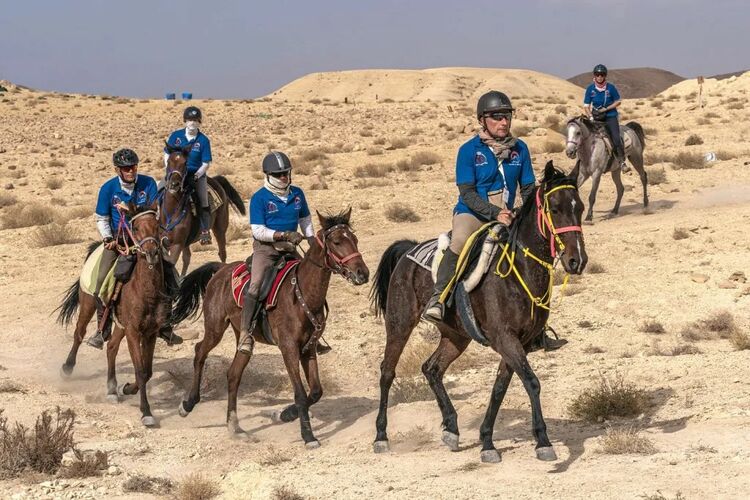
For the first time, the international equestrian adventure race known as The Gallops will be held in Central Asia, with the 2025 edition taking place around the scenic mountain lake of Son-Kul in Kyrgyzstan’s Naryn region.

Scheduled for July 19-27, Gallops-2025 will begin in the village of Kyzart. Over five days, participants will cover more than 200 kilometers on horseback, navigating a route encircling Lake Son-Kul.

This unique event, inspired by the spirit of the Paris-Dakar rally, combines elements of orienteering and endurance riding. While not a traditional competition, The Gallops tests participants’ stamina, solidarity, and self-discipline, making it a challenge of both physical and mental endurance.

Organized in collaboration with local government authorities, Gallops-2025 is expected to attract around 100 riders, including professionals and VIPs from more than 15 countries. Participants will include public figures such as actors, athletes, members of royal families, and media personalities.

According to the office of the Kyrgyz president’s plenipotentiary representative in the Naryn region, the event has already garnered significant attention from global media and social platforms, bolstering Kyrgyzstan’s profile as a destination for adventure tourism.

Past editions of The Gallops were held in Oman (2014), Morocco (2018), India (2019), and Jordan (2021).