• KGS/USD = 0.01144 0%
  • KZT/USD = 0.00214 0%
  • TJS/USD = 0.10508 0.48%
  • UZS/USD = 0.00008 0%
  • TMT/USD = 0.28490 -0.28%
  • KGS/USD = 0.01144 0%
  • KZT/USD = 0.00214 0%
  • TJS/USD = 0.10508 0.48%
  • UZS/USD = 0.00008 0%
  • TMT/USD = 0.28490 -0.28%
  • KGS/USD = 0.01144 0%
  • KZT/USD = 0.00214 0%
  • TJS/USD = 0.10508 0.48%
  • UZS/USD = 0.00008 0%
  • TMT/USD = 0.28490 -0.28%
  • KGS/USD = 0.01144 0%
  • KZT/USD = 0.00214 0%
  • TJS/USD = 0.10508 0.48%
  • UZS/USD = 0.00008 0%
  • TMT/USD = 0.28490 -0.28%
  • KGS/USD = 0.01144 0%
  • KZT/USD = 0.00214 0%
  • TJS/USD = 0.10508 0.48%
  • UZS/USD = 0.00008 0%
  • TMT/USD = 0.28490 -0.28%
  • KGS/USD = 0.01144 0%
  • KZT/USD = 0.00214 0%
  • TJS/USD = 0.10508 0.48%
  • UZS/USD = 0.00008 0%
  • TMT/USD = 0.28490 -0.28%
  • KGS/USD = 0.01144 0%
  • KZT/USD = 0.00214 0%
  • TJS/USD = 0.10508 0.48%
  • UZS/USD = 0.00008 0%
  • TMT/USD = 0.28490 -0.28%
  • KGS/USD = 0.01144 0%
  • KZT/USD = 0.00214 0%
  • TJS/USD = 0.10508 0.48%
  • UZS/USD = 0.00008 0%
  • TMT/USD = 0.28490 -0.28%

Tokayev at the UN Underscores Kazakhstan’s New Diplomacy

Kazakhstan’s international visibility is reaching a peak this late summer and early autumn of 2025. In August, UN Secretary-General António Guterres visited Astana, praising the country’s role as a stabilizing influence in Central Asia and a supporter of multilateral institutions.

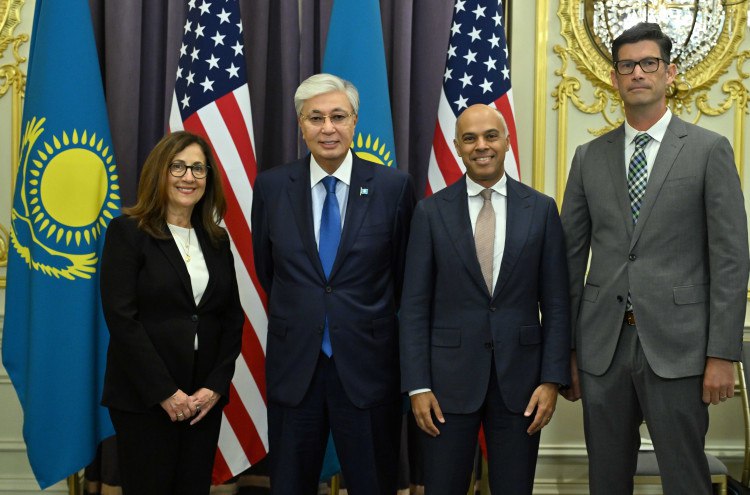
In a few days, President Kassym-Jomart Tokayev will address the UN General Assembly in New York, presenting Kazakhstan as a reliable partner in peacekeeping, sustainable development, and nonproliferation. This upcoming UN speech marks a departure from past appearances, signaling Astana’s intent not only to balance powers but also to set global agendas. Together, these events signify the country’s ascent as a state no longer defined solely by the art of survival between great powers, but one that now seeks to set agendas, convene adversaries, and project norms beyond its borders.

This dual UN moment illustrates the broader transformation of Kazakhstan’s foreign policy over the past year: the shift from multi-vector balancing, an inheritance of the Nazarbayev era, toward a more assertive mode of multi-actor entrepreneurship. Framed through the UN stage, Kazakhstan’s diplomacy now aspires to translate regional initiatives into a global narrative. Rather than oscillating between Moscow, Beijing, Brussels, and Washington, Astana has begun to use its accumulated diplomatic capital to initiate, mediate, and institutionalize regional and global frameworks.

From Balance to Initiative

For three decades after independence, Kazakhstan’s “multi-vector” foreign policy served as a model of survival in a region shaped by the clash of external rivalries. The doctrine emphasized equidistance between Russia, China, and the West, with an overlay of pragmatic economic engagement.

In practice, this often meant leveraging one relationship to offset pressure from another while securing steady inflows of trade and investment. Today, however, the war in Ukraine, the erosion of European security, and the sharper contest between Beijing and Washington have undermined the viability of simple balancing.

In response, Tokayev’s government has shifted its approach, seeking to overlay a more agenda-setting dynamic on multi-vectorism by positioning Kazakhstan as a regional hub for diplomacy and connectivity. At the UN, this shift might be presented as Kazakhstan’s evolution from passive survival to a more proactive approach to international diplomacy. Astana’s task is to transform such declarations into a durable strategy.

Central Asia and the South Caucasus

The clearest evidence of Kazakhstan’s new role comes from Central Asia itself. Relations with Uzbekistan, once characterized by rivalry, have been recast as a cornerstone of functional regionalism. Over the past twelve months, Astana and Tashkent have concluded demarcation agreements, expanded electricity grid interconnections, and coordinated positions on water resource management.

The consultative meetings of Central Asian leaders, which Kazakhstan has championed, now serve as regularized platforms for joint initiatives, from infrastructure to practical economic integration, with attempts to reduce Russian and Chinese influence. At the UN, this shift may be framed as Kazakhstan’s evolution from mere survival to actively pioneering new approaches in international diplomacy. For Kazakhstan, the partnership with Uzbekistan provides buffering against external pressure and multiplies regional influence. Astana has also made use of the UN Regional Centre for Preventive Diplomacy for Central Asia (UNRCCA), grounding its convening authority in both international law and practical problem-solving.

The past year also saw Kazakhstan deepen its engagement in the South Caucasus. Economic ties with Azerbaijan have grown rapidly, with bilateral trade surpassing $330 million in the first half of 2025 alone. Transport and logistics have been at the core of this cooperation.

In August, Almaty served as one of the trusted platforms for discussions leading to the U.S.-backed Armenia–Azerbaijan declaration. By hosting these talks, Astana demonstrated its capacity to act as an intermediary in one of Eurasia’s most contentious disputes. These mediation efforts will bolster Tokayev’s UN narrative of Kazakhstan as a neutral broker capable of contributing to peace beyond Central Asia.

The European Union and the United States

Kazakhstan’s outreach to the European Union has combined commercial pragmatism with strategic signaling. In 2024, EU–Kazakhstan trade approached $50 billion, making Astana the EU’s leading oil supplier and a pivotal partner in critical raw materials. Less visible were discussions on renewable energy and regulatory standards, where Kazakhstan pressed to move beyond transactional deals. European counterparts welcomed the ambition but voiced caution about Astana’s capacity to implement, just as they did with Uzbekistan and other Central Asian states at the Samarkand summit.

Calls for a new EU–Central Asia summit and participation in the bloc’s green hydrogen initiative highlight aspirations, but realization is far from guaranteed. Tokayev is expected to reference these initiatives at the UN as part of Kazakhstan’s contribution to global climate and energy agendas. Cooperation with the United States represents a complementary vector. Through the C5+1 dialogue and expanding trade – now surpassing $4 billion annually – Washington and Astana have pursued supply chain and critical mineral projects. The Middle Corridor, advanced through the Trans-Caspian Trade and Transit Partnership (TRIPP), has become central to this agenda, while Kazakhstan’s role in brokering the Armenia–Azerbaijan declaration has opened discussion of a new Armenia corridor – still tentative, but reinforcing Astana’s image as both mediator and connector. Together, the European Union and the United States are also Kazakhstan’s largest cumulative foreign investors, accounting for well over 40% of total FDI – far outweighing contributions from Russia and China.

American officials have tied this relationship to explicit support for Kazakh sovereignty, particularly in light of the Ukraine war. Tokayev’s government has courted these ties while keeping one eye on the turbulence of U.S. domestic politics. How far this engagement can withstand shifting U.S. priorities remains an open question. At the UN, however, Astana will likely frame U.S. and EU partnerships as part of its multilateral credentials, linking bilateral gains to global governance priorities.

Russia and China

Russia and China remain the delicate fulcrum of Kazakhstan’s foreign policy. Relations with Moscow have grown more complicated as Astana, emphasizing territorial integrity, has refused to recognize Russia’s annexation of Ukrainian territories. Yet economic dependence on Russian transit remains entrenched, and Kazakhstan cannot easily disentangle itself from inherited supply chains. Defense integration is discouraged even as the national economy stays deeply exposed to Russian markets, a vulnerability that hardens structural limits on autonomy.

China has meanwhile become Kazakhstan’s largest trading partner. Infrastructure, energy, and manufacturing dominate the bilateral agenda, with railroad connectivity under the Belt and Road remaining a backbone of the corridor. Astana has welcomed Chinese investment while insisting on sovereign decision-making. Official Chinese sources frame the relationship in sweeping terms, while Kazakh policymakers present it more cautiously. Beijing is accepted as a necessary partner, but concerns over dependency linger. By stressing peace in Ukraine and UN reform, Tokayev is signaling that his UN speech will present Kazakhstan not just as a regional balancer between Moscow and Beijing, but as a middle power anchoring its diplomacy in sovereignty and international law.

Kazakhstan, Central Asia, and the UN Stage

From the vantage point of 2025, Kazakhstan’s foreign policy no longer resembles a defensive maneuver, as multi-vectorism once did. Its current diplomacy is closer to an entrepreneurial project, improvised in parts yet directed toward shaping outcomes across Eurasia. In the South Caucasus, Astana has mediated talks; in Central Asia, it has convened neighbors; with the European Union, it has pressed for frameworks as well as trade. This initiative, while uneven in implementation, signals a shift in posture from survival through balance to influence through engagement, and it reflects Tokayev’s effort to project Kazakhstan as a professionalized “middle power” with a distinct diplomatic identity that links domestic reform to external strategy.

The strategy is ambitious, but its foundations remain fragile. Moscow may tighten pressure if Astana is perceived as drifting too far from Russian security structures; the domestic reform process may stall under bureaucratic resistance or political hesitation; commodity markets may again swing violently, exposing vulnerabilities in the national economy. Yet the initiative is taking root in agency, network-building, and institutional reform. The Bertelsmann Transformation Index estimates that this new diplomatic dynamism positions Kazakhstan to do more than merely survive among larger powers, though the actualization of this potential will depend on consolidating reforms at home and carefully managing external pressures.

Kazakhstan’s activism has raised Central Asia’s profile in the United Nations. Guterres’s August visit underlined the region’s role in preventive diplomacy, while Astana’s initiatives are now shaping how the UN views Central Asia: not as peripheral, but as a zone of governance experiments with global resonance. Tokayev wants the world to see Kazakhstan not as a passive buffer, but as a rising middle power. By convening Central Asia’s leaders, mediating in the South Caucasus, and championing new corridors to Europe, he has already begun to redefine his country’s role. His UNGA address now offers the chance to show that Kazakhstan is no longer surviving between powers, but stepping forward to give Central Asia a voice with global resonance.
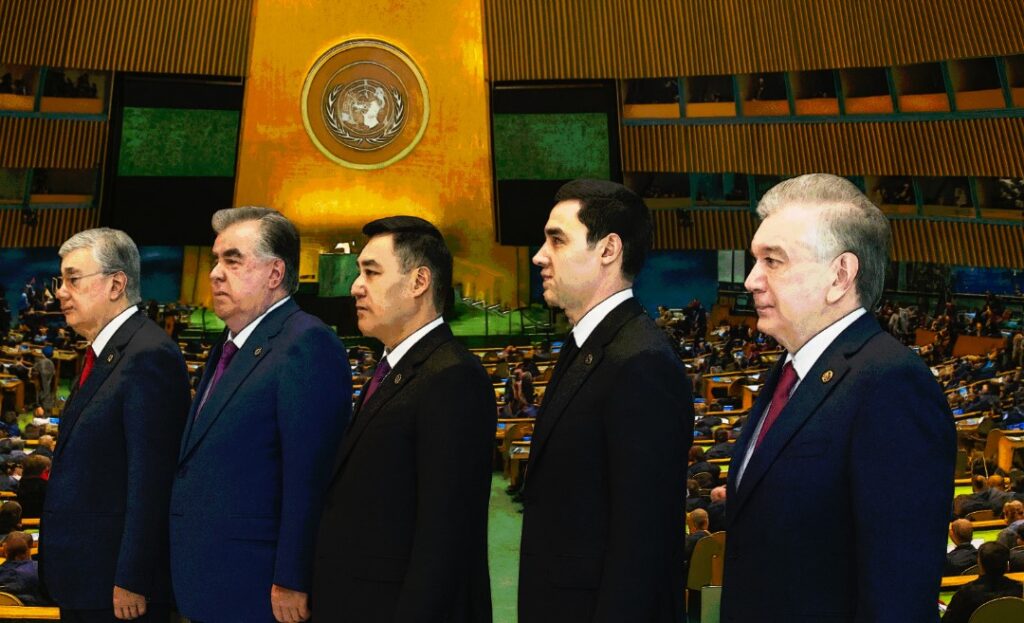
Central Asian Presidents at UNGA-80: All Five Confirmed

New York, Sept 22, 2025 – Central Asia will have a strong presence at the 80th United Nations General Assembly (UNGA-80), with four of the region’s presidents confirmed to attend in person. One leader’s participation, however, remains unannounced.

From Kazakhstan, President Kassym-Jomart Tokayev is scheduled to be in New York from September 21 to 23. The Kazakh presidency confirmed that he will deliver his country’s national statement and meet with other heads of state on the sidelines of the high-level week.

Kyrgyzstan’s President Sadyr Japarov is officially confirmed to be in New York from September 22 to September 25, where he is scheduled to deliver a speech in the General Debate. Japarov will also join a UN Security Council discussion on AI and a high-level climate event, while holding bilateral meetings with Secretary-General António Guterres and leaders from multiple regions.

In Tajikistan, the presidential press service announced on September 21 that President Emomali Rahmon departed Dushanbe for New York to attend UNGA-80. He is accompanied by senior officials and is expected to speak during the General Debate.

From Turkmenistan, President Serdar Berdimuhamedov left Ashgabat on September 21 for a working trip to New York. Turkmen state media confirmed his participation in UNGA-80, marking his direct representation of the country at the session.

Uzbekistan’s President Shavkat Mirziyoyev arrived in New York on September 20 for a visit lasting through September 24. His agenda includes addressing the General Debate on its opening day and holding bilateral meetings with UN Secretary-General António Guterres and other world leaders.

With the General Debate opening on September 23, Central Asia is set to be represented at the highest level by all five of its nations: Kazakhstan, Kyrgyzstan, Tajikistan, Turkmenistan, and Uzbekistan.

Tokayev’s Visit to New York: UN Speech, Investment Talks, Nuclear Power, and Digital Cooperation

Kazakh President Kassym-Jomart Tokayev arrived in New York on September 21 for a working visit scheduled to last until September 23.

Diplomatic and Business Engagements

According to the presidential press service, Tokayev is set to deliver a speech during the general debate of the 80th anniversary session of the UN General Assembly. His agenda includes bilateral meetings with foreign leaders and heads of international organizations, as well as a roundtable discussion and a series of engagements with representatives of transnational companies. These meetings aim to highlight Kazakhstan’s investment opportunities.

Expanding Cooperation with Cameco

Tokayev’s first official meeting was with Tim Gitzel, President and CEO of Canada’s Cameco Corporation. The discussion focused on prospects for expanding cooperation in the uranium sector, particularly through the Inkai joint venture, which has been developing the Inkai deposit in the Turkestan region for over 25 years.

The president commended Cameco’s long-standing partnership with Kazatomprom, noting over $500 million in investments and the successful transfer of nuclear technologies. “Kazakhstan is entering a new stage of energy development, with plans to build three nuclear power plants. Our country is interested in the innovative methods used in the nuclear industry,” Tokayev stated.

Focus on Education and Testing Reform

A major component of the visit centered on human capital development. In talks with Amit Sevak, President of Educational Testing Service (ETS), Kazakhstan expressed interest in updating its national assessment systems. Sevak emphasized the importance of tailoring solutions to Kazakhstan’s specific needs and highlighted the role of artificial intelligence in this transformation.

Kazakhstan’s Minister of Science and Higher Education Sayasat Nurbek confirmed the country’s intention to elevate national exams to international standards. “GRE, SAT, and TOEFL are globally recognized, and they were developed in this scientific environment. Our goal is not to replace the Unified National Testing system but to enhance its quality. A large team of ETS researchers will arrive in Kazakhstan next month,” he said.

Cultural Cooperation with the Smithsonian Institution

Tokayev also met with representatives of the Smithsonian Institution, the largest scientific and cultural complex in the United States. Discussions focused on academic exchanges and the international promotion of Kazakhstan’s cultural heritage. Beginning next year, Kazakh researchers will be able to undertake internships and conduct studies at the institution.

Helle Bjetvin, Head of Folk Art Programs, expressed personal admiration for Kazakh applied arts: “I truly admire Kazakh ornaments and design. They beautifully combine tradition and craftsmanship. For me, it’s something very special.”

Digital Transformation and Artificial Intelligence

Digital development was another key topic of the visit. Joint projects involving data centers, infrastructure expansion, and the establishment of agencies for artificial intelligence implementation were explored.

Minister of Digital Development Zhaslan Madiev noted that Kazakhstan is steadily transitioning to a digital state model and seeks robust technological and financial partnerships. “We are discussing major joint projects in digital infrastructure and AI development. Kazakhstan’s market is attractive to global investors, and Goldman Sachs is being considered as a potential partner,” he said.

Opinion: Almaty as a Model for the Future: Central Asia’s Role in the Global Agenda

Almaty is gradually becoming a hub for resolving issues of not only regional but also global significance. The recent opening of the UN Regional Center for Sustainable Development Goals (SDGs) for Central Asia and Afghanistan here was an event no less significant than the 80th anniversary session of the General Assembly in New York.

This is no coincidence: the global agenda at the UN today is increasingly focused on the regional level. Central Asia is not a periphery, but a kind of “model for the future,” where climate, water resources, and security challenges are intertwined.

For example, the Tian Shan glaciers have shrunk by more than 25% over the past decade and continue to melt faster than predicted, directly threatening the Amu Darya and Syr Darya rivers. These rivers are increasingly failing to reach the Aral Sea, and its dried-up bed is turning into a giant source of dust and salt.

Air pollution levels in the region’s cities, as measured by PM2.5, exceed World Health Organization guidelines by an average of 4–6 times. Extreme heat and drought are leading to the loss of agricultural land and the degradation of ecosystems, which affects not only regional but also global food security.

Central Asia has already become a unique “testing ground for the future.” The region is testing mechanisms for cross-border cooperation. The CASA-1000 energy project connects Kyrgyzstan and Tajikistan with Afghanistan and Pakistan, creating a “green energy corridor.” Meanwhile, Afghanistan’s Qosh Tepa Canal is altering the balance of water usage on the Amu Darya, forcing neighboring countries to seek new models of agreement. The question is whether these nations can develop a system of joint water and energy management. The outcome will shape not only regional but also global processes.

At the same time, the United Nations itself is grappling with a deficit of trust and effectiveness. The Security Council is paralyzed, while General Assembly resolutions often carry only advisory weight. In the face of nuclear risks, environmental upheavals, and the threat of epidemics, the global community is stalling. Even large-scale initiatives such as the Glasgow Financial Alliance for Net Zero (GFANZ) remain largely declarative rather than actually limiting “dirty” investments.

Therefore, reform proposals are becoming increasingly vocal, in particular, to strengthen regional UN divisions that are capable of responding more quickly to crises and ensuring practical cooperation between countries. Another way to overcome the trust deficit could be to involve independent expert councils – scientists, NGOs, think tanks – more widely in the decision-making process, which would reduce the influence of political gridlock at the global level.

Overall, Almaty can be seen as a model of a “UN in miniature” – a regional center capable of promptly addressing issues that may seem “too small” for New York, yet are critically important for the countries of the region. For instance, the SDG Center could initiate the creation of a regional water monitoring system with unified measurement standards and transparent data sharing.

Such decentralization could form the basis for future UN reform. This is not an alternative to the organization but its renewal: granting more authority and resources at the regional level while maintaining strict accountability to headquarters in New York. In this model, regional SDG centers become not only analytical hubs but also coordination platforms, where decisions on concrete issues such as water, environment, energy, migration are made.

Decentralization also helps reduce vulnerability to political blockages. For example, disputes in the UN Security Council between major powers rarely touch on the actual situation in Central Asia. Yet the regional center in Almaty could ensure real-time data sharing on glacier conditions, Amu Darya and Syr Darya water levels, or air quality in urban areas, and propose collaborative projects. In this way, the UN transforms from an abstract “world organization” into a tool of direct benefit to people.

The financial foundation of such reform also requires innovative approaches. One possible solution would be to account not only for countries’ economic power (GDP) but also their ecological footprint. The higher a nation’s emissions and pollution levels, the greater its mandatory contributions. Such a model would encourage major polluters to invest in reducing their carbon footprint and in clean technologies, with contributions directed specifically toward regional UN operations.

More and more, ideas are emerging about humanity’s need to move from the stage of the “self-centered teenager” with a consumerist attitude toward the world and deep distrust to the stage of “adult responsibility,” based on cooperation and “global rationalism.”

Perhaps visions of global unification, or even a “world government”, remain utopian. But Central Asia may become the platform for implementing at least part of these ideas. By the UN’s 100th anniversary, a new world architecture is unlikely to emerge. Yet if Almaty becomes the place where real solutions for a sustainable future are developed. Such solutions as rational water distribution, transition to green energy, adoption of water-saving technologies, and investment in science will already mark a major step forward.


The views expressed in this article are those of the author and do not necessarily reflect the official policy or position of the publication, its affiliates, or any other organizations mentioned.

Ukrainian Prosecutors Say 13 Uzbek Workers Held in “Inhumane Conditions”

Prosecutors in Ukraine say they have detained four members of a human trafficking operation that exploited 13 Uzbek laborers and subjected them to humiliating treatment that included scheduled visits to the toilet.

Two Chinese citizens, an Uzbek national and a Ukrainian woman used coercion and deception to recruit vulnerable people with few resources outside Ukraine and move them to the Kyiv region for use in forced work for profit, the Kyiv Regional Prosecutor’s Office said on Thursday. Images provided by the office show the farm workers standing in front of greenhouse-like structures covered in plastic tarpaulins in a rural area. Other photos show the cramped, unsanitary conditions in which the men and women lived.

“To maintain control, the perpetrators used coercion and restrictions on freedom of movement, which indicates the exploitative nature of their actions,” the Ukrainian prosecutors said. “The victims were humiliated to the extreme: even visits to the toilet were allowed only according to a set schedule, and any minor violation was punished with fines.”

Ukrainian authorities said they searched the suspects’ residences and business sites on Wednesday, finding 13 Uzbek citizens who were being held in “inhumane conditions.”

Officials from the Uzbek embassy in Ukraine visited the greenhouse facility in the Kyiv region following the publication of reports in Ukrainian media about Uzbek citizens being treated as “slaves,” the embassy said on Friday.

“At present, it has been established that all our citizens are safe and in good health, and they have been placed in one of the local hospitals in the Kyiv region to receive the necessary medical treatment,” the embassy said.

It said steps are being taken to return the group to Ukraine, while noting that court proceedings are underway against the suspects. In a reference to the war against Russia, the embassy repeated guidance that Uzbek nationals should avoid travel to Ukraine because of safety concerns.

Under Ukrainian law, the four suspects could face long prison terms if convicted of human trafficking and other charges.

Glavcom, a Ukrainian news agency, said a 51-year-old Chinese citizen with a temporary residence permit in Ukraine was the head of the alleged human trafficking operation. The Uzbek workers were between the ages of 22 and 42 and had been offered high salaries to persuade them to go to Ukraine, an enticement that turned out to be false, according to Glavcom.

Once in Ukraine, the Uzbek nationals had to surrender their passports to their employers, the agency reported.

From Hydropower to Human Capital: Japarov Plans Strategic Visit to Japan

Kyrgyz President Sadyr Japarov is preparing for a visit to Japan that underscores growing strategic ties between the two countries. Kyrgyz officials say they plan to sign energy and infrastructure agreements in Tokyo, including support for a training center for the national electric grid and upgrades at the Kurpsai hydropower plant, according to Trend, citing the Kyrgyz Energy Ministry. The same report notes that grant funding from Japan’s international cooperation programs will back grid training and modernization efforts.

The timing reflects Tokyo’s recent step-up in activity vis-à-vis Central Asia. As previously reported by The Times of Central Asia, in late August 2025, Japan’s foreign minister undertook a multi-country tour that emphasized long-term engagement and connectivity across the region. Japanese officials framed their approach as trust-building, focused on people-to-people links, infrastructure, and practical cooperation.

Energy cooperation is expected to feature prominently during the visit. Kyrgyz officials say the Japan-backed training center is moving through final approval, and modernization of the Kurpsai facility is planned with Japanese grant support. Bishkek has also invited Japanese participation in additional hydropower projects, positioning Japan as a technology and financing partner in Kyrgyzstan’s power sector.

Labor mobility and skills are another focus. The authorities in Kyrgyzstan have been working with Japanese counterparts to create safe, legal pathways for Kyrgyz workers. In July, Kyrgyz officials met with Japan’s construction human-resources association to align training standards and prepare workers for job opportunities in Japan, and free Japanese-language courses were launched in Bishkek to improve employability for prospective migrants.

Education and cultural exchange underpin the relationship. Over three decades, Japan has funded scholarships, exchanges, and language programs that connect Central Asian students to Japanese universities. An overview of these initiatives highlights how education has become a durable pillar of Japan’s regional engagement, building familiarity with Japanese business practices and technology among Kyrgyz graduates.

For Bishkek, the visit is about turning ongoing cooperation into signed projects and new resources. Officials point to the grid training center and Kurpsai upgrades as near-term deliverables, while the broader agenda includes workforce programs and academic ties. The message from both sides is continuity: steady, practical steps rather than headline-grabbing announcements.

Regionally, Japan’s approach offers Central Asian countries additional partners for finance, training, and technology. For Kyrgyzstan, deeper ties with Tokyo complement existing relationships while helping diversify investment sources and markets. The outcome to watch is whether the visit locks in concrete funding and timelines for priority energy and skills initiatives outlined by the Kyrgyz side.