• KGS/USD = 0.01144 0%
  • KZT/USD = 0.00211 0%
  • TJS/USD = 0.10432 -0.29%
  • UZS/USD = 0.00008 0%
  • TMT/USD = 0.28571 0.28%
  • KGS/USD = 0.01144 0%
  • KZT/USD = 0.00211 0%
  • TJS/USD = 0.10432 -0.29%
  • UZS/USD = 0.00008 0%
  • TMT/USD = 0.28571 0.28%
  • KGS/USD = 0.01144 0%
  • KZT/USD = 0.00211 0%
  • TJS/USD = 0.10432 -0.29%
  • UZS/USD = 0.00008 0%
  • TMT/USD = 0.28571 0.28%
  • KGS/USD = 0.01144 0%
  • KZT/USD = 0.00211 0%
  • TJS/USD = 0.10432 -0.29%
  • UZS/USD = 0.00008 0%
  • TMT/USD = 0.28571 0.28%
  • KGS/USD = 0.01144 0%
  • KZT/USD = 0.00211 0%
  • TJS/USD = 0.10432 -0.29%
  • UZS/USD = 0.00008 0%
  • TMT/USD = 0.28571 0.28%
  • KGS/USD = 0.01144 0%
  • KZT/USD = 0.00211 0%
  • TJS/USD = 0.10432 -0.29%
  • UZS/USD = 0.00008 0%
  • TMT/USD = 0.28571 0.28%
  • KGS/USD = 0.01144 0%
  • KZT/USD = 0.00211 0%
  • TJS/USD = 0.10432 -0.29%
  • UZS/USD = 0.00008 0%
  • TMT/USD = 0.28571 0.28%
  • KGS/USD = 0.01144 0%
  • KZT/USD = 0.00211 0%
  • TJS/USD = 0.10432 -0.29%
  • UZS/USD = 0.00008 0%
  • TMT/USD = 0.28571 0.28%

Kazakhstan Faces Landmark Constitutional Referendum

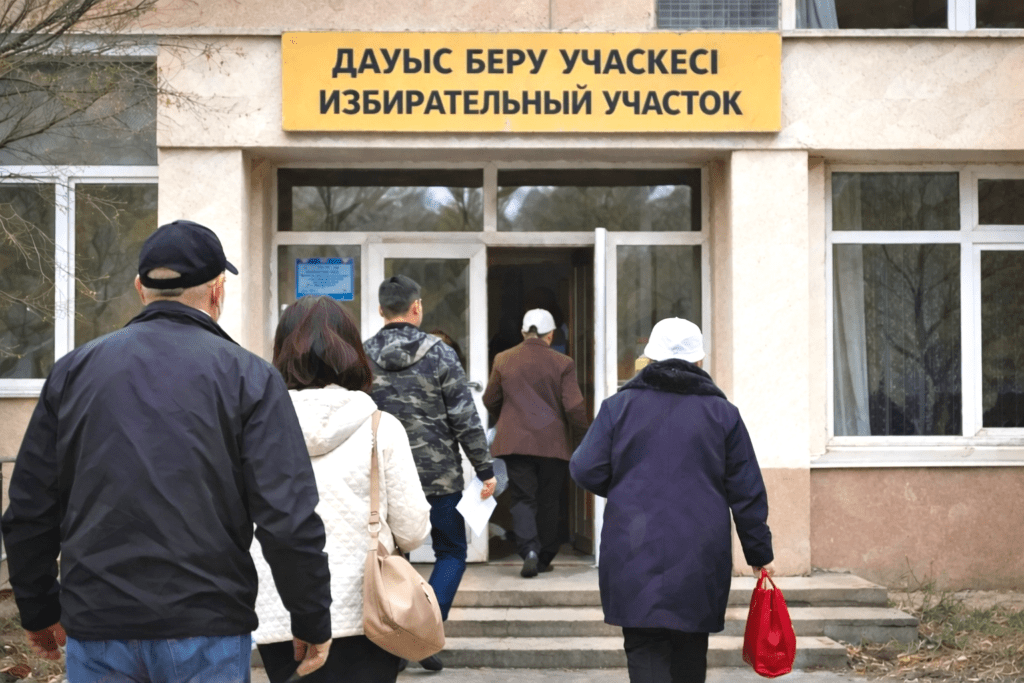
On March 15, citizens will vote in a nationwide referendum on sweeping constitutional amendments that could significantly reshape Kazakhstan’s political system.

Kazakhstan’s Constitution has undergone periodic revision since independence, with changes adopted in 1998, 2007, 2011, 2017, 2019, and most recently in 2022, when 56 amendments to the basic law were approved in a national referendum. According to official statements, the proposed draft would affect about 84% of the Constitution, making it the most extensive revision in the country’s modern history. President Kassym-Jomart Tokayev has described the proposed document as “essentially a new Constitution.”

At the same time, the draft retains several core principles. Kazakhstan would continue to be defined as a secular, democratic, unitary state, with the people recognized as the sole source of state power. Attempts to overthrow the constitutional order would remain punishable by law.

The draft also proposes the creation of a new representative body, the Kurultai, which would replace the current bicameral parliament, consisting of the Mazhilis (lower house) and the Senate (upper house), with a unicameral legislature.

The scale of the proposed reforms has generated significant public attention. The draft Constitution has been widely debated, and the referendum campaign has been accompanied by a large-scale public information effort. Supporters argue that the changes could streamline governance and modernize political institutions, while critics have raised concerns about the concentration of authority and the pace of reform.

Rights and Freedoms

The current Constitution states that human rights and freedoms must not infringe on the rights of others, the constitutional order, or public morality. The new draft expands this provision, specifying that the exercise of rights and freedoms must not violate the rights or restrict the freedoms of other individuals, undermine the constitutional order, disrupt public order, threaten public health, or contradict societal morality.

The document continues to guarantee freedom of speech and prohibit censorship, stating, “Freedom of speech and scientific, technical, and artistic creativity is guaranteed.” It also introduces an additional clause stipulating that the dissemination of information must not infringe upon the honor and dignity of others, public health, or public order.

The list of prohibited forms of propaganda is also broadened. It includes advocacy for violent changes to the constitutional order, violations of territorial integrity and sovereignty, threats to national security, incitement to war or armed conflict, and the promotion of social, racial, national, ethnic, or religious superiority or discord, as well as the glorification of cruelty and violence.

Supporters of the draft say these provisions are intended to strengthen social stability and national security. However, some observers note that broader restrictions linked to public order or morality may raise questions about how such norms would be interpreted and applied in practice.

In family law, the draft specifies that marriage is defined as a voluntary and equal union between a man and a woman, registered by the state in accordance with the law.

President and Vice President

Proposed changes to the structure of executive power have been among the most widely discussed aspects of the reform. The draft retains the rule that the president is elected for a single seven-year term. It also provides that, with the consent of the Kurultai, the president would appoint ten judges to the Constitutional Court for eight-year terms, six members of the Central Election Commission for five-year terms, and eight members of the Supreme Audit Chamber for five-year terms. If the Kurultai twice refuses to approve these appointments, the president would have the authority to dissolve the legislature.

The draft reintroduces the post of vice president, which existed between 1991 and 1996, and was held by Yerik Asanbayev before being abolished. Under the proposed amendments, the vice president would be appointed by the president with the consent of the Kurultai.

The vice president’s anticipated duties include representing the country abroad on behalf of the president, serving as the president’s representative in relations with the Kurultai, the government, and other state bodies, and maintaining contacts with public, scientific, and cultural organizations both domestically and internationally.

If the Kurultai twice refuses to approve the vice-presidential appointment, the president would again have the right to dissolve it. Proponents argue that the measure could help prevent institutional deadlock, while critics warn it may further strengthen presidential leverage over the legislature.

The reintroduction of the vice presidency would also alter the constitutional succession procedure. Currently, if the president leaves office early, his duties are assumed by the chair of the Senate, followed by the chair of the Mazhilis, and then the prime minister. Under the draft, presidential powers would first pass to the vice president. If the vice president is unable to assume the role, authority would transfer to the chair of the Kurultai and subsequently to the prime minister.

Unicameral Parliament

Legislative authority in Kazakhstan is currently vested in a bicameral parliament comprising the Senate and the Mazhilis. If the amendments are approved, these chambers would be replaced by the Kurultai, a term historically used for assemblies of tribes among Turkic and Mongol peoples.

President Tokayev first proposed the creation of a unicameral parliament in September 2025 and suggested the name Kurultai. The proposed body would consist of 145 deputies elected for five-year terms.

According to the draft, the Kurultai would serve as the country’s highest legislative authority, responsible for passing laws, reviewing legislation challenged by the president, deciding on matters of war and peace, calling presidential elections, and initiating referendums. It would also approve key state appointments and oversee government activity through reports and votes of no confidence, as well as establish commissions, hold hearings, and monitor budget implementation.

Supporters of the unicameral model argue that it could make the legislative process more efficient and responsive. Others caution that removing the upper chamber may reduce institutional checks within the parliamentary system.

The draft also provides for the creation of the Kazakhstani People’s Council as a consultative body representing citizens’ interests. It would be tasked with developing recommendations on major areas of domestic policy, strengthening national unity, and promoting national values. The council would also be able to submit draft legislation to the Kurultai and propose national referendums.

Correcting Accumulated Imbalances

Kazakh political analyst Daniyar Ashimbayev argues that both domestic developments and changes in the international environment are driving the push for constitutional reform.

“The 1995 Constitution was adopted during the transition to a market economy and the consolidation of independence. At that time, expectations about globalization and international law were different. Today, international legal norms are under strain, and geopolitical risks are increasing. Some provisions have become outdated and require reassessment. In this sense, the new Constitution reflects an emerging political reality,” he stated.

Ashimbayev added that modern societies face competing trends, including what he described as cosmopolitanism on the one hand, and a revival of traditionalist social models on the other. In his view, this creates a need to redefine and institutionalize balanced social principles.

Timur Suleimenov Advances Tokayev Crypto Reserve Plan with $350M Portfolio

National Bank Governor Timur Suleimenov is moving to implement President Kassym-Jomart Tokayev’s crypto strategy, saying Kazakhstan has already formed a crypto-related investment portfolio of up to $350 million from gold and foreign-exchange reserves. The move is the clearest sign yet that Tokayev’s calls for a strategic state role in digital assets are moving from presidential strategy to central-bank implementation.

Suleimenov has presented the initiative as a measured reserve-management step rather than a dramatic plunge into direct coin buying. The National Bank is preparing a list of instruments that goes beyond direct cryptocurrency exposure and includes shares of high-tech companies tied to crypto and digital financial assets, index funds and other instruments with similar market behavior. Deputy Governor Aliya Moldabekova said the first investments are expected in April-May, with officials focusing on digital-asset infrastructure companies rather than a large immediate direct allocation to cryptocurrencies.

The structure closely tracks Tokayev’s own instructions. In his September 8, 2025 state-of-the-nation address, Tokayev said Kazakhstan should place greater focus on crypto assets and called for a State Digital Assets Fund to be created on the basis of the National Bank’s investment arm to accumulate a strategic crypto reserve. That same address argued that Kazakhstan needed to accelerate the formation of a full digital-asset ecosystem, and The Astana Times reported that the National Investment Corporation, a National Bank subsidiary, will manage the crypto fund.

Tokayev had already laid some of the political groundwork a year earlier. In his September 2, 2024 address, he said Kazakhstan should continue improving the regulatory framework for digital assets and mining while further developing crypto exchanges. By May 2025, he was also telling central-bank officials of the Organization of Turkish States that Kazakhstan would introduce new regulations for the secure circulation of digital assets, including cryptocurrencies, stablecoins and tokenized assets.

At the same time, Tokayev has paired crypto expansion with tougher enforcement language. During a January 28, 2026 meeting at the Financial Monitoring Agency, he warned that attempts to move capital abroad through cryptocurrency schemes were continuing and said the state needed a stronger barrier against such activity. That caution helps explain why Timur Suleimenov and Tokayev are favoring a state-managed, rules-based portfolio of diversified crypto-linked assets, rather than a rapid expansion into direct cryptocurrency purchases.

Taken together, Kazakhstan’s direction is becoming clearer: Tokayev is setting the strategic line, and Timur Suleimenov is translating it into a controlled investment program inside the National Bank. If the first allocations begin on schedule in April or May, the coming weeks will offer the first concrete test of whether Tokayev’s crypto-reserve vision can work under Suleimenov’s more cautious, institutionally managed model.

Old Bublik? Classic Bublik? Kazakhstani Tennis Player Loses in California

It wasn’t so much the loss that alarmed some tennis fans, but the racket smash. 

After stellar results since mid-2025 that propelled him into the top 10, Kazakhstan’s Alexander Bublik went out in the round of 32 at the Indian Wells tennis tournament to Rinky Hijikata, who is ranked outside the top 100. Bublik faded in the third after two tiebreaks, losing 6-7(3), 7-6(3), 6-3 to the Australian qualifier in the southern California desert on Monday.

But a moment that distracted from the shot-making came when Hijikata tied the match at the end of the second set, hitting a smash into the open court. Bublik responded by pulverizing his racket, smashing it into the hard court five times in a reminder of past emotional eruptions that some people in the tennis world saw as undermining his potential.

Tennis analyst Nikola Aracic said he thought Bublik had the potential to be in the top five but that recent disappointments, including a fourth-round wipeout by Australian Alex de Minaur at the Australian Open in January, were threatening his chances. 

“We’re seeing the ‘old Bublik’ unfortunately, and he is back in the trap of jester-maxxing on the court,” Aracic said on his YouTube channel, in reference to Bublik hitting an easy, putaway ball with his racket handle during the match against Hijikata. 

“NEVER CHANGE,” Tennis TV said on X, accompanying video of the stunt with a laughter emoji.

“People on the internet love it and some of the major publications in the tennis world have praised this as ‘classic Bublik,’” Aracic said. “But I’m seeing this as something very negative” that, if continued, could relegate Bublik to a lower ranking as he loses focus. 

The Athletic, a sports journalism outlet owned by The New York Times, featured Bublik in an article this week that was titled: “How to smash a tennis racket: Style, control, damage, aggression — and danger.”

The article says Bublik smashed his racket “with abandon and devastation,” though it notes that destroying rackets has a long history among the tennis elite.  

Russia-born Bublik, 28, started 2026 by winning the ATP tournament in Hong Kong and becoming a top 10 player for the first time. He won four titles last year after struggling early in 2025, matching his showman instincts with a surge up the rankings. 

After beating Bublik, Hijikata lost to Cameron Norrie of Britain in the round of 16 on Wednesday. 

From Electricity to Fuel, Central Asia is Doing More Business with Afghanistan

Central Asia is becoming even more important to Afghanistan.

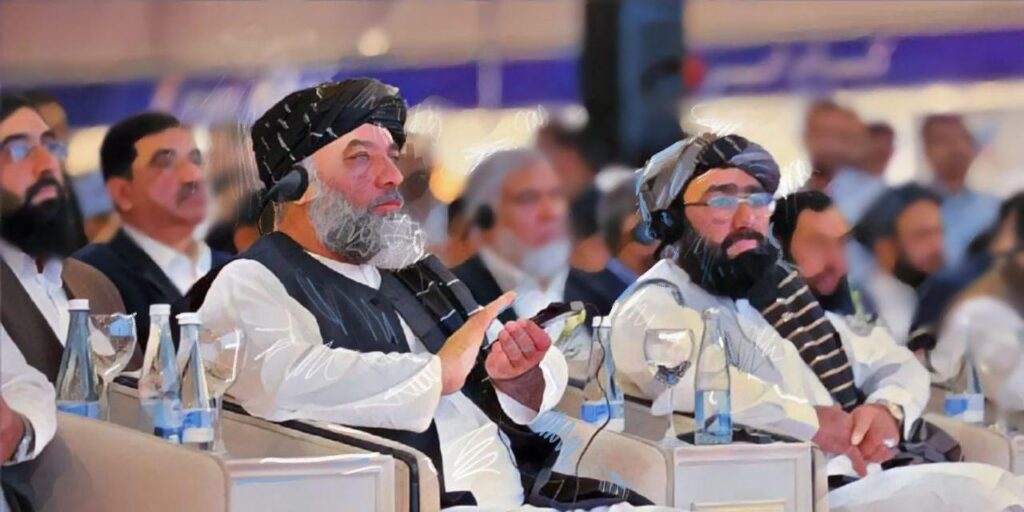
After the Taliban returned to power in August 2021, most of the countries of Central Asia established a dialogue with its leadership that focused on business potential, backed up by security promises.

This understanding is more important than ever to the Taliban government, as events along Afghanistan’s eastern and western borders have left Central Asia as the only reliable import-export route for Afghanistan at the moment.

Booming Trade

At the start of March, Afghanistan’s Ministry of Industry and Commerce released figures for 2025 that showed trade with Central Asia increased from $1.79 billion in 2024 to $2.4 billion in 2025.

While most of the trade is exports from Central Asia to Afghanistan, reports mentioned that Afghan exports to Central Asia — mostly to Kazakhstan and Uzbekistan — increased by 77 percent, from $122 million in 2024 to $216 million in 2025.

A closer look shows that Uzbekistan-Afghanistan trade in 2025 totaled some $1.6 billion

A full figure for Kazakh-Afghan trade in 2025 is not yet available. However, trade between Kazakhstan and Afghanistan amounted to some $525.2 million in 2024. 

Kazakhstan’s Deputy Prime Minister Serik Zhamangarin said at a Kazakh-Afghan business forum in Kazakhstan’s southern city of Shymkent in October 2025 that bilateral trade in the first eight months of 2025 had reached some $335.9 millionThese figures are certain to have grown. 

Fresh agreements worth more than $360 million were signed on the sidelines of the Kazakh-Afghan business forum.

On March 6, Uzbekistan’s President Shavkat Mirziyoyev signed a decree ratifying the Preferential Trade Agreement between Uzbekistan and AfghanistanTrade totals for Kyrgyzstan, Turkmenistan, and Tajikistan with Afghanistan are more modest, but, as in the cases of Kazakhstan and Uzbekistan, are set to grow. 

Kyrgyz-Afghan trade for the 12 months to March 2025 came to some $66 million, but, during a Kyrgyz-Afghan business conference in Kabul commercial contracts worth some $157 million were signed

There are no figures for Turkmen-Afghan trade in 2025, but Turkmen electricity exports to Afghanistan are increasing. Turkmenistan is also preparing to export natural gas to Afghanistan. A natural gas pipeline is slowly being constructed from the Turkmen border to the western Afghan city of Herat, which could start operation as soon as 2027.

Tajikistan was the lone Central Asian country to shun contact with the Taliban after they returned to power. Representatives of the previous government of Ashraf Ghani continue to occupy the Afghan embassy in Dushanbe. 

Tajik and Taliban authorities finally established contacts only in late 2024 but even to this day the two sides rarely meet face-to-face. However, Tajik-Afghan trade in 2025 still totaled some $120 million.

Afghanistan’s Ministry of Industry and Commerce noted that most of Central Asia’s exports to Afghanistan are electricity, fuel products, and natural gas.

Uzbekistan, Tajikistan, and Turkmenistan export electricity to Afghanistan via transmission lines that were built during the 20 years the Taliban were out of power. Some 80 percent of Afghanistan’s electricity is imported, and most of that (75-80 percent) comes from the three Central Asian countries. Iran supplies the remainder.

There are projects under construction that would further boost Central Asian electricity exports to Afghanistan, most notably the Central Asia-South Asia (CASA-1000) project that will bring an additional 300 megawatts (MW) of electricity annually from Kyrgyzstan and Tajikistan to Afghanistan (and 1000 MW to Pakistan). 

The Kyrgyz and Tajikistan powerlines are already built, and the Afghan section of the project is tentatively due to be completed in 2027.

Also worth mentioning is that Kazakhstan is the major supplier of grain and flour to Afghanistan.

Good Timing

Central Asia has become Afghanistan’s most reliable trade partner. Pakistan was the main gateway for Afghan trade, but fighting between Afghanistan and Pakistan since late 2024 has lowered trade from $2.46 billion in 2024 to $1.77 billion in 2025 and it continues to drop.

Trade with Iran was increasing after the 225-kilometer Khaf-Herat railway started operating in 2023. The line was due to become completely operational in 2026. The railway already carried nearly 750,000 tons of goods in the 12 months to March 2026, but the military campaign the United States and Israel are waging against Iran is likely to reduce trade volumes along the new railway in at least the short term.

With the exception of Turkmenistan, the Central Asian governments were hostile to the Taliban when they were in power in Afghanistan in the late 1990s. The Taliban leadership reciprocated the animosity. There were security problems along the Central Asia-Afghan border during most of these years.

After August 2021, the Central Asian governments pursued a business relationship with the Taliban government, hoping it would help the Taliban keep their promise not to allow any militant groups inside Afghanistan to attack neighboring countries.

Nevertheless, there have been times when the Taliban has seemed unable to guarantee security along the Central Asian border. The terrorist group Islamic State of Khorasan Province fired rockets at the Uzbek border city of Termez in April and July 2022, and also into Tajikistan in May 2022.

The Taliban quickly arrested suspects in those attacks, but more recently there have been attacks along the Tajik-Afghan border. In November 2024, and in November and December 2025, there were three attacks on Chinese projects in Tajikistan that killed several workers, mainly Chinese nationals.

There were also two clashes between Tajik border guards and Taliban fighters, one in August 2025, the other in October that year. So far this year there have not been any incidents targeting Central Asia from the Afghan side of the border. 

With Central Asia now being the Taliban’s biggest trade partner, as well as being the surest route for imports and exports for Afghanistan, the Central Asian strategy of developing a business relationship with the Taliban has now made Central Asia indispensable for Afghanistan. It also makes ensuring security for Central Asia a priority for the Taliban. 

Kazakh Parliament Backs Caspian Green Energy Corridor Linking Central Asia to Europe

Kazakhstan’s Mazhilis, the lower house of parliament, has ratified a strategic partnership agreement with Uzbekistan and Azerbaijan on cooperation in green energy production and transmission. The agreement involved the construction of a high-voltage power cable along the seabed of the Caspian Sea.

Speaking at a plenary session, Energy Minister Yerlan Akkenzhenov noted that the document had been signed by the leaders of the three countries in November 2024 on the sidelines of the COP29 climate conference in Baku.

According to the minister, the agreement lays the groundwork for one of the most ambitious energy initiatives in the history of independent Kazakhstan.

The project involves the creation of a “Green Energy Corridor” designed to facilitate the export of environmentally friendly electricity, as well as green hydrogen and green ammonia, from Central Asian countries to European markets via the Caspian region.

A key component of the initiative is the planned installation of a high-voltage direct current underwater cable system across the Caspian Sea. Officials say the project could provide Kazakhstan with direct access to the European Union’s energy market through interconnection with a similar energy infrastructure initiative being considered in the Black Sea region.

The initiative reflects a broader effort by Central Asian governments to position the region as a supplier of low-carbon energy to Europe while developing east-west infrastructure that bypasses traditional Russian transit routes. For Kazakhstan and Uzbekistan in particular, exporting renewable electricity and related products such as green hydrogen could open new markets as global demand for cleaner energy continues to grow.

Italian consulting company CESI has begun preparing a feasibility study, which is expected to define the project’s financial model and core technical parameters. The cost of preparing the feasibility study is estimated at around €1 million and will be fully covered by grant funding. The Asian Development Bank and the Asian Infrastructure Investment Bank have indicated their readiness to allocate up to $2 million in additional support.

To coordinate implementation, the Green Corridor Alliance joint venture was established in July 2024. Ownership is divided equally among Kazakhstan, Uzbekistan, and Azerbaijan, with each country holding a 33.3% stake. The company is currently overseeing expert consultations and preparing subsequent phases of the project.

According to Akkenzhenov, successful implementation would strengthen Kazakhstan’s position in global energy markets.

“The project will help position Kazakhstan as a reliable partner in sustainable energy, capable of contributing to international energy corridors and implementing large-scale technological initiatives,” he stated.

The initiative is also expected to expand export potential, stimulate the development of new energy technologies, and reinforce Kazakhstan’s role as a regional energy hub.

Following the parliamentary debate, the Mazhilis deputies approved the agreement, emphasising its importance for enhancing regional energy security. The project is intended to deepen the interconnection between the power systems of Central Asia and Azerbaijan and create conditions for stable exports of green electricity.

At the same time, the initiative highlights the growing role of the Caspian region in emerging energy corridors linking Central Asia with European markets. Alongside transport projects such as the Trans-Caspian International Transport Route, energy infrastructure is increasingly viewed as another pillar of east-west connectivity across the region.

Kazakhstan has accelerated the development of renewable energy in recent years. As previously reported by The Times of Central Asia, the country plans to significantly expand hydropower capacity by 2030.

Childhood Obesity Rising in Tajikistan and Across Central Asia, Report Warns

The number of overweight and obese children in Tajikistan is increasing, raising concerns among international researchers who warn that the trend could lead to serious health problems at an early age and requires urgent preventive action.

According to the World Obesity Atlas 2026, around 12,000 children aged 5-9 in Tajikistan are overweight or obese. Among adolescents aged 10-19, the figure is estimated at approximately 20,000.

Researchers note that the consequences of an elevated body mass index can emerge early in life. Among affected children and adolescents, about 2,000 are estimated to show signs of hypertension, roughly 1,000 may have elevated blood glucose levels, around 3,000 may experience high triglyceride levels, and approximately 6,000 may suffer from metabolic dysfunction-associated steatotic liver disease (MASLD).

These findings indicate that health conditions traditionally associated with adulthood are increasingly being detected among younger age groups.

Changing diets and early-life factors

Experts identify several factors contributing to rising obesity rates, including dietary habits. On average, children aged 6-10 consume between 50 and 100 milliliters of sweetened beverages daily, increasing the risk of excessive weight gain.

Early childhood nutrition also plays an important role. The rate of incomplete breastfeeding among infants aged 1-5 months reaches 71.3%, which researchers suggest may raise the likelihood of obesity later in life.

Maternal health is another significant factor. The report estimates that around 23% of women aged 15-49 in Tajikistan are overweight, while the prevalence of diabetes in this group is approximately 1.5%. Experts stress that maternal health and early nutrition have long-term effects on children’s metabolic risks.

Regional trends

Similar patterns are emerging across Central Asia. The study indicates that Kazakhstan has comparatively higher rates of childhood overweight and obesity, while Uzbekistan also faces a substantial share of affected children. In Kyrgyzstan and Turkmenistan, the situation remains less severe but is gradually worsening, according to researchers.

One of the main drivers identified is a shift in dietary patterns. Rising consumption of sugar, sweetened beverages, and ultra-processed foods is associated with urbanization, lifestyle changes, and increased availability of high-calorie products. Regional governments have begun to respond.

As The Times of Central Asia previously reported, authorities in Kyrgyzstan recently approved higher excise taxes on sugar-sweetened beverages, including products marketed to children.