• KGS/USD = 0.01144 0%
  • KZT/USD = 0.00210 0%
  • TJS/USD = 0.10454 -0.1%
  • UZS/USD = 0.00008 0%
  • TMT/USD = 0.28571 0.28%
  • KGS/USD = 0.01144 0%
  • KZT/USD = 0.00210 0%
  • TJS/USD = 0.10454 -0.1%
  • UZS/USD = 0.00008 0%
  • TMT/USD = 0.28571 0.28%
  • KGS/USD = 0.01144 0%
  • KZT/USD = 0.00210 0%
  • TJS/USD = 0.10454 -0.1%
  • UZS/USD = 0.00008 0%
  • TMT/USD = 0.28571 0.28%
  • KGS/USD = 0.01144 0%
  • KZT/USD = 0.00210 0%
  • TJS/USD = 0.10454 -0.1%
  • UZS/USD = 0.00008 0%
  • TMT/USD = 0.28571 0.28%
  • KGS/USD = 0.01144 0%
  • KZT/USD = 0.00210 0%
  • TJS/USD = 0.10454 -0.1%
  • UZS/USD = 0.00008 0%
  • TMT/USD = 0.28571 0.28%
  • KGS/USD = 0.01144 0%
  • KZT/USD = 0.00210 0%
  • TJS/USD = 0.10454 -0.1%
  • UZS/USD = 0.00008 0%
  • TMT/USD = 0.28571 0.28%
  • KGS/USD = 0.01144 0%
  • KZT/USD = 0.00210 0%
  • TJS/USD = 0.10454 -0.1%
  • UZS/USD = 0.00008 0%
  • TMT/USD = 0.28571 0.28%
  • KGS/USD = 0.01144 0%
  • KZT/USD = 0.00210 0%
  • TJS/USD = 0.10454 -0.1%
  • UZS/USD = 0.00008 0%
  • TMT/USD = 0.28571 0.28%

Tajik Police to Patrol Dushanbe on Electric Scooters

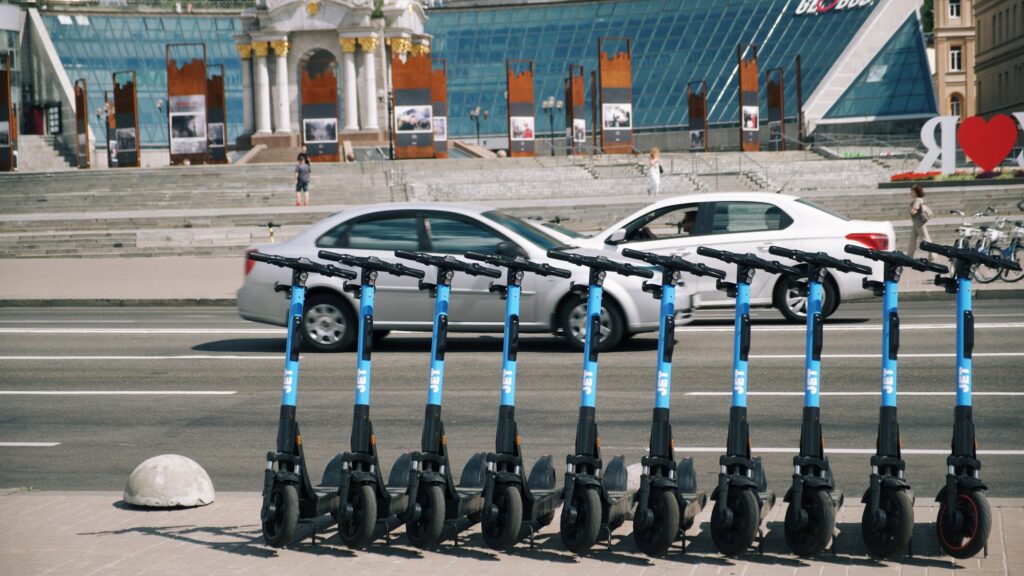
Police officers in Dushanbe have been equipped with electric scooters to patrol the streets of the Tajik capital.

The Ministry of Internal Affairs said the initiative is intended to improve police efficiency and strengthen public safety.

“In order to enhance security and maintain public order, police officers in the capital have been provided with electric patrol scooters,” the ministry said in an official statement.

The new scooters are fitted with special equipment required for law enforcement duties, including signal beacons and sound systems.

According to the ministry, the scooters can travel up to 100 kilometers on a single charge, making them suitable for daily patrols.

“In the future, police officers in the capital will use these scooters in public spaces. This will help improve the effectiveness of police work and contribute to a greater sense of safety among residents,” the statement added.

The use of compact electric transport in policing is becoming increasingly widespread. Such solutions enable officers to move more quickly in pedestrian areas, parks, and crowded locations where the use of patrol cars may be impractical.

A similar approach has already been tested in Kazakhstan. At the end of August 2025, a large-scale operation was conducted in Almaty to monitor compliance with regulations on electric scooter use. Fifty police officers on electric scooters took part.

The Almaty Police Department said that using this type of transport allowed officers to respond more quickly to offenses.

According to police representatives, electric scooters help officers operate efficiently in crowded areas and in locations that are difficult for vehicles to access, while also facilitating preventive engagement with the public.

Officials say that the pilot initiative was successful. Following the initial operations, discussions began on the possibility of introducing electric transport as a permanent feature of urban policing.

China to Fund Construction of Nine Border Facilities in Tajikistan Near Afghanistan

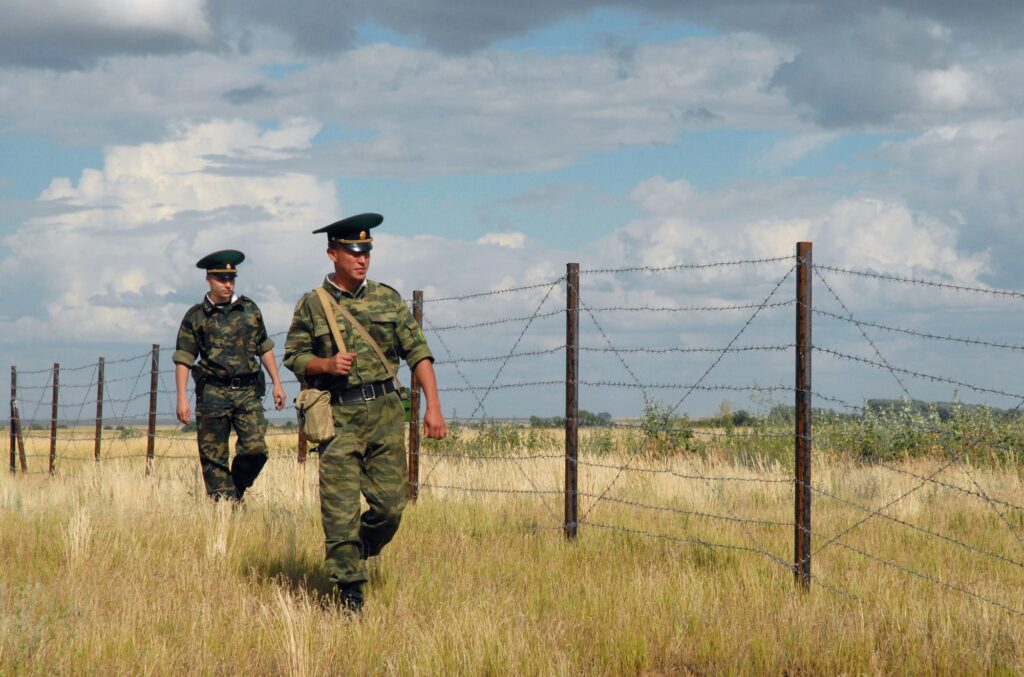
China will finance the construction of nine border facilities in Tajikistan’s frontier regions with Afghanistan, according to a project approved by Tajik lawmakers earlier this month.

The plan was reviewed and adopted during a March 4 session of the Majlisi Namoyandagon, the lower house of Tajikistan’s parliament, Asia-Plus reported.

The construction project, valued at more than 550 million Tajikistani somoni (approximately $57,425,000), will be fully funded by the Chinese government. In turn, Tajikistan will exempt the project from taxes, customs duties, and other mandatory payments.

According to Muradali Rajabzoda, first deputy chairman of Tajikistan’s State Committee for National Security, the initiative is intended to strengthen the logistical and technical capabilities of the country’s border forces. Speaking during the parliamentary session, Rajabzoda said the project would be implemented in three phases, with exchange letters already signed to launch the second stage.

The total construction area of the facilities is expected to reach 17,109 square meters. Rajabzoda said the Chinese government would provide the financing “on a grant basis,” meaning the funds will not need to be repaid.

Although authorities have not disclosed the precise locations of the planned installations, they confirmed that the facilities will be built in Tajikistan’s border regions with Afghanistan.

According to Bahriddin Ziyoi, a member of the parliamentary committee on law enforcement, defense, and security, the Chinese side will also carry out research and design work related to the project. In addition to financing construction, China is expected to supply equipment, building materials, and engineering specialists.

Chinese engineers will travel to Tajikistan to install and configure technical systems at the sites. The project will also include office and residential furnishings, computers, and other equipment necessary for operating the facilities.

Infrastructure development will form another component of the plan. China will assist in building access roads to the border facilities and installing water supply, drainage systems, and electricity connections.

Funding from Beijing is expected to begin after internal procedures in China are completed. Tajik authorities say the exchange letters governing the project were approved by the government in November 2025 and later submitted to parliament following consultations with relevant ministries and agencies. Officials also stated that the documents underwent an anti-corruption review and no risks were identified.

The new facilities follow earlier cooperation between the two countries. According to Tajik security officials, 12 border installations were constructed in 2017-2018 in Tajikistan’s frontier areas with Afghanistan with financial support from China.

Security cooperation between the two countries has previously drawn international attention. In 2024, the British newspaper The Telegraph reported that China had built a secret military base in Tajikistan, citing satellite imagery and describing a facility in mountainous terrain where Chinese and Tajik forces allegedly conducted joint exercises.

Tajik authorities have repeatedly rejected those claims. The Ministry of Foreign Affairs has stated that reports about a Chinese military base on Tajik territory “do not correspond to reality,” adding that the issue has not been part of bilateral discussions between the two countries.

China and Tajikistan have expanded security cooperation over the past decade, particularly along the Afghan border. In 2016, the two countries signed a security agreement aimed at strengthening coordination against regional threats following political changes in Afghanistan. Officials say the partnership includes bilateral mechanisms as well as cooperation through international organisations.

Kyrgyzstan Launches Electronic Queuing System for Trucks at China Border

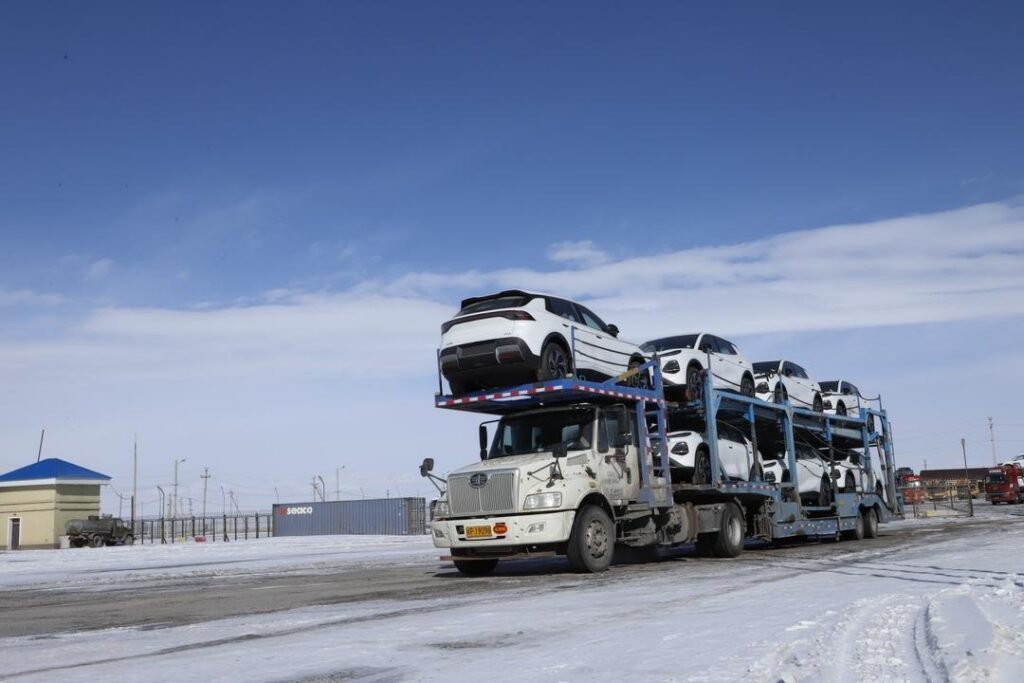
Kyrgyzstan’s State Customs Service has launched a pilot electronic queuing system for trucks at the Torugart border crossing in the Naryn region on the Kyrgyz-Chinese border.

According to the Customs Service, the system is designed to streamline truck flows and reduce congestion that previously formed near the crossing. Queues of heavy vehicles sometimes stretched for up to 25 kilometres, placing significant strain on road infrastructure and negatively affecting the environment around Lake Chatyr-Kul.

The new system allows transport operators to pre-register trucks for border clearance. Vehicles are directed to the checkpoint from a designated waiting area in accordance with their place in the electronic queue.

In addition, a new waiting facility for drivers and representatives of transport companies has been opened at the crossing.

Torugart is currently undergoing modernisation. Planned upgrades include the expansion of checkpoint territory, installation of modern non-intrusive inspection equipment, increased throughput capacity, and the construction of additional parking areas.

The initiative is aimed at improving the efficiency of the crossing amid growing trade turnover between Kyrgyzstan and China.

According to Chinese Ambassador to Kyrgyzstan Liu Jiangping, bilateral trade reached a record $27.2 billion in 2025, representing a 20% increase compared with the previous year.

Torugart is one of Kyrgyzstan’s two fully operational road crossings with China, alongside the Irkeshtam checkpoint in the Osh region.

In September 2024, Kyrgyzstan opened a third road crossing with China. The Bedel checkpoint, initially launched under a simplified regime, is located in a remote mountainous area roughly equidistant from Karakol in Kyrgyzstan and Aksu in China. Its full-scale development with infrastructure meeting international standards is expected to be completed by 2027.

Kazakhstan Reduces Number of Overseas Polling Stations for Referendum

Kazakhstan has reduced the number of overseas polling stations for the nationwide referendum scheduled for March 15 due to the deteriorating security situation in the Middle East. The announcement was made by Yerlan Alimbayev, Ambassador-at-Large at the Ministry of Foreign Affairs.

The Times of Central Asia previously reported the announcement of a referendum on adopting a new constitution. Among the most notable proposed changes are a transition from a bicameral parliament to a unicameral body known as the Kurultai; the restoration of the position of vice president; and the enshrinement in the basic law of commitments to digital transformation, economic modernization, and the strengthening of sovereignty.

Some Kazakh citizens will vote abroad, but the number of overseas polling stations has been reduced in response to military escalation in the Middle East.

Military operations in the region, including on Iranian territory, began on February 28.

“Due to the escalation of the situation in the Middle East and taking into account security considerations, it was decided to reduce the number of polling stations by 11 across ten countries. As a result, 71 polling stations will operate in 54 countries at Kazakhstan’s foreign missions. The number of registered voters abroad is 14,230,” Alimbayev said.

According to him, referendum commissions have already been formed at Kazakhstan’s diplomatic missions. All commission members have been tested on their knowledge of the law and have received the appropriate certification.

“We can assure you that all polling stations are ready to operate. Information materials, ballot boxes, and ballots have been delivered. Starting tomorrow, they will be sent via diplomatic mail,” the Foreign Ministry representative added.

According to the ministry, at the time the conflict escalated in the Middle East there were more than 10,000 Kazakh citizens in countries across the region, including 47 in Iran, 163 in Israel, more than 3,000 in Qatar, more than 4,000 in the United Arab Emirates, and about 1,800 in Saudi Arabia.

As of March 10, 8,585 Kazakh citizens had been evacuated from conflict-affected areas, according to Foreign Ministry spokesman Yerlan Zhetibayev.

“We are doing everything possible to ensure the safety of our citizens and are providing the necessary support. At this time, we have received no information about Kazakh citizens who have been killed or injured,” he said.

Munara Abdukakharova: Stories of Art, Identity, and Political Memory from Kyrgyzstan

A yellow hammer-and-sickle symbol is sewn onto black, yellow, blue and red mattresses in Up on Manas, down on Sovetskaya, a powerful artwork by artist Munara Abdukakharova presented last year at Fondazione Elpis in Milan. Inspired by the traditional kurak korpe (the hand-stitched patchwork cushions and mattresses that roll up like futons), the piece reimagines a familiar domestic object as a carrier of collective memory for Central Asian migrants, often the most tangible material link to home.

Born in 1990 in Bishkek, just one year before Kyrgyzstan declared independence from the Soviet Union, Abdukakharova belongs to a generation that grew up during a profound political and cultural transition. The lingering Soviet legacy, the rise of nationalism, increasing religious influence, and the pressures of global capitalism all intersect in her work, which frequently draws on textiles, felt, and everyday objects rooted in local culture.
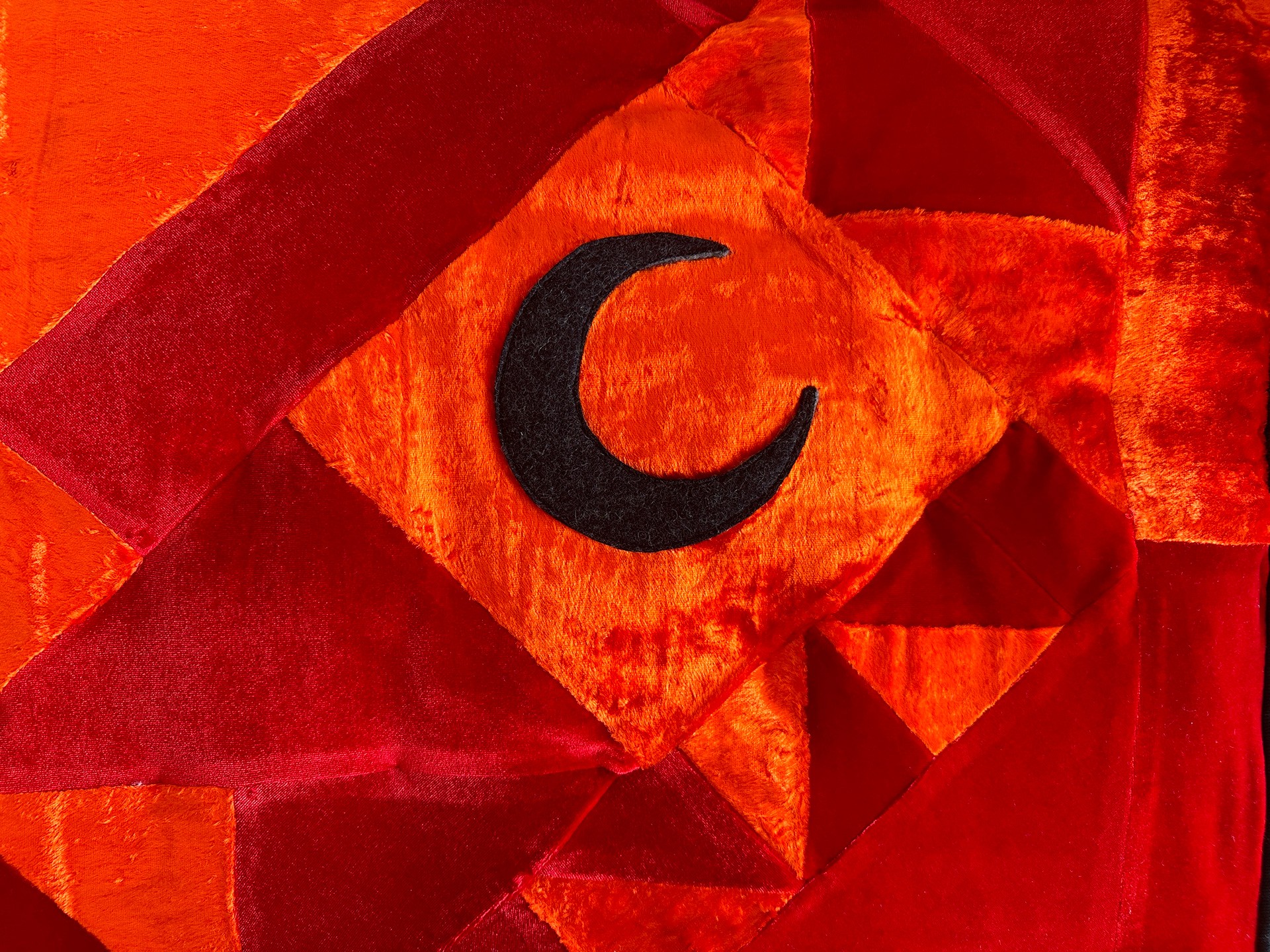
“The art I make is mostly narrative, based on my everyday life, and depicts broader social issues in Kyrgyzstan,” says Abdukakharova from her home in Bishkek, from where she realizes most of her work.

A finalist of the B. Bubikanova Art Prize, Abdukakharova works across embroidery, printmaking, photography, and installation. Speaking to The Times of Central Asia, she reflects on her path from architecture to contemporary art, the political realities shaping life in Bishkek, and the role artists play in questioning the direction of a young nation.

TCA: You often describe your artistic practice as emerging from observation and your everyday experience. Did you grow up in a family that was into art?

Abdukakharova: Not at all. All the members of my family are pharmacists, and while my parents wanted me to go to medical school, I couldn’t; I’m really scared of blood! (laughs) I went to an architectural school instead.

I didn’t draw as a child, but I remember really liking to dismantle objects, whether it was toys or even a chair, furniture, and trying to put it back again… something I still love to do. The passion for drawing came only later on, in high school.

TCA: Your decision to study architecture in Bishkek came at a time when many young people in Kyrgyzstan still looked toward Russia for their education. Could you describe the circumstances that led you to that choice and the cultural expectations surrounding it?

Abdukakharova: When I finished high school in 2008, studying in Moscow was still seen as the best option. Unlike how it is today, growing up in Bishkek, there was a strong belief that anything coming from the former Soviet Union was inherently good. The teacher who helped me prepare university applications only suggested schools in Moscow or St. Petersburg; other countries were never really discussed, even though I already spoke English quite fluently. Looking back, I realize how dominant that perspective was at the time.

I took a gap year, thinking that I could go to an art school later, maybe the Moscow Surikov State Academic Institute of Fine Arts. In the end, my parents didn’t let me pursue that path, and now I think it might have been for the best.

If I had gone to study in Moscow, my development as an artist and architect would probably have taken a completely different direction. It would have shaped not only my education, but my perspective on art and the way I see the world today.
TCA: How would you describe the experience of studying architecture in Bishkek?

Abdukakharova: I studied architecture for six years. The first three were okay, but the last few years were really hard. There was a lot of corruption involved, and some professors were very difficult to work with. At some point, I really thought about quitting, but still, I graduated in 2014.

The training was very academic: we studied drawing for four years, painting for two, and sculpture for one, learning classical techniques and a very disciplined way of working.

For a long time, I remembered that period as plainly bad. But now that more time has passed, I’ve started thinking that anything, good or bad, leaves some experience in your life. Even today, when people see my works, they often say it feels like I was taught as an architect.

TCA: How did you first encounter contemporary art practices?

Abdukakharova: During my third year at university, a professor invited me to do a summer internship at a museum studio connected to both architecture and contemporary art. The head of the studio is an architect and curator, and that environment introduced me to contemporary artistic practices.

From there, with two friends, we created a collective called Ten Points. We participated in a local festival for three years while we were studying. After graduation, we stopped working as a group, but I continued my path in the arts.
TCA: Your work frequently incorporates textiles and felt, materials deeply embedded in Kyrgyz nomadic traditions. How did you begin working with those mediums?

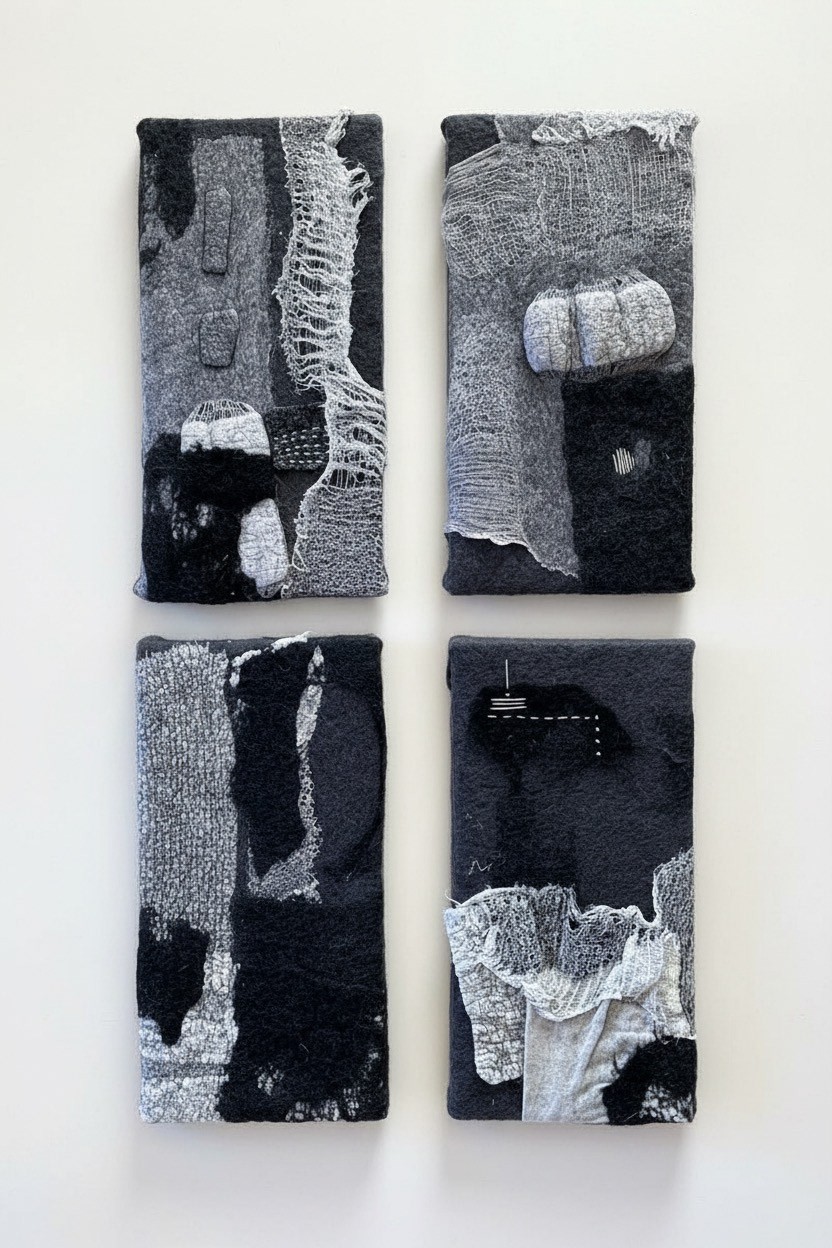
Abdukakharova: I started with textiles. I bought myself a small loom, and I began weaving abstract works. I showed those pieces in a group show, and that was the starting point. In 2018, I took a short course in wet-felting. A woman who is now a very close friend gave us a basic knowledge of working with wool and making felt. I really enjoyed it.

Today, I continue to explore those techniques through collaborations with local craftspeople. I’m working with a local manufacturer called Tumar. They helped me enlarge my drawings using the technique of ala-kiyiz, which is a very ancient Kyrgyz wet-felting technique for carpets, which is now under threat of disappearing.

TCA: Your work often engages with social and political realities in Bishkek, yet it rarely does so in a direct or didactic way. How do you approach political themes in your practice, and what role does art play for you in addressing these issues?

Abdukakharova: Politics is both part of my art and my life. I think it’s important to talk about social and political issues in the country, especially because today there are fewer possibilities to express disagreement publicly.

A few years ago, there were peaceful demonstrations in Bishkek. These were not aggressive protests, just quiet collective walks to show that people cared about certain issues. But in the last couple of years, demonstrations have been prohibited in the city.

Because of that, I feel that speaking about these topics through art, or even just continuing to discuss them with people around me, becomes increasingly important. Even in everyday conversations, I sometimes realize that people around me may not fully recognize certain problems, and I feel a responsibility to keep raising these questions.

TCA: One of these concerns is air pollution in Bishkek, which you address in your ongoing series, Smog Parallel City. How did this project begin?

Abdukakharova: In winter in Bishkek, the air pollution becomes extremely heavy, and yet many people still don’t seem to realize how serious it is. Sometimes I walk through the city and see young mothers outside with their babies in strollers while the air is full of smoke, and it makes me feel very sad, because it can really affect people’s health.

For me, it is also very personal – my daughter has allergies, and I often think about how the polluted air might influence children growing up in the city. At first, I approached smoke purely as a physical condition, as the visible pollution that surrounds us; but over time, I began to understand that it could also function as a metaphor.

Now I often speak about “political smoke” as well, a kind of atmosphere of obscurity or confusion that surrounds our daily lives. So, in an abstract manner, the series continues to refer to very real environmental problems, but at the same time, it reflects a broader feeling about the conditions in which society exists today.

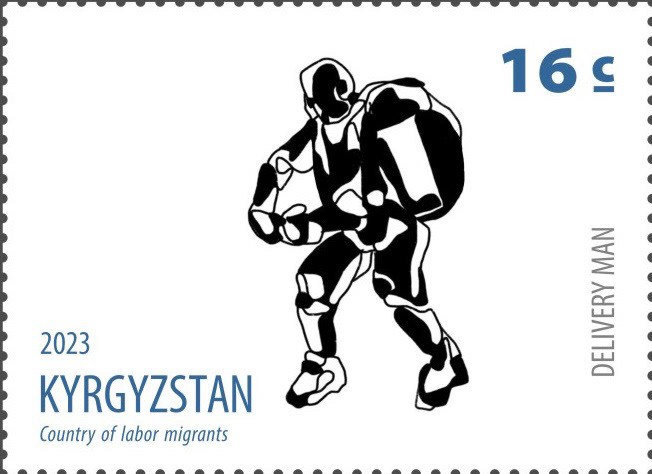
TCA: Migration is another central theme in your practice, particularly in the project Kyrgyzstan: Country of Migrants. What inspired that work?

Abdukakharova: The project was born from a reflection on national postage stamps. Usually, they show things a country is proud of: flowers, buildings, and famous athletes.

There is a lot of labor migration to Russia. Many people live in very poor conditions there. Sometimes, twenty people sleep in one room, and they endure these conditions in order to send money home. They support families and keep the economy of Kyrgyzstan alive. That’s why I dedicated the stamps to professionals, like cleaners, waitresses, delivery workers, and taxi drivers. I feel migrants are the national heroes of Kyrgyzstan.
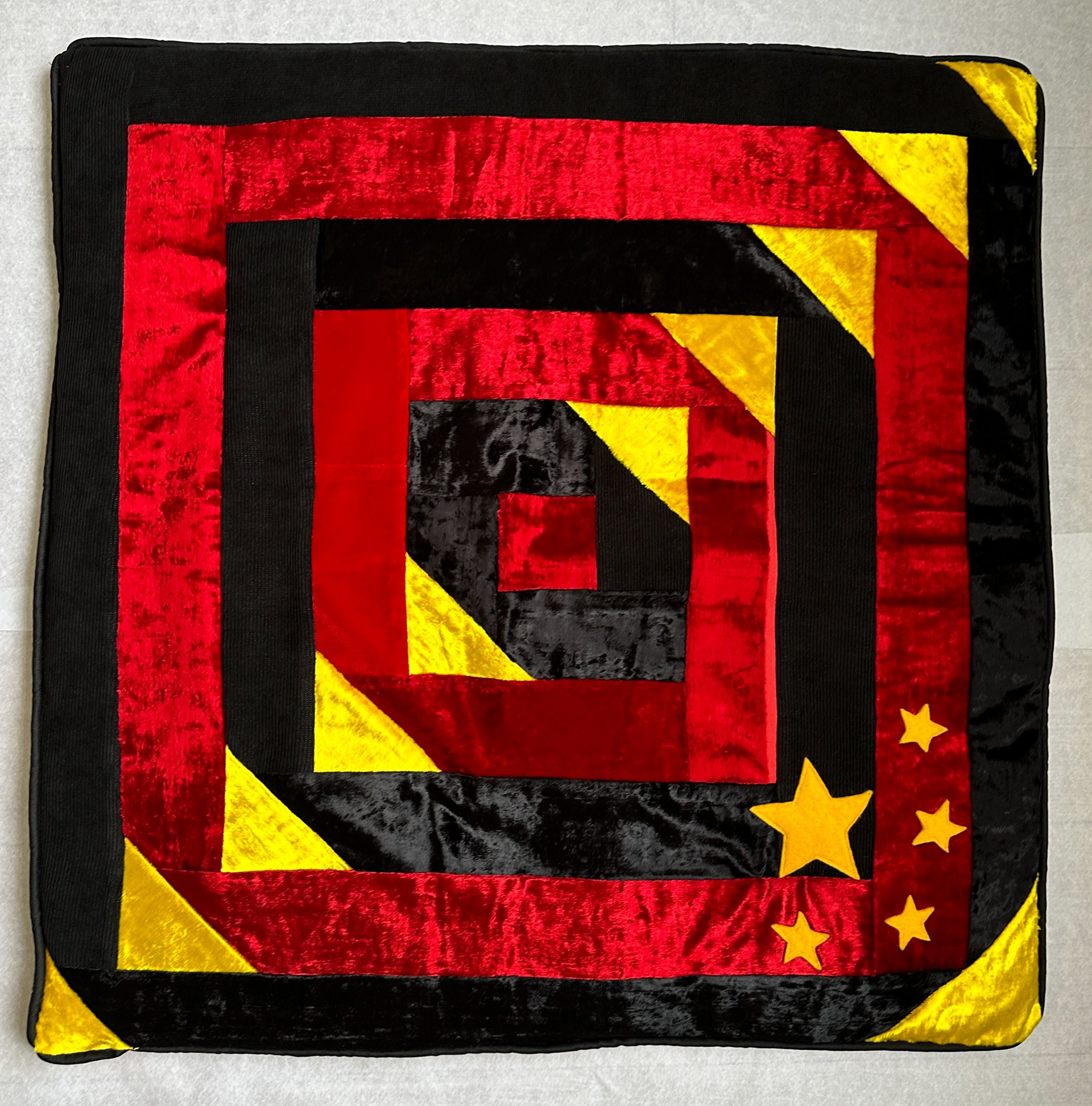
TCA: Another work of yours, Up on Manas, Down on Sovetskaya, reflects on the many cultural and political influences shaping Bishkek today. How did you translate these ideas into the textile form?

Abdukakharova: The idea came from the titles of bus routes in Bishkek. On the buses, street names are often shortened, and when you read them, you start noticing how many different historical layers exist in the city at the same time. For example, people still say Sovetskaya or Moskovskaya; Soviet-era names that officially no longer exist, but remain in everyday language.

At the same time, there are other references, like Silk Way Street, which points to connections with China, or Manas Street, named after the Kyrgyz national hero. Seeing these names together made me think about the different influences shaping the country today: the Soviet past that still lingers in people’s memories, the increasing presence of Chinese businesses and their cheap goods in Bishkek, the growing influence of religion in rural communities, and the nationalist rhetoric in public space.

In the work, I translated these ideas into textiles using patchwork and embroidery. I stitched together pieces of fabric and incorporated the names and symbols into the surface, almost like assembling fragments of a map. The process relates to traditional Kyrgyz textile practices, where different fabrics are sewn together by hand, but here the composition becomes a way of reflecting on these overlapping histories and directions.

This got me thinking about how global political tensions reach even a small country like Kyrgyzstan. Around the war between Russia and Ukraine, for example, with friends taking different sides; I feel that for us, living in such a small country, it is important to remain united.

What matters most is that our home remains a home. At the same time, I also feel concerned about how rapidly capitalism is entering Bishkek, because it sometimes seems that we’re losing things that are essential to this place.

I’m not talking about nationalism, but about protecting what’s unique about our culture, and thinking about what we want to preserve and pass on to future generations.

TCA: What role does the community in Bishkek play in sustaining your art practice?

Abdukakharova: Most of my exhibitions are in this local context. I know that for an artist’s career, this is not considered very good, because you don’t earn much money. But the local community of artists is very important for me. They are the people who keep me here in Bishkek. I’m also very inspired by the older generation of artists. Even when the situation becomes very difficult, they remain calm and continue creating art.

Iran War Quietly Raises the Strategic Value of Central Asian Airspace

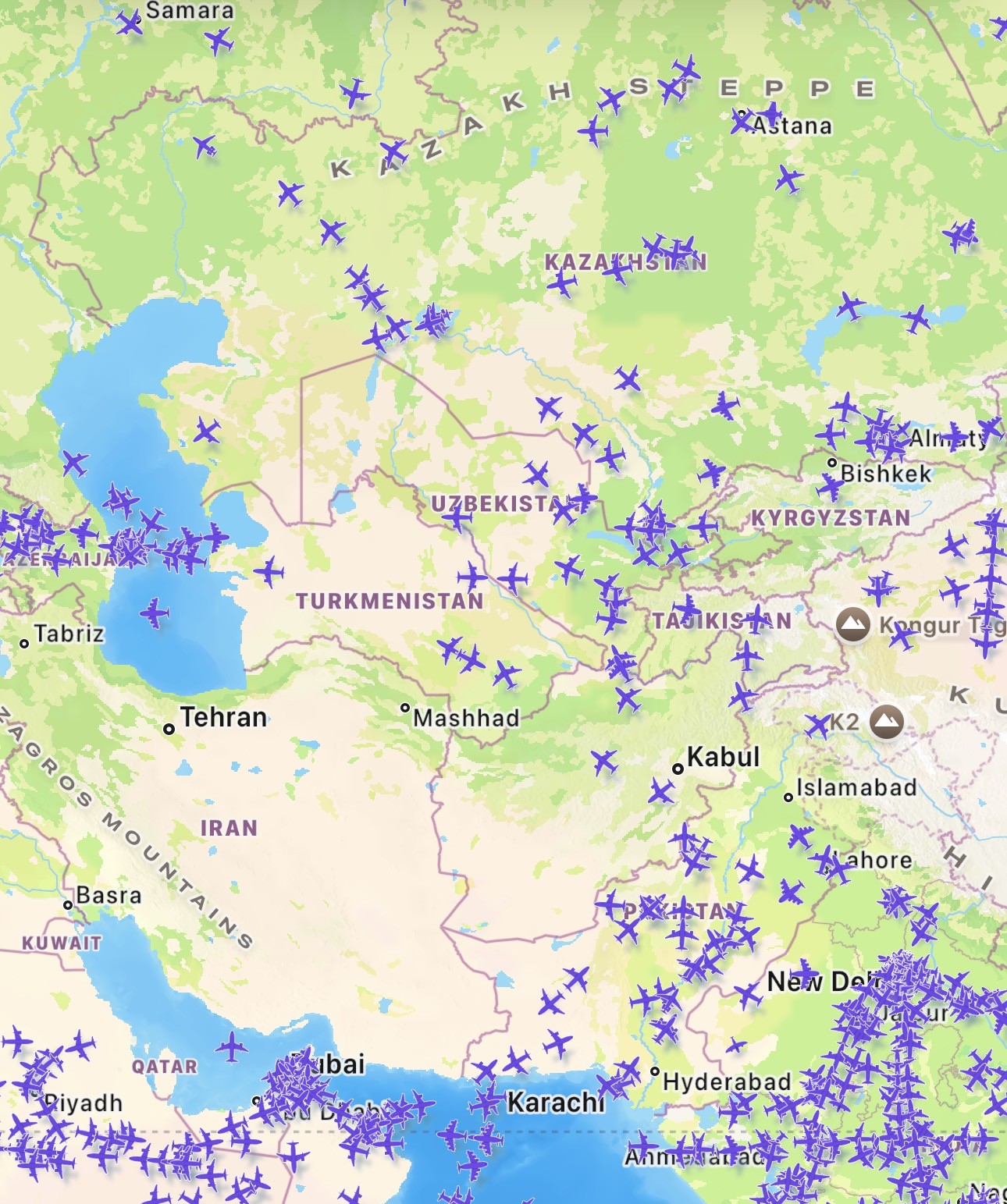
The war in Iran has disrupted one of the main aviation corridors linking Europe and Asia. The European Union Aviation Safety Agency (EASA) has issued safety bulletins warning of high risk to civilian aircraft in Iranian airspace and surrounding regions affected by military activity, missile launches, interceptions, and air defense operations. A separate EASA bulletin covering Iran, valid through March 31, describes a high risk to civil flights at all altitudes within the Tehran flight information region.

The consequences reach far beyond the Middle East. Since Russia’s full-scale invasion of Ukraine in 2022, most Western airlines have been unable to use Russian airspace. With Iranian airspace now considered unsafe for normal commercial transit, the map for long-haul traffic between Europe and Asia has become extremely tight. Reuters mapping of global flight paths shows airlines diverting north via the Caucasus or taking longer southern routes through the eastern Mediterranean and the Arabian Peninsula. Many passengers traveling between Europe and Asia still transit through Gulf hubs. However, airports across the region, including Dubai, Abu Dhabi, Doha, Kuwait, and Bahrain, have faced disruption and unstable schedules during the conflict.

Central Asia sits just beyond that northern bypass. It is not replacing the Gulf as a passenger hub, and is not suddenly becoming the main bridge between Europe and Asia, but the region’s airspace is increasingly strategically valuable as the number of efficient alternatives shrinks. The war has made Central Asia more important as part of a wider arc stretching from Turkey and the Caucasus across the Caspian basin and onward toward South and East Asia.

Live flight-tracking map (image taken at 840am EST) showing aircraft routes avoiding Iranian airspace during the crisis. Many flights between Europe, the Middle East, and South Asia are being diverted north over the Caspian Sea and across Central Asia instead of flying over Iran; source: Planes Live

Kazakhstan is the clearest example. Local airlines had already begun to adjust before the current escalation reached its present level. In January, The Times of Central Asia reported that Air Astana had rerouted flights to Sharm el-Sheikh, Dubai, Doha, and Medina to avoid Iranian airspace. After the conflict widened, Air Astana canceled flights to several Middle Eastern destinations following the closure of Iranian airspace and rising regional tensions. Kazakhstan also imposed a temporary ban on flights over or near the airspace of Iran, Israel, Syria, Iraq, Jordan, and Lebanon.

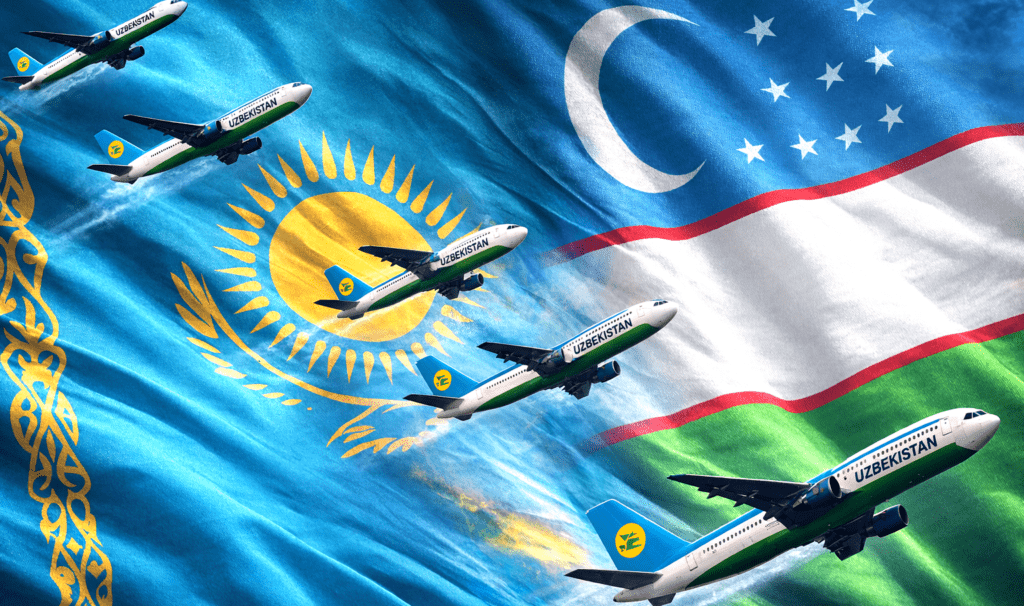
Uzbekistan also moved quickly. As early as October 2024, Kun.uz reported that Uzbekistan Airways was avoiding Iraqi airspace and western Iranian airspace on safety grounds. After the latest escalation, on March 4, Uzbekistan suspended flights to six Middle Eastern countries. The pattern is clear: Central Asian carriers are not immune to the crisis; they are already adjusting networks, schedules, and commercial risk, with the broader economic consequences of the conflict emerging across regional supply chains.

However, the region’s aviation systems clearly now carry far greater strategic and economic importance than they did only a few years ago. On its official site, Kazakhstan’s air navigation provider Kazaeronavigatsiya states that in the first half of 2025, it served 216,616 flights, including 161,029 operated by foreign airlines and described as transit and landing traffic. Kazakhstan’s aviation sector is also growing fast. In 2025, the country’s airports handled 31.8 million passengers, while Kazakh airlines carried 20.7 million. These figures point to an aviation system with real regional significance rather than a marginal market.

Uzbekistan is moving in the same direction. The government has made aviation expansion part of a broader transport strategy, with plans for a new major airport in the Tashkent region reflecting ambitions that go far beyond domestic demand. Tashkent is not Dubai, but it is steadily emerging as an important regional hub at a time when established corridors to the south are under growing strain.

None of this means Central Asia will see a sudden windfall. Longer detours increase fuel burn, crew expenses, insurance premiums, and schedule risk. Much of the region’s added strategic value may first be felt in overflight planning, air traffic management, and route resilience rather than headline passenger numbers. Nor does it mean airlines will quickly shift large volumes of passengers through Central Asian hubs. Gulf airports still possess far larger networks, deeper fleets, and more developed connecting systems.

But geography has become harsher and more political. Iranian airspace is unsafe, and parts of the Gulf corridor have been disrupted. In that environment, countries able to offer stable airspace, competent air traffic control, and reliable infrastructure gain importance.

That is where Central Asia now finds itself. For years, the region’s governments have spoken about the strategic value of their territory for rail, road, and trade corridors. The war in Iran has quietly added aviation to that argument. In a world where established east-west routes are narrowing, the skies over Central Asia matter more than they did before.