Moldova Moves to Leave CIS as Post-Soviet Bloc Loses Another Member

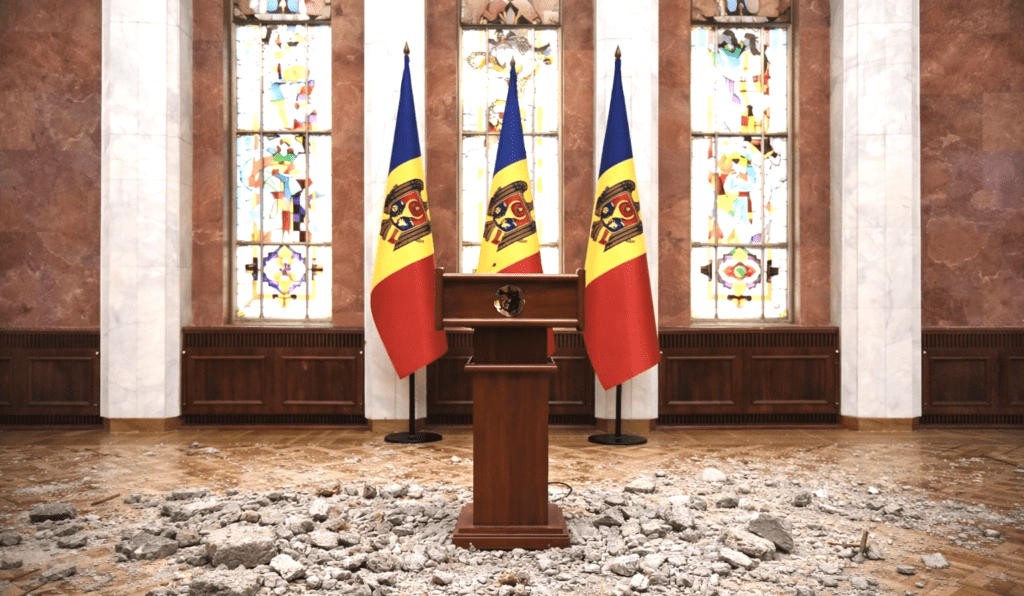
Moldova’s parliament approved, in final reading on April 2, the country’s withdrawal from the Commonwealth of Independent States (CIS), with 60 deputies voting in favor. President Maia Sandu then promulgated the denunciation decrees, which were published in the Official Journal on April 8 and entered into force, with the Foreign Ministry set to notify the CIS. If Moldova’s withdrawal takes full legal effect after notification and the relevant notice period, eight CIS member states would remain: Armenia, Azerbaijan, Belarus, Kazakhstan, Kyrgyzstan, Russia, Tajikistan, and Uzbekistan.
The CIS was created immediately after the collapse of the Soviet Union as a framework to manage the breakup and maintain post-Soviet cooperation among former republics. Moldova’s denunciation concerns a structure originally formed by 11 former Soviet states, not all 15 Soviet republics. Moldova’s exit further weakens the CIS politically, though the bloc will continue to exist if the remaining member states stay in place.
Moldova has already approved the denunciation of the 1991 Agreement on the Establishment of the CIS, the related Protocol, and the 1993 CIS Statute. The Moldovan authorities say the CIS’s core values and principles are no longer being respected, especially the recognition of territorial integrity and the inviolability of borders. They cite Russia’s war against Ukraine, acts of aggression against Georgia, and the illegal military presence of Russian troops on Moldovan territory. Chisinau says the move is consistent with Moldova’s European path, while the European Union remains its main economic partner.
Economic ties with the Commonwealth have significantly declined: in 2025, CIS countries accounted for 5.9% of Moldova’s exports, while the European Union accounted for 67.5%.
Moldova’s final withdrawal from the CIS may not, therefore, come as a surprise to its other members. On January 19, Deputy Prime Minister and Foreign Minister Mihai Popșoi announced the start of the process to denounce the three core CIS agreements underpinning Moldova’s membership.
“We are already in the process of getting approvals for the denunciation of three agreements with the CIS. They are the agreements that form the basis of our affiliation to the CIS, namely: the CIS Statute, the CIS Founding Agreement, and the Annex to this agreement,” Popșoi said. He added that this would mean Moldova was no longer a CIS member legally, while participation had already been suspended de facto.
Moldova set a course toward breaking its remaining ties with its Soviet past after the 2020 presidential elections, when new president, Maia Sandu, announced a path toward EU integration and refused to participate in CIS summits. Moldova has spent the past several years unwinding CIS-linked agreements. As of January 2026, Moldovan officials said the country had signed 283 CIS agreements, of which 71 had already been rescinded, and about 60 more were in process.
On December 12, 2025, Moldova’s parliament approved the denunciation of the 1992 Bishkek agreement on visa-free travel for CIS citizens. For Uzbekistan, Kazakhstan, and several other states, visa-free travel with Moldova remains in place under bilateral agreements. Moldovan authorities said the denunciation of the Bishkek agreement would affect only Tajikistan and Kyrgyzstan, which do not have similar bilateral arrangements with Moldova.
Ukraine, notably, was among the founding members of the CIS alongside Russia and Belarus. On December 7-8, 1991, in Viskuli, in the Belovezhskaya Pushcha on the territory of Soviet Belarus, Boris Yeltsin, Leonid Kravchuk, and Stanislav Shushkevich signed the agreement that formalized the dissolution of the Soviet Union and the creation of the CIS.
On December 13, a meeting of the presidents of five Central Asian states, Kazakhstan, Kyrgyzstan, Tajikistan, Turkmenistan, and Uzbekistan, took place in Ashgabat. The group issued a joint statement expressing readiness to join the CIS based on equal participation and recognition of all members as founders.
On December 21, in Almaty, the leaders of 11 former Soviet republics signed the Alma-Ata Declaration, which set out the CIS’s goals and principles and broadened the framework created earlier that month.
Post-Soviet integration began almost as soon as the Soviet Union collapsed, but it moved along more than one track. Alongside the CIS, Kazakhstan’s Nursultan Nazarbayev promoted deeper Eurasian economic integration, an effort that developed from the Customs Union into the Single Economic Space and then the Eurasian Economic Union. Armenia and Kyrgyzstan later joined that bloc, expanding a framework first built by Russia, Kazakhstan, and Belarus.
That makes Moldova’s withdrawal from the CIS part of a wider reordering rather than an isolated step. Armenia, meanwhile, has moved in a different political direction, with its parliament approving a law on launching the process of accession to the European Union in March 2025, even though the country remains a member of the EAEU. That does not amount to an Armenian exit from the EAEU, and it is too early to present it as one. But it does suggest that former Soviet states are no longer aligning around a single post-Soviet center of gravity.