• KGS/USD = 0.01144 0%
  • KZT/USD = 0.00194 0%
  • TJS/USD = 0.10841 -0.37%
  • UZS/USD = 0.00008 0%
  • TMT/USD = 0.28571 0.28%
  • KGS/USD = 0.01144 0%
  • KZT/USD = 0.00194 0%
  • TJS/USD = 0.10841 -0.37%
  • UZS/USD = 0.00008 0%
  • TMT/USD = 0.28571 0.28%
  • KGS/USD = 0.01144 0%
  • KZT/USD = 0.00194 0%
  • TJS/USD = 0.10841 -0.37%
  • UZS/USD = 0.00008 0%
  • TMT/USD = 0.28571 0.28%
  • KGS/USD = 0.01144 0%
  • KZT/USD = 0.00194 0%
  • TJS/USD = 0.10841 -0.37%
  • UZS/USD = 0.00008 0%
  • TMT/USD = 0.28571 0.28%
  • KGS/USD = 0.01144 0%
  • KZT/USD = 0.00194 0%
  • TJS/USD = 0.10841 -0.37%
  • UZS/USD = 0.00008 0%
  • TMT/USD = 0.28571 0.28%
  • KGS/USD = 0.01144 0%
  • KZT/USD = 0.00194 0%
  • TJS/USD = 0.10841 -0.37%
  • UZS/USD = 0.00008 0%
  • TMT/USD = 0.28571 0.28%
  • KGS/USD = 0.01144 0%
  • KZT/USD = 0.00194 0%
  • TJS/USD = 0.10841 -0.37%
  • UZS/USD = 0.00008 0%
  • TMT/USD = 0.28571 0.28%
  • KGS/USD = 0.01144 0%
  • KZT/USD = 0.00194 0%
  • TJS/USD = 0.10841 -0.37%
  • UZS/USD = 0.00008 0%
  • TMT/USD = 0.28571 0.28%
17 December 2025

Turkmenistan Steps into the Spotlight with Regional Diplomacy and Economic Reforms

Long known for its isolationist policies, Turkmenistan is gradually opening up to the international community through significant economic and diplomatic initiatives. Recent efforts include diversifying its natural gas exports, engaging in regional infrastructure projects such as the TAPI gas pipeline, and expanding trade partnerships. Additionally, the government has taken steps toward modernization and economic reforms to attract foreign investment, signaling a shift towards enhanced regional cooperation and global integration.

This week, these initiatives gathered pace, as Chairman of the Halk Maslahaty of Turkmenistan, Gurbanguly Berdimuhamedov, continued his diplomatic tour of Central Asia with official visits to Kazakhstan and Kyrgyzstan. Berdimuhamedov’s meetings focused on strengthening strategic partnerships, expanding trade and economic cooperation, and deepening cultural dialogue.

Visit to Kazakhstan: Cultural Diplomacy and Strategic Cooperation

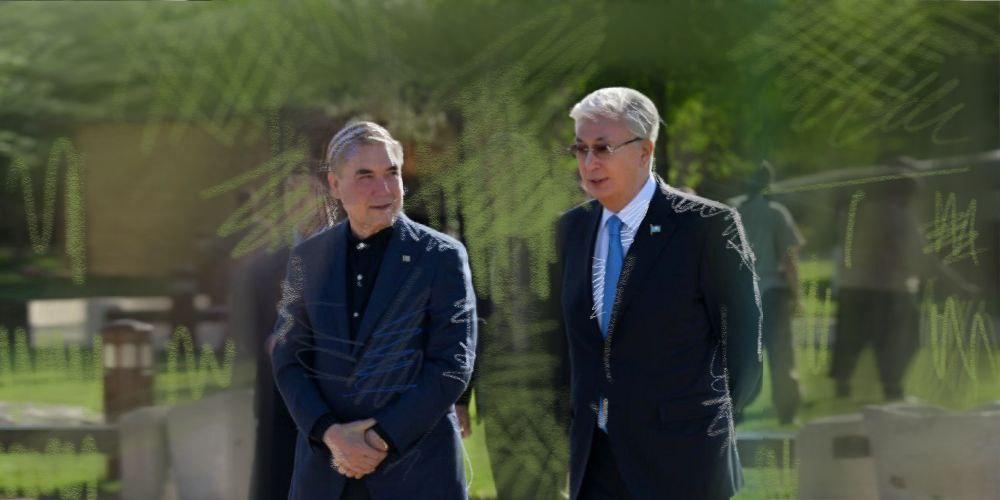
On April 21, Berdimuhamedov arrived in the city of Turkestan, where he was welcomed by Kazakh President Kassym-Jomart Tokayev. The leaders held an informal meeting and visited key cultural and infrastructure sites, including the mausoleum of Khoja Ahmed Yassawi, a UNESCO World Heritage Site considered a spiritual center of the Turkic world.

The tour also included the “Ethnoaul” ethnographic complex, the Turkistan Visit Centre, and an inspection of ongoing archaeological and restoration work at the ancient settlement of Kultobe. At the SPK Turkistan industrial park, they reviewed six investment projects worth a total of 36.5 billion tenge, encompassing production from tractors to medical equipment, with future expansion plans involving 112 facilities​.

During the meeting, Tokayev highlighted growing bilateral ties and discussed joint initiatives in energy, transport, and digitalization. Tokayev reaffirmed Kazakhstan’s interest in participating in the development of Turkmenistan’s Galkynysh gas field and regional infrastructure projects, including the Turgundi-Herat-Kandahar-Spin Buldak railway and various transit highways connecting the two nations.

Tokayev also offered support in digital governance and IT training, aligning with broader goals of regional modernization.

Speaking to Toppress.kz, political analyst Tair Nigmanov interpreted Berdimuhamedov’s regional tour as a sign of Turkmenistan’s gradual emergence from diplomatic isolation. Nigmanov emphasized the symbolic significance of Turkestan, which Kazakhstan is positioning as a regional diplomatic hub for the Turkic world.

Visit to Kyrgyzstan: Tradition and Informal Diplomacy

On April 22, Berdimuhamedov arrived in Kyrgyzstan, where he was met at Issyk-Kul Airport by President Sadyr Japarov, who personally drove his guest along the visit route, a gesture that drew public attention. The leaders toured the Rukh-Ordo cultural center in Cholpon-Ata, and held informal discussions. During the visit, Japarov gifted a komuz, a traditional Kyrgyz string instrument, and invited Berdimuhamedov to sample the national kuurma tea.

Talks on April 23 focused on enhancing bilateral relations. President Japarov praised the “centuries-old friendship” between the two nations and proposed establishing a Kyrgyz-Turkmen Development Fund, modeled on similar funds with Russia, Hungary, and Uzbekistan. Berdimuhamedov responded positively, expressing a desire to expand cooperation in trade, energy, education, and cultural exchange.

Next Stop: Uzbekistan

Berdimuhamedov is scheduled to visit Uzbekistan on April 23-24 at the invitation of President Shavkat Mirziyoyev. The agenda includes political, economic, and transportation cooperation, continuing the regional outreach and reinforcing Turkmenistan’s strategic presence in Central Asia.


Lawyers Challenge Death Sentences of Uzbeks Convicted of UAE Rabbi Murder

Three Uzbek citizens sentenced to death in the United Arab Emirates are at the center of growing international concern over the fairness of their trial and the potential political influences behind the case.

On March 30, the Abu Dhabi Federal Court of Appeal handed down death sentences to Olimboy Tohirovich (29), Mahmudjon Abdurahim (29), and Azizbek Komilovich (34), after convicting them of the murder of Zvi Kogan, an Israeli-Moldovan dual national whose body was discovered in the Emirati city of Al Ain in November 2024. A fourth individual received a life sentence for aiding the accused. UAE authorities have linked the case to terrorism.

Following the verdict, the Worldwide Lawyers Association (WOLAS), established by lawyers and academics working in Turkiye with the aim of conducting activities in the international arena, raised alarm about potential violations of international legal standards. In a statement, WOLAS cited possible political pressure, opaque legal proceedings, and concerns that confessions may have been obtained under duress.

WOLAS has sent formal appeals to the governments of the UAE and Uzbekistan, the UN Office of the High Commissioner for Human Rights, and several UN Special Rapporteurs, including those on extrajudicial executions and torture. The group’s demands include:

  • A comprehensive, impartial review of the case
  • Commutation of the death sentences
  • Assurance of fair trial standards, including access to legal counsel and medical care
  • An independent investigation into allegations of torture

The group also urged Uzbekistan to take more robust measures in defending the rights of its nationals abroad. Their recommendations include enhanced consular engagement, legal aid, and proactive diplomatic efforts to mitigate harsh sentences and prevent future incidents.

Under UAE law, all death sentences must be reviewed by the Federal Supreme Court and require final approval from the country’s president, providing a potential avenue for clemency or sentence reduction.

Uzbekistan’s Ministry of Foreign Affairs confirmed to Kun.uz that it is closely monitoring the case. Ministry spokesperson Akhror Burhonov stated that consular support, legal assistance, and discussions with UAE authorities are ongoing. He emphasized that protecting the rights of Uzbek citizens abroad remains a top government priority.

Israeli media have reported that Mossad suspects links between the convicted men and an Iranian organization, though no conclusive evidence has been made public.

While WOLAS is not directly representing the defendants, it asserts its role as an international legal watchdog advocating for due process and human rights. The organization has asked the UN to conduct an inquiry, delay any execution until all legal reviews are exhausted, and document the case in upcoming reports on global human rights issues.

South Korea Backs Forest Restoration in Kazakhstan’s Fire-Ravaged Abay Region

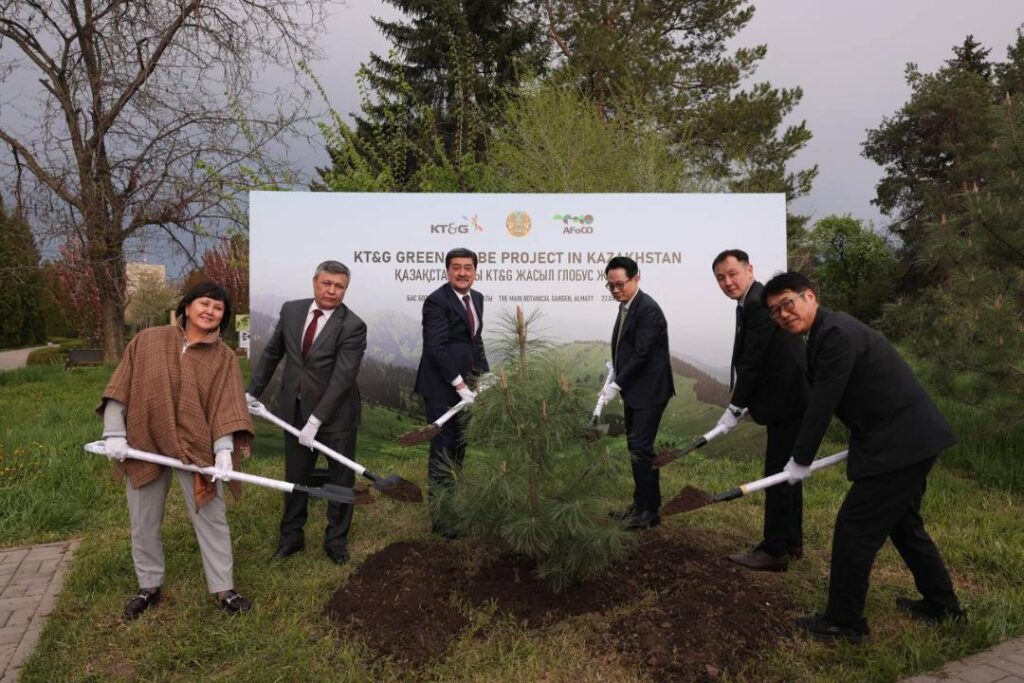
Kazakhstan and South Korea have launched a joint initiative to restore forests in the Abay region of eastern Kazakhstan, which was severely affected by large-scale wildfires. On April 22, Kazakhstan’s Ministry of Ecology and Natural Resources signed a memorandum of understanding with the Asian Forest Cooperation Organization (AFoCO) and South Korea’s KT&G Corporation to implement the project​.

Scheduled to run through December 31, 2027, with potential for extension, the initiative is part of KT&G’s Green Globe program and focuses on three key components:

  1. Reforestation: Pine saplings will be planted in burned areas, with participation from local communities and KT&G staff in Kazakhstan.
  2. Technology Transfer: Korean information and communication technology (ICT) tools will be introduced for monitoring and preventing wildfires. Training sessions and seminars for forest service professionals are planned in Almaty.
  3. Prevention and Awareness: Public education campaigns will promote fire prevention practices and aim to reduce human-caused fire risks.

The project builds on an earlier agreement signed in June 2024 between Kazakhstan’s Ministry of Ecology and the Korea Forest Service. That memorandum covered broader cooperation areas, including forest legislation reform, biodiversity protection, and ecosystem restoration​.

As part of this growing partnership, Kazakh forest specialists have undergone training in South Korea, learning advanced techniques in reforestation and fire prevention.

Officials expect the new project to boost Kazakhstan’s efforts in sustainable forest restoration, enhance environmental resilience, and reduce climate-related and human-induced ecological threats.

Kyrgyz Special Forces Showcase Combat Drone Capabilities in Anti-Terror Exercise

Kyrgyzstan’s elite State Committee for National Security (GKNB) special forces unit, Alpha, demonstrated advanced combat capabilities during the Asman Kozomolu 2025 anti-terrorist exercises, held to enhance operational readiness in modern warfare scenarios.

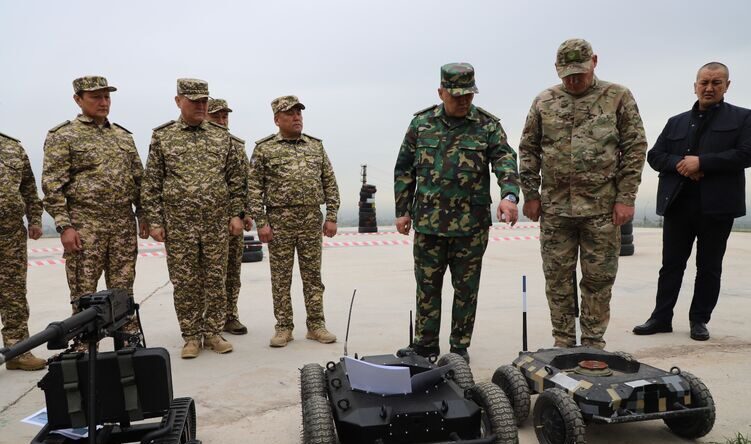
According to the GKNB, the drills featured the use of cutting-edge weaponry, including unmanned aerial vehicles (UAVs), first-person view (FPV) drones, and robotic ground systems​. The exercises aimed to sharpen the operational skills of personnel in deploying modern combat technologies under conditions simulating real combat.

“In conditions close to combat, critical capabilities of modern combat robotics and UAVs were demonstrated, along with the process of manufacturing FPV drones,” the committee stated.

A key component of the drill involved storming a simulated administrative building using a ground-based combat robot, followed by a coordinated assault by special forces. The unit also rehearsed neutralizing enemy vehicles using kamikaze ground drones and attack drones equipped with shaped-charge munitions. Additionally, operators practiced deploying FPV drones with varying payload-release mechanisms.

GKNB Chairman Kamchybek Tashiev attended the exercise and participated in sniper shooting drills. Addressing the forces, he emphasized the government’s commitment to equipping military and security units with state-of-the-art logistics and weaponry to counter emerging threats.

Kyrgyzstan initiated its drone program in late 2021, acquiring Turkish-made Bayraktar drones during heightened tensions along the Tajik border. Since then, the country has expanded its drone arsenal to include Russian Orlan-10 UAVs. In 2022, Kyrgyzstan inaugurated its first drone base, and by 2024, it had unveiled its first domestically produced drone at an industrial exhibition attended by President Sadyr Japarov.

Kyrgyzstan Exports Over 8 Million Eggs to Kazakhstan Amid Shifting Trade Policies

Between January and March 2025, Kyrgyzstan exported 8.8 million chicken eggs to neighboring Kazakhstan, according to Kyrgyzstan’s Ministry of Water Resources, Agriculture and Processing Industry​.

This marks the second consecutive year that Kyrgyzstan has achieved near-total self-sufficiency in egg production, enabling it to maintain consistent exports. In a move to support domestic poultry and egg producers, the Kyrgyz government has exempted feed and feed additives for the industry from value-added tax (VAT).

Earlier this month, Kyrgyz authorities announced a temporary ban on egg imports to further protect domestic producers. As a result, the country currently imports no table eggs, though imports of hatching eggs, essential for poultry reproduction, continue.

In the first quarter of 2025, Kyrgyzstan imported 2.26 million hatching eggs from five countries: Turkey, Uzbekistan, Russia, France, and Denmark.

Meanwhile, in a parallel development, Kazakhstan introduced a six-month ban on chicken egg imports starting April 9. The Kazakh Ministry of Agriculture cited the need to protect local poultry farms during a period of seasonally low demand as the reason for the temporary restriction​.

These shifting trade dynamics highlight the strategic importance of the poultry sector in Central Asia and underscore the balancing act between supporting domestic production and ensuring market stability.

Tajik Journalist Rukhshona Khakimova Transferred to Prison After Closed Treason Trial

Rukhshona Khakimova, a Tajik journalist convicted of treason, has been transferred from a detention center in Dushanbe to a correctional facility in Nurek. The relocation was confirmed by a relative on April 22, who reported being informed of the transfer when attempting to deliver a package to the journalist​.

Khakimova was sentenced to eight years in prison on February 5, 2025, following a closed-door trial. Her case is among several related to an alleged attempted coup. Despite the prosecution’s request for a 17-year sentence, the court handed down an eight-year term. The judge did not account for Khakimova’s family circumstances; she is the mother of two young children, the eldest only two and a half years old, and the youngest nine months. She was taken into custody directly from the courtroom​.

The case against Khakimova was initiated in June 2024 by Tajikistan’s General Prosecutor’s Office under charges of high treason. The accusation stemmed from a journalistic survey she conducted on China’s influence in Tajikistan. In the course of her reporting, Khakimova interviewed several individuals later implicated in the purported coup case, including former MP Saidjafar Usmonzod, who received a 27-year sentence, and her uncle, Shokirjon Khakimov, sentenced to 18 years. However, her interviews also included individuals unconnected to the alleged conspiracy.

Before her arrest, Khakimova was placed under a travel restriction enforced by a signature bond, and all her identification documents had been confiscated. She was living in a rented apartment in Dushanbe. At the time of her arrest, authorities reportedly seized approximately 230,000 somoni ($21,427) from her personal bank account, funds she and her husband had saved toward purchasing a home.

Khakimova is one of the few women in Tajikistan working openly with independent media. Her sentencing has become emblematic of the country’s increasing suppression of free speech. Human rights groups, including Human Rights Watch, Reporters Without Borders, and The Observatory for the Protection of Human Rights Defenders, have condemned her prosecution as a violation of press freedom, and have called for her immediate release.

Additionally, a petition signed by 130 women in Tajikistan appealed to President Emomali Rahmon to commute Khakimova’s sentence, urging humane consideration for the mother of two. These efforts, however, have thus far failed to change her legal status.