• KGS/USD = 0.01144 0%
  • KZT/USD = 0.00193 -0%
  • TJS/USD = 0.10811 -0.28%
  • UZS/USD = 0.00008 0%
  • TMT/USD = 0.28490 0%
  • KGS/USD = 0.01144 0%
  • KZT/USD = 0.00193 -0%
  • TJS/USD = 0.10811 -0.28%
  • UZS/USD = 0.00008 0%
  • TMT/USD = 0.28490 0%
  • KGS/USD = 0.01144 0%
  • KZT/USD = 0.00193 -0%
  • TJS/USD = 0.10811 -0.28%
  • UZS/USD = 0.00008 0%
  • TMT/USD = 0.28490 0%
  • KGS/USD = 0.01144 0%
  • KZT/USD = 0.00193 -0%
  • TJS/USD = 0.10811 -0.28%
  • UZS/USD = 0.00008 0%
  • TMT/USD = 0.28490 0%
  • KGS/USD = 0.01144 0%
  • KZT/USD = 0.00193 -0%
  • TJS/USD = 0.10811 -0.28%
  • UZS/USD = 0.00008 0%
  • TMT/USD = 0.28490 0%
  • KGS/USD = 0.01144 0%
  • KZT/USD = 0.00193 -0%
  • TJS/USD = 0.10811 -0.28%
  • UZS/USD = 0.00008 0%
  • TMT/USD = 0.28490 0%
  • KGS/USD = 0.01144 0%
  • KZT/USD = 0.00193 -0%
  • TJS/USD = 0.10811 -0.28%
  • UZS/USD = 0.00008 0%
  • TMT/USD = 0.28490 0%
  • KGS/USD = 0.01144 0%
  • KZT/USD = 0.00193 -0%
  • TJS/USD = 0.10811 -0.28%
  • UZS/USD = 0.00008 0%
  • TMT/USD = 0.28490 0%
10 December 2025

Afghanistan and Central Asia: Pragmatism Instead of Illusions

“When the winds of change blow, some build walls, others build windmills.” — Chinese proverb

Afghanistan remains one of the most complex and controversial spots on the map of Eurasia. After the Taliban came to power in 2021, it seemed the countries of Central Asia were faced with a choice: to distance themselves from the new regime or cautiously engage with it. However, it appears they have chosen a third path – pragmatic cooperation free from political intentions.

Today, a window of opportunity is opening for the Central Asian states to reconsider their relationship with Afghanistan, not as a buffer zone or a source of instability, but as a potential element of a new regional architecture.

At the same time, these countries are in no hurry to establish close political ties with Kabul. They avoid making declarations about “integrating” Afghanistan into Central Asia as a geopolitical region. Instead, the focus is on practical, rather than political or ideological, cooperation in areas such as transportation, trade, energy, food security, and humanitarian engagement.

This pragmatic approach is shaping a new style of regional diplomacy, which is restrained yet determined. Against this backdrop, two key questions emerge: What role can Afghanistan play in regional development scenarios, and what steps are needed to minimize risks and maximize mutual benefit?

Afghanistan After 2021: Between Stability and Dependency

Since the end of the war and the Taliban’s return to power, Afghanistan has experienced a degree of relative order. However, the country remains economically and institutionally dependent on external assistance. Historically, Afghanistan has survived through subsidies and involvement in external conflicts, from the “Great Game” to the fight against international terrorism. Today, new actors, such as China, Russia, India, Turkey, and the Arab states, are stepping onto the stage alongside Russia, the United States, and the broader West.

In the context of current geopolitical realities after the fall of its “democratic” regime, Afghanistan has found itself in a gap between the experiences of the past and a yet undetermined future. It has a unique opportunity to transcend its reputation as the “graveyard of empires” and determine its fate while simultaneously integrating into the international community. How the de facto authorities in Afghanistan handle this opportunity will not only shape the Afghan people’s and the region’s future but also influence the development of the entire global security paradigm.

In parallel, the countries of Central Asian are building bilateral relations with Kabul on strictly pragmatic terms: participation in infrastructure and energy projects, food supply, and humanitarian aid. All of these steps have been taken without political commitments and without recognizing the regime.
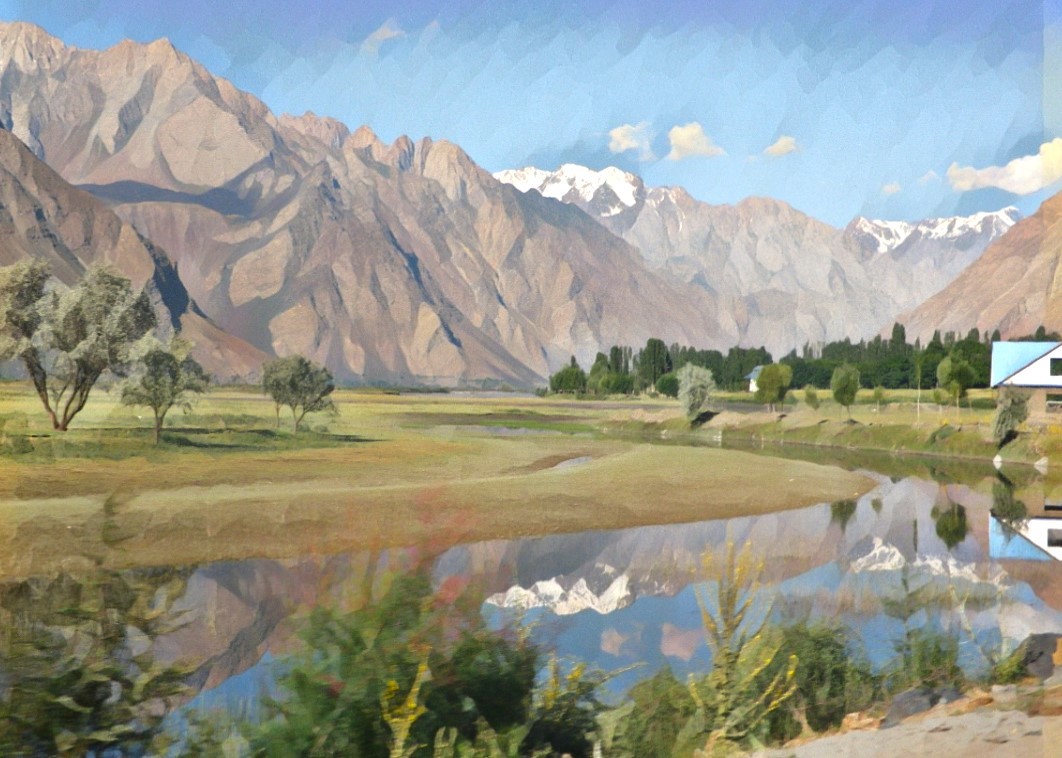
The border between Afghanistan and Tajikistan near Khorog, GBAO; image: TCA, Stephen M. Bland

Geo-Economics and Logistics: Afghanistan as a Strategic Hub

The regional reality in Central Asia is increasingly taking on a geo-economic dimension. The region is not only an arena for the interests of external powers but also a zone for developing transport, logistics, and energy networks in which Afghanistan is playing an increasingly prominent role.

Currently, four of the six corridors under the Central Asia Regional Economic Cooperation Program (CAREC) pass through Afghan territory, linking it with Tajikistan, Uzbekistan, and Turkmenistan.

Central Asian countries are paying special attention to infrastructure projects that, under favorable conditions, could reshape the region’s economic landscape. These include the Trans-Afghan railway, the Turkmenistan-Afghanistan-Pakistan-India (TAPI) gas pipeline, and the Central Asia-South Asia power project (CASA-1000).

What is particularly significant is that these projects are beginning to move beyond the conceptual stage.

Recently, the presidents of Kyrgyzstan and Tajikistan officially inaugurated the 500 kV Datka–Sughd transmission line, a key component of the CASA-1000 regional project. Over the next 15 years, both countries are expected to supply Afghanistan and Pakistan with 23 billion kWh of electricity through this line, marking a major step forward in regional energy cooperation.

The Trans-Afghan Corridor is also beginning to take shape. While its eastern route (via Kabul) faces engineering and financial challenges, the western path (Torgundi–Herat–Kandahar–Spin Boldak) is becoming more defined. The Afghan government recently signed five contracts with domestic companies to design a 737.5 km railway connecting Herat and Kandahar.

The “five-country corridor” initiative (China-Kyrgyzstan-Tajikistan-Afghanistan-Iran), which Tehran is trying to promote, also retains its potential. While it currently exists mostly on paper, the construction of a railway segment from Uzbekistan to Herat and its integration with the China–Kyrgyzstan–Uzbekistan (CKU) railway would give it practical value as part of a new Eurasian transport network.
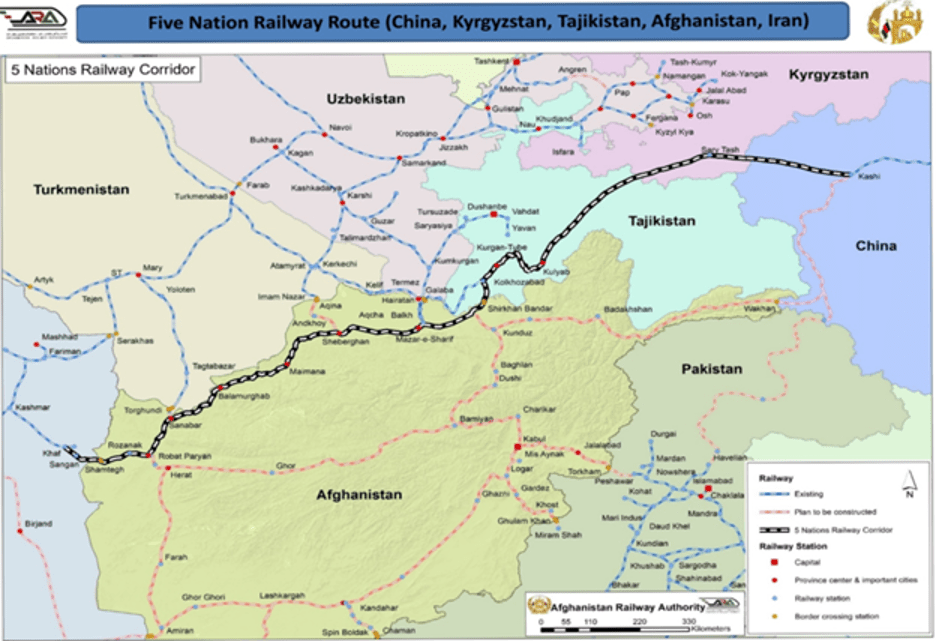
Image: Caspian Bulletin

The activity of neutral Turkmenistan in this area also deserves attention. Turkmenistan’s role in the “North-South” and “East-West” logistical intersections makes it one of the key operators in Eurasian traffic, including the Afghan direction. A connection is being formed through Iranian territory, with access to the ports of Bandar Abbas and Chabahar.

However, Ashgabat’s “flagship” project is the TAPI gas pipeline, designed to supply natural gas to countries with a total population of 1.75 billion. As President Berdimuhamedov stated, “Speaking about the TAPI gas pipeline project, I would like to emphasize its high social significance. According to experts, the construction of the pipeline and related infrastructure systems, new institutions, and enterprises will create 12,000 jobs in Afghanistan and solve several key humanitarian issues in the country.”

Alongside the implementation of the TAPI project, Turkmenistan is also building power transmission lines and an optical fiber communication system along the Turkmenistan-Afghanistan-Pakistan route. A 214-kilometer section of the pipeline has already been built in Turkmenistan. Last September, the construction of a 153-kilometer section from Serhetabad to Herat was launched. The construction is now ongoing in Afghanistan, where ten kilometers have already been built.

In addition to the countries of Central Asia, external actors are also showing interest in developing trans-Afghan routes. India, using the Iranian port of Chabahar, is seeking direct access to the markets of Afghanistan and Central Asia, bypassing Pakistan. This direction is seen by New Delhi as a strategic alternative to the China-Pakistan corridor.

Russia, in turn, links the development of Afghan logistics with the implementation of the International North-South Transport Corridor (INSTC), which connects Russia with Iran and then, via Chabahar, to South Asia. Integrating Afghan transit into this route can provide additional flexibility and a regional dimension to the INSTC.

All this opens up opportunities for transregional connections, where Afghanistan serves not as a point of fracture, but as a connecting link between South, Central, and Western Asia.

There is a political saying: “If you’re not at the Table, you’re on the Menu.” For Central Asia, participation in new corridors is not a choice but a matter of survival; either you are the route, or you are a transit territory without rights.

However, Afghanistan’s potential is not limited to transit. According to the U.S. Geological Survey (USGS), copper reserves at the Aynak deposit exceed 660 million tons of ore with a metal content of 1.67%, corresponding to about 11 million tons of copper. This makes it one of the largest undeveloped copper projects in the world. Iron ore reserves at Hajigak reach 2 billion tons with iron content up to 64%. Additionally, the USGS has recorded significant resources of lithium, beryllium, tantalum, and other rare earth elements, especially in the southwestern and northeastern provinces. According to their forecasts, Afghanistan could occupy a leading position in the world in terms of lithium potential.

However, despite the availability of these reserves, sectoral problems remain significant: lack of infrastructure, regulatory instability, absence of a transparent licensing distribution mechanism, and field commanders having control over mining operations. Due to these factors, the potential major industrial projects, Aynak and Hajigak, are essentially suspended. Despite this, an eventual wave of bidders is anticipated.

At the same time, smaller but more practically oriented projects are gaining momentum, including the construction of power grids and small hydropower plants, warehouses, and Afghan companies’ participation in agricultural programs. This is the level of cooperation where concrete solutions can be realized.

Thus, the development of Afghanistan’s infrastructure opens a window of opportunity. The country is transforming from a “buffer zone” into a geoeconomic link between Central, South, and Western Asia. At the same time, this is a space of high sensitivity: growing activity here requires coordination among the Central Asian countries to avoid duplication, enhance stability, and prevent rivalry.

Yes, Afghanistan remains a complex partner, but ignoring its geoeconomic link means losing a key element of the new Eurasian economic framework.

Of course, structural barriers remain, such as the Afghan-Pakistani conflict, lack of international recognition, and the sanctions regime. Nevertheless, the countries of Central Asia, with the support of their surrounding environment, continue to view Kabul as an important economic neighbor.

Security and Ideology: The Region’s Cautious Vigilance

Despite signs of stabilization within Afghanistan, the Central Asian states maintain a cautious stance on issues of security and ideological influence from the Taliban. Of particular concern are reports of the presence in Afghanistan of militants from transnational groups with a Central Asian orientation. Although the Taliban claims to have control over the situation, most regional experts acknowledge the long-term risks involved.

There is also some unease about the development of religious infrastructure, including a network of madrasas, including those known as “jihadist madrasas.” These institutions could potentially form an ideological base beyond Afghanistan’s borders.

Nevertheless, the Central Asian countries have avoided alarmism, focusing on dialogue and taking a realistic approach to the assessment of threats.

Afghanistan as Part of the Regional Consensus

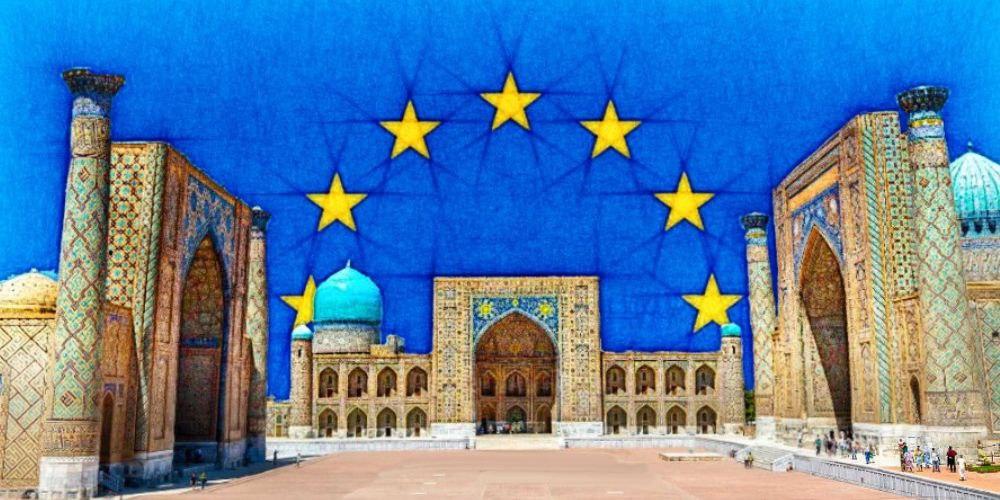
At the first “Central Asia – European Union” summit held in Samarkand, Afghanistan did not occupy a central position on the agenda. Nevertheless, in some speeches, the importance of a stable and engaged Afghanistan was emphasized, not so much as an object of foreign policy, but as part of the broader regional space.

In the final declaration, leaders reaffirmed their commitment to seeing Afghanistan as a “safe, stable, and prosperous state with an inclusive governance system that respects the human rights and fundamental freedoms of all its citizens,” including women, girls, and ethnic and religious minorities.

It is clear that the “gender issue” was included in the declaration at the initiative of the European side since the Central Asian republics have never focused on this problem. As previously reported by TCA, the emphasis on the “gender issue” is not quite what the Central Asian countries expect in the context of the Afghan resolution. For them, it is much more important to address pressing issues such as security, economic cooperation, and migration control, which directly affect stability in the region. This is why Central Asian countries prefer to focus on practical steps and avoid unnecessary politicization of issues that might complicate dialogue with the Taliban and worsen the situation in neighboring Afghanistan.

In this regard, the position of the EU and Central Asian countries on women’s and girls’ rights, as reflected in the Samarkand declaration, should be seen as only “generally aligned.”

The declaration also established a mechanism for regular consultations on the Afghan agenda, stating: “We support the holding of regular consultations between the special representatives and envoys of Central Asian countries and the EU on issues related to Afghanistan.”

These consultations will help adapt regional policy to the new reality where this is no official recognition of the Taliban, but an understanding that, de facto, they are a key link in ensuring access to humanitarian aid and preventing cross-border threats.

Earlier at the Samarkand meetings, President Shavkat Mirziyoyev of Uzbekistan emphasized in an interview with Euronews that Afghanistan remains one of the priorities of the country’s foreign policy. According to him, the Uzbek approach has always been based on pragmatism and a focus on long-term goals, rather than ideological preferences. Mirziyoyev also noted that “many who disagreed with our policy on Afghanistan are now forced to acknowledge its correctness and inevitability,” referring, among other things, to international partners.

These statements reflect not only Uzbekistan’s position but also illustrate the overall shift in the perception of Afghanistan by the Central Asian states.

Kazakhstan has demonstrated the same approach. Since the Taliban came to power, President Kassym-Jomart Tokayev has consistently emphasized the need for a multilateral and balanced approach to the Afghan issue. His speeches focus on the integration of Afghanistan into regional and international processes. Kazakhstan supports the international community’s efforts, including under the UN’s auspices, to stabilize the situation, provide humanitarian aid, and launch infrastructure projects. Thus, Kazakhstan is developing a concept of “positive neutrality,” where Afghanistan is seen not as an isolated threat but as a potential partner and a key element of regional stability.

Against this backdrop, it becomes evident that a coordinated and pragmatic approach to the Afghan dossier has emerged in Central Asia. Even countries that previously held more rigid positions, in particular, Tajikistan, are now demonstrating increasing flexibility, both in official statements and in practical cooperation. The focus of the regional approach is gradually shifting from isolation and fears to economic ties, infrastructure, and a shared future that is in the interests of all the countries in the region.

Crossroads

Afghanistan has already become an integral factor in the stability and security of Central Asia. Pragmatic, cautious, and consistent interaction is the formula that the countries of the region are applying to their southern neighbor today.

A stable Afghanistan is not an end goal, but a condition for the long-term development and enhancement of Central Asia’s independent regional position in a changing world through the strengthening of ties and reduction of threats.

History has repeatedly tried to turn this region into a battleground for external interests, the so-called “Great Game.” However, at the current moment, Central Asia has the opportunity to not just react to the plans of outside powers but to implement its own. Afghanistan, no matter how complex and contradictory it may be, can become part of this shift, not as a threat but as an opportunity. It all depends on by who and how the future of the region is managed.

Thus, Central Asia is not a battleground; it is a crossroads, and crossroads have their own rules.
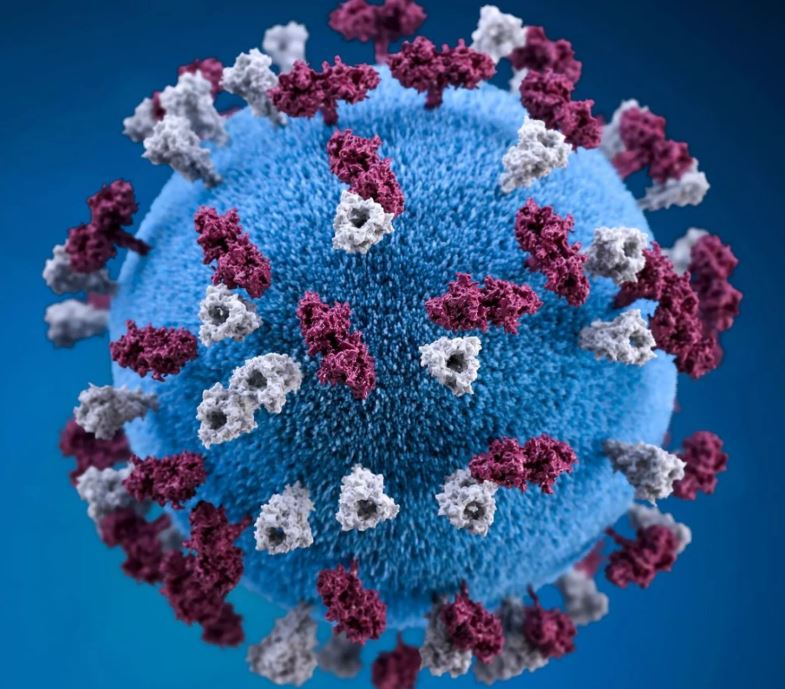

Kyrgyzstan Among Countries with Highest Number of Measles Cases

The measles virus is spreading in many parts of the world, and Kyrgyzstan is among the nations experiencing a surge in cases as health officials conduct an immunization drive despite vaccine skepticism among some people.

A total of 5,168 measles cases had been registered across the Central Asian country as of April 10 this year, in what the Ministry of Health described as an “acute” situation.

Some 1,777 vaccination clinics operate across Kyrgyzstan at a primary healthcare level and in maternity hospitals, and mobile teams carry out vaccinations in remote areas as well as among migrants in new settlements in the capital, Bishkek, according to the ministry. One UNICEF-supported nurse has traveled on horseback to deliver measles vaccines on remote farms in the mountainous country.

“Every year, up to 20,000 people refuse to get vaccinated. The main reasons for refusal are religious beliefs — 43%, doubts about the safety and effectiveness of vaccines — 45%. This leads to the spread of vaccine-preventable diseases,” the ministry said. It also stated that unvaccinated citizens, mainly preschool children, could be temporarily barred from educational institutions in the event of an epidemic or the threat of one.

Health experts say a decline in immunization is contributing to a rise in global measles cases this year.

The U.S. Centers for Disease Control and Prevention said that, as of April 10, a total of 712 confirmed cases of the airborne, highly contagious disease had been reported in the United States this year, compared to 285 cases that were reported last year. The greatest concentration of cases this year is in Texas. Officials declared the disease to be eliminated in the U.S. in 2000.

Yemen, India, and Pakistan have the world’s highest numbers of reported measles cases in the last six months, according to an April report by the World Health Organization. Kyrgyzstan, which has a population of about seven million, has the seventh highest number of cases in the WHO data.

Kyrgyzstan’s healthcare system is likely under a lot of strain because of the surging measles cases, the International Federation of Red Cross and Red Crescent Societies said in March, stating that the deaths of two children had been reported.

“Hospitals, clinics, and health professionals are overwhelmed with the high number of patients, leading to longer waiting times, limited resources, and increased workload for medical staff,” the federation said.

Turkmen Nationals in Belarus Investigated Over Alleged Migration Scheme

Belarusian authorities have launched a criminal investigation into an alleged illegal migration network that reportedly involved hundreds of Turkmen citizens residing in the country, according to a report by state news agency BELTA.

The investigation centers on a scheme allegedly orchestrated by three taxi company owners in Minsk. Since 2022, four companies officially registered as taxi service providers were involved in operations that enabled foreign nationals, primarily from Turkmenistan, to obtain temporary residence permits using falsified documents.

The business owners, aged between 30 and 38, are accused of hiring foreign nationals on paper to facilitate their acquisition of legal status. Investigators say the suspects collaborated with three intermediaries, themselves undocumented migrants, who advertised the scheme in online chat groups. These groups promised an easy path to legal residency, bypassing official procedures and bureaucracy.

According to law enforcement, the operation offered two main methods for obtaining documents. The first involved issuing fake job invitations that prospective migrants could use at Belarusian embassies in Turkmenistan when applying for a visa. The second relied on falsified employment contracts, which migrants then submitted to local migration offices to obtain legal residence.

The scheme came to light following coordinated searches at the suspects’ homes and company offices. Authorities seized computers, documents, and other evidence now under review. The suspects, who have been taken into custody, are cooperating with investigators and have reportedly admitted to charging $150 per visa, along with monthly payments from clients seeking to remain in Belarus.

The investigation remains ongoing. Belarusian authorities are currently verifying the legal status of all foreign nationals who utilized the services of the implicated companies.

Central Asia: An Arena of Geopolitical Attraction

Though 2025 is not yet at its halfway point, Central Asia has already emerged as one of the primary stages of global diplomatic engagement. Rich in natural resources and strategically positioned between global powers, the region has attracted increasing interest from the European Union, China, Russia, and others. Kazakhstan, Uzbekistan, and their neighbors are asserting greater agency, pursuing multi-vector foreign policies, and striving to capitalize on evolving geopolitical dynamics.

EU-Central Asia: A New Chapter

Amid regular annual meetings, a landmark event this year was the inaugural EU-Central Asia Summit, held in Samarkand, Uzbekistan, on April 3-4. Leaders of all five Central Asian states met with European Council President António Costa and European Commission President Ursula von der Leyen. Discussions centered on infrastructure development, including the Trans-Caspian route, digitalization, energy security, and water resource management. The summit concluded with a pledge to sign an Enhanced Partnership and Cooperation Agreement.

This meeting was facilitated by a reconfiguration of global alliances. U.S. President Donald Trump’s new tariff policies and the evolving relationship between Washington and Moscow have led European leaders, unwilling to restore ties with Russia, to seek new partnerships. Central Asia, with its strategic position and investment potential, is increasingly appealing.

Kazakhstan and Uzbekistan, the region’s economic leaders, are particularly eager to attract foreign capital. The EU represents a possible source, though Russian analysts remain skeptical about Europe’s ability to dislodge Russian and Chinese influence. For instance, Mikhail Neizhmakov of the Russian Agency for Political and Economic Communications noted that while von der Leyen spoke of a €12 billion Global Gateway investment package, China is the largest exporter of investment in the Eurasian region, with accumulated direct investment of $58.6 billion at the end of the first half of 2024, according to the Eurasian Development Bank.

Security Discourse and Russian Narratives

In addition to the EU summit, the region hosted other key diplomatic events, such as the Digital Forum in Almaty earlier this year, which was attended by Russian Prime Minister Mikhail Mishustin. Another major gathering was the CIS Council of Foreign Ministers, held on April 11, also in Almaty. Ministers approved a 2025 consultation plan and adopted joint statements on regional security, humanitarian cooperation, and opposition to unilateral sanctions.

Kazakhstan: A Regional Diplomatic Hub

Kazakhstan has so far distinguished itself as Central Asia’s foremost diplomatic player in 2025, hosting high-level visits and spearheading regional engagement. In January, Prime Minister Mishustin visited Astana and Almaty. February saw King Abdullah II of Jordan meet with President Kassym-Jomart Tokayev to discuss investment and humanitarian cooperation.

In March, President Tokayev welcomed his Slovenian counterpart, Nataša Pirc Musar, who expressed interest in expanding bilateral trade. French President Emmanuel Macron is also preparing to visit Kazakhstan later this year, reinforcing France’s strategic interest in the region. In June, meanwhile, Chinese President Xi Jinping is scheduled to attend the second Central Asia-China Summit in Astana, where trade and investment will top the agenda.

Navigating a New Geopolitical Order

Today, Central Asia represents a vital intersection of East and West. The region’s intensifying foreign policy engagements reflect both a reaction to global instability and a proactive push to craft a resilient development model, one based on diversified partnerships and strengthened regional collaboration.

Leaders in Kazakhstan and Uzbekistan continue to demonstrate pragmatic, flexible diplomacy, seeking to avoid overreliance on any single global power while bolstering their regional and international influence. In a world increasingly defined by geopolitical turbulence, Central Asia is steadily transitioning from a passive periphery to an active player on the global stage.

How Kazakhstan Revives National Traditions Through Cinema

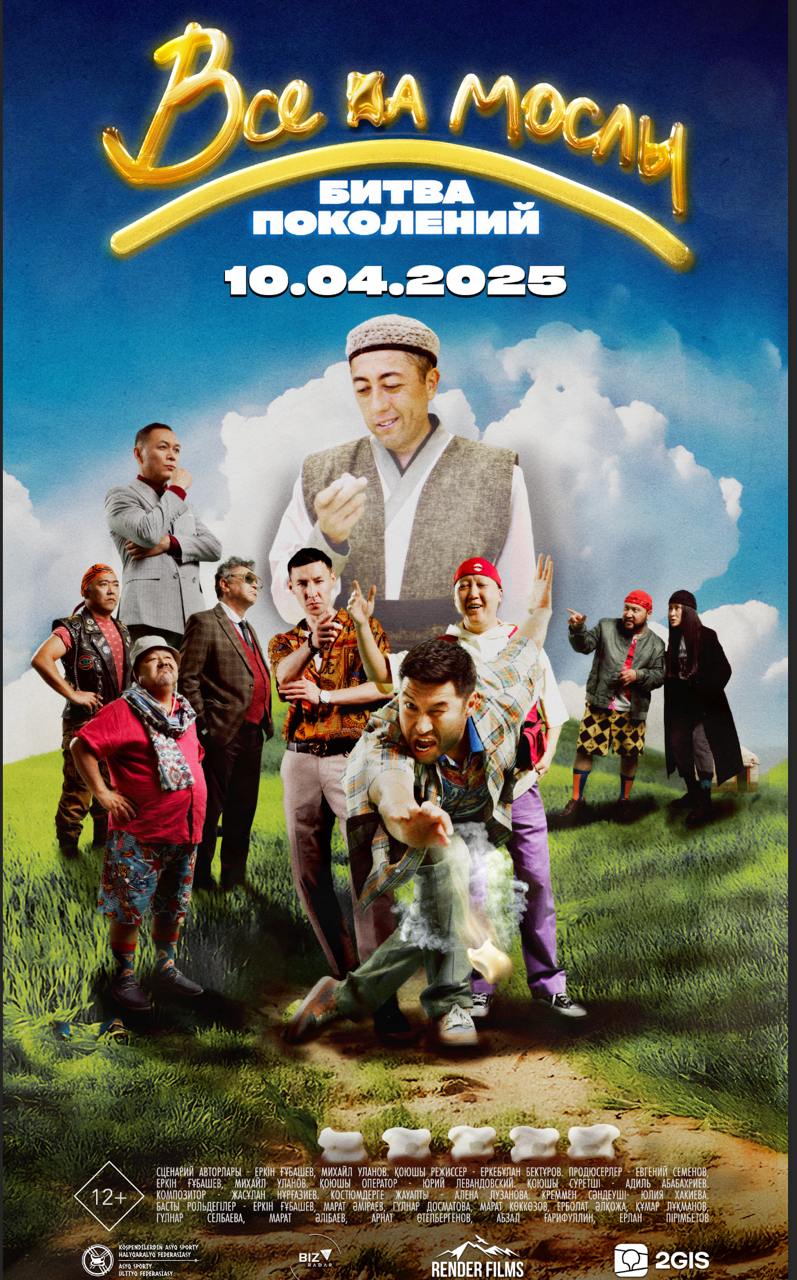
At a recent press screening of the Kazakhstani fantasy comedy All on Mosles: Battle of the Generations, the audience laughed, applauded and, perhaps most tellingly, relived childhood memories. Some even left wanting to play asyki again.

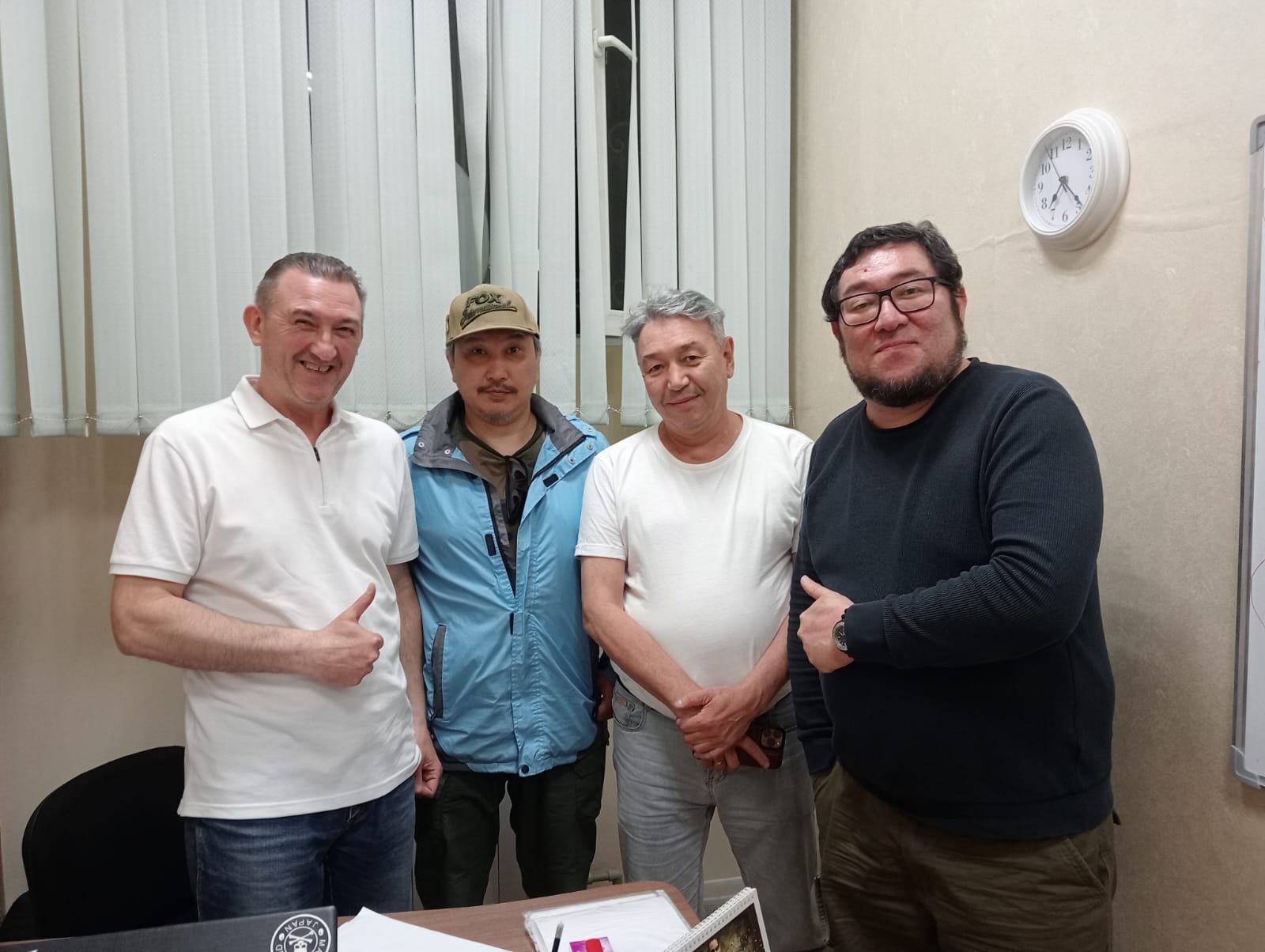
The film’s creators achieved what seemed nearly impossible: they transformed an almost forgotten traditional game into a vibrant cinematic adventure appealing to both adults and children. The Times of Central Asia spoke with the film’s authors, Yerken Gubashev, Yerkebulan Bekturov, and Mikhail Ulanov, about how the project came to life, the challenges they encountered, and why asyk atu is more than just a game.

Now showing across Kazakhstan, the film centers on asyk atu, an ancient game where players aim to knock opponents’ asyk (ram’s knuckle bones) from a designated area using a special, often weighted and decorated, throwing asyk known as a sak. Popular across Soviet Kazakhstan until the 1990s, the game has since been revived by cultural activists. Today, asyk atu is included on UNESCO’s Representative List of the Intangible Cultural Heritage of Humanity.

Image: TCA, Askar Kubaizhanov

TCA: Tell us about your film. How did the idea come about?

Yerken Gubashev: I was really the initiator of the whole project. I co-wrote the script, co-produced the film, and played one of the lead roles. But more than that, it was my dream to bring asyki back and turn them into something grand.

Watching my son and his friends sitting on the street, absorbed in their phones, was tough. When we were kids, asyki was real life. We played for hours, competing, learning dexterity, patience, and respect. I started imagining a world where asyki was the number one sport, with world championships and a whole culture surrounding it. I shared the idea with Yerkebulan and Mikhail, and we couldn’t stop.

Mikhail Ulanov: We began to imagine: What if asyks could fly? What if each player had a unique technique? What if one could come to life or transform into a weapon? From this, a fantastical world emerged, rooted in tradition but filled with comedy, fantasy, and even superhero parody.

Yerkebulan Bekturov: We shaped the film to resonate with modern youth: short, dynamic scenes, sharp transitions, and vivid visuals. Yet it tells a complete story. We believe it will appeal not just to Kazakhstani audiences but also internationally. There are lots of nods to Hollywood, The Gentlemen, Kill Bill, and others, which helps bridge cultures.

TCA: The film isn’t just entertainment, is it? Is there a cultural mission here?

Yerken Gubashev: Absolutely. Our goal is to bring asyki back to the playgrounds so kids share, compete, and step away from social media. More broadly, it’s about reconnecting with our roots. Kazakh traditional culture is rich but underrepresented in cinemas. Importantly, asyki isn’t only Kazakh, it’s a Turkic game played by Uzbeks, Kyrgyz, Bashkirs, Tatars, Yakuts, and even in the Caucasus. It’s a vast cultural universe that unites Turkic peoples. Today, even the U.S., Norway, and Finland have national teams. A global championship in a decade isn’t far-fetched, asyk atu is already part of the World Nomad Games.

Mikhail Ulanov: Kazakhstan is a multiethnic country, but Kazakh culture has always been a unifying thread. Through cinema, we can remind people of the values that connect us. We’re confident the film will resonate beyond Kazakhstan.

TCA: How can your project help popularize nomadic culture and raise Kazakhstan’s international profile?

Mikhail Ulanov: Someone once told us, “Your asyks fly, your characters have superpowers.” Yes, they do! But think of kung fu movies where masters float across water or leap between treetops. It’s fantasy, but it captivates audiences and inspires martial arts practice. If we can present asyki in a visually engaging way, even with fantasy, it becomes a cultural trigger.

Yerken Gubashev: Take beshbarmak, for example. Someone tries it, enjoys it, then wants to learn more about our language, culture, and traditions. I grew up on karate films and soon wanted to know how the Japanese lived. Today, visual culture, movies, streaming, screens, is our main portal into new worlds.

Mikhail Ulanov: A friend’s daughter started with Japanese manga, ended up learning the language, and now studies in Japan. It all began with a picture. Why not imagine that someone watches our film and decides to visit Kazakhstan, to play asyki, explore the culture, maybe even meet a real-life Mugalim, the guardian of ancient asyk atu secrets.

TCA: But for the film to have such an impact, it must be seen; that’s a question of distribution, right?

Yerken Gubashev: Exactly. The hardest part is getting it to audiences. Kazakhstan’s film market is highly commercialized. If a film doesn’t turn a quick profit, it vanishes. Even culturally valuable projects lose out to those with bigger advertising budgets. It’s not about quality, it’s about reach. Many great films are simply crowded out.

Take Adilkhan Yerzhanov. His work is celebrated at Cannes, Berlin, and Venice. In France, audiences gave him standing ovations. But in Kazakhstan, silence. No commercial success. It’s a Van Gogh paradox: unrecognized at home, lauded abroad. We don’t want our films to follow that path.

Image: TCA,Askar Kubaizhanov

TCA: What challenges did you face in getting your film to screens?

Yerkebulan Bekturov: Enormous ones. Local distributors compete intensely, which hurts filmmakers. Projects backed by major corporations get resources, advertising, and guaranteed screenings. Independent films like ours, made from the heart but without financial muscle, often never reach the public.

TCA: Still, Kazakh cinema seems to be in a period of growth. What’s fueling this renaissance?

Yerkebulan Bekturov: It’s amazing. Ten years ago, this would’ve been unthinkable. Last year saw 92 domestic releases; over 100 are expected this year. Interestingly, state funding has dropped below 5%; most films are privately financed. Two major players now dominate: Kinopark/Tiger Films, with strong infrastructure, and social media, which mobilizes online fanbases to draw viewers from streaming to the cinema. It’s a successful model that’s catching international attention.

TCA: How essential is government support for national cinema?

Yerkebulan Bekturov: It’s not just about money. Government support can also mean regulation. Even with private cinema networks, the state could help by negotiating quotas for cultural or festival films, ensuring they get decent time slots and reach audiences. Production is booming, but cinema space is limited. The fight for screens is fierce.

Mikhail Ulanov: State investment in infrastructure, not just as a financier, but as a regulator and facilitator, would be a game-changer. Especially in regions where cinemas are scarce. Cinema should entertain, yes, but also educate, inspire, and shape cultural taste, not by force, but by offering alternatives.

Kazakh Scientists Unveil Advanced Organ Storage Technology at Expo 2025

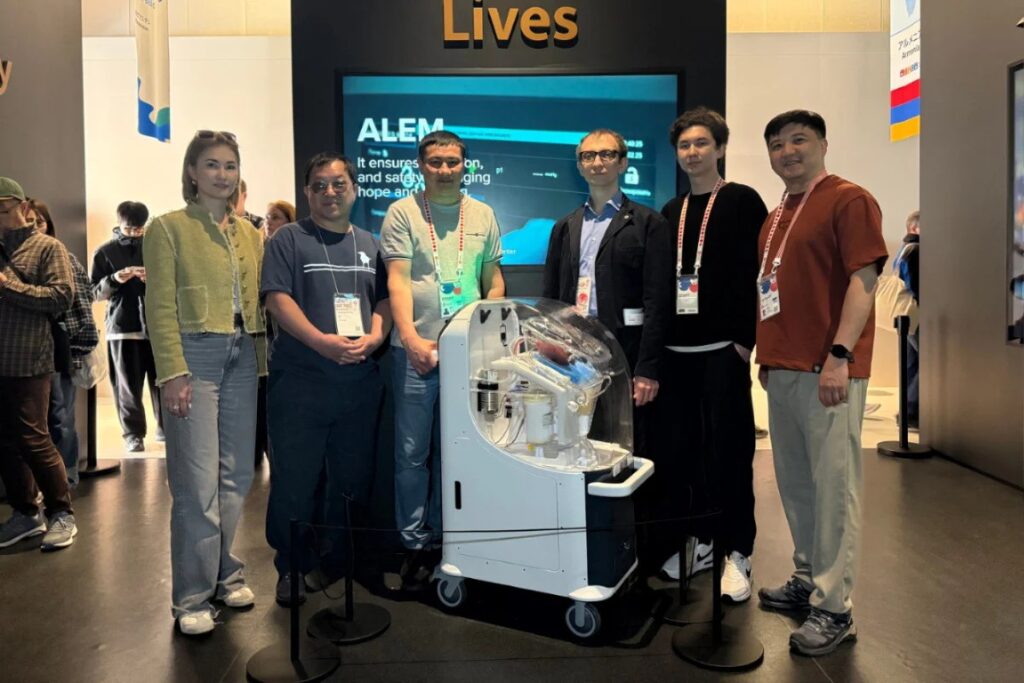
A team of Kazakhstani doctors from the UMC Heart Center, led by renowned cardiac surgeon Yuri Pya, presented a groundbreaking development at the World Expo 2025 in Osaka, Japan: ALEM, a device designed for long-term preservation of donor organs.

Developed with the support of the Heart Center Foundation, ALEM (Astana Life Ex-situ Machine) addresses a pressing issue in Kazakhstan’s vast geographical context, ensuring timely and effective delivery of donor organs across long distances.

Extending the Viability of Life

The ALEM device can keep a donor heart viable for more than 24 hours by replicating conditions inside the human body, including maintaining precise temperature, oxygen levels, and vital functions. This significantly extends the traditional preservation window of 4-6 hours, offering new potential for transplantation logistics and success rates.

From Emergency to Innovation

The idea for ALEM was born from necessity. As Pya recalls, “We had a difficult situation, due to weather conditions we couldn’t get a donor heart in time. Then the idea arose to create our own system, more affordable and perhaps even more effective.”

The device was developed through interdisciplinary collaboration among cardiac surgeons, anesthesiologists, and engineers. It has already passed preclinical trials on animals and is now preparing for the next phase: clinical testing.

More Than Preservation

According to Timur Lesbekov, director of the Heart Center’s cardiac surgery department, ALEM offers not only preservation but also therapeutic potential. “This product can be called a breakthrough. To sustain an organ for more than a day is a great achievement. Importantly, the system can also treat organs before transplantation,” he said.

Developers hope that showcasing ALEM at Expo 2025 will attract international attention and foster collaboration in the field of transplantology. “This is a historic moment for Kazakhstan,” said Murat Zauyrov, director of the Heart Center Foundation. “It’s the first time we are presenting a major medical innovation on such a global stage. Our aim is to contribute to global medical progress.”

Kazakhstan’s Transplant Challenges

Kazakhstan currently needs around 10 transplants per million residents annually, according to Pya. Since 2012, 100 heart transplants have been performed, a modest number, but each representing a life saved. “It’s not just a surgery. It’s a complex operation involving air ambulances, police, and coordination across at least five ministries,” he emphasized.

Plans are underway to begin serial production of the ALEM device in Astana, which would position Kazakhstan among a select group of countries with a domestically developed system for long-distance organ transport.

Expo 2025: A Global Stage for Innovation

Expo 2025 in Osaka features participation from 158 countries and nine international organizations. ALEM is on display at the Kazakhstan Pavilion in the “Connecting Lives” zone under the broader theme “Creating a Future Society for Our Lives”.

Kazakhstan’s pavilion, designed in the shape of a traditional shanyrak, was presented alongside exhibitions from South Korea, Germany, and Turkey. The opening ceremony was attended by Japanese Emperor Naruhito and Prime Minister Shigeru Ishiba, with Kazakhstan’s delegation led by Minister of Trade Arman Shakkaliev.