• KGS/USD = 0.01144 0%
  • KZT/USD = 0.00212 0%
  • TJS/USD = 0.10456 0.19%
  • UZS/USD = 0.00008 0%
  • TMT/USD = 0.28490 0%
  • KGS/USD = 0.01144 0%
  • KZT/USD = 0.00212 0%
  • TJS/USD = 0.10456 0.19%
  • UZS/USD = 0.00008 0%
  • TMT/USD = 0.28490 0%
  • KGS/USD = 0.01144 0%
  • KZT/USD = 0.00212 0%
  • TJS/USD = 0.10456 0.19%
  • UZS/USD = 0.00008 0%
  • TMT/USD = 0.28490 0%
  • KGS/USD = 0.01144 0%
  • KZT/USD = 0.00212 0%
  • TJS/USD = 0.10456 0.19%
  • UZS/USD = 0.00008 0%
  • TMT/USD = 0.28490 0%
  • KGS/USD = 0.01144 0%
  • KZT/USD = 0.00212 0%
  • TJS/USD = 0.10456 0.19%
  • UZS/USD = 0.00008 0%
  • TMT/USD = 0.28490 0%
  • KGS/USD = 0.01144 0%
  • KZT/USD = 0.00212 0%
  • TJS/USD = 0.10456 0.19%
  • UZS/USD = 0.00008 0%
  • TMT/USD = 0.28490 0%
  • KGS/USD = 0.01144 0%
  • KZT/USD = 0.00212 0%
  • TJS/USD = 0.10456 0.19%
  • UZS/USD = 0.00008 0%
  • TMT/USD = 0.28490 0%
  • KGS/USD = 0.01144 0%
  • KZT/USD = 0.00212 0%
  • TJS/USD = 0.10456 0.19%
  • UZS/USD = 0.00008 0%
  • TMT/USD = 0.28490 0%

IMF Forecasts Slower Growth for Kyrgyzstan, While Authorities Project Higher Rates

The International Monetary Fund (IMF) expects Kyrgyzstan’s economic growth to slow to 6.8% in 2025, even after strong performance in the first half of the year. In its latest report, the IMF projects medium-term growth to stabilize at 5.2%. By contrast, Kyrgyz authorities remain bullish, forecasting GDP growth of 8.5-9% by year-end.

According to the National Statistical Committee, Kyrgyzstan’s GDP expanded by more than 12% between January and May 2025, with preliminary figures placing the economy’s value at 573 billion KGS (approximately $6.5 billion).

Reflecting this momentum, the National Bank of Kyrgyzstan recently revised its growth forecast upward from 8% to 9%. The central bank attributed this adjustment to accelerated investment activity, rising household incomes, and stronger domestic demand. Growth is being driven by key sectors such as manufacturing, trade, and construction, bolstered by proactive fiscal measures and robust business activity.

Diverging Forecasts and Economic Narratives

While acknowledging the resilience of Kyrgyzstan’s economy amid global volatility, the IMF maintains a more cautious outlook. Its report highlights a decline in inflation to single-digit levels and improvements in public debt management, both of which create fiscal space for critical investments in infrastructure, energy, and human capital.

“In the medium term, growth is expected to approach its potential of 5.2% as re-export trade normalizes. However, the economic outlook remains sensitive to geopolitical risks. Strengthening fiscal buffers and implementing structural reforms remain priorities for the country,” the IMF noted in a statement.

This divergence in outlook is not new. In 2023, then Prime Minister Akylbek Japarov famously wagered with World Bank Chief Economist Hugh Riddell that GDP growth would exceed 7%. Japarov ultimately won the bet, as the actual performance validated his projection, despite widespread skepticism.

Experts Weigh In

Economist Nurgul Akimova attributes the differing forecasts to contrasting methodologies. “International organizations use standardized models that consider macroeconomic indicators, institutional stability, and vulnerability to external shocks,” she explained. “Kyrgyz authorities, by contrast, often base their projections on optimistic assumptions about investment inflows, export expansion, and remittances.”

Akimova also highlighted the political motivations behind domestic forecasts. “Official estimates serve to project confidence, both to the public and to investors. However, overly optimistic projections can obscure risks and complicate fiscal planning.”

“In the short term, the government can often meet its targets by mobilizing domestic resources. But in the long run, IMF forecasts tend to be more accurate as they account for both internal and external vulnerabilities,” she concluded.


UK Organization to Launch Social-Emotional Education Programs for Uzbek Children

The UK-based non-profit organization Think Equal is preparing to launch social-emotional education programs for young children in Uzbekistan, according to a report from the Dunyo Information Agency.

The initiative was announced following a meeting at the Uzbek Embassy with Think Equal founder and executive director, Leslee Udwin. During the discussion, Udwin presented the organization’s educational model, which is designed to foster empathy, emotional literacy, self-regulation, critical thinking, and peaceful conflict resolution skills in early childhood.

The program targets children aged 3 to 6 and is already in use in several countries, including India, Kenya, Canada, Australia, South Africa, Mexico, Singapore, and the United Kingdom. The 30-week curriculum features three 30-minute lessons per week and employs illustrated books, activity guides, and interactive games to teach emotional and relational skills.

At the conclusion of the meeting, attendees expressed support for holding a follow-up session with Uzbekistan’s Ministry of Preschool and School Education to explore a potential partnership.

Regional Focus on Child Wellbeing

The announcement comes amid broader efforts to improve child welfare across Central Asia. Last month, the “Dialogue for Children: Central Asia and UNICEF” conference in Tashkent spotlighted regional cooperation in pediatric care.

Health ministers from Kazakhstan and Uzbekistan discussed initiatives to expand collaboration, with Kazakhstan proposing the establishment of an international academic hub for childhood cancer treatment and announcing the opening of a new Proton Therapy Center in Astana. The facility is expected to treat up to 800 patients annually and will be accessible to children from Uzbekistan, including those from the autonomous Republic of Karakalpakstan.

Kazakhstan to Invest $15 Billion in Oil and Gas Chemical Industry Development

Kazakhstan is set to invest $15 billion in its oil and gas chemical sector through six major projects aimed at shifting the economy from raw material exports to high-value industrial production. The initiative was announced by Temirlan Urkumbaev, Director of the Oil and Gas Chemistry Department at the Ministry of Energy, during the Power Central Asia + China forum.

Flagship Projects Underway

One of the cornerstone projects is already operational: an integrated gas chemical complex for polypropylene production by Kazakhstan Petrochemical Industries Inc. (KPI), launched in 2022 in the Atyrau region. The facility processes raw materials from the Tengiz field and has a production capacity of 550,000 tons of polypropylene per year. In 2024 alone, it produced around 250,000 tons, spanning 12 grades of polypropylene. The project’s total cost was $2.6 billion.

The second major project, a polyethylene plant with an annual capacity of 1.25 million tons, began construction in late 2024 within the National Industrial Petrochemical Technopark special economic zone (SEZ), also in Atyrau. To date, 49% of preparatory work has been completed. The plant’s launch is scheduled for 2029, with an estimated investment of $7.4 billion. It is expected to produce over 20 grades of polyethylene, 40% of which will be premium grade.

“Excavation work for the pyrolysis unit has already started,” Urkumbaev stated. “International partners such as SIBUR, Sinopec, and EPC contractors including Tecnimont, Técnicas Reunidas, and Hyundai Engineering are involved. Their participation ensures compliance with global engineering and environmental standards.”

Cluster Development and Strategic Goals

Additional projects are being developed to produce butadiene, urea, and other products essential to agriculture and industry. All will be situated within the same SEZ, which spans over 3,600 hectares and offers tax incentives and established infrastructure. Currently, 18 companies are operating in the zone.

According to Urkumbaev, the creation of an integrated oil and gas chemical cluster will generate over 19,000 new jobs and marks a strategic pivot from resource extraction to the production of high-tech goods with greater added value.

“The era when Kazakhstan was seen primarily as a raw materials supplier is drawing to a close. We are building a new, more sustainable economy. The development of oil and gas chemistry is a path toward deeper resource processing, enhanced scientific capacity, and a stronger position in the global market,” he said.

Government Commitment to Petrochemical Growth

Oil and gas chemistry has been designated a strategic priority by the Kazakh government. Almasadam Satkaliyev, now head of the Atomic Energy Agency and formerly Minister of Energy, previously underscored the importance of redirecting liquefied hydrocarbon gas from transportation use to the petrochemical industry.

Proton Plans to Launch Electric Vehicle Production in Kazakhstan

Malaysian automotive manufacturer Proton Holdings Berhad is exploring the possibility of launching electric vehicle (EV) production in Kazakhstan. The announcement followed a meeting between Proton representatives and Yersayin Nagaspayev, Kazakhstan’s Minister of Industry and Construction.

Proton, Malaysia’s largest automotive group, began operations in 1985 by producing cars under license from Mitsubishi. Since the late 1990s, the company has developed its own models, including the e.MAS line of electric vehicles, which it now proposes to localize in Kazakhstan.

“The company presented plans to produce electric cars under the e.MAS brand. Discussions focused on potential production sites, export opportunities, and ensuring compliance with the technical and environmental standards of the Eurasian Economic Union (EAEU),” the Ministry of Industry and Construction reported.

Following the meeting, the parties agreed to establish a joint working group tasked with developing a roadmap for localizing production and launching joint investment projects.

Kazakhstan’s Growing Automotive Sector

Minister Nagaspayev highlighted that more than 134,000 passenger cars were produced in Kazakhstan in 2024. Major international brands, including KIA, Hyundai, Chevrolet, JAC, and Jetour, are already manufacturing in the country. In 2025, two new automotive plants are scheduled to open in Almaty and Kostanay, with a combined annual capacity of up to 190,000 vehicles.

The EV segment is currently the fastest-growing portion of the Kazakh automotive market. According to the Association of the Automobile Industry of Kazakhstan (AKAB), the number of registered electric vehicles grew from about 1,500 in early 2023 to 3,200 by the end of that year. As of May 2025, that figure has surged to 9,400.

This rapid growth is attributed in part to a government policy introduced in 2023 that exempts citizens from import duties and taxes on one electric vehicle per person, valid through the end of 2025. Analysts also cite rising oil prices and the expansion of EV charging infrastructure as key drivers of demand.

As previously reported by The Times of Central Asia, Kazakhstan is on track to produce approximately 150,000 vehicles in 2025, a record for the country.

Kazakh Doctors Among Lowest Paid in Economy

As Kazakhstan marks Medical Workers’ Day, celebrated annually on the third Sunday of June, new data highlights the challenging financial reality for those in the healthcare sector. According to a recent report by Energyprom.kz, medical professionals remain among the lowest-paid workers in the country.

Healthcare Among Lowest-Paid Sectors

In the first quarter of 2024, the average monthly nominal salary in Kazakhstan’s “Health and Social Services” sector stood at 312,800 tenge (approx. $605), according to the National Statistics Bureau. This figure is 26.1% lower than the national average across all economic sectors.

Healthcare ranks among the bottom five sectors for wages, joined by agriculture (248,900 KZT / $481), culture and arts (284,900 KZT / $551), and education (302,400 KZT / $584). Utility services also report low salaries at around 286,000 KZT ($553).

This is not a new trend: the healthcare sector has remained at or near the bottom of the wage rankings for over two years. In 2021, it ranked tenth from the bottom. By contrast, the mining industry leads with an average salary of 981,400 KZT ($1,898), followed by IT (859,800 KZT / $1,663) and finance and insurance (855,500 KZT / $1,654).

Post-Pandemic Stagnation

While healthcare salaries surged during the COVID-19 pandemic, growing 20-30% annually in 2020-2021, wage growth has since slowed markedly. Since 2022, real income growth has remained modest, peaking at 2.3%, with some quarters seeing declines of up to 4.6%.

Since 2019, nominal wages in healthcare have more than doubled, rising from 133,500 KZT ($258) to 315,400 KZT ($610). Yet, once inflation is factored in, the gains appear far less significant.

Analysts stress that nominal wages only provide a partial picture. In 2023, the median salary in healthcare was 250,700 KZT ($485), compared to a national median of 285,700 KZT ($553). The modal (most common) wage in healthcare was even lower.

Income Disparities Within the Profession

There is considerable wage variation among medical specialties. In 2024, the average monthly salaries were as follows:

  • Therapists: 460,200 KZT ($890)
  • Pediatricians: 425,900 KZT ($824)
  • Surgeons: 505,700 KZT ($978)
  • Cardiologists: 475,000 KZT ($919)

At the upper end of the spectrum, an interventional arrhythmologist, who performs pacemaker implantations, earns around 1.1 million KZT ($2,128) per month. Embryologists (IVF specialists) and cardiac surgeons also command high salaries, averaging 860,100 KZT ($1,664) and 768,800 KZT ($1,487), respectively.

Conversely, specialists in support roles often earn significantly less. Parasitologists receive around 200,000 KZT ($387), and occupational health physicians average 210,000 KZT ($406). Other low-paid professions include massage therapists, nurses, forensic medical experts, and microbiologists.

XI Jinping’s Five Points: How China Is Looking To Reshape Central Asia

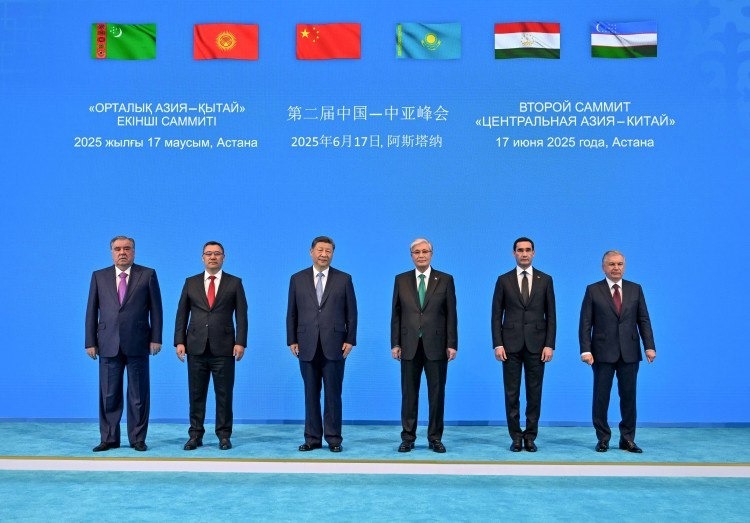
The second China-Central Asia summit on June 17, held in Astana, Kazakhstan, underscored the strengthening ties between China and the region. This event marked a significant milestone in solidifying the China-Central Asia cooperation framework with the signing of the Treaty on Eternal Good-Neighborliness, Friendship, and Cooperation. Experts note that Central Asian countries, once unable to adopt an intra-regional treaty, collectively reached this broader agreement with China.

The summit also featured a range of side events, including the Energy Forum “Energy of Central Asia – China,” the Forum on Humanitarian Exchange, the Second Forum on Industrial and Investment Cooperation, and the Central Asia-China Business Council meeting, among others. These gatherings highlighted cooperation in energy, trade, and cultural exchange, reflecting China’s deepening influence in the region.

Kazakh President Kassym-Jomart Tokayev praised China’s approach to equal partnership, stating that relations between the two nations are “stable and free from the negative impacts of geopolitical challenges and shocks as well as the international circumstances. China has never imposed any political conditions regarding cooperation with Kazakhstan.”

“This is a very important point, Kazakhstani Sinologist Adil Kaukenov explained, “as the head of state, being at the forefront of Kazakhstan’s foreign and domestic policies, faces political games, manipulation, and pressure at various levels, which require considerable restraint, experience as a statesman, and popular support to overcome.”

During the summit, the heads of the Central Asian states articulated their priorities for cooperation with China. Kazakhstan emphasized projects like the creation of a joint cargo terminal in the port of Kuryk on the Caspian Sea, cooperation in the fields of nuclear energy and artificial intelligence, and counteracting international cybercrime. Kyrgyzstan focused on security, transport, e-commerce, energy, and tourism. Tajikistan prioritized industrial development, trade, food security, and green economy initiatives. Uzbekistan, meanwhile, sought the further integration of Afghanistan into the region, and proposed an “Electronic Silk Road” trade platform, and the development of a long-term strategy called the “Central Asia-China Industrial and Infrastructure Belt.”

Chinese President Xi Jinping used his address to outline five key points that shape China’s vision for the future of its relationship with Central Asia.

“Our cooperation is rooted in more than two thousand years of friendly relations, consolidated by the solidarity and mutual trust that has been established for 30 years since the establishment of diplomatic relations, and has made great progress thanks to mutually beneficial cooperation in the new era,” Xi stated in his keynote speech. According to Xi, China considers Central Asia one of the priorities of its foreign policy, and this building of peaceful, inclusive partnerships was marked by the historical milestone of the signing of the treaty at the summit.

“We will improve the architecture of cooperation, which is characterized by pragmatism, efficiency, and deep integration,” the Chinese president said, adding that 2025–2026 have been declared the Years of High-Quality Development of China-Central Asia Cooperation. This initiative will focus on trade, transport connectivity, green energy, agriculture, and technology. Notably, China pledged 1.5 billion yuan ($208 million) in grants for projects aimed at improving infrastructure, public welfare, and vocational training.

China, according to its leader, is ready to share its latest technological achievements with Central Asia, promote digital infrastructure communication, expand cooperation in the field of artificial intelligence, and cultivate new productive endeavors.

“In order to enhance cooperation in relevant areas, China has decided to establish a poverty alleviation center, an education exchange and cooperation center, a desertification control center, and a platform for creating favorable conditions for trade within the China-Central Asia framework,” Xi stated.

Security cooperation was highlighted as a priority, with China committing to support the modernization of defense and law enforcement capabilities in Central Asia. Xi also highlighted combating terrorism, cyber threats, and transnational crime, alongside aiding Afghanistan’s stability and development.

Strengthening cultural bonds was another key aspect, with Xi proposing the establishment of more Chinese cultural centers, university branches, and language programs in Central Asia. He also stressed educational exchanges to foster closer connections. Finally, Xi reiterated China’s focus on establishing a just global framework. We must “safeguard a fair, rational, equitable and orderly international order.  China supports the growing role of Central Asian states in international affairs, and is ready to join forces with all partners in upholding international justice, in the fight against hegemony and power politics, and in promoting an equitable and orderly multipolar world, and accessible and inclusive economic globalization,” he told those in attendance.

The summit concluded with the signing of the Astana Declaration, reaffirming China’s commitment to strengthening ties with Central Asia.