• KGS/USD = 0.01144 0%
  • KZT/USD = 0.00212 0%
  • TJS/USD = 0.10456 0.19%
  • UZS/USD = 0.00008 0%
  • TMT/USD = 0.28490 0%
  • KGS/USD = 0.01144 0%
  • KZT/USD = 0.00212 0%
  • TJS/USD = 0.10456 0.19%
  • UZS/USD = 0.00008 0%
  • TMT/USD = 0.28490 0%
  • KGS/USD = 0.01144 0%
  • KZT/USD = 0.00212 0%
  • TJS/USD = 0.10456 0.19%
  • UZS/USD = 0.00008 0%
  • TMT/USD = 0.28490 0%
  • KGS/USD = 0.01144 0%
  • KZT/USD = 0.00212 0%
  • TJS/USD = 0.10456 0.19%
  • UZS/USD = 0.00008 0%
  • TMT/USD = 0.28490 0%
  • KGS/USD = 0.01144 0%
  • KZT/USD = 0.00212 0%
  • TJS/USD = 0.10456 0.19%
  • UZS/USD = 0.00008 0%
  • TMT/USD = 0.28490 0%
  • KGS/USD = 0.01144 0%
  • KZT/USD = 0.00212 0%
  • TJS/USD = 0.10456 0.19%
  • UZS/USD = 0.00008 0%
  • TMT/USD = 0.28490 0%
  • KGS/USD = 0.01144 0%
  • KZT/USD = 0.00212 0%
  • TJS/USD = 0.10456 0.19%
  • UZS/USD = 0.00008 0%
  • TMT/USD = 0.28490 0%
  • KGS/USD = 0.01144 0%
  • KZT/USD = 0.00212 0%
  • TJS/USD = 0.10456 0.19%
  • UZS/USD = 0.00008 0%
  • TMT/USD = 0.28490 0%

Opinion: Latecomer Advantage – Central Asia’s Prospects for Embracing Technology

Chinese President Xi Jinping’s visit to Astana, Kazakhstan for the second China–Central Asia Summit marks another milestone in reviving a historic bond shaped by the ancient Silk Road — a shared civilizational journey linking China and Central Asia.

Today, as the world enters an era dominated by technology as a key driver of development, Central Asian countries have the opportunity to leverage a latecomer advantage by narrowing the digital gap, cultivating technical talent, and harnessing technology for poverty reduction and inclusive growth.

Closing the Digital Gap: Role of the Digital Silk Road

The rise of the digital economy is reshaping the very foundation of modern development. Just as reliable electricity, transportation networks, and other essential infrastructure once formed the critical foundations for development, digital infrastructure has now become an indispensable pillar for economic and social advancement.

The digital world is inherently shared, a phenomenon that can be understood as the ‘digital commons’. It refers to spaces where access and contribution are mutually reinforcing — the value of digital resources grows as more people use them, more knowledge is exchanged, and more services become interconnected.

In light of this, Chinese President Xi Jinping proposed building the Digital Silk Road of the 21st Century as early as May 2017 to help close the digital gap among participating countries.

For Central Asian countries, the task is to achieve more inclusive digital connectivity. This means not only expanding coverage and improving the quality and speed of connections but also embedding digital solutions more deeply into daily life — across education, commerce, healthcare, etc. These are essential steps toward fully realizing the shared benefits of the digital commons.

Mature digital business models from other parts of the world offer valuable blueprints that can be directly adopted or adapted to local contexts.

In education, mobile-based learning platforms and virtual classrooms have proven effective in overcoming limited local resources. Expanding access to vocational training, language courses, and digital literacy programs is essential to build a workforce ready for the modern economy.

In commerce, the rapid rise of mobile payment systems and cross-border e-commerce platforms has the potential to fundamentally reshape the models small businesses operate. By replicating proven models in mobile finance and logistics management, Central Asian countries can open new pathways for local producers to connect with global markets.

ln healthcare, telemedicine provides another avenue where digital solutions can directly address the challenges of limited medical resources and vast geographic distances. Online diagnostic services and remote consultations can expand access to basic healthcare services and help strengthen public health resilience.

These models are especially applicable because they are already functioning effectively in comparable emerging markets. Many of today’s digital solutions are highly scalable and transferable, requiring only sufficient connectivity and a capable user base.

Seizing the latecomer advantage: Talent is the key

While lagging in technology may seem a disadvantage, it can also serve as a strategic advantage when viewed differently. This is the essence of what is known as the latecomer advantage — the ability of less developed countries to skip costly, time-consuming stages of technological experimentation and move directly to mature, proven solutions.

Historical examples such as Vietnam, Indonesia, and the Philippines have demonstrated how effectively introducing technologies can accelerate development. Central Asia can follow a similar path, with talent development as the key.

As early as May 2017, Chinese President Xi Jinping proposed a plan under the Belt and Road framework to promote cooperation and innovation in science and technology. “China will enhance cooperation on innovation with other countries. We will launch the Belt and Road Science, Technology and Innovation Cooperation Action Plan, which consists of the Science and Technology People-to-People Exchange Initiative, the Joint Laboratory Initiative, the Science Park Cooperation Initiative and the Technology Transfer Initiative,” he stated.

By leveraging this initiative, Central Asia can advance its human capital strategy by cultivating technological talent along two parallel tracks:

High-end scientific talent: Central Asian countries should cultivate researchers and engineers capable of engaging in joint development projects, gradually moving beyond technology adoption to adaptation and improvement. Collaborating with Chinese partners through scientific exchanges and joint laboratories can accelerate this talent development process.

Technical and vocational talent: Beyond high-level scientists, the region also requires a large skilled workforce capable of operating and maintaining imported technological equipment and systems. Vocational training schools, complemented by programs from Chinese companies to train local technicians, can significantly reduce the region’s reliance on external technical support.

By focusing on both high-end scientific expertise and a broad base of skilled technical workers, Central Asia can efficiently absorb existing technologies and turn the latecomer advantage into a lasting foundation for greater regional competitiveness.

Agricultural technology for poverty alleviation

In recent years, Central Asia has enjoyed a period of relative stability, providing a critical window to address poverty issues.

China’s approach to poverty alleviation offers useful pathways. Over the past decades, the country has lifted hundreds of millions of people out of poverty, with agricultural technology playing a central role. High-yield crop varieties and modern agricultural practices have become key drivers of its remarkable rural productivity growth.

By drawing on these practices, Central Asia can develop solutions that are suitable for its unique conditions. Given its vast arable lands and frequently harsh climates, the region stands to gain significantly from technologies such as drought-resistant crop varieties that mitigate environmental challenges and enhance agricultural productivity.

In addition to crop improvement, smart irrigation systems conserve water and lower input costs, automated pest management reduces crop losses, and precision farming optimizes resource use. Even more advanced technologies, such as satellite-based soil monitoring and remote sensing, can be applied on large-scale farms to optimize field management.

By localizing and scaling these technologies, Central Asian countries can build a more resilient agricultural sector and lay the groundwork for durable poverty reduction.

Catch-up growth: Central Asia’s emerging prospects

With China and Central Asia deepening their partnership, the region stands at the threshold of a new chapter. Just as the ancient Silk Road once carried silk, spices, and stories across vast lands, today’s Belt and Road Initiative brings technology and digital opportunity. If Central Asia successfully leverages its latecomer status, it stands a good chance of driving catch-up growth and achieving prosperity.


The views expressed in this article are those of the author and do not necessarily reflect the official policy or position of the publication, its affiliates, or any other organizations mentioned, including CGTN.


Kyrgyzstan Intends to Join International Conventions on Nuclear Safety

The Kyrgyz Parliament is reviewing legislation on the country’s accession to two pivotal international agreements concerning nuclear and radiological safety: the Convention on Assistance in the Case of a Nuclear Accident or Radiological Emergency, and the Convention on Early Notification of a Nuclear Accident. Both conventions were adopted in Vienna in 1986 in response to the Chornobyl disaster and established frameworks for international cooperation during radiation emergencies.

The legislative initiative was prompted by concerns raised by the Ministry of Natural Resources, Ecology, and Technical Supervision regarding the risks posed by radioactive materials used in industry and medicine. Presenting the draft bills to parliament, Deputy Minister Asel Raimkulova underscored the necessity of safeguarding public health and the environment.

“Ensuring the safety of people and protecting nature from radiation threats are of paramount importance,” Raimkulova stated.

According to the ministry, joining these conventions would grant Kyrgyzstan access to timely information on radiation incidents occurring abroad, as well as technical and expert assistance from international agencies. It would also facilitate closer collaboration with other countries in radiation safety, monitoring, and emergency response.

Hazardous Legacy: Radioactive Waste Sites

A further rationale for accession lies in the legacy of toxic and radioactive waste across Kyrgyzstan. The Ministry of Emergency Situations reports 92 hazardous waste sites nationwide, including 23 uranium tailings ponds. The remaining sites contain materials such as heavy metals, cyanides, and other toxic substances.

Building Capacity Through International Training

In an effort to bolster domestic capabilities, a recent radiological safety training session was held in Bishkek with the involvement of experts from the U.S. Department of Energy. The training was attended by personnel from the Ministry of Natural Resources, Ministry of Internal Affairs, Ministry of Emergency Situations, and customs agencies. Participants received both theoretical and practical instruction on radiological threat assessments, facility protection, and emergency response protocols.

The Next Steps for Central Asian Finance: Interview with Azerbaijani Fintech Leader Dr. Fuad Karimov

This week The Times of Central Asia will be attending the CAMCA Regional Forum, which this year is being held in Ulaanbaatar, Mongolia. 

The CAMCA network is a collection of professionals and policymakers dedicated to sharing ideas, knowledge and inspiration to accelerate the development of the Eurasia region; its name stands for Central Asia, Mongolia, the Caucasus and Afghanistan.

Ahead of the Forum, The Times of Central Asia spoke with Dr. Fuad Karimov, Regional Managing Director of the payment software company Xsolla, about what the CAMCA program means for the Eurasian finance industry, and how Azerbaijan can work more closely with Central Asia.

TCA: What condition do you feel fintech spaces are currently in, particularly in the Eurasia region?

FK: Fintech [financial technology] across the CAMCA region is accelerating. Countries like Kazakhstan and Uzbekistan have made significant progress in regulation and adoption. 

In Azerbaijan, key drivers include state-led digitalization and innovative companies like PashaPay and Birbank, which are transforming consumer payment behavior. 

Cross-border transfers, mobile banking, and contactless solutions are increasingly common across the region.

In what areas do you think CAMCA initiatives can help them improve?

CAMCA can create platforms to harmonize financial regulations, facilitate cross-border fintech testing, and promote knowledge exchange. It can also help reduce friction in currency conversion. 

Regional collaboration can attract investors from the West and Asia. Priorities should include cybersecurity, financial literacy, AI in finance, and coordinated exploration of digital currency pilots like e-Manat, e-Tenge, and e-Soum.

You’re moderating a session on harnessing fintech in CAMCA markets. What topics do you expect to touch upon, and who are you looking forward to hearing from?

We’ll cover the rise of digital national currencies (CBDCs), crypto regulation, exchange rate risk, and the impact of AI on lending, compliance, and fraud prevention. 

I’m especially looking forward to hearing from fintech leaders in the CAMCA region — each representing diverse policy environments and innovation models.

Where do you see opportunities for Central Asia to work more closely with Azerbaijan?

There’s strong potential in co-developing cross-border payment systems, digital identity frameworks, and startup accelerators. 

Azerbaijan can share experience in building public-private fintech partnerships, while Central Asia offers scale and growing demand. Aligning exchange rate mechanisms, regulatory approaches, and education systems will enhance regional integration. 

The CAMCA platform is an ideal space to turn these synergies into actionable policy and investment opportunities.


With Major Plant Modernization, Kyrgyzstan Seeks To End Construction Woes

Kyrgyzstan’s construction sector received a significant boost on June 16 with the launch of a new production line at the Kant cement plant, the country’s largest cement producer.

Located in the city of Kant, about 20 kilometers east of Bishkek, the plant has been in operation since 1964 and remains a cornerstone of the national construction materials industry. Its modernization was carried out in partnership with China’s Beijing Triumph Engineering and the Eurasian Development Bank, with total investments exceeding $60 million.

In 2024, the plant produced 1.156 million tons of cement. The new production line is expected to add 800,000 tons of clinker capacity annually, enhancing the plant’s output and improving cement quality to better meet domestic demand.

At the launch ceremony, President Sadyr Japarov emphasized the rapid growth of Kyrgyzstan’s construction sector, citing a surge in infrastructure development across the country. “In just the first three months of 2025, 3,300 residential buildings totaling 419,000 square meters were commissioned, 32.2% more than during the same period last year,” Japarov stated.

Despite this expansion, Kyrgyzstan has recently faced a cement shortage due to soaring demand driven by the construction of homes, schools, roads, and social infrastructure. The surge has also led to price hikes, prompting government action.

The Times of Central Asia previously reported that the Ministry of Economy and Commerce has proposed designating cement as a “socially significant good,” a status that allows the state to regulate the prices of essential materials. The ministry argued that unchecked pricing has inflated housing costs and impeded the timely completion of social projects.

The modernization of the Kant cement plant is expected to help ease these pressures by increasing supply, stabilizing prices, and supporting Kyrgyzstan’s continued infrastructure development.

China Strengthens Partnerships Across Central Asia at Landmark Summit

Chinese President Xi Jinping’s visit to Astana on June 16, ahead of the Second China-Central Asia Summit, marked a significant milestone in fostering deeper partnerships between China and Central Asia. With all of the region’s nations in attendance, the summit saw agreements signed across sectors such as energy, infrastructure, agriculture, and technology, solidifying China’s growing influence in the strategically vital region. According to Kazinform, China and the Central Asian nations are poised to finalize over 35 memorandums collectively valued at more than $17 billion during the second China-Central Asia Business Council meeting in Astana on June 17.

A Lavish Welcome and Key Agreements

Image: Akorda

Xi Jinping arrived in Astana amid unprecedented pomp and ceremony, including an honor guard, traditional dances, children in national costumes, and an escort of Kazakh Air Force fighter jets. This grand welcome highlighted the importance of the China-Kazakhstan partnership.

During talks with Kazakh President Tokayev, the two leaders oversaw agreements spanning areas such as energy, space, agriculture, intellectual property, tourism, healthcare, science, and the digital economy. Tokayev spoke about Kazakhstan’s plans to build several nuclear power plants, including one with the involvement of China National Nuclear Corporation (CNNC). Characterizing CNNC as a “reliable strategic partner,” he also emphasized Kazakhstan’s role as a supplier of natural uranium and nuclear fuel to China.

“CNNC is known worldwide for its high competence, so it will certainly occupy a worthy niche in our market,” Tokayev stated.

Infrastructure development under China’s Belt and Road Initiative (BRI) also took center stage. Plans to modernize logistics corridors, simplify customs procedures, and build new border facilities were discussed, reinforcing Kazakhstan’s role as a critical transit hub.

The bilateral meeting was preceded by joint events, where business leaders from both nations signed dozens of agreements, including a $1 billion loan from the China Development Bank to the Development Bank of Kazakhstan. Another significant agreement saw Kazakhstan partnering with CNNC, Xiamen Wanli Stone, and the Satpayev Institute of Geological Sciences to explore cross-border ore belts and uranium extraction.

Kazakhstan’s Role as a Regional Leader

Kazakhstan has become central to China’s regional strategy, a focus reinforced during Xi Jinping’s visit, where Tokayev described China as a “close friend and reliable partner.”

Kazakh Deputy Prime Minister and Minister of the National Economy, Serik Zhumangarin, meanwhile, highlighted the increasing significance of cooperation in agriculture and logistics within the region. “Central Asia is a key region for the development of dryland farming in the world. Currently, the countries of the region are actively promoting and diversifying the export of organic agricultural products to the Chinese market. Camel milk from Kazakhstan, cherries from Uzbekistan, dried fruits from Tajikistan, honey from the Kyrgyz Republic, and cotton from Turkmenistan are increasingly entering the Chinese market and are highly appreciated by consumers,” he stated.

Zhumangarin also stressed the critical role of transport infrastructure in facilitating connectivity. At present, over 80% of land transportation between China and Europe passes through Kazakhstan. “We are interested in further deepening cooperation within China’s Belt and Road Initiative. This mega-project, along with the Middle Corridor, opens up additional opportunities for unlocking the potential of the North-South and East-West corridors,” he added.

Kyrgyzstan Focuses on Technology and Trade

Image: Xinhua

Kyrgyzstan emerged as another key partner during the summit, forging agreements to establish a China–SCO Member State Artificial Intelligence Cooperation Center. Additional accords included support for Kyrgyzstan’s water management systems and measures to improve border health and quarantine processes.

President Sadyr Japarov emphasized technology, infrastructure, and agriculture as priorities, with Xi lauding the “great potential” for the two nations to scale up trade and investment and expand cooperation in emerging sectors.

Uzbekistan Advances Connectivity

Image: UzA

Uzbekistan’s agreements focused on enhancing regional connectivity, including the China-Kyrgyzstan-Uzbekistan Railway project. This initiative seeks to reduce trade costs and increase efficiency across Central Asia. Uzbekistan also expanded agricultural exports, with fruit and textiles positioned for the Chinese market.

Additionally, cooperation extends across education and culture, with initiatives like Chinese university branches and mutual training programs. Following the talks, it was announced that the protocol on bilateral negotiations for Uzbekistan’s accession to the World Trade Organization had been signed.

Tajikistan and Turkmenistan Deepen Collaboration

Image: Press service of the President of Tajikistan

At the summit, Tajikistan focused on renewable energy and agriculture, signing agreements to increase exports of dried fruits and other goods. President Emomali Rahmon praised China’s role in supporting economic resilience and infrastructure development. Investment, and economic collaboration, focusing on sectors such as industry, energy, transportation, and communications were also on the agenda, with the two highlighting that China now contributes to over 20% of Tajikistan’s foreign trade turnover.

Image: Xinhua

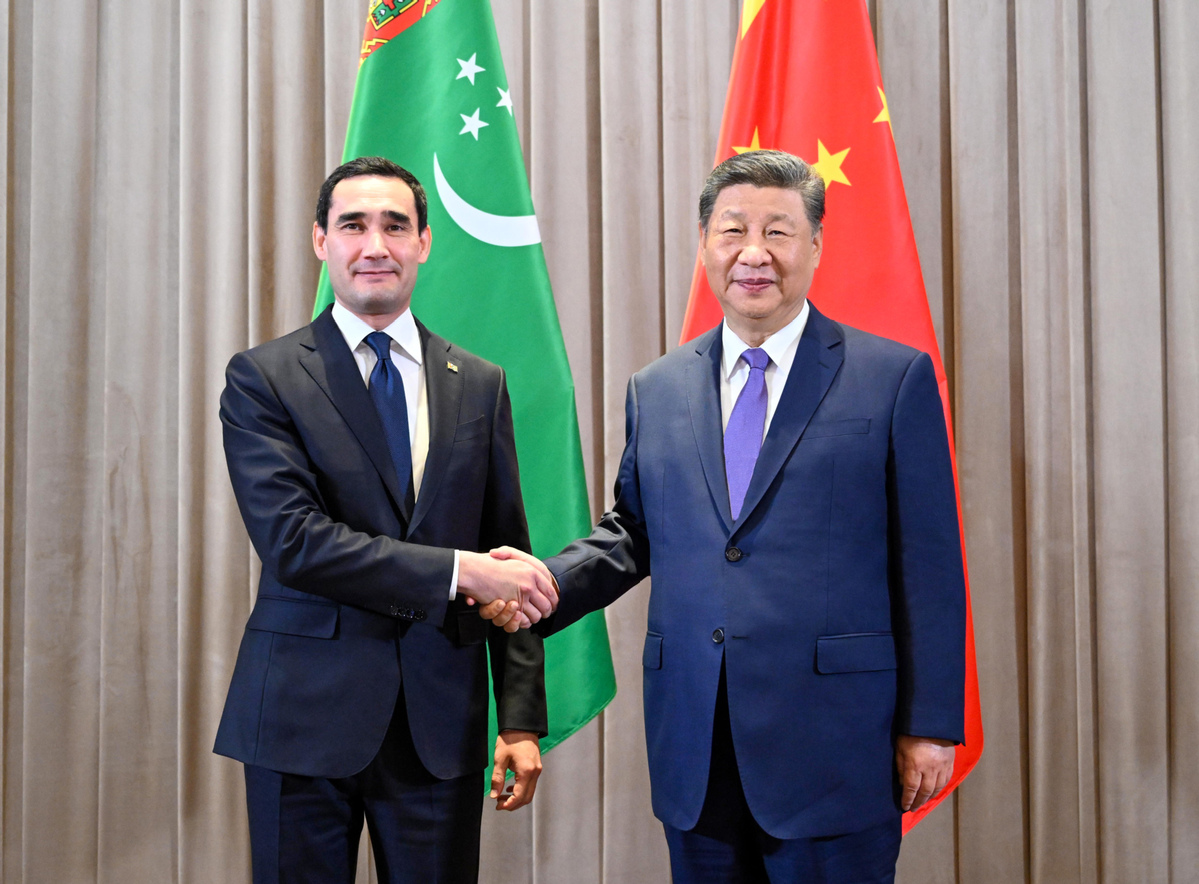
Turkmenistan, meanwhile, attempted to capitalize on its natural gas reserves, agreeing to supply more to China and strengthen energy collaboration. President Serdar Berdimuhamedov underscored Turkmenistan’s dedication to energy security and regional stability, whilst Xi stated that China is willing to work with Turkmenistan to fully unlock the potential for cooperation between the two nations on the basis of mutual respect and “win-win collaboration.”

Insights on China’s Expanding Role

Political analyst Dosym Satpaev believes Xi’s visit underscores China’s commitment to Central Asia amid shifting global dynamics. Noting China’s concern over increased U.S. and EU engagement in Central Asia – especially in the field of critical raw materials – Satpaev suggests that Beijing is aiming to secure not only resources but also control over infrastructure related to electric vehicle production.

“China has big plans for the region,” Satpaev told Nezavisimaya Gazeta. “The goal is to deepen economic, political, and defense cooperation with Central Asian countries, especially given instability in the Middle East.”

Satpaev pointed out that China has invested about $4 billion in Iran and imports up to two million barrels of oil daily from the country. Any instability in Iran, he argues, jeopardizes China’s energy security and enhances the strategic importance of Central Asia.

Other analysts noted that Xi’s visit coincided with a G7 summit which proved testing, potentially signaling Beijing’s desire to pursue an independent global strategy.

Political commentator Gaziz Abishev observed that Kazakhstan is forging a unique partnership with China amid a broader shift in global economic power from the North Atlantic to the South China Sea.

“Kazakhstan-China relations have entered a ‘golden period.’ China’s rapid industrial growth has given it unprecedented global influence, and Kazakhstan is leveraging this while maintaining strategic autonomy.”

Abishev added that Kazakhstan is emerging as an active player in Asian integration, moving beyond its traditional role on Europe’s eastern edge. He stressed the importance of integration into regional production and infrastructure networks.

He also highlighted that over 15,000 Kazakh students are currently enrolled in Chinese universities, a trend he views not merely as educational but as strategic, fostering a generation of professionals fluent in Chinese language, culture, and economic logic.

A Shared Vision for Regional Growth

With its investments and strategic initiatives, the Second China-Central Asia Summit appears to have resulted in China solidifying its position as a driving force in Central Asia, promoting regional stability while advancing its economic and geopolitical ambitions. The summit also served to reaffirm Central Asia’s importance in global trade and set the stage for sustainable, long-term growth.

In Kazakhstan, Gender Imbalance Persists Even Among Teenagers

A recent study by Finprom.kz, conducted in partnership with the National Statistics Bureau, sheds light on how Kazakhstani citizens allocate their time across work, leisure, and household duties. The findings reveal significant gender disparities that begin in adolescence and continue into adulthood.

Unequal Distribution of Labor at Home

The study was based on data from a modular survey conducted every five years, involving approximately 12,000 respondents nationwide. Participants maintained daily activity logs, including both weekdays and weekends.

On weekdays, men in Kazakhstan work an average of 9 hours and 7 minutes, about an hour longer than women. However, when it comes to household duties and childcare, women spend more than twice as much time: 2 hours and 13 minutes compared to 48 minutes for men. The gap widens on weekends, with women spending 4 hours and 44 minutes on domestic tasks, compared to 1.5 hours for men.

Meanwhile, men spend more time on social media, television, and reading the news, around 1.5 hours on weekdays and nearly 3 hours on weekends. Women engage in these activities roughly an hour less. A similar trend appears in general leisure and relaxation time, where men again lead.

Gender Norms Form Early

Gendered patterns in domestic labor emerge as early as adolescence. Boys aged 10-14 spend about 1 hour and 6 minutes a day on household chores, while girls dedicate 1 hour and 52 minutes. Cooking accounts for a large portion of this difference, with girls spending an average of 44 minutes on meal preparation.

The study also found that parents with higher education levels spend more time with their children, regardless of employment status. Interestingly, unemployed men spend three times less time with their children than employed men, regardless of the day of the week. This correlation was not observed among women.

Despite traditional assumptions, men dedicate nearly as much time to personal care as women. On weekdays, men spend 1 hour and 17 minutes on hygiene and grooming, just 3 minutes less than women. On weekends, they spend even more: 1 hour and 40 minutes, compared to 1 hour and 29 minutes for women. Unemployed men consistently surpass women in this area.

Regional Disparities and Stress

The study highlighted notable regional differences in time use. In North Kazakhstan, residents spend about 1.5 hours daily on cooking and eating, while in Shymkent, the figure is nearly double. Shymkent residents also spend just 8 minutes a day on rest and reflection, compared to over an hour in Mangistau.

Cleaning and laundry take up 1.5 hours a day in Shymkent, one of the highest rates in the country. In contrast, residents of Astana spend just 39 minutes on these tasks.

Screen time also varies significantly. On average, Kazakhs spend 2 hours and 3 minutes daily on digital content. In North and East Kazakhstan, this climbs to 2 hours and 40 minutes. Residents of Almaty, Ulytau, and Shymkent average 2 hours and 14 minutes, while those in Kyzylorda and Mangistau spend the least, 1 hour and 17 minutes, and 1 hour and 21 minutes respectively.

A separate sociological survey by the Kazakhstan Institute for Public Development (KIPD), involving 2,400 respondents, found that 37.8% of women and 32.4% of men feel tired and overworked. Nearly one-quarter of women said they struggle with household management, compared to 16.9% of men.

“Women are more likely to experience fatigue, lack of time, and difficulty managing daily life. This highlights the need for a more equitable distribution of household responsibilities within the family,” the report’s authors concluded.